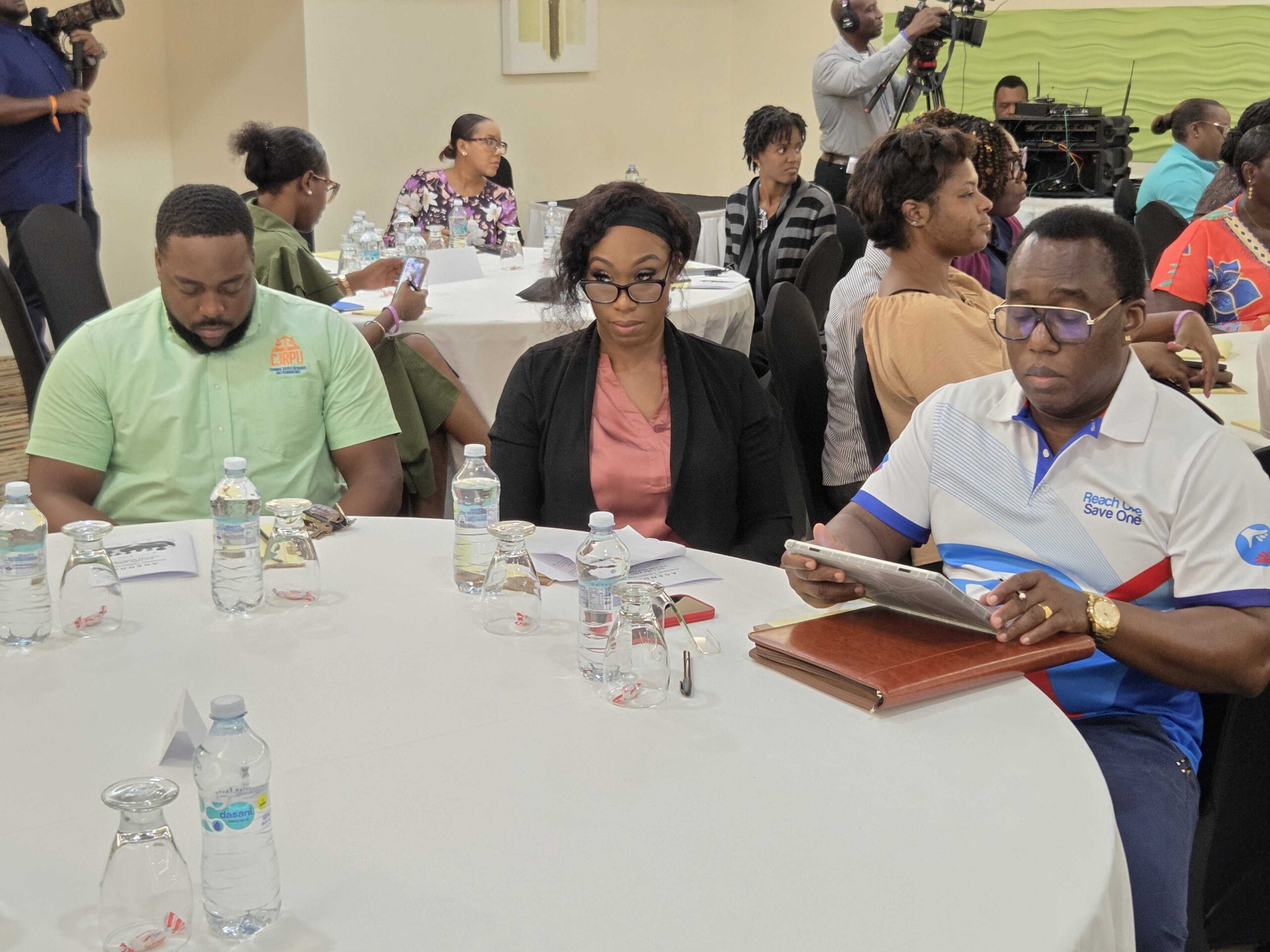
Barbados has kickstarted a transformative overhaul of its national criminal justice framework that shifts the long-standing institutional focus from offender prosecution to victim-centered support and healing. The launch of the initiative took place Monday at the opening of a high-profile two-day stakeholder symposium held at the Radisson Hotel, where government officials outlined a plan to build a rigorous, compassionate and tightly coordinated support system that ensures trauma survivors do not have to navigate the aftermath of violence and crime on their own.
The symposium brought together a cross-section of key stakeholders, including senior judiciary representatives, officers from the Barbados Police Service, officials from multiple government ministries, licensed social workers, trauma counsellors, and leaders from local non-governmental organisations focused on victim support. Addressing the gathered delegation, Minister of Legal Affairs and Criminal Justice Michael Lashley pledged rapid, tangible action to close long-standing gaps in institutional care for vulnerable crime survivors.
Lashley acknowledged that while Barbados’ existing criminal justice system has long been recognised as fair and impartial, its historical structure has always prioritised the investigation and prosecution of offenders over the physical, emotional and legal healing of the people harmed by crime. “We have built our criminal justice system around the investigation of offences and the prosecution of offenders. One thing you can say about our system is that it is fair and that it is impartial, but we have not focused centrally on victims. How we treat the most vulnerable among us is a measure of who we are as a nation. If we are working on rebuilding the Barbadian civilisation, this matters,” Lashley told attendees.
Drawing on decades of professional experience as a practicing attorney, Lashley shared first-hand accounts of the profound fear and secondary trauma that victims often face when navigating the country’s current legal ecosystem. He recalled a specific case from his private practice involving a domestic violence survivor who had successfully obtained a court-issued protection order, but was left trembling in terror after the perpetrator easily accessed her confidential safe housing location.
Lashley explained that the current fragmented system, lacking a centralised, cross-agency coordination unit, leaves victims exposed to unnecessary harm when they enter the often-intimidating court environment. Survivors are regularly forced to relive traumatic events repeatedly during testimony and face aggressive cross-examination from experienced defence legal teams, he added. “Ask yourself what happens to the victim after the police report is filed. Who calls them weekly to check and see if they are safe? Who explains what bail means? Imagine a victim going into the court for the first time in their life, having to face trained and experienced legal counsel in a courtroom with jurors, and then the media is there too to report everything. The system itself can feel like a further burden through delays and complexity,” Lashley argued.
Under the proposed reform plan, a dedicated specialised victim advisory unit will likely be established to conduct individual needs assessments, advocate on behalf of survivors within the legal system, and connect victims to critical support services including trauma counselling, emergency alternative housing, and personalised legal guidance. Lashley noted that recent legislative updates, including the recently passed anti-gang legislation, upcoming parliamentary debates on a specialised gun court, and proposed amendments to the Evidence Act, all work hand-in-hand with the new victim-centered reforms to strengthen overall public safety.
To address deep-rooted systemic gaps, the Ministry of Legal Affairs and Criminal Justice has already conducted extensive cross-sector consultations with the Office of the Director of Public Prosecutions, national prison authorities, domestic violence and victim shelters, and individual trauma survivors to gather on-the-ground insight. Preliminary findings from these consultations confirmed that while a range of victim support services currently exist across Barbados, they operate in isolated institutional silos that create gaps in care, eroding public trust in the rule of law.
Lashley emphasised that legislative change means little without consistent, robust implementation and enforcement, particularly when it comes to domestic violence protection orders. “An order on paper is only as good as its enforcement. We need to ensure that victims understand how to report breaches, and that breaches are responded to in a swift manner. Any new system must be designed with survivors, not just for them. Their feedback must drive continuous improvement,” he said.
The minister assured attending stakeholders that the outcomes of the two-day symposium would not be left unused, pledging that a dedicated inter-agency working group would be formed immediately after the event’s closing session to translate symposium recommendations and priority actions into enforceable operational policy. “We are not just about talk. I don’t want out of this symposium a document dated and signed and then there is no action on it. There will be action on it. No victim should navigate the aftermath of crime alone,” he stated.
Marilyn Rice-Bowen, event chairperson and a victim support program practitioner with 22 years of direct experience, echoed Lashley’s call for tangible action, stressing that the symposium must move beyond abstract academic debate to deliver concrete structural change for vulnerable Barbadian citizens. “Over the next two days, we will not be debating whether Barbados needs a national victim support framework; that question has already been answered. What we will be doing is something more purposeful. We will be designing it together with rigour, with compassion, and with a commitment to those who need it most at the centre of every decision we make,” Rice-Bowen said.