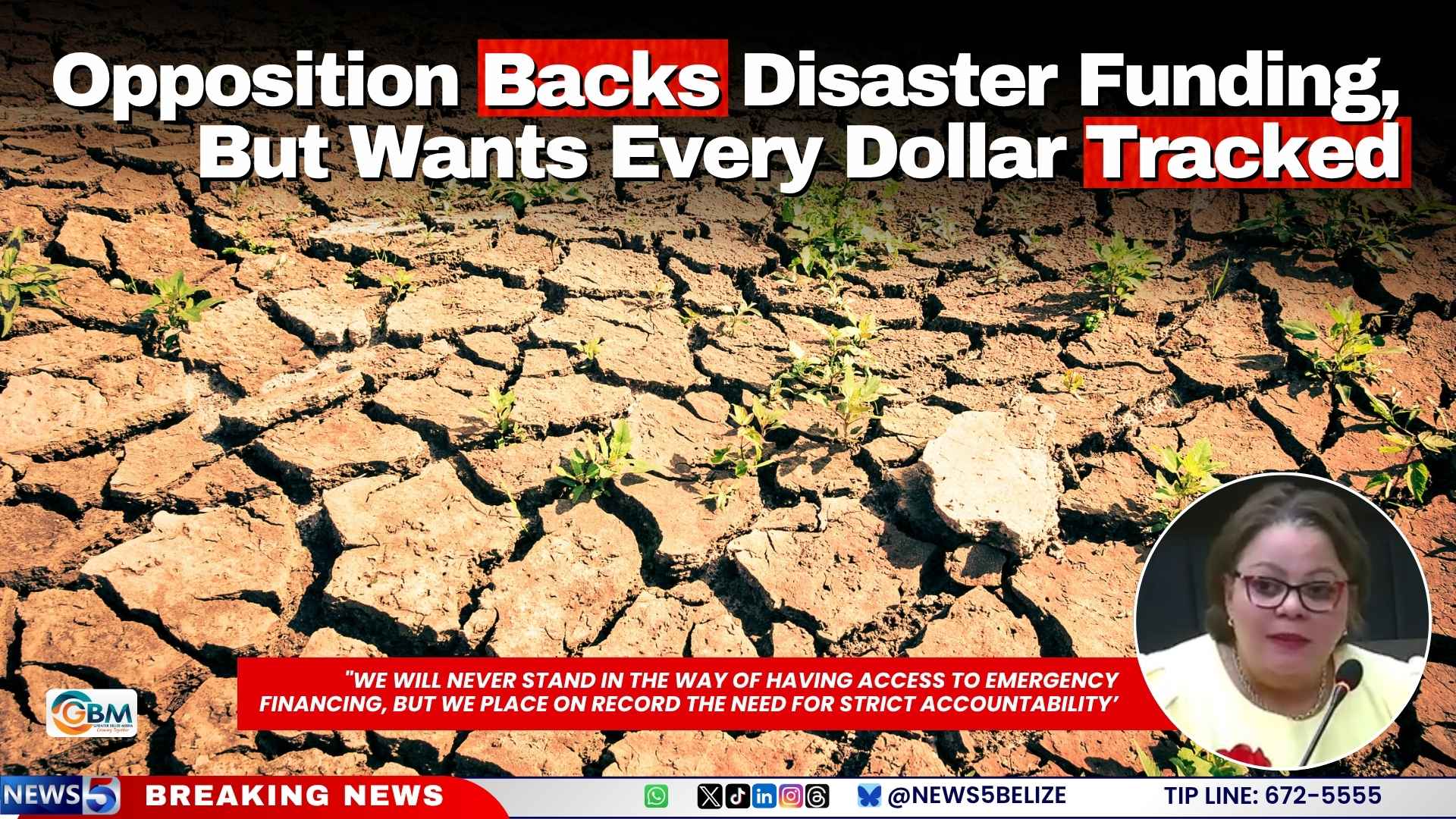
In a House of Representatives sitting held Thursday, Belize’s parliamentary opposition has confirmed it will greenlight emergency disaster and public health crisis funding, but only on the condition that every cent of public money is subjected to rigorous transparency tracking and parliamentary oversight. Opposition Leader Tracy Panton emphasized that the bloc has no intention of blocking critical emergency resourcing, but is standing firm on requirements that all spending adhere to strict accountability and prudent financial management standards for the Belizean public.
Panton directly addressed Prime Minister Briceño during the debate, calling on the administration to deliver on its pledge of the “gold standard of transparency.” She reiterated that permanent parliamentary oversight must be baked into the management of all emergency appropriations, to ensure funds are used for their intended public purposes.
Following the discussion, Minister of Public Service and Disaster Risk Management Henry Charles Usher updated the House on pre-emptive drought preparedness measures already underway. He confirmed that the government has activated its anticipatory disaster funding mechanism, issuing early cash advances to agricultural producers across the northern and western districts of Corozal, Orange Walk and Cayo. The region is bracing for a projected prolonged drought throughout 2026, and the allocated funding will be directed to upgrading on-farm water storage infrastructure, expanding irrigation access, and procuring drought-resistant seed varieties for smallholder and commercial farmers.
Usher noted that while the initial advance disbursements were modest in size, the early activation of the fund represents a proactive shift in disaster planning that prioritizes mitigation before a crisis escalates. He added that even though meteorological forecasts predict a below-average Atlantic hurricane season for 2026, the government cannot afford to be complacent about climate-related disaster risk, making advance preparedness funding all the more critical.
The funding motion ultimately earned bipartisan support from all members of the House, and has now been forwarded to the Finance and Economic Development Committee for detailed procedural review before moving toward final approval.