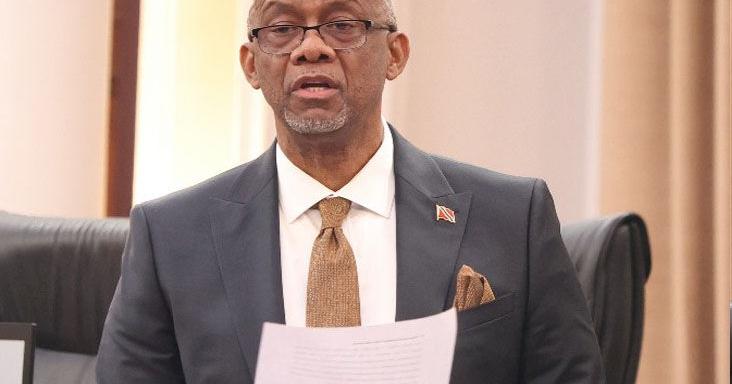
A major parliamentary controversy unfolded during a recent sitting of the Senate of Trinidad and Tobago, where sitting government ministers launched sharp criticism against opposition Senator Faris Al-Rawi, SC, over his alleged role in a coordinated plan to compromise the integrity of the Public Administration and Appropriations Committee (PAAC). The fallout has led the Senate President to order both Al-Rawi and fellow opposition Senator Janelle John-Bates, a sitting PAAC member, to face investigation by the parliamentary Privileges Committee over allegations of contempt of Parliament.
The confrontation was opened by Labour Minister Leroy Baptiste, who tabled a motion to adopt the PAAC’s Special Report detailing John-Bates’s misconduct. Baptiste argued that Al-Rawi was fully aware of John-Bates’s status as a PAAC member, and documentary evidence attached to the special report directly and irreversibly implicates the opposition senator in the misconduct.
The evidence in question centers on a witness statement submitted to the PAAC by former Health Minister Terrence Deyalsingh. In-depth metadata and tracked change analysis of the document reveals that both John-Bates and Al-Rawi contributed extensively to drafting the statement, with Al-Rawi personally carrying out revisions, edits, and in multiple cases overwriting changes previously made by other contributors.
Baptiste emphasized that Al-Rawi’s participation in the drafting process cannot be written off as an innocent oversight. Instead, he framed the actions as part of a prearranged sequence of coordinated activities that resulted in fabricated and improperly shaped evidence being presented to the parliamentary committee, directly undermining the body’s institutional integrity.
During the subsequent parliamentary debate, Senate President Wade Mark approved two separate privilege motions put forward by Government Senator and sitting PAAC member David Nakhid. Nakhid’s first motion addressed John-Bates’s conduct, noting that the PAAC’s own special report had concluded she deliberately compromised the committee’s impartiality and took part in what amounts to a conspiracy to commit contempt of Parliament. Nakhid explained that John-Bates violated core parliamentary standards by failing to recuse herself from the committee’s review of Deyalsingh’s evidence, despite having secretly assisted in drafting and advising on the memorandum, and failing to disclose her involvement to the committee. He added that if the PAAC chair had not intervened to stop her, John-Bates would have continued to take part in the committee’s deliberations, raising severe red flags about commitment to impartiality and adherence to parliamentary ethics.
Nakhid’s second privilege motion targeted Al-Rawi, a senior barrister with decades of legal experience. He pointed out that Al-Rawi’s edits appear repeatedly across the tracked version of Deyalsingh’s statement, and argued that as a Senior Counsel, Al-Rawi should have recognized immediately that John-Bates’s involvement in the drafting process was improper. Citing Erskine May’s seminal Treatise on the Law, Privileges, Proceedings and Usage of Parliament, Nakhid noted that any conspiracy to deceive either chamber of Parliament or its committees is legally defined as contempt of Parliament. He further argued that legal professional privilege cannot be invoked to shield deceptive conduct, alleging that Al-Rawi conspired with Deyalsingh and John-Bates to mislead the PAAC, thereby committing contempt and abusing the parliamentary privilege afforded to his position.
Following the debate, Senate President Wade Mark formally ruled that both Al-Rawi and John-Bates must be referred to the Privileges Committee for full investigation into the allegations.
Minister of Housing Anil Roberts joined the growing chorus of government criticism against Al-Rawi, noting that the opposition senator’s actions are particularly troubling given his prior service as Attorney General of the country. Roberts argued that the full weight of the PAAC special report and supporting evidence shows Al-Rawi witnessed a young parliamentary colleague making a serious, admitted error, and chose to do nothing to stop it. He dismissed the entire affair as an undisputed political horror story for the opposition People’s National Movement (PNM), noting that both Al-Rawi and John-Bates are trained attorneys, making their conduct all the more disappointing.
Roberts further called out Al-Rawi, a third-generation parliamentarian, by referencing public criticism from former PNM General Secretary Ashton Ford, who previously labeled Al-Rawi a non-performer. He stressed that Al-Rawi, a 30-year veteran of legal practice who previously led a high-profile prosecution that secured a witness tampering charge, should have recognized immediately that John-Bates’s actions were improper. Roberts alleged that Al-Rawi not only failed to warn John-Bates that her conduct amounted to witness tampering and urge her to resign and apologize to the PAAC, but actually joined the scandalous conspiracy alongside John-Bates and Deyalsingh to corrupt and undermine the PAAC’s core work.
Roberts closed by calling on the full Parliament to defend its institutional integrity by demanding both senators resign from office. He directed his call specifically at Al-Rawi, claiming the senior senator refuses to apologize or step down despite the weight of evidence against him. To prevent a repeat of the prior high-profile “Emailgate” parliamentary scandal, Roberts called for an immediate full investigation, including retaining United States legal counsel to compel Google via subpoena to preserve all email correspondence between Al-Rawi, John-Bates, and Deyalsingh stored on the company’s servers. He also urged the Parliament to seek formal legal opinion on whether the conduct amounts to criminal offenses including witness tampering, conspiracy to pervert the course of justice, misconduct in public office, corruption, and fraud.