分类: politics

  • Banks urged to remove disability barriers under new law

    Banks urged to remove disability barriers under new law

    A landmark shift in how the Barbadian financial sector approaches disability inclusion is gaining momentum, as human rights and disability advocates warn that the era of treating accessibility as optional charity has formally ended, replaced by binding legal obligations under a landmark national law.

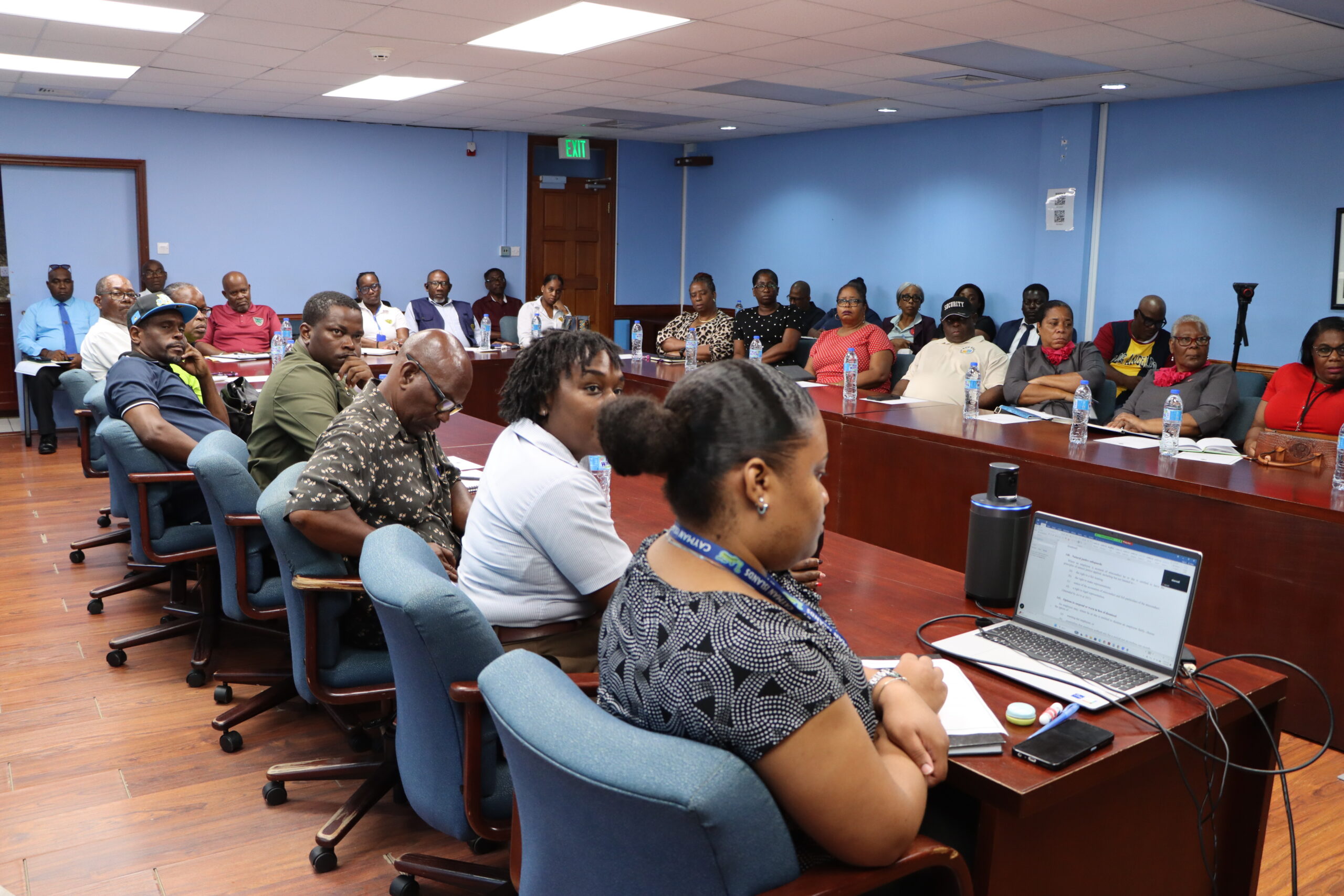
    At an accessibility training session hosted for banking and credit union leaders at CIBC’s Warrens location, Human Rights Commissioner Kerryann Ifill and prominent disability advocate and attorney Andwele Boyce jointly called on the industry to reframe its approach to serving disabled customers from a framework of goodwill to one of legal and human rights accountability. Their push comes months after the Rights of Persons with Disabilities Act, the nation’s first comprehensive legislation codifying accessibility protections for disabled people, entered into force in January 2025.

    Ifill, who was appointed Barbados’ first human rights commissioner in December 2024, challenged long-standing harmful misconceptions about disability. Citing global data showing 15% of the world’s population lives with some form of impairment, she argued that disability is not inherently rooted in an individual’s physical or sensory condition — instead, it is created by systemic societal failure to remove barriers that exclude disabled people from full participation.

    “Disability is not the impairment,” Ifill stated. “The disability is the barriers that society has put in place that prevent people from enjoying full participation in everyday life. Disability does not have to create dependency. It does not mean that we cannot determine our own path.”

    Drawing from her own lived experience, Ifill shared how adaptive technology allowed her to resolve a transportation crisis independently when her regular service failed unexpectedly. But she also opened up about ongoing systemic frustrations within the banking sector, noting that everyday transactions often become dehumanizing, independence-denying experiences for disabled customers.

    “Sometimes, I gotta tell you, the most upsetting parts of my life have to do with the bank,” she said. “You’re asking your clients to give up their right to independence… What you need to see is opportunities to create a pathway to independence.”

    Ifill also pointed to inclusive financial innovations such as the digital platform First Pay as proof that accessible design is not just a legal requirement — it is also smart economic policy. “Inclusion is just smart economics,” she explained. “If I can easily access my money, I can easily transact business, it drives growth. I don’t need, when I travel next week, to leave my debit cards at home… nobody needs to help me out.”

    Boyce, who serves as a national disability advocate, laid out the clear technical requirements and enforceable penalties of the new law, which codifies the United Nations Convention on the Rights of Persons with Disabilities — ratified by Barbados back in 2013 — into domestic legislation. Under Section 75 of the new act, all financial services and facilities must be made fully accessible to disabled customers. Existing buildings have a three-year window to complete retrofits to meet accessibility standards, while mandatory immediate requirements include accessible ATMs, inclusive digital banking services, and a ban on denying credit or lending based on disability.

    The law establishes formal accountability measures, including a specialized complaints tribunal led by a High Court judge and heavy fines for non-compliance: institutions that fail to meet their obligations face fines of up to BBD $100,000 per violation. Boyce added that the recently activated Social Empowerment Agency (SEA) also has authority to investigate discrimination claims brought by disabled customers against financial service providers.

    During the training, advocates outlined common accessibility gaps that persist across Barbadian financial institutions, ranging from physically inaccessible features like high service counters that exclude wheelchair users to exclusionary digital tools such as CAPTCHA tests that block access for visually impaired customers. Boyce also highlighted the need for reasonable accommodations, such as waiving rigid identical signature requirements for customers with motor impairments and adjusting ATM session timeouts to accommodate the needs of elderly and disabled users.

    Most critically, both advocates emphasized that outdated, harmful attitudes remain the single largest barrier to full inclusion. Boyce, a disabled person himself, shared his own experience of service providers speaking to his companions rather than directly to him, a common infantilizing practice that undermines autonomy. “Speak directly to a person with a disability,” he advised industry professionals. “I will tell you that even as a thirty-something-year-old who has lived life and gone to school… there are lots of times in which service providers still speak to the people with me as opposed to me.”

    Closing the training, Boyce urged financial institutions to reframe accessibility: rather than viewing it as an unnecessary financial burden, he said, it should be recognized as a fundamental human right that strengthens inclusion and drives broad-based growth for the entire Barbadian economy.

  • Turner Says Housing Rollout Begins in Pares Village with 13 Homes, 21 More Units in Parham

    Turner Says Housing Rollout Begins in Pares Village with 13 Homes, 21 More Units in Parham

    As the April 30 general election in Antigua and Barbuda approaches, Antigua and Barbuda Labour Party (ABLP) St. Peter constituency candidate Rawdon Turner is showcasing progress on a key community pledge: expanding accessible homeownership opportunities for young residents. During a recent election interview with local broadcaster ABS, Turner outlined the timeline and goals of the phased housing initiative, which grew directly from feedback collected through months of door-to-door community outreach.

    Turner confirmed that the first phase of the project, centered in Pares Village, is nearing final completion. Thirteen new residential units are currently under active construction, with several already at an advanced stage of development. Key structural and exterior work, including roofing, door and window installation, has already been finished on these units, putting the first batch of homes on track for handover in the near future.

    Following the completion of the Pares Village phase, Turner announced plans to launch a second round of development in the Vernon neighborhood of Parham, where 21 additional purpose-built units will be constructed. All 34 total units across both phases are specifically targeted at young people and young professionals who want to move out of multi-generational family homes and build independent lives, a priority that emerged as a top concern from community consultations.

    Turner emphasized that the incremental, small-cluster approach to development was deliberately chosen to address the unique constraints of the St. Peter constituency. Rather than pursuing one large-scale housing development that would require massive tracts of land, the government is utilizing smaller available parcels spread across multiple communities, allowing the project to align with both local land availability and resident demand. This method also makes it possible to deliver completed homes to beneficiaries faster than a single large project would, Turner noted.

    While the candidate acknowledged that current demand for affordable youth housing still exceeds the supply that this first round of development will provide, he framed the 34 units as the critical first step in a long-term strategy to expand housing access across the constituency. The housing initiative forms a core plank of Turner’s broader re-election campaign platform, which centers on delivering tangible improvements to local infrastructure, expanding employment opportunities, and driving inclusive community development across St. Peter.

  • Pringle Says UPP Will Change Work Permit System to Let Workers Move Jobs Freely

    Pringle Says UPP Will Change Work Permit System to Let Workers Move Jobs Freely

    As Antigua and Barbuda prepares for its upcoming general election on April 30, opposition United Progressive Party (UPP) leader Jamale Pringle has laid out a sweeping plan to reform the country’s existing work permit framework, promising to eliminate one of the most burdensome hurdles facing foreign workers in the country.

    Speaking to supporters at a campaign rally held in All Saints, Pringle pulled back the curtain on the proposed changes, criticizing the current regulatory structure that locks foreign workers into contracts with a single employer. Under the status quo, any worker seeking to switch jobs must restart the entire application process from scratch, a repetitive procedure that piles up unnecessary costs and creates significant administrative red tape for foreign employees who have already established themselves in the country.

    Pringle outlined that a UPP-led administration would completely restructure the permitting system by shifting the classification of work permits from employer-specific to industry or profession-based. This fundamental overhaul means that instead of issuing a permit tied to one particular role at one company, authorities would grant authorization based on the worker’s skilled trade or professional field. For example, a construction laborer or a hotel service worker would be free to move between different positions within their respective sector without submitting a new application, paying additional fees, or waiting for fresh approval every time they change roles.

    In remarks highlighting the human impact of the reform, Pringle emphasized that the change is designed to create a fairer system for foreign workers who have made lasting contributions to Antigua and Barbuda’s economy. “We understand that persons would have moved from their country of birth to live within Antigua and Barbuda, and they help to build our economy,” he said, noting that these workers currently face disproportionate restrictions and repeated financial burdens under outdated rules.

    The work permit overhaul is not an isolated policy proposal, Pringle confirmed, but rather one piece of a wider, ambitious agenda to modernize Antigua and Barbuda’s labor market and regulatory frameworks for businesses. With voting day just weeks away, the plan marks a clear policy distinction for the UPP as it courts voters ahead of the April 30 general election.

  • Joseph Proposes Concrete Roads and Drainage Overhaul to Tackle Rural West Flooding

    Joseph Proposes Concrete Roads and Drainage Overhaul to Tackle Rural West Flooding

    As Antigua and Barbuda prepares for its April 30 general election, one closely contested constituency — St. John’s Rural West — has seen core quality-of-life and infrastructure issues rise to the top of campaign priorities, with ruling Antigua and Barbuda Labour Party candidate Michael Joseph laying out a detailed action plan to address the area’s long-running road decay and persistent flooding problems.

    During a recent televised appearance on ABS’s public affairs program *Know Your Candidates*, Joseph zeroed in on the most severely impacted communities across the constituency, naming Golden Grove Extension and Cooks as regions grappling with some of the most dangerous and unusable road surfaces in the entire district. He explained that much of this poor infrastructure stems from uncompleted private development projects, where developers abandoned work before delivering basic public amenities, leaving hundreds of local residents stuck on unpaved, unmaintained dirt roads that become impassable during wet weather.

    “Without a doubt, the worst road conditions right now are in Golden Grove Extension and Cooks,” Joseph stated in the interview, noting that many developers who initiated residential builds in these areas failed to follow through on legal requirements to install connecting roads, running water, and electrical infrastructure for new homeowners.

    Following sustained advocacy from local residents and community leaders, Joseph confirmed that government-funded infrastructure upgrades are already underway in both neighborhoods, with multiple construction firms contracted to build out the full missing road network. In low-lying, frequently waterlogged sections of Golden Grove Extension, project planners have pivoted away from traditional asphalt paving to far more durable, climate-resistant concrete — a change Joseph says is critical to withstanding increasingly frequent severe weather and consistent flooding.

    “We have to build climate-resilient roads here… traditional asphalt simply won’t hold up to the constant water exposure,” he explained. Given the large scale of the project and the need for specialized, long-lasting construction techniques, Joseph estimates that full completion of the road network across both communities will take between 12 and 24 months.

    Beyond road repairs, Joseph turned attention to the chronic flooding crisis tied to the Big Gutter drainage system running along Federation Main Road, a problem that has plagued the area for decades despite repeated attempts at quick fixes. Past interventions focused solely on clearing accumulated debris from the gutter, but recent engineering assessments have uncovered deeper structural issues tied to shifting water flow patterns and rising sea levels linked to climate change.

    Studies found that the combination of increasing rainwater runoff volume, higher sea levels that slow drainage outflows, and a blocked primary outlet channel has forced all excess water through a single narrow passage, overwhelming the system and causing widespread flooding along the main road during even moderate rain events. To address this root cause, engineering teams have developed two viable long-term solutions: installing heavy-duty industrial pumps to actively move excess water out of the system during storms, or constructing a large retention pond to expand the area’s overall drainage capacity.

    In the near term, crews are already working to replace thousands of aging concrete slabs that cover sections of the Big Gutter, many of which cracked and broke during earlier debris removal operations. In a move designed to build community investment in the project, Joseph says he lobbied to hire a local contractor to manufacture and install the replacement slabs, ensuring that members of the St. John’s Rural West community benefit directly from the work.

    “I thought it was critical to advocate for local small contractors to take on this work… that way, there’s real community ownership of the improvements we’re making,” he said.

    Joseph framed the ongoing infrastructure push as part of a broader labor party commitment to raising living standards across all constituencies, arguing that the government has a core responsibility to step in when private developers fail to deliver on their legal and contractual obligations to residents.
    “No matter what private developers do or don’t deliver, as a government we have a fundamental responsibility to ensure that all our people enjoy a high standard of living,” he said.

    With just weeks to go before the general election, St. John’s Rural West remains one of the most closely watched swing constituencies in the country, and both major parties have centered their local campaigns on infrastructure improvements and quality-of-life upgrades for area residents.

  • ‘We do not take this friendship for granted,’ Taiwan tells SVG

    ‘We do not take this friendship for granted,’ Taiwan tells SVG

    As the 45th anniversary of official diplomatic relations between St. Vincent and the Grenadines (SVG) and Taiwan approaches on August 15, senior diplomatic representatives from Taiwan have emphasized that the island nation deeply values its long-standing alliance with the Caribbean state, stating that the friendship is not taken for granted.

    The milestone commemoration took center stage on Wednesday at a public event in Arnos Vale, where a joint ceremonial parade was held by the 2026 Midshipmen Cruising and Training Squadron of Taiwan’s Navy and the Royal St. Vincent and the Grenadines Police Force.

    Addressing attendees at the gathering, Fiona Fan, Taiwan’s top envoy to Kingstown, framed the anniversary not as a mere formal commemoration, but as a celebration of a deep, unbreakable connection built over four and a half decades through reciprocal sincerity, mutually beneficial collaboration, and consistent mutual respect between the two sides.

    Fan highlighted the symbolic weight of the Taiwanese Navy squadron’s 50-day transoceanic journey, which took the vessel across the West Pacific Ocean and through the Caribbean Sea to reach SVG. She described the voyage as a tangible demonstration of courage, unwavering commitment, and steadfast resolve, adding that for Taiwan, the journey underscores a core conviction: peace is not a passive, guaranteed state. Instead, it must be actively protected, preserved, and reinforced through collective resilience and a commitment to global responsibility.

    Positioning Taiwan as a responsible actor in the international community, Fan asserted that the island remains a consistent force for positive global good, dedicated to advancing peace, stability, and widespread prosperity across the Indo-Pacific region and beyond. She noted that the 45-year partnership has evolved far beyond standard diplomatic engagement, delivering tangible, transformative development outcomes for SVG over the decades. These outcomes include key national infrastructure projects that Taiwan has supported through donations and concessional loans, such as the Argyle International Airport, the Rabacca Bridge, the country’s national library, and the ongoing expansion of the Arnos Vale acute care hospital.

    Looking ahead to the next chapter of bilateral cooperation, Fan shared that the two sides are set to explore new collaborative frontiers, including advances in smart agriculture, expanded access to improved healthcare, tech-driven innovation, targeted programming for youth and women’s empowerment, and the development of sustainable, community-centered tourism. Fan outlined Taiwan’s core vision for the partnership: a future where ongoing joint work continues to lift living standards and strengthen local communities across both nations.

    Amid widespread global geopolitical uncertainty, Fan noted that the enduring bilateral partnership sends a powerful message that resonates far beyond the borders of SVG and Taiwan. She extended sincere gratitude on behalf of Taiwan’s government and people to SVG for its long-standing, unwavering support for Taiwan’s meaningful participation in key international organizations, including the United Nations, the World Health Organization, and Interpol. Reaffirming the value Taiwan places on the alliance, Fan stated: “We do not take this friendship for granted. We honour it, we cherish it, and we remain committed to being a reliable partner, sharing knowledge, contributing expertise and working hand in hand for global well-being.” She closed her remarks by expressing hope that the friendship will continue to stand as a beacon of hope, a symbol of shared resilience, and a promise of a brighter shared future for the people of both nations.

    Speaking at the same event, Rear Admiral Ming-feng Chen, commander of the Taiwanese Navy training squadron, echoed these sentiments, noting that the joint military parade serves a dual purpose. Beyond showcasing the discipline, precision, and capability of both participating forces, the event is first and foremost a celebration of 45 years of deep friendship between two nations separated by thousands of miles of ocean but united by shared commitments to the values of freedom and democracy. Chen added that the joint performance by the Taiwanese Navy military band and the SVG police force band further highlights the deep harmony and shared alignment between the two countries. He concluded by thanking the government and people of SVG for their warm hospitality extended to the squadron during its visit, and offered a toast to the enduring, unshakable bond between the two nations.

  • Lovell Urges Voters to ‘Give UPP a Chance’

    Lovell Urges Voters to ‘Give UPP a Chance’

    As Antigua and Barbuda prepares for its upcoming general election on April 30, United Progressive Party (UPP) candidate Harold Lovell has launched a forceful campaign push in the All Saints West constituency, positioning the ballot as a make-or-break moment for transformative governance. Speaking to a fired-up crowd of supporters at a recent campaign rally, Lovell laid out a clear call to action for local voters: oust the sitting administration and give his party the chance to lead the region forward.

    Lovell’s rally remarks blended impassioned appeals for political turnover with targeted critiques of the incumbent government’s failures to address long-running local grievances. Top of his list of complaints is the crumbling state of All Saints West’s transportation infrastructure, which he condemned in blistering terms. “The road situation is atrocious, abominable! Horrible!” he told the crowd, arguing that the current government has left critical routes in disrepair for years. He went on to accuse administration officials of rushing superficial, last-minute road repairs ahead of the vote to cover up their years of inaction, dismissing the efforts as a hollow political stunt. “They are trying to do in three weeks what they could not do in three years,” Lovell said, pushing back against the government’s last-ditch outreach. Instead of patchwork fixes, he pledged that a UPP government would deliver a structured, long-term overhaul of local infrastructure, including upgraded drainage networks and a holistic, comprehensive plan for regional roads and highways.

    Access to basic public healthcare also emerged as a central pillar of Lovell’s campaign messaging in the constituency. He highlighted the prolonged closure of a local community clinic, which has been shuttered for six full months, leaving local residents without convenient access to primary care. The closure, he emphasized, has created unnecessary hardship, pain and logistical disruption for thousands of constituents who rely on the facility for routine medical care.

    Beyond fixing infrastructure and restoring public services, Lovell centered much of his address on expanding economic opportunity, particularly for the constituency’s young population. He argued that many local residents, regardless of age, are hungry for a fair shot at economic success that does not depend on political connections or favoritism from the sitting government. “All they want is an opportunity… and that’s what the United Progressive Party is all about,” he explained.

    Framing the upcoming election as a clear choice between two futures — one of persistent government dependency and one of widespread empowerment — Lovell asserted that a UPP administration would prioritize raising overall quality of life for All Saints West residents while building sustainable pathways to long-term economic independence for all members of the community. With less than a month remaining before polls open, the race in All Saints West is shaping up to be a key battleground in the broader national election, as both parties scramble to win over undecided voters.

  • Pringle Pledges Urgent Talks with WIOC, Bus Operators on Fuel Relief if Elected

    Pringle Pledges Urgent Talks with WIOC, Bus Operators on Fuel Relief if Elected

    With Antigua and Barbuda’s general election just around the corner, United Progressive Party (UPP) leader Jamale Pringle has made soaring fuel prices a cornerstone of his campaign, promising to kick-start urgent negotiations with key energy and transportation stakeholders within days of taking office if his party secures victory.\n\nSpeaking to a crowd of enthusiastic supporters at a recent UPP campaign rally, Pringle emphasized that the skyrocketing cost of living – driven in large part by steep increases in gasoline and grocery prices – has created a crisis for ordinary citizens that demands immediate, decisive government action. “From working commuters to small business owners, everyone is feeling the squeeze of rising gas and food costs, and this election has turned on this urgent struggle,” Pringle told attendees. He stressed that addressing household and business cost burdens would sit at the top of his administration’s policy agenda should UPP win the April 30 vote.\n\nUnder Pringle’s proposed plan, a UPP government would launch direct talks immediately after inauguration with the West Indies Oil Company (WIOC), the state-owned national petroleum entity, to audit current fuel pricing structures and explore actionable mechanisms to pass relief directly to consumers. Beyond energy sector negotiations, Pringle also committed to holding dedicated consultations with bus operators and other public transportation stakeholders. For months, public transport providers have raised alarm over how persistent high fuel costs have squeezed their profit margins, forcing many to consider raising passenger fares that would further shift burden to working people. These dialogues, Pringle noted, will feed into a broader fuel relief package designed to ease pressure on both transportation operators and daily commuters.\n\nWhile Pringle stopped short of releasing specific details on the size, funding structure, or exact eligibility requirements of the proposed relief package, he made clear that the core goal of the policy would be to reorient the country’s existing energy framework to deliver more tangible, direct benefits to ordinary citizens, rather than solely supporting institutional or corporate interests.\n\nThe pledge comes as fuel and energy costs have emerged as the defining political issue ahead of the general election, with households across the income spectrum and businesses of all sizes consistently naming transportation and energy expenses as the top driver of growing cost-of-living pressures. Pringle framed the planned fuel consultations as one piece of a wider UPP policy agenda focused on rolling back cost-of-living challenges, noting that any fuel-specific relief would be paired with broader economic support policies to lift financial strain across the country. As the island nation prepares to head to the polls on April 30, the promise of immediate action on fuel prices has cemented cost of living as the central battleground for competing parties.

  • UPP MPs Sought to Replace Pringle With Lewis as Opposition Leader, Letter Apparently Signed By Simon Shows

    UPP MPs Sought to Replace Pringle With Lewis as Opposition Leader, Letter Apparently Signed By Simon Shows

    As the 2026 general election campaign unfolds in Antigua and Barbuda, a newly surfaced internal document has exposed a major rift within the main opposition United Progressive Party (UPP), with a group of sitting UPP MPs formally pushing to replace long-serving opposition leader Jamale Pringle with St John’s Rural West MP Richard Lewis. The leaked letter, addressed directly to Governor General Sir Rodney Williams, bears the signatures of six self-identified UPP-aligned members of parliament – a majority of the party’s lower house caucus – all backing Lewis’s bid to take over the official Leader of the Opposition post. In the document, the signatories argue that Lewis already commands the confidence of the majority of UPP parliamentarians in the Lower House, and call on the Governor General to appoint him to the role with immediate effect. The request draws explicitly on Section 79(5) of Antigua and Barbuda’s Constitution, which grants the Governor General authority to remove an incumbent Leader of the Opposition if that person is found to no longer hold the backing of a majority of non-government legislators. The correspondence is linked to former St Mary’s South MP Kelvin “Shugy” Simon, whose name and constituency information appear at the top of the document, per the original leak obtained by Antigua News Room. Under Antigua and Barbuda’s constitutional framework, the Governor General holds the formal power to appoint the Leader of the Opposition, selecting the candidate who can demonstrate majority support among the country’s non-government parliamentary members. Pringle, who has led the UPP and held the opposition leader post since 2018, has faced repeated internal challenges over the course of his tenure, with periodic open discussions among party ranks about the UPP’s ideological direction and electoral viability ahead of national polls. The leak of the ouster letter, coming in the middle of an active election campaign, has dramatically escalated public concerns over unity within the opposition bloc, just as voters prepare to cast their ballots. Political analysts note that public exposure of deep internal leadership divisions could erode voter confidence in the UPP’s ability to challenge the incumbent government, opening the party up to increased scrutiny from both opponents and undecided voters in the final stretch of the campaign.

  • Kendra Beazer Slams BPM Leadership as Stagnant, Says Change Must Deliver Results

    Kendra Beazer Slams BPM Leadership as Stagnant, Says Change Must Deliver Results

    At a packed campaign rally on the island of Barbuda, opposition candidate Kendra Beazer delivered a uncompromising, result-focused address to voters ahead of the upcoming April 30 election, framing the contest as a defining crossroads between years of stalled progress and tangible, people-centered change. Rejecting the longstanding political culture of empty promises and unfulfilled pledges, Beazer centered his speech on a straightforward, resonant thesis: meaningful change is not crafted in speeches—it is delivered through action that improves daily life for all Barbudans.

  • PM Browne Says Electing Beazer Will Give Barbuda a Voice in Cabinet as Minister

    PM Browne Says Electing Beazer Will Give Barbuda a Voice in Cabinet as Minister

    Ahead of the April 30 by-election on the Caribbean island of Barbuda, Antigua and Barbuda Prime Minister Gaston Browne has made a bold campaign promise that has reshaped the political narrative of the race. Speaking to a packed, energized crowd of local supporters, Browne centered his entire address on one core argument: Barbuda has long been sidelined from national executive decision-making, and only the election of his party’s candidate Kendra Beazer will secure the island a permanent seat at the Cabinet table.\n\nFor decades, Browne argued, Barbuda has existed as an outsider looking in when national policies are drafted and public resources are allocated. Without a direct representative in the country’s top decision-making body, the island’s priorities have been pushed to the bottom of the national agenda, holding back critical progress across key sectors. “Real power lies where policies are shaped and budgets are approved,” Browne emphasized, drawing thunderous applause from the assembled crowd. He made a concrete, binding commitment that if Beazer secures victory at the polls, the candidate will immediately be appointed to a Cabinet post, ending years of marginalization for the island.\n\nGoing far beyond a routine party endorsement, Browne positioned Beazer as a rising leader with the potential to reach the highest echelons of Antigua and Barbuda’s national government. The Prime Minister told the rally that Beazer “can go all the way” in national politics, rejecting the idea that Barbuda should settle for symbolic, token representation that delivers no tangible results. Instead, he argued, voters have the opportunity to elect a leader who can shape the entire nation’s direction while delivering for local constituents.\n\nBrowne wove a direct line between political representation and tangible development outcomes throughout his remarks, arguing that Barbuda’s long-term progress is inextricably tied to closer alignment with the central government. Without a voice at the Cabinet table, he warned, the island will continue to be locked out of critical decisions on infrastructure expansion, major private investment, and national strategic planning. Electing a candidate aligned with the ruling administration, he insisted, will streamline project delivery and cut through red tape to bring tangible benefits to residents faster than ever before.\n\nOutlining a bold, multi-pronged development agenda for the island, Browne highlighted three core pillars of planned growth: transformative infrastructure investment, targeted expansion of Barbuda’s tourism sector, and accelerated development of renewable energy capacity. “We are already bringing investment, we are already locked in on delivering development,” he said, noting that these initiatives will generate new local jobs, boost small business activity, and raise overall living standards across the island. He stressed that moving these high-impact projects forward requires top-level coordination with central government, reinforcing his case for direct Cabinet representation.\n\nTurning to one of the most contentious political issues on the island, land rights, Browne moved to address widespread criticism of his administration’s approach to land development. He pledged that his government would prioritize full, inclusive consultation with Barbuda’s residents before any major decisions on land use are made, stressing that “no major changes will happen without the direct engagement of the people of Barbuda.” At the same time, he pushed back against calls to halt development entirely, arguing that economic progress and community input on land issues can and should move forward in tandem.\n\nBrowne also used the rally as an opportunity to criticize Barbuda’s incumbent opposition leadership, accusing the current administration of failing to attract transformative investment and deliver meaningful, lasting development for local residents. “We cannot continue down this path of stagnation,” he said, arguing that the current leadership’s refusal to cooperate with the central government has held the island back for years. He contrasted that approach with the ruling Labour Party’s model, which he framed as focused on collaborative partnership, intentional long-term planning, and delivering measurable results for residents.\n\nA core focus of Browne’s address was the impact of any new development on Barbuda’s youth, stressing that all progress must translate into tangible opportunity for the next generation of residents. Above all, he repeatedly framed the upcoming April 30 election as a defining turning point for the entire island, urging voters to make a strategic choice that will shape Barbuda’s trajectory for decades to come.\n\nAs the crowd broke into chants of “Beazer!” in response to his remarks, Browne closed by reinforcing his central message. For too long, he argued, Barbuda has remained on the margins of national governance. With Kendra Beazer’s election to a Cabinet post, the island will finally have a direct voice in the room where all critical national decisions are made.