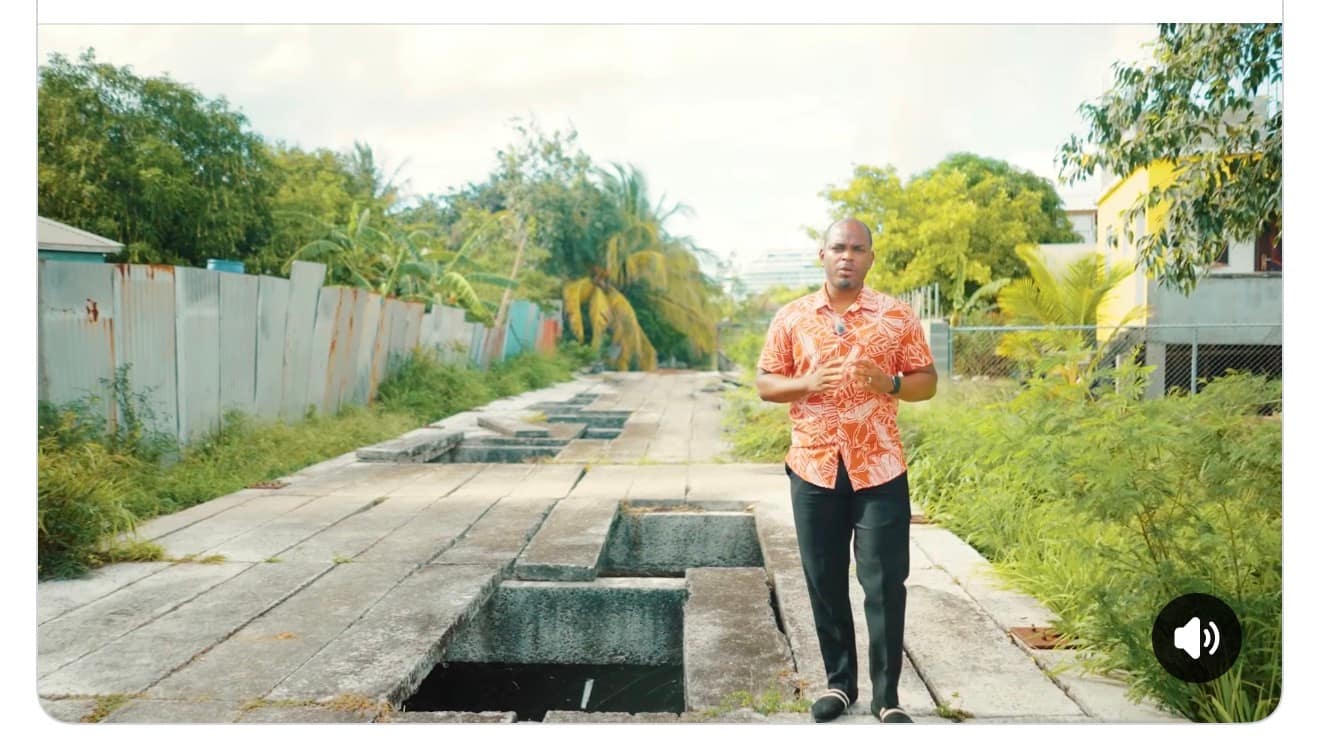
As Antigua and Barbuda prepares for its April 30 general election, one closely contested constituency — St. John’s Rural West — has seen core quality-of-life and infrastructure issues rise to the top of campaign priorities, with ruling Antigua and Barbuda Labour Party candidate Michael Joseph laying out a detailed action plan to address the area’s long-running road decay and persistent flooding problems.
During a recent televised appearance on ABS’s public affairs program *Know Your Candidates*, Joseph zeroed in on the most severely impacted communities across the constituency, naming Golden Grove Extension and Cooks as regions grappling with some of the most dangerous and unusable road surfaces in the entire district. He explained that much of this poor infrastructure stems from uncompleted private development projects, where developers abandoned work before delivering basic public amenities, leaving hundreds of local residents stuck on unpaved, unmaintained dirt roads that become impassable during wet weather.
“Without a doubt, the worst road conditions right now are in Golden Grove Extension and Cooks,” Joseph stated in the interview, noting that many developers who initiated residential builds in these areas failed to follow through on legal requirements to install connecting roads, running water, and electrical infrastructure for new homeowners.
Following sustained advocacy from local residents and community leaders, Joseph confirmed that government-funded infrastructure upgrades are already underway in both neighborhoods, with multiple construction firms contracted to build out the full missing road network. In low-lying, frequently waterlogged sections of Golden Grove Extension, project planners have pivoted away from traditional asphalt paving to far more durable, climate-resistant concrete — a change Joseph says is critical to withstanding increasingly frequent severe weather and consistent flooding.
“We have to build climate-resilient roads here… traditional asphalt simply won’t hold up to the constant water exposure,” he explained. Given the large scale of the project and the need for specialized, long-lasting construction techniques, Joseph estimates that full completion of the road network across both communities will take between 12 and 24 months.
Beyond road repairs, Joseph turned attention to the chronic flooding crisis tied to the Big Gutter drainage system running along Federation Main Road, a problem that has plagued the area for decades despite repeated attempts at quick fixes. Past interventions focused solely on clearing accumulated debris from the gutter, but recent engineering assessments have uncovered deeper structural issues tied to shifting water flow patterns and rising sea levels linked to climate change.
Studies found that the combination of increasing rainwater runoff volume, higher sea levels that slow drainage outflows, and a blocked primary outlet channel has forced all excess water through a single narrow passage, overwhelming the system and causing widespread flooding along the main road during even moderate rain events. To address this root cause, engineering teams have developed two viable long-term solutions: installing heavy-duty industrial pumps to actively move excess water out of the system during storms, or constructing a large retention pond to expand the area’s overall drainage capacity.
In the near term, crews are already working to replace thousands of aging concrete slabs that cover sections of the Big Gutter, many of which cracked and broke during earlier debris removal operations. In a move designed to build community investment in the project, Joseph says he lobbied to hire a local contractor to manufacture and install the replacement slabs, ensuring that members of the St. John’s Rural West community benefit directly from the work.
“I thought it was critical to advocate for local small contractors to take on this work… that way, there’s real community ownership of the improvements we’re making,” he said.
Joseph framed the ongoing infrastructure push as part of a broader labor party commitment to raising living standards across all constituencies, arguing that the government has a core responsibility to step in when private developers fail to deliver on their legal and contractual obligations to residents.
“No matter what private developers do or don’t deliver, as a government we have a fundamental responsibility to ensure that all our people enjoy a high standard of living,” he said.
With just weeks to go before the general election, St. John’s Rural West remains one of the most closely watched swing constituencies in the country, and both major parties have centered their local campaigns on infrastructure improvements and quality-of-life upgrades for area residents.