A landmark shift in how the Barbadian financial sector approaches disability inclusion is gaining momentum, as human rights and disability advocates warn that the era of treating accessibility as optional charity has formally ended, replaced by binding legal obligations under a landmark national law.
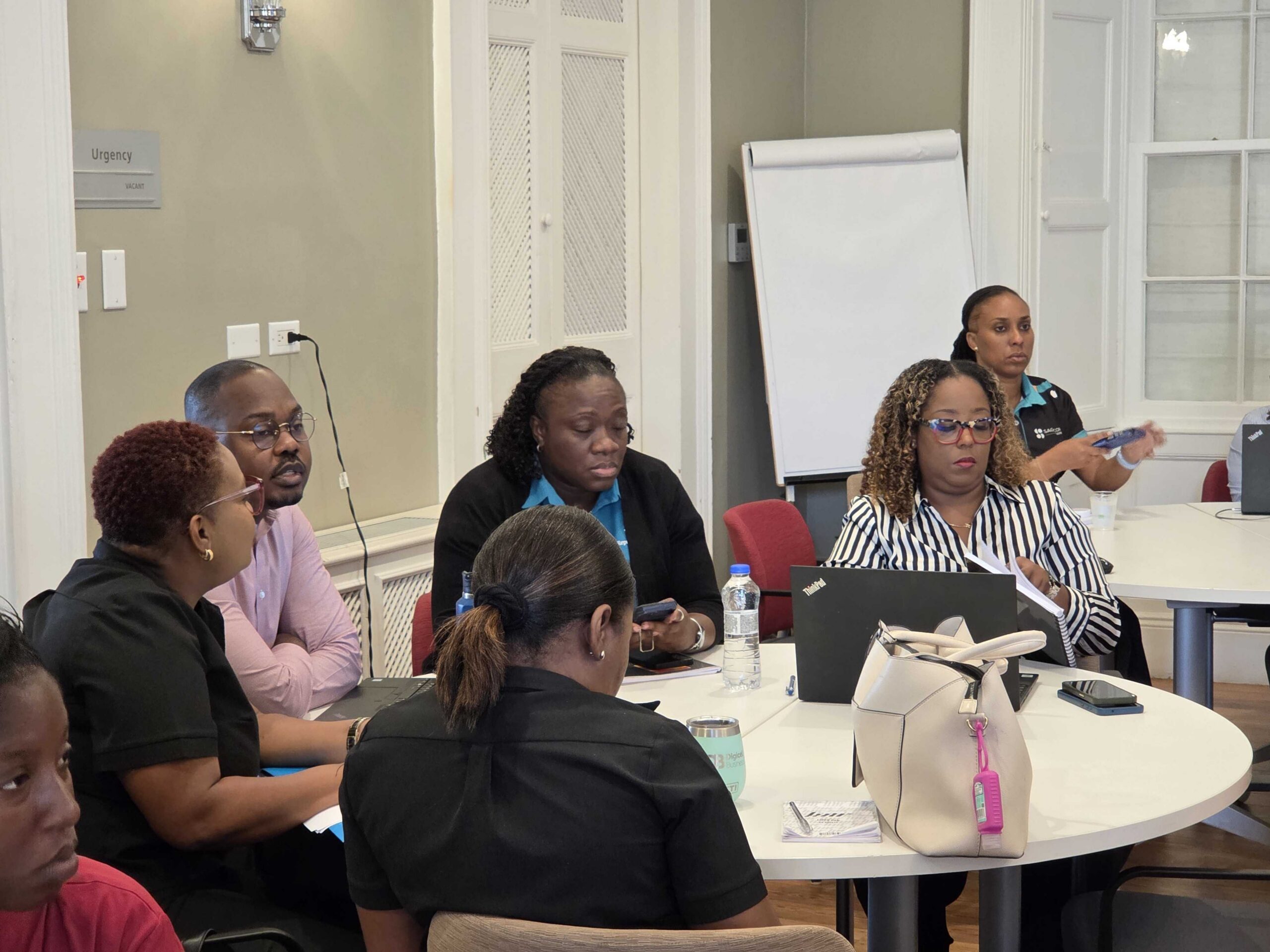
At an accessibility training session hosted for banking and credit union leaders at CIBC’s Warrens location, Human Rights Commissioner Kerryann Ifill and prominent disability advocate and attorney Andwele Boyce jointly called on the industry to reframe its approach to serving disabled customers from a framework of goodwill to one of legal and human rights accountability. Their push comes months after the Rights of Persons with Disabilities Act, the nation’s first comprehensive legislation codifying accessibility protections for disabled people, entered into force in January 2025.
Ifill, who was appointed Barbados’ first human rights commissioner in December 2024, challenged long-standing harmful misconceptions about disability. Citing global data showing 15% of the world’s population lives with some form of impairment, she argued that disability is not inherently rooted in an individual’s physical or sensory condition — instead, it is created by systemic societal failure to remove barriers that exclude disabled people from full participation.
“Disability is not the impairment,” Ifill stated. “The disability is the barriers that society has put in place that prevent people from enjoying full participation in everyday life. Disability does not have to create dependency. It does not mean that we cannot determine our own path.”
Drawing from her own lived experience, Ifill shared how adaptive technology allowed her to resolve a transportation crisis independently when her regular service failed unexpectedly. But she also opened up about ongoing systemic frustrations within the banking sector, noting that everyday transactions often become dehumanizing, independence-denying experiences for disabled customers.
“Sometimes, I gotta tell you, the most upsetting parts of my life have to do with the bank,” she said. “You’re asking your clients to give up their right to independence… What you need to see is opportunities to create a pathway to independence.”
Ifill also pointed to inclusive financial innovations such as the digital platform First Pay as proof that accessible design is not just a legal requirement — it is also smart economic policy. “Inclusion is just smart economics,” she explained. “If I can easily access my money, I can easily transact business, it drives growth. I don’t need, when I travel next week, to leave my debit cards at home… nobody needs to help me out.”
Boyce, who serves as a national disability advocate, laid out the clear technical requirements and enforceable penalties of the new law, which codifies the United Nations Convention on the Rights of Persons with Disabilities — ratified by Barbados back in 2013 — into domestic legislation. Under Section 75 of the new act, all financial services and facilities must be made fully accessible to disabled customers. Existing buildings have a three-year window to complete retrofits to meet accessibility standards, while mandatory immediate requirements include accessible ATMs, inclusive digital banking services, and a ban on denying credit or lending based on disability.
The law establishes formal accountability measures, including a specialized complaints tribunal led by a High Court judge and heavy fines for non-compliance: institutions that fail to meet their obligations face fines of up to BBD $100,000 per violation. Boyce added that the recently activated Social Empowerment Agency (SEA) also has authority to investigate discrimination claims brought by disabled customers against financial service providers.
During the training, advocates outlined common accessibility gaps that persist across Barbadian financial institutions, ranging from physically inaccessible features like high service counters that exclude wheelchair users to exclusionary digital tools such as CAPTCHA tests that block access for visually impaired customers. Boyce also highlighted the need for reasonable accommodations, such as waiving rigid identical signature requirements for customers with motor impairments and adjusting ATM session timeouts to accommodate the needs of elderly and disabled users.
Most critically, both advocates emphasized that outdated, harmful attitudes remain the single largest barrier to full inclusion. Boyce, a disabled person himself, shared his own experience of service providers speaking to his companions rather than directly to him, a common infantilizing practice that undermines autonomy. “Speak directly to a person with a disability,” he advised industry professionals. “I will tell you that even as a thirty-something-year-old who has lived life and gone to school… there are lots of times in which service providers still speak to the people with me as opposed to me.”
Closing the training, Boyce urged financial institutions to reframe accessibility: rather than viewing it as an unnecessary financial burden, he said, it should be recognized as a fundamental human right that strengthens inclusion and drives broad-based growth for the entire Barbadian economy.