分类: politics

  • Parmessar pleit voor versterkte parlementaire samenwerking op IPU-bijeenkomst in Turkije

    Parmessar pleit voor versterkte parlementaire samenwerking op IPU-bijeenkomst in Turkije

    On Saturday, at the ongoing Inter-Parliamentary Union (IPU) global conference hosted in Türkiye, Rabin Parmessar, leader of the National Democratic Party (NDP) parliamentary faction in Suriname, delivered a landmark address to an assembly of over 1,000 parliamentary representatives from more than 150 countries.

    Parmessar centered his speech on the urgent need for coordinated cross-border parliamentary collaboration to address pressing shared global challenges. Against a backdrop of rising geopolitical friction across multiple regions, he emphasized that robust democratic institutions, unwavering commitment to democratic values, and shared global responsibility are non-negotiable foundations for navigating today’s turbulent international landscape.

    As one of the world’s largest multilateral platforms for parliamentary dialogue, the IPU conference brings together not only elected parliamentarians but also delegates from dozens of international intergovernmental organizations and civil society non-governmental organizations. The summit serves as a critical space for constructive discussion and coordination on core global issues ranging from democratic governance and inclusive sustainable development to international peace and security.

    In his remarks, Parmessar also highlighted the outsized importance of continued active engagement from smaller sovereign nations in global multilateral forums. Specifically pointing to his own country Suriname, he stressed that national parliaments across all states, regardless of size or economic power, play an irreplaceable role in upholding governmental transparency, advancing good governance, and ensuring accountability to citizens.

    Parmessar is leading the three-person Surinamese parliamentary delegation to the conference, joined by Asis Gajadien, parliamentary faction leader of the Progressive People’s Party (VHP), and Ines Pané of the Basic Party for Renewal and Democracy (ABOP). Suriname’s participation in this year’s IPU conference aligns with the country’s broader long-term diplomatic strategy to strengthen its global standing and deepen its contributions to inclusive multilateral cooperation, according to delegation sources.

  • GBB grijpt in bij gronduitgifte Apoera; BV’s ingetrokken en South-Drain opnieuw bekeken

    GBB grijpt in bij gronduitgifte Apoera; BV’s ingetrokken en South-Drain opnieuw bekeken

    In an official announcement dated April 19, Stanley Soeropawiro, Suriname’s Minister of Land and Forest Management (GBB), has ordered the revocation of multiple statements of willingness (BVs) for land parcels located along the highway leading to Apoera, following the confirmation of procedural violations during the original allocation process. Simultaneously, a separate land parcel at South-Drain, earmarked for the construction of a new docking pier, has been placed on an accelerated re-evaluation track to resolve outstanding procedural questions.

    An internal ministry audit found that the initial land allocations failed to fully comply with existing regulatory protocols and legal requirements. According to a statement from the GBB, decisive intervention was a necessary step to restore the rule of law in land allocation processes and safeguard public trust in the government’s management of state land resources. The ministry emphasized that it is proactively addressing all confirmed irregularities, with a dual focus on upholding legal certainty and advancing sustainable long-term development across the entire Apoera region.

    Beyond the Apoera road parcels, the South-Drain plot is undergoing a full second review across both legal and administrative dimensions. Internal ministry reports have flagged potential gaps and shortcomings in the original decision-making process that led to the parcel’s allocation, as well as in subsequent administrative actions related to the site. Minister Soeropawiro has issued a formal warning that any legal transactions involving the South-Drain parcel carry significant unaddressed legal risks, and has called on all involved parties to refrain from entering into such agreements until the review is completed.

    The South-Drain parcel is classified as a strategically critical asset for the broader economic and infrastructure development of the Corantijn region, as well as for overland connectivity to Apoera. Because of this strategic importance, the legality and validity of all original decisions regarding the site will undergo a full, comprehensive audit to resolve all outstanding questions.

    The Surinamese state has reserved the right to pursue additional legal action or implement alternative arrangements aligned with the public good if the review finds that further action is necessary. Once the full legal review process is concluded, the Ministry of Land and Forest Management will release a full public update on the findings and next steps.

  • The Ministry of the Environment is changing its paradigm in Haiti

    The Ministry of the Environment is changing its paradigm in Haiti

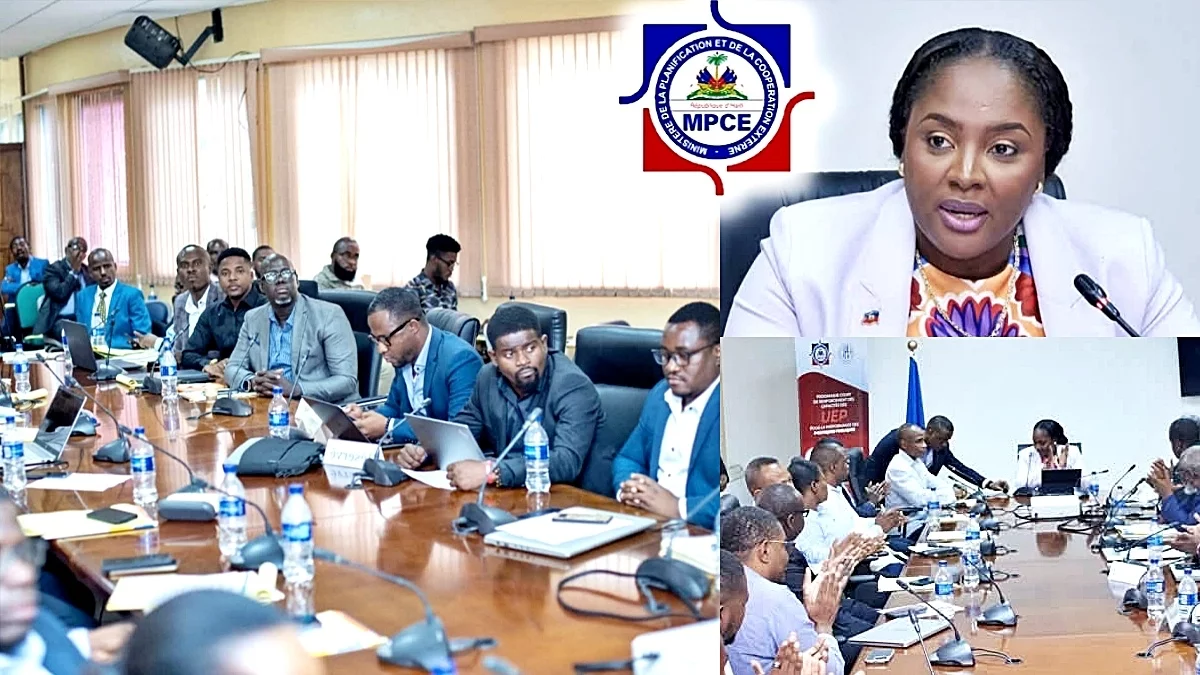
    In a landmark gathering held at Port-au-Prince’s Karibe Convention Center on April 16, 2026, Haiti’s Ministry of the Environment launched a transformative new approach to environmental governance, reframing climate and ecological action as a foundational pillar of the country’s stability, public safety and long-term economic recovery. The two-day strategic planning and consultation summit brought together ministry leadership and key technical and financial partners to align cross-sector work around a newly articulated national vision.

    Jean Marie Claude Germain stood in for Planning Minister Sandra Paulemon, who was traveling on official government business in the United States for the event. In his opening remarks, Germain reinforced the Haitian government’s commitment to improving coordination of international development cooperation, ensuring all external interventions align closely with nationally defined priorities. He praised the ongoing dedication of international partners to Haiti’s development goals and expressed confidence that the new strategic framework would strengthen shared objectives, streamline overlapping interventions, and speed up the delivery of tangible results to communities across the country.

    Following Germain’s opening address, Valéry Fils-Aimé, Haiti’s recently appointed Minister of the Environment, outlined the ministry’s full strategic roadmap, marking a clear break from previous approaches to environmental management. Fils-Aimé emphasized that the environmental sector is no longer treated as a secondary policy area, but as a core strategic lever that directly shapes national territorial stability, public wellbeing and economic revival. Against a backdrop of escalating ecological challenges facing Haiti, Fils-Aimé positioned environmental action as a top national priority that demands coordinated, collective action from government, civil society, and international partners.

    The new strategy is built around four interconnected strategic priorities, the first of which reframes solid waste management from a routine public cleanliness issue to a central component of urban governance, public health and national environmental security. Under the banner of the Konbit Haiti Zero Waste program, the ministry is launching a nationwide mobilization effort to build a formal, functional public waste management system. Key components of the initiative include structured municipal collection routes, capacity building for the National Waste Management and Recycling Service (SNGRS), expanded engagement with local government authorities, and investment in formal recycling and resource recovery sectors. Fils-Aimé noted that the program’s long-term goal is to turn Haiti’s long-standing structural waste crisis into a source of new economic and social opportunity for local communities.

    The second strategic axis focuses on environmental rehabilitation and sustainable natural resource management, addressing widespread ecosystem degradation through an integrated “mountain-to-sea” approach. This framework combines community-led reforestation projects, comprehensive watershed management, coastal zone protection, and investments in territorial climate resilience, all aimed at restoring ecological balance, securing at-risk communities, and protecting the livelihoods of Haitian households that depend on natural resources. In line with this priority, the ministry will launch the Citizen Environmental Initiatives Support Program (PAIEC) in May 2026. The program will issue targeted calls for proposals aligned with national sector priorities, providing funding and support to at least 30 local environmental nonprofits and roughly 100 green entrepreneurs who have developed innovative, locally rooted sustainable solutions. The end goal of this initiative is to nurture a growing ecosystem of green entrepreneurship that creates formal jobs, generates local economic value, and encourages widespread citizen participation and ownership of climate and environmental action.

    Third, the ministry has prioritized strengthening environmental governance and institutional capacity, noting that no national environmental policy can deliver results without robust, functional state institutions. Three key institutional projects are slated to move forward rapidly: first, expanding the mandate and capacity of the Directorate of Environmental Inspection and Monitoring and the National Environmental Assessment Office, working in partnership with other relevant government agencies, to improve regulation of natural resource extraction including water, mining, and sand quarrying; second, elevating the National Solid Waste Management Service (SNGRS) as the primary operational arm of the ministry and a central pillar of national sustainable waste management; third, expanding the mandate and capacity of the National Agency for Protected Areas (ANAP), the ministry-supervised body responsible for the co-management of Haiti’s protected natural areas.

    The fourth and final strategic priority focuses on restructuring external cooperation and securing sustainable financing for national climate action. Fils-Aimé called on partners to work with the Haitian government, under the leadership of the Prime Minister, to rapidly launch a multi-donor climate and environment fund. The new fund will address the long-standing challenge of fragmented donor interventions, strengthen national-level impact, enable coordinated resource mobilization, direct financing to high-impact projects in priority sectors, and improve the speed and effectiveness of on-the-ground interventions.

    Closing the opening session, Fils-Aimé emphasized that the new framework is more than a list of disconnected projects: it represents a cohesive national vision, a clear actionable roadmap, and an open invitation to collective action across all sectors. “Our responsibility is simple, yet demanding: to produce visible results, to tangibly improve the living environment, to strengthen the presence of the State, to create economic opportunities, and to build sustainable resilience,” Fils-Aimé said. “The environment is not just another sector. It is the condition of our stability and the foundation of our development.”

  • ABLP St. John’s Rural East Branch Condemns Removal of Maria Browne Campaign Signs

    ABLP St. John’s Rural East Branch Condemns Removal of Maria Browne Campaign Signs

    A local chapter of the Antigua and Barbuda Labour Party (ABLP) has publicly denounced a disturbing act of electoral sabotage targeting the campaign materials of a sitting party politician, marking an ugly turn ahead of the island nation’s democratic political activity. The St. John’s Rural East Branch of the ABLP confirmed that the incident involved a small group of young men who traveled through the constituency in a white Toyota Vitz. Wearing the party’s signature red ABLP-branded shirts to obscure their true intentions, the group defaced and removed campaign signs and posters belonging to Hon. Maria Browne, an elected representative for the area. Party officials with the local branch emphasized that this behavior has no place in Antigua and Barbuda’s democratic framework. They labeled the actions as both ethically unacceptable and legally unlawful, noting that the vandalism directly contradicts the core values that the ABLP has long promoted for political competition: fairness, mutual respect, and integrity across all campaign activity. The branch stressed that every political actor, regardless of which party they align with, has a fundamental right to engage in public political expression. That right, officials added, must always be exercised within the bounds of the law and with respect for opposing candidates and their supporters. Following the discovery of the vandalism, the St. John’s Rural East Branch formally filed a report with local law enforcement. Authorities have since launched a formal investigation into the incident, and party representatives confirmed that they are fully cooperating with police to identify all individuals involved in the act. The branch made clear that once the responsible parties are found, they will be held fully accountable for their actions under the law. In addition to calling for accountability, the local chapter issued a public appeal to all residents and political actors across Antigua and Barbuda. The branch urged every person to approach the political process with responsibility and respect, reiterating that aggressive, illegal tactics that undermine democratic activity will not be tolerated in the country.

  • Mottley calls for democratic renewal, truth and fairness in Spain

    Mottley calls for democratic renewal, truth and fairness in Spain

    Leaders from across the globe gathered in Barcelona for the IV Meeting in Defence of Democracy, with Barbados Prime Minister Mia Mottley at the forefront of calls to translate commitments to democratic governance into tangible action. The high-level summit closed with a landmark joint declaration that reaffirmed the global community’s core commitment to upholding democracy, universal human rights, and a rules-based international order, while outlining a concrete action plan focused on multilateral reform, information integrity, democratic digital governance, and inclusive global development.

    Against a backdrop of rising geopolitical tension, widening economic inequality, growing societal polarization, and the rampant spread of disinformation, Mottley positioned Barbados as a leading voice for small nations demanding that democratic values be defended through action, not just rhetoric. Her address centered on three interconnected critical priorities that shape the future of democratic governance globally: upholding the rules-based international system, countering the rise of extremism fueled by systemic inequality and exclusion, and defending truth amid a growing crisis of disinformation.

    “For small states like Barbados, a rules-based order is essential to our ability to exist and succeed,” Mottley emphasized. She further warned that unaddressed systemic inequality poses an existential threat to democratic foundations, noting, “When democracy does not deliver for people, and when inequality becomes extreme, it erodes faith in the system itself and creates space for extremism.”

    Many of Mottley’s key priorities were integrated directly into the final Barcelona declaration. The document reaffirmed that respect for international law and multilateral cooperation remain the bedrock of global peace, sustainable development, and human dignity. Participating leaders committed to building a renewed, more effective, inclusive, and representative multilateral system, including comprehensive reform of the United Nations, particularly the UN Security Council.

    Of special significance to Barbados and other similarly positioned nations, the declaration recognized the urgent need for a reformed multilateral framework that addresses the unique vulnerabilities of Small Island Developing States (SIDS) and advances a global development financing structure better aligned to the needs of marginalized nations and their citizens.

    A core pillar of Mottley’s intervention was the concept of informational sovereignty, which she framed as fundamental to democratic function. “Without facts there is no truth, without truth there is no trust, and without trust there is no shared reality,” she stated, arguing that democracies have a non-negotiable obligation to protect the public’s right to accurate information. This emphasis was reflected in the final declaration: participating nations pledged to strengthen cross-border cooperation on transparency, accountability, and democratic governance in the digital space; launched a new Digital Democracy Roundtable initiative; and committed to supporting algorithmic transparency, information integrity, independent pluralistic media, sustainable journalism, and national digital sovereignty.

    Mottley pushed attending leaders to move beyond broad symbolic statements and unite around shared, values-driven actionable goals. “If we are serious about the Sustainable Development Goals, we have to be serious about allowing countries to access the means to achieve them. The reform of the international financial system is central to that effort,” she said. She went on to argue for a “more comprehensive, fairer and more democratic system” that guarantees all people access to basic necessities including food and clean water, and addresses the systemic inequities that push vulnerable nations further to the margins during global economic crises.

    The summit’s final declaration echoed these concerns, acknowledging that persistent systemic inequality creates fertile conditions for extremism and democratic backsliding, reaffirming the importance of fair progressive taxation, and recognizing that climate change acts as a key amplifier of global inequality. Most notably, the meeting framed itself as a decisive turning point, shifting the initiative from collective acknowledgment of shared challenges to concrete implementation. The group will reconvene in New York this coming September on the sidelines of the United Nations General Assembly to review progress.

    Beyond the plenary discussions, Mottley held bilateral talks with Spanish Prime Minister Pedro Sanchez focused on advancing practical cooperation priorities for Barbados and other small island states. The two leaders covered a wide range of topics, including migration policy cooperation, climate resilience, renewable energy transition, methane reduction policy, data governance, international competitiveness, strategic autonomy, and the removal of persistent systemic economic barriers that disproportionately harm small states.

    Key topics on the bilateral agenda included a potential technical study visit for Barbadian officials to learn from Spain’s migration policy experience, the framing of climate resilience as a core national defense priority for small island nations, advancing renewable energy transition while maintaining energy security in a hurricane-prone region, strengthening global methane regulations, sustainable green data center governance, and the strategic importance of digital and communications sovereignty for small states.

    The leaders also addressed the disproportionate harm caused by unfair international financial listings, specifically discussing Barbados’ long-running request to be removed from Spain’s national blacklist of financial jurisdictions. Mottley noted that Barbados has already met all required compliance standards set by the Organisation for Economic Co-operation and Development (OECD), and Sanchez confirmed that Spain would immediately move forward with updating the list and removing Barbados from the designation.

  • Iran fully closes Strait of Hormuz over US blockade and fires on ships

    Iran fully closes Strait of Hormuz over US blockade and fires on ships

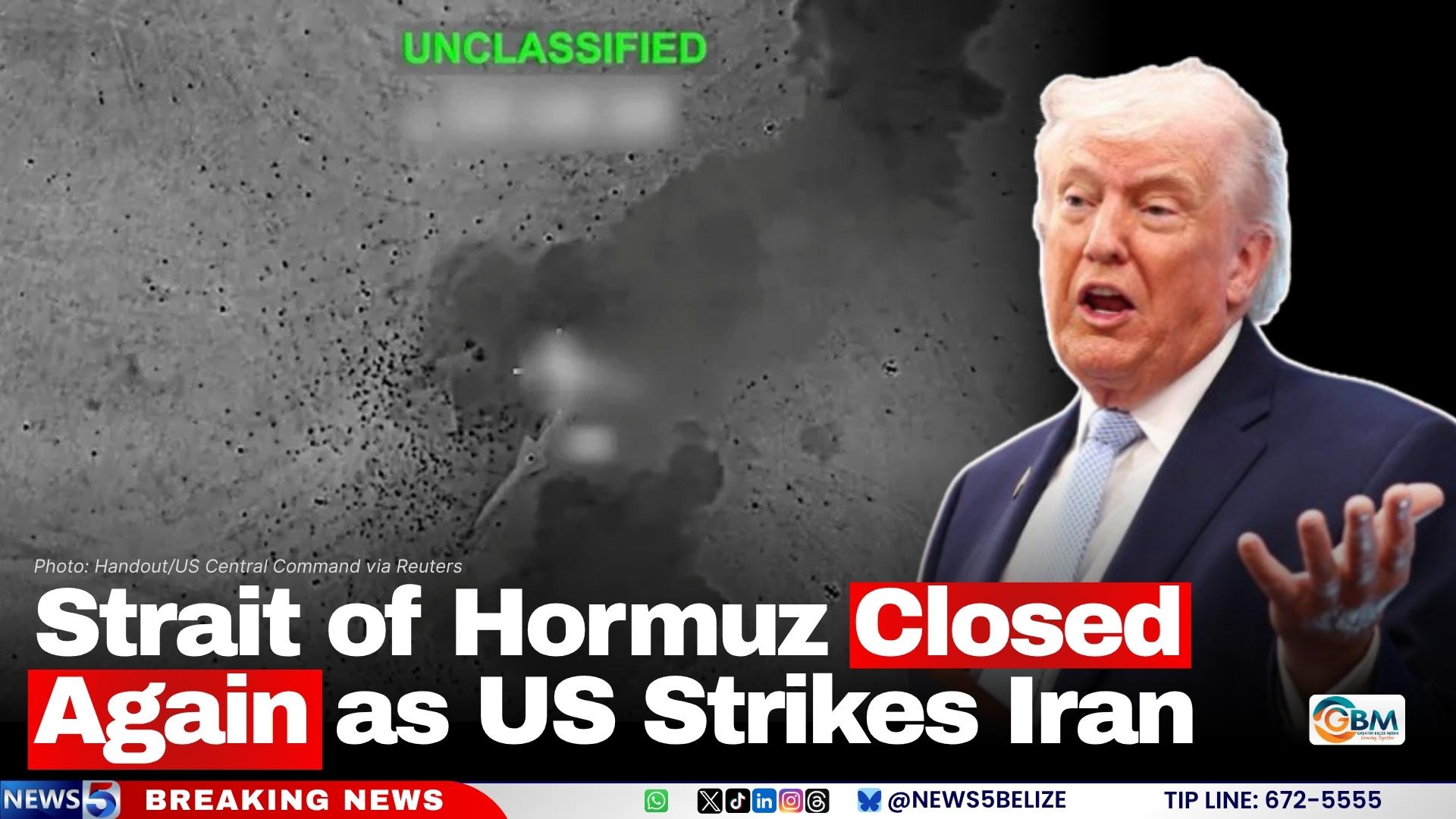
    Tensions around the strategically vital Strait of Hormuz reignited dramatically on Saturday, as Iran backed away from its recent partial reopening of the waterway and launched attacks on passing commercial vessels. The escalation comes in direct retaliation for the United States’ ongoing maritime blockade of Iranian ports, a core pressure tactic in the eight-week conflict between the two nations.

    In an official statement Saturday, Iran’s Revolutionary Guard Navy announced that the strait will remain fully closed to commercial traffic until the U.S. blockade is permanently lifted. The force issued a stark warning to global shipping: “no vessel should make any movement from its anchorage in the Persian Gulf and the Sea of Oman, and approaching the Strait of Hormuz will be considered as cooperation with the enemy” — a designation that puts any errant vessel at risk of being targeted.

    The United Kingdom’s United Kingdom Maritime Trade Operations center confirmed the attacks, reporting that Revolutionary Guard gunboats fired on a tanker, while an unknown projectile struck a container ship, damaging cargo containers on board. India’s foreign ministry has since escalated the diplomatic fallout, summoning Iran’s ambassador to New Delhi to protest the incident: two of the vessels hit were flying the Indian flag, a particularly provocative move after Iran had recently allowed multiple India-bound ships to pass through the strait unimpeded.

    This latest escalation comes at a precarious moment for regional diplomacy: a fragile temporary ceasefire is set to expire this coming Wednesday. Iranian officials confirmed that Tehran has received a new set of negotiating proposals from Washington, with Pakistani mediators currently working to arrange a new round of direct talks between the two adversaries.

    Just days before Saturday’s attacks, Iran’s joint military command had announced that control of the strait had “returned to its previous state … under strict management and control of the armed forces,” signaling a partial easing of restrictions that had raised hopes for de-escalation.

    For Iran, controlling access to the Strait of Hormuz — through which roughly 20% of the world’s daily oil supplies transit — remains its most impactful leverage in the conflict. The current conflict began on February 28, when the U.S. and Israel launched military operations amid stalled negotiations over Iran’s nuclear program. Closing the strait puts immediate pressure on the global economy, inflicting political strain on Western leaders while the U.S. naval blockade aims to cripple Iran’s already fragile economy.

    Iran’s newly installed supreme leader, Ayatollah Mojtaba Khamenei, delivered a defiant address Saturday, asserting that Iran’s navy stands “ready to inflict bitter defeats on its enemies.” Khamenei, who assumed the role following his father’s death in Israel’s opening offensive of the war, has not been seen in public since he took office.

  • Premier’s Trip To St Kitts & Nevis Cost $3,736.10 – Bernews

    Premier’s Trip To St Kitts & Nevis Cost $3,736.10 – Bernews

    Newly released public travel records posted to Bermuda’s official government travel transparency webpage have revealed the total cost of Premier David Burt’s February 2026 working trip to St. Kitts and Nevis, totaling exactly $3,736.10 — all of which covered the premier’s transoceanic air travel for the engagement.

    The four-day official visit ran from February 24 to February 27, 2026, and centered on Burt’s attendance at the 50th Meeting of the Conference of Heads of Government of the Caribbean Community (CARICOM), a landmark regional gathering marking five full decades of CARICOM’s work advancing integration across the Caribbean. This historic session was also the first CARICOM heads of government conference held under the new chairmanship of Dr. Terrance Drew, Prime Minister of host nation St. Kitts and Nevis. Burt was joined on the trip by Bermuda’s Minister of Home Affairs, Alexa Lightbourne.

    Over the course of the conference, Premier Burt took part in every scheduled plenary and working session, where regional leaders centered talks on pressing priorities for the bloc: deeper cross-border cooperation, improved coordinated security responses, broad-based economic diversification across member states, and expanded intra-regional trade flows. A key topic for Bermuda’s delegation was the territory’s ongoing accession process toward full membership in CARICOM; Bermuda currently holds associate member status and has steadily expanded its institutional and diplomatic engagement with the bloc in recent years.

    On the sidelines of the formal conference proceedings, Burt also held a series of one-on-one bilateral meetings with leaders from other Caribbean Overseas Territories, focusing on shared priorities and collaborative initiatives for smaller territories.

    Burt’s participation in the 50th CARICOM summit follows his attendance at the 49th heads of government meeting, a consistency that underscores Bermuda’s long-term commitment to active engagement in the highest levels of Caribbean regional governance, per the official government description of the trip.

    The St. Kitts and Nevis leg of Burt’s travel came immediately after a separate working visit to San Francisco, where he was invited to lead a high-profile session at NEARCON 2026. Titled “The ‘Bermuda Triangle’ Approach to Innovation and AI as the Next Regulatory Frontier,” the session explored how Bermuda’s unique tripartite collaboration framework between government, industry regulators, and private sector stakeholders can be adapted to build fit-for-purpose regulatory regimes for artificial intelligence in global financial services. While in San Francisco, Burt also held closed-door meetings with C-suite executives from leading digital asset and artificial intelligence firms.

    Following the conclusion of the CARICOM summit, Burt returned to Bermuda on February 27, 2026, in time to take his seat in the House of Assembly for the scheduled General Economic Debate.

    The full public disclosure of travel costs follows a growing pattern of proactive release of official travel expenses by the Bermuda government, with recent disclosures also published for other ministerial trips to destinations including Switzerland, Dubai, Barbados, and other global locations. The release also comes as the territory’s Auditor General carries out a broader review of official government travel expenses.

  • COMMENTARY: Why should Antiguans and Barbudans vote for the right to keep their own property?

    COMMENTARY: Why should Antiguans and Barbudans vote for the right to keep their own property?

    As Antigua and Barbuda enters another national election cycle, a long-simmering debate over land ownership and property rights has moved to the center of national discourse, rooted in the nation’s complex history of emancipation and post-independence governance.

    Writer Yves Ephraim recently sparked this conversation after drawing a throughline from historical accounts of land access to modern policy failures in the island nation. Opening with a reflection on Agnes Meeker’s *Plantations of Antigua*, Ephraim highlights a striking observation from the text: in the early days following emancipation, the most pressing desire of newly freed people was to secure permanent, individual ownership of land — a goal that remained frustratingly out of reach for most.

    This historical reality resonates deeply with ongoing inequities in 2026, Ephraim argues. Property ownership is not merely a personal convenience; it is a foundational pillar of human freedom, economic stability, and national prosperity. Economically, land stands as one of the four core factors of production, alongside capital, labor, and entrepreneurship. Without access to secure land tenure, individuals cannot build homes, launch businesses, or achieve long-term financial security. Historically, concentrated land ownership has always equated to concentrated power, from the feudal systems where monarchs controlled all territory to the colonial era where enslaved labor generated massive wealth from Antigua and Barbuda’s fertile sugar lands, while those who did the work were barred from owning any land themselves.

    In a democratic society built on the principles of individual freedom, the protection of private property rights is a non-negotiable obligation of government. Land ownership and personal liberty are inextricably linked: without secure claim to a plot of land, people face homelessness, systemic abuse, and constant vulnerability to state action. Yet 180 years after emancipation and more than four decades after independence in 1981, Ephraim questions why successive governments have failed to deliver widespread land access to the descendants of formerly enslaved people.

    Simple arithmetic underscores the feasibility of broad land distribution, he notes. Antigua alone holds roughly 3 billion square feet of total land mass. Allocating a 5,000 square-foot plot to each of the nation’s 100,000 citizens would require just 500 million square feet — less than a fifth of the total available area, and an amount that fits easily within the footprint of the publicly acquired Syndicate Lands alone. Decades ago, the nation took on debt to purchase these lands, a debt that was repaid by ordinary taxpayers. Instead of distributing these plots broadly to ordinary citizens, however, past administrations limited cheap land grants to political cronies and sold off vast swathes of public land to foreign investors, treating the finite resource as if it were unlimited.

    This mismanagement has created the current housing crisis, where low-income families struggle to find affordable land and homes. Rather than address the legacy of poor stewardship of public land, the current government has turned to seizing privately held land from citizens who lawfully purchased and paid taxes on their property, framing the seizures as necessary to build low-income housing. Ephraim calls this action a fundamental violation of individual freedom and constitutional principles, arguing that overreach by the state has always been the greatest threat to personal liberty in the nation’s history — from the legal enshrinement of slavery to today’s arbitrary property confiscation.

    Secure property rights are also the backbone of a growing, stable economy, he emphasizes. No investor will commit to a mortgage or business venture if there is a constant threat that the government will seize their property for arbitrary reasons. As voters head to the polls in the upcoming election, Ephraim urges Antiguans and Barbudans to make property rights a core voting issue. He challenges all citizens to support only candidates and administrations that explicitly pledge to protect private property rights, laying the groundwork for a free, prosperous nation where all citizens can thrive.

  • LETTER: While we wait: Abortion Law

    LETTER: While we wait: Abortion Law

    As a nation waits anxiously for a High Court ruling on the constitutionality of its restrictive 1861 abortion law, a recent legislative move across England has drawn renewed attention to the injustice of outdated criminal penalties for reproductive healthcare. In a significant act of accountability, the UK Parliament has passed new legislation that will clear the criminal records of every woman convicted of abortion or attempted abortion under laws dating back to the 1800s. This step marks a formal acknowledgment by the British government that criminalizing women’s access to abortion was a misguided, ineffective, deeply unfair, and cruel policy that caused unnecessary harm to generations of people.

    England first decriminalized most abortions nearly six decades ago, in 1967, marking the first major break from a punitive approach to reproductive care. Shifting from criminal prosecution to public health-focused regulation has yielded measurable positive results: England currently reports an abortion rate of 23 per 1000 women, far lower than the 59 per 1000 rate recorded in the nation still clinging to its 1861 law. Now, almost 60 years after decriminalization, England is addressing the lingering harm of its former policy: clearing past convictions will lift the lifelong stigma and professional barriers that came with permanent criminal records, which for decades barred affected women from career advancement and caused deep emotional distress.

    Advocacy group ASPIRE, which authored this open letter calling for reform, points out that the push to strike down the outdated domestic abortion law is not an unprecedented demand. Forty years ago, Canada’s Supreme Court ruled in the landmark 1988 case R v Morgentaler that an abortion law nearly identical to the 1861 law currently in place here was unconstitutional. More recently, in 2017, Northern Ireland’s Court of Appeal found that the abortion-related provisions of the 1861 Offences Against the Person Act were incompatible with Article 8 of the European Convention on Human Rights.

    Despite gaining political independence in 1981, this nation chose to retain the 1861 Victorian-era abortion law inherited from its colonial past, a policy that remains in place as of 2026. ASPIRE urges the domestic High Court to follow the examples set by Canada, Northern Ireland, and now England, breaking with the culture of punitive approaches to reproductive healthcare and issuing a ruling that declares the current restrictive abortion law unconstitutional.

  • Police Issue Warning as Campaign Materials Are Removed and Defaced Across Communiti

    Police Issue Warning as Campaign Materials Are Removed and Defaced Across Communiti

    Local law enforcement agencies have issued an official public warning after reports of widespread removal and deliberate defacement of political campaign materials emerged from multiple residential communities in the region. According to initial police briefings, investigators have documented dozens of incidents dating back to the start of the current election cycle, where campaign signs, posters and promotional displays were either torn down from public and private property or marked with vandalism.

    Local policing officials emphasize that this type of behavior violates local public property laws and undermines the core principles of free democratic expression, regardless of an individual’s political alignment. Authorities are urging community members who witnessed any acts of vandalism or have relevant surveillance footage to come forward to assist with ongoing investigations. They also note that anyone found responsible for the damage could face misdemeanor charges, fines, and other legal penalties.

    As the campaign season enters its final stretch, police have increased patrols in high-traffic community areas to deter further vandalism, and remind both campaign teams and residents to report any suspicious activity related to campaign materials immediately.