In a landmark gathering held at Port-au-Prince’s Karibe Convention Center on April 16, 2026, Haiti’s Ministry of the Environment launched a transformative new approach to environmental governance, reframing climate and ecological action as a foundational pillar of the country’s stability, public safety and long-term economic recovery. The two-day strategic planning and consultation summit brought together ministry leadership and key technical and financial partners to align cross-sector work around a newly articulated national vision.
Jean Marie Claude Germain stood in for Planning Minister Sandra Paulemon, who was traveling on official government business in the United States for the event. In his opening remarks, Germain reinforced the Haitian government’s commitment to improving coordination of international development cooperation, ensuring all external interventions align closely with nationally defined priorities. He praised the ongoing dedication of international partners to Haiti’s development goals and expressed confidence that the new strategic framework would strengthen shared objectives, streamline overlapping interventions, and speed up the delivery of tangible results to communities across the country.
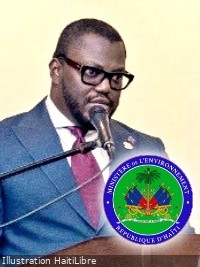
Following Germain’s opening address, Valéry Fils-Aimé, Haiti’s recently appointed Minister of the Environment, outlined the ministry’s full strategic roadmap, marking a clear break from previous approaches to environmental management. Fils-Aimé emphasized that the environmental sector is no longer treated as a secondary policy area, but as a core strategic lever that directly shapes national territorial stability, public wellbeing and economic revival. Against a backdrop of escalating ecological challenges facing Haiti, Fils-Aimé positioned environmental action as a top national priority that demands coordinated, collective action from government, civil society, and international partners.
The new strategy is built around four interconnected strategic priorities, the first of which reframes solid waste management from a routine public cleanliness issue to a central component of urban governance, public health and national environmental security. Under the banner of the Konbit Haiti Zero Waste program, the ministry is launching a nationwide mobilization effort to build a formal, functional public waste management system. Key components of the initiative include structured municipal collection routes, capacity building for the National Waste Management and Recycling Service (SNGRS), expanded engagement with local government authorities, and investment in formal recycling and resource recovery sectors. Fils-Aimé noted that the program’s long-term goal is to turn Haiti’s long-standing structural waste crisis into a source of new economic and social opportunity for local communities.
The second strategic axis focuses on environmental rehabilitation and sustainable natural resource management, addressing widespread ecosystem degradation through an integrated “mountain-to-sea” approach. This framework combines community-led reforestation projects, comprehensive watershed management, coastal zone protection, and investments in territorial climate resilience, all aimed at restoring ecological balance, securing at-risk communities, and protecting the livelihoods of Haitian households that depend on natural resources. In line with this priority, the ministry will launch the Citizen Environmental Initiatives Support Program (PAIEC) in May 2026. The program will issue targeted calls for proposals aligned with national sector priorities, providing funding and support to at least 30 local environmental nonprofits and roughly 100 green entrepreneurs who have developed innovative, locally rooted sustainable solutions. The end goal of this initiative is to nurture a growing ecosystem of green entrepreneurship that creates formal jobs, generates local economic value, and encourages widespread citizen participation and ownership of climate and environmental action.
Third, the ministry has prioritized strengthening environmental governance and institutional capacity, noting that no national environmental policy can deliver results without robust, functional state institutions. Three key institutional projects are slated to move forward rapidly: first, expanding the mandate and capacity of the Directorate of Environmental Inspection and Monitoring and the National Environmental Assessment Office, working in partnership with other relevant government agencies, to improve regulation of natural resource extraction including water, mining, and sand quarrying; second, elevating the National Solid Waste Management Service (SNGRS) as the primary operational arm of the ministry and a central pillar of national sustainable waste management; third, expanding the mandate and capacity of the National Agency for Protected Areas (ANAP), the ministry-supervised body responsible for the co-management of Haiti’s protected natural areas.
The fourth and final strategic priority focuses on restructuring external cooperation and securing sustainable financing for national climate action. Fils-Aimé called on partners to work with the Haitian government, under the leadership of the Prime Minister, to rapidly launch a multi-donor climate and environment fund. The new fund will address the long-standing challenge of fragmented donor interventions, strengthen national-level impact, enable coordinated resource mobilization, direct financing to high-impact projects in priority sectors, and improve the speed and effectiveness of on-the-ground interventions.
Closing the opening session, Fils-Aimé emphasized that the new framework is more than a list of disconnected projects: it represents a cohesive national vision, a clear actionable roadmap, and an open invitation to collective action across all sectors. “Our responsibility is simple, yet demanding: to produce visible results, to tangibly improve the living environment, to strengthen the presence of the State, to create economic opportunities, and to build sustainable resilience,” Fils-Aimé said. “The environment is not just another sector. It is the condition of our stability and the foundation of our development.”