分类: politics

  • Voter ID Replacement Drive Surpasses 30,000 Applications as April Surge Continues

    Voter ID Replacement Drive Surpasses 30,000 Applications as April Surge Continues

    ST. JOHN’S, Antigua — As Antigua and Barbuda prepares for its upcoming general election, the country’s Electoral Commission has recorded a striking upward trend in applications for replacement voter identification cards, with more than 30,000 requests submitted since the start of 2024. Data from the commission’s latest progress report reveals that momentum behind the voter ID renewal initiative has accelerated sharply since February, with the most intense activity concentrated across March and the first half of April.

    By mid-April, the cumulative number of replacement applications had reached 30,303, with 6,952 requests processed in just the first two weeks of the month. This sharp uptick follows a similar surge in March, when 4,168 applications were logged — a massive jump from the 508 applications recorded in February and 355 in January. A closer look at weekly data for April shows demand growing steadily week over week: 1,077 applications were submitted in the first week of the month, rising to 2,894 in the second week, and climbing again to 2,981 by the end of the third week.

    Regional breakdowns of the renewal process highlight significant disparities in completion rates across the country’s constituencies. The small rural constituency of St. Peter leads all regions with an 89% completion rate, followed by the sister island of Barbuda at 77%, St. Philip North at 75%, and St. Philip South at 72%. By contrast, multiple densely populated urban constituencies centered around the capital, including St. John’s City West, St. John’s City South, and St. John’s Rural West, have yet to crack the 60% threshold for completed replacement card applications.

    In terms of total application volume, three constituencies account for the largest share of requests: St. George has recorded 2,862 applications, All Saints West has 2,646, and St. John’s Rural West has 2,585. These numbers demonstrate strong engagement from voters across both rural and semi-urban areas of the country, even as urban centers lag behind in completion rates.

    The rising number of applications signals growing public interest in the electoral process, as voters prepare to cast their ballots in the upcoming general election. The early-year slow pickup in applications shifted to a sustained surge starting in March, a trend that has continued into April with no signs of slowing. Electoral officials have repeatedly urged all registered voters to complete their replacement ID application and collect their new cards ahead of polling day, stressing that valid updated identification is required to participate in the election. The commission continues to work through the backlog of applications to ensure all eligible voters are properly registered before voting begins.

  • Sergeant arrested for guns, ammo missing from Cove and John Police Station

    Sergeant arrested for guns, ammo missing from Cove and John Police Station

    In a developing case out of Guyana’s East Coast Demerara region, a serving police sergeant assigned to the Cove and John Police Station has been taken into custody following the mysterious disappearance of a large cache of firearms and ammunition from the station’s secure arms room, law enforcement officials confirmed Sunday.

    The missing inventory includes four 9mm pistols, three .32 caliber handguns, and 68 rounds of live ammunition. The discrepancy was first uncovered during a routine check of the station’s stored weapons and evidence on Wednesday, April 15, 2026. When initial searches failed to turn up the missing items, an official alert was issued up the department’s established chain of command.

    According to a public statement released by the Guyana Police Force, preliminary investigations confirm the disappearance came to light during a scheduled audit of firearms and held exhibits at the facility. The force’s Office of Professional Responsibility has since launched a full internal investigation into the incident, marking one of the most serious internal security breaches involving law enforcement weapons in the region in recent years.

    As the probe progresses, investigators have already collected multiple witness statements and pulled relevant administrative records related to access and inventory tracking for the arms room. The Guyana Police Force emphasized in its statement that it is deploying every necessary investigative and operational resource to locate and recover all missing firearms and ammunition, noting that the gravity of the incident is not being understated.
    “The matter is being treated with the seriousness it warrants, and all appropriate action will be taken in accordance with the law and established procedures,” the statement read, in a public assurance to Guyanese citizens concerned about unregistered weapons entering illegal circulation.

    The arrest of the serving sergeant marks a significant development in the early stages of the investigation, though officials have not yet released further details about the sergeant’s alleged connection to the missing cache or any potential suspects that may still be at large. For communities across East Coast Demerara, the incident has raised urgent questions about inventory security protocols at local law enforcement facilities, as police work to trace the missing weapons before they can be used in criminal activity.

  • US Catholic schools to appeal ruling in LGBTQ discrimination case

    US Catholic schools to appeal ruling in LGBTQ discrimination case

    The U.S. Supreme Court has opened a new chapter in the ongoing national debate over religious freedom versus LGBTQ non-discrimination protections, announcing Monday it will review an appeal brought by Catholic preschool providers against Colorado’s public funding eligibility requirements.

    Colorado’s universal preschool initiative allocates taxpayer dollars to cover tuition at both public and private early childhood education centers, including institutions run by religious organizations. However, the state has cut off public funding to the Catholic preschool programs involved in the suit, saying their refusal to enroll children of same-sex and transgender parents violates the state’s anti-discrimination statutes.

    The plaintiffs in the case — the Catholic Archdiocese of Denver, two Colorado Catholic parishes, and local parents Dan and Lisa Sheley — saw their claims rejected by lower federal courts before turning to the nation’s highest bench. In a public statement following the Supreme Court’s announcement, the Sheleys emphasized they are only seeking equal access to the program the state established for all families. “All we want is the freedom to choose the best preschool for our kids without being punished for our faith,” the couple said. “Colorado promised families a universal preschool program, then cut out families like ours because we chose a Catholic education.”

    Nicholas Reaves, legal counsel for the plaintiffs, echoed that framing, arguing Colorado has arbitrarily excluded religious families from a public benefit designed to be open to all residents. “Colorado promised free preschool for all, then slammed the door on families who chose a religious education for their children,” Reaves said.

    In its legal brief submitted to the Supreme Court, Colorado defended its policy, noting that any organization accepting public funding through the universal preschool program is required to comply with basic non-discrimination rules that bar exclusion based on race, religion, sexual orientation, and gender identity — regardless of whether the exclusion targets the child or their parents. “Petitioners seek an exemption from this law to allow them to receive public funding while turning away preschoolers because of their, or their parents’, gender identity or sexual orientation,” the state’s filing said.

    The case comes before a Supreme Court that holds a solid conservative majority, which has repeatedly ruled in favor of religious liberty claims in recent years — and many of those high-profile rulings have originated in Colorado. In 2018, the court sided with a Denver-area baker who refused to create a wedding cake for a same-sex couple, citing religious objections. Just weeks before the Supreme Court agreed to take the new preschool case, it issued a ruling backing a Christian therapist in Colorado who challenged a state ban on conversion therapy for LGBTQ minors.

    Oral arguments in the Catholic preschool case are scheduled to take place during the Supreme Court’s upcoming 2026-2027 term, which kicks off in October. A final decision is expected to be handed down by the end of the term in June 2027.

  • PLP touts $1.4bn investment during Exuma campaign rally

    PLP touts $1.4bn investment during Exuma campaign rally

    As the Bahamas’ general election draws near, the two leading national political parties held simultaneous campaign rallies across different islands this week, reinforcing their core messaging and clashing over their competing visions for the country’s future. The Progressive Liberal Party (PLP), the current governing party, hosted a well-attended rally in Exuma, where top party officials doubled down on their pitch to voters for a renewed term, framing the PLP as the only force capable of delivering sustained, inclusive progress across the archipelago.

    PLP leader and incumbent Prime Minister Philip Davis told assembled Exuma and Ragged Island residents that the upcoming election is far more than a routine vote – it is a decision that will shape the entire trajectory of the nation for years to come. Davis emphasized that only his party has the track record and plan to push the country forward, pointing to the strong local leadership delivered by Deputy Prime Minister Chester Cooper, who serves as the Member of Parliament for Exuma and Ragged Island. “There is still much work left to do,” Davis noted, highlighting ongoing priorities to lower the cost of living for Bahamian families and ensure that economic growth and development reach every community across the islands.

    Davis spotlighted a slate of ongoing infrastructure and development projects across Exuma and Ragged Island that the PLP administration has advanced, including the construction of a new airport, a new hotel development, and the successful completion of a hurricane-resistant solar microgrid on Ragged Island – a project designed to protect the island’s power supply from the extreme weather that threatens the Caribbean regularly. “We are not just investing in concrete and roads; we are investing in the Bahamian people,” Davis added, noting that the administration’s work has gone far beyond just recovering from the economic shock of the COVID-19 pandemic, which devastated the country’s tourism-dependent economy.

    For his part, Deputy Prime Minister Cooper laid out the governing party’s full track record and future agenda for his constituents, noting that the PLP has attracted more than $1.4 billion in new investment to Exuma, delivered value-added tax reductions to ease consumer costs, and upgraded critical public infrastructure across the district. Cooper outlined upcoming projects, including additional road repairs on Little Exuma, completion of airport upgrades at Black Point, new affordable housing developments in the Exuma Keys, and strengthened local immigration enforcement. He also laid out plans for further expansion of affordable housing, construction of a new primary school, a new centralized government administrative complex, and a multipurpose youth facility, adding that expanding access to high-quality healthcare remains the administration’s top unwavering priority.

    Turning to Ragged Island, which was nearly destroyed by Hurricane Irma in 2017, Cooper said the PLP has restored hope to a community that he claimed the Free National Movement (FNM), the main opposition party, abandoned after the storm. “After Irma, the FNM wrote you off,” he said, outlining the PLP’s ongoing investments in the island, including construction of a new medical clinic, expansion of sustainable eco-tourism, and development of heritage tourism centered on the HMBS Flamingo monument. “You are never an afterthought to this government,” Cooper told Ragged Island residents, “I work for you every single day.”

    Cooper repeatedly attacked the FNM, arguing that the opposition party has little more than empty rhetoric and no substantive policy plan to move Exuma and the country forward. Prime Minister Davis doubled down on that criticism, framing the FNM as a divisive political force that would halt, stall and roll back all the economic and social progress the PLP has delivered over its term. Davis claimed the FNM would “break up progress” the same way the party fractured its own internal unity in recent years, adding: “That is the core difference between our two parties. We build opportunities for the many, they are focused on taking from the many to benefit the few.”

    The PLP rally in Exuma featured additional campaign speeches from other prominent party figures, including Fred Mitchell, Glenys Hanna-Martin, Clay Sweeting, and Robyn Lynes, who all echoed the party’s core messaging to voters ahead of the election. The event took place at the exact same time the opposition FNM held its own campaign rally in North Abaco, where FNM candidates stuck to the party’s long-held campaign message that the FNM works for all Bahamians, not just a small, privileged elite. This election cycle has followed familiar partisan framing: the PLP campaigns as the party of steady progress and inclusive development, while the FNM has positioned itself as a populist alternative focused on delivering for working and middle-class Bahamian families.

  • BGLC appoints new executive director for regulatory focus

    BGLC appoints new executive director for regulatory focus

    KINGSTON, Jamaica — Jamaica’s primary gambling sector regulator, the Betting Gaming and Lotteries Commission (BGLC), has announced the appointment of Timar Powell as its new executive director, with the leadership change officially taking effect on April 20. The hiring comes as the organization enters a pivotal new strategic period focused on raising regulatory benchmarks and building a more adaptive, robust institutional framework to oversee the fast-evolving local industry.

  • Fox, Bastian and Cooper top list of multi-millionaire candidates

    Fox, Bastian and Cooper top list of multi-millionaire candidates

    Ahead of the 2026 general election in The Bahamas, newly published mandatory financial disclosures from the Tribune have pulled back the curtain on the extreme wealth of candidates vying for public office, counting more than 50 millionaires among the field of contenders. Leading the pack of ultra-wealthy hopefuls are three high-profile figures: former NBA star turned actor Rick Fox, business leader Sebas Bastian, and Deputy Prime Minister Chester Cooper.

    Notably, these disclosures carry an important caveat: Bahamian law does not require candidates’ financial declarations to be audited or certified by an independent accounting professional, so no government body verifies the accuracy of the reported figures before they are published.

    Fox, who is running as a Free National Movement (FNM) candidate, tops the overall rankings with a declared net worth of $469 million – a figure that puts him hundreds of millions of dollars ahead of every other candidate in the race.

    Trailing Fox is Sebas Bastian, a candidate from the ruling Progressive Liberal Party (PLP), who reported a personal net worth of $28.9 million. Bastian, however, confirmed that an additional $160 million in family and business assets are held in undisclosed trusts that predate his entry into politics. He argued that because he holds only discretionary beneficiary status rather than sole legal ownership of the trust assets, including those assets in his personal declaration would be both improper and inaccurate.

    Third place goes to Deputy Prime Minister Chester Cooper, who serves as Minister of Tourism, Investment and Aviation. Cooper declared $28.6 million in total assets, $324,000 in annual income, and $560,000 in outstanding liabilities, bringing his net worth to approximately $28 million. Cooper’s declared wealth has grown steadily during his time in public office: it nearly doubled between the 2017 and 2021 elections, rising from $7.9 million to $14.8 million, and has almost doubled again since 2021.

    Former Prime Minister Dr. Hubert Minnis, now running as an independent candidate in the Killarney constituency, comes next with a declared net worth of $19 million. Dr. Minnis reported $20 million in total assets, most held in securities, alongside $1 million in annual income and $1.7 million in liabilities. Like Cooper, his net worth has grown consistently over the past decade of public service, rising from $10.9 million in 2012 to $12.6 million in 2017 and $14 million in 2021.

    Incumbent Prime Minister Philip “Brave” Davis saw little change to his overall asset base, which remains around $4.3 million, primarily invested in real estate and securities. Davis filed a declaration listing $685,162 in savings, $239,665 in a current checking account, and $219,767 in total debt. While he reported a net worth of $4.1 million in the 2021 election cycle, the prime minister did not include a calculated net worth on his 2026 filing submitted to the Parliamentary Registration Department. A spokesperson later clarified that Davis intends to report a net worth of $4.5 million, though the figure did not appear in the official published gazette document.

    Among PLP incumbents, multiple candidates saw double or triple-digit growth in their declared net worth since 2021. Sea Breeze MP Leslia Miller-Brice’s net worth jumped from $3.1 million to $8.7 million, with most of her assets held in real estate and securities, and no outstanding liabilities reported. Central and South Eleuthera MP Clay Sweeting’s net worth rose from $1.5 million to $4.5 million, and Carmichael MP Keith Bell’s grew from just over $1 million to $3.9 million. Smaller but consistent growth was recorded for most other PLP incumbents, with only a handful seeing no major change to their overall wealth. A small number of sitting PLP members, including Elizabeth MP JoBeth Coleby-Davis, remain below the $1 million net worth threshold.

    On the FNM side of the race, party leader Michael Pintard declared a net worth of $3.97 million, up from $2.9 million in 2021, while senior party figure Dr. Duane Sands reported a net worth of $8.1 million, up from $6.9 million in the last election cycle. Multiple first-time FNM candidates also posted substantial net worths, including Nicholas Fox, who is running in Fox Hill and declared $5.47 million. Like the PLP, not all FNM candidates are millionaires: deputy party leader Shanendon Cartwright, for example, reported a net worth of just under $940,000, while East Grand Bahama incumbent James Kwasi Thompson declared a net worth of $538,500. At the lowest end of the wealth spectrum for FNM contenders, Fort Charlotte candidate Travis Robinson – who reported just $7,300 in net worth when he first ran as a student candidate in 2017, and $147,000 in 2021 – now has a declared net worth of $598,000.

    Independent and third-party candidates also span a huge range of wealth. Veronica McIver, the Coalition of Independents candidate challenging Dr. Minnis in Killarney, declared a net worth of $12 million, making her one of the wealthiest candidates in the entire race. At the opposite end of the spectrum, fitness professional Jillian Bartlett, running as an independent in Marco City, reported just $6,600 in total assets and an annual income of $18,000, while missionary Deidre Ann-Taylor, an independent candidate in Exuma and Ragged Island, listed just $4,030 in total assets. A small number of candidates across all parties declined to report a calculated net worth on their filings.

  • PM blames poorly planned infrastructure for last Friday’s gridlock

    PM blames poorly planned infrastructure for last Friday’s gridlock

    Last Friday evening, commuters across sections of Jamaica’s Corporate Area faced an unprecedented transportation nightmare that turned ordinary rush-hour travel into a hours-long ordeal. What is typically a 20-minute trip from New Kingston to the base of Red Hills stretched to three full hours for one driver, while another traveler moving along Eastwood Park Road just after 5 p.m. reported covering a distance of just five car lengths over 60 minutes. The paralyzing gridlock locked up routes from shortly after 4 p.m. through to well after 7 p.m., leaving thousands of motorists stranded in their vehicles. Local observers have pointed to several immediate triggers for the massive traffic tie-up, including heavy afternoon rains that drenched most of the capital, ongoing road construction projects in high-traffic corridors, and the widespread presence of potholes that force drivers to slow down and navigate carefully around damaged pavement. However, Prime Minister Dr. Andrew Holness says the gridlock is a sign of a much deeper, systemic problem that reaches far beyond these day-of issues. Speaking Sunday at the National Housing Trust (NHT) 50th anniversary thanksgiving service held at Webster Memorial United Church in St. Andrew, Holness framed the gridlock as a clear symptom of Jamaica’s long-standing failure to build infrastructure that matches current population and travel demands. “The recent traffic gridlock that we experienced is…a symptom of not just poorly planned infrastructure, but aged infrastructure — an infrastructure that simply cannot meet the demands in place,” Holness told attendees. The prime Minister explained that this systemic gap is why his administration has redirected the NHT, one of the country’s leading public housing bodies, to prioritize large-scale, coordinated master plan developments going forward. Under the new approach, Holness said the country will move away from small, disconnected infrastructure and housing projects, and instead focus on building complete, planned communities rather than just isolated housing units. “We must build with resilience in mind. That means stronger building standards. It means better land use planning. It means relocating development away from high-risk zones, and it means ensuring that every new home built today can withstand the realities of tomorrow,” he added. The government has a national commitment to deliver 70,000 new housing units across Jamaica, with the NHT taking the lead on more than half of that target: 41,000 units. Once this initial round of new construction is complete, Holness announced that the NHT will shift its focus to upgrading older communities built 50 years ago, many of which are struggling with failing critical infrastructure. “They need repair. The sewage plants are not working. The roads are in potholes. Many of those houses, we may have to knock them down and put up new structures there,” Holness said. In the upcoming financial year, the NHT will inject approximately $50 billion into new housing development, with an additional $21 billion allocated to subsidies that make home purchases more affordable for Jamaican buyers. Holness reaffirmed his long-held position that Jamaica’s housing affordability challenge is first and foremost a problem of insufficient supply, not just a lack of access to financing for prospective buyers. “Increasing loan limits without increasing supply only drives up prices. The real constraint has been land, infrastructure, approvals, and construction capacity,” he explained. The upcoming Greater Inswood Development, which will be led entirely by the NHT, is set to serve as a national model for the new integrated planning and delivery approach that Holness says is the only path forward for sustainable growth across Jamaica. “This is the direction in which Jamaica must go,” he declared.

  • Home Affairs Minister did not intervene in son’s road incident- Pres Ali

    Home Affairs Minister did not intervene in son’s road incident- Pres Ali

    As of April 19, 2026, a growing political controversy has emerged in Guyana following a recent road incident that saw a vehicle end up in the Vlissengen Road/Irvine Street trench, with opposition figures raising questions about potential undue influence by senior government officials.

    The core of the dispute centers on claims that Home Affairs Minister Oneidge Walrond intervened in the official police investigation of the crash, after allegations emerged that the vehicle involved – a Guyana government-owned car – was being driven by Walrond’s adult son at the time of the accident. These concerns were formally raised by Opposition Leader Azruddin Mohamed, triggering calls for full transparency from the government and law enforcement agencies.

    President Irfaan Ali has publicly moved to clear Minister Walrond of the allegations of intervention. Speaking to Demerara Waves Online News, the head of state confirmed that the crash did involve one of Walrond’s grown children, but emphasized that the minister has given him personal assurance that she did not interfere at any stage of the police process. “The minister has spoken to me, informing me about this accident and has assured me that she has not gotten involved with the police or nothing on this matter,” Ali stated.

    Ali further noted that given the circulating accusations, the Guyana Police Force is the appropriate body to provide public clarification on the incident, and he pledged that the country’s Traffic Chief, Assistant Commissioner Mahendra Singh, would release details to address public uncertainty. However, as of the latest update, no official statement or clarification has been issued from Singh’s office.

    Notably, multiple attempts to seek comment directly from Minister Walrond, the Guyana Police Force’s Public Relations Department, and Assistant Commissioner Singh have gone unanswered. All enquiries sent to the relevant parties via calls and written messages have received no response, an unusual departure from standard government practice in the country.

    Ordinarily, Guyanese government institutions move quickly to refute claims from Opposition Leader Mohamed that they deem untrue, and the police force typically issues prompt updates or public statements on open investigations. The extended silence from all relevant authorities has done little to ease lingering questions about the circumstances of the crash and any potential political interference, keeping the controversy active in public discourse.

  • Browne Says UPP ‘Didn’t Originate’ Four-Day Work Week, Questions Feasibility

    Browne Says UPP ‘Didn’t Originate’ Four-Day Work Week, Questions Feasibility

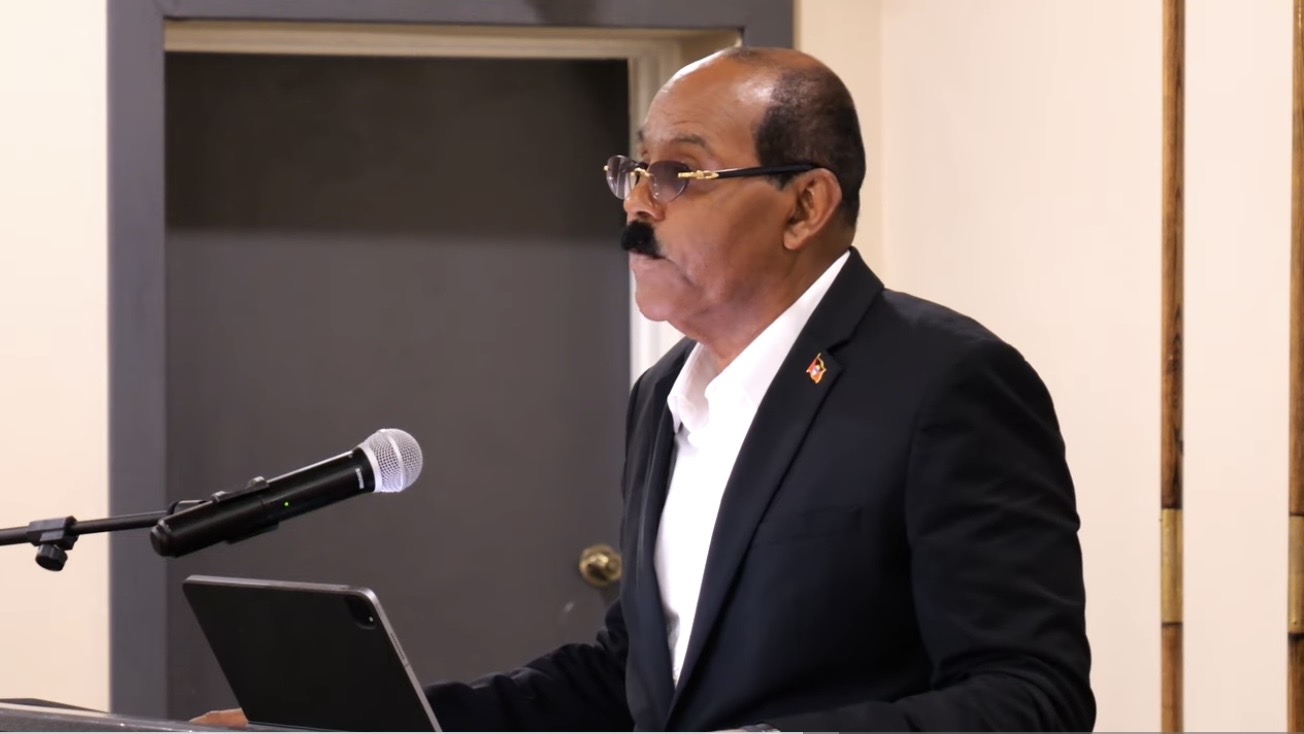
    As Antigua and Barbuda’s April 30 general election campaign enters its final, heated stretch, Prime Minister Gaston Browne has launched a sharp rebuttal of the opposition United Progressive Party (UPP)’s flagship four-day work week policy, pushing back on claims the idea originated with the challenger party and arguing the policy lacks rigorous planning for nationwide rollout.

    Speaking during his regular weekly radio address, Browne emphasized that the concept of a compressed work week has been under active review by his administration long before the UPP included it in their election platform. His government has already held extensive consultations with a wide range of stakeholders to map out how the policy could function across Antigua and Barbuda’s public and private sectors, he added, noting that one framework under discussion combines four days of in-office work with one remote working day per week.

    Browne drew a clear line between his administration’s methodical approach and what he characterized as the UPP’s unfocused, untested proposal. The prime minister warned that implementing a sweeping change to national work schedules cannot be carried out haphazardly, stressing that any rollout requires deep technical planning and cross-sector input before it can be put into practice. He questioned the feasibility of rolling out the policy across both public and private sectors without prior consultation with industry leaders, labor representatives and other key groups.

    The prime minister’s criticism of the four-day work week proposal was part of a broader takedown of the UPP’s campaign pledges during the radio program. Browne argued that many of the opposition’s policy ideas are designed solely to win voter support, rather than to deliver tangible, workable change once in office. “They don’t have a plan,” Browne said, accusing the opposition of attempting to win over voters by floating underdeveloped concepts that have not been vetted for practical implementation.

    The UPP has positioned the four-day work week as a core campaign promise, framing the policy as a pathway to improved work-life balance for workers across the country. But Browne countered that any major shift to the national work model requires rigorous analysis of its potential impacts on three critical areas: workforce productivity, the delivery of public services, and the performance of Antigua and Barbuda’s key economic sectors, which rely heavily on consistent, accessible operations particularly in tourism and trade.

    Browne confirmed that his administration will continue stakeholder consultations before moving forward with any decision, clarifying that the policy itself is not being rejected outright. While the concept of a compressed work week remains under active consideration, any eventual implementation will only move forward once sufficient structured planning is complete and the country is judged to be ready for the shift, he said.

    The public clash over the four-day work week highlights the widening policy divide between the ruling Antigua Labour Party and the opposition UPP as the April 30 election draws closer. Campaign debates are increasingly centered not just on which party puts forward more innovative policy ideas, but on which can demonstrate the capacity to turn those ideas into actionable, effective governance.

  • PM Browne Warns UPP Promises Will Lead to Higher Taxes

    PM Browne Warns UPP Promises Will Lead to Higher Taxes

    As Antigua and Barbuda enters the final stretch of campaigning ahead of the April 30 general election, sitting Prime Minister Gaston Browne has launched a pointed warning to voters, claiming that sweeping campaign promises from the opposition United Progressive Party (UPP) could ultimately trigger broad tax hikes for residents — including the possible return of the personal income tax abolished by his current administration.

    Speaking during an interview with local outlet Pointe FM, Browne drew attention to what he frames as a critical gap in the UPP’s policy platform: the opposition has failed to outline a clear, viable plan to fund its extensive electoral proposals, and has offered no definitive denial that taxes will rise if the party takes power. “I observe that they have not said that they will not increase taxes. Notice they have remained silent on that issue,” Browne told the station.

    While Browne acknowledged the UPP has issued a surface-level assurance it would not reintroduce personal income tax, he invoked a 20-year-old historical precedent to cast doubt on that promise. Ahead of the 2004 general election, Browne recalled, the UPP made identical commitments to avoid bringing back the tax — only to reverse course immediately after winning office. “We saw that movie before,” he said.

    Browne added that when the UPP reimposed the tax, it was billed as a temporary, one-year measure to shore up public finances. Instead, the levy remained in place for a full decade, until Browne’s current administration won power and repealed it entirely.

    Beyond the tax debate, the prime minister accused the UPP of running a misleading campaign built on uncoordinated, unplanned policy ploys rather than a cohesive governing agenda. He noted that he has yet to see the opposition release a full, comprehensive election manifesto, arguing that the party is only rolling out piecemeal promises to win over voters without any plan to deliver on them. “They’re just putting all these piecemeal promises out there,” Browne said.

    The prime minister also drew a line between his administration’s approach and the opposition’s electoral strategy, rejecting what he called a “giveaway war” of unsustainable spending pledges. Browne argued that opposition parties face no accountability for extravagant promises before an election, as they only face consequences if they win power. “When you’re in opposition… you can promise anything,” he said.

    In contrast, Browne highlighted his own government’s track record of fiscal discipline as a defining achievement, claiming that his administration has delivered a standard of national financial management never before achieved in Antigua and Barbuda. “We believe in fiscal responsibility,” he said.
    Browne’s comments come as all major political parties ramp up their campaigning, with economic policy and measures to address rising cost of living emerging as the central battleground issues for the upcoming vote.