分类: politics

  • Retired CARICOM Official Warns Dispute Could Weaken Regional Work

    Retired CARICOM Official Warns Dispute Could Weaken Regional Work

    A bitter public dispute over the reappointment of CARICOM Secretary General Dr. Carla Barnett has fractured the usually cohesive facade of the Caribbean regional bloc, with a retired top official warning that the open conflict could cause lasting damage to the organization’s core mission. The standoff erupted after Trinidad and Tobago issued a stark public ultimatum in late April 2026: it will withdraw critical financial contributions to the bloc unless member leaders revisit the approval of Barnett’s second term.

    Trinidad and Tobago’s leadership has put forward two core grievances to justify its hardline position. Officials claim the bloc’s progress has ground to a standstill during Barnett’s first term, and add that Trinidad was denied any meaningful input when the decision to reappoint her was originally made. The position has pitted the twin-island nation directly against Belize, whose prime minister and foreign minister have both issued public statements unreservedly backing Barnett’s continued leadership.

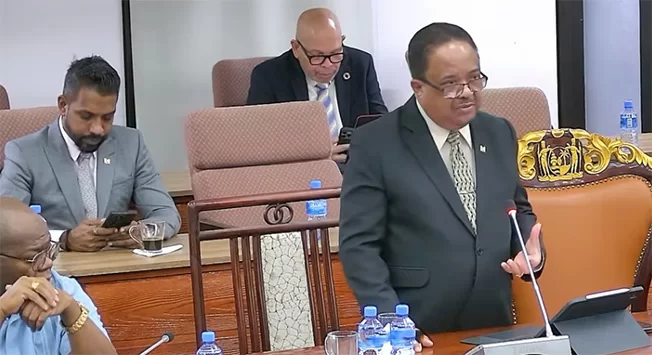
    The unprecedented public airing of internal tensions has drawn a sharp warning from Ambassador Byron Blake, a former Assistant Secretary General of CARICOM who retired from the bloc after decades of service. Blake argues that the public fight over the secretary general’s appointment is likely a distraction from deeper underlying rifts, framing the leadership dispute as little more than a “smoke screen” for broader disagreements within the bloc.

    Even so, Blake stressed that the very fact the conflict has spilled into public view poses a severe threat to CARICOM’s functionality. In comments originally made during a televised evening broadcast, he noted that the organization has always historically resolved internal differences through closed-door caucuses and quiet diplomacy, and this open public clash over a leadership appointment has no precedent in CARICOM’s history.

    “A public disagreement with the sitting secretary general is almost suicidal,” Blake explained. “It means that the secretary general, who has to move among countries and among heads of government, will not get cooperation in terms of the programs and the activities. And that then would really be very destructive for the movement.”

    Beyond the immediate damage to ongoing initiatives, Blake added that the public dispute erodes trust in how CARICOM operates, casting doubt on the bloc’s ability to navigate internal differences to deliver collective progress for member states. He urged leaders to come to a swift resolution to the standoff, warning that prolonged division will only deepen harm to the regional integration project that CARICOM was built to advance.

  • Smith Defends Party Switch as Necessary for ‘Delivery’ in All Saints West

    Smith Defends Party Switch as Necessary for ‘Delivery’ in All Saints West

    In a recent press briefing addressing growing public scrutiny over his sudden party affiliation change, representative candidate Smith for the All Saints West constituency has doubled down on his decision, framing the switch as an unavoidable step to better serve local residents.

    Smith explained that his previous party had failed to prioritize the key infrastructure, social service, and economic development projects that top the list of concerns for All Saints West voters. Deadlocked internal negotiations and misaligned policy priorities, he claimed, had left critical initiatives stuck in limbo for years, leaving constituents without the tangible progress they were promised.

    “I did not make this choice lightly,” Smith told reporters gathered at the constituency’s central community hall. “Switching parties was never about personal gain or political opportunism. It was about cutting through the gridlock to get things done for the people who put their trust in me. For too long, our community’s needs have been sidelined for party-centric interests, and that ends now. This move is purely about delivery—delivering better roads, improved healthcare access, and more job opportunities for every household across All Saints West.”

    Local political analysts note that the party switch has shifted the competitive landscape for the upcoming constituency election, with both the outgoing and new party of Smith adjusting their campaign strategies to account for the change. While opposition critics have blasted the move as a self-serving power grab that signals political instability, Smith’s supporters have argued that the decision reflects a rare commitment to putting constituents above party loyalty.

  • Private Bus Operators Get New Deal with GOB

    Private Bus Operators Get New Deal with GOB

    In a development that brings resolution to a longstanding dispute between the Government of Belize (GOB) and private bus operators, Cabinet has approved a new tiered mileage-based fare system to address industry calls for fairer operating conditions, following threats of a total service shutdown last month. The reform comes in direct response to a years-long advocacy campaign from the Belize Bus Association (BBA), which pushed for regulatory changes to correct what they have framed as an unequal playing field for private operators against state-owned services.\n\nTransport Minister Dr. Louis Zabaneh confirmed the three-tier structure to local outlet News 5, outlining clear fare levels and eligibility requirements for each service category. Under the approved framework, standard regular bus routes will be capped at $0.18 per mile, faster express services will carry a rate of $0.20 per mile, and a newly created premium service tier will be set at $0.22 per mile.\n\nUnlike the existing fare structure that offers little differentiation between service quality levels, the new premium tier comes with binding operational standards to justify the higher rate. To qualify for the premium classification, operators must run vehicles no older than seven years, install ergonomic bucket seating, and offer on-board Wi-Fi connectivity. These premium services will also be restricted to inter-municipal runs and high-traffic, high-demand routes, aligning with commuter needs for faster, more comfortable travel between population centers.\n\nDr. Zabaneh noted that government officials have already communicated the framework verbally to BBA leadership, with formal written negotiations set to wrap up within the coming week. Final adjustments will include rounding all final fare amounts to the nearest $0.25 for passenger convenience, and a full collaborative mapping of all route stops that will include input from both private operators and the state-run National Bus Company (NBC).\n\nThe policy breakthrough comes after a period of escalating tension: the BBA recently threatened to suspend all intercity service over skyrocketing fuel costs that have squeezed operator margins, alongside longstanding complaints that existing pay and fare structures are structurally unfair, leaving many private operators operating consistently at a loss. The new fare system applies exclusively to intercity highway routes, which make up the majority of cross-country commuter corridors in the country.\n\n“ we have agreed with the president of the BBA that we will make sure we work closely with them and with the NBC to ensure that all those stops are incorporated properly,” Dr. Zabaneh added, emphasizing the government’s commitment to a collaborative final rollout.\n\nFor BBA leadership, the announcement marks a milestone in a nearly 20-year fight for equitable regulation. BBA President Phillip Jones told News 5 that the association has been lobbying successive governments to level the playing field and establish equal operating conditions for all public bus operators across the country, dating back to the early 2000s.

  • Simons brengt begin juni officieel bezoek aan Dominicaanse Republiek

    Simons brengt begin juni officieel bezoek aan Dominicaanse Republiek

    Suriname and the Dominican Republic are moving forward with plans to deepen their bilateral ties, with a high-stakes presidential visit scheduled for early June to formalize new collaborative agreements. Suriname’s President Jennifer Simons will travel to the Dominican Republic on June 1 and 2 to hold official talks with her Dominican counterpart President Luis Abinader, marking a key milestone in the growing relationship between the two Caribbean nations.

    To lay the groundwork for the presidential summit, Suriname’s Minister of Foreign Affairs, International Trade and Cooperation Melvin Bouva already held a series of preparatory working meetings in the Dominican Republic. During these discussions, the two sides signed a joint declaration that outlines a shared commitment to expanded partnership, with core priorities centered on three key sectors: economic development, tourism expansion, and bilateral trade.

    In remarks following the signing, Minister Bouva emphasized that the Dominican Republic opens substantial new opportunities for Suriname’s economic growth, particularly in the tourism and export segments. Suriname has set a clear goal of boosting international visitor arrivals to the country, and closer collaboration with the Dominican Republic — a major regional tourism hub — is expected to help Suriname tap into larger tourist flows. Additionally, Suriname is positioning itself to expand access to the Dominican market for key domestic agricultural exports, including corn, soybeans and cacao.

    Beyond bilateral ties, the two countries are also prioritizing closer regional collaboration to address shared Caribbean challenges, especially around energy stability and food security. Dominican Republic has been identified as a critical strategic partner for Suriname as it works to advance these regional cooperation goals, creating a framework for mutual benefit that extends beyond traditional trade and economic links.

  • Transport minister: Free seniors rides permanent

    Transport minister: Free seniors rides permanent

    During a heated debate in Barbados’ House of Assembly on the transformative Older Persons (Care and Protection) Bill, Minister of Transport and Works Kirk Humphrey has issued an unwavering guarantee that the Mottley administration will permanently retain free bus fare for all senior citizens riding public Transport Board buses, even amid ongoing discussions of potential public-private partnerships for the island’s transport sector.

    Humphrey, who draws deep personal and academic expertise in elder rights issues, framed the new legislation not as an act of charitable goodwill from the government, but as a long-overdue fundamental gesture of gratitude to the generations of Barbadians who built the modern nation. The minister used the debate to push back against persistent public rumours that privatization of transport services would eliminate the popular free fare benefit for vulnerable groups, delivering a categorical public reassurance.

    “Let me make it clear. There will never be, under this administration, any time where older persons have to pay to use buses in this country. It is not the policy of the government. That free ride for older persons will continue regardless of whatever structure we settle on for delivering transport to Barbadians,” Humphrey stated emphatically. The minister extended this ironclad guarantee to all other groups that currently hold free public transport privileges, including active and serving police officers, emphasizing that government efforts to boost operational efficiency in the transport sector will never come at the expense of vulnerable and marginalized groups.

    Humphrey also used the occasion to call on Barbadian society to confront a growing worrying erosion of the island’s long-held traditional culture of intergenerational community care. Invoking the classic Socratic maxim that “the unexamined life is not worth living,” he urged the nation to engage in deep introspection about how it treats its aging population. He questioned how a country once famous for its tight-knit community care systems had reached a point where so many seniors report feeling invisible, socially excluded, and neglected.

    “Dignity does not expire at 65 or 67. In fact, we have a responsibility as people get to that age to put a little bit more effort in,” Humphrey argued.

    Drawing on his portfolio oversight, the transport minister detailed the often-overlooked deep connection between accessible public infrastructure and broader social well-being for older Barbadians. He explained that seemingly small oversights, such as cracked sidewalks or unbuilt bus shelters, do more than just hinder mobility – they actively push seniors into social isolation. If an older person cannot wait comfortably for a bus due to a lack of shelter, they will often choose to stay home entirely, skipping critical medical appointments and cutting off visits with family and friends, eroding their independence over time.

    “Getting older should not mean losing independence in these things that are so easy to be able to resolve,” he said. Humphrey challenged his own ministry to abandon outdated accessibility standards that are unfit for a 21st-century Barbados, mandating that all public walkways be fully accessible for people living with disabilities and seniors, who he noted experience mobility and safety risks such as uneven lighting very differently than younger people.

    Beyond the transport policy commitments, Humphrey outlined the core protections of the new Older Persons Bill, which establishes a comprehensive national framework to combat elder neglect, abuse and financial exploitation. He highlighted the landmark creation of a confidential national register of documented elder abusers, a provision he called a personal priority, which will bar anyone with a confirmed history of abusing seniors from working in licensed elder care facilities across the island.

    “This bill says that older persons are right holders and that they are not just passive recipients of government’s largesse. It recognizes physical abuse, emotional abuse, sexual abuse, neglect, abandonment, and financial abuse—including when people take your pensions or your savings. Silence can no longer be used to protect abusers in this country,” Humphrey said.

    The minister closed by issuing a direct challenge to the Social Empowerment Agency and all relevant government bodies responsible for elder welfare: passing groundbreaking legislation is only the first step, and the true impact of the bill will depend on consistent, aggressive enforcement. “Protection delayed is protection denied. We have to enforce what the bill allows us to enforce. We have to put in place the systems to benefit the persons that we’re meant to protect. Use the legislation. Enforce the legislation,” he urged. Echoing a long-held global standard of national accountability, Humphrey noted that “You judge a country not by the way it treats the people who are strong… but by the way it treats its vulnerable.”

  • Lucy Belle-Matthew, sworn-in as Roseau mayor, outlines Council priorities

    Lucy Belle-Matthew, sworn-in as Roseau mayor, outlines Council priorities

    On a formal Monday swearing-in ceremony, Lucy Belle-Matthew took office as the new mayor of Dominica’s capital city, Roseau, laying out a clear, action-focused policy agenda centered on three long-standing urban challenges: inadequate sanitation, unregulated private property management, and disorderly street vending.

    Belle-Matthew earned her mandate after a competitive March 2026 city council election, where she ran as the representative for Ward 4. She secured a solid victory, polling 408 votes to defeat her challenger Sherman Boston, who garnered 267 votes.

    In her first official inaugural address to the city and its residents, the new mayor opened with pressing property regulation issues, emphasizing that owners of vacant lots and crumbling, dilapidated buildings must bring their holdings into compliance with existing city council rules. “We are appealing to the owners of such properties to take immediate action to comply with Council’s regulation,” Belle-Matthew stated. To strengthen the city’s ability to enforce these rules, she revealed the council plans to propose revisions to local property tax legislation, adding that the council’s regulatory authority must be acknowledged and upheld across the municipality. “There cannot be full and effective representation without your commitment to pay your taxes and fulfilling your obligation to Council,” she added.

    Belle-Matthew also took a moment to praise the national Government of Dominica for its ongoing investments in upgrading municipal housing stock, noting that the national initiative has already delivered tangible improvements to living standards for hundreds of local families. She called on private property owners and all community members to partner with the city council to advance local sanitation improvement projects, framing public cleanliness as a shared responsibility rather than solely a government task.

    Shifting focus to urban public space management, the mayor called out unregulated street vending as a growing public safety concern, particularly in Roseau’s densely populated city center, where vendors have occupied sidewalks and public roadways. “Vending in some areas of the city has become a major hazard due to the congestion and disorderly vending practices,” she explained. Rejecting heavy-handed crackdowns that would threaten vendors’ livelihoods, Belle-Matthew outlined a balanced approach: the city will restructure vending locations to restore public access to sidewalks and streets, but will offer existing vendors the option to relocate to available, properly zoned space at the Roseau Market, where they can continue operating their businesses without disruption. “This situation cannot be allowed to continue. We will seek to address this issue in an orderly manner,” she said. “If you are relocated to the Roseau market, we want you to make a good living by applying your trade. But we have a statutory duty which we must execute.”

  • PM Browne Says He Has Never Refused Duty-Free Vehicle Waivers, Signals Willingness to Codify Policy

    PM Browne Says He Has Never Refused Duty-Free Vehicle Waivers, Signals Willingness to Codify Policy

    The top leader of Antigua and Barbuda has pushed back against criticism of the nation’s duty-free vehicle concession program, confirming that no eligible applicant has been locked out of the benefit during his nearly 12 years in office, and confirming the government is ready to turn the longstanding administrative policy into formal law.

    Speaking during his regular segment on the popular local radio program *Browne and Browne Show* broadcast on Pointe FM, Prime Minister Gaston Browne, who also leads the Antigua and Barbuda Labour Party, mounted a robust defense of the existing concession approval process, emphasizing that it has remained open to all qualifying people from its inception.

    “In the almost 12 years I’ve served as prime minister, I have never ever refused anybody who qualified the opportunity to access a duty-free concession,” Browne stated during the interview.

    The prime minister’s public remarks come as local political circles have engaged in sustained debate over how the program is run. Currently, duty-free vehicle waivers are awarded on a discretionary, case-by-case basis, leading to opposition criticism over perceived gaps in transparency and inconsistent application of eligibility rules.

    Browne acknowledged the concerns raised by opponents, signaling that while the program has functioned as an administrative policy up to this point, his administration has no objection to enshrining its rules in national legislation to codify the process. “We have no difficulty codifying our duty-free regime in law,” he said.

    He added that formalizing the system through legislation would bring much-needed additional clarity to the criteria and process for granting concessions, but stood by the current framework, noting it already delivers broad access to eligible applicants across the country. The duty-free vehicle concession program has been a core plank of government policy in Antigua and Barbuda for decades, with waivers reserved for specific groups including public servants and other pre-qualified individuals, all of which require final government approval.

    Browne’s latest comments mark a clear shift in the government’s position, indicating a willingness to revise the program’s structure to address longstanding transparency concerns while doubling down on the assertion that the current system operates fairly and includes all qualified applicants. The national opposition has repeatedly questioned the governance of the concession program in recent months, but as of press time, no official response to Browne’s latest announcement has been released.

  • Public Service Transfers Suspended for 2026; PSU Backs Government Decision

    Public Service Transfers Suspended for 2026; PSU Backs Government Decision

    In a policy shift announced in late April 2026, the Government of Belize has enacted a full suspension of all public service transfers that involve a change of jurisdiction for the entire calendar year, extending the current postings of all affected public officers by 12 months.

    The official order is formalized in Circular Memorandum No. 26 of 2026, dated April 20 and issued by Rolando Zetina, Chief Executive Officer of the Ministry of the Public Service and Disaster Risk Management. Per the document, while Regulation 101(1) of the 2014 Belize Constitution (Public Service) Regulations requires standard tours of duty to run between two and three years, the ministry has determined that the 2026 cycle of postings requires an extra year at current duty stations, citing the “exigencies of the service” as the core justification for the change. Under the new policy, no applications for cross-jurisdiction transfers will be reviewed or approved this year, and department chief executives have been instructed to submit formal requests for the one-year extensions where operationally required.

    In an official statement responding to the announcement, the Public Service Union (PSU), the country’s leading body representing public sector employees, confirmed it fully endorses the government’s decision, framing the suspension as both “timely and necessary”.

    The union outlined longstanding concerns that have driven its support for the policy: in recent years, many transfers have been carried out as punitive measures rather than for operational efficiency, placing unnecessary financial strain on national public finances. According to PSU estimates, annual costs associated with public service transfers—including transfer grants, rental subsidies, commuting allowances, and hardship stipends—add up to millions of Belize dollars each year, draining resources that could be allocated to core public services.

    Beyond budget concerns, the union also referenced Regulation 96 of the Public Service Regulations, which mandates that all transfers must be conducted strictly to advance public service interests, and cannot be used as a replacement for formal disciplinary procedures. The PSU stated that it has documented multiple cases in which transfers were allegedly deployed to victimize, intimidate, or marginalize public officers who have fallen out of favor with administrative leadership.

    As the policy moves forward, the PSU has laid out two key demands to ensure equitable implementation. First, the organization stressed that all eligible public officers must continue to receive all applicable allowances without interruption during their extended tours of duty, and has called on finance officials across all government ministries to put in place the necessary administrative and budgetary provisions to avoid any stoppages in pay and benefits. Second, the union is calling on the Ministry of the Public Service and Disaster Risk Management to maintain close oversight of how the suspension is implemented across departments, and to proactively put safeguards in place to prevent the continued misuse of transfers as a tool for retaliation against public servants once the moratorium is lifted.

  • CCJ questions AG Nandlall about whether making commentary on Mohameds was “proper”

    CCJ questions AG Nandlall about whether making commentary on Mohameds was “proper”

    On Tuesday, April 21, 2026, the Caribbean Court of Justice (CCJ) opened a tense session focused on more than just the legal merits of an extradition appeal: judges zeroed in on controversial public statements made by Guyana’s top legal official, Attorney General Anil Nandlall, regarding two US-sanctioned and wanted Guyanese businessmen, Nazar Mohamed and Azruddin Mohamed.

    The case currently before the regional court stems from the Mohameds’ appeal of an Arrest Warrant Authorization (ATP) issued last October by Guyana’s Home Affairs Minister Oneidge Walrond. The ATP authorized a local magistrate to move forward with an arrest warrant to open extradition committal proceedings for the pair, who have been sanctioned by the US Treasury Department’s Office of Foreign Assets Control over allegations of financial misconduct. All lower court proceedings have been put on hold pending the CCJ’s final ruling, which has not yet been scheduled.

    During Tuesday’s hearing, the issue of Nandlall’s public commentary took center stage after the Mohameds’ legal team argued that the attorney general’s repeated public statements created a taint of bias that undermines the fairness of the entire extradition process.

    CCJ President Winston Anderson acknowledged that all legal professionals, including government lawyers, hold a protected right to free speech. Still, he emphasized that out-of-court statements that risk eroding public trust in judicial processes or compromising the fairness of ongoing proceedings have no place in a functional democracy. “Statements which are made outside of these proceedings and which could have the effect of undermining the fairness of the proceedings, or which could undermine public confidence in the administration of justice, should be avoided,” Anderson stated, adding that he expected legal representatives to adhere to professional guidelines and that the court would prefer not to address the issue again.

    Anderson went on to press Nandlall, noting that while serious allegations against the Mohameds are already on the public record, there was no clear reason for the government’s chief legal advisor to issue public pronouncements on the ongoing case. The court highlighted that the “elephant in the room” is the Mohameds’ core claim: that Nandlall’s public comments revealed a predetermined bias against them in any extradition request, a claim that Minister Walrond – who received legal advice from Nandlall before issuing the ATP – did not refute from her position in the courtroom.

    Justice Chile Eboe-Osuji expanded on the court’s concerns, clarifying that the issue is not whether the Attorney General has the authority to make formal decisions in the case, but whether his public comments – which included criminal accusations against the applicants, ongoing public commentary on the extradition process, and implied criticism of Principal Magistrate Judy Latchman who is assigned to the committal proceedings – have irreparably biased the process. Eboe-Osuji posed a sharp question to Nandlall: “Is there something to be said that it is part of the job of the AG to bring the population back to say, look, respect the process, let the process take its course rather than making comments that might add to that negative public view on the matter?”

    Judge Arif Bulkan also pushed back on Nandlall’s attempts to frame the controversy as a product of political rivalry, pointing out that the attorney general had failed to directly address the court’s core question about his comments on the extradition case and its expected outcome. Nandlall pushed back against the judges’ questioning, denying he had ever commented on the projected outcome of the proceedings. He argued his public remarks focused instead on public concerns over the length of the ongoing committal process and referenced already public information: the US sanctions against the Mohameds that had been widely reported by international outlets including Reuters.

    Nandlall further defended his comments by noting many of the remarks were made during the 2025 Guyanese general and regional election campaign, a period when public debate over political and policy issues is heightened. “This is his rap sheet; this is what we have to speak about,” he told the court, adding that he had not made any improper statements. He argued that any perceived missteps stem from incorrect quotation, and that his comments were framed appropriately with respect for the judicial system, and any use of his remarks against him is politically motivated. “The comments that were made were in their proper context. They may have been disputed and used for political purposes, but they were not improper statements,” he said.

    The Mohameds’ legal team has argued that Minister Walrond’s decision to authorize the arrest warrant is fatally biased because she acted on advice from Nandlall, who has repeatedly publicly condemned the pair and commented on their multiple ongoing court cases at every level of the Guyanese judicial system, from the magistrates’ court to the Court of Appeal. They also point out that Walrond herself publicly spoke out against the Mohameds during the 2025 election campaign.

    In closing the court’s questioning on the issue, President Anderson noted that the panel of judges was actively questioning whether Nandlall’s comments aligned with the standards of best practice needed to strengthen democratic governance and the rule of law in Guyana. Nandlall reiterated that his role was limited to providing legal advice to the Home Affairs Minister, who retained full authority to make the final decision on the ATP.

  • President eind mei naar Brazilië; samenwerking wordt verdiept

    President eind mei naar Brazilië; samenwerking wordt verdiept

    Suriname is set to take a major step forward in its bilateral relationship with Brazil, with President Jennifer Simons scheduled to pay an official working visit to the South American nation at the end of May. During the trip, Simons will hold high-level talks with her Brazilian counterpart, Luiz Inácio Lula da Silva, with the core goal of strengthening collaborative ties between the two neighboring countries.

    According to Melvin Bouva, Suriname’s Minister of Foreign Affairs, International Trade and Cooperation (BIS), preparations for the high-profile visit are currently progressing smoothly. Multiple key priority topics will top the agenda for the presidential discussions, including cross-border management, coordinated responses to transnational criminal activity, and most prominently, expanded economic cooperation and bilateral trade.

    Bouva confirmed through Suriname’s official Communication Service that the groundwork for deeper collaboration has already been laid in prior diplomatic engagements. Past face-to-face meetings between the two sides in 2025, plus a recent telephone consultation between the two heads of state, have set a clear foundation for the upcoming talks. The visit is expected to produce concrete, actionable agreements that will deepen the overall bilateral partnership.

    For Suriname, food security is one of the most critical policy priorities on the discussion agenda. Brazil is widely viewed as a key strategic partner for Suriname in this area, thanks to Brazil’s world-leading agricultural sector and its established capacity for regional collaborative development.

    Improving cross-border connectivity between the two countries also ranks as a high priority for Suriname’s administration. The Surinamese government emphasizes that enhanced connectivity is a foundational requirement for unlocking shared economic growth, expanding trade volumes, growing the tourism sector, and upholding regional security for both nations.

    Beyond one-on-one bilateral cooperation, Suriname and Brazil already maintain aligned cooperation within multilateral international organizations, where the two countries frequently coordinate and adopt shared policy positions on regional and global issues.