分类: politics

  • The Prime Minister of Haiti is holding numerous political meetings in the United States.

    The Prime Minister of Haiti is holding numerous political meetings in the United States.

    In a packed week of diplomatic engagement aimed at advancing Haiti’s stability and democratic transition, Haitian Prime Minister Alix Didier Fils-Aimé has held a series of back-to-back high-level meetings with top U.S. political leaders across the executive and legislative branches since launching his official U.S. visit on April 20, 2026.

    The first and most critical of these talks was a strategic meeting with U.S. Secretary of State Marco Rubio, centered on deepening bilateral cooperation across three core pillars: Haitian national security, domestic political stabilization, and the upcoming electoral process. The two leaders aligned on shared priorities that included expanding capabilities for the newly formed Gang Repression Force (FRG), rebuilding core state institutions, laying the groundwork for free, inclusive and internationally credible general elections, and moving forward with the renewal of the long-standing HOPE/HELP trade agreements. Both parties confirmed that tangible progress has already been made in standing up the FRG, and jointly called for the full, rapid deployment of the force to execute its security mandate across Haiti.

    Following the meeting with Secretary Rubio, Fils-Aimé sat down with Republican Congressman Mario Díaz-Balart, Vice Chairman of the U.S. House Appropriations Committee. Their discussion centered on Haiti’s ongoing security crisis, national efforts to reassert state authority across gang-controlled territories, and the preconditions required to hold a legitimate democratic election. The Haitian Prime Minister underscored that lasting security is an non-negotiable foundation for any successful democratic transition and the holding of peaceful general elections. In response, Díaz-Balart reaffirmed that the U.S. Congress remains deeply invested in long-term Haitian stability, and encouraged continued progress on restoring public safety and strengthening democratic governing institutions.

    The Prime Minister’s tour also included a meeting with Senate Majority Leader Chuck Schumer, a long-standing congressional supporter of Temporary Protected Status (TPS) for Haitian migrants living in the U.S. Fils-Aimé used the meeting to stress that TPS protections remain a lifeline for thousands of Haitian nationals residing in the United States, amid Haiti’s ongoing humanitarian and security collapse. He called on U.S. authorities to maintain their focus on the ongoing crisis in Haiti, framing the meeting as part of a broader diplomatic push to extend and preserve protections for the Haitian diaspora at a time when the country’s domestic situation remains extremely fragile.

    Fils-Aimé also held bilateral talks with Democratic Senator Raphael Warnock, who serves as senior pastor of Atlanta’s Ebenezer Baptist Church. The pair covered a wide range of bilateral priorities, from Haiti’s ongoing security challenges to the country’s long-term economic and institutional development. Discussion also turned to inclusive economic growth, specifically targeted policies to create new job opportunities for Haitian youth and expand social programs that underpin domestic stability.

    A working session with Republican Congressman Gregory Murphy expanded on these core themes, with talks covering security, the ongoing humanitarian crisis, and economic priorities. The two leaders agreed that closer international cooperation is critical to expanding security gains and creating the stable conditions needed for a credible electoral process. On economic policy, they highlighted the importance of maintaining consistent, predictable terms for trade programs like HOPE/HELP, which support existing Haitian jobs and sustain the country’s struggling productive sector. The discussion also addressed the urgent humanitarian situation, with both sides agreeing that emergency response efforts must be paired with long-term sustainable solutions rooted in economic recovery and job creation.

    The final key meeting on Fils-Aimé’s schedule was with Kristi Noem, the U.S. Special Envoy for the Shield of the Americas initiative and former U.S. Secretary of Homeland Security, who left that post on March 31, 2026. The pair aligned on core priorities for Haiti: strengthening national security, consolidating institutional stability, and delivering a transparent, inclusive and credible electoral process. They also emphasized the need for closer cooperation with regional partners to counter drug trafficking, disrupt transnational criminal networks operating in and through Haiti, and address the growing challenges of irregular migration across the Americas.

  • PM lays out education reform plan

    PM lays out education reform plan

    The Caribbean island nation of Saint Lucia has launched an ambitious, multi-faceted strategic plan to modernize and revitalize its national education system, with Prime Minister Philip J. Pierre detailing wide-ranging reforms designed to expand equitable access to learning, embed a culture of lifelong education, and align academic offerings with the shifting demands of the 21st-century workforce.

    Pierre laid out the full details of the reform agenda as he presented the government’s 2026/2027 budget to the House of Assembly on Tuesday evening, anchoring the plan in his administration’s core policy perspective. “A fundamental belief of my administration is that learning is a lifelong endeavour, and our policies are designed to achieve this national goal,” the prime minister told legislators.

    This overarching vision will guide investment and policy changes across three priority areas from the start: early childhood education, specialized support for learners with disabilities, and technical and vocational skills training. Building on two existing flagship access programs—the First Generation Scholarship Programme and the one university graduate per household initiative—Pierre confirmed both initiatives will not only be preserved but scaled up to reach more eligible learners across the island.

    This year alone, 25 new fully partnered scholarships will be made available through a collaboration with New York-based Monroe College, and senior government leaders will soon hold formal talks with the University of the West Indies (UWI) to open up additional spots for Saint Lucian students at the regional institution.

    A core infrastructure priority of the reform plan is the full upgrade of traditional learning spaces into technology-integrated smart classrooms. “We must upgrade our classrooms into smart classrooms,” Pierre said, noting the renovated spaces will foster more dynamic, interactive learning experiences while helping curricula evolve to match workplace needs.

    The prime minister also addressed a long-standing challenge facing the island’s education sector: a persistent shortage of qualified instructors in high-priority STEM fields, specifically science and mathematics. To close this gap, the government will increase recruitment for these roles and introduce a new “master teacher” model, where experienced, expert educators will lead instruction and mentor less experienced staff in these critical subject areas.

    Beyond curriculum and infrastructure changes, the reform plan recognizes the foundational role of family engagement in student success. Pierre warned that without intentional, supportive parenting, many children will struggle to reach their full academic and personal potential. In response, a cross-government joint initiative bringing together the Ministry of Education, the Ministry of Youth Development, and the Saint Lucia Social Development Fund will provide targeted resources to parents, while also working to improve overall student retention across all school levels.

    This program will include early screening to identify students at risk of dropping out, and expanded technical and vocational pathways for learners whose strengths and interests fall outside the traditional academic track.

    Vulnerable student groups, particularly boys, who make up a disproportionate majority of the island’s high school dropouts, will receive targeted, tailored support under the new plan. Males currently account for most school departures before graduation, so the reforms will add targeted counselling, peer mentorship, and behavioural support, alongside a dedicated student support program for students in Forms Four and Five.

    Early childhood education remains a central pillar of the entire transformation agenda, with Pierre emphasizing that these early developmental years are “the most critical and receptive for learning.” To raise quality and consistency across the sector, the government will standardize early childhood education through a new national play-based curriculum, and a comprehensive quality assessment will be conducted for all public and private early childhood centres across the island. More than $1 million has been allocated in this year’s budget to launch the first phase of this work.

    Technical and vocational education and training (TVET), a key lever for aligning education with labour market demands, will see dramatic expansion under the plan. Four existing secondary schools are already in the process of being converted into dedicated technical and vocational institutes. The government will also deepen its collaboration with the Centre for Adolescent Renewal and Education (CARE) to support positive behavioural development, cut national dropout rates, and boost graduate employability through structured, work-focused training.

    Additional support through the regional OECS Skills and Innovation Project will help Saint Lucia develop national TVET standards and curricula that are directly mapped to current and projected labour market needs. The government will also introduce targeted training subsidies for vulnerable learners, alongside a new Grants Management Facility to support education-focused innovation and youth entrepreneurship.

    To deliver on these TVET expansion goals, the national Programme for Education Realignment and Transformation will fund the construction of new TVET laboratories and hands-on training workshops in selected secondary schools, all outfitted with modern, industry-standard tools and digital technology to give learners practical, job-ready experience before they enter the workforce.

  • Abusing elderly could bring $100K fine, jail under new bill

    Abusing elderly could bring $100K fine, jail under new bill

    A sweeping new bill aimed at strengthening protection for Barbados’ senior population was introduced to Parliament on Tuesday, bringing with it unprecedented harsh penalties for elder abuse and mandatory reporting requirements for professionals who encounter suspected mistreatment in their line of work. The Older Persons (Care and Protection) Bill, sponsored by Minister of People Empowerment and Elder Affairs Adrian Forde, establishes comprehensive new frameworks to safeguard the health, safety and dignity of all people aged 65 and older, covering everything from residential care facility standards to rules governing how family members must treat elderly relatives under their care.

    Under the bill’s core protection provisions, anyone found guilty of abusing or neglecting an older person faces steep consequences. Perpetrators can receive summary convictions carrying fines as high as $100,000, a prison sentence of up to five years, or both penalties combined. This accountability extends across all groups responsible for elder care, including family members, professional caregivers, institutional facilities, and even government entities that provide care services. Minister Forde emphasized that the severe penalties send an unambiguous warning to potential abusers, covering all forms of harm: physical, psychological, emotional abuse, neglect, abandonment, and financial exploitation of older adults.

    A centerpiece of the new legislation is its mandatory reporting requirement, which imposes a legal duty on a wide range of professionals to flag suspected abuse to law enforcement or relevant authorities. The mandated group includes all healthcare workers, from doctors and nurses to pharmacists, who are required to report suspected abuse if they observe signs of mistreatment during examinations or identify patterns of potential pharmacological abuse through medication dispensing records. The requirement also applies to hospital administrators, social workers, law enforcement officers, telecommunications technicians, and any other worker who may encounter evidence of elder abuse in the course of their job. For example, a technician repairing an older person’s phone or computer who discovers evidence of abuse will now be legally required to report their findings.

    Failing to fulfill this mandatory reporting obligation carries a fixed fine of $10,000. To address common barriers to reporting, such as fear of retaliation or victimization, the legislation includes robust protections for individuals who come forward. Reports can be submitted anonymously, and anonymous submissions receive the same level of review and investigation as named reports. Additionally, anyone who submits a report in good faith is protected from legal repercussions, even if an investigation ultimately finds the report was not fully accurate based on the information the reporter had at the time.

    To enable rapid intervention in life-threatening situations, the bill grants authorized officers new powers to act quickly without first obtaining a court order. If inspectors find an older person living in an immediately unsafe environment – such as a facility with a collapsing roof, severe vermin infestation, or exposure to life-threatening diseases like leptospirosis – officers can move the older person to a safe location immediately to protect their health. For non-emergency cases, any concerned individual with reasonable grounds to believe an older person is at risk can apply to the court for a relocation order, placing the senior in a safe, supervised care setting for up to six months, with ongoing court oversight and regular reviews to arrange permanent alternative care if needed.

    Authorized officers assigned to implement the legislation also gain explicit new powers to conduct investigations, enter residential or care premises, interview relevant parties, and conduct on-site assessments of living and care conditions for older adults.

    Finally, the bill establishes a formal national register of elder abuse cases, to be administered by the Social Empowerment Agency (SEA). The register will collect key details for each case, including the personal contact information of the vulnerable older person, the nature, timing and location of the reported abuse, contact details for the alleged perpetrator, contact information for the older person’s caregiver, family or friends, and any additional information the SEA deems relevant. All information held in the register is strictly confidential, with access limited only to authorized personnel, the SEA executive director, and individuals granted access via court order or legal provision. Unauthorized disclosure of information from the register carries a penalty of up to $10,000.

  • 36 Hours Missing, Many Questions Remain in Indian Creek Case

    36 Hours Missing, Many Questions Remain in Indian Creek Case

    It has been seven days since the normally quiet community of Indian Creek Village in Toledo unexpectedly captured national public attention, and the cloud of uncertainty hanging over the disappearance of First Alcalde Marcus Canti has yet to lift. Though Canti returned to his home just 36 hours after he suddenly vanished from his rural property, public demand for answers has only grown in the days since his reappearance. The local leader claims he was abducted by two unknown assailants, but law enforcement has released no official updates on the case, leaving residents and observers demanding full transparency and accountability from authorities.

    On April 13, Canti disappeared without warning from his family farm. He resurfaced before dawn on April 15 on the outer edges of the village, unharmed beyond minor injuries but offering little detail about what transpired during his absence. According to initial police accounts, Canti told investigators he was taken against his will from his property by two men, held captive, and later released. Beyond that basic statement, no further information has been made public, leaving the unusual incident shrouded in ambiguity.

    When pressed by reporters last week about whether investigators had confirmed Canti’s account of a forced abduction, ACP Hilberto Romero, head of the National Crime Investigation Branch, confirmed that the probe was still active. “We are carrying out a thorough investigation and so we’ll have all the facts when his statement is concluded today. So that is all I know at this time,” Romero stated on April 16.

    To date, law enforcement has not issued any formal update on the reported abduction, beyond confirming that Canti presented with minor bruises and soreness when he returned home. While Canti was still missing, two leading local groups—the Toledo Alcalde Association and Maya Leaders Alliance—launched a community search and called on authorities to release all available information. But after Canti’s return, efforts to secure public clarity have hit a wall. Multiple attempts by News Five to contact Canti directly for comment have received no response, and a joint public statement released by the two organizations on Friday offered no new details, only noting that the incident is a serious matter and that a full official investigation had been requested.

    Police have confirmed that five local residents were taken into custody for questioning in the early days of the probe, all of whom have since been released. Among those detained are three prominent local leaders: Indian Creek Village Chairman Domingo Choc, Second Alcalde Manuel Ack, and former Village Councilor Santiago Pop. All three have publicly denied any involvement in Canti’s disappearance.

    “Each one of us was questioned and then we had proof. We showed them proof that all of us are innocent. So that is why we were released,” Choc explained in an interview on April 15.

    Ack echoed that claim of innocence, saying: “The officer ask me, you know why you are here. I told him no sir. Then the man take a little minute and asked me again, sir do you know the Alcalde is missing? Sir, I don’t have no idea about that.”

    Pop echoed the calls for full transparency to clear his name and the names of other detainees, saying: “I need to clear myself that I have not done anything as a criminal. So, I want to clear my name and the others’ name as well.”

    Shortly after returning to the village, Canti traveled out of the Toledo District to receive outpatient care at a private medical clinic in Belmopan. News Five’s attempts to reach Canti at the clinic for comment were also unsuccessful. Adding another layer of uncertainty to the case is an unconfirmed audio recording that purports to capture Canti pleading for help during his captivity. Pressure continues to build on authorities to verify the authenticity of the recording, a step that has not yet been taken.

    With the official investigation still ongoing and no new information forthcoming from Canti himself, the unresolved mystery of his 36-hour disappearance continues to hang over Indian Creek Village. This report was compiled by Paul Lopez for News Five, out of Belize.

  • FAd’H, recruitment of 1,200 new soldiers in Haiti in the coming days

    FAd’H, recruitment of 1,200 new soldiers in Haiti in the coming days

    Against a backdrop of escalating security instability across Haiti, the Caribbean nation’s Armed Forces (FAd’H) have taken a major step toward expanding their operational capacity, with a new cohort of graduates entering service and plans for mass recruitment in the coming weeks. On April 21, 2026, a solemn patriotic ceremony was held at Vertières Military Base to mark the graduation of 339 new soldiers from the 36th intake, a class that honors legendary Haitian figure François Capois.

    In a charged atmosphere brimming with national pride, the newly minted service members took a formal oath of allegiance to Haiti. The new recruits pledged to uphold the country’s constitution and committed their service to protecting and defending the Haitian nation. Over four months of rigorous foundational training led by seasoned military instructors and mentors, the cohort not only mastered core combat and operational skills but also completed specialized coursework focused on human rights standards, gender equality, and civilian protection protocols. Of the 339 graduates, 200 will progress to advanced specialized training to reinforce the military’s existing operational task forces.

    Addressing attendees and graduates at the ceremony, Colonel Neoxles P. Arné, the FAd’H’s head of training, extended a formal welcome to the new soldiers. He urged the cohort to uphold strict discipline, demonstrate mature judgment, and cultivate a relentless sense of duty as they step into their new roles defending the country. Colonel Arné also expressed gratitude to all stakeholders who contributed to the successful training of the 36th class, and highlighted a growing trend of strong interest in military careers among Haiti’s youth, a development he called encouraging for the future of the armed forces.

    The graduation and upcoming recruitment push form part of a broader strategy by Haiti’s Ministry of Defense to shore up the military’s operational capabilities amid a rapidly deteriorating domestic security landscape. The ministry’s end-of-year target is to bring roughly 3,000 new trained soldiers into the FAd’H ranks. Already, 570 qualified applicants are scheduled to begin their four-month basic training at Vertières Base in the third week of May. Looking ahead, the ministry will launch a recruitment drive for an additional 1,200 new soldiers in the immediate coming days. To facilitate this effort, three new recruitment offices will open shortly at the Anacaona Military Base, Petit-Goâve, and Les Cayes.

    Infrastructure upgrades are also underway to support the expanded training pipeline. Once planned renovations to FAd’H training facilities are complete, the military will be able to train up to 900 new soldiers every four months: 500 candidates at the Vertières site and a further 400 at the Anacaona base, putting the force on track to meet its year-end expansion goals.

  • Public Service Union: Transfer Freeze Welcome, But Not Enough

    Public Service Union: Transfer Freeze Welcome, But Not Enough

    In a newly announced government policy change for Belize’s public sector, the Public Service Union (PSU) has offered conditional support for a directive that freezes public officer transfers and extends current tour of duty terms. While the union frames the move as a welcome first step to address long-standing systemic flaws, it warns the order only delivers short-term relief and leaves deeper, costly problems unaddressed.

    Dean Flowers, president of the PSU, laid out the union’s position in a recent interview, confirming full backing for the 2026 transfer freeze while calling for urgent additional reform. Flowers noted that while narrow exceptions for emergency transfers may be necessary, all such exceptions must require formal public justification to prevent abuse.

    Flowers explained that the union has been advocating for an overhaul of the transfer system since 2021, in the aftermath of the global COVID-19 pandemic. He told reporters that in recent years, particularly following national election cycles, transfers have repeatedly been weaponized as a punitive tool rather than allocated based on operational efficiency or the well-being of public workers. Many transfers have forcibly separated public officers from their families, causing widespread unnecessary disruption to workers’ personal lives, according to Flowers.

    The union documented widespread claims of vindictive misuse of transfer policies as early as 2022, when it collected hundreds of worker complaints that demonstrated consistent abuse of the system. Beyond the human cost, Flowers also highlighted the massive financial burden that unregulated transfers place on Belize’s public coffers.

    According to the PSU’s analysis, the government of Belize spends more than $10 million annually on housing allowances alone for transferred public officers. That figure does not include the one-time transfer grants of $1,200 per officer, which add an estimated $200,000 in additional annual public spending. When extra hardship allowances for postings to high-cost, remote locations such as San Pedro, Caye Caulker, Placencia and Punta Gorda – which amount to $350 per officer – are factored in, total annual transfer-related spending reaches between $15 million and $20 million, a sum Flowers calls an unnecessary drain on public resources.

    The union has laid out two key additional demands alongside its support for the freeze. First, it requires that all eligible public officers retain full access to their applicable allowances without interruption during the extended tour of duty period. Second, it is calling on Belize’s Ministry of Public Service to implement strict, ongoing monitoring of the directive’s implementation to ensure compliance and prevent loopholes that would allow misuse of the transfer system to continue.

    This report is a transcript of an evening television broadcast, with all Kriol language speech transcribed using a standardized spelling system for publication.

  • “Hogwash”: PSU President Rejects Claims of Habitual Opposition

    “Hogwash”: PSU President Rejects Claims of Habitual Opposition

    For Belize’s Public Service Union (PSU), aligning with the sitting Briceño administration is a rare occurrence — so rare that when PSU leader Dean Flowers recently backed the government’s latest personnel transfer decision, critics quickly raised eyebrows. The core accusation leveled against Flowers and his union: that their long history of opposing government policy changes stems not from deeply held principle, but from a reflexive, habitual opposition to the status quo for its own sake. On April 21, 2026, Flowers pushed back hard against the claim, dismissing the criticism outright as baseless “hogwash” and laying out the intentional, principle-driven framework that guides the union’s positions.

    In a response shared during a televised broadcast, Flowers emphasized that every public stance the PSU has taken is rooted in specific concerns, not blind opposition. He pointed to the union’s long-running criticism of the government’s Suspicious Activity Reporting Act (SARA) as a clear example: from the start, the union’s objections have centered on demands for transparency and policy justification, rather than a blanket rejection of change.

    Flowers explained that the PSU has consistently asked Prime Minister Briceño, along with the country’s Director General and Financial Secretary, to provide concrete evidence and analysis to back the SARA policy. Specifically, the union wants the government to explain why the existing Tax Department cannot carry out the functions the government argues SARA is needed to deliver. He reaffirmed that the union only pushes back when policy lacks clear, justifiable reasoning, not for the sake of opposing.

    Flowers also addressed the case of the NeoPeople initiative and the government’s plan to outsource public sector data management, including human resource records, to the third-party organization. He noted that experienced professionals who helped launch the Center for Information Technology and Organization (CITO) — using a grant from Taiwan to build the institution and earn it ISO certification — already have the in-house infrastructure, skills and capacity to manage all government data. From the PSU’s perspective, there is no justification for spending $3 million of taxpayer money annually to outsource a service the public sector can already provide effectively.

    This report is a full transcript of an evening television news broadcast, edited for clarity and context.

  • Raúl congratulates the Eastern Army on its 65th Anniversary

    Raúl congratulates the Eastern Army on its 65th Anniversary

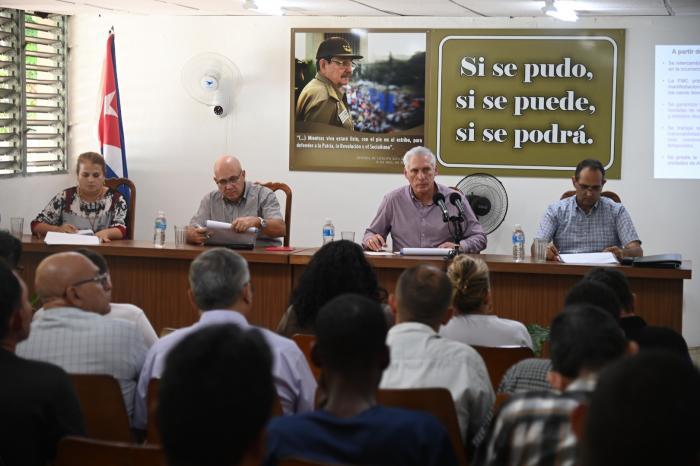
    On the 65th anniversary of the founding of Cuba’s iconic Eastern Army, Army General Raúl Castro Ruz, leader of the Cuban Revolution, has issued a heartfelt commemorative message celebrating the armed corps’ decades of service, revolutionary legacy, and ongoing commitment to defending the island’s socialist project.

    The Eastern Army was formally established on April 21, 1961 — just two days after Cuba’s landmark victory over foreign-backed incursion at the Bay of Pigs, a moment that marked the first major defeat of U.S. imperial ambitions in Latin America. In his greeting, Raúl Castro recalled the urgent, defining order issued by then-Commander-in-Chief Fidel Castro Ruz at the corps’ founding: “If we save the East, we save the Revolution!” The phrase underscores the Eastern region’s outsized historical and geographic strategic importance to Cuba’s revolutionary project, a priority that has shaped the army’s mission from its earliest days.

    Over its 65-year history, the Eastern Army — affectionately known by the nickname the “Lord Army” for its stature and reputation — has built its legacy far beyond traditional military operations. Raúl Castro emphasized that the corps’ standing stems not only from its military strength, but from its unwavering resistance to repeated enemy provocations and acts of aggression, as well as its long record of self-sacrifice in internationalist solidarity missions across the globe.

    A core contribution of the Eastern Army highlighted in the message is its role in advancing and implementing Cuba’s core strategic doctrine of the “War of all the People” — a framework that Raúl Castro noted remains particularly critical today, as the island faces persistent external threats to its socialist sovereignty.

    Beyond national defense, the Eastern Army has long been integrated into civilian support efforts across Cuba. Raúl Castro pointed to the still-raw public memory of the corps’ rapid deployment for search, rescue, and relief work in the wake of devastating Hurricane Melissa, followed by months of post-storm recovery work. This commitment to serving the Cuban people in times of crisis, he noted, is a core thread running through the entire history of the institution, and has earned the enduring gratitude of the Cuban public.

    In closing his message, Raúl Castro called for solemn tribute to the service members who have lost their lives in the line of duty, arguing that ongoing respect for fallen heroes reinforces the Eastern Army’s unshakable commitment to defeating any future act of enemy aggression. He extended formal congratulations to the corps’ founding members and all currently serving combatants for their service and achievements over 65 years, ending with a warm personal embrace to all members of the Eastern Army.

  • World Court to hear Guyana-Venezuela border controversy case next month

    World Court to hear Guyana-Venezuela border controversy case next month

    The decades-long territorial dispute between South American neighbors Guyana and Venezuela is set to enter a new, critical phase next month, as the International Court of Justice (ICJ) will launch oral hearings on the merits of Guyana’s case starting May 4, Guyana’s Attorney General Anil Nandlall confirmed in an appearance on his weekly social media program *Issues In The News* on Tuesday evening.

    Nandlall, who will travel to The Hague to join Guyana’s legal team alongside the country’s co-agent Carl Greenidge and a cohort of international legal experts, noted the hearings are scheduled to run through the full week of May 4, and could extend into the following week if the volume of arguments and proceedings requires additional time. As of Tuesday evening, neither the ICJ nor Venezuela’s Ministry of Foreign Affairs has issued an official public statement confirming the hearing schedule or outlining Venezuela’s planned arguments for the proceedings.

    The dispute centers on the 1899 Arbitral Tribunal Award that established the formal land border between the two countries, which Venezuela has repeatedly refused to recognize. Caracas continues to claim sovereignty over the 160,000-square-kilometer Essequibo Region, a resource-rich territory rich in mineral deposits and old-growth forests that accounts for roughly two-thirds of Guyana’s total land area, as well as Guyana’s Exclusive Economic Zone (EEZ) stretching offshore from the region.

    The outcome of the case carries major commercial stakes for the global energy sector, as multiple major international oil companies hold active exploration and production concessions in offshore waters adjacent to Essequibo. Guyana first brought the case to the ICJ for adjudication on March 29, 2018, and energy industry stakeholders have been closely tracking its progress ever since.

    In January 2026, Darren Woods, CEO of US energy giant ExxonMobil – which leads development of the massive Stabroek Block offshore Essequibo that has already yielded more than 11 billion barrels of proven oil reserves – described the upcoming ICJ ruling as a “critical milestone” that will shape the company’s long-term investment and operational plans in the region. Last month, Nicole Theriot, the United States Ambassador to Guyana, announced that Washington stands ready to facilitate bilateral negotiations between Guyana and Venezuela to settle remaining maritime boundary disputes after the ICJ issues its final ruling, which is currently expected in early 2027.

    A key complication for post-ruling negotiations is Venezuela’s non-membership in the United Nations Convention on the Law of the Sea (UNCLOS), the international framework that governs maritime boundary delimitation. Unlike Guyana and neighboring Suriname, Venezuela has not ratified the convention, meaning any final maritime agreement will require direct bilateral negotiations between Georgetown and Caracas with no binding international legal framework to govern the process.

  • Retired CARICOM Official Warns Dispute Could Weaken Regional Work

    Retired CARICOM Official Warns Dispute Could Weaken Regional Work

    A bitter public dispute over the reappointment of CARICOM Secretary General Dr. Carla Barnett has fractured the usually cohesive facade of the Caribbean regional bloc, with a retired top official warning that the open conflict could cause lasting damage to the organization’s core mission. The standoff erupted after Trinidad and Tobago issued a stark public ultimatum in late April 2026: it will withdraw critical financial contributions to the bloc unless member leaders revisit the approval of Barnett’s second term.

    Trinidad and Tobago’s leadership has put forward two core grievances to justify its hardline position. Officials claim the bloc’s progress has ground to a standstill during Barnett’s first term, and add that Trinidad was denied any meaningful input when the decision to reappoint her was originally made. The position has pitted the twin-island nation directly against Belize, whose prime minister and foreign minister have both issued public statements unreservedly backing Barnett’s continued leadership.

    The unprecedented public airing of internal tensions has drawn a sharp warning from Ambassador Byron Blake, a former Assistant Secretary General of CARICOM who retired from the bloc after decades of service. Blake argues that the public fight over the secretary general’s appointment is likely a distraction from deeper underlying rifts, framing the leadership dispute as little more than a “smoke screen” for broader disagreements within the bloc.

    Even so, Blake stressed that the very fact the conflict has spilled into public view poses a severe threat to CARICOM’s functionality. In comments originally made during a televised evening broadcast, he noted that the organization has always historically resolved internal differences through closed-door caucuses and quiet diplomacy, and this open public clash over a leadership appointment has no precedent in CARICOM’s history.

    “A public disagreement with the sitting secretary general is almost suicidal,” Blake explained. “It means that the secretary general, who has to move among countries and among heads of government, will not get cooperation in terms of the programs and the activities. And that then would really be very destructive for the movement.”

    Beyond the immediate damage to ongoing initiatives, Blake added that the public dispute erodes trust in how CARICOM operates, casting doubt on the bloc’s ability to navigate internal differences to deliver collective progress for member states. He urged leaders to come to a swift resolution to the standoff, warning that prolonged division will only deepen harm to the regional integration project that CARICOM was built to advance.