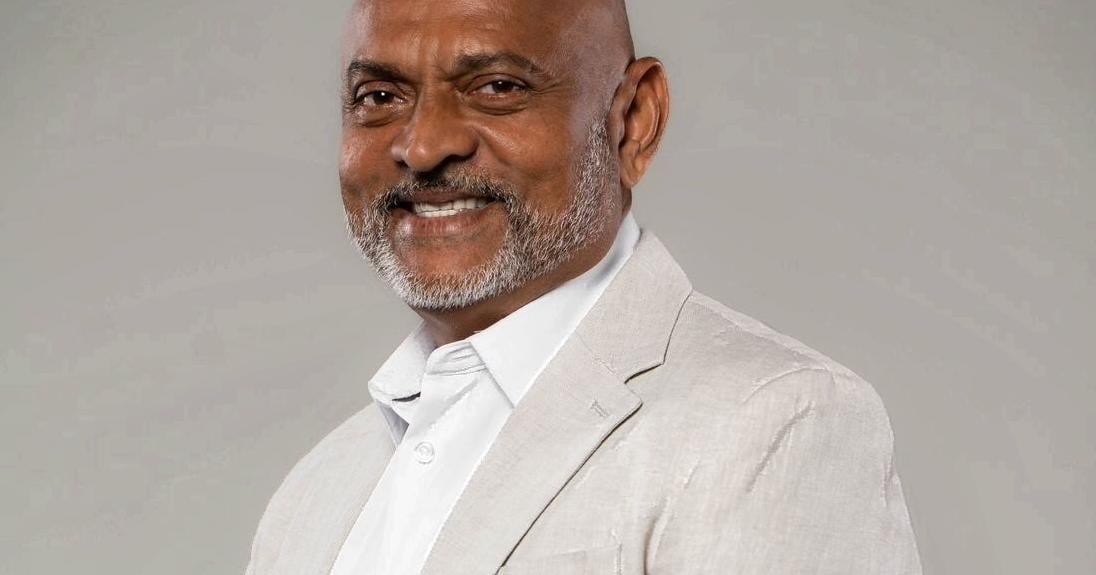
As Trinidad and Tobago’s government prepares to table a three-month extension of the national state of emergency in parliament, a prominent regional security consultant is pushing back against a vague, open-ended extension, while also sounding the alarm over a growing pattern of child killings across the country. Dr. Garvin Heerah, a leading voice on regional security issues, made his remarks to local outlet Express on Wednesday, just two days after the Office of the Attorney General announced Prime Minister Kamla Persad-Bissessar would bring the extension resolution for parliamentary debate.
Heerah emphasized that extending a state of emergency—an extraordinary constitutional measure that curtails some normal civil liberties—cannot be justified purely by procedural momentum. If the prime minister and defence minister deem additional time under the emergency framework necessary, he argued, they have a non-negotiable responsibility to lay out specific, measurable goals for the extension period. He pushed back against the common framing that cites general improvements in security as both the reason for extending the measure and the only metric for its success, noting that the public is owed far more than vague assurances.
“The population deserves more than assurances—they deserve benchmarks,” Heerah said. He called on the government to publish concrete crime reduction targets, clear operational milestones for security forces, and explicit safeguards to protect civil liberties during the extension, as well as a clear outline of the independent body tasked with monitoring those safeguards. “If it is to retain public legitimacy, and that legitimacy is not guaranteed, it must be time-bound, goal-specific, and subject to independent accountability,” he stressed, adding that a three-month extension is a substantial period that should be deployed with intentional planning, rather than treated as a default continuation of existing policy. “Three months is a meaningful window. It should be used with the same precision and intent the State expects of its security forces on the ground,” he added.
Beyond the state of emergency debate, Heerah also addressed the recent killing of 12-year-old Mercedez Layne, whose body was discovered in a grassy area off Carapal Road in Erin on Sunday morning. Layne’s death is far from an isolated tragedy, Heerah argued: at least eight minors have been killed in Trinidad and Tobago in the first half of 2026 alone, and more than 75 juvenile fatalities from violence have been recorded over the past decade. This steady trend reveals deep, unaddressed failures in the country’s security and law enforcement systems that demand urgent, comprehensive scrutiny from all national institutions.
“The violent deaths of children are among the most disturbing indicators a society can confront,” Heerah said, noting that the consistent death toll reflects a systemic pattern that requires what he termed “serious institutional interrogation.” He raised pointed questions about resourcing for law enforcement agencies tasked with investigating these child homicides, asking whether every case—regardless of the victim’s age or socio-economic background—is receiving the full level of forensic and investigative rigor that a homicide investigation requires. He also voiced concern over the lack of a standardized, publicly visible profiling framework for perpetrators of child killings, arguing that authorities must clarify whether the deaths are tied to unaddressed psycho-social crises, connected to organized criminal activity, or the result of opportunistic violence.
“That distinction matters enormously, both for prevention and prosecution,” Heerah said. “A regional security posture that cannot distinguish between these categories is one that will continue to bury children.” He concluded by noting that the rate of child violent deaths serves as a critical benchmark for the state’s core responsibility to protect its most vulnerable populations. “The deaths of minors reflect on us all. They are a measure of how well—or how poorly—the State protects its most vulnerable,” he said.