分类: politics

  • Leonel Fernández rejects proposed tax measures

    Leonel Fernández rejects proposed tax measures

    MADRID — Speaking to a crowd of gathered supporters at Madrid’s Eventize Space, former Dominican president and current leader of the opposition People’s Force party Leonel Fernández has issued a sharp rejection of the tax policy agenda put forward by the ruling Modern Revolutionary Party (PRM), warning that new fiscal burdens would be untenable for Dominican households already grappling with soaring living costs and persistent inflation.

    Fernández’s public criticism came during an event that also marked the swearing-in of new People’s Force members from multiple political backgrounds. The new recruits include defectors from the ruling PRM, the Dominican Liberation Party (PLD), and the Democratic Hope Party (PED), alongside Dominican professionals, entrepreneurs, healthcare workers and community leaders based across Spain and other European nations.

    At the gathering, the opposition leader argued that the current PRM administration is pursuing policies that function as a full tax reform, only rebranded under an alternative name to avoid public backlash. He stressed that the strained economic environment facing ordinary Dominicans makes any new tax-based policy completely inappropriate, noting that the government has yet to deliver solutions for the country’s most pressing public challenges despite its pursuit of additional public revenue.

    Fernández made clear that the People’s Force will stand firm against any legislative or executive initiative that raises taxes or pushes greater financial strain onto working families. He emphasized that widespread public anxiety over rising inflation and the escalating cost of essential goods has not eased, and reaffirmed his party’s commitment to advocating for the interests of workers, students, women, youth and all marginalized social sectors across the Dominican Republic.

    Looking ahead to the 2028 national elections, Fernández framed the strong turnout and growing cross-border support from the Dominican diaspora in Europe as a major vote of confidence in the opposition bloc. He noted that the influx of new members from across the political spectrum and the expanding base among Dominicans living abroad reflects the party’s successful, ongoing push to build its presence within the country’s global diaspora community.

  • Rollins demands PLP disclose if Gardiner donated to campaign

    Rollins demands PLP disclose if Gardiner donated to campaign

    A fiery confrontation has erupted in Bahamian parliamentary budget debates, as Long Island Member of Parliament Dr Andre Rollins has launched intensified scrutiny over multi-million dollar government contracts awarded to a construction firm tied to a convicted US narcotics trafficker, calling for full disclosure of any campaign donations the trafficker may have made to the governing Progressive Liberal Party (PLP) over the past decade.

    At the center of the controversy is Top Notch Builders, a company that was granted a $35 million public-private partnership (PPP) contract to build the Eight Mile Rock administrative complex just 24 hours before the May 2017 general election. Public corporate registry documents from The Bahamas directly link Eric Gardiner, a man previously convicted of drug trafficking charges in the United States, to the firm, where he is listed as president and a director. Corporate filings further show that Top Notch Builders owns Complete Construction, the developer behind the current administration’s flagship Carmichael Village affordable housing initiative, which launched during the previous legislative term.

    In a surprising reveal, current Finance Minister Michael Halkitis has confirmed he previously held a director position at Top Notch Builders, though he maintains he stepped down from the role in 2021, citing disruptions caused by the COVID-19 pandemic.

    Dr Rollins dedicated the bulk of his budget debate address to pressing for clear answers about the awarding process for the Eight Mile Rock contract. He is demanding confirmation of which government official approved the deal, whether the contract was put out for mandatory competitive bidding, and whether Gardiner has ever contributed to PLP campaign coffers. “Who in the government knew what, and when did they know it?” Rollins asked lawmakers. “Was the project open to a competitive bidding process, and if not, why not? Which minister of government was responsible for signing off on the terms of the agreement?”

    Additional context around the case dates back to a plane crash on a previous Election Day, when U.S. rescue teams recovered Gardiner alongside ten other survivors. Authorities reported Gardiner was carrying $30,000 in cash at the time of the crash, and multiple survivors were observed wearing clothing and accessories branded with PLP branding. Dr Rollins argues Bahamian voters have a right to know whether Gardiner made any campaign donations to the PLP after the 2017 awarding of the Grand Bahama contract.

    “This is important because it would help to explain why a company he is alleged to be a beneficial owner of would receive unusually favourable contractual terms by public contract,” he explained. “It would also help us to investigate which government ministers had direct involvement in the issuance of that eight mile rock government complex contract to Top Notch.”

    Dr Rollins also alleged that a controversial “poison pill provision” was written into the PPP contract, designed to make the agreement impossible for a new administration to cancel. He claimed that when the Minnis administration took office in 2017, officials would have been required to pay the full value of the contract, including all accrued principal and interest, if they chose to terminate the deal.

    “It’s unbelievable that any government would not have done its due diligence on the principal of Top Notch Builders,” he said. “And with a principal who has been already convicted of narcotics trafficking by the United States of America to get $50.6m in government money means… if one was so minded or had that amount of money to wash or clean, it would be a very convenient way to do so.”

    Broadening his critique to public-private partnership arrangements as a whole, Dr Rollins warned that without mandatory public disclosure and robust oversight, PPPs can easily be exploited as vehicles for money laundering. He added that full, nationwide implementation of the Freedom of Information Act would significantly improve government transparency and accountability by creating a verifiable public paper trail for all state contracts.

    The debate quickly devolved into a heated parliamentary exchange after Dr Rollins opened his remarks with sharp criticism of the role of big money in Bahamian politics and alleged procedural exploitation in the House of Assembly. Fox Hill MP Fred Mitchell repeatedly raised points of order arguing Rollins’ comments were not relevant to the budget debate, a position that was later upheld by House Speaker Patricia Deveaux.

    The back-and-forth escalated into a public clash between Dr Rollins and Speaker Deveaux, with both accusing the other of undermining The Bahamas’ democratic institutions. At one tense point, Dr Rollins warned the Speaker to be cautious, saying he did not want to see her suffer a negative health incident. “You could never,” Speaker Deveaux shouted in response. “Ten of you. Ten just like you could not bring my health event. Be careful. Boy look here. Don’t do that.”

  • Wells announces plan to regulate funeral sector

    Wells announces plan to regulate funeral sector

    During Thursday’s 2026/2027 Budget Debate in the Bahamas House of Assembly, State Minister for Health and Wellness Owen Wells outlined a far-reaching legislative and administrative reform package aimed at modernizing the country’s healthcare sector, with new regulation of the funeral services industry highlighted as a key priority for protecting vulnerable grieving families.

    Wells emphasized that families place unparalleled trust in funeral service providers during periods of profound loss, creating a critical need for formal oversight to guarantee ethical, professional care. The upcoming Funeral Services Industry Bill will enshrine binding requirements for operator licensing, uniform professional standards, robust consumer protections, and formal accountability mechanisms, all designed to ensure services uphold the dignity that end-of-life care demands. While the core framework of the legislation has been confirmed, Minister Wells did not release further details on timelines for tabling the bill, proposed penalties for non-compliance, or the specific agency that will be tasked with enforcing the new rules.

    The funeral industry regulation is just one component of a broader push to expand and update healthcare sector governance. Minister Wells confirmed that the ministry is also advancing three other key legislative initiatives: a Patients’ Rights Bill, an updated Elderly Abandonment Bill, and ongoing work to embed other existing health legislation into force.

    The Patients’ Rights Bill will establish a formal, clear framework to guide interactions between patients and healthcare providers, codifying core protections including informed consent for medical procedures, patient confidentiality, guaranteed access to personal health information, mandatory professional conduct standards, and requirements for respectful treatment of all care recipients. For vulnerable older Bahamians, the revised Elderly Abandonment Bill will strengthen existing legal protections, set clearer care standards, and reinforce commitments to upholding the dignity and overall wellbeing of the country’s aging population.

    Beyond legislative changes, the ministry is pursuing structural administrative reforms to keep pace with its growing scope of work. For years, the ministry has relied on external legal support from the Public Hospitals Authority, the Office of the Attorney General, and the Department of Legal Affairs to handle regulatory and legal matters. As the sector expands and modernizes, Wells announced that a dedicated in-house Legal Unit will be established during the 2026/2027 fiscal period.

    This internal legal team will cut response times for pressing regulatory and legal issues, reduce costly delays in contract negotiations, strengthen public procurement processes, and ensure all ministry policies and programs are legally sound from their design stage. The new unit will also reduce the administrative burden on the Office of the Attorney General by handling routine and specialized health sector legal work internally, including licensing reviews, administrative actions, contract drafting, regulatory rollout, and clinical governance matters.

    To address longstanding coordination gaps across the public healthcare system, Wells also announced the creation of a Public Health Operations Task Force. The inter-agency body will conduct a comprehensive review of how core public health entities – including the Ministry of Health and Wellness, the Department of Public Health, Princess Margaret Hospital, Rand Memorial Hospital, the Supplies Management Agency, and other relevant stakeholders – interact and operate. It will map existing workflows, identify systemic bottlenecks and service duplication, and propose evidence-based practical solutions to streamline cross-agency coordination and improve service delivery for patients.

    Digital modernization of health records will also remain a key priority during the upcoming budget cycle. The ministry will continue rolling out universal Electronic Medical Records across all Department of Public Health facilities, while working to integrate these systems with other major public healthcare institutions. Plans are also in place to strengthen the national Health Information Exchange, allowing authorized care providers to securely access critical patient data when needed for treatment.

    Wells pushed back against any perception that these reforms are merely bureaucratic adjustments, noting that every proposed change is centered on people. “These topics may appear administrative in nature, but their purpose is people-centred and intended to protect patients, support families, assist healthcare workers and strengthen public confidence in our healthcare system,” he said. The government’s overall legislative agenda for the health sector is focused on four core goals: strengthening patient protections, updating outdated professional regulations, improving national public health preparedness, and supporting innovation in how care is delivered to Bahamian communities.

  • Plea talks collapse

    Plea talks collapse

    A high-profile double murder case with political ties in Jamaica has hit a critical legal impasse, pushing the matter toward a formal trial after a public disagreement between prosecution and defense teams over how the crime should be classified under national law. The case centers on Leoda Bradshaw, a former United States Navy culinary specialist who has remained in police custody since her arrest in October 2023. Bradshaw faces eight total charges: two counts each of conspiracy to murder, conspiracy to kidnapping, kidnapping, and capital murder, in connection with the 2023 abduction and killing of 10-month-old Serayah Paulwell — the infant daughter of Jamaican parliamentarian Phillip Paulwell — and the child’s mother, 27-year-old Toshyna Patterson. Three other co-accused individuals, including Bradshaw’s cousin Roland Balfour, alleged shooter David Smith, and Bjorn Black, have already pleaded guilty to their roles in the crime.

    The disagreement erupted during an expedited Supreme Court hearing held Thursday before Chief Justice Bryan Sykes. The case had originally been scheduled for a plea and case management hearing later this month, but the defense requested an earlier hearing to resolve the ongoing classification dispute. Director of Public Prosecutions Claudette Thompson, leading the prosecution, confirmed that her office has indicted Bradshaw on charges of capital murder, which falls under Section 2(1)(e)(i) of Jamaica’s Offences Against the Person Act. A recent amendment to this legislation sets a mandatory minimum 50-year prison term for capital murder convictions before a defendant becomes eligible for parole.

    Bradshaw’s defense team, however, has offered to have their client plead guilty to non-capital murder, which carries a shorter minimum sentence of 45 years before parole eligibility. Under Jamaican law, non-capital murder is defined under Section 2(2) of the same act. The defense has also formally notified the prosecution of its intention to request a Newton Hearing — a specialized legal procedure used when a defendant enters a guilty plea but disputes the specific facts of the crime as outlined by the prosecution. Since the agreed facts directly impact the final sentencing, a judge alone hears evidence and rules on which version of events is legally accurate.

    Lead defense counsel Deborah Martin explained to the court that Bradshaw had prepared a full detailed statement in advance of entering her guilty plea. After prosecutors reviewed the statement, they rejected Bradshaw’s account of events, noting it conflicted with testimony from other witnesses the prosecution plans to rely on during trial. The core disagreement centers on the specific factual details laid out in the indictment for the two murder counts, Martin confirmed, adding that “the defence cannot agree a particular that is in dispute…we do not see how to proceed.”

    Chief Justice Sykes noted in his remarks that the Jamaican legislature has explicitly drawn clear distinctions between categories of murder, including those that qualify for the death penalty. He pointed out that the prosecution had not yet moved forward with seeking the death penalty for Bradshaw, a major concession to the defendant. Thompson echoed this point in court, emphasizing that the Crown had deliberately chosen not to serve a Death Penalty Notice on Bradshaw, even though one had already been served on another co-accused in the same case. Thompson called the decision a “huge concession” and argued that the crime fits the legal definition of capital murder perfectly, saying “If there was ever a case that fits what the section intended, this would be it.”

    With no resolution reached on the classification dispute, Thompson confirmed that the case would proceed to trial, stating plainly “We are going to trial. We will have a plea and case management date. There will be a trial.” Chief Justice Sykes adjourned the hearing, scheduling the formal plea and case management hearing for June 24, where a final trial timeline will be confirmed. The full trial is currently set to begin on September 28.

    During Thursday’s proceedings, Bradshaw observed the discussion quietly, dressed in a belted buttercup gold midi shirt-dress, with short natural curls framing her face. Court documents outline that Patterson and her infant daughter were first reported missing on September 9, 2023. Prosecutors allege the pair were abducted and transported to Warieka Hills in St Andrew, where they were shot to death before their bodies were burned to conceal evidence.

  • Vaz highlights JUTC revenue surge, fleet upgrades as ridership climbs

    Vaz highlights JUTC revenue surge, fleet upgrades as ridership climbs

    KINGSTON, Jamaica — Jamaica’s state-run public transit provider, the Jamaica Urban Transit Company Limited (JUTC), has delivered standout progress across key performance metrics, including revenue growth, rising passenger volumes, fleet modernization, and streamlined operations, according to Minister of Energy, Transport and Telecommunications Daryl Vaz. Vaz shared these positive updates during a formal ministerial briefing hosted by the Jamaica Information Service (JIS) on Thursday, where he zeroed in on the exceptional performance gains posted by the JUTC’s Portmore depot as a clear example of the broader turnaround.

  • FNM takes DEA ‘Politician 1’ allegations to police

    FNM takes DEA ‘Politician 1’ allegations to police

    Political tensions in The Bahamas have reached a new boiling point this week after opposition lawmakers formally called on national police to launch a full, urgent investigation into explosive drug trafficking allegations laid out in a US federal court affidavit. The sworn document, filed in the United States District Court for the Southern District of New York, links an unnamed Bahamian political figure, referenced only as “Politician-1”, to a $30 million cocaine trafficking conspiracy.

    In an official letter dated June 11, addressed to Police Commissioner Shanta Knowles and copied to National Security Minister Myles Laroda and Attorney General Wayne Munroe, Opposition Leader Michael Pintard called for an “urgent and comprehensive investigation” into every detail of the allegations. The request was co-signed by every opposition member of the House of Assembly, confirming unified opposition push for accountability.

    The affidavit centers on Jonathan Eric Gardiner, who is also known by the alias “Player”, and outlines a startling claim: in October 2024, Politician-1 met with an undercover Drug Enforcement Administration (DEA) source and a pilot inside The Bahamas’ Parliament building to negotiate details of a cocaine shipment moving from Colombia, through The Bahamas, and ultimately to the United States. The allegations also suggest that the criminal network received protection and support from politicians, public officials, and members of Bahamian security and law enforcement agencies.

    Pintard laid out clear mandates for the proposed investigation, calling on police to work alongside national security bodies and international partners to first unmask the identity of Politician-1, then probe whether any elected official or public servant facilitated the alleged criminal activity, and finally uncover any complicity among law enforcement or security personnel that enabled the trafficking network. Beyond the drug trafficking claims, Pintard also called for full investigations into linked money laundering activities, suspicious financial flows, and hidden beneficial ownership structures tied to the alleged criminal enterprise.

    The request also extends to a full audit of government contracts, concessions, and financial dealings connected to Gardiner’s construction firm, Top Notch Builders Limited, and all of its affiliated entities. Public records already confirm that Top Notch Builders was awarded high-profile public contracts for two major projects: the Obadiah Wilchcombe Complex in Grand Bahama and the Renaissance at Carmichael housing development on New Providence.

    In the letter, Pintard emphasized the gravity of the claims, noting that the allegations are set out in a sworn court document, making them a critical threat to national security. “These allegations, as presented in a sworn complaint before a U.S. federal court, raise profound national security concerns and, if substantiated, would represent a serious breach of public trust, the rule of law, and the integrity of public institutions,” he wrote.

    Pintard added that urgency, independence, and full transparency are non-negotiable, given the potential damage to The Bahamas’ international reputation and public faith in national governance. “The public must be assured that no individual – regardless of position – is above the law, and that all allegations of criminal conduct touching public office are investigated thoroughly and impartially,” the letter concluded.

    This formal request marks the latest escalation from the opposition Free National Movement, which has pushed the allegations to the top of national political debate this week. Tensions flared earlier in the House of Assembly, after Speaker Patricia Deveaux blocked multiple attempts by Pintard to table documents related to the US court filing, sparking heated verbal exchanges between government and opposition lawmakers.

    So far, the Office of the Prime Minister has responded that the governing administration will request official information from US authorities, and that local law enforcement agencies will launch their own internal inquiries into the claims.

  • ‘Wait and see’ ‘wait and see’ says Walker

    ‘Wait and see’ ‘wait and see’ says Walker

    A high-stakes diplomatic and political standoff has emerged in The Bahamas after the nation’s top House official brushed off damning allegations contained in a U.S. federal criminal complaint, drawing a measured but firm response from the U.S. ambassador to the country. Speaking to reporters on Grand Bahama this week, U.S. Ambassador Herschel Walker pushed back against House Speaker Patricia Deveaux’s characterization of the accusations against Bahamian national Eric Gardiner and an unnamed senior Bahamian politician as nothing more than “frivolous and malicious gossip,” telling the public to “wait and see” how the ongoing investigation unfolds.

    Walker emphasized that the case remains an active, open investigation, noting that premature commentary risks unfairly prejudicing either side of the proceedings. “It is funny because people say things like that, but you know it’s an open investigation, and I think people know when it is an open investigation, you just wait and see what’s going to happen,” Walker told reporters. “You really don’t want to say anything about it because you don’t want to hurt either side.”

    Contrary to claims that the allegations are baseless gossip, the accusations are part of a formal criminal filing in the Southern District of New York — one of the most high-profile federal court jurisdictions in the United States, where prosecutors regularly handle complex, high-stakes cases involving transnational drug trafficking, public corruption, organized crime, and major financial fraud.

    Gardiner, the primary defendant named in the complaint, was taken into U.S. custody shortly after a plane crash off Florida’s coast on May 12, which coincided with The Bahamas’ general election. The small aircraft, traveling between Abaco and Grand Bahama, carried 12 people total, and Gardiner was one of 11 who survived the crash. Court records show investigators recovered $30,000 in cash inside a cross-body bag marked with the name of a senior Bahamian politician, only identified in court documents as “Politician 1.”

    Tensions flared earlier this week when Deveaux blocked Opposition Leader Michael Pintard from tabling documents related to the U.S. criminal complaint in the House of Assembly, moving to block any parliamentary debate of the allegations entirely by labeling them malicious and unsubstantiated.

    Walker reiterated his longstanding policy of declining to comment on active law enforcement probes, saying public speculation before investigators conclude their work risks spreading unsubstantiated misinformation. “That’s why I don’t really comment on things like that because being an open investigation, who knows? And we don’t want to just put things out there that is just not true,” he said.

    The core allegations laid out by federal prosecutors paint a picture of deep infiltration of drug trafficking operations into Bahamian political circles. Prosecutors claim Gardiner, who goes by the alias “Player,” was a key figure in a Bahamas-based cocaine trafficking network that sourced bulk narcotics from Colombia and other South American countries for smuggling into the U.S. He is formally charged with conspiring to import no less than five kilograms of cocaine into the U.S., and is accused of acting as a foreign supplier for a Georgia-based drug trafficking ring, coordinating the movement of multiple-kilogram cocaine shipments from The Bahamas into South Florida.

    Most explosively, the criminal complaint alleges that undercover Drug Enforcement Administration agents, posing as members of a Mexican drug cartel, met with the senior unnamed Bahamian politician directly inside the House of Assembly building to negotiate a plan to ship cocaine through The Bahamas en route to the U.S. According to investigators’ accounts, the politician agreed to use their position to facilitate the smuggling operation in exchange for regular cash payments.

  • Cuba opens more sectors to private business amid US pressure

    Cuba opens more sectors to private business amid US pressure

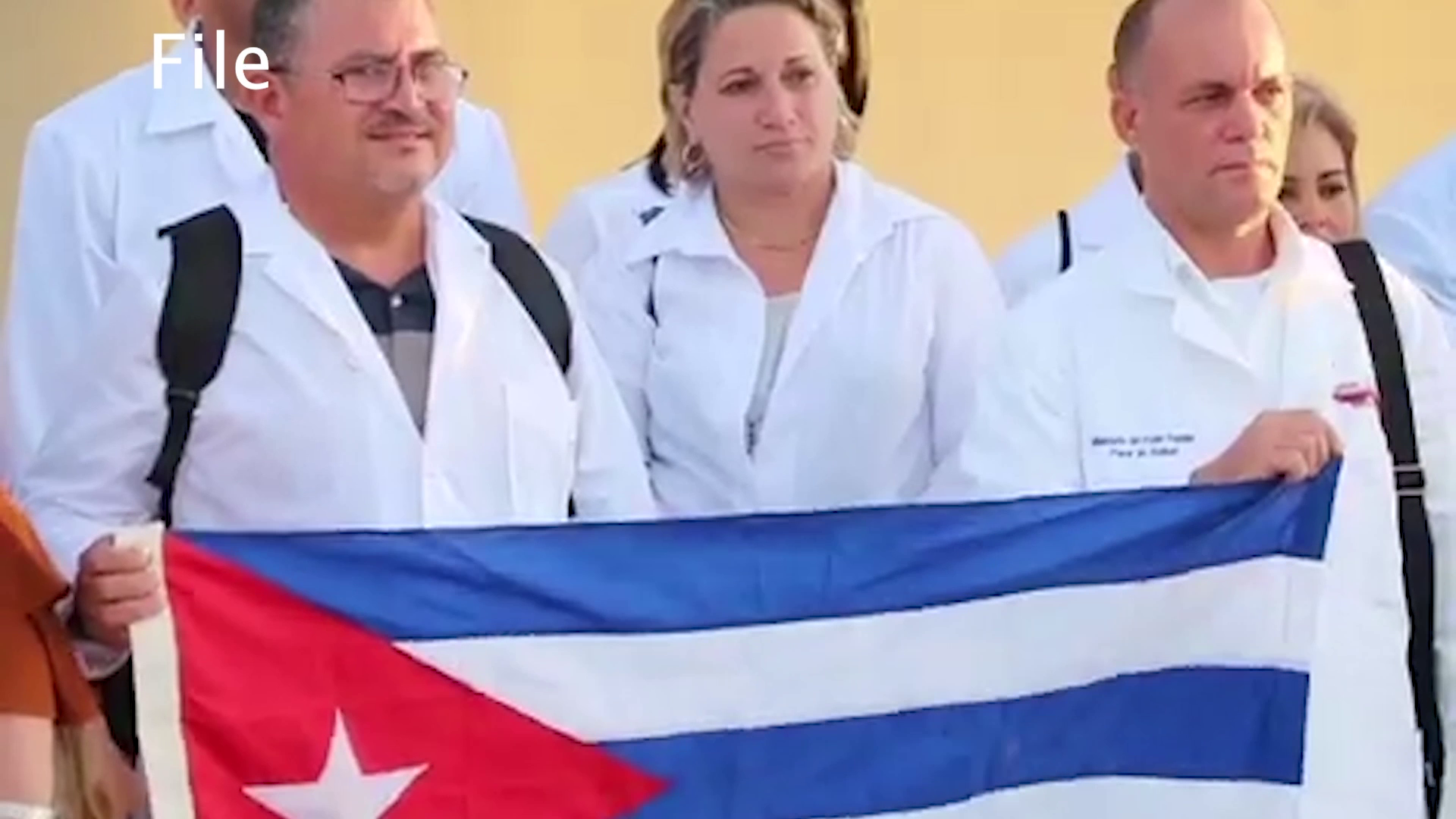
    HAVANA, Cuba – In a bold move to counter the devastating economic impact of the long-running United States blockade, Cuban President Miguel Diaz-Canel announced Friday a sweeping package of reforms designed to expand freedoms for small private enterprises across the island nation.

    Delivering a nationally televised address to the Cuban people, Diaz-Canel outlined a series of policy shifts that will open more economic sectors to private participation, cut red tape for new business approvals, and level the playing field for domestic private entrepreneurs. “For non-state management models, the roster of off-limits activities will be narrowed to expand operational scope as widely as possible,” Diaz-Canel stated. “We have launched an urgent process to clear all pending business applications in the shortest timeline achievable.”

    The reforms represent the latest in a series of liberalization measures rolled out by the Cuban communist government, which has faced mounting pressure after Washington tightened its oil blockade against the island in January. Private enterprise, which was first authorized with a 100-employee cap in 2021, has already emerged as a vital pillar of Cuba’s struggling economy. Earlier this year, private firms gained the right to import fuel – a sector that had remained under exclusive state control for decades.

    Under the new policy framework, domestic private businesses will now be granted the same investment rights as foreign investors, a change crafted to shore up economic activity after multiple foreign firms exited the country over fears of U.S. secondary sanctions. Diaz-Canel also revealed that policymakers are evaluating the elimination of mandatory state intermediaries for private import and export operations, a change that would drastically reduce business costs and streamline cross-border trade for non-state actors.

    Beyond private sector liberalization, the president reaffirmed the government’s commitment to decentralizing economic governance and granting expanded autonomy to state-owned enterprises, which still control approximately 80 percent of Cuba’s total economic output. He also announced a sweeping restructuring of state bureaucracy that will cut the number of national ministries and reduce the size of the public sector workforce. The restructuring plan is scheduled for parliamentary debate and approval in July, and Diaz-Canel emphasized that all new reforms would move through the approval process at an accelerated pace.

    Despite mounting economic headwinds that have deepened long-running crises in energy, food security, and public welfare, Diaz-Canel struck a defiant and confident tone, pushing back against what he called Washington’s “maximum pressure” campaign against Cuba. “The country is not paralyzed; we are confronting this challenge with intelligence and unity,” he said.

    The U.S. trade embargo on Cuba dates back to 1962, making it one of the longest-running economic blockades in modern history. In recent years, successive U.S. administrations have expanded sanctions beyond the core embargo, including the oil restriction imposed earlier this year, which has significantly worsened the island’s chronic economic, social, and energy crises.

  • 800 Volunteers Express Interest in Supporting CHOGM 2026

    800 Volunteers Express Interest in Supporting CHOGM 2026

    As Antigua and Barbuda ramps up planning for what will stand as one of the largest international diplomatic gatherings in the nation’s history, more than 800 local residents have already stepped forward to register their interest in volunteering for the 2026 Commonwealth Heads of Government Meeting (CHOGM).

    The latest progress on the island nation’s summit readiness was outlined to the country’s Cabinet during a detailed briefing from Karen-Mae Hill, Antigua and Barbuda’s High Commissioner to the United Kingdom, and Ann-Marie Layne, Director General of Foreign Affairs. The high-profile summit is currently scheduled to take place in November 2026.

    Maurice Merchant, Director General of Communications for the preparation effort, shared that work is progressing steadily across every critical pillar of event planning, including logistics, security protocols, inter-region transportation, attendee accommodation, diplomatic protocol, and overall event coordination. Pre-event engagement has already revealed robust global interest in the gathering: multiple participating delegations have already locked in their accommodation bookings, while other attending teams are finalizing their travel itineraries.

    The summit is set to welcome a large contingent of heads of government and senior diplomatic officials from all 56 Commonwealth member states, a turnout that will shift global diplomatic focus squarely onto Antigua and Barbuda for the duration of the event. Invitations sent out to major global institutions and development partners have already drawn widespread positive responses, according to official updates.

    Beyond delegation planning, public participation has outperformed early expectations: of the hundreds of residents who have expressed interest in volunteer roles, more than 130 delegation liaison officers have already been selected to offer dedicated direct support to visiting official delegations. Structured training programs for all volunteers and support staff will roll out incrementally in the months leading up to November 2026 to ensure all personnel are fully prepared.

    Planning for CHOGM carries extra weight for Antigua and Barbuda, as the summit will overlap with a widely anticipated state visit from King Charles III, the Head of the Commonwealth. Merchant confirmed during the Cabinet briefing that the King will travel to both Antigua and the smaller sister island of Barbuda during his visit. With two high-profile, globally focused events overlapping, all involved government agencies have entered an accelerated phase of joint planning and inter-agency coordination to deliver seamless outcomes.

    For Antigua and Barbuda, the summit represents more than a diplomatic gathering: it is a rare opportunity to welcome the entire Commonwealth leadership to the nation’s shores, showcase the country’s unique strengths and hospitality to a global audience, and cement the nation’s standing as an engaged, influential actor within the international community.

  • New Work Permit Rules to Require Wider Advertising of Vacancies

    New Work Permit Rules to Require Wider Advertising of Vacancies

    The Cabinet of Antigua and Barbuda has approved a sweeping set of reforms to the country’s work permit system, designed to expand access to job advertising for local workers and tighten approval protocols for foreign labor applicants. The policy changes were announced Thursday by Director General of Communications Maurice Merchant during a post-Cabinet press briefing, following a detailed presentation from the Labour Commissioner and senior staff at the One Stop Employment Centre (OSEC) on the current state of work permit application administration.

    Merchant told reporters that Cabinet members raised consistent concerns that open job vacancies across multiple sectors are not currently being advertised to the broadest possible pool of local job seekers. To address this gap, the body agreed that targeted, stricter measures are required to boost both transparency around open roles and public access to information about available employment opportunities. The reform push comes in direct response to growing internal concern over repeated requests to bring in foreign workers for positions that Cabinet leaders are confident can be filled by qualified residents of Antigua and Barbuda.

    “Cabinet feels that there is something drastically wrong with that process because they believe that locals can assume those positions,” Merchant told reporters at the briefing. He specifically called out the prevalence of import requests for low- to mid-skill roles that are commonly held by local workers, including nannies, cooks, and other general labor positions, questioning why these applications are being submitted at all when a local workforce is available.

    Beyond expanded job advertising requirements, the new rules will also tighten the origin requirements for work permit applications. Merchant noted that under the current system, a significant share of applications are submitted by foreign individuals who are already physically present in Antigua and Barbuda. Going forward, new policy will mandate that all foreign applicants must submit their work permit applications from their country of legal permanent residence before traveling to Antigua and Barbuda to take up employment. Only after it has been confirmed that no qualified local candidate can be found to fill the open role will a work permit be approved, according to Merchant.

    Cabinet also confirmed that additional layers of scrutiny will be applied to high-risk work permit categories, most notably applications for domestic workers. Under the new protocols, employers seeking to hire a foreign domestic worker will be required to formally justify their need for an imported employee and provide verifiable proof that they have the financial capacity to meet their contractual wage and benefit obligations to the worker.

    Senior government officials emphasized that the full package of reforms is rooted in a core goal: strengthening protections for the local Antigua and Barbuda labor market while guaranteeing that qualified native and resident workers get the first chance to apply for and accept every open position available in the country.