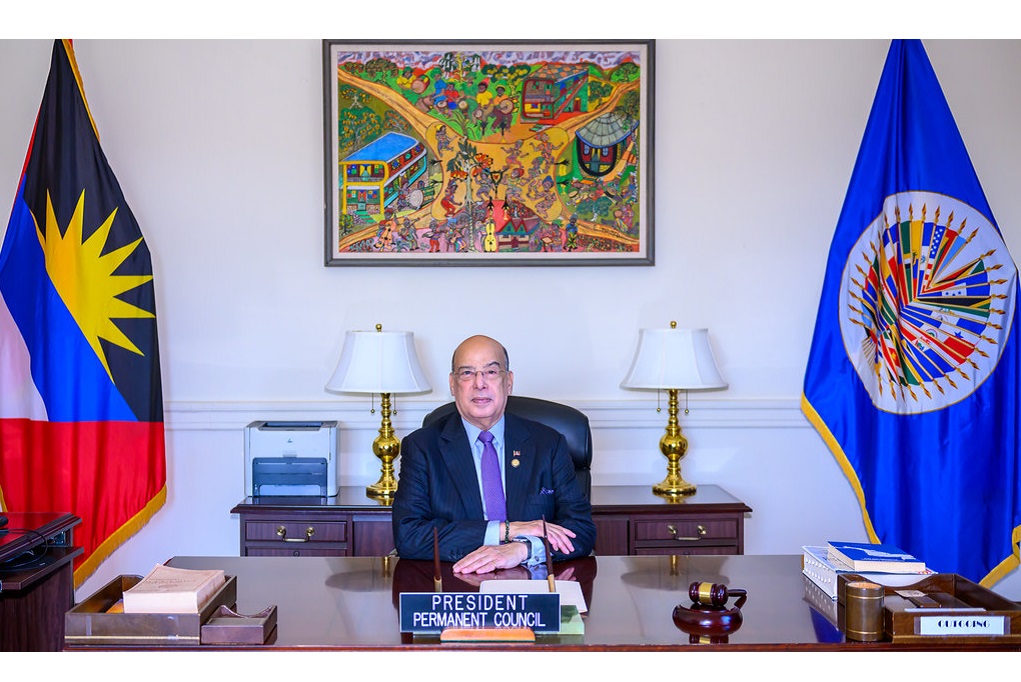
A heated public debate has erupted over policing accountability in Jamaica after National Security Minister Dr Horace Chang drew widespread criticism for his recent announcement that officers of the Jamaica Constabulary Force (JCF) will not be required to wear body-worn cameras (BWCs) during high-risk operations targeting armed criminals. Chang made his position clear during a post-Cabinet media briefing held Wednesday, arguing that mandating cameras for confrontations with heavily armed suspects is fundamentally illogical. He questioned the practicality of requiring officers to wear recording devices when pursuing suspects armed with high-powered weapons like M16 assault rifles capable of firing 60 rounds per minute, noting that officers prioritize taking cover and returning fire during active shootouts, not managing body camera equipment. The minister doubled down on his stance, emphasizing that even for pre-planned 3:00 a.m. raids targeting wanted gunmen, BWCs will not be deployed.
分类: politics
-

Palestinians to vote in first elections since Gaza war
For the first time since the outbreak of the latest Gaza war, Palestinian voters across the Israeli-occupied West Bank and the central Gaza district of Deir el-Balah are casting ballots Saturday in long-awaited municipal elections, a vote shaped by a limited political landscape and broad public apathy toward the ability of the process to deliver meaningful change.
Figures from the Ramallah-headquartered Central Elections Commission (CEC) show roughly 1.5 million registered voters will participate across the West Bank, joined by an additional 70,000 registered voters in Deir el-Balah. Unlike broader national elections, the vast majority of competing candidate lists are either aligned with Palestinian President Mahmoud Abbas’s secular nationalist Fatah party or running as independent candidates. Notably, no lists are fielded by Hamas, Fatah’s long-standing political rival that controls roughly half of the Gaza Strip.
Across most West Bank municipalities, Fatah-backed tickets face off against independent slates led by candidates from smaller opposition factions, including the Marxist-Leninist Popular Front for the Liberation of Palestine. In dozens of districts, however, the lack of competition has already preordained results: in major population centers including Nablus and Ramallah, the seat of the Palestinian Authority (PA), only one candidate list was submitted, allowing that ticket to claim victory automatically without any voter turnout.
Many voters echo deep skepticism about the election’s ability to improve daily life under Israeli occupation. Mahmud Bader, a private business owner from the northern West Bank city of Tulkarem, where two adjacent refugee camps have been under full Israeli military control for more than a year, said he planned to cast a ballot despite expecting no tangible improvements. “Whether candidates are independent or partisan, it has no effect and will have no benefit for the city,” Bader told AFP. “The Israeli occupation is the one that rules Tulkarem. This vote is just an image shown to international media — to pretend we have functioning elections, a state, or independence.”
Logistical challenges also shape the vote in war-ravaged Gaza. The CEC confirmed polling stations in the West Bank will operate from 7:00 a.m. local time (0400 GMT) through 7:00 p.m., but stations in Deir al-Balah will close two hours earlier at 5:00 p.m. The adjustment is designed to allow vote counting to finish before sundown, a necessary workaround given chronic widespread power outages across the war-damaged strip.
International observers have framed the vote as a rare step forward for democratic engagement amid ongoing conflict. UN Middle East coordinator Ramiz Alakbarov praised the CEC for pulling off a “credible process” under extreme constraints. “Saturday’s elections represent an important opportunity for Palestinians to exercise their democratic rights during an exceptionally challenging period,” Alakbarov said in an official statement.
This vote marks the first electoral contest held in Gaza since the 2006 legislative elections, which were won by Hamas. The Islamist group has controlled most of Gaza since 2007, splitting Palestinian governance between the Hamas-led strip and the Fatah-governed West Bank. Jamal al-Fadi, a political scientist based at Cairo’s Al-Azhar University, told AFP the PA’s decision to limit Gaza balloting exclusively to Deir el-Balah is a deliberate pilot test to assess public opinion in the post-war context, when no comprehensive public opinion polling has been conducted.
The selection of Deir el-Balah was also rooted in practicality: the district is one of the few areas of Gaza where a large majority of the original population has not been displaced by the more than two-year-long conflict between Hamas and Israel, al-Fadi explained. The 90-year-old Abbas, who has held the Palestinian presidency for more than two decades without holding a new presidential election, has repeatedly promised to hold national legislative and presidential votes that have yet to be organized.
For some first-time voters, the election carries symbolic weight even amid its limitations. Farah Shaath, 25, said she was eager to cast her first ever ballot Saturday. “Although it is unlike any election in the world, it is a confirmation of our continued existence in the Gaza Strip despite everything,” Shaath said.
Organizing the Gaza vote has also required navigating competing security claims. CEC spokesman Fareed Taamallah told AFP that the commission has recruited polling staff from local Palestinian civil society groups and contracted a private security firm to guard the 12 polling centers in Deir el-Balah. But an anonymous CEC source based in Gaza told AFP that Hamas police have insisted on taking responsibility for securing the electoral process, planning to deploy unarmed plainclothes security personnel around all polling sites.
-

UDC appoints new board to steer corporation during 58th anniversary year
KINGSTON, Jamaica — As the Urban Development Corporation (UDC) marks its 58th year of operations, the national development agency has formalized the appointment of a fresh board of directors, set to steer the organization through a three-year term running from February 23, 2026, to February 22, 2029. This leadership shakeup comes as the UDC leans into expanding its institutional footprint and advancing national development priorities across the island.
The new board assumes its post at a pivotal moment, when the UDC is actively delivering on its broad mandate that spans large-scale urban development, public asset management, and community engagement. The leadership transition is designed to build on the agency’s six-decade legacy while advancing a modern, forward-thinking agenda centered on strategic investment, responsible public stewardship, and organizational transformation.
Norman Brown, incoming board chairman, emphasized that the new leadership team shares a core commitment to upholding ethical governance, delivering rigorous strategic oversight, and advancing the UDC’s public mission — particularly as Jamaica prioritizes climate and infrastructural resilience across all national development work.
“For almost 60 years, the UDC has stood as a foundational national institution that shapes growth across Jamaica,” Brown stated in an official press release issued Friday. “This new board fully grasps the weight of the role we must play to guide the organization through its next chapter of progress. We are dedicated to keeping the UDC focused, transparent, and responsive to public needs as it advances projects and manages assets that deliver tangible, lasting value to all Jamaican people.”
As Jamaica’s leading national development agency, the UDC has played an integral role in building connected communities, developing accessible public spaces, attracting domestic and foreign investment, and managing a vast portfolio of public assets that drive broad-based economic and social progress. Its high-profile holdings include some of the country’s most popular tourist and recreational landmarks: the globally renowned Dunn’s River Falls and Park, Reach Falls, Harmony Beach Park, Ocho Rios Bay Beach, and Turtle River Park.
Beyond managing existing recreational assets, the UDC is currently advancing a slate of high-impact strategic initiatives and development programs across the island. Key ongoing projects include the Portmore Resilience Park, the Raintree Commercial Complex, the Kingston Waterfront Improvement Project, and multiple residential development ventures in the Caymanas area. These projects, alongside the agency’s other ongoing work, contribute to widespread urban renewal, job-creating economic activity, and improved quality of life for communities across Jamaica.
Bobby Honeyghan, UDC’s general manager, noted that the new board’s appointment comes at a critical juncture for the agency, and will provide essential strategic support to keep the organization’s mandate on track. “The UDC’s work touches some of the most visible and impactful areas of national development, and a strong, engaged board is non-negotiable for maintaining the momentum we have built,” Honeyghan explained. “We welcome the new directors to the team and are eager to collaborate closely with them as we strengthen the UDC’s project delivery, expand our public impact, and advance the national development goals of Jamaica.”
-

US says two killed in boat strike as toll climbs over 180
A recent lethal airstrike carried out by the United States military against a suspected drug-trafficking vessel has pushed the cumulative death toll from Washington’s year-long anti-“narco-terrorist” campaign across Latin America to at least 182, according to official statements and independent counting. The strike, which took place on Friday, left two people dead aboard the targeted boat, US Southern Command — the military body overseeing all American operations in the Latin American and Caribbean region — confirmed in a public post on the social platform X. In its announcement, the command echoed the standardized language it has used to justify dozens of similar lethal operations launched since the campaign launched in September last year, claiming intelligence assessments verified the vessel was traveling along well-documented smuggling corridors in the Eastern Pacific and actively engaged in drug-trafficking activities. According to a tally compiled by Agence France-Presse, this strike marked at least the seventh such lethal operation carried out by US forces in April alone. Despite repeated claims that targeted vessels are linked to drug smuggling networks categorized as terrorist organizations by the US government, the Trump administration has yet to release conclusive, public evidence to back up these assertions. The lack of transparent proof has sparked fierce debate over the legal standing of the cross-border campaign. International legal scholars and global human rights organizations have raised sharp criticism, arguing that most of these strikes qualify as extrajudicial killings. Many of those killed, they contend, were unarmed civilians who did not pose any immediate, active threat to US national security, raising serious questions about the moral and legal legitimacy of the ongoing campaign.
-

Coleby-Davis dodges questions over collapsed energy deal
A flagship energy reform initiative meant to modernize New Providence’s power grid has collapsed less than two years into a 25-year public-private partnership, leaving behind swirling questions about millions in investment, looming legal risks, and shifting government control that Bahamian officials have declined to address publicly.
At the center of the unraveling is the exit of Island Grid, a firm led by U.S. energy executive Eric Pike, from the grid management partnership with Bahamas Grid Company. The project was long billed as a cornerstone of the Bahamas government’s agenda to upgrade the country’s aging energy infrastructure and boost grid reliability for consumers across New Providence.
When pressed by reporters this week to explain why the partnership fell apart, Energy and Transport Minister JoBeth Coleby-Davis refused to offer any additional detail beyond a vague reference to a previously released government statement. “We spoke to it and a statement went out,” she told reporters, cutting off all further questions on the matter.
In its official statement released Wednesday, the Bahamian government attempted to frame the sudden shakeup as a planned transition rather than a collapsed deal, emphasizing that the partnership’s foundational phase had been completed ahead of a shift to full local leadership. Officials moved quickly to reassure the public that the ownership of critical transmission and distribution assets has not changed, and that the transition to a Bahamian-led management team is a welcome development.
The government announced the appointment of Dareo McKenzie as Bahamas Grid Company’s new chief executive officer, with Gladys Fernander stepping into the role of chief financial officer. Officials confirmed that Pike remains involved only as a contractor to wrap up ongoing foundational works, including major transmission line and substation upgrades scheduled for completion at the end of May. The statement also noted that the project has already delivered tangible progress, with fewer power outages and improved overall system reliability for end users.
Despite these official assurances, concerns across the political and financial sectors have continued to grow. Opposition chairman Dr. Duane Sands warned that the messy breakdown of the public-private arrangement will almost certainly lead to a wave of litigation, pointing to unresolved questions around outstanding payments, corporate governance structures, and the unclear operational relationship between Bahamas Power & Light and Bahamas Grid Company.
Financial stakeholders tied to the project’s $111 million bond structure and $30 million in equity backing have also raised alarms, as investors still lack clear information about repayment guarantees and the long-term stability of the initiative. The collapse has already triggered a major reshuffle of Bahamas Grid Company’s board of directors: Pike and his associate Mei Shibata have stepped down, replaced by attorney Nikolai Sawyer and Super Value president Debra Symonette, joining one remaining incumbent director. Multiple other previously listed directors are no longer serving in their roles, according to industry sources.
The original 25-year agreement established a shared governance framework between the Bahamian government and private sector investors. The recent changes to leadership and board composition have only intensified ongoing scrutiny over who now holds oversight and control of the critical national energy project, with no clear answers from government officials to date.
-

Jordan challenges PNCR to unveil programme for Guyana’s 60th Independence anniversary
In the lead-up to Guyana’s milestone 60th anniversary of independence from British rule, a former senior leader of the country’s main opposition People’s National Congress Reform (PNCR) has publicly criticized his own party for failing to finalize a commemorative event schedule months after the 2025 calendar turned over.
Winston Jordan, who served as finance minister in the previous PNCR-led coalition government, made the remarks during an interview with local outlet KAMSTV on Thursday, April 23, 2026. Jordan stressed that the PNCR had a unique obligation to organize early celebrations, given that the party’s founding leader, Forbes Burnham, was the head of government who formally guided Guyana to full sovereignty when it gained independence on May 26, 1966. By his count, the party should have had a full program of activities ready to go no later than December 31, 2025, with just weeks remaining before the major anniversary as of his statement.
“What are you waiting for, PNC? With only a couple of weeks left, you still haven’t even unveiled a full schedule of activities,” Jordan said. “Even if you are facing financial constraints, you should at the very least ensure that our Founder-Leader, Linden Forbes Sampson Burnham, is not written out of this anniversary celebration. We all know that the ruling People’s Progressive Civic (PPPC) will not mention his name if they can avoid it this 60th year.”
Jordan, who has been an outspoken public critic of both the current PPPC government and PNCR opposition leadership, questioned whether the party was passively waiting for the ruling administration to honor Burnham during the national commemorations, rather than taking initiative on its own.
“The moment of independence is a core part of this party’s legacy,” Jordan noted. He also recalled a unifying moment from 1966: while Cheddi Jagan — the iconic leader of the PPP and another towering figure in Guyana’s independence movement — did not join Burnham at the final London independence negotiations, he embraced Burnham on stage at Georgetown’s National Park on the eve of independence, laying a foundation of national unity that ought to be remembered.
Jordan added that low-cost, simple commemorative events are fully within the party’s reach, even with limited funding.
To contextualize this political debate: while Jagan is widely recognized as the earliest and most vocal advocate for Guyana’s separation from British colonial rule, historians widely document that the United Kingdom, pressured by the United States, altered Guyana’s electoral system ahead of the 1964 vote. The change from a first-past-the-post system, under which Jagan’s PPP had won previous elections, to proportional representation was explicitly designed to remove Jagan from power. U.S. officials pushed for the shift over concerns that Jagan’s communist leanings would lead an independent Guyana to align with the Soviet Union during the Cold War. The new electoral system allowed the PNCR to form a coalition government with the United Force party, and the PNCR retained power through elections widely regarded as fraudulent until free democratic elections were restored in 1992, following the end of the Cold War.
As the ruling PPPC has not moved to center Burnham in official 60th anniversary planning, a new opposition party has stepped forward to launch its own months-long national commemoration. Earlier this week, We Invest In Nationhood (WIN) — a new opposition bloc that won 16 parliamentary seats in the 2025 general and regional elections — rolled out a six-week national campaign themed “Rooted in Identity – Rising in Destiny.”
In an official statement, WIN outlined that the initiative is designed to restore meaning, dignity, and national pride to the 60th independence observance by inviting all Guyanese citizens to engage with the country’s anti-colonial history, assess its current development trajectory, and collectively build a shared vision for the future. “Guyana’s independence is more than a date on the calendar; it is the culmination of sacrifice, resilience, and the enduring spirit of a people determined to define their own destiny,” the party said. “This initiative goes beyond superficial celebration to deliver a national program that fosters deeper public awareness, cross-community unity, and broad citizen participation across every region of the country.”
WIN’s campaign includes a range of accessible activities spanning oral history storytelling projects, civic education and national reflection sessions, public dialogues on national identity and the responsibilities of citizenship, cultural festivals showcasing the diversity of Guyanese traditions and creative work, and community service and development projects designed to mobilize citizen action across all sectors of society. The campaign will culminate during Independence Week with a series of official national observances and a large-scale cross-disciplinary production titled *The Dawn of a Nation: Guyana 60*, which will weave together theater, live music, cultural performance, and national reflection to trace Guyana’s journey from colonial struggle to sovereign statehood. “This landmark initiative will reignite a spirit of unity, purpose, and pride that will carry us forward as one people, one nation, with one shared destiny,” WIN added.
-

Nederland kampt met grootste veiligheidsdreiging sinds WOII
In a stark annual assessment released Thursday, the Netherlands’ leading intelligence and security service, the Algemene Inlichtingen- en Veiligheidsdienst (AIVD), has sounded the alarm that the country is facing the most severe combination of national security threats it has encountered since the end of World War II. Officials identify major foreign and domestic actors driving this unprecedented risk landscape, as shifting global power dynamics erode decades of relative stability that underpinned Dutch peace and prosperity.
“In the 80 years since our agency was founded, we have never observed a threat environment like the one we face today: our national security is under sustained pressure from multiple directions simultaneously,” AIVD Director Simone Rmit stated during the official launch of the 2025 annual threat report. She emphasized that after generations of predictable, stable global order that allowed the Netherlands to grow and thrive, the international system has now become fundamentally volatile and unpredictable.
As a founding member of both NATO and the European Union, the Netherlands faces particularly acute external threats from two major powers: Russia and China, the report confirmed. According to AIVD analysis, Russia has grown increasingly aggressive toward Western nations, conducting regular disruptive cyberattacks and building capacity for a long-term confrontation with the NATO alliance. The assessment concludes that a direct military clash between Russia and Western powers can no longer be ruled out as an impossible outcome.
Russia has repeatedly rejected claims of planned aggression against NATO member states, countering that the “collective West” itself threatens Russian national security through its extensive financial and military backing of Ukraine amid the ongoing war.
On the Chinese front, the AIVD accuses Beijing of continuing “illicit” efforts to acquire cutting-edge Western technologies to reshape the global order in line with its own strategic and economic interests. The service notes that China has long been categorized as the top threat to Dutch economic security, and that risk has grown even more pronounced over the course of 2025. China has consistently denied engaging in any illegal technology acquisition activities and maintains it poses no threat to Western nations.
Beyond external risks, the report also highlights growing domestic security concerns. Both jihadist extremist groups and far-right extremist movements are listed as the primary internal threats to the country, with the AIVD noting that both ideologies are gaining alarming levels of traction among young Dutch people, a trend that officials describe as deeply troubling.
The AIVD’s high-profile warning underscores just how complex and multifaceted modern security challenges have become for the Netherlands, at a time when the global order is far less stable and predictable than it has been at any point in the past eight decades.