分类: politics

  • Reparatiebedrijf Sardha doet aangifte tegen ‘Newara’ om vermeende facturen Canawaima

    Reparatiebedrijf Sardha doet aangifte tegen ‘Newara’ om vermeende facturen Canawaima

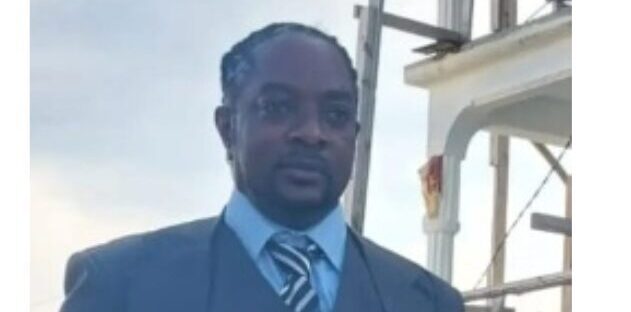
    A Surinamese repair company has launched formal legal action against a local politician, accusing him of defamation, slander, and document forgery, in a case that has amplified existing tensions over mismanagement allegations at a state-owned enterprise. On Wednesday, M.J. Sardha, a family-owned repair business based in Nickerie, filed the police report against Newalsing Nankoesing, a prominent local politician widely known by his nickname Newara.

    The conflict stems from a live social media broadcast hosted by Nankoesing, where he presented what he claimed were three official invoices from M.J. Sardha totaling more than 500,000 Surinamese dollars for work completed for Canawaima Management Company, the state-run port and ferry management firm. During the stream, Nankoesing also made public claims that Richenel Vrieze, president commissioner of Canawaima, holds hidden financial interests in M.J. Sardha, and that the business is officially registered under Vrieze’s wife’s name.

    Shaijad Sharda, legal representative for M.J. Sardha and son of the company’s owner, has forcefully refuted all of these accusations. In an interview with local outlet Starnieuws, Sharda made clear that the company never created or submitted the invoices Nankoesing displayed to Canawaima’s leadership. The business had no prior knowledge of the documents until they were spread publicly on social media, he added.

    Sharda did confirm that M.J. Sardha has carried out legitimate, contracted work for Canawaima, including major repair work on a ferry engine that remained ongoing until the controversy broke. All of the firm’s work for the state company was completed following standard transparent procurement and contracting procedures, he emphasized, pushing back on the insinuations of nepotism and conflicts of interest.

    “There is no family connection whatsoever to Mr. Vrieze. His wife does not work for our company, nor is she any relation to our family,” Sharda stated in the interview. He added that Nankoesing’s unsubstantiated claims have caused severe, lasting damage to the company’s reputation and disrupted its day-to-day operations, leaving the business with no choice but to pursue legal action.

    The legal filing comes amid a growing crisis over governance at Canawaima, with multiple officials raising alarms about ongoing irregularities at the state-owned firm. Previously, Dayanand Dwarka, chair of the union representing Canawaima workers, publicly confirmed the existence of the disputed invoices and backed claims of widespread mismanagement at the company. Separately, Lesley Daniël, Canawaima’s terminal manager, submitted a formal written report to Raymond Landveld, Suriname’s Minister of Transport, Communication and Tourism, detailing a range of alleged irregularities – including instances where the Board of Commissioners carried out operational activities that fall outside its official mandate.

    In response to the growing allegations, Minister Landveld has already announced a full overhaul of Canawaima’s leadership, confirming that the entire existing Board of Commissioners will be replaced. The new board is scheduled to be officially appointed the day after the defamation report was filed, and the minister has also ordered a full independent investigation into potential corrupt activities within the state-owned enterprise.

  • No Cabinet reshuffle on the cards’

    No Cabinet reshuffle on the cards’

    On the eve of marking one full year in office, Trinidad and Tobago Prime Minister Kamla Persad-Bissessar has confirmed that no immediate Cabinet reshuffle is planned, while offering a candid assessment of her administration’s early progress – most notably a significant drop in national crime rates. The Prime Minister made the announcement Saturday following a sod-turning ceremony for the new Hilton Garden Inn development at South Park in San Fernando, where she fielded questions from reporters on two key topics: the widely speculated restructuring of ministerial portfolios and her government’s performance ahead of its first anniversary.

    When asked about the possibility of reshuffling her Cabinet ahead of the milestone, Persad-Bissessar made her position clear: “There is no reshuffle on the cards at this time.”

    Turning to reflection on her administration’s first 12 months in office, the Prime Minister struck a balanced tone, acknowledging meaningful progress while emphasizing that a large volume of work remains to fulfill campaign pledges to the public. “I think we’ve done a lot. There’s still so much to do…we have many promises to keep… and I’m not shirking from that. I’m looking forward to continue to work for the people of our country,” she said.

    A full comprehensive breakdown of the government’s completed projects and policy achievements over the past year will be delivered by Persad-Bissessar this weekend at a national address hosted by the United National Congress at Couva South Hall. The Prime Minister used her earlier media interaction to highlight one key early win that formed the centerpiece of her party’s election campaign: falling crime statistics.

    Persad-Bissessar noted she is encouraged by consistent downward trends in criminal activity, though she stopped short of declaring victory on the issue, stressing that ongoing work is critical. “Crime was something we campaigned heavily on, and we have some achievements, (but) as I say, much more to do. Murder is down by 42%. Serious crime is down by 30%,” she told reporters. “Crime is down from 600 to whatever it was at the end of last year. And again, this year, so far, from last year to now, that too is down. So, I am very happy about that, but I’m not overjoyed, because I think there’s still much more to do.”

    She also clarified a key distinction in the government’s approach, explaining that the administration has implemented what she calls an “anti-crime plan”, rather than a generic crime plan – a deliberate framing that she said rejects the idea that the status quo works for criminals. “The crime plan is in the hands of the criminals, and the anti-crime plan, as I said, state of emergency (SoE) is one part of it. It is not the be all and end all of it,” she explained.

    Beyond a state of emergency, the government’s multi-pronged anti-crime strategy includes embedding police officers in primary and secondary schools, expanding the total size of the national police service through new recruitment drives, and allocating additional patrol vehicles to frontline law enforcement teams to improve response times. When asked about the long-delayed reform of national firearms legislation, Persad-Bissessar confirmed that policy development is currently ongoing in collaboration with the Law Reform Commission. She added that she has ordered comparative research into regulatory frameworks used in other Commonwealth countries to identify evidence-based models that can be adapted for local use. “Yes, we will reform it,” she confirmed.

  • Senator Isalean Phillip named to the World Economic Forum’s 2026 Young Global Leaders

    Senator Isalean Phillip named to the World Economic Forum’s 2026 Young Global Leaders

    In an announcement that highlights the rising influence of Caribbean leadership on the global stage, Saint Kitts and Nevis Senator and Minister of State Isalean Phillip has been named to the World Economic Forum’s 2026 Class of Young Global Leaders, the WEF confirmed in an official announcement posted to its website on April 16, 2026.

    Phillip, who serves as Minister of State for Social Development and Gender Affairs, with oversight of the Ministry of Youth Empowerment, Ageing and Disability, is one of just six Caribbean leaders selected to join this year’s cohort of 118 emerging leaders under the age of 40. The 2026 group draws accomplished change-makers from more than 50 countries across sectors including academia, private business, sports, civil society, government, arts and culture, social entrepreneurship, and media.

    The Young Global Leaders initiative, launched by the WEF to identify and elevate next-generation leadership, recognizes trailblazers who demonstrate unique capacity to bring fresh perspectives, adaptive problem-solving, and courageous leadership amid global uncertainty. With this appointment, Phillip becomes part of a sprawling global network of more than 1,400 active leaders from over 120 nations, all focused on collaborative leadership development and collective action to address pressing transnational challenges.

    Throughout her tenure in the Saint Kitts and Nevis government, Phillip has centered her policy agenda on advancing equity, social protection, and inclusive governance. Under her direction, the ministry has advanced landmark updates to the country’s child protection frameworks, creating stronger safeguards for vulnerable children, and expanded accessible opportunities for meaningful social engagement for senior citizens. A lifelong advocate for marginalized communities, she has consistently pushed for expanded rights and accessibility for people living with disabilities, and has made embedding youth voices in national policy and decision-making a core priority of her work.

    The official appointment was announced to local audiences by the St. Kitts and Nevis Information Service (SKNIS) in a press release distributed from Basseterre on April 23, 2026.

  • Fuel Prices Trend Downward as Government Delivers Targeted Cost-of-Living Relief

    Fuel Prices Trend Downward as Government Delivers Targeted Cost-of-Living Relief

    Basseterre, St. Kitts – In a tangible win for households and businesses across St. Kitts and Nevis, targeted government interventions to ease cost-of-living pressures have already delivered visible reductions in retail fuel prices, just weeks after Prime Minister Dr. Terrance Drew outlined the relief package in a national address.

    As of April 22, 2026, the maximum retail price for unleaded gasoline across both Delta and SOL Service Stations in St. Kitts has dropped to EC$18.19 per gallon. This marks a clear downward shift from prices recorded only eight days earlier, on April 14, when Delta stations charged a maximum of EC$18.42 per gallon and SOL stations set a cap of EC$19.30 per gallon.

    The immediate price reduction stems from one core policy rolled out by the Drew administration: a temporary 50% cut to the excise tax on gasoline, which lowered the levy from EC$1.95 per gallon to EC$0.98 per gallon. This measure is set to remain in effect through July 31, 2026, and represents a direct fiscal commitment of roughly EC$1.2 million from the government, designed to buffer local consumers and enterprises from ongoing volatility in global fuel markets.

    A second key relief measure is set to appear at fuel pumps in the near future: a temporary cut to the Customs Service Charge on gasoline, which will drop from 6% to 3% also through the end of July. The full impact of this adjustment will be reflected in retail prices as new fuel shipments arrive in the federation over the coming weeks.

    Officials and economic analysts project that lower fuel prices will generate broad, positive ripple effects across the St. Kitts and Nevis economy. By cutting transportation costs for both commercial operators and private motorists, the measures are expected to stabilize overall prices for everyday goods and services, ease strain on stretched household budgets, and provide critical support to key productive sectors including agriculture, manufacturing, and logistics – industries where energy and transport costs make up a large share of operating expenses.

    The St. Kitts-Nevis Labour Party Administration has reaffirmed its commitment to advancing people-centered, strategic fiscal policies that deliver measurable, on-the-ground benefits to all citizens. Amid ongoing global economic instability that continues to put upward pressure on essential goods prices worldwide, the administration says it will maintain a proactive approach to protecting public welfare, ensuring that the gains of responsible fiscal management are shared across every segment of society.

  • Nieuwe Raad van Commissarissen Canawaima wordt vandaag benoemd na ophef

    Nieuwe Raad van Commissarissen Canawaima wordt vandaag benoemd na ophef

    On April 23, the Ministry of Transport, Communication and Tourism of Suriname announced that a new Supervisory Board (Raad van Commissarissen, RvC) will be officially installed at the Canawaima Management Company (CMC) on the same day, according to Minister Raymond Landveld.

    CMC operates the critical ferry connection between Suriname’s South Drain and neighboring Guyana, a key transit link for cross-border travel and trade between the two South American nations. The major leadership reshuffle comes on the heels of public, serious allegations of conflict of interest that rocked the outgoing supervisory body.

    Per local media outlet Starnieuws’ verified sources, the new board will be led by Naraindeth Seopershad as president-commissioner, with Prakash Raghoebiren and Fandi Bogor joining as sitting members. The three members of the previous board – chair Richenel Vrieze, Abdul Madhar, and Edgar van Genderen – have been notified of the change, though their formal resignation process has not yet been fully completed.

    The decision to replace the entire supervisory board was reached following closed consultations between Minister Landveld and Suriname’s President Jennifer Simons. The process accelerated dramatically after the CMC workers’ union, headed by Dayanand Dwarka, formally withdrew its confidence in the old board’s leadership.

    The union had initially planned to launch industrial action to push for leadership changes, but ultimately called off the protests after reaching an agreement with Minister Landveld. The union made the concession to avoid disrupting ferry services, which would have harmed passengers relying on the cross-border connection. In return, Landveld committed to rapid intervention to address the union’s concerns – a promise that has now resulted in the full replacement of the supervisory board.

    As of the announcement, outgoing board members have not yet received a formal hearing from the Ministry of Transport, Communication and Tourism (TCT) or the President’s Cabinet, nor have they been placed on administrative leave pending the finalization of the transition.

  • Employers Must Allow Paid Time Off for Voting on Polling Day

    Employers Must Allow Paid Time Off for Voting on Polling Day

    As preparations get underway for the 2026 general elections in Antigua and Barbuda, the nation’s independent Electoral Commission has issued a formal public advisory reinforcing critical legal requirements for employers across the country, centered on protecting workers’ right to participate in democratic governance.

    The official reminder draws its authority from Section 34(1) of the Representation of the People (Amendment) Act, a piece of legislation first enacted in 2001 that enshrines voting access protections for employed voters. Per the statute, every employer operating in Antigua and Barbuda holds a non-negotiable legal duty to grant every eligible voter who is on their payroll a minimum of four consecutive hours of leave on polling day to travel to their polling location and cast their ballot.

    The legislation does not stop at mandating time off: it also explicitly prohibits employers from any form of retaliatory action against workers exercising this right. This includes a complete ban on wage deductions, reduced hours penalties, demotions, or any other adverse employment consequence imposed specifically because an employee takes their legally entitled time to vote.

    According to election officials, this long-standing regulatory provision was crafted to remove one of the most common barriers to electoral participation for working people. For employees with rigid shift schedules, non-flexible work hours, or jobs that pay hourly wages, taking unpaid time off to vote can create significant financial hardship that pushes many to skip casting a ballot entirely. By guaranteeing paid, uninterrupted time to vote, the regulation aims to level the playing field and ensure that every eligible citizen, regardless of their employment circumstances, has an equal and unimpeded opportunity to shape the future of their country through the ballot box.

  • Minister Soeropawiro belooft doorbraak in slepende grondkwestie Mariënburg

    Minister Soeropawiro belooft doorbraak in slepende grondkwestie Mariënburg

    On April 23, a landmark public gathering between senior Surinamese government officials and residents of Mariënburg brought long-simmering land rights issues in the region to the forefront of national policy action, with top leaders announcing an end to delayed talks and the launch of a targeted, case-by-case resolution process.

    Thousands of local residents packed the venue of the meeting, held by the Ministry of Land and Forest Management, after years of waiting for formal clarification on their legal land ownership claims. For decades, Mariënburg residents have navigated systemic uncertainty around land tenure, with repeated unfulfilled promises from previous administrations leaving deep public distrust.

    Opening the meeting, Minister of Land and Forest Management Stanley Soeropawiro delivered a clear, uncompromising message to attendees: the phase of rhetorical commitment is over, and tangible, on-the-ground action is set to begin immediately. “Let me be perfectly clear,” Soeropawiro stated. “If our government can successfully resolve complex challenges like illegal land occupation, there is no credible reason why the decades-long issues in Mariënburg cannot be fixed.”

    Bronto Somohardjo, chair of the Standing Committee on Land Affairs in the National Assembly, echoed the minister’s commitment, drawing a clear distinction between the current administration’s approach and pre-election political performativity criticized by local residents. “We are not here today to play politics,” Somohardjo emphasized. “If that were our goal, we would have followed the same playbook as the VHP: call you in right before an election, hand you a meaningless piece of paper with no legal standing, and disappear. That is not what the people of Mariënburg deserve.”

    Instead of empty promises, the ministry has rolled out a new, community-centered resolution strategy: direct documentation collection and individual case assessment. Local residents have been formally called on to submit all relevant paperwork supporting their claims, including land allocation letters, payment receipts, and formal plot boundary information. Officials will review each dossier individually to develop targeted, long-term structural solutions that resolve tenure uncertainty permanently.

    Soeropawiro framed the public gathering as an official turning point for the region, saying, “The era of waiting and uncertainty must come to an end. We will now work step by step to deliver clarity, justice, and solutions that last.” The ministry’s core priority throughout this process is to rebuild fractured public trust: rather than relying solely on communication, officials have committed to delivering visible, measurable results that address the community’s decades-old grievances.

  • Migration Director calls for stronger security and professionalism at entry points

    Migration Director calls for stronger security and professionalism at entry points

    In a recent gathering of immigration control personnel in Santo Domingo, the top leader of the Dominican Republic’s General Directorate of Migration has laid out clear new expectations for officers working across the country’s ports, airports, and land border crossings. Luis Rafael Lee Ballester, the agency’s head, used the meeting to underscore that every member of the immigration workforce must anchor their daily work in three core principles: unwavering professionalism, strict ethical standards, and a profound commitment to protecting the Dominican Republic’s national security.

    Beyond security imperatives, Lee Ballester highlighted the dual role immigration officers play as both gatekeepers of the nation and ambassadors of Dominican hospitality. With the Dominican Republic welcoming roughly 26 million international visitors annually, he noted that the efficiency and warmth of immigration procedures shape how the entire world perceives the country. He pressed frontline inspectors and their supervisory teams to strike a careful balance: maintaining rigorous security checks without creating unnecessary delays, and delivering consistent, respectful treatment to every traveler, regardless of their origin or background.

    Lee Ballester further reminded attendees that their positions carry unique public responsibility. As the very first point of contact for people entering the Dominican Republic and the last interaction for those departing, immigration staff collectively shape the country’s global reputation. In addition to customer service standards, he emphasized the urgent need to strengthen internal oversight protocols, aimed at stopping transnational criminal networks from using the Dominican Republic as a transit hub or safe haven for illicit activities.

    The meeting drew senior representatives from the agency’s immigration intelligence and border security divisions, who aligned with Lee Ballester’s priorities. Together, authorities reaffirmed their commitment to rolling out standardized operating procedures, sustaining constant security vigilance across all entry and exit points, and safeguarding the positive international standing the Dominican Republic has built as a leading travel and trade destination in the Caribbean.

  • Taiwan’s President’s visit to Eswatini blocked by mainland China

    Taiwan’s President’s visit to Eswatini blocked by mainland China

    A planned official visit by Lai Ching-te, leader of the Taiwan region, to the Kingdom of Eswatini has been forced into postponement after multiple countries along the proposed travel route withdrew overflight clearances under pressure from mainland China, Taiwan’s representative office in Haiti announced this week. The trip, originally scheduled to run from April 22 to 27, was meant to mark national celebrations in Eswatini, one of the few countries that still formally recognizes Taiwan.

    In an official statement released Wednesday, the representative office said the abrupt cancellation of overflight authorizations eliminated the necessary security conditions for Lai, his accompanying delegation and the presidential aircraft to complete the journey safely. In response to the change of plans, Lai has appointed a special envoy to attend Eswatini’s national events in his place.

    The statement pinned the blame for the canceled permits directly on Beijing, claiming the affected countries made their decisions after facing economic coercion and political pressure from Chinese authorities. It argued that these actions violate the sovereignty of the countries that withdrew the permits, threaten the safety of global civil aviation travel, and run counter to long-standing international norms and standard practices for cross-border air travel.

    The Taiwan region’s government issued a formal condemnation of the move, reaffirming its claim that Taiwan is a sovereign entity and that its 23 million residents are entitled to unimpeded, un-intimidated participation in international affairs.

  • A signature for peace, and for the sacred duty to defend the Homeland

    A signature for peace, and for the sacred duty to defend the Homeland

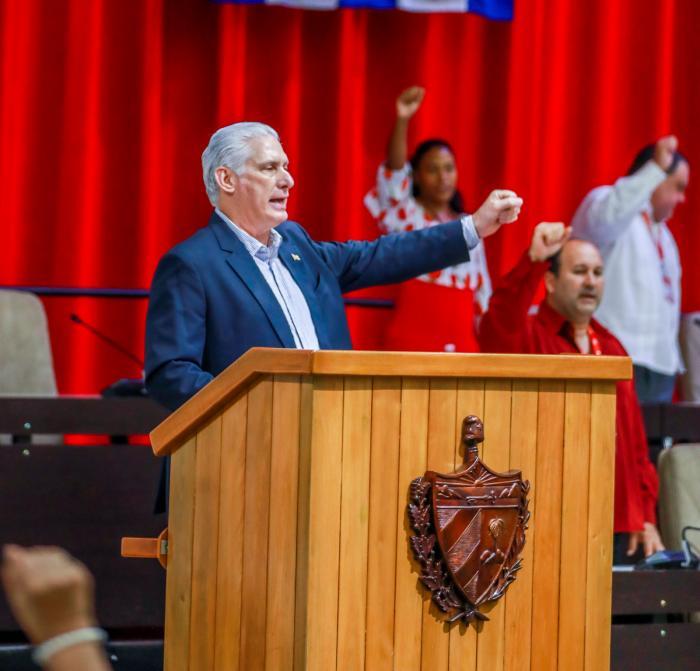
    On Wednesday morning, Cuba’s highest political leader, Miguel Díaz-Canel Bermúdez — who holds dual roles as First Secretary of the Central Committee of the Communist Party of Cuba and President of the Republic of Cuba — took part in a solidarity gathering at the Communist Party Central Committee Headquarters to publicly back the growing ‘My Signature for the Homeland’ movement.

    The grassroots initiative has emerged as a nationwide call to action, inviting every Cuban to stand together in defense of the country’s revolutionary project and national sovereignty in the face of what Cuban officials frame as external imperial aggression. During Wednesday’s event, both senior party officials and administrative staff based at the headquarters added their signatures to the initiative, which is already circulating through communities, workplaces and public institutions across the entire island.

    Díaz-Canel first outlined the movement’s broader ambitions during an April 16 commemoration of the 65th anniversary of the proclamation of the Cuban Revolution’s socialist character. At that event, he stressed that the signature drive should grow beyond Cuba’s borders to become a global solidarity movement, tasked with sharing the unfiltered truth of Cuba’s situation with audiences across the world. This includes raising international awareness of the widespread harm inflicted on the Cuban people by the long-standing U.S. economic blockade, a measure that has been escalated into a multidimensional economic war further tightened by an energy embargo. Díaz-Canel has described this campaign as genocidal, pointing to the severe, widespread deprivation it has imposed on all sectors of Cuban society.

    Wednesday’s gathering, which also included attendance from Roberto Morales Ojeda, a member of the Communist Party Political Bureau and Organization Secretary of the Central Committee, is just one of hundreds of similar events rolling out across the country. It follows an initial high-profile signing held April 19 at the Bay of Pigs, a historic site of Cuban resistance to foreign intervention, where Díaz-Canel and other senior leaders of the revolution first put their names to the initiative.

    That opening signing ceremony reaffirmed the Cuban nation’s long-standing, unwavering commitment to peace, a core value rooted in the national identity forged through decades of resistance. It also reiterated a principle enshrined in Cuba’s constitution: that standing in defense of the nation is not merely a fundamental right for Cuban citizens, but the highest honor and most fundamental supreme duty of every person on the island.