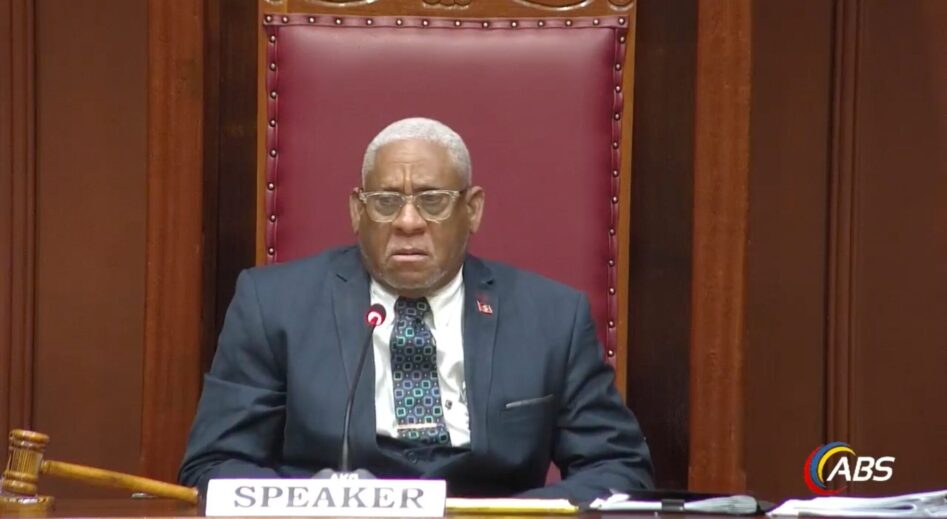
The opening days of a new parliamentary term have already brought the first high-profile dispute, centered on whether the Speaker of the House is upholding the critical requirement of impartiality that underpins functional legislative debate. During Tuesday’s sitting of the House of Representatives, the tension unfolded right after Opposition Leader Jamale Pringle completed his formal swearing-in as the elected Member of Parliament for the All Saints East and St. Luke constituency.
In his opening remarks, Pringle called for sweeping cultural change in the chamber, pushing for a more respectful and inclusive space that can accommodate substantive, meaningful policy debate. At the core of that vision, he emphasized, is a Speaker who remains strictly neutral when presiding over proceedings. While Pringle acknowledged that current Speaker Osbert Frederick holds a personal commitment to fairness, he publicly questioned whether that commitment has consistently translated into action during parliamentary business, noting that “sometimes it’s not shown.”
Frederick did not let the criticism go unchallenged, responding immediately to the opposition leader’s remarks from the chair. He issued a direct call to back up the accusation, demanding: “I would want you to mention one occasion when I have not been fair.” The Speaker went on to robustly defend his entire record in the role, stressing that every ruling he has delivered has been rooted in the chamber’s governing rules. “I have never ruled outside of the standing order,” he asserted, confirming that he would continue to strictly apply the Standing Orders to all parliamentary business going forward.
After the initial back-and-forth, Pringle moved to de-escalate the tension, clarifying that he never intended to signal personal disrespect toward Frederick. He offered a formal apology if the Speaker felt his comments had been a slight, and outlined his hopes for the new term: a productive working dynamic between the governing majority and opposition bloc, where all elected members get equal opportunity to contribute to full and open debate on key issues.
Beyond the immediate clash, Pringle also raised a longstanding procedural grievance, urging the government to circulate draft legislation to opposition lawmakers far earlier in the legislative process. This earlier distribution, he argued, would give opposition teams enough time to conduct thorough research and prepare constructive input ahead of formal parliamentary discussions, strengthening the quality of legislation overall.
This brief but charged exchange stands as one of the first defining moments of the new parliamentary session, and it brings long-simmering questions about legislative procedure and the Speaker’s neutral role in balancing government and opposition voices to the forefront of public attention.