分类: politics

  • Fernandez Lists Roads, Water and Clinic Upgrades as Top Priorities in Rural North

    Fernandez Lists Roads, Water and Clinic Upgrades as Top Priorities in Rural North

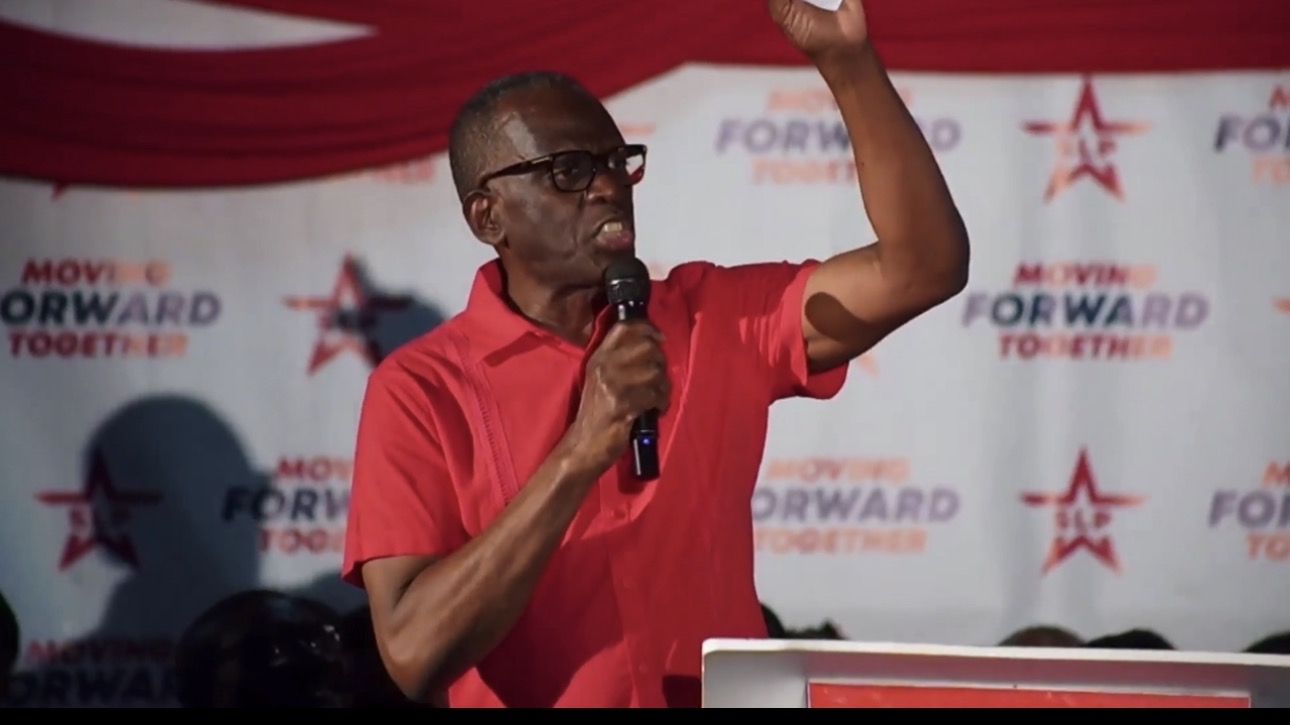
    As the April 30 general election draws near, the tight race for the St. John’s Rural North parliamentary seat has put basic public services and infrastructure at the center of campaign discourse. Incumbent candidate and current Tourism Minister Charles Fernandez laid out his constituency’s most pressing unmet needs in a recent “Know Your Candidate” interview, confirming that road networks, potable water access, and community healthcare remain the top three priorities for area residents, even as ongoing work addresses longstanding gaps.

    Fernandez emphasized that transportation infrastructure tops the list of resident concerns, a challenge his team has prioritized throughout his current term. He pointed to active upgrade and repair projects across multiple communities in the constituency, including Yorks, Cedar Grove and Mount Pleasant — regions where some neighborhoods still lacked fully paved roads before current works got underway. To speed up delivery of these projects, Fernandez confirmed that additional construction resources and financing are on the way. A third paving machine will soon be deployed to expand work capacity, while new funding will allow crews to extend upgrades to more neighborhoods across the constituency.

    A reliable, consistent potable water supply is the second core issue dominating Fernandez’s agenda. He noted that the national government has already channeled major investments into expanding water production and distribution, including upgrades to reverse osmosis treatment facilities and overhauls of existing pipeline networks. These investments have already delivered measurable results: daily water output across the area now sits at roughly 11 million gallons, and that number is projected to climb further as new treatment capacity comes online in the coming months. Even with this progress, Fernandez acknowledged that legacy infrastructure challenges persist, noting that aging pipes and outdated control valves continue to cause service disruptions in some neighborhoods. “It is still a challenge in some areas… it’s not perfect,” he said, confirming that full system modernization remains a key goal for a new term.

    On the healthcare front, Fernandez highlighted improving community-level access to care as a non-negotiable priority. The core of this push, he explained, is expanding service offerings at local clinics to reduce the need for residents to travel longer distances for routine care. He publicly backed plans to extend clinic operating hours and increase the number of full-time doctors assigned to local facilities, changes designed to accommodate residents who cannot attend appointments during standard daytime working hours. “That is something that I welcome immensely… and something I think is needed,” he said of the proposal.

    Fernandez confirmed that if voters return him to office, these three core priorities will continue to guide his work, with an unwavering focus on delivering the basic public services that shape daily life for every constituent in St. John’s Rural North. With the race widely expected to be one of the most closely contested contests in the upcoming general election, the outcome will likely hinge on candidates’ ability to convince voters they can deliver tangible progress on these high-priority infrastructure and service issues.

  • Kandidaten VN-chef beloven hervormingen en herstel vertrouwen

    Kandidaten VN-chef beloven hervormingen en herstel vertrouwen

    As the United Nations prepares to select a new leader to succeed incumbent Secretary-General António Guterres in 2027, four early candidates took center stage this week at public hearings with UN member states and civil society groups, all pledging to embrace sweeping institutional reforms to reverse the global body’s declining credibility and restore its central role in international cooperation.

    Founded in the aftermath of World War II to prevent catastrophic global conflict and advance shared development, the UN has faced growing criticism in recent years over eroding authority and public trust. Deepening geopolitical rifts between major powers have strained the organization’s ability to respond to global crises, while its sprawling institutional structure has led to calls for cost-cutting and greater efficiency, putting pressure on the 193-member body to prove its ongoing relevance in a shifting world order.

    Among the candidates is Rebeca Grynspan, 70, a former vice-president of Costa Rica and current head of the UN Conference on Trade and Development (UNCTAD), who identified UN peacekeeping operations as her top priority if selected. She sounded the alarm over falling global confidence in the organization, urging bold, decisive action to update its structures. “Defending the United Nations today means having the courage to change it,” Grynspan stated during her hearing.

    She is joined on the candidate list by another former regional leader, 74-year-old Michelle Bachelet, ex-president of Chile and former UN High Commissioner for Human Rights. If either candidate wins, they will make history as the first woman to lead the UN. Bachelet used her hearing to emphasize her longstanding commitment to advancing gender equality and women’s rights globally, though her candidacy has drawn backlash from conservative U.S. politicians over her public support for abortion access.

    Former Senegalese President Macky Sall, 64, is also in the race, campaigning on a platform of rigorous institutional management. Sall has pledged to streamline coordination across the UN’s dozens of independent agencies and eliminate redundant work practices. “This is the moment to deliver better performance with fewer resources,” he argued, outlining a vision of a revitalized UN whose most impactful work still lies ahead.

    The fourth early candidate is Rafael Grossi, 65, an Argentine diplomat who has served as head of the International Atomic Energy Agency (IAEA), the UN’s nuclear watchdog, for six years. Grossi framed ongoing institutional reform efforts as a necessary starting point for the organization, but stressed that significant work remains to address the UN’s structural challenges.

    The winning candidate will secure a five-year term, with an option to renew for a second five-year term. Compared to the 2016 selection cycle that ultimately elevated Guterres from a field of 13 contenders, the current candidate pool is far smaller at this early stage, though the door remains open for new contenders to join the race in the coming months.

    By longstanding convention, the secretary-general role is not filled by a national of the UN Security Council’s five permanent members — China, France, Russia, the United Kingdom, and the United States — a rule designed to prevent an unhealthy concentration of power among the world’s major nuclear-armed states. Even so, the backing of these permanent powers remains a critical factor in the complex, closed-door selection process, which requires Security Council endorsement before a candidate is confirmed by the General Assembly.

    Against a backdrop of overlapping global crises, from intensifying armed conflicts to accelerating climate change and widening global inequality, the next UN secretary-general will face one of the most daunting leadership jobs in the world: rebuilding public and multilateral trust in the UN, and reasserting the organization’s place as the central platform for collective global problem-solving.

  • Analyst Says Three Marginal Seats Likely to Decide General Election Outcome

    Analyst Says Three Marginal Seats Likely to Decide General Election Outcome

    As Antigua and Barbuda enters the final week of campaigning ahead of its hotly contested general election, a leading political analyst has mapped out the narrow pathways to power for both major parties, identifying three toss-up constituencies that will almost certainly decide who forms the next government.

    Political commentator Arvel Grant has highlighted City East, St. George, and St. Mary’s North as the critical battlegrounds that will swing the election, pointing out that all three seats were decided by margins of less than 3 percentage points in the most recent contest. These razor-thin past results have transformed the three constituencies into unpredictable, highly competitive races where neither side can take victory for granted. According to Grant, neither the ruling Antigua and Barbuda Labour Party (ABLP) nor the opposition United Progressive Party (UPP) can reasonably claim to hold a safe lead in any of the three districts heading into polling day.

    For the UPP, the roadmap to a parliamentary majority requires a careful combination of holds and gains, Grant explains. The opposition must first retain all six seats it won in the 2023 election, secure upset victories in both City East and St. Mary’s North, and count on its long-standing coalition partner the Barbuda People’s Movement to hold onto its single Barbudan seat. If the UPP pulls off this sequence of outcomes, it will clinch exactly the number of parliamentary seats needed to form a new administration, Grant notes.

    Meanwhile, the incumbent ABLP faces a simpler but still highly uncertain path to re-election. The ruling party only needs to hold onto its current base of eight core seats and win just one of the three key marginal constituencies to cross the threshold for a majority, Grant says. Even a single gain from the toss-up seats will be enough for the ABLP to retain power if it holds its existing strongholds.

    Beyond the three critical battlegrounds, Grant also flagged three additional constituencies to watch on election night: Rural East, Rural North, and St. Paul’s. These districts have a well-documented history of swinging between parties between elections, with voter loyalties shifting in response to changing national political sentiment and hyper-local issues that resonate with regional electorates, he explained. Unlike safer, solidly partisan seats, these districts remain fluid and up for grabs.

    Grant also emphasized two overarching factors that could upend all pre-election projections: voter registration rates and overall voter turnout on polling day. High levels of new voter re-registration have historically tended to benefit opposition parties, he noted, while low overall voter turnout creates volatility and makes final results far harder to predict. The analyst urged both major parties to prioritize aggressive get-out-the-vote operations to mobilize their base supporters over the final week of campaigning.

    In closing, Grant reaffirmed that the election will be decided at the margins, with the road to parliamentary majority running directly through the three key contested constituencies. “Ultimately, the path to government will run through the three marginal seats,” he said. “Whatever happens, the election will likely be determined by City East, St. George or St. Mary’s North.”

  • Defending Cuba means defending justice and sovereignty

    Defending Cuba means defending justice and sovereignty

    Authored by Yadirys Echenique Paz, Cuba’s Ambassador to Grenada, this commentary traces Cuba’s modern trajectory through decades of external pressure, while framing the island’s revolutionary project as a enduring example of self-determination and global solidarity that demands renewed international support in 2026.

    No account of Cuba’s modern history can be complete without addressing the persistent threats that have shaped the island’s national experience up to the present day. For more than six decades, a crippling economic blockade, coordinated international smear campaigns, and relentless diplomatic pressure have all been wielded with the explicit goal of cutting Cuba off from the global community. Yet this campaign of isolation has been met with a powerful counter-movement: tens of thousands of people across every continent have rallied to Cuba’s defense, recognizing that protecting the island’s right to self-determination is itself a defense of national dignity for all small and developing nations.

    From its earliest days, the 1959 Cuban Revolution emerged as a guiding light for progressive movements across the globe. Its unwavering resolve in the face of imperial pressure inspired generations of anti-colonial and progressive fighters across Latin America, Africa, and Asia, while earning widespread sympathy among progressive social groups in Europe. The transformations that followed the overthrow of Fulgencio Batista’s authoritarian regime were never confined to Cuba’s borders; the revolution crossed continents to become a global banner of progressive change that retains its urgent relevance more than 60 years later.

    Cuba’s global influence after 1959 extended far beyond symbolic inspiration. Over the past six decades, the Cuban people have intertwined their national story with the struggle of Global South nations for independence and equity. From the valiant resistance of Cuban military contingents against the 1983 United States invasion of Grenada, to the deployment of tens of thousands of Cuban civilians and service members to support anti-colonial liberation movements across Africa, the island has a long track record of standing in solidarity with marginalized nations. This commitment also extends to social development: Cuba has implemented life-changing public health programs such as Operación Milagro (Operation Miracle), which has provided free eye care to millions of low-income people across the Global South, and literacy initiatives such as Yo Sí Puedo (Yes I Can) that have lifted millions out of illiteracy. During global crises ranging from natural disasters to the COVID-19 pandemic, Cuban medical brigades have been among the first to arrive in hard-hit nations to provide critical care.

    This decades-long commitment to international solidarity has come at a steep human cost. Hundreds of Cuban internationalists have lost their lives serving in distant lands, united by the core belief that the fight for justice does not stop at national borders. Their sacrifice stands as proof of the consistency of Cuba’s revolutionary project: it does not merely proclaim lofty principles, but turns them into tangible, on-the-ground action in every struggle beyond the island’s borders.

    Today, as external threats grow more intense and coordinated disinformation campaigns multiply, defending Cuba has become synonymous with defending justice and national sovereignty for all peoples resisting foreign domination. Expressions of solidarity with the island are part of a shared global struggle against great power hegemony. Standing up to the United States’ longstanding hostile policies toward Cuba is an act of supporting a people’s right to live in peace, shape their own future free from external coercion, and uphold the resilience of a nation that continues to be a beacon of hope for progressive movements across the globe.

    Against the backdrop of a renewed 2026 offensive by U.S. imperialism against Cuba—marked by harsh new energy sector sanctions and coordinated attempts at political destabilization within the island—active international solidarity has become an urgent necessity. Every public statement condemning aggression, every mass march rallying to defend the Cuban Revolution, every public manifesto denouncing the ongoing blockade is a direct act of defending the universal principles of sovereignty and justice. By contrast, those who choose silence at this critical moment stand complicit with the forces seeking to undermine Cuba’s right to self-determination.

    In this moment of heightened pressure, the commentary calls on global supporters to recall Fidel Castro’s words during a May 8, 1959 address: “Our Revolution needs the solidarity of other brotherly peoples (…) to become stronger, to become firmer, and to carry forward a programme of the broadest dimension.” That 65-year-old call remains just as urgent today, because as Cuba’s revolutionary project survives, it preserves a global vision of national sovereignty, social justice, and cross-border solidarity that is worth defending—not only for the Cuban people, but for all peoples across the world.

    *Disclaimer: NOW Grenada does not take responsibility for the opinions and content shared by this contributing author.*

  • Dr. Philmore Benjamin Puts Healthcare Reform at Center of Campaign, Proposes Tiered System to Ease Hospital Burden

    Dr. Philmore Benjamin Puts Healthcare Reform at Center of Campaign, Proposes Tiered System to Ease Hospital Burden

    As Antigua and Barbuda prepares for its April 30 general election, a seasoned local physician has made transforming the nation’s healthcare system the centerpiece of his bid for public office. Dr. Philmore Benjamin, the Antigua and Barbuda Labour Party (ABLP) candidate running for the St Mary’s North constituency, laid out his comprehensive restructuring plan during a televised and radio interview on ABS Television/Radio Thursday morning, drawing on 30 years of frontline medical experience to frame his policy agenda.

    Decades of working directly with patients in the community have given Benjamin a unique perspective on the systemic flaws driving poor health outcomes for local residents, he explained during the appearance. “As a practicing physician for the past 30 years, I have seen a lot and I have learned a lot,” Benjamin said, emphasizing that many of the health struggles citizens face can be traced back to misaligned policy decisions.

    For Benjamin, fixing the nation’s healthcare system starts at its most foundational level: community-level primary care. “Primary health care starts at the level of the clinics. And that is the first contact with patients,” he noted. His proposed multi-tiered model aims to expand the scope of care available at existing village clinics, while introducing a new network of polyclinics to fill the current gap between basic community care and tertiary hospital services.

    Under this plan, polyclinics would bring diagnostic services and specialist care that are currently only available at the main tertiary hospital directly to local communities. “We’d expect to have now some specialist services in these clinics… rather than going to the hospital maybe to get an X-ray, maybe ultrasound,” Benjamin explained. By shifting non-critical care from the main Sir Lester Bird Medical Centre to community and polyclinic settings, the plan directly targets the persistent overcrowding that has strained the island’s flagship hospital. “To fix that, we have to fix primary health care,” Benjamin said, adding that a hospital should never be forced to function as a frontline primary care clinic.

    Beyond the core polyclinic and primary care expansion, Benjamin’s plan also includes expanded access to geriatric physiotherapy, increased at-home care services for vulnerable patients, and stronger public health education focused on preventing both communicable and non-communicable diseases.

    While his campaign platform covers five key pillars – including youth development, environmental stewardship, elder care, and public safety – Benjamin stressed that healthcare remains the backbone of any meaningful effort to raise local quality of life. “My intention really is to improve standard of living and quality of life,” he said.

    Having practiced medicine in the St Mary’s North community for more than 30 years, Benjamin noted that his deep, long-standing ties to the area have shaped a campaign rooted in personal familiarity and public service. Many constituents already know him through his decades of medical work, and voter response has been largely positive so far, he reported. “So far, so good,” he said of the early reception on the campaign trail.

  • SVG passes CARICOM law on more secure air travel

    SVG passes CARICOM law on more secure air travel

    On Tuesday, April 21, 2026, St. Vincent and the Grenadines (SVG) passed a landmark piece of national security legislation: the Advanced Passenger Information and Passenger Name Record Bill 2026. While Deputy Prime Minister and National Security Minister St. Clair Leacock, who also holds oversight for immigration, acknowledged the legislation is far from the most attention-grabbing policy passed by Parliament, he emphasized it is one of the most critical steps the country has taken to modernize border protection and improve cross-border travel for legitimate visitors.

    The new law replaces SVG’s outdated Advanced Passenger Information Act, building a far more comprehensive regulatory framework that governs the collection, cross-border transmission, secure sharing, encrypted storage, and official oversight of Advance Passenger Information (API) and Passenger Name Record (PNR) data for all travelers entering, departing, or transiting through SVG’s ports and airports. It is not an isolated policy change; instead, it forms part of a harmonized model law adopted across the 15-nation CARICOM bloc, designed to align regional border control and security protocols into a single, coordinated system.

    Leacock told lawmakers that SVG, a small island developing state, faces outsized border management challenges amid growing travel volumes. Official travel data shows roughly 32,000 travelers arrived and departed from SVG in both February and March 2026, with more than 11,500 people entering via air travel alone and nearly 12,000 air departures recorded in the month. For a nation of SVG’s size, these volumes create immense responsibility for security officials, requiring modernized data-driven systems that mitigate transnational crime risks while keeping travel processes efficient and convenient for law-abiding passengers.

    Leacock noted that modern airline travelers consistently prioritize two core outcomes: fast, frictionless immigration processing, and robust safety protocols that do not compromise public security. The new API/PNR framework, he argued, directly addresses both priorities by enabling pre-arrival risk assessments that speed up processing for low-risk travelers while flagging potential threats before a plane or vessel ever departs for SVG.

    Multiple regional and international security and aviation bodies will play key roles in upholding the new framework. The Trinidad-based CARICOM Implementation Agency for Crime and Security (CARICOM IMPACS) hosts the regional API/PNR database and manages core supporting security systems, while Barbados’ Joint Regional Communication Centre leads on-ground operational data management. International bodies including Interpol and the International Air Transport Association (IATA) will also participate as part of the global security and aviation network that underpins the system.

    Leacock stressed that air travel and border security are only as strong as the weakest link in the regional and global chain, requiring every participating state to take full ownership of its own segment of the system. He highlighted recent high-stakes security incidents across the Caribbean that underscore the urgent need for coordinated modern border controls: a fatal shooting of a police officer in Trinidad and Tobago that was followed by the disappearance of more than 60 firearms, which prompted Port of Spain to tighten port controls and alert neighboring countries including SVG to increase screening for inter-island travelers. In another incident, a police officer in Grenada was attacked and his weapon stolen, with the suspect later apprehended in SVG. Closer to home, SVG authorities recently intercepted 396 packages of cocaine worth an estimated $12 million from a vessel off the country’s Leeward Coast – a seizure that creates ongoing security risks as criminal groups seek to recover the lost contraband.

    “These are not artificial constructions,” Leacock told Parliament. “They are real-life situations. Border security is a very important matter for the peace, security, well being of Vincentians.”

    Under the new law, border security is formally defined as protecting national borders from the illegal movement of weapons, drugs, contraband, and people, while actively facilitating lawful trade and travel. The core function of the new framework is to ensure that by the time a passenger boards an aircraft or vessel bound for SVG, local authorities already know the traveler’s identity, purpose of travel, and any potential security risk they may pose.

    The legislation places clear mandatory obligations on captains of aircraft and vessels, or their designated agents, to submit complete API and PNR data in standardized formats via the CARICOM electronic manifest single window platform. Strict deadlines are set for pre-departure and pre-arrival data submissions, which allows security officials to complete risk assessments ahead of arrival, and to verify or correct inaccurate data before the traveler reaches SVG.

    To address privacy concerns, the law includes strict provisions requiring confidential handling of all traveler data, with access restricted exclusively to designated authorized security agencies, and only granted following a formal written request and approval from SVG’s competent national authority. It also enshrines individual rights: travelers can request access to their own API data to verify its accuracy, challenge incorrect information, request corrections, and seek legal redress in cases of errors such as mistaken identity.

    Leacock framed the passage of the bill as part of a broader global technological shift reshaping modern travel and border security. He referenced recent briefings from Caribbean Bank Note, the manufacturer of SVG’s passport booklets, on emerging biometric and electronic passport technologies, including chip-enabled documents designed for fast machine reading and extended durability. Looking ahead, the SVG government also plans to expand processing capacity at Argyle International Airport, adding self-service kiosks that allow travelers to scan digital documents and mobile credentials to complete immigration formalities far faster than traditional manual processing.

  • Senator presents motion urging support for dev’t bank

    Senator presents motion urging support for dev’t bank

    Following the New Democratic Party (NDP)’s landslide victory in St. Vincent and the Grenadines’ (SVG) November 27 general election, the new administration has moved forward on one of its core campaign pledges: establishing a dedicated national development bank to unlock broad-based economic growth.

    Government Senator Chelsea Alexander tabled the long-awaited motion before SVG’s Parliament this week, framing the institution as a critical policy tool to strengthen the backbone of the country’s economy — small and medium-sized enterprises (SMEs). Unlike larger economies dominated by multinational conglomerates, SVG’s economic activity is driven by local micro and small businesses, from neighborhood beauty salons and family-owned restaurants to independent food vendors and creative ventures, Alexander noted, highlighting these local enterprises as living testaments to Vincentian resilience and entrepreneurial spirit.

    The push for a dedicated development bank is not a new concept for SVG, and the proposal draws on the country’s decades-long experience with development financing. Prior to 2000, these functions were handled by the St. Vincent and the Grenadines Development Corporation (DEVCO), but its overly broad mandate diluted the focus on targeted development lending. In 2000, the then-NDP government established a standalone development bank by law, with a clear mission to support enterprises across agriculture, fishing, tourism, housing and industry. That changed in 2009, when the institution was merged with the former National Commercial Bank to form the current Bank of St. Vincent and the Grenadines, creating a hybrid commercial-development entity. While the merger strengthened the country’s commercial banking sector, Alexander explained, it sidelined the core development mandate: development financing became increasingly narrow over time, leaving early-stage entrepreneurs, high-risk projects and emerging sectors locked out of affordable capital.

    Alexander emphasized that this gap is not a failure of commercial banks, which by design are risk-averse and prioritize profit generation. Instead, it creates a clear need for a specialized public institution focused on bridging market gaps to advance national development. The motion tabled this week does not call for immediate creation of the bank. Instead, it asks Parliament to greenlight a full comprehensive review of SVG’s existing development finance system, after which the government will present a detailed policy paper or draft legislation outlining a modern, targeted development finance framework aligned with the NDP administration’s four core economic pillars: agriculture, the blue economy, tourism, and the new creative and digital economy.

    The proposed bank would fill critical unmet needs across every key sector of SVG’s economy, Alexander argued. For rural communities dependent on farming and fishing, where livelihoods are concentrated in the newly designated special development zones of North Leeward, North Windward and the Southern Grenadines, the bank would provide fair, flexible credit to help farmers purchase modern equipment, scale operations, and compete in regional markets, while enabling fishers to invest in new boats, refrigerated storage, vessel tracking systems and critical communications tools. For the tourism sector, the bank would offer more than just capital: it would also provide targeted technical assistance and training to help small tourism projects succeed. Most notably, the bank would address a growing barrier for young Vincentians entering emerging sectors such as podcasting, social media influencing, graphic design and co-working, where entrepreneurs often do not meet the strict collateral requirements of traditional commercial lenders. By offering flexible funding tailored to these new ventures, Alexander said the institution would invite young people to innovate, reimagine traditional industries, and drive long-term economic diversification.

    Beyond direct lending, the national development bank would serve a range of additional key functions: it would act as a conduit for international and regional development funding, run national outreach initiatives including entrepreneurship internships, and strengthen public-private partnerships to advance sustainable, inclusive growth. Alexander framed the bank as a deliberate departure from a laissez-faire approach to economic growth, noting that the institution would ensure progress is intentionally designed, strategically funded, and equitably shared across all communities, guaranteeing that no sector, region or citizen is left behind.

    When Parliament adjourned for the day Tuesday, debate on the motion had not concluded. By parliamentary rules, debate on private member’s motions must end by 5 p.m. local time. Following the adjournment, Prime Minister Godwin Friday, leader of the NDP, requested that debate be paused until a future date to be announced at a later time. Alexander called for bipartisan support for the measure, noting that a national development bank was a core campaign promise across both major political parties: the NDP made the proposal a central pledge to voters during the 2024 general election, which saw the incumbent Unity Labour Party (ULP) voted out of office in a historic 14-1 split of the 15-seat Parliament.

  • Voter ID Replacement Programme Passes 60% Completion in Antigua and Barbuda

    Voter ID Replacement Programme Passes 60% Completion in Antigua and Barbuda

    A national voter identification card replacement program in Antigua and Barbuda has crossed the 60% completion threshold, according to the latest official data published by the country’s Electoral Commission. The commission’s April 2026 performance report reveals that a total of 31,391 applications have been fully processed since the initiative launched, with 8,040 of those applications completed in the month of April alone. This brings the nationwide completion rate to roughly 61% of all registered voters.

    Progress across the country’s 17 parliamentary constituencies has been far from uniform, with some regions recording far higher uptake than others. The constituency of St Peter leads all regions with an impressive 91% completion rate, outpacing every other area by a significant margin. Behind St Peter, the island of Barbuda sits in second place with a 78% completion rate, followed closely by St Philip North at 76%. All Saints West and St Mary’s South also rank among the top-performing regions, with both hitting or surpassing the 67% completion mark.

    Despite the strong overall national figure and high performance in several constituencies, a handful of regions are still lagging behind the national average. Both St John’s Rural South and St Mary’s North have recorded completion rates just under the 60% threshold, while St John’s City West is sitting exactly at the national average of 61%. These disparities highlight uneven outreach and participation across different parts of the twin-island nation.

    A closer look at daily processing data from the third week of April, spanning 19 to 25 April, reveals a clear pattern in workflow. Over the seven-day period, electoral officials processed 1,088 replacement ID applications. Processing activity peaked during the first half of the week, with 393 applications logged on 20 April and 335 more processed the following day. However, activity slowed dramatically over the weekend, with no applications processed between 23 April and 25 April.

    In addition to slowing weekend activity, the data also shows that the rate of new applicants joining the replacement program has dropped off in recent weeks. During that same 19–25 April period, only 148 new applications were submitted by eligible voters. This trend indicates that while officials continue to process existing applications at a steady pace, the pool of voters who have not yet initiated the replacement process is shrinking.

    To date, the Electoral Commission has not announced a firm deadline for voters to complete their ID card replacements, but officials have repeatedly urged all eligible registered voters to complete the process as soon as possible. The new, updated voter identification cards are designed to serve as a core authentication tool for all future electoral events in Antigua and Barbuda, streamlining check-in processes and strengthening the integrity of the country’s democratic processes.

  • Reparatiebedrijf Sardha doet aangifte tegen ‘Newara’ om vermeende facturen Canawaima

    Reparatiebedrijf Sardha doet aangifte tegen ‘Newara’ om vermeende facturen Canawaima

    A Surinamese repair company has launched formal legal action against a local politician, accusing him of defamation, slander, and document forgery, in a case that has amplified existing tensions over mismanagement allegations at a state-owned enterprise. On Wednesday, M.J. Sardha, a family-owned repair business based in Nickerie, filed the police report against Newalsing Nankoesing, a prominent local politician widely known by his nickname Newara.

    The conflict stems from a live social media broadcast hosted by Nankoesing, where he presented what he claimed were three official invoices from M.J. Sardha totaling more than 500,000 Surinamese dollars for work completed for Canawaima Management Company, the state-run port and ferry management firm. During the stream, Nankoesing also made public claims that Richenel Vrieze, president commissioner of Canawaima, holds hidden financial interests in M.J. Sardha, and that the business is officially registered under Vrieze’s wife’s name.

    Shaijad Sharda, legal representative for M.J. Sardha and son of the company’s owner, has forcefully refuted all of these accusations. In an interview with local outlet Starnieuws, Sharda made clear that the company never created or submitted the invoices Nankoesing displayed to Canawaima’s leadership. The business had no prior knowledge of the documents until they were spread publicly on social media, he added.

    Sharda did confirm that M.J. Sardha has carried out legitimate, contracted work for Canawaima, including major repair work on a ferry engine that remained ongoing until the controversy broke. All of the firm’s work for the state company was completed following standard transparent procurement and contracting procedures, he emphasized, pushing back on the insinuations of nepotism and conflicts of interest.

    “There is no family connection whatsoever to Mr. Vrieze. His wife does not work for our company, nor is she any relation to our family,” Sharda stated in the interview. He added that Nankoesing’s unsubstantiated claims have caused severe, lasting damage to the company’s reputation and disrupted its day-to-day operations, leaving the business with no choice but to pursue legal action.

    The legal filing comes amid a growing crisis over governance at Canawaima, with multiple officials raising alarms about ongoing irregularities at the state-owned firm. Previously, Dayanand Dwarka, chair of the union representing Canawaima workers, publicly confirmed the existence of the disputed invoices and backed claims of widespread mismanagement at the company. Separately, Lesley Daniël, Canawaima’s terminal manager, submitted a formal written report to Raymond Landveld, Suriname’s Minister of Transport, Communication and Tourism, detailing a range of alleged irregularities – including instances where the Board of Commissioners carried out operational activities that fall outside its official mandate.

    In response to the growing allegations, Minister Landveld has already announced a full overhaul of Canawaima’s leadership, confirming that the entire existing Board of Commissioners will be replaced. The new board is scheduled to be officially appointed the day after the defamation report was filed, and the minister has also ordered a full independent investigation into potential corrupt activities within the state-owned enterprise.

  • No Cabinet reshuffle on the cards’

    No Cabinet reshuffle on the cards’

    On the eve of marking one full year in office, Trinidad and Tobago Prime Minister Kamla Persad-Bissessar has confirmed that no immediate Cabinet reshuffle is planned, while offering a candid assessment of her administration’s early progress – most notably a significant drop in national crime rates. The Prime Minister made the announcement Saturday following a sod-turning ceremony for the new Hilton Garden Inn development at South Park in San Fernando, where she fielded questions from reporters on two key topics: the widely speculated restructuring of ministerial portfolios and her government’s performance ahead of its first anniversary.

    When asked about the possibility of reshuffling her Cabinet ahead of the milestone, Persad-Bissessar made her position clear: “There is no reshuffle on the cards at this time.”

    Turning to reflection on her administration’s first 12 months in office, the Prime Minister struck a balanced tone, acknowledging meaningful progress while emphasizing that a large volume of work remains to fulfill campaign pledges to the public. “I think we’ve done a lot. There’s still so much to do…we have many promises to keep… and I’m not shirking from that. I’m looking forward to continue to work for the people of our country,” she said.

    A full comprehensive breakdown of the government’s completed projects and policy achievements over the past year will be delivered by Persad-Bissessar this weekend at a national address hosted by the United National Congress at Couva South Hall. The Prime Minister used her earlier media interaction to highlight one key early win that formed the centerpiece of her party’s election campaign: falling crime statistics.

    Persad-Bissessar noted she is encouraged by consistent downward trends in criminal activity, though she stopped short of declaring victory on the issue, stressing that ongoing work is critical. “Crime was something we campaigned heavily on, and we have some achievements, (but) as I say, much more to do. Murder is down by 42%. Serious crime is down by 30%,” she told reporters. “Crime is down from 600 to whatever it was at the end of last year. And again, this year, so far, from last year to now, that too is down. So, I am very happy about that, but I’m not overjoyed, because I think there’s still much more to do.”

    She also clarified a key distinction in the government’s approach, explaining that the administration has implemented what she calls an “anti-crime plan”, rather than a generic crime plan – a deliberate framing that she said rejects the idea that the status quo works for criminals. “The crime plan is in the hands of the criminals, and the anti-crime plan, as I said, state of emergency (SoE) is one part of it. It is not the be all and end all of it,” she explained.

    Beyond a state of emergency, the government’s multi-pronged anti-crime strategy includes embedding police officers in primary and secondary schools, expanding the total size of the national police service through new recruitment drives, and allocating additional patrol vehicles to frontline law enforcement teams to improve response times. When asked about the long-delayed reform of national firearms legislation, Persad-Bissessar confirmed that policy development is currently ongoing in collaboration with the Law Reform Commission. She added that she has ordered comparative research into regulatory frameworks used in other Commonwealth countries to identify evidence-based models that can be adapted for local use. “Yes, we will reform it,” she confirmed.