分类: politics

  • Gonsalves attempts to use IMF report to rally ULP supporters

    Gonsalves attempts to use IMF report to rally ULP supporters

    Five months after the Unity Labour Party (ULP) ended its 24-year consecutive rule over St. Vincent and the Grenadines (SVG), veteran opposition leader and former prime minister Ralph Gonsalves is leveraging a newly released International Monetary Fund economic assessment to mobilize his base and push for an early reversal of the electorate’s decision. The 80-year-old leader, who remains head of the ULP despite the party’s historic electoral defeat, laid out his political campaign in an hours-long broadcast on the ULP-owned Star Radio’s popular “Morning Comrade” show Wednesday.

    In the December 2024 general election, the New Democratic Party (NDP) secured the most lopsided electoral victory in SVG since 1989, beating the ULP by more than 10,000 popular votes. The election saw a dramatic shakeup within the ULP: while Gonsalves retained his own parliamentary seat, both his son Camillo Gonsalves, the former finance minister, and Saboto Caesar, former agriculture minister and a leading contender to succeed the elder Gonsalves, lost their seats. With former deputy leader Montgomery Daniel, 70, retiring from politics last year, the ULP has not yet filled the deputy leadership position after delaying a vote at its 2022 convention.

    On Tuesday, one day before Gonsalves’ broadcast, sitting Prime Minister Godwin Friday upheld his pledge to government transparency by hosting a joint press conference with the Washington-based IMF team to announce the preliminary findings of the fund’s annual Article IV Consultation, a routine assessment SVG completed during every ULP administration. Friday confirmed that while the IMF identified a need for targeted economic reform, his NDP government will develop a locally led economic stabilization program that centers national ownership of the recovery process. He also emphasized that policy adjustments will prioritize protecting the country’s most vulnerable vulnerable populations from hardship. The full IMF staff report and executive board concluding statement are expected to be published at a later date, with additional detail on the fund’s full assessment and policy recommendations.

    Gonsalves seized on the consultation results to frame the new government’s economic approach as illegitimate, arguing that voters made a mistake when they ousted the ULP after more than two decades in power, and now have a political duty to correct that error as quickly as possible. He positioned the conflict as a clear clash of competing economic visions: rejecting what he called the IMF and NDP’s “austerity message,” he argued that the ULP’s platform prioritizes prudence, enterprise, and inclusive growth that benefits all segments of SVG society. Gonsalves called on all ULP party bodies, from constituency councils to national leadership, to activate immediately, announcing that a national council meeting is scheduled for next month to lay the groundwork for the ULP’s return to power.

    This is not the first time in less than a month that Gonsalves has leveraged a current policy debate to rally ULP supporters. Earlier in February, he mobilized opposition to a proposed constitutional amendment put forward by the NDP, framing the change as a self-serving “insurance policy” the governing party introduced to counter the ULP’s ongoing election petitions, which challenge the eligibility of Friday and Foreign Affairs Minister Dwight Fitzgerald Bramble over their dual Canadian citizenship. Friday responded that the amendment will be referred to a parliamentary select committee, and no floor vote or debate will be held until broad public consultation is completed.

  • Gonsalves rejects IMF proposals, embraces statements favourable to ULP

    Gonsalves rejects IMF proposals, embraces statements favourable to ULP

    A sharp political debate has erupted in St. Vincent and the Grenadines after the International Monetary Fund presented its annual economic assessment to the island nation’s new five-month-old administration, drawing fierce criticism from the former ruling party leader who claims the proposed austerity measures will disproportionately harm low-income workers and the growing middle class.

    Ralph Gonsalves, head of the Unity Labour Party (ULP), stepped into the fray shortly after the IMF concluded its 2026 Article IV consultation — the Fund’s mandatory annual economic health check for member states — with a public press conference hosted in Kingstown on Tuesday. The ULP, which held power for 25 consecutive years, was ousted in the November 2025 general election, winning just one of 15 parliamentary seats against Prime Minister Godwin Friday’s New Democratic Party (NDP).

    Gonsalves argues that the IMF’s proposed austerity framework directly contradicts the fiscally prudent, growth-focused economic philosophy his administration advanced during its time in office. “The main issue is they want to impose an austerity programme, which is a wrong and dangerous idea,” Gonsalves stated in his response to the Fund’s recommendations. He warned that the policies, which the IMF is pushing the young NDP government to adopt, would deepen poverty for the nation’s most vulnerable residents and reverse economic gains that lifted many working-class people into the middle class. “Those who are poor it gonna make you poorer… Those who came out of poverty and into the middle class it will drag you down, back into poverty,” he added.

    The Tuesday press conference marked a break from long-standing practice in SVG: for the first time, the IMF’s mission chief for the country presented the Fund’s conclusions directly to the public, rather than having findings filtered through the sitting administration’s partisan framing — a norm that prevailed during Gonsalves’ two-and-a-half decades in office. Prime Minister Friday, who also serves as the nation’s finance minister, spoke before IMF Mission Chief Sergei Antoshin at the event, framing the public presentation as a core commitment of his new government to open governance.

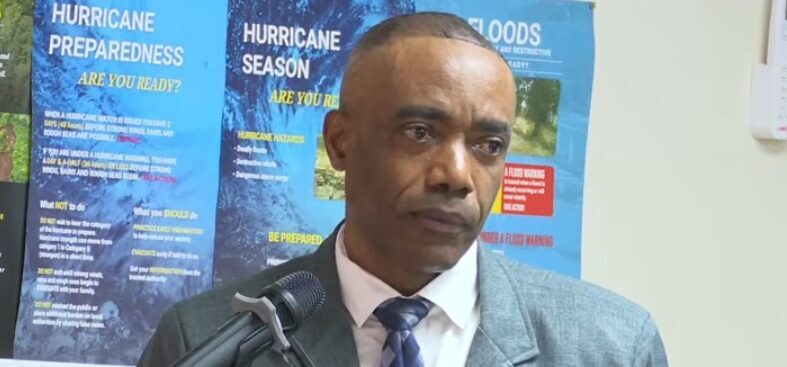
    Friday emphasized that the Article IV consultation is a necessary, routine process that his administration takes extremely seriously. “We have to deal with situations as they are, not as we would like them to be,” he noted, adding that his government is prepared to address the nation’s economic challenges with honesty and pragmatism, prioritizing the best interests of all Vincentians. Having held office for just five months, Friday reiterated that his administration campaigned on a pledge of transparency, saying the public press conference is part of a broader commitment to keep citizens informed of every major policy challenge and decision the government faces. “Today’s session is a part of that process of engaging with the people of this country on important matters that confront them,” he said.

    But Gonsalves took issue not only with the substance of the IMF’s recommendations, but also with Friday’s decision to share the stage with Antoshin. The former prime minister claimed he never invited an IMF mission chief to appear alongside him at a public press conference during his tenure, arguing that Friday’s move amounts to the NDP leader hiding behind the Fund to push unpopular “bitter medicine” on the Vincentian public. Gonsalves accused the NDP government of a “mentality of submission” to the IMF, rather than pursuing genuine dialogue and pushing back against harmful policy prescriptions when necessary.

    The debate has also centered on SVG’s long-running high debt burden, which the IMF has repeatedly flagged as a critical risk to economic stability. As of December 31, 2025, the nation’s total national debt stood at 3.5 billion Eastern Caribbean dollars, equal to an estimated 113% to 120% of gross domestic product, per World Bank calculations. Antoshin noted during Tuesday’s press conference that SVG has been classified at high risk of debt distress since 2016.

    Gonsalves, who served as finance minister for 17 of his 25 years as prime minister, defended his administration’s debt record, pushing back against framing that links the rising debt to reckless public spending. He cited Antoshin’s own comments that growing fiscal deficits were driven by post-disaster relief and reconstruction efforts, large public infrastructure projects, and rising current expenditures. Gonsalves clarified that the major construction projects completed under his administration included critical public assets: primary and secondary schools, coastal and riverine flood defenses, community clinics, a new national hospital, an upgraded port, an international airport, and a national sports stadium.

    He also disputed characterizations of the debt portfolio as overly expensive, noting that total debt sits at 3.3 billion Eastern Caribbean dollars, 2.1 to 2.3 billion of which is low-interest external debt, with less than 1 billion in domestic debt held primarily in government bonds. “When they’re talking about the debt … the bulk of the debt is cheap, overwhelmingly,” Gonsalves said. He added that his administration had already agreed on a framework with the IMF to gradually reduce the debt-to-GDP ratio to 60% to 65% by 2035, putting the nation’s debt on a sustainable long-term trajectory.

    Full details of the IMF’s assessment and policy recommendations are expected to be released publicly in the coming weeks when the Fund publishes its full Article IV staff report and Executive Board concluding statement.

  • ABEC Chairman Calls for Order, Respect and Preparedness as Antigua Votes

    ABEC Chairman Calls for Order, Respect and Preparedness as Antigua Votes

    As Antigua and Barbuda prepares to hold its critical general election on Thursday, April 30, the chair of the country’s independent Electoral Commission (ABEC) has delivered a clear, urgent message to voters, political parties and all stakeholders involved: order, mutual respect and strict preparedness are non-negotiable to deliver a credible, trusted democratic outcome.

    Arthur G.B. Thomas, ABEC’s sitting chairman, framed the upcoming vote as a defining moment for the nation’s democratic trajectory, emphasizing that every citizen’s right to vote comes paired with a binding responsibility to uphold electoral regulations. At the top of the enforcement agenda is the mandate for valid official voter identification, a requirement Thomas confirmed will be applied without exceptions for any elector.

    “Let me be clear. No elector can be permitted to vote without a valid voter identification card,” Thomas stated, underscoring that the commission has already gone to great lengths to help voters resolve any ID issues ahead of polling day. To ensure eligible citizens could access or replace their identification documents, ABEC extended operating hours, added trained staffing to all regional offices, and deployed every available resource over the preceding weeks. Now, Thomas says, the onus shifts entirely to individual voters to confirm their eligibility before arriving at the polls.

    “The opportunity has been provided. The responsibility now rests with you,” he added.

    Beyond identification rules, Thomas issued a strong appeal for widespread discipline and decorum across all polling stations nationwide. He urged every voter to extend respect to electoral officials, on-site security personnel, fellow voters, and political opponents, noting that an orderly process is foundational to public trust in the final result. “Order and compliance and mutual respect are not optional; they are essential to the credibility of the outcome,” he said.

    Thomas also reminded registered political parties of their legal and ethical obligation to remove all campaign materials, signage and promotional paraphernalia from areas surrounding polling divisions. A neutral voting space free from last-minute undue influence, he explained, is a core requirement for a fair election.

    “The polling environment must remain neutral, orderly, and free from undue influence,” Thomas emphasized.

    As polling locations open across the twin-island nation for the general election that will select the country’s next government, Thomas closed his address with a call for all eligible citizens to exercise their democratic right peacefully and within the bounds of electoral law. He stressed that broad adherence to the commission’s rules is the single most critical factor in maintaining public confidence in the process and its final outcome, urging all participants to honor Antigua and Barbuda’s long-standing democratic traditions through responsible participation.

  • Symposium on Migration : The Minister of MAST advocates for the protection of Haitian migrants

    Symposium on Migration : The Minister of MAST advocates for the protection of Haitian migrants

    Against a backdrop of sustained global discourse around human mobility and displacement, Haitian policymakers and stakeholders gathered Wednesday, April 29, Push for coordinated, forward-thinking solutions to the country’s ongoing migration challenges. Hosted at Port-au-Prince’s Montana Hotel and organized by the Jean Price-Mars Diplomatic Academy with official backing from Haiti’s Ministry of Foreign Affairs, the one-day symposium centered on the theme “Haitian Migration and its Contemporary Dynamics: Between Crises, Mobility, and Public Responses”, bringing together leading voices from diplomacy, academia, and national government institutions to examine the current state of Haitian migration and map out actionable policy responses.

    Marc-Elie Nelson, Haiti’s Minister of Social Affairs and Labor (MAST), delivered the symposium’s keynote address, placing the protection of Haitian migrants at the top of the government’s policy agenda. “Migration has grown into one of the most pressing issues shaping international relations and public debate across the globe, and it is a defining challenge for our nation,” Nelson told attendees. He outlined a four-pillar approach to addressing the crisis: strengthening protections for Haitian citizens living abroad, deepening collaborative partnerships with the international community, expanding economic and social opportunities for young Haitians to reduce the pressure to emigrate, and more effectively integrating the Haitian diaspora into national development planning.

    Nelson used his remarks to reaffirm the Haitian government’s commitment to addressing the root drivers of forced migration. He emphasized that the administration would work across all relevant state institutions to advance inclusive social policies designed to reduce the systemic vulnerabilities that push thousands of Haitians to seek opportunities abroad each year.

    Pushing back against narratives that frame Haiti as permanently trapped in a cycle of human capital flight, Nelson struck a hopeful tone about the country’s potential. “Haiti is not condemned to perpetually export its youth and its most dynamic citizens,” he said. “Our country possesses extraordinary human resources, and our people have a well-documented resilience that is recognized across the entire world.” The minister outlined an ambitious vision to reframe migration as a coordinated national project, with the goal of building domestic capacity to retain young Haitian talent, encourage the return of skilled Haitians living abroad, and rebuild a sense of hope across the country.

    Beyond high-level government addresses, the symposium served as a critical collaborative platform for cross-sector experts to share new research and on-the-ground findings related to Haitian migration, laying the groundwork for future multi-stakeholder action on the issue.

  • Creative work at the forefront

    Creative work at the forefront

    In a pre-International Workers’ Day ceremony held on April 30, 2026, Cuban Prime Minister Manuel Marrero Cruz, who also serves as a member of the country’s Political Bureau, led an official event honoring 14 exceptional labor collectives under the Palco Business Group with the prestigious National Vanguard flag distinction. The award recognizes the group’s relentless drive to uphold productive output and creative problem-solving, even amid the long-standing, punitive economic blockade imposed by the United States on Cuba. Event organizers framed the group’s consistent commitment to meeting production targets as an act of resilience against external economic pressure, a stance that earned the 14 entities this top national honor.

    Among the recognized collectives, three organizations received the National Vanguard flag for the first time in their history: TRANSPAK, the Palco Customs and Freight Forwarding Company; the Central Office of Conex Company; and Palacio de Convenciones UEB. The remaining 11 collectives re-qualified for the honor, reaffirming their long track record of exceptional performance and alignment with national labor priorities.

    Beyond recognizing consistent domestic productive excellence, the ceremony also paid special tribute to Palco Business Group workers who were deployed to provide critical services in Venezuela during the unrest that unfolded on January 3 of this year. The emotional tribute highlighted the workers’ unwavering commitment to the core principles of the Cuban Revolution, as well as Cuba’s longstanding tradition of cross-border solidarity with other peoples across the Global South. Photographs captured by Estudios Revolución documented the entire ceremony, capturing moments of tribute and celebration among attending workers and government officials.

  • DNA-voorzitter Adhin: Politieke verdeeldheid vertraagt wetgevingsproces in DNA

    DNA-voorzitter Adhin: Politieke verdeeldheid vertraagt wetgevingsproces in DNA

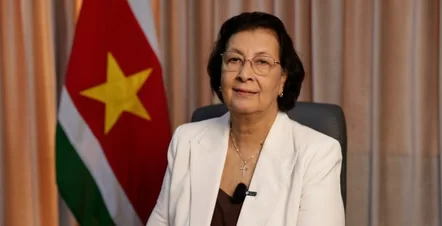
    Suriname’s National Assembly Speaker Ashwin Adhin has outlined the primary factors slowing the country’s legislative process, while pushing back against criticism of the current parliament’s low output of passed laws, arguing that thorough, high-quality lawmaking serves the nation better than rushed, error-ridden legislation. In an exclusive interview with local outlet Starnieuws, Adhin identified deep political division across political factions and extended preparation requirements for bill reviews as the two leading causes of delayed legislative action.

    Adhin explained that differing policy positions between parliamentary factions and frequent absences of elected members regularly force delays to the review of critical draft laws. Even within ruling coalition blocs and opposition groups, competing perspectives on sensitive pieces of legislation are common, requiring extended rounds of additional negotiations and consensus-building before bills can advance to plenary votes. While Adhin stressed that open disagreement is a natural, healthy component of democratic governance, he acknowledged that this political reality directly impacts the speed at which new laws can be enacted.

    Beyond ideological divides, the speaker also highlighted persistent challenges with achieving legislative quorum. When too few assembly members are present to meet the minimum attendance requirement, scheduled sessions cannot proceed and planned votes must be pushed back to a later date. To mitigate this issue, Adhin noted he now proactively coordinates with faction leaders ahead of planned sessions to confirm attendance numbers, and will cancel scheduled meetings if it is clear quorum will not be met. “If I know in advance there will be no quorum, I will not schedule a meeting,” he said.

    Adhin defended the current parliament’s legislative pace, arguing that the body should not be judged solely on the total number of bills passed, but rather on the quality and careful consideration that goes into each new law. Behind the public plenary sessions, he explained, parliamentary committees carry out intensive work to review bill content, propose amendments, and conduct rigorous legal testing to ensure legislation is sound. Rushed lawmaking, he warned, creates far larger problems down the line.

    To illustrate the risks of hasty legislative action, Adhin pointed to past flawed judiciary reform laws. While the Law on the Legal Position of the Judiciary took multiple years to enact, critical provisions related to funding were not fully calculated or detailed during the drafting process. This has required major, costly corrections after the law entered into force, demonstrating the cost of cutting corners. “Better to take a little extra time and get it right, than to fix mistakes after a law has already been adopted,” Adhin said, outlining his core governing principle.

    Currently, anti-money laundering and counter-terrorism financing legislation top the national assembly’s legislative agenda. Adhin emphasized these bills carry urgent priority, as Suriname must meet binding international regulatory obligations to avoid damage to the country’s financial reputation and an increased risk of being placed on an international financial blacklist. A new round of international compliance assessments is scheduled this year, but multiple required bills still need to be finalized to meet the deadline.

    Over the first nine months of the current parliament’s term, 294 meetings have been scheduled, of which 264 have been held. Eighteen draft bills have been introduced for review, but only three have been passed into law to date. Adhin projected that a larger batch of bills will be finalized in the coming months, with priority given to legislation tied to Suriname’s economic, financial, and governance priorities. Over the next nine-month period, he aims to see between 30 and 35 full bills passed and enacted, a major jump from the first term’s output.

    “A parliament should not rush to produce output just to hit numerical targets,” Adhin said. “It should legislate responsibly and sustainably in the interest of the people of Suriname.”

    Adhin is currently out of the country for a private visit to the Netherlands, and will remain away through May 5. While in Europe, he will also meet with Surinamese diaspora community leaders and potential international investors in coordination with the Surinamese embassy in The Hague. Despite his absence, a public plenary session on the new Fire Department Law remains scheduled as planned for the day of the interview.

  • In them, work becomes their Homeland

    In them, work becomes their Homeland

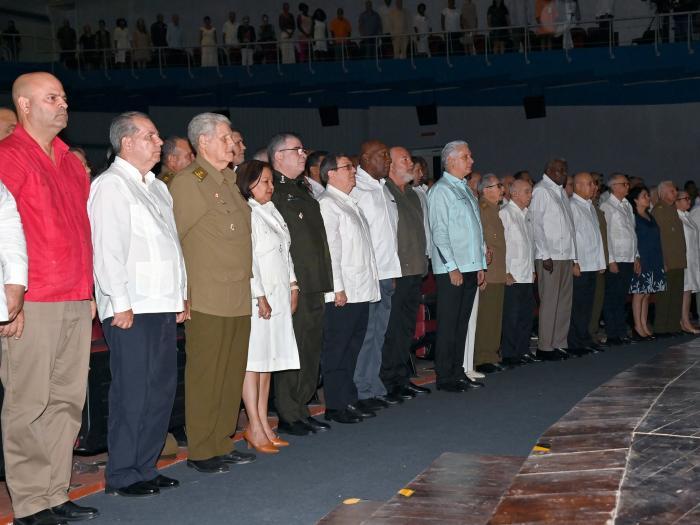
    On the eve of International Workers’ Day 2026, Cuba held a solemn, emotion-filled ceremony to honor the nation’s most dedicated workers, recognizing their extraordinary contributions to national development amid persistent economic and social pressure from the long-standing U.S. blockade. The event, led by Miguel Díaz-Canel Bermúdez — First Secretary of the Central Committee of the Communist Party of Cuba and President of the Republic — celebrated workers who have embodied the resilience and collective commitment that define Cuban society.

    Before the official awards conferral began, Díaz-Canel held a closed-door gathering with approximately 80 workers from the country’s critical essential sectors, held in the El Laguito protocol hall. According to an official post from the Cuban Presidency’s X account, the discussion centered on the daily challenges workers navigate under the crippling effects of the U.S. trade and economic embargo. Workers across key fields including public health, education, culture, energy, and tourism shared firsthand accounts of how they have turned resistance and creative problem-solving into a way of life, sustaining critical services for communities across the island. During the meeting, Díaz-Canel emphasized that work in Cuba is far more than a routine professional obligation: it is an act of profound national commitment and patriotism, and a core pillar of the country’s ongoing resistance to external pressure.

    At the formal awards ceremony, which was attended by senior Cuban political figures including Rebel Army Commander José Ramón Machado Ventura, Esteban Lazo Hernández (President of the National Assembly of People’s Power and the Council of State), Prime Minister Manuel Marrero Cruz, and other top leaders from the Communist Party, government, and mass organizations, Díaz-Canel conferred Cuba’s highest labor honor — the title of Hero of Labor of the Republic of Cuba — on 24 outstanding individuals spanning diverse sectors of the national economy and public life. The honorees include Martha López Guzmán from the José Martí UBPC, Luis Oscar Gálvez Taupier from the Icidca, Graciela María Rodríguez Pérez from the Alejo Carpentier Foundation, Antonio Gómez Delgado from the TVC Information System and Estudios Revolución, and dozens of other workers from education, healthcare, mining, military construction, internal security, and cultural institutions.

    Beyond the Hero of Labor titles, the ceremony also recognized dozens of additional outstanding workers and labor collectives with the Lázaro Peña Order (awarded in first, second, and third classes) and the Jesús Menéndez Medal, honoring sustained, exemplary service across the country’s workplaces.

    Every honoree carries a unique story of quiet devotion, creative resilience, and unwavering loyalty to the core principles of Cuba’s social project, where individual sacrifice consistently aligns with collective progress. The timing of the ceremony, held on the cusp of May 1, carries special symbolic weight: as Cuban workers prepare to march and celebrate International Workers’ Day, the recognition reinforces a core national belief that the homeland is defended not just through political action, but through the daily effort, responsibility, and unity of ordinary working people. In his remarks, Díaz-Canel underscored the deep honor of gathering with workers who prove every day that the Cuban people have the ingenuity and determination to overcome any obstacle placed in their path.

  • Relocation Talk Grows as 911 Center and Police HQ Upgrades Compete for Funds

    Relocation Talk Grows as 911 Center and Police HQ Upgrades Compete for Funds

    Plans for a long-term shift of the Eastern Division Police Headquarters have been confirmed by top Ministry of Home Affairs official Elton Bennett, who pushed back on swirling speculation that public property in the Lake-I district would be sold to finance overlapping public safety infrastructure projects.

    In comments made during an on-record interview on April 29, 2026, Bennett, the Ministry’s chief executive officer, clarified that the government is not walking away from the Raccoon Street site permanently, but has instead laid out a long-range strategy to move the headquarters to a purpose-built facility that can accommodate the police department’s steady expansion. “I wouldn’t use the word abandon, I would prefer to relocate,” Bennett told reporters, noting that short-term repair work is already underway to shore up the aging current headquarters while the long-term relocation plan moves forward.

    Speculation has circulated in local public discourse that the government plans to offload the Caye Caulker police-owned parcel of land to generate enough capital to build a new 911 emergency response center on Lake-I Boulevard, with eventual plans to develop the site into a full-service permanent police station. When pressed to address these rumors, Bennett rejected claims that any Lake-I public property is marked for sale, stating flatly that he is unaware of any active plans to dispose of government-owned land in the district. He also declined to add further comment on the previously addressed Caye Caulker land situation when reporters pushed for clarification.

    Both the upgrade of the 911 emergency system and the renovation or relocation of the Raccoon Street police headquarters remain high-priority urgent needs for the local public safety sector, Bennett confirmed. With two critical infrastructure projects competing for limited government resources, the Ministry of Home Affairs continues to actively search for viable funding sources to deliver both projects without sacrificing the quality or timeline of either.

    The original reporting is a published transcript of an evening television broadcast, transcribed for online publication with standardized spelling adjustments for Kriol-language remarks used by speakers in the original segment.

  • Police Officers Promoted, but are They Still Waiting to Get Paid?

    Police Officers Promoted, but are They Still Waiting to Get Paid?

    As of April 29, 2026, public scrutiny is mounting over delayed compensation for promoted and transferred police officers, with top officials addressing growing concerns about unmet pay obligations in a recent public briefing. A journalist from the outlet pressed Elton Bennett, chief executive officer of the Ministry of Home Affairs, on two key questions: whether annual salary increments for police personnel are being held up, and if officers who earned promotions are receiving the adjusted pay they are entitled to.

    Bennett clarified that there are no ongoing backlogs or issues with the disbursement of annual increments, noting that he has not encountered any unprocessed increment requests during his tenure. However, he openly acknowledged that a number of outstanding payments remain stuck in bureaucratic processing, including one-off transfer grants and adjusted salary emoluments linked to recent promotions. Bennett admitted that applications for these delayed payments regularly cross his desk for review, confirming the backlog is an ongoing issue.

    When the reporter followed up asking if all outstanding payments are moving through administrative channels on a reasonable timeline, Bennett asserted that the process is being handled in a timely manner. Despite this official confirmation, the response offers little immediate relief for the officers waiting for their rightful compensation. Many have been waiting weeks or even months for pay adjustments after changing ranks or stations, and the acknowledgment of a backlog does not speed up the deposit of owed funds into their accounts.

    This report is a transcribed version of an evening television news segment broadcast by the outlet, with any regional Kriol language statements adapted to standard English spelling for clarity in the online publication.

  • Gas Prices Squeeze Patrols: Bennett Says Police Ops Must Be Reworked

    Gas Prices Squeeze Patrols: Bennett Says Police Ops Must Be Reworked

    As motorists across the country feel the ongoing sting of rising gas prices at the pump, the ripple effect of higher fuel costs has now reached public safety operations, prompting a top government official to order a full restructuring of how law enforcement carries out its daily work. Elton Bennett, chief executive officer of the Ministry of Home Affairs, told local reporters in a televised address Wednesday that accelerating fuel inflation is not just a burden for private drivers—it is squeezing budgets across every sector of the public sphere, from media outlets to national security agencies and all government departments that rely on vehicle fleets to deliver services.

    Bennett emphasized that blanket budget increases to cover higher fuel bills are not a viable long-term solution for stretched public finances. Instead, he said, the ministry will need to return to the drawing board and redesign core operational frameworks to cut unnecessary fuel use while still maintaining public safety standards. The restructuring will focus specifically on routine patrol routes, emergency response deployments, and day-to-day logistics, with the goal of maximizing efficiency from every gallon of fuel purchased without compromising the quality or speed of essential services.

    “The rising cost of fuel is impacting all of us,” Bennett said in the address. “You in the media, in the security service, across government, in the delivery of goods—everyone is feeling the effects of higher fuel prices. So it’s something that would require us to go back to the drawing table to redesign our operations to ensure that we take into consideration the rising cost of fuel so that we can plan our operations better.”

    The announcement comes amid a broader trend of public sector agencies adjusting their operations to account for sustained energy price inflation, which has pushed up operational costs for every service that relies on ground transportation. Local government leaders across the region have warned that unadjusted fuel costs could eat into budgets for other critical public services, from education to infrastructure maintenance, if operational overhauls are not implemented quickly.