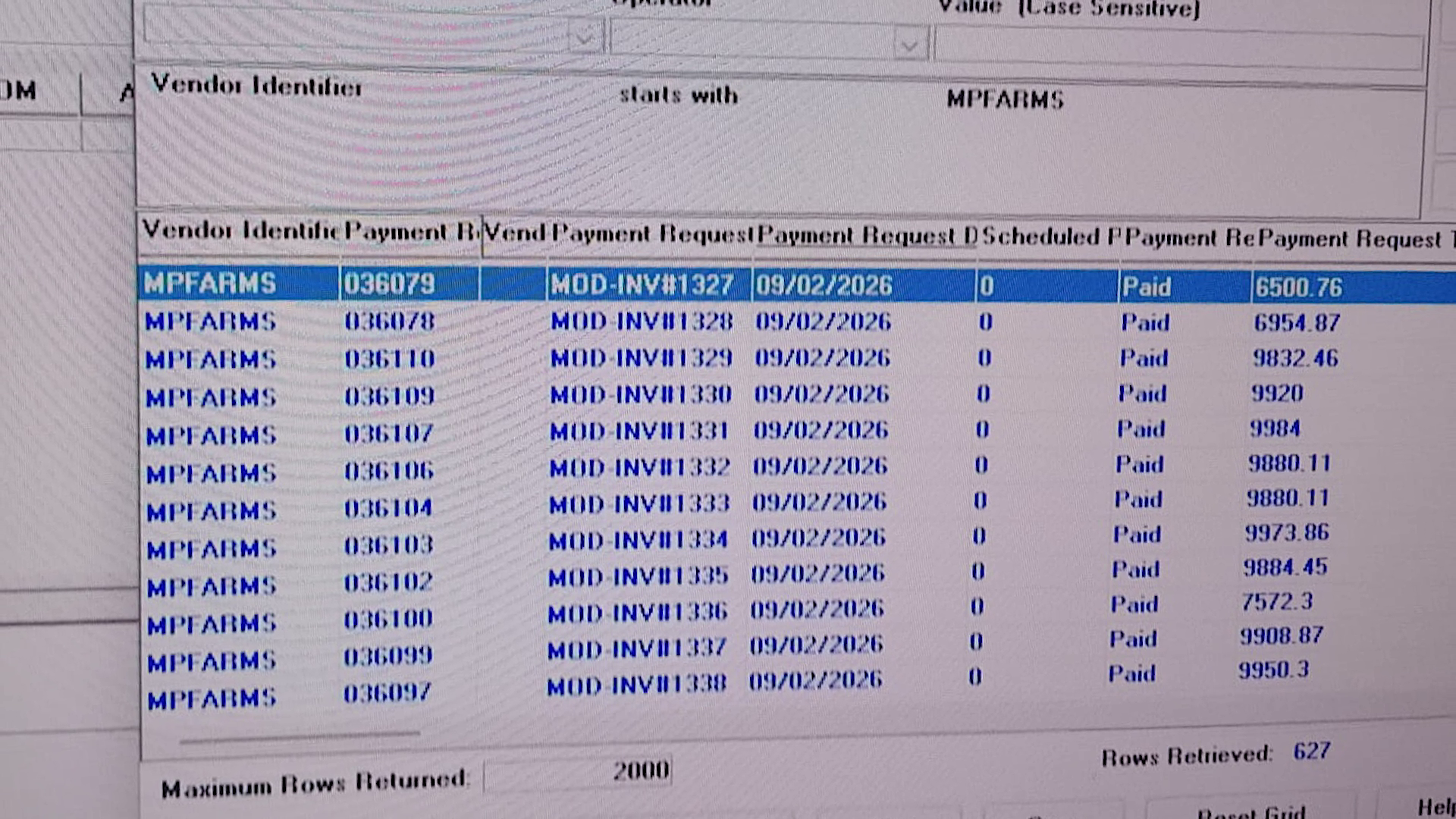
On June 25, 2026, a growing public controversy over questionable Defense Ministry payments linked to relatives of Belmopan Representative Oscar Mira has put government transparency and spending oversight under intense scrutiny in Belize. At the center of the ongoing conversation, Cabinet Minister Andre Perez has publicly stated that it is far too premature to draw any definitive conclusions on the matter, emphasizing that the prime minister-ordered independent audit must be allowed to run its full course before any findings can be confirmed or shared.
The controversy first gained widespread public attention when leaked records from the government’s Smart Stream payment system exposed that hundreds of thousands of dollars in public funds were processed through a series of individual transactions, each falling just under the $10,000 threshold that requires formal ministerial sign-off. This common practice of splitting large payments to avoid higher-level oversight has raised urgent questions about gaps in the government’s financial accountability framework, and Perez confirmed his own ministry is now facing growing pressure to clarify how it enforces transparency and prevents similar cases of potential misuse from slipping through regulatory cracks.
Addressing reporters, Perez stressed that all current claims remain unproven allegations. “These are all allegations. I want to say that let’s wait for the audit to take over, and the Prime Minister has spoken. So I don’t think I want to produce or say anything or opinions. The Prime Minister has spoken. There are allegations made, and let the audit flow, and after that, we’re able to comment,” Perez stated. When asked directly whether his ministry engages in split payments to bypass oversight, Perez pushed back firmly, noting that his department is small and he had conducted an internal review of all transactions with senior leadership. “I have done the check with my office and checked with my CEOs, everything, and they say we’re fine. My ministry… We’re transparent, and we’re not engaging anything on spec payments as such,” he added. Perez also acknowledged he had not previously reviewed the specific line-item details of Smart Stream payments, so he could not speak to the specifics of the Mira-linked transactions. He confirmed he had reached out to Mira following Mira’s recent leave of absence but declined to share any additional details of their conversation.
As the audit progresses, the controversy has sparked broader debates about whether the current $10,000 no-sign-off threshold is appropriate for modern government spending, amid rising costs and expanding government budgets. Financial Secretary Joseph Waight has already openly admitted that gaps exist in the current oversight system, leaving auditors to determine whether any formal rules were broken in the Mira payments case.
Drawing on his background as a private sector businessman, Perez argued that the $10,000 threshold has not kept pace with inflation and growing government operations across Belize’s security agencies, including the expanded Belize Defence Force and Coast Guard. “The national budget is growing, right? We have more payments to make. The Coast Guard has grown. The BDF has grown. My ministry is growing as well. So for me as a businessman, if I’m going to be engaging my CEO, can I make any decisions on the threshold of ten thousand dollars, and everything has to go through us, and the payments are getting bigger, the increase of cost on just about everything, then it’s time for us to look at maybe the increase of the threshold from ten to fifteen, twenty thousand dollars,” Perez explained. He pointed to everyday examples like rising fuel costs to illustrate his point, noting that the current low threshold forces even routine large transactions to be split unnecessarily. Perez emphasized he was not arguing for a drastic jump to a $50,000 threshold, nor was he confirming any abuse of the current system, framing his comments as a purely practical perspective on outdated financial rules. When pressed about the risk of abuse and documented irregularities such as double invoicing, Perez declined to comment, saying only that the issue of threshold adjustments merits formal review once the audit is complete.
In addition to the payment controversy, Perez is also addressing separate nepotism allegations tied to a government grocery assistance program he oversees as Area Representative for Belize Rural South. Social media claims have alleged that relief funds for the program were improperly directed to a San Pedro grocery store owned by Perez’s family members, with program coupons handled by a close relative. Perez rejected these claims outright as malicious political attacks from the opposition UDP, arguing that involving his innocent family members in unproven claims is unfair.
Perez clarified that the grocery bag program, which serves low-income Belizeans including single mothers, unemployed residents, and people with medical needs, works with multiple small local stores across the district, not just one. The San Pedro store tied to his family only receives a small share of program business, he said, and has even provided goods on credit during months when no government payments were processed. He explained that partnering with small local stores is a strategic choice: these stores stock the essential food items the program allows (no soft drinks, tobacco, or alcohol are permitted) and often offer more accessible locations for low-income families than larger, more expensive supermarkets. Perez added that his office never handles program funds directly: stores reconcile their coupon totals with his team, which then submits requests to the central government, and payments are halted immediately if any discrepancies are found.
Perez has declined to make any further on-the-record comments about both controversies until the Defense Ministry audit is finalized.