分类: politics

  • Voting underway in Barbuda

    Voting underway in Barbuda

    Polling stations opened their doors across the Caribbean island of Barbuda early Wednesday as voters head to the polls to cast their ballots in what is being framed as a critical electoral contest for the small island nation. Long queues formed outside multiple voting locations in communities from Codrington to the island’s more remote coastal settlements, with many residents arriving before dawn to secure their chance to participate in the democratic process. Election officials have reported that all voting materials are in place, and more than 50 trained poll workers have been deployed to staff the island’s 10 polling precincts to ensure the process proceeds smoothly.

    Barbuda, which has a total registered voter base of just over 1,600 people, is holding the election to select representatives for the Barbuda Council, the local governing body that manages issues ranging from infrastructure development to environmental protection and land use on the island. This year’s contest comes as the island continues long-term recovery efforts following the devastating damage caused by Hurricane Irma in 2017, and candidates have centered their campaigns on key priorities including improving healthcare access, expanding affordable housing, boosting tourism revenue, and strengthening climate resilience to protect against future extreme weather events.

    Political observers note that this election carries broader implications for national politics in Antigua and Barbuda, as control of the Barbuda Council has long been a bellwether for support ahead of general elections scheduled to be held in the country by 2025. Several major national political parties have fielded candidates for the seven open council seats, and party leaders have been campaigning heavily across the island in recent weeks to mobilize their base. Voting is scheduled to conclude at 6 p.m. local time, with preliminary results expected to start trickling in from counting centers later Wednesday evening. Election monitors from independent regional organizations are on the island to observe the process and confirm that it meets international democratic standards. Voters spoken to by reporters expressed a wide range of priorities, with many emphasizing that economic opportunity and climate action are their top deciding factors when casting their ballots.

  • WATCH: ABEC Chairman Urges Voters to Turn Out To Vote On Election Day Today

    WATCH: ABEC Chairman Urges Voters to Turn Out To Vote On Election Day Today

    As polling locations open across the twin-island nation of Antigua and Barbuda for a national election to select the country’s next government, the top official of the independent electoral body has issued a urgent, unifying call to all eligible citizens to participate in the democratic process and uphold the core values of fair voting.

    Arthur G.B. Thomas, Chairman of the Antigua and Barbuda Electoral Commission (ABEC), delivered his official appeal in a public statement released early Thursday morning, framing the election as a defining moment for collective national direction. “Today is the day that you exercise your voice… through democratic choice,” Thomas stated, emphasizing that every eligible voter holds the power to influence the trajectory of the country through their ballot.

    Thomas laid out key logistical details to guide voters on election day, noting that all polling stations kicked off operations at 6 a.m. local time and will wrap up voting promptly at 6 p.m. He urged residents not to wait until the last minute to cast their ballots, reminding those who have not yet voted to make their way to their assigned locations before the closing deadline. “Come out and play your part in shaping the future of your country,” he added.

    A critical procedural reminder was also front and center in Thomas’ statement: all voters must present a valid, government-issued voter identification card to receive a ballot. No eligible voter will be permitted to cast a vote without this required documentation, he confirmed.

    The ABEC chairman highlighted the extensive work his commission has completed ahead of voting day to guarantee broad, equitable access to the election. According to Thomas, the commission implemented targeted measures to eliminate barriers that could prevent eligible citizens from casting their ballots, working proactively to avoid disenfranchisement of any registered voter.

    Beyond participation and procedural rules, Thomas centered his appeal on maintaining order and mutual respect throughout the day. He called on all citizens, regardless of political affiliation, to keep the process calm and orderly, and to honor the democratic traditions that underpin the nation’s governance. “Let us make this a day defined by peace, respect and unity,” he said, asking voters to follow all official guidelines, treat polling workers with courtesy, and respect the work of election officials on the ground.

    Thomas closed his statement with a core reminder of democratic accountability: once the official results are announced, all members of the public must accept the outcome of the vote. Accepting the will of the electorate, he argued, is a non-negotiable fundamental pillar of any functioning democratic system. “Let us also respect the outcome… that is the true strength of a democratic [process],” he said.

    Thomas’ remarks come as the entire nation is engaged in voting to select its next government. National authorities have echoed his message, noting that peaceful, widespread participation is the most critical factor in ensuring the election is viewed as credible and legitimate by the public and international observers.

  • Voter ID Replacements Surge Day Before Polls

    Voter ID Replacements Surge Day Before Polls

    As Antigua and Barbuda’s general election drew near, a last-minute rush to secure replacement voter identification cards unfolded across the nation, new official data has confirmed. Thousands of eligible voters rushed to electoral offices in the final days of pre-election preparations, pushing transaction volumes sharply higher in multiple constituencies ahead of polling day.

    Figures published by the Antigua and Barbuda Electoral Commission show that more than 32,700 total voter ID transactions were processed across the month of April alone. This sustained high volume of activity underlines consistent, growing demand for corrected or replacement identification that continued without interruption right up to the opening of polling stations.

    The pace of applications peaked in the final full week of pre-election preparations, with daily replacement requests hitting a high of 289 on April 27. The trend stayed strong through the following days, with 253 applications logged on April 28 and 224 more submitted on April 29, before activity gradually slowed as the country entered official election day.

    Electoral data breaks down completion rates by constituency, revealing stark regional variations in voter readiness. Several constituencies posted particularly high overall rates of completed ID transactions, led by St. Peter at 93%, Barbuda at 81%, and St. Philip North at 77%. These high rates signal that voters in these areas have completed the necessary bureaucratic steps to cast their ballots, pointing to widespread preparedness among local electorates.

    In contrast, more densely populated urban constituencies recorded comparatively lower completion figures. St. John’s City West logged a 63% completion rate, while neighboring St. John’s Rural South stood at 62%. Even with these lower readings, officials note that the numbers still reflect consistent and steady participation from voters in these districts in the ID verification process.

    The commission’s cumulative pre-election report adds that more than 18,000 ID applications were processed in earlier stages of the electoral cycle. These earlier submissions factor into the final April total, further highlighting the massive scale of voter verification and ID updating efforts that have taken place in the lead-up to the national vote.

    As preparations entered their final phase early Thursday morning, senior election officials reiterated repeated calls for all voters to double-check that their identification documentation is valid and in order before they arrive at their assigned polling station. The outreach aims to reduce wait times at polling locations and prevent avoidable disruptions to voting on election day.

  • WATCH: Behind the scenes as election officials ready polling stations before sunrise

    WATCH: Behind the scenes as election officials ready polling stations before sunrise

    As dawn broke over the twin-island nation of Antigua and Barbuda on Thursday, a coordinated team of election administrators, security officials, and political delegates had already begun their work, putting the final touches on polling stations ahead of the nation’s highly anticipated 2026 general election.

    The Antigua and Barbuda Electoral Commission (ABEC) confirmed Wednesday evening that all returning officers and their on-ground support teams had reached their assigned locations well in advance of the official 6 a.m. poll opening time. In an upbeat public statement shared across social media and official communication channels ahead of voting day, the commission urged registered voters to prepare to participate, writing: “Today is the day! General Elections 2026! Returning Officers and their teams are in place for the opening of the polls at 6 am. Are you ready?!”

    True to the commission’s timeline, every polling station across both islands opened exactly on schedule. On-site officials and accredited party representatives worked through opening protocols to verify that all voting systems, from paper ballots to voter check-in processes, were fully operational, laying the groundwork for an orderly start to the day’s voting.

    To address any potential disruptions and ensure the safety of both voters and election staff, uniformed security personnel have been deployed to every polling division across the country. These officers will remain on site throughout all voting hours to maintain public order and respond quickly to any issues that arise as electors arrive to cast their ballots.

    ABEC has also released a behind-the-scenes video documenting the final pre-voting preparation efforts, available for public viewing on the commission’s official digital platforms.

  • Polls Open Across Antigua and Barbuda as Voting in the 2026 General Elections Gets Underway

    Polls Open Across Antigua and Barbuda as Voting in the 2026 General Elections Gets Underway

    Voters across the twin-island nation of Antigua and Barbuda headed to the polls starting at 6 a.m. local time Thursday, as the country’s highly anticipated general election officially got underway across all 17 electoral constituencies. The Antigua and Barbuda Electoral Commission has issued formal confirmation that voting operations are running smoothly across every polling station nationwide, with ballot access open to eligible electors until 6 p.m. Thursday. Once voting concludes at the closing deadline, vote counting will immediately commence. The election is shaped as a competitive contest dominated by two major political forces: the incumbent governing Antigua and Barbuda Labour Party (ABLP), and the main opposition United Progressive Party (UPP). One additional candidate from the Barbuda People’s Movement (BPM) is also in the running, alongside three independent contenders who are competing for seats in three separate constituencies: Debbie Pero Georges in St. George, Alan Weston in St. Paul, and Nigel Bascus in St. John’s Rural West. These independent candidacies have created tightly contested three-way races in each of these three districts. Notably, the Democratic National Alliance (DNA) opted out of the 2024 contest entirely, having previously announced it would not field any candidates in this election cycle. Early voter activity was reported at multiple polling locations across the country, with dozens of electors arriving to cast their ballots within minutes of stations opening. To maintain order and uphold electoral integrity, election officials, accredited party agents, and uniformed security personnel have been deployed to every polling site across Antigua and Barbuda. For context, the last general election held in the country in 2023 saw a total of 42,869 valid ballots cast, translating to a national voter turnout rate of 70.37 percent, per official electoral data. Ahead of voting, electoral authorities have issued public guidance urging all registered electors to double-check their assigned polling station locations ahead of arrival, bring the mandatory government-issued photo identification required to vote, and adhere to all established electoral rules and protocols throughout voting day. The outcome of Thursday’s vote will determine the full membership of Antigua and Barbuda’s next national Parliament. Counting operations are scheduled to run through the overnight hours into Friday, which has been designated a public holiday to accommodate the election process, with final official results expected to be declared once counting is completed. To reinforce transparency, independent observation teams from three major regional and international bodies—the Commonwealth, the Organization of American States (OAS), and the Caribbean Community (Caricom)—are on the ground monitoring all stages of the electoral process.

  • Wijzigingen Comptabiliteitswet noodzakelijk voor begrotingsbehandeling

    Wijzigingen Comptabiliteitswet noodzakelijk voor begrotingsbehandeling

    Paramaribo, 30 April – The opening of public debate on Suriname’s 2026 national budget has been delayed, after National Assembly Speaker Ashwin Adhin confirmed that critical preconditions have yet to be met before formal deliberations can begin. In an interview with local outlet Starnieuws, Adhin explained that amendments to the country’s Comptability Act must first be finalized to create a legal framework for the budget process. On top of the required legislative changes, the executive branch has yet to submit several supplementary policy documents and full financial datasets required for parliamentary review.

    Adhin emphasized that budget deliberation is far more than a procedural formality for the legislature. It is the core mechanism through which parliament exercises its constitutional oversight over government spending, sovereign debt management, public revenue streams, and the implementation of administration policy priorities. Launching debate without complete, accurate information would be irresponsible, he said, adding that the government must first provide full clarity on all outstanding line items and planned expenditure allocations. Once all required documentation is received, the 2026 budget will be immediately placed on the assembly’s urgent agenda. Adhin also noted that the council of ministers still awaits a comprehensive national debt plan from Finance and Planning Minister Adelien Wijnerman, a key document required for thorough review.

    The debate over the 2026 budget comes as the Suriname Court of Audit highlighted long-running systemic flaws in public financial management in its recently released 2025 annual report. While the court acknowledged that incremental progress has been made in recent reforms, it found that misalignment between policy priorities and budget implementation remains a persistent shortcoming. Internal control systems within individual government ministries also continue to function inadequately, the audit body found.

    As a result of these weak controls, errors and irregularities in public spending are not always caught in a timely fashion, the court reported. Additional challenges remain around upholding integrity and compliance with existing financial laws and regulations. Recent audits into domain land management, social welfare benefits, and public subsidy distribution confirmed that gaps in oversight and irregular spending practices are still widespread. The court also flagged compliance with financial reporting requirements by state-owned enterprises as an ongoing high-priority concern.

    Against this backdrop, Adhin argued that rigorous, careful scrutiny of the 2026 budget is non-negotiable. Parliament must have full clarity to trace exactly how public resources are allocated, what existing sovereign debt obligations the government carries, and how new financing will be deployed to meet policy goals. The Court of Audit echoed this priority, noting that transparency and accountability are foundational to maintaining public trust in government institutions. It also stressed that discharge approval by the National Assembly is a critical link in the state’s financial accountability cycle; without completing this step, national financial oversight remains incomplete.

    Adhin reaffirmed that while moving the budget process forward in a timely manner is important, speed cannot come at the cost of robust, thorough parliamentary financial oversight. The budget will only be taken up for full debate once all preconditions are met. “We will not rush this process at the expense of sound governance,” Adhin said, adding that once the required legal amendments are passed and all missing documents are submitted, the National Assembly will advance the budget process with full urgency.

  • Pringle Urges Change, Browne Promotes Strong Leadership in Final Appeal to Voters

    Pringle Urges Change, Browne Promotes Strong Leadership in Final Appeal to Voters

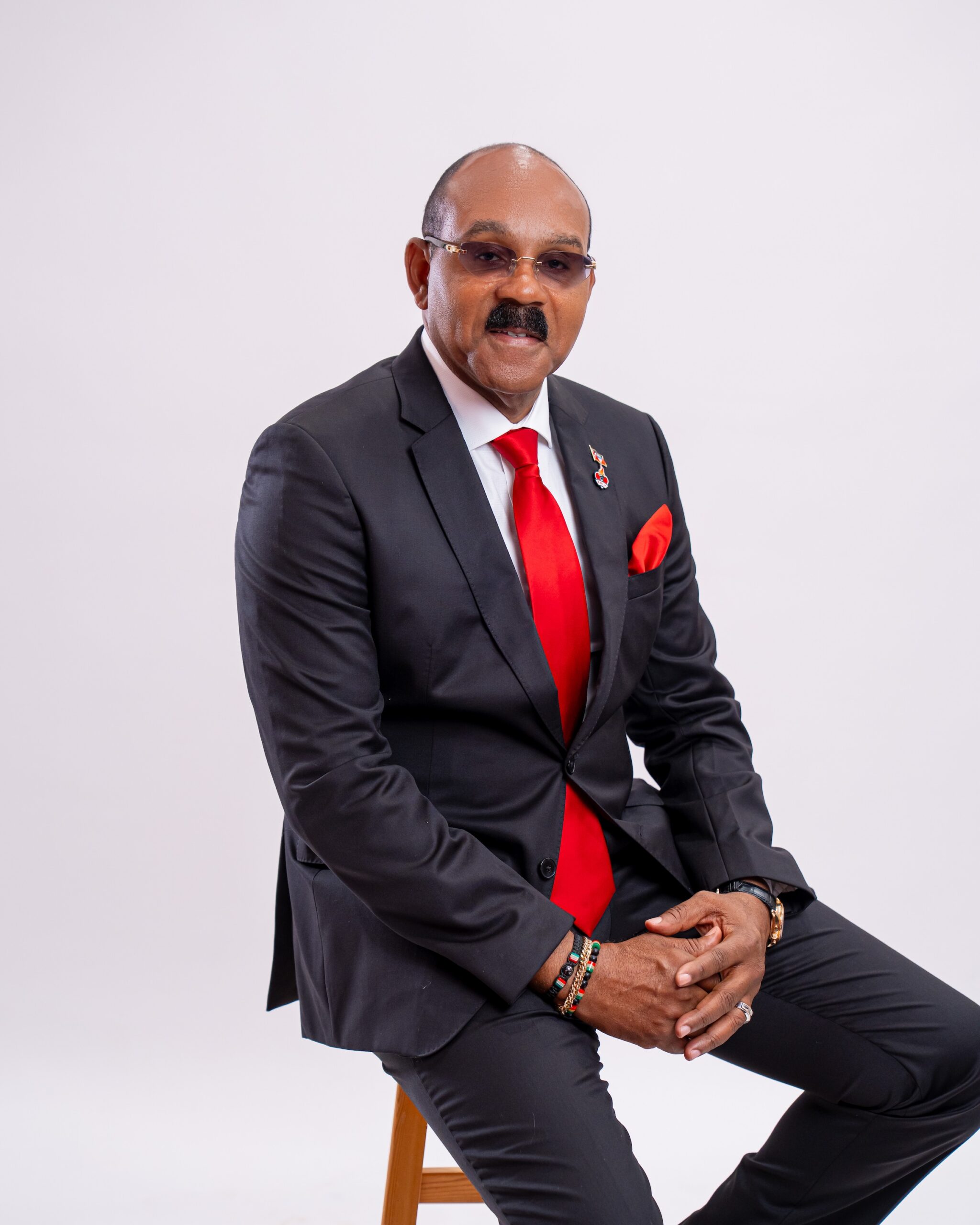
    As Antigua and Barbuda prepares to head to the polls for its critical general election, the nation’s two leading political forces have laid out starkly competing visions for the country’s future in last-ditch appeals to the electorate. On the eve of voting, opposition leader Jamale Pringle of the United Progressive Party (UPP) framed the upcoming ballot as a once-in-a-five-year opportunity to reverse what he calls a 12-year downward trajectory under the incumbent administration, while sitting Prime Minister Gaston Browne of the Labour Party is begging voters for a second term to build on the national “renaissance” his government claims to have already delivered.

    In a pre-election video address published Wednesday, Pringle positioned the 2023 election as a defining turning point that will touch every corner of voters’ daily lives, from household grocery bills to the quality of public infrastructure and accessible healthcare. “Tomorrow… may be your last opportunity for five years to determine the future of this nation,” Pringle told the public, urging every eligible citizen — particularly undecided voters and those planning to skip voting — to show up to their polling stations and make their voices heard.

    Pringle leaned into widespread voter frustration, acknowledging that large swathes of the population have been left “deeply disappointed” over the 12 years of Labour Party rule, with many facing declining personal finances and worsening economic mobility. He listed a litany of grievances that have eroded public trust: crumbling road networks, inconsistent access to clean drinking water, a steady rise in violent and petty crime, and the skyrocketing cost of living that has stretched household budgets thin. All these issues, he argued, are clear proof that a change in leadership is long overdue.

    Beyond domestic failures, Pringle also called out what he framed as governance missteps that have damaged Antigua and Barbuda’s standing on the global stage. He pointed to strained diplomatic relations with key international partners and emerging financial risks that threaten the nation’s economic stability, arguing that these challenges are “not accidental circumstances” but the direct outcome of poor policy choices by the Browne administration.

    Making his pitch for the UPP, Pringle highlighted the party’s proven track record in past government roles, noting that the party has previously inherited complex national challenges and managed them effectively. He urged voters to “vote against the situations that hinder your progress and the behavior that threatens democracy,” while calling on supporters to back the UPP and hold the party accountable if it fails to deliver on its pledges to boost living standards and drive inclusive national development. To counter doubts about the opposition’s readiness to govern, Pringle emphasized the “education, experience, competence, and the character” of the UPP’s full slate of candidates, framing the team as uniquely prepared to tackle the nation’s most pressing issues.

    Meanwhile, during his final pre-election televised address, Prime Minister Browne made the case that his sitting administration has already delivered tangible, measurable progress for Antigua and Barbuda, and deserves another term to deepen those gains. Centering his re-election campaign on a theme of national renewal, Browne argued that the country is already in the midst of a transformative renaissance, pointing to sustained economic growth, large-scale infrastructure upgrades, and expanded social programs as proof of positive change under his leadership. “We are already in the Renaissance,” he said, adding that continued investment in physical infrastructure and human development would unlock the “blossoming of our nation” and lift living standards for all citizens.

    Browne highlighted improvements across key economic metrics, including steady GDP growth, record low unemployment, and improved fiscal performance. He claimed his administration has strengthened the country’s overall financial position and steadily reduced economic inequality over its term. He also pointed to signature policy initiatives including subsidized affordable housing, broad duty waivers on essential goods, and expanded social safety net programs, all part of a broader push to distribute national wealth more equitably and improve quality of life for all Antigua and Barbudans.

    Looking ahead to a second term, Browne laid out key policy pledges: his government would raise the national minimum wage and work toward implementing a full “livable wage” for all workers, while continuing critical subsidies to shield domestic consumers from volatile global price hikes. He argued that ongoing economic expansion, backed by billions of dollars in committed domestic and foreign investment projects, will create thousands of new jobs and solidify Antigua and Barbuda’s position as an economic and political leader across the Caribbean. Browne also pushed back against claims of exclusionary governance, emphasizing that his administration’s popular policies — from duty waivers to social support — have been distributed evenly to all citizens regardless of their political party affiliation.

    These sharply contrasting closing messages highlight the stark choice facing voters as they head to the polls on election day. After more than a decade of Labour Party rule, voters must decide whether to align with the opposition’s call for sweeping change after years of perceived decline, or endorse the incumbent’s argument that its policy framework has already laid a strong foundation for continued growth and shared prosperity. The closely contested election, which will set the country’s political direction for the next five years, will see voters deliver their verdict today.

  • Uncertainty over Venezuela

    Uncertainty over Venezuela

    In a sharp rebuke of Trinidad and Tobago’s ruling United National Congress (UNC) administration, People’s National Movement (PNM) political leader Pennelope Beckles has raised alarms over the rapidly deteriorating diplomatic relationship between the twin-island nation and neighboring Venezuela, arguing that the fractured bilateral ties are directly undermining the country’s ability to lock in critical energy contracts that underpin its economy.

    Speaking at a “State of the Economy” political gathering hosted at Port of Spain’s City Hall Monday night, Beckles emphasized that strained cross-border relations have severely eroded Trinidad and Tobago’s negotiating leverage at a moment when the energy sector remains the backbone of the country’s public revenue, export earnings, and overall economic stability. She told attendees that growing uncertainty around official engagement with Caracas has slowed progress on high-priority cross-border energy initiatives, most notably the long-planned Dragon gas project.

    Beckles called out the current government for inconsistent public messaging around the status of the Dragon gas development, criticizing its clumsy handling of international diplomacy. She noted that nearly 12 months have passed since Prime Minister Kamla Persad-Bissessar announced the securing of a new Office of Foreign Assets Control (OFAC) license and the revival of the Dragon gas deal, yet administration officials have still not been able to conduct official visits to Venezuela to advance the project. She contrasted this inaction with progress under the previous PNM administration, recalling that former energy minister Stuart Young made repeated trips to Caracas to lay the critical groundwork for the agreement.

    “They say the Dragon gas deal is dead, they repeat it over and over, but imagine they are so bold-faced and have no shame. All of a sudden the same deal they said was dead they supposedly revived,” Beckles said, accusing the current administration of taking credit for diplomatic and technical progress achieved by the previous government while simultaneously dismissing those past efforts.

    She also reiterated criticism of Persad-Bissessar’s past confrontational approach to Venezuela, noting that the prime minister’s aggressive, undiplomatic attacks on the Venezuelan government led to her being declared persona non grata. “Be careful how you bad talk people,” Beckles warned.

    Turning to the broader health of Trinidad and Tobago’s economy, Beckles underscored the outsized role the energy sector plays in sustaining national livelihoods, breaking down its contribution to key economic metrics: it accounts for one-third of total government revenue, one-fifth of overall gross domestic product, and roughly 80 percent of the country’s total export earnings. “Without the benefits of the energy sector we would not enjoy the lifestyle we have come to take for granted,” she said.

    Beckles stressed that Trinidad and Tobago’s entire economic model is built around natural gas, with upstream extraction feeding a robust downstream industrial sector that includes some of the largest petrochemical facilities in the Caribbean and Latin America. This industrial estate model, she noted, relies entirely on stable, long-term access to natural gas supplies.

    Against this backdrop, she explained, declining production from maturing domestic gas fields has put growing pressure on the sector, making strategic cross-border partnerships and binding international energy agreements more important than ever. Production volumes have dropped sharply from historic highs, she said, while proven domestic reserves continue to decline, creating an urgent need to develop new supply sources like the Dragon field off Venezuela’s coast.

    Beckles also criticized what she described as repeated attempts by the ruling administration to misrepresent the true state of the energy sector, arguing that political messaging often disregards hard technical realities around declining production and shrinking reserves. She closed by noting that previous negotiations under the PNM administration had strengthened Trinidad and Tobago’s standing in the global energy market, securing more favorable pricing structures and expanded participation in liquefied natural gas operations that benefit the entire nation.

  • Kamla warned about fallout over Trump

    Kamla warned about fallout over Trump

    Against the backdrop of shifting global political tides, a leading international relations scholar has sounded a urgent alarm over the strategic choices shaping Trinidad and Tobago’s foreign policy. Dr. Andy Knight, speaking at the weekly Movement for Social Justice (MSJ) Tuesday Talk forum hosted by MSJ leader David Abdulah, argued that the current close alignment of Prime Minister Kamla Persad-Bissessar’s administration with U.S. President Donald Trump carries significant long-term risks that the small Caribbean nation cannot afford to ignore.

    At the core of Knight’s warning is the unpredictable nature of American political cycles, which stand in sharp contrast to the stable long-term relationships small states depend on for their security and economic prosperity. “Right now, we see one or two Caricom nations tying their fate to a sitting U.S. president, but leaders in these capitals need to remember that no presidential term lasts forever,” Knight explained. He noted that even before the next presidential election, midterm congressional shifts could easily turn the sitting president into a lame duck, drastically limiting their ability to deliver on any informal or formal commitments made to Caribbean allies.

    For a country like Trinidad and Tobago, which relies heavily on consistent, mutually respectful diplomatic ties to sustain its trade and security, this overalignment could leave the nation exposed when the inevitable leadership change occurs in Washington. “When you hitch your entire wagon to a single president, you set yourself up for long-term harm,” Knight emphasized. “If a new administration takes power in the next U.S. election, your close ties to the previous president could leave you on the wrong side of Washington, with few paths to repair the damage. That’s an existential threat for a small state that can’t afford to burn diplomatic bridges.”

    Knight also pointed out growing unease across the Caribbean Community (Caricom) over Trinidad and Tobago’s close adoption of U.S. security priorities, noting that regional rifts have already begun to emerge. One high-profile example he cited was Venezuela’s decision to suspend energy cooperation with Trinidad and Tobago shortly after a U.S. warship was deployed to the region, a move that illustrates how quickly alignment with a major power can trigger damaging diplomatic and economic tension with neighboring states.

    This reality, Knight argued, underscores the need for Trinidad and Tobago to prioritize both major power relations and regional integration. The nation maintains extensive trade and people-to-people ties across the Caribbean, and a breakdown of those relationships would carry severe economic and political consequences. “The smarter long-term play is to align your national interests with your Caribbean neighbors,” he said. “If regional partners grow frustrated with your choices and scale back cooperation, Trinidad and Tobago will find itself in an extremely difficult position.”

    Adding another layer of risk is Trump’s well-documented unpredictability, Knight argued. Even in the short term, there is no guarantee that the current favorable alignment will hold: “We have no certainty that this president will maintain his support for Trinidad and Tobago, given how fickle he has proven to be. He can reverse course on past allies in an instant, which would leave the nation isolated almost overnight.”

    Instead of tying the nation’s future to Washington, Knight argued that all Caribbean states should pursue a more balanced, independent foreign policy that preserves regional autonomy and unity. “We shoot ourselves in the foot when we tie our entire future to one individual or one single administration,” he said. “The entire region needs to think strategically about how to protect its sovereignty, strengthen regional cohesion, and avoid being left vulnerable when the inevitable shifts in global politics occur.”

  • Saint Kitts and Nevis Government slashes import duties for fully electric vehicles

    Saint Kitts and Nevis Government slashes import duties for fully electric vehicles

    Basseterre, Saint Kitts – In a bold policy move designed to accelerate the Caribbean nation’s transition to low-carbon transportation, the government of Saint Kitts and Nevis has announced a 35-percentage-point cut to import duties on fully electric vehicles under four years old. The sweeping reduction, which will lower import taxes from 45 percent to just 10 percent, takes effect May 1, 2026.

    Energy Minister Konris Maynard unveiled the new measure during an official launch ceremony for two groundbreaking national sustainability programs – Solar Integration for Sustainable Energy (SOLARISE) and Decarbonised Roadway Initiative for Vehicle Electrification (DRIVE) – held at the CUNA Conference Room on April 30.

    Maynard emphasized that the tariff cut is far more than a minor policy adjustment, framing it as a transformative shift for the country’s transportation and energy sectors. “This government is about accelerating the transition to electric mobility and electric vehicles,” he told attendees, noting that the steep reduction is intended to remove a key financial barrier to EV adoption for local residents and citizens.

    Beyond making the initial purchase of electric vehicles more accessible, Maynard – a personal EV owner himself – pointed to the ongoing financial benefits that come with electric transportation. Owners of EVs routinely see far lower costs for fuel, regular operation, and routine maintenance compared to drivers of traditional gas-powered vehicles, he explained.

    The policy forms a core part of the government’s broader long-term strategy to build a more resilient national energy system, modernize the country’s transportation infrastructure, diversify the local economy, and position Saint Kitts and Nevis to compete effectively in an increasingly decarbonized global economy.

    The launch of both the SOLARISE and DRIVE initiatives, along with the accompanying tariff cut, drew full high-level support from the national Cabinet, including Prime Minister Dr. Terrance Drew, Deputy Prime Minister Dr. Geoffrey Hanley, Tourism Minister Marsha Henderson, Sustainable Development Minister Dr. Joyelle Clarke, and Social Development Minister Isalean Phillip. This cross-government backing signals the country’s unified commitment to advancing its climate and sustainability goals.