分类: politics

  • Fuel Fight Ignites: Government Pushback Meets Broaster’s Counterstrike

    Fuel Fight Ignites: Government Pushback Meets Broaster’s Counterstrike

    As of May 8, 2026, a bitter public political dispute over fuel price relief has erupted in Belize, pitting the sitting government against a caretaker from the country’s main opposition party. The conflict kicked off after United Democratic Party (UDP) caretaker for Belize Rural Central Edward Broaster unveiled a localized fuel relief initiative, prompting pushback from the administration’s top transport official.

    When pressed for comment on Broaster’s proposal this week, Transport Minister Dr. Louis Zabaneh struck a conciliatory opening tone, saying he welcomed the opposition figure’s willingness to address public hardship around fuel costs. But he quickly sharpened his critique, arguing that a targeted giveaway for a single electoral constituency cannot fulfill the national mandate that comes with holding national office — a duty to deliver tangible relief to all Belizean residents, not just one voting bloc.

    Broaster did not wait long to fire back in an exclusive interview with local outlet News Five, turning the minister’s challenge back on the sitting government. When Zabaneh called for a nationwide rollout of relief to prove the policy’s merit, Broaster embraced that framing: that is exactly the outcome opposition figures want, he said, because the incumbent government holds all the institutional authority and regulatory power to slash fuel prices at a national scale. Broaster argued that the government has deliberately dodged its responsibility to lower costs, and that the minister’s critique only exposes the ruling party’s lack of care for working Belizeans.

    “I don’t hold the national budget or the regulatory power to roll this out across the country. That power rests entirely with the Prime Minister,” Broaster noted, pointing to the Prime Minister’s own repeated public claims that he has the capacity to cut fuel prices. Broaster went on to challenge the government’s track record, highlighting that fuel prices have been raised repeatedly since the Prime Minister took office: ten separate hikes hit consumers in 2022 alone, with additional increases in the years following. He dismissed the Prime Minister’s go-to justification that global conflicts are to blame for sustained high prices, saying the administration has more than enough room to bring costs down regardless of international volatility.

    Broaster also dismissed the government’s existing small relief measure as inconsequential: the 68-cent excise tax cut the Prime Minister has touted is little more than nominal, he argued, because the government still retains steep environmental and goods and services taxes on fuel that deliver massive revenue to the state. Broaster admitted that his localized constituency relief push is a deliberate political gesture, framing it as a necessary gimmick to force the ruling government into meaningful action that eases cost-of-living burdens for all Belizeans.

    This report is a transcribed excerpt from News Five’s evening television broadcast, reproduced for online readers.

  • Sweeping new law to expand maritime powers

    Sweeping new law to expand maritime powers

    As a small island nation with an outsized maritime footprint, Barbados is moving to cement its legal control over territorial waters, offshore natural assets, and fast-growing emerging maritime sectors through a sweeping new piece of legislation that also addresses two of the 21st century’s most pressing and emerging priorities: climate change-driven sea level rise and the growing intersection of ocean activity and outer space innovation.

    The comprehensive Maritime Areas (Jurisdiction and Rights) Bill was formally tabled in Barbados’ House of Assembly this Friday by Ian Gooding-Edghill, the country’s Minister of Tourism and International Transport. Gooding-Edghill framed the legislation as a landmark update that brings the nation’s domestic legal framework fully into alignment with the United Nations Convention on the Law of the Sea (UNCLOS), the foundational global agreement governing maritime rights and responsibilities.

    Speaking to fellow members of parliament, the minister outlined the core goals of the proposed law: to build a clear, robust legal regime governing all of Barbados’ maritime territories, formalize the boundaries of the nation’s sovereign authority and jurisdiction, enable more effective sustainable stewardship of marine resources, and embed internationally recognized standards for the protection of fragile marine biodiversity. Beyond foundational boundary-setting, the bill grants expanded enforcement authority to Barbados’ maritime law enforcement personnel, including the right to board, arrest individuals on, and seize vessels without a warrant in specific high-priority circumstances.

    The legislation formalizes Barbados’ long-held claims under UNCLOS to its full network of maritime zones, including internal waters, a 12-nautical-mile territorial sea, and a 200-nautical-mile exclusive economic zone (EEZ). Within the 12-nautical-mile territorial sea, the bill confirms Barbados’ full sovereignty over all assets, from the airspace above to the seabed and subsoil below the water column. The EEZ designation grants the nation exclusive economic rights to all offshore resources and commercial activity within that zone, a protection Gooding-Edghill emphasized has grown increasingly critical as oil and mineral exploration accelerates across the Caribbean region.

    “There are people drilling for oil all over the globe and especially within the Caribbean Sea,” Gooding-Edghill told MPs. “It is important for us to ensure that we have exclusive jurisdiction of our zones and that we maintain our sovereign rights.”

    The bill also extends Barbados’ legal authority to offshore islands, artificial installations, and maritime infrastructure, granting regulators oversight over key governance areas including customs, immigration, and public health and safety rules. Beyond resource protection, the legislation unlocks new economic development potential: Barbados’ total maritime area is far larger than its land territory, opening opportunities across shipping, coastal infrastructure development, and sustainable marine tourism.

    Forward-looking provisions set the legislation apart from outdated existing frameworks. It includes explicit legal language that preserves Barbados’ sovereign claims and maritime boundaries even in worst-case climate scenarios, where rising sea levels lead to partial submergence of the nation’s territory. The bill also breaks new ground by addressing the fast-growing overlap between the maritime and space sectors, explicitly extending legal oversight to “space-related ocean activities” and even research related to extraterrestrial oceans, under the purview of the government ministry responsible for space affairs.

    Gooding-Edghill confirmed his team is already exploring the synergies between the two sectors, hinting at upcoming opportunities that could benefit key parts of the Barbadian economy, including education, tourism, and youth employment. “Barbadians should ‘stay tuned’ for interesting and exciting opportunities” that will deliver widespread benefits, the minister added.

  • Politie krijgt bodycams en nieuwe uniformen

    Politie krijgt bodycams en nieuwe uniformen

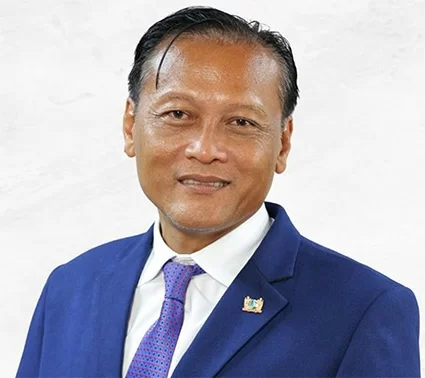
    Suriname’s national police force is set for a major modernization upgrade in the coming weeks, with the introduction of body-worn cameras for frontline officers and a rollout of updated uniforms, senior law enforcement and government officials have confirmed. The initiative, which aims to boost operational transparency, officer safety and criminal evidence gathering, has received full backing from Police Commissioner Melvin Pinas, who has also called for the future integration of digital facial recognition and other advanced technologies to strengthen the country’s fight against rising criminal activity.

    Justice and Police Minister Harish Monorath made the announcement of the body cam program during a recent promotion ceremony for 205 new police recruits, who were elevated to the rank of special police officers. Monorath confirmed that 250 body cameras are already ready for deployment, with donations coming from multiple domestic and international partners: 150 units were contributed by the U.S. Embassy in Paramaribo, 50 were donated by Suriname’s local private sector, and an additional 50 units were provided by Suriname’s e-government initiative e-Gov. According to the minister, the first batch of body cameras will be officially deployed to active officers by the end of May.

    Speaking at a press briefing on Thursday, Commissioner Pinas emphasized the transformative potential of the body cam program for Suriname’s police service, and reaffirmed his unwavering support for full national rollout within 2025. “This project delivers three core benefits that will strengthen our entire force: improved officer safety, greater operational transparency, and more solid, verifiable evidence for criminal prosecutions,” Pinas told reporters. “That is why I stand 100 percent behind this initiative, and we are committed to making full deployment a reality this year.”

    The commissioner also noted that the body cam program is just the first step in a broader push to integrate advanced technology into Suriname’s law enforcement operations. He pointed to the already proven success of the country’s existing Safe City closed-circuit camera network, which has helped police solve hundreds of cases across the nation. “You can think of the Safe City camera network as police officers with three extra eyes, constantly monitoring and recording activity across our urban areas,” Pinas said. “We have already recorded so many investigative wins using this system, and I am a strong supporter of adding facial recognition technology and other next-generation tools to our existing technological toolkit to help us tackle crime more effectively.”

    In addition to the body cam announcement, Maureen Palmtak, Director of Policy Preparation and Management at the Suriname Police Force, revealed that updated uniforms will be rolled out to frontline general duty officers between May and June. The first officers to wear the new standardized uniforms will be the 205 newly promoted special officers, who are set to be appointed as probationary police officers following their promotion.

  • Portable benefits plan needs national education push – AG

    Portable benefits plan needs national education push – AG

    As debate over the transformative National Portable Benefits Framework continued in Barbados’ House of Assembly Friday, top law enforcement official Attorney General Wilfred Abrahams has pushed for an immediate, nationwide public outreach campaign to ensure all Barbadian workers understand the new system’s rules and advantages. He warned that gaps in public knowledge could leave working people locked out of critical protections and new opportunities that the proposed policy is designed to deliver.

  • Guyana rapped by Hemispheric Human Rights Commission’s Special Rapporteur on Freedom of Expression

    Guyana rapped by Hemispheric Human Rights Commission’s Special Rapporteur on Freedom of Expression

    In a newly released 2026 report, the Organization of American States’ Special Rapporteur on Freedom of Expression, operating under the Inter-American Commission on Human Rights, has documented a systemic deterioration of press freedom and open discourse in Guyana throughout 2025, painting a picture of an increasingly adverse environment for journalistic work.

    At the core of the rapporteurship’s criticism is hostile rhetoric targeting independent media from top Guyanese public officials, specifically naming President Irfaan Ali and the government’s Department of Public Information. The report emphasizes that as formal guarantors of human rights, public authorities hold a unique duty to avoid speech that endangers journalists or interferes with their work. This obligation stems from the high profile of public office, the broad reach of official statements, and their outsized ability to shape public perception of media workers. Any official statement that undermines the right to free expression, or creates direct or indirect pressure on reporters contributing to public deliberation, violates this core duty, the report finds.

    Beyond verbal hostility, the rapporteurship recorded multiple documented instances of active obstruction of press coverage. One high-profile case dates to September 17, 2025, when several independent media outlets were excluded from President Ali’s first post-inauguration press conference, held after his September 6 swearing-in. Six outlets received no advance notification of the event, while other favored outlets were personally invited by the press secretary and director of press and publicity. Local press outlets framed the exclusion as part of a broader pattern of controlling the official government narrative, silencing public scrutiny, and eroding the public’s right to transparent governance. In response, Guyana’s Director of Public Information dismissed critical coverage of the exclusion as “malicious, misleading, and blatantly inaccurate.”

    Addressing the incident, the rapporteurship referenced binding precedent from the Inter-American Court of Human Rights, which holds that any restriction on journalist access to official public events must meet strict standards: it must be legal, pursue a legitimate public goal, and be necessary and proportional to that goal in a democratic society. Any accreditation requirements for media must be specific, objective, reasonable, and applied transparently, the court has ruled.

    The report also tackles the long-running issue of multi-million-dollar government debts owed to multiple major Guyanese media outlets, including the shuttered Stabroek News, as well as the Guyana Chronicle, Guyana Times, and Kaieteur News, a debt the government has publicly acknowledged. Citing Principle 13 of the IACHR’s Declaration of Principles on Freedom of Expression, the rapporteurship notes that using state resources, including public funds, official advertising allocations, broadcast frequency grants, and other state powers to pressure, punish, reward, or privilege media based on their editorial coverage constitutes a direct attack on press freedom and must be legally prohibited.

    Turning to political discourse, the report documents allegations of obstruction targeting opposition figure Azruddin Mohamed, leader of the We Invest in Nationhood movement, by the ruling People’s Progressive Party (PPP) and the Guyanese government. Obstruction included efforts to block Mohamed from holding public rallies with supporters and a months-long delay to his swearing-in as Opposition Leader. President Ali has denied any role in blocking Mohamed’s election to the opposition post. Mohamed currently faces extradition to the United States on allegations of financial crimes. The delay was only resolved after mounting pressure from the Western diplomatic community, when National Assembly Speaker Manzoor Nadir convened a session of opposition parliamentarians to hold the vote.

    The report stresses that free expression, in both its individual and collective forms, is a non-negotiable foundation of democratic electoral processes. As the Inter-American Court has previously established, open discourse acts as an essential tool for shaping voter opinion, strengthening competition between political factions, allowing voters to evaluate candidate platforms, and enabling transparency and oversight of elected officials. It also nurtures the formation of the collective will expressed through popular vote. Beyond elections, free expression plays a critical democratic role: it prevents the rise of authoritarianism and facilitates personal and collective self-determination. As such, the report confirms, the state carries a binding obligation to create the conditions for open, pluralistic public debate on issues that matter to citizens. Aligning with the OAS Hemispheric Agenda for the Defense of Freedom of Expression, the report notes that an engaged citizenry requires institutions that encourage rather than suppress discussion of public issues. Any use of coercive or subtle mechanisms to impose a single official narrative or discourage open debate is fundamentally incompatible with democratic governance.

    The rapporteurship also documented widespread failures in Guyana’s access to information regime. It received dozens of complaints from journalists and civil society groups about unresponsiveness to information requests from public entities and elected officials. The most prominent example of these failures was a March 28, 2025, protest held outside the Office of the Information Commissioner, attended by journalists and civil society organizers. Protesters accused the Information Commissioner of failing to uphold his statutory duties under Guyana’s 2011 Access to Information Act, including deliberately obstructing legitimate requests for government records. Protesters also highlighted that the Commissioner is legally required to submit an annual public report to Parliament, but has not done so for more than a decade. The protest called for sweeping legislative reform to decentralize the access to information process, arguing that individual ministries should take responsibility for processing requests rather than concentrating power in a single commissioner role. The protests continued for weeks, with participation from leading civil society groups including the Guyana Press Association, General Workers’ Union, Guyana Human Rights Association, and Guyana Transparency Institute.

    Additional failures of transparency highlighted in the report include the ruling PPP’s refusal to disclose full details of its 2025 election campaign financing, the government’s ongoing refusal to release the full official report into a 2025 Guyana Defence Force helicopter crash that killed five servicemen, and an incomplete public audit of Guyana’s oil sector costs.

    The OAS report’s findings are echoed by new data from global press freedom watchdog Reporters Without Borders (RSF), which announced late last month that Guyana has dropped three places in its annual 2026 World Press Freedom Index. RSF now ranks Guyana 76th out of 180 assessed countries, down from 73rd place in 2025.

  • Public service minister backs portable benefits framework

    Public service minister backs portable benefits framework

    Against a backdrop of rapidly evolving global labour markets where gig work, freelancing, self-employment, and short-term contract roles are growing rapidly, Barbados has tabled a groundbreaking policy proposal to extend critical social protection to millions of workers left excluded from traditional welfare systems. Public Service and Talent Development Minister Kay McConney, who also serves as the Member of Parliament for St Philip West, formally backed the National Portable Benefits Framework resolution during a Friday sitting of the House of Assembly, framing the policy as a long-overdue correction to gaps in the country’s existing social security infrastructure.

    McConney emphasized that the framework is designed to serve a broad cross-section of underprotected workers across Barbados, from small-scale farmers in Ebenezer to independent masons in Chapel, and countless other non-traditional workers who have gone without safety nets for decades. She stressed that the proposal goes far beyond creating a new bureaucratic structure; it centers on making benefit access accessible, understandable, and inclusive for all workers regardless of their employment arrangement. A core priority of the policy will be widespread public outreach, ensuring workers from all sectors understand how the system works, see themselves reflected in its coverage, and recognize the tangible value it brings to their daily financial and personal security.

    In her address to the chamber, McConney framed the framework as more than a routine policy adjustment: it is a transformative pathway to social security access and long overdue peace of mind for workers locked out of traditional systems. She noted that Barbados’ labour market has shifted dramatically away from the mid-20th century “cradle-to-grave” full-time employment model that existing social security laws were built to serve. By 2026, she pointed out, the majority of the current workforce is navigating a far more fluid economy, where workers pursue multiple income streams, switch roles regularly, and actively choose self-employment or gig work over long-term positions with a single employer.

    “As the nature of work changes, our social safety nets must evolve alongside it,” McConney argued, linking the proposal to the government’s ongoing policy push to boost skills development and entrepreneurship across the country. “We are actively encouraging Barbadians to build new skills, launch their own businesses, and pursue self-employment. If we are serious about supporting that shift, we cannot leave these workers without the same protection that traditional employees have enjoyed for generations. We need to build a system that meets them where they are.”

    Beyond protecting workers, McConney highlighted that the portable benefits framework will also strengthen Barbados’ competitive position in the global race for skilled talent. In today’s borderless labour market, countries around the world are competing to attract high-quality independent workers and skilled professionals, and comprehensive portable benefits will create a more welcoming environment for talent that drives economic growth, she explained.

    The minister also outlined the key structural difference between the new framework and the existing system. Currently, social security benefits are tied to individual employers, meaning workers who switch jobs, pursue side hustles, launch home-based businesses, or work in informal sectors face gaps or complete loss of coverage. Under the new proposal, benefits will be registered in the worker’s own name, rather than an employer’s, and travel with the worker through every career transition. This eliminates the disruptive stops and starts in coverage that currently plague workers who move between roles, creating continuous protection no matter how someone chooses to work.

    Universal access is another central pillar of the framework: McConney confirmed that the policy will expand social security eligibility to all workers, regardless of how their employment is categorized. One key problem this will solve is the widespread issue of “job lock,” where workers are trapped in unsatisfying full-time roles solely because they cannot afford to lose their employer-tied benefits. The new framework removes this barrier, giving workers the freedom to pursue entrepreneurship, switch careers, or take on flexible work without sacrificing access to critical social protection.

    Finally, McConney framed the proposal as a core component of broader labour market modernization efforts across Barbados. “We cannot claim to have a current, effective labour policy if our laws are stuck in a bygone era that no longer matches how people actually work today,” she said. “This framework brings our social security system in line with the reality of 21st century work, and delivers long-overdue protection to the workers who are increasingly the backbone of our evolving economy.”

  • Pringle to return as opposition leader, UPP Senators to Receive Appointments on Monday

    Pringle to return as opposition leader, UPP Senators to Receive Appointments on Monday

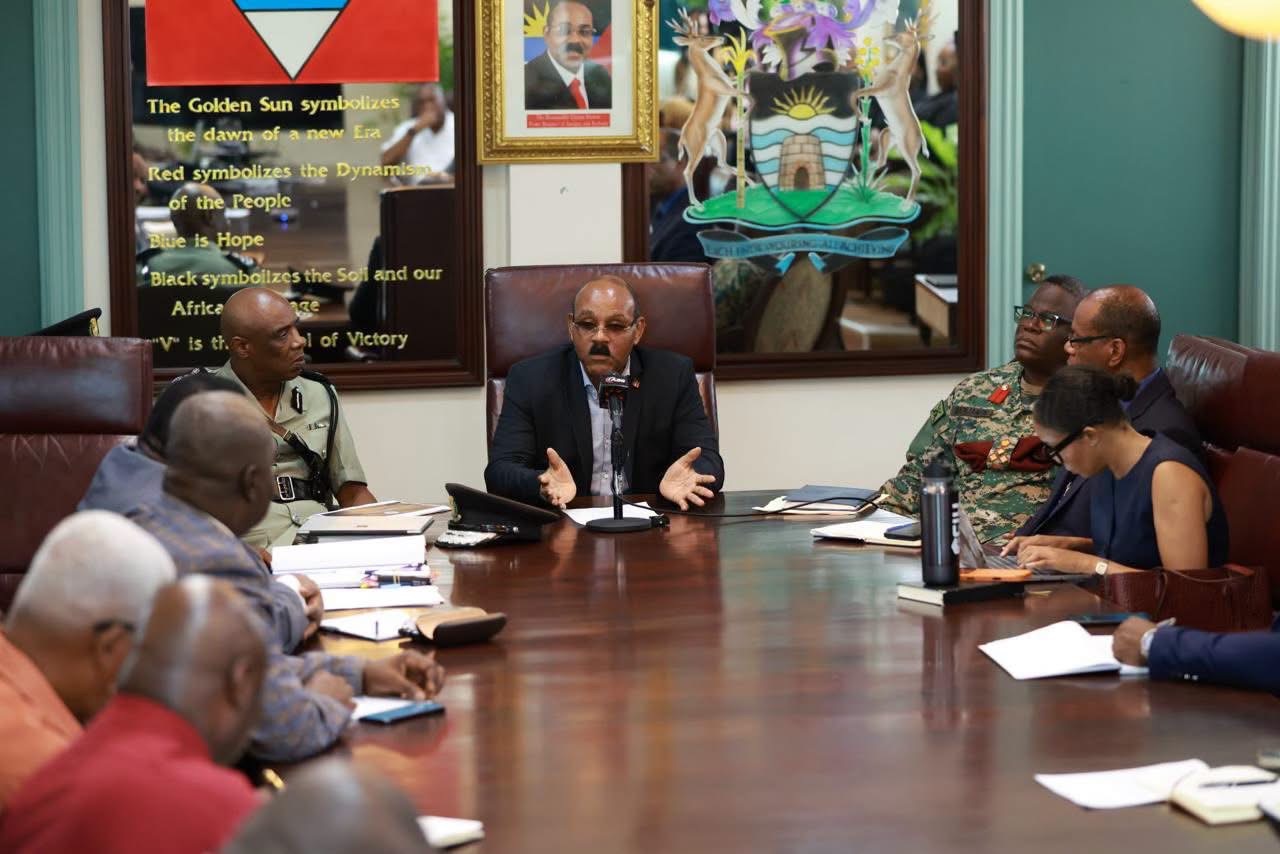
    A key constitutional milestone is set to unfold in Antigua and Barbuda on Monday, May 11, when Governor General His Excellency Sir Rodney Williams will formally install Jamale Pringle as Leader of the Opposition at Government House, with the ceremony scheduled to begin at 1 p.m.

    Pringle, who won the recent electoral contest for the All Saints East and St. Luke constituency, has moved quickly to assemble his team for the Upper House of parliament. Under the country’s constitutional framework, the opposition bloc is guaranteed four Senate seats. To fill these positions, Pringle has selected four nominees who will also receive their official instruments of appointment during Monday’s ceremony at Government House.

    The four incoming senators bring diverse professional and political backgrounds to the chamber. Chester Hughes currently serves as an executive officer at the Antigua and Barbuda Workers’ Union, bringing deep experience in labor advocacy to the role. Jonathan Wehner holds the position of Public Relations Officer for the United Progressive Party (UPP), while Malaka Parker acts as caretaker for the St. John’s Rural North constituency, and Ashworth Azille serves as caretaker for the St. John’s Rural East constituency, all on behalf of the UPP.

    In a statement ahead of the ceremony, Pringle expressed full confidence in his selected team. He emphasized that the new Senate caucus will deliver the level of legislative representation the UPP requires as it enters a period of internal rebuilding, while also bringing robust, high-quality debate to the chamber that holds the current Browne Administration to account for its policy decisions.

    Pringle noted that the selection process was deliberate and strategic, designed to meet both immediate and long-term goals for the party. In the near term, the appointments will expand the UPP’s operational and legislative capacity as the opposition. Looking ahead, the process lays critical groundwork for the UPP’s preparations to form a future national administration, he added.

    To wrap up his comments, Pringle extended an invitation to all UPP members and the general public of Antigua and Barbuda to throw their full support behind the new senators, as they step into their formal responsibilities to both the party and the nation.

  • Caddle advocates for a worker-focused benefits system

    Caddle advocates for a worker-focused benefits system

    A landmark proposal aimed at rethinking social security for Barbados’ evolving workforce is currently advancing through parliamentary debate, promising to close critical protection gaps for gig workers, freelancers and people holding multiple jobs. The National Portable Benefits Framework, tabled by St George North Member of Parliament Toni Moore as a Private Members Resolution, is designed to delink worker benefits from individual employers, ensuring coverage stays with people across every stage of their working lives.

    Minister of Economic Affairs and Planning Marsha Caddle has emerged as a key proponent of the plan, explaining that the proposed system would allow multiple employers to contribute to a single worker’s benefits account at the same time, creating an uninterrupted stream of coverage that moves with the employee from role to role. The framework covers core social security supports, including retirement pensions, maternity benefits, disability assistance and other forms of worker protection, upending the traditional model that ties eligibility to permanent employment with a single organization.

    Caddle framed the proposal as a necessary evolution of policy that balances two critical national goals: labor protection and national productivity. The minister noted that the government is already moving to establish a new Competitiveness and Productivity Commission, acknowledging that Barbados currently faces systemic challenges in boosting productivity across all sectors, not just among individual workers. She argued that productivity and worker security are not opposing goals – instead, workers perform far better when they can count on predictable, consistent access to benefits, a stability the current system fails to deliver for non-traditional workers.

    Drawing on her own professional experience working as an independent consultant, Caddle called out outdated biases in key institutions that exclude flexible workers. She explained that financial institutions still routinely assess creditworthiness based on a borrower’s employer rather than their actual income or reliability, a system that reduces non-traditional workers’ worth to their association with a single entity. She described this outdated mindset as a leftover “plantation mentality” that has no place in a modern economy where work patterns are rapidly shifting.

    The framework, Caddle emphasized, is more than a policy change – it is a societal shift that challenges government bodies, financial institutions and communities to adapt to new ways of working. It requires more nuanced, flexible systems that can accommodate diverse work arrangements, a complexity that she says is necessary to build an inclusive economy that serves all workers.

    To implement the portable benefits model, Caddle confirmed that revisions to the current Employment Rights Act will likely be required, as existing legal definitions of “employer” and “employee” are too rigid to fit flexible work arrangements. The proposed system also shifts a degree of responsibility for benefits management to workers themselves, ensuring that coverage is no longer controlled entirely by a single employer that can cut off access when a worker changes roles. Instead, workers will take a more active role in managing their own benefits, coordinating contributions from multiple clients or employers to maintain continuous coverage.

    Finally, Caddle highlighted that successful rollout of the policy will depend on robust public outreach and education led by the National Insurance and Social Security Service (NISSS), to ensure all workers understand how the new system operates and how they can access their benefits. The House of Assembly resumed debate on the resolution Friday, moving the transformative proposal one step closer to potential implementation.

  • MP Ron Redhead set to take over ICT portfolio from 1 June

    MP Ron Redhead set to take over ICT portfolio from 1 June

    In a public announcement made during the official launch of the International Girls in ICT Day–AI Innovation Challenge this past Friday, Grenada Prime Minister Dickon Mitchell revealed a key shift in cabinet leadership: long-serving legislator Ron Redhead, the Member of Parliament for St George North East, will assume full responsibility for the country’s ICT portfolio starting June 1. Currently, Mitchell himself oversees Grenada’s ICT and digital transformation strategy, a responsibility he has held alongside multiple other high-level cabinet posts that include Prime Minister, National Security, Public Administration, Infrastructure and Information. A formal official statement confirming Redhead’s appointment is scheduled to be released by the Prime Minister in the coming days.

    Redhead first entered public office following the National Democratic Congress’ (NDC) historic 9-6 election victory in June 2022, where he won his seat for St George North East. After the NDC took power, he was appointed Minister of State for Youth and Sports, a position he stepped down from during the government’s 2024 cabinet reshuffle. At the time of that reshuffle, administration officials clarified that the departure would allow Redhead to complete his university degree while continuing to carry out his duties as an elected Member of Parliament. Now, he is set to rejoin the cabinet ahead of his upcoming graduation.

    At the end of this month, Redhead will graduate from St George’s University, having completed his academic program while balancing the full demands of his parliamentary role. Prime Minister Mitchell emphasized the significance of this achievement during his announcement, framing Redhead’s journey as a powerful example of lifelong learning and persistent goal pursuit even amid challenging circumstances. “He has a unique story to share,” Mitchell noted. “I highlight this because it’s important for us to understand that we can work and continue to educate ourselves and continue to pursue our dreams, even in pretty difficult circumstances.”

    Mitchell argued that Redhead’s experience combining senior public policymaking and ongoing higher education leaves him uniquely positioned to lead Grenada’s digital development. “The fact that he is a Member of Parliament, the fact that he’s a politician, the fact that he is responsible for policymaking, is all the more reason why he recognised the need to pursue and continue his education,” Mitchell added. The Prime Minister also emphasized that the portfolio shift will bring much-needed dedicated focus to Grenada’s expanding ICT and digital transformation agenda. Unlike the current arrangement where the portfolio is held by the Prime Minister alongside multiple other major responsibilities, Redhead will have no conflicting high-priority duties, allowing him to devote full attention to advancing the country’s digital goals. “I’m sure he’ll be happy to take on his new portfolio. I’m sure those members of the ICT team will be happy to have a minister who has the time and no competing priorities to ensure that we can continue to push ICT and the digital transformation in Grenada,” Mitchell said.

    A well-known younger figure within the ruling NDC party, Redhead has not yet commented on his upcoming appointment: attempts by reporters to reach him for a statement on Friday were unsuccessful.

  • UDP’s Edward Broaster Calls PM’s Fuel Tax Cut “Peanuts”

    UDP’s Edward Broaster Calls PM’s Fuel Tax Cut “Peanuts”

    On May 8, 2026, political tensions over fuel pricing in Belize flared up after United Democratic Party (UDP) caretaker candidate for Belize Rural Central Edward Broaster publicly dismissed Prime Minister John Briceño’s recently announced fuel tax cut as nothing more than “peanuts” — a negligible gesture that fails to address the crippling cost pressures facing working-class Belizeans.

    Broaster made the critical remarks during a local event at the Northern Gas Station in his constituency, where he personally rolled out a temporary $2 per gallon fuel subsidy for local residents, covering costs for up to 10 gallons per qualifying vehicle. During the event, he argued that the prime minister has deliberately chosen to leave the most burdensome fuel levies untouched, even after announcing a 68% cut to the national excise tax on fuel. In Broaster’s view, the remaining environmental taxes and general sales tax (GST) applied to fuel are what continue to squeeze household budgets for ordinary working people across the country.

    “That is giving the government the big bite from the fuel that the prime minister refused to touch,” Broaster told attendees. “He can’t blame it on the war.”

    The local subsidy initiative has sparked pushback from ruling party politicians, who have framed Broaster’s move as a cynical political stunt. Dolores Balderamos-Garcia, the sitting Area Representative for Belize Rural Central, has already dismissed Broaster’s program as a blatant “political gimmick” designed to score cheap votes ahead of potential elections. Additionally, Dr. Louis Zabaneh, the Area Representative for Dangriga, had previously challenged Broaster to expand his fuel relief program to a national scale — a call Broaster has rejected, arguing that meaningful national relief is the responsibility of the incumbent administration, not individual opposition politicians.

    Broaster doubled down on his criticism of the Briceño government, arguing that the administration has failed to deliver the substantive cost-of-living relief it promised to voters. “They really don’t care about the people,” he said. “They’re the ones who have the power to reduce fuel prices across the board.”

    In additional comments made during an interview earlier this week, Broaster revealed that he is already developing a follow-up initiative: a week-long fuel relief program specifically targeted at public bus commuters, who rely on fuel-powered transit for daily travel to work, school, and essential services.