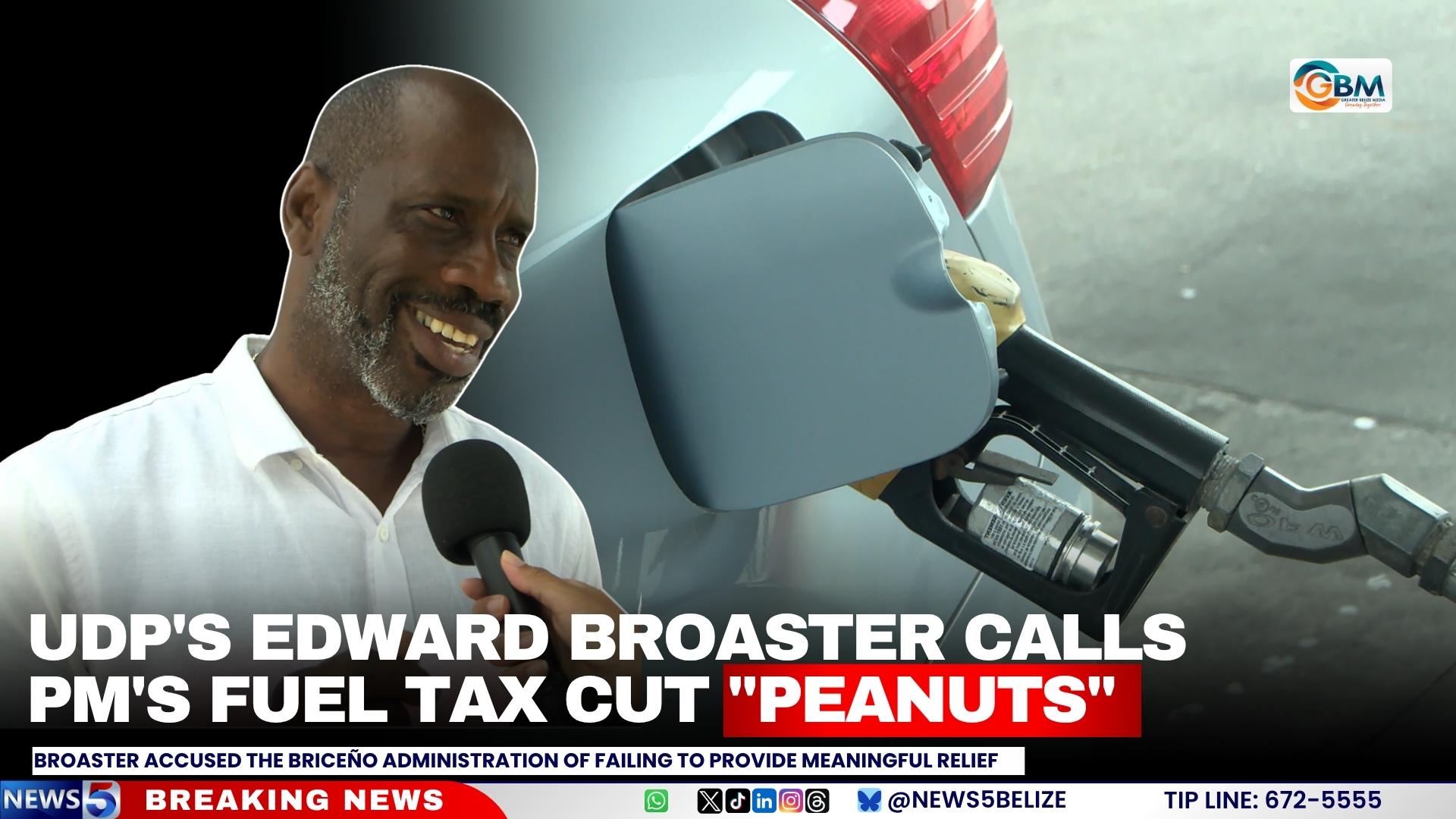
On May 8, 2026, political tensions over fuel pricing in Belize flared up after United Democratic Party (UDP) caretaker candidate for Belize Rural Central Edward Broaster publicly dismissed Prime Minister John Briceño’s recently announced fuel tax cut as nothing more than “peanuts” — a negligible gesture that fails to address the crippling cost pressures facing working-class Belizeans.
Broaster made the critical remarks during a local event at the Northern Gas Station in his constituency, where he personally rolled out a temporary $2 per gallon fuel subsidy for local residents, covering costs for up to 10 gallons per qualifying vehicle. During the event, he argued that the prime minister has deliberately chosen to leave the most burdensome fuel levies untouched, even after announcing a 68% cut to the national excise tax on fuel. In Broaster’s view, the remaining environmental taxes and general sales tax (GST) applied to fuel are what continue to squeeze household budgets for ordinary working people across the country.
“That is giving the government the big bite from the fuel that the prime minister refused to touch,” Broaster told attendees. “He can’t blame it on the war.”
The local subsidy initiative has sparked pushback from ruling party politicians, who have framed Broaster’s move as a cynical political stunt. Dolores Balderamos-Garcia, the sitting Area Representative for Belize Rural Central, has already dismissed Broaster’s program as a blatant “political gimmick” designed to score cheap votes ahead of potential elections. Additionally, Dr. Louis Zabaneh, the Area Representative for Dangriga, had previously challenged Broaster to expand his fuel relief program to a national scale — a call Broaster has rejected, arguing that meaningful national relief is the responsibility of the incumbent administration, not individual opposition politicians.
Broaster doubled down on his criticism of the Briceño government, arguing that the administration has failed to deliver the substantive cost-of-living relief it promised to voters. “They really don’t care about the people,” he said. “They’re the ones who have the power to reduce fuel prices across the board.”
In additional comments made during an interview earlier this week, Broaster revealed that he is already developing a follow-up initiative: a week-long fuel relief program specifically targeted at public bus commuters, who rely on fuel-powered transit for daily travel to work, school, and essential services.