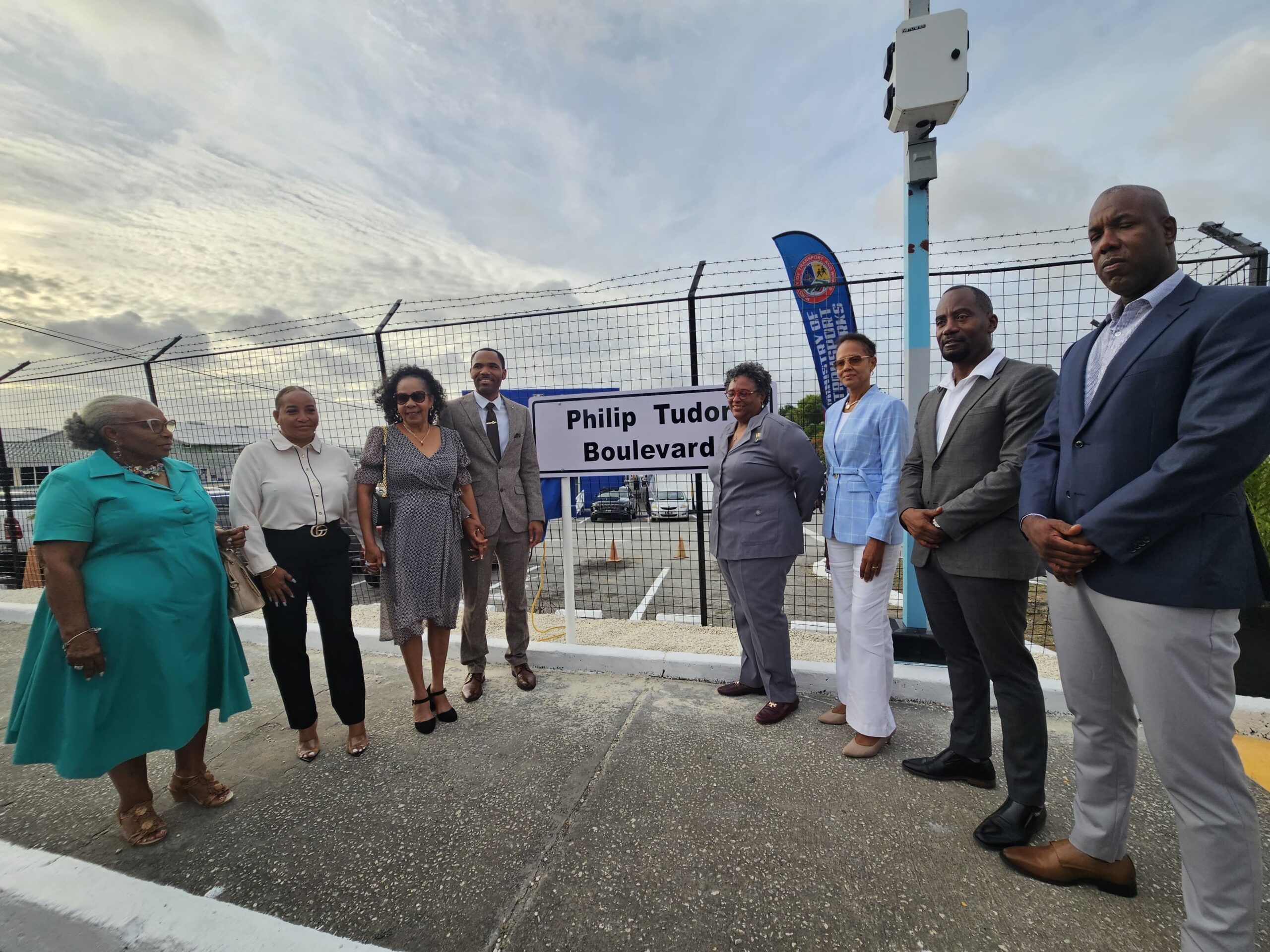
In an unprecedented departure from long-standing local naming traditions, the government of Barbados has honored the decades-long infrastructure legacy of late senior engineer Philip Adrian Howard Tudor by renaming one of the island nation’s key thoroughfares after him. Previously known as Pine East-West Boulevard, the major road now officially carries Tudor’s name, marking a rare recognition of a career civil servant’s contributions that breaks from the norm of naming highways and public roads exclusively for heads of government, cabinet ministers, elected parliamentarians, and national cricket icons.
The official unveiling ceremony, held Thursday afternoon as part of the country’s National Honours Ceremony themed around “Community, Service and Excellence”, drew top government leadership including Prime Minister Mia Mottley, Deputy Prime Minister and local Member of Parliament Santia Bradshaw, and Minister of Transport and Works Kirk Humphrey, alongside senior public officials and members of Tudor’s extended family. Government officials confirmed that the road renaming is the first of two permanent institutional tributes planned to preserve Tudor’s professional legacy, with the second being a renaming of the central laboratory at the Ministry of Transport and Works (MTW) headquarters, where the engineer spent the bulk of his decades-long career.
Bradshaw, who collaborated closely with Tudor during her own tenure as Minister of Transport and Works, emphasized that these tributes are far more than empty symbolic acts. Instead, she framed them as enduring reminders of a lifetime spent advancing Barbados’ development and lifting the quality of life for all its citizens. She noted that the boulevard holds particular personal and professional resonance for Tudor, who commuted along this route to work for nearly 40 years while leading the design and expansion of the island’s entire road network.
“There are people who work on roads, and then there are people who dedicate their entire lives to building them, improving them, and using them as instruments of national development,” Bradshaw said in her remarks. “Philip Tudor belonged firmly in the latter category.” Bradshaw added that Tudor possessed a rare understanding of the profound social role of infrastructure beyond asphalt and concrete: “He understood that roads were lifelines. They connected families to schools. They connect farmers to markets. They connect patients to healthcare and communities to opportunity.”
Accepting the honor on behalf of the entire Tudor family, the engineer’s son Alair Tudor thanked the government for ensuring his father’s decades of quiet service would not be erased from national memory. Standing alongside his mother and Tudor’s wife Dr Lesandra Tudor beside the newly unveiled road sign, Alair noted that the permanent renaming enshrines his father’s legacy for coming generations, cementing his reputation as a dedicated professional who led by quiet example.
“Today we’re celebrating a man that gave his all to his work, ensuring his name is enshrined in history for future generations to know of his dedication to his profession and his craft,” he said. “He silently encouraged many of us to be better and to give your all in what you do.”
Prime Minister Mottley, who counted Tudor as a professional acquaintance for more than 30 years, echoed those remarks, praising the late engineer as the gold standard of public service. “the consummate public servant… but above all else, he was human. He was fair and he was a man who always displayed heart,” Mottley said. She added that Tudor served every successive national administration with equal levels of professionalism and impartiality, using the occasion to call for greater recognition of unsung career public servants whose work lays the foundation for long-term national growth long after their own tenures end.