分类: politics

  • AG meets with UK lawyers

    AG meets with UK lawyers

    A high-profile legal battle over alleged state destabilization and an assassination conspiracy against Trinidad and Tobago’s top government leadership took a key step forward this week, as Attorney General John Jeremie held an extended meeting with two senior King’s Counsel brought in from the United Kingdom to represent the State in the case.

    The closed-door meeting, which ran for multiple hours, took place at the Office of the Attorney General in Port of Spain, bringing Jeremie together with Sir James Raymond Eadie KC and Robert Stephen Strang KC. The pair join National Gas Company chairman Gerald Ramdeen to complete the State’s three-member legal team, which received formal case briefings from Jeremie ahead of their official admission to the local bar.

    According to official documentation, the two KCs were formally approved to practice law specifically for this high-stakes case, listed as matter CV2026-02618: Dominic Hadeed & Genevieve Hadeed v The Commissioner of Police. The authorization was granted by Jeremie under Section 15A of Trinidad and Tobago’s Legal Profession Act, following required consultations with the Chief Justice. Official legal notices confirming their eligibility were published in the Government Gazette on June 30, and both barristers were scheduled to be formally called to the Trinidad and Tobago Bar the day after the meeting.

    Both legal figures carry extensive credentials from the UK legal system. Eadie, a member of the Honourable Society of the Middle Temple, was admitted to practice before the Bar of England and Wales in 1984. Strang, also a Middle Temple member admitted to the UK bar in 2003, has a well-documented track record of high-profile wins, including successfully representing former prime minister Dr Keith Rowley in a 16-year-long land dispute tied to Tobago’s Alma Estate. Working alongside attorneys Ramesh Lawrence Maharaj and Dr Margaret Rose, Strang secured a final victory for Rowley before the UK-based Privy Council, the highest appellate court for Trinidad and Tobago.

    The case the KCs have been brought in to argue stems from serious allegations brought by the State against local businessman Dominic Hadeed, owner of Blue Waters Products Ltd, his wife Genevieve Hadeed, and their relative Star Sabga. The three are accused of conspiring to assassinate senior government officials, with the detention order against Genevieve Hadeed specifically claiming she made public statements calling for the death of current Prime Minister Kamla Persad-Bissessar. State intelligence alleges the trio planned a series of violent acts to murder top government leaders and destabilize the country’s elected government.

    The preventive detention orders (PDOs) at the center of the legal challenge were signed by Homeland Security Minister Roger Alexander under the 2026 Emergency Powers Regulations, implemented during an active state of emergency. Dominic and Genevieve Hadeed were arrested at their West Trinidad home last Wednesday, and have remained in custody since. Dominic Hadeed is currently being held at the Remand Yard of Golden Grove Prison, while Genevieve Hadeed and Star Sabga are detained at Golden Grove’s Women’s Prison.

    This is not the first ruling in the ongoing legal saga. Earlier this week, High Court Justice Frank Seepersad dismissed the Hadeeds’ initial bid for immediate release via a habeas corpus application, ruling that the PDOs issued against the couple during the state of emergency were lawful. In a detailed 24-page judgment, Seepersad rejected the couple’s core argument that their initial arrest was unlawful, which would have invalidated the subsequent detention orders. The judge found that entries in the official police station diary directly contradicted claims that the pair were never informed they were being detained under the Emergency Powers Regulations, and confirmed that the initial 48-hour detention and subsequent seven-day extension authorized by a senior police officer met all legal requirements.

    Seepersad emphasized in his ruling that while he upheld the legality of the current detention, emergency powers do not place the executive branch of government beyond judicial oversight. He also clarified that even if the initial arrest had been found unlawful — a finding he did not make — that procedural issue would not automatically invalidate the PDOs issued against the pair.

    The habeas corpus ruling only addressed the immediate question of whether the Hadeeds should be released from custody pending the full case. A separate substantive constitutional challenge remains pending, which will ask the High Court to rule on broader questions of whether the State’s actions in issuing and executing the PDOs comply with the country’s constitution. In that challenge, the Hadeeds argue their constitutional rights were violated by their detention under the state of emergency, and the court will ultimately decide whether the Homeland Security Minister and Commissioner of Police acted within their legal authority under the Emergency Powers Regulations, whether the searches and detention were lawful, and whether the Hadeeds received all constitutionally guaranteed protections.

    Seepersad explicitly ruled that these broader constitutional questions were not resolved in the habeas corpus proceedings, and directed that the constitutional challenge be heard by a separate High Court judge. The case is scheduled for its next procedural hearing on July 27, with both legal teams required to submit full written arguments to the court before that date. The Hadeeds are currently represented by a team led by Senior Counsel Douglas Mendes, Gilbert Peterson, and Faris Al-Rawi, alongside a group of supporting instructing attorneys.

  • PM to attend regional summit

    PM to attend regional summit

    As the Caribbean Community (Caricom) prepares to convene its 51st Regular Meeting of the Conference of Heads of Government in St Lucia starting this Sunday, Trinidad and Tobago’s Prime Minister Kamla Persad-Bissessar has made two critical announcements ahead of the gathering: she will personally attend the high-level regional summit, and her administration remains unwavering in its opposition to the reappointment of incumbent Caricom Secretary-General Dr Carla Barnett.

    In comments provided to local outlet the Express, Persad-Bissessar confirmed she has held direct talks with St Lucia Prime Minister Philip J Pierre, who is set to take over as incoming Caricom chairman ahead of the summit. On the contentious issue of Barnett’s reappointment, the Trinidad and Tobago leader reiterated that her government will not recognize any extended term for the Secretary-General when her current tenure expires in August.

    The dispute over the reappointment is rooted in procedural disagreement. Persad-Bissessar has long argued that the process used to advance Barnett’s extension conflicts with the Revised Treaty of Chaguaramas, Caricom’s foundational governing document, and the bloc’s long-standing institutional governance rules. Trinidad and Tobago has already formally submitted its official position to all regional leaders, maintaining that any new term granted through what it frames as an unlawful procedure will not be accepted by Port-of-Spain. The government has also confirmed that its stance is backed by formal legal advice affirming its interpretation of the treaty’s requirements for the Secretary-General appointment process. The core question up for debate among heads of government remains whether the conference properly exercised its legal authority to extend Barnett’s tenure, and the impasse is expected to be a top discussion topic during the summit as Caricom leadership works to find a path forward to resolve the disagreement.

    Alongside the leadership dispute, the summit opens a new chapter for Caricom with Pierre set to assume the bloc’s chairmanship on July 1, 2026, for a six-month term ending on December 31 of the same year. He will succeed outgoing chairman Dr Terrance Drew, Prime Minister of St Kitts and Nevis, and will lead the four-day summit hosted in Gros Islet, Saint Lucia, from July 5 to 8.

    In a pre-summit address delivered Monday, Pierre laid out his policy priorities for his tenure, centering his agenda on deepening regional unity and making Caricom more visible and impactful in the daily lives of ordinary Caribbean citizens. “Across our region, people are navigating a rapidly changing world: they work tirelessly to build better lives, our economies are adapting to uncharted new realities, and our communities face shared challenges that demand collective cooperation, innovative thinking and shared purpose,” Pierre said. “At this moment, many of our citizens are asking one critical question: how can Caricom make a greater difference in our everyday lives? That question must guide all of our work over the coming months.”

    The incoming chairman emphasized his commitment to bringing Caricom closer to the people it serves, noting that the bloc’s impact should not be limited to formal summit meetings and official declarations. Instead, he said, Caricom’s work should be visible and felt in local communities, schools, small businesses, and family homes, reflected in expanded opportunities for every citizen across the region.

    Pierre stressed that regional solidarity is the Caribbean’s greatest advantage, noting that “the Caribbean is strongest when we work together, speak with shared purpose, and respect the unique voices and contributions of every Member State. Our rich diversity of cultures, languages, traditions, and lived experiences is one of our most powerful strengths.”

    Under his leadership, Pierre pledged that Caricom will prioritize building a more resilient and sustainable Caribbean, advancing key priorities including urgent climate action, strengthened regional food and nutrition security, inclusive economic growth, accelerated digital transformation, expanded trade and investment opportunities, and freer movement of people, skills, services and ideas across the regional bloc. He added that all policy work must center the needs of ordinary Caribbean people, noting “every Caribbean citizen, regardless of age, gender, ability, background, occupation, or personal circumstance, must be able to see themselves reflected in the regional agenda and feel that Caricom is working to improve their lives, expand their opportunities, and strengthen their future.”

    Pierre also highlighted the inseparable link between development and public safety, calling on member states to collaborate to build safer, more hopeful communities where every citizen can live, work, learn and thrive in peace and dignity. He closed by noting that the ultimate measure of Caricom’s success is whether ordinary citizens can feel the benefits of regional integration in their daily lives. “Integration that our people cannot feel will not last,” he said. “Together, we can build a Caribbean Community that is more united, more inclusive, more resilient, and more prepared for the future. Let us move forward together, from resilience to renewal and revival. In solidarity with the people of the Caribbean, I thank you.”

  • Coalitie en oppositie lijnrecht tegenover elkaar in slotdebat over begroting

    Coalitie en oppositie lijnrecht tegenover elkaar in slotdebat over begroting

    In a late-night parliamentary vote held Sunday, Suriname’s National Assembly has approved the government’s 2026 national state budget and accompanying state debt plan, capping off hours of heated debate between the ruling coalition and the main opposition party over the proposal’s financial credibility, transparency and policy priorities.\n\nJust ahead of the final vote, members of the parliamentary committee of rapporteurs laid out their competing stances on the budget, which comes as Suriname navigates a fragile economic transition period. For the ruling coalition, the 2026 budget is framed as a necessary bridge to steady the country through ongoing economic headwinds while laying groundwork for long-term sustainable growth.\n\nRabin Parmessar, faction leader of coalition partner NDP, described the proposal as a “bridge budget” designed to guide Suriname through its current economic challenges. He emphasized that continued fiscal discipline from the government is non-negotiable to prevent further expansion of the country’s fiscal deficit, adding that solid financial governance is critical to boosting domestic and investor confidence in Suriname’s economy. Parmessar also called for more efficient policy implementation, stronger oversight of state-owned enterprises, more rigorous monitoring of budget execution, and accelerated action to clear the backlog of closed budget audits that have piled up in recent years.\n\nOther coalition representatives noted that the current administration has only been in office for a short period, and that approving the budget is essential to unlock planned investments across key public sectors including education, healthcare, social welfare, infrastructure and broad economic development. Moving forward, the coalition said, its core focus will be delivering on the policy priorities laid out in the approved budget.\n\nHowever, the main opposition party VHP maintained firm objections to the proposal throughout the debate, announcing ahead of the vote that it would cast its full bloc against the budget. VHP faction leader Asis Gajadien argued that the budget lacks sufficient financial underpinning, with major unresolved uncertainties surrounding projected government revenue. He added that the plan fails to deliver meaningful prospects for improving household purchasing power, expanding employment opportunities, or lifting the overall economic well-being of the Surinamese public.\n\nVHP parliamentarian Kishan Ramsukul raised additional red flags, pointing to vague budget line items, questionable exchange rate assumptions, and overoptimistic projections for future revenue from the country’s key oil and gas sector. He also noted that the numerous last-minute amendments made during parliamentary review made it impossible to conduct a thorough, rigorous assessment of the full proposal.\n\nIn response to opposition criticism, Minister of Finance and Planning Adelien Wijnerman defended the exchange rate assumptions used to draft the budget. Wijnerman explained that the framework was built on a conservative estimate of 39 Surinamese dollars per U.S. dollar, while the current market exchange rate has already fallen below 38 Surinamese dollars per dollar. This deliberate conservative approach, she noted, was chosen to ensure the budget can withstand unexpected volatility in foreign currency markets and avoids relying on an overly optimistic growth scenario.\n\nOther opposition lawmakers echoed concerns that core priority sectors including education, healthcare and public safety do not receive sufficient allocated resources in the proposal, and said the government failed to provide adequate clarity on how multiple policy initiatives would be funded and implemented.\n\nFollowing closing statements from the committee of rapporteurs and the government’s response to questions, the National Assembly moved forward with the final vote. The 2026 state budget and state debt plan was ultimately adopted with a clear majority of 31 votes in favor, versus 16 votes opposed. The full ruling coalition supported the proposal, while all VHP members voted against it.

  • Mira Says Work Continues, But the Scandal Won’t Go Away

    Mira Says Work Continues, But the Scandal Won’t Go Away

    Nearly two weeks after stepping aside from his ministerial post to clear the way for an independent government probe into the high-profile Smart Stream scandal, Belmopan’s area representative Oscar Mira is still refusing to step away from his public duties—even as allegations of improper government payments to his family members continue to hound him.

    The escalating scandal, which ties to the Belizean Ministry of Defense, has hit a critical turning point this week, with top government officials including Prime Minister John Briceno and suspended minister Florencio Marin set to address public concerns in the coming hours. In an exclusive interview with News Five’s senior correspondent Paul Lopez, Mira pushed back against growing public backlash, arguing that his priority remains delivering for the constituents who elected him, regardless of the cloud of controversy hanging over his tenure.

    “I did not get elected solely as a minister. First and foremost, I am the area representative for Belmopan, and I have never taken leave from that role,” Mira told Lopez during an on-the-record meeting in the capital Wednesday. “My responsibilities to the people of this district do not stop because of political noise, and you can see that for yourself in the progress we have made across the city.”

    Mira led Lopez on a tour of a rapidly developing residential neighborhood in Belmopan, where long-overdue infrastructure upgrades have recently been completed: new access roads have been graded, public utilities have been connected, and dozens of new homes are under construction in an area that was largely cut off from basic services just two years ago. “There is a lot of noise surrounding this situation, but I choose to block it out, because that noise will not slow down the work we are doing to improve life for Belmopan residents,” he said. “If residents drive through any of these developing areas, they will see a level of progress they have never seen before.”

    Public reaction to Mira’s decision to continue constituency work has been sharply divided online. Some members of the public argue that the ongoing corruption allegations have irreparably damaged his reputation and that he should step down from all public duties pending the outcome of the audit, while others credit him for staying focused on delivering visible development projects despite the pressure.

    Mira has repeatedly denied any wrongdoing in connection with the millions of dollars in Ministry of Defense payments that went to businesses owned by his siblings and close family members, payments that were approved during his tenure as Minister of State, then later as substantive minister of the department. He said he requested a leave of absence from his Cabinet post specifically to allow the audit to proceed without political interference, and he remains fully confident the process will clear his name.

    “That noise is just political posturing, and it will die out on its own once the audit is complete,” Mira said. “That is why I asked the prime minister to let me step aside temporarily. I welcome this audit, and I am confident I was not involved in any improper activity.” When asked directly if he believed the probe would vindicate him and his family, he answered firmly: “I am convinced that it will.”

    Addressing criticism that his family has enriched itself through improper public contracts at the expense of Belizean taxpayers, Mira defended his relatives’ work. “My family is a hardworking family. My parents raised us to prioritize education, and all of my family members are licensed professionals,” he said. “If they received payments from the government, those payments were for legitimate professional services they provided. I do not believe any of my family members would accept payment for work they did not complete.”

    The scandal has brought up new unresolved questions this week, after Lopez confirmed that Mira still retains access to a government-issued ministerial vehicle more than a week into his administrative leave. The vehicle was parked outside Mira’s constituency office Wednesday, and did not display an official Government of Belize license plate. When asked if he still collects his full ministerial salary and receives other executive perks such as allowances during his leave, Mira confirmed he still uses the government vehicle, but said he had not checked his pay status and could not provide a definitive answer.

    While Mira insists the upcoming audit will clear all questions of impropriety, the probe has so far failed to address growing public concerns over the continued benefits Mira receives, even as he is suspended from his ministerial duties. Reporting for News Five, Paul Lopez delivered this exclusive update from Belmopan.

  • News Five Asked Mira the Questions Everyone’s Asking

    News Five Asked Mira the Questions Everyone’s Asking

    In a high-profile interview with local outlet News Five, Belmopan Area Representative Oscar Mira has pushed back against growing public scrutiny over hundreds of questioned government contracts awarded to his siblings’ businesses, breaking weeks of silence to address the questions on every political observer’s mind.

    For weeks, Mira has consistently maintained that he had no knowledge of the controversial transactions that unfolded during his tenure, first as Minister of State and later as substantive cabinet minister. Interviewer Paul Lopez pressed Mira on the core public question: how could hundreds of contracts worth substantial public funds, awarded to his close family members, escape his notice in his senior government role?

    Rather than offering a direct, detailed response, Mira deferred all conclusions to the ongoing audit of the contracts. “I will leave it to the audit that is happening. I do not want to prejudice that audit,” Mira stated. He emphasized that he never involved himself in the day-to-day payment or service procurement processes handled by dedicated finance and accounting officers, roles he never held. He also noted the controversy highlights a pressing need to update Belize’s public procurement system, calling the current framework outdated.

    Lopez further pressed Mira on whether the contracts ever came up in casual family settings, pointing out that Mira and his siblings are known to be a close-knit family. Again, Mira declined to comment beyond calling for the audit to run its full course, arguing that all Belizean citizens deserve the right to bid for government contracts regardless of their family connections. “It is a rigid process, it is not an easy process,” he said of the existing procurement system, defending the right of his family members to participate in open government contracting.

    Critics have already decried the arrangement as a clear case of conflict of interest, but Mira argues the discourse around the controversy is misframed. He rejects the idea that relatives of elected officials should be automatically barred from bidding for state work, noting that in a small nation like Belize, most citizens share some degree of family connection. “If the work that you provide is to the standard and if it is competitive, then I don’t see the reason why [they should be excluded],” he explained, echoing a past statement from a former prime minister who similarly defended hiring a family member for qualified work. When asked to guarantee that all contracted goods and services were delivered as agreed, Mira confirmed they were provided to a high standard.

    The controversy has now moved to a formal investigative phase: the Integrity Commission of Belize is set to launch a full probe into the allegations of public office misconduct, following a formal corruption complaint filed by UDP caretaker Edward Broaster. Mira says he welcomes the independent scrutiny, insisting he has nothing to hide and is confident the investigation will ultimately clear his name.

    “It is their job, that is what an integrity commission is there for. I welcome the investigation,” Mira said. “Someone has made a complaint and it is their job to make sure they do the proper investigation. The investigation will bring out the truth. I fear nothing.” When asked directly if investigators would uncover evidence of corrupt activity, Mira firmly denied any wrongdoing, noting he never personally processed any payments tied to the contracts. “We are a democratic country and those things are there for this and I will make sure I clear my name,” he added, confirming he has retained legal representation for the probe.

    This report is adapted from a transcript of an evening television news broadcast, with original Kriol-language commentary standardized to written English for publication.

  • New Employment Record Fuels Ongoing Mira Controversy

    New Employment Record Fuels Ongoing Mira Controversy

    As public scrutiny of the politically connected Mira family continues to escalate across Belize, a newly uncovered government document has reignited fierce debate over nepotism in public sector hiring, adding another layer to the ongoing controversy. On July 1, 2026, local outlet News Five verified the authenticity of a January 20 memorandum from the Ministry of Finance, which formally approved the temporary appointment of Eris Mira — wife of Brian Mira, a member of the prominent Mira political family — to the post of secretary at the Ministry of Home Affairs.

    According to the official document, the appointment went into effect on February 1, 2026. Prior to this reassignment, the memo confirms, Eris Mira held an identical secretary role at the Ministry of Defense, marking her second placement in a government ministry. The public document also discloses full salary details for the position: an annual pay rate of $26,011, which translates to just over $2,100 in monthly compensation.

    What has drawn the most public anger and raised new questions about the legitimacy of the appointment is the location of Mira’s work, which does not align with the official posting outlined in the government memo. News Five’s on-the-ground reporting confirmed on July 1 that Eris Mira was observed carrying out her work duties not at the Ministry of Home Affairs’ central offices, as the appointment document specifies, but instead at the constituency office of Oscar Mira, another high-ranking member of the Mira family who serves as a government minister.

    This latest revelation comes as public and political scrutiny of the Mira family’s influence and hiring practices has grown steadily in recent months. Back in mid-June, when criticism of Eris Mira’s government appointments first began to gain traction, she addressed the controversy directly via social media, issuing a defiant response to her critics. “If my shine bothers you, cover your eyes,” Mira wrote in her public post, a comment that further amplified public discussion of the nepotism claims.

    As of Tuesday, no official statement has been released by the Mira family, the Ministry of Home Affairs, or the Ministry of Finance addressing the newly revealed discrepancy between Mira’s official posting and her actual work location. The controversy continues to fuel calls for greater transparency in government hiring practices across the country.

  • Enter Kukulcan as Defense Spending Controversy Grows Larger

    Enter Kukulcan as Defense Spending Controversy Grows Larger

    Dated July 1, 2026, a deepening public corruption scandal is roiling the nation’s Ministry of Defense, as newly leaked financial records expand the scope of misconduct allegations far beyond the already high-profile “Mira Millions” controversy that has dominated national political discourse in recent weeks.

    Local news outlet News Five has acquired a fresh cache of internal Smart Stream transaction screenshots that link dozens of unexplained government payments to Kukulcan Limited, a private firm widely reported to have close personal connections to sitting Defense Minister Florencio Marin Jr. The newly uncovered invoices cover a four-year window stretching from 2021 through 2025, and they reveal a suspicious pattern that mirrors irregularities already documented in the Mira Millions investigation: the vast majority of the recorded payments fall just under the $10,000 reporting threshold, a common tactic used to bypass formal procurement oversight and public disclosure requirements for government spending.

    Prior to this leak, scrutiny of defense spending had been largely focused on questionable payments linked to the Mira family and their associated business interests. But these new documents, if authenticated, confirm that problematic procurement practices and mismanagement of public funds have persisted across multiple years and involve additional actors tied to the minister’s inner circle. The disclosure has amplified already serious questions about accountability, transparency, and ethical governance within one of the federal government’s most secretive and heavily funded departments.

    In the coming days, News Five has announced it will publish a full deep dive into the newly leaked records, with planned reporting that will unpack the ultimate recipients of the payments, document what (if any) public services were rendered in exchange for the public funds, and detail the full scope of systemic failures that allowed the unregulated spending to continue for years without oversight.

  • A center that contributes to scientific, health, and technological sovereignty  At

    A center that contributes to scientific, health, and technological sovereignty At

    Havana, Cuba – In a celebratory ceremony marking four decades since the founding of the nation’s landmark Center for Genetic Engineering and Biotechnology (CIGB), Cuban leaders and scientific stakeholders gathered to honor the revolutionary vision that built the country’s world-renowned biotech sector against long-standing geopolitical and economic challenges.

    The event opened with a moment of recognition for Army General Raúl Castro Ruz, leader of the Cuban Revolution, whose decades of contributions to advancing Cuban biotechnology were honored with a special institutional award from CIGB workers. Political Bureau member and CIGB Director General Marta Ayala Ávila presented the honor on behalf of the center’s staff, with Cuban President Miguel Díaz-Canel Bermúdez — who also serves as First Secretary of the Central Committee of the Communist Party of Cuba — accepting the award on Castro’s behalf.

    In his keynote address to CIGB workers, Díaz-Canel emphasized that the institution stands as a defining example of the resilience that has shaped Cuban national identity. Joined at the ceremony by Political Bureau member and Prime Minister Manuel Marrero Cruz, the president traced CIGB’s origins to the forward-thinking vision of revolutionary leader Fidel Castro, who prioritized scientific investment long before biotechnology became a global priority.

    Díaz-Canel recalled that as early as 1960, when nearly a quarter of Cuba’s population remained illiterate, Fidel Castro articulated a national vision centered on developing a generation of scientists and thinkers. That foundational commitment led to CIGB’s official founding in 1986, at a time when cutting-edge biotech research was limited almost exclusively to the world’s most industrialized nations. Díaz-Canel framed that founding decision as far more than a scientific investment: it was a politically transformative act rooted in humanist values that secured Cuba’s scientific, health and technological sovereignty, he said.

    Against a decades-long economic blockade and resource scarcity, Cuba’s revolutionary leadership chose not to wait for outside powers to solve the nation’s challenges, instead betting on domestic talent and collective effort to build an indigenous biotech sector, Díaz-Canel added.

    Forty years on, the results of that gamble are impossible to ignore. The president outlined a legacy of breakthrough milestones that have improved lives across Cuba and dozens of other countries, ranging from the interferon developed to curb Cuba’s 1981 dengue epidemic to the Abdala COVID-19 vaccine, which was developed and produced entirely at CIGB. He highlighted Heberprot-P, a one-of-a-kind treatment that reduces lower leg amputations from diabetic foot disease by up to 75 percent, alongside life-saving vaccines for hepatitis B and pentavalent Haemophilus influenzae type b, and widely recognized therapeutic products including streptokinase, Hebermin, Jusvinza and a range of interferons that have improved health outcomes globally.

    Beyond human health, CIGB’s research has advanced Cuba’s goal of food sovereignty, Díaz-Canel noted. The institution’s Gavac and Porvac vaccines protect the nation’s cattle and swine herds, while new high-yield soybean and corn seed varieties are already being rolled out across national planting programs, with growing demand from Cuban farmers.

    Today, CIGB continues to expand its research pipeline, with more than 40 active innovation projects in development, including candidate products HEBERSaVax, CIGB 300, CIGB 845 and CIGB 552. Díaz-Canel emphasized that CIGB is far more than a research hub: it is proof of what the Cuban Revolution can deliver when science is centered on public good, and a testament that Cuban scientists trained in the nation’s public education system can compete with the very best talent in the world.

    He acknowledged that the sector has faced persistent headwinds, from the long-standing U.S. economic blockade to chronic resource shortages and technological barriers, but noted that every obstacle has served to accelerate Cuban biotech’s progress — a hallmark of Fidel Castro’s enduring legacy. Díaz-Canel expressed confidence that CIGB will continue to drive national progress as Cuba implements targeted economic transformations aimed at unlocking productive capacity, generating shared prosperity and advancing social justice.

    Calling on the center’s workers to build on the revolutionary legacy, Díaz-Canel tied the next era of progress to the upcoming centennial of Fidel Castro’s birth, saying the milestone should serve as a catalyst for a new wave of innovation and achievement. “Fidel’s legacy calls upon you to continue being that beacon of innovation and progress that he envisioned,” he said. “Continue to be great.”

    For her part, CIGB Director General Marta Ayala Ávila reaffirmed the institution’s commitment to advancing public health through science amid growing external aggression, saying the center’s staff is more dedicated than ever to improving the quality of life for the Cuban people.

    The 40th anniversary ceremony included additional recognitions for the pioneering team that first produced leukocyte interferon in Cuba in May 1981, for long-serving CIGB staff who have contributed to the center’s work across four decades, and for domestic institutions that have partnered with CIGB to advance its mission over the years. The Cuban Workers’ Federation (CTC) also awarded CIGB its 85th Anniversary Seal, presented by CTC General Secretary Osnay Miguel Colina Rodríguez.

    Four decades after its founding, CIGB has solidified its standing as a leading high-tech institution focused on the research, development, production and commercialization of vaccines and biotechnological innovations, with far-reaching impacts on human, animal and plant health, and across key sectors of the Cuban economy.

  • Pinar del Río, Manuel Marrero Cruz, authorities, meeting

    Pinar del Río, Manuel Marrero Cruz, authorities, meeting

    In a high-stakes gathering with top political and governmental leaders from Cuba’s western Pinar del Río province, Prime Minister Manuel Marrero Cruz has laid out an ambitious agenda to accelerate the country’s ongoing economic and social transformation, centered on cutting red tape and unlocking untapped productive potential across the region.

    The core of Marrero Cruz’s directive centers on devolving greater authority to municipal governments, equipping local administrations to take on expanded decision-making responsibilities that were previously held by central bodies. He stressed that incremental, meeting-driven workstyles cannot deliver meaningful progress in this complex overhaul, calling for a fundamental review of outdated administrative systems to clear the way for change.

    Provincial governor Eumelin González Sánchez detailed the early advances Pinar del Río has already made in aligning with the national reform framework. He reported that nine of the province’s municipalities have already secured the full complement of resources and regulatory approvals to launch new non-agricultural micro, small, and medium-sized enterprises (MSMEs) and cooperative entities. To streamline operations and reduce public sector bloat, the province has completed restructuring of 1,575 positions at the provincial level and an additional 2,949 posts at the municipal level, generating more than 22 million pesos in cost savings that can be redirected to priority development initiatives.

    González Sánchez highlighted several key strengths that position Pinar del Río to capitalize on the new economic reforms. The region now hosts 55 distinct production chains, marking a 12% expansion since the end of 2015, with six of these chains holding enough potential to evolve into formal economic associations. A fully operational export-import hub is already in place at the La Conchita Fruit and Vegetable Canning Company, and planning is advancing for a slate of new foreign direct investment projects across key sectors.

    In a notable development that signals growing openness to global and diaspora engagement, the governor confirmed that four investment proposals from Cubans residing overseas are currently under active review. The proposals focus on high-priority areas for the province: energy development, domestic food production, and tourism infrastructure, all of which align with national economic priorities.

    Marrero Cruz doubled down on the urgent need to cut through bureaucratic delays that have slowed the approval of new economic actors. He articulated a bold target for regulatory streamlining: “Our goal is for someone to be able to submit an application to work as a self-employed worker in the morning and be doing so by the afternoon.”

    Looking ahead to the end of July, the prime minister outlined clear milestones for the reform process. He said significant progress is expected across multiple core reform pillars: granting expanded operational autonomy to state-owned enterprises, streamlining hierarchical management structures, developing robust non-state economic models, downsizing oversized central government agencies, implementing comprehensive salary reform, and building out modern social protection frameworks.

    On the critical topic of social protection, Marrero Cruz emphasized that all economic policy adjustments must be paired with targeted social policy interventions to offset any unforeseen negative impacts of the transition, ensuring that vulnerable populations are supported through the reform process.

    Beyond economic matters, the prime minister and his accompanying delegation of national ministers also reviewed preparations for upcoming national celebrations marking the July 26th Revolution, the main national holiday commemorating the 1953 attack on the Moncada Barracks that launched the Cuban Revolution. This year’s central commemorative events will be hosted in Pinar del Río, making the province the focus of national attention for the historic occasion.

  • A Temporary Exit or a Growing Crisis? Florencio Marin Jr. Steps Aside

    A Temporary Exit or a Growing Crisis? Florencio Marin Jr. Steps Aside

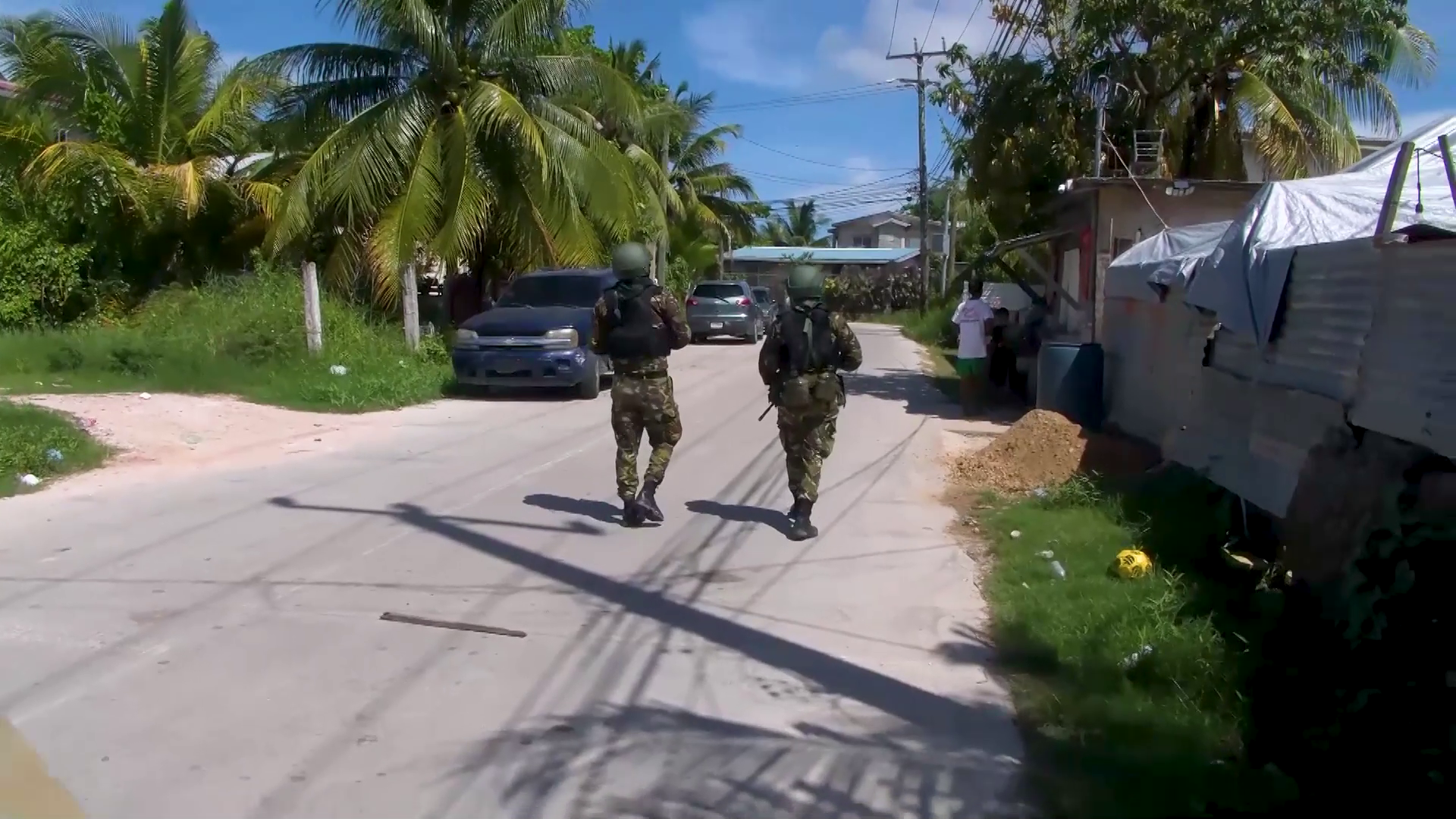
    In a developing political scandal that has already ensnared other figures linked to questionable government contracts, Belize’s governing administration is facing deepening scrutiny over dealings at the Ministry of Defense. As the investigation into the controversial Mira family contracts expands beyond initial suspect Oscar Mira, senior minister Florencio Marin Jr.—who oversaw the ministry through most of the period now under audit—has stepped down temporarily to facilitate the ongoing review.

    Prime Minister John Briceño confirmed the development publicly, noting that Marin himself requested the administrative leave ahead of the Auditor General’s full operational review of the defense department. While Briceño has stated he anticipates Marin will return to his post as senior minister once the 90-day review period concludes, the move makes clear that the investigation is extending into the highest levels of the ministry’s leadership, raising questions about systemic oversight gaps that have until now remained unaddressed.

    In a telephone interview shared with reporters, Marin, who also serves as area representative for Corozal South East, emphasized his commitment to full transparency and cooperation with the investigation. “It happened whilst I was the minister,” Marin stated in his remarks. “I believe I did nothing illegal, but I think it is best for the government for me to step back for the next 90 days, so that the Auditor General can conduct her work without fear or favour.”

    Marin added that Prime Minister Briceño approved his leave request, and that he will remain fully available to answer any questions auditors have during the review period. Once the Auditor General releases her final report, government officials will re-evaluate Marin’s position and determine next steps for the Ministry of Defense’s leadership.

    This report is adapted from a transcript of an evening television newscast, with original remarks preserved for accuracy.