分类: politics

  • LISTEN: Shugy says voters equated Pringle to a man who can’t drive

    LISTEN: Shugy says voters equated Pringle to a man who can’t drive

    In recent political commentary that has sent ripples through local electoral circles, prominent political figure Shugy has shared unfiltered insights into how the electorate perceives one controversial candidate: Pringle. According to Shugy’s on-the-record remarks, delivered during a public interview that has since drawn widespread attention, a large cross-section of voters have drawn a striking metaphor to sum up their impression of Pringle – they see him as a man simply incapable of getting behind the wheel and driving competently.

    This blunt analogy is far more than a throwaway insult; political analysts interpret it as a damning judgment on Pringle’s ability to steer policy, lead the community, and deliver on the promises he has laid out on the campaign trail. For voters, the comparison taps into a deeply held frustration: just as an unqualified driver puts everyone on the road at risk, they argue, a leader who lacks the competence, decisiveness, and vision to govern would put the entire constituency’s interests in jeopardy.

    The revelation comes at a critical juncture in the lead-up to upcoming local elections, where Pringle has been fighting to shore up support amid slipping poll numbers and growing criticism of his past performance in office. Shugy’s comments have amplified already existing doubts among undecided voters, and have been seized on by opposing political camps to underscore their own arguments that Pringle is unfit for office. While Pringle’s campaign has yet to issue an official response to the remarks, political insiders expect that the candidate will move quickly in the coming days to push back against the narrative and attempt to rebuild his image with voters before election day.

    Political observers note that this kind of plain-spoken voter metaphor is not uncommon in modern electoral politics, where voters often rely on simple, memorable comparisons to sum up complex judgments about candidates. In this case, the driving analogy has resonated because it connects directly to a core voter priority: the desire for a steady, capable hand at the helm of government. Whether this perception will hold through to election day remains to be seen, but it has already reshaped the narrative of the campaign and put Pringle on the defensive.

  • Court Delays Asot Michael Will Dispute Pending Handwriting Expert

    Court Delays Asot Michael Will Dispute Pending Handwriting Expert

    A high-profile estate dispute centered on the late former Antiguan politician Asot Michael has been paused until May 20, as legal teams on both sides work toward resolving disagreements over appointing an independent handwriting expert to verify the authenticity of a contested last will and testament.

    Presiding over the case, Acting High Court Judge M.E. Birnie Stephenson issued a formal order requiring both factions of Michael’s family to file detailed documentation of their candidate expert witnesses by the next hearing. The required submissions include each candidate’s scheduling availability, projected service fees, and confirmation of their willingness to take on the assessment role.

    Michael, who previously served as the Member of Parliament for St Peter and held a cabinet minister position in the Antiguan government, was discovered deceased at his Dry Hill residence in November 2024. At the center of the legal conflict is a will dated March 2021, which is being contested by Michael’s only son, Nigel Michael, and upheld by Michael’s two sisters, Teresa-Anne Michael and Soraya Michael.

    Represented by attorneys Hugh Marshall and Chantal Marshall, Nigel Michael has advanced two core claims against the 2021 will: first, he alleges the document is a deliberate forgery, and second, he claims his father suffered from impaired mental capacity caused by alcohol intoxication at the time the will was signed. In response, the sisters, whose legal team is led by Dr Errol Cort, Alketz Joseph and Jada Cort, have categorically denied all of Nigel’s accusations.

    Court records confirm that while both sides acknowledge the necessity of a handwriting analysis to resolve the authenticity question, they have failed to reach a consensus on which expert should conduct the examination. The sisters raised formal objections to the expert candidate put forward by Nigel Michael, Beverly East, citing unsubstantiated concerns that the expert could hold implicit bias in favor of Nigel’s position.

    Judge Stephenson ultimately rejected the bias allegation against East, ruling that the claimants had not presented any concrete evidence to support the claim. The justice emphasized that serious accusations of expert bias require a “clear and cogent basis” that was absent in this instance. The judge also issued criticism toward Nigel Michael’s legal team, faulting them for failing to conduct appropriate prior consultations with the opposing side before nominating their candidate, a misstep that undermined efforts to select a mutually agreed expert.

    In a final ruling to move the case forward, the court mandated that a single jointly appointed expert must be selected to conduct the analysis. It also ruled that all associated costs and expenses for the expert’s work will be split equally between the two disputing parties.

  • Fractieleiders roepen op tot herstel vertrouwen in parlement en versterking democratie

    Fractieleiders roepen op tot herstel vertrouwen in parlement en versterking democratie

    On May 9, Suriname marked a major milestone in its democratic history: 160 years since the founding of its first representative legislative body. At a special public session held to celebrate the anniversary, faction leaders from across the country’s major political parties delivered a shared, consistent call for greater integrity, expertise, national unity, and the restoration of public trust in the national parliament. Despite ideological differences between competing parties, a single unifying message ran through nearly every address: the National Assembly (DNA) must rebuild its connection to the Surinamese people and strengthen the country’s democratic constitutional order.

    Political leaders opened the session by reflecting on the 160-year evolution of Suriname’s people’s representation, tracing its origins back to the first meeting of the Colonial States in 1866. Alongside this historical reflection, representatives also offered a critical assessment of the DNA’s current performance and the growing challenges that Suriname’s democracy faces in the modern era.

    Acting faction leader Rossellie Coutinho, speaking on behalf of the National Democratic Party (NDP), emphasized that the parliament must urgently confront whether it still retains sufficient public confidence. Coutinho argued that honest self-reflection is a necessary step for the legislative body to evolve into a modern institution that genuinely embodies and represents the “sovereign will of the Surinamese people.” The NDP also highlighted the need for increased female participation in parliamentary governance.

    Asis Gajadien, faction leader of the Progressive Reform Party (VHP), outlined his party’s longstanding historical role in advancing democracy and the rule of law in Suriname. He warned that democracy is not an inherent, guaranteed outcome, requiring constant active defense to survive. For Gajadien, people’s representation should not be limited to parliamentary debates, but must deliver tangible, measurable improvements to the daily lives of Surinamese communities. He called for national unity and cross-community collaboration, putting collective interest above division and ethnic polarization.

    Jerrel Pawiroredjo, faction leader of the National Party of Suriname (NPS), drew attention to the growing vulnerability of democratic institutions across the globe. Citing ongoing wars, rising extremism, systemic racism, and widespread information manipulation as global threats, he stressed that Suriname must remain vigilant against risks to its own democratic constitutional order. Pawiroredjo added that core democratic principles — representative governance, separation of powers, and press freedom — must be actively protected rather than taken for granted.

    Vice Chairman Ronnie Brunswijk, representing the General Liberation and Development Party (ABOP), traced Suriname’s democratic journey from its colonial-era representative system to the broad, inclusive democratic participation the country has today. Brunswijk noted that democracy matures through experience, overcoming challenging moments, and sustained open dialogue. He emphasized that all parliamentary work must center the national interest, rather than fuel division between population groups.
    Bronto Somohardjo, faction leader of Pertjajah Luhur (PL), openly acknowledged that public trust in Suriname’s political establishment has declined in recent years. Referencing the difficult living conditions that many ordinary Surinamese citizens currently face, Somohardjo argued that elected representatives cannot look away when much of the population lives in daily economic uncertainty. He stressed that the parliament must realign itself with the pressing needs of the general public.
    Ronny Asabina, faction leader of Brotherhood and Unity in Politics (BEP), underlined the non-negotiable importance of morality, integrity, and professional expertise for parliamentary representatives. He warned that public confidence in representative governance will erode further if institutional quality and professionalism are allowed to weaken. Asabina added that parliamentarians must always be mindful of the public example they set for broader society.

    Steven Reyme, faction leader of A20, framed political leadership as a temporary position that leaves a permanent legacy for the nation. He described the parliamentary seat as a “seat of influence,” noting that elected representatives carry the responsibility of building a strong foundation of better conditions for future generations of Surinamese. For Reyme, the parliament must remain committed to core values of transparency, integrity, and forward-looking governance to serve the nation well.

  • The real toll of ULP debt

    The real toll of ULP debt

    In June 1985, political commentator Dr. Kenneth John published a column assessing the first year in office of the Mitchell-led New Democratic Party (NDP) administration, which had swept into power the previous year. Among the key actions Dr. John highlighted from the new government were the release of Junior Cottle after more than a decade of incarceration, the recruitment of former Caribbean Development Bank official Arnhim Eustace to head the country’s planning division, and the appointment of St. Claire Leacock to lead the Marketing Board.

    The most enduring takeaway from Dr. John’s 1985 column, however, was his conclusion on the NDP’s early fiscal approach: the government had stayed on a sustainable path by prioritizing strict budget discipline and implementing a temporary austerity program, rather than falling into what Dr. John called the permanent debt trap of the International Monetary Fund — the only other option on the table at the time. This 40-year-old observation carries new weight today, as the island nation once again grapples with pressing questions about public debt under a new NDP administration, drawing sharp comparisons between past and present political eras.

    The current political debate over national debt has reignited after recent public disclosures on the country’s fiscal position from Prime Minister Richmond Friday and IMF representatives. The now-opposition Unity Labour Party (ULP) has seized on the disclosures to criticize the new NDP government, but this analysis turns the lens the other way, examining the cumulative debt accumulated by ULP during its 25 years in power.

    When Mitchell’s NDP took control from the previous Cato-led Labour administration in 1984, the incoming government inherited a national debt of EC$190 million. Mitchell publicly described the sum as a “helluva debt situation”, particularly given the unaffordable 9% to 11% interest rates attached to the infrastructure development loans that made up much of the total.

    When ULP won power in 2001, then-Prime Minister Ralph Gonsalves argued the new administration had inherited a poor fiscal hand. Speaking during a December 2001 parliamentary session, Gonsalves claimed the outgoing NDP government had left behind a total national debt of EC$640 million, including EC$140 million in debt tied to the controversial Ottley Hall development project. After the Ottley Hall debt was ultimately forgiven, the adjusted debt legacy left by the NDP after 17 years in power stood at EC$500 million. Subtracting the EC$190 million the NDP inherited from Cato’s government, this works out to an average of just EC$18 million in new debt added each year during the NDP’s tenure.

    By the end of September 2007, just six years into ULP’s first term, official reports put the national debt at EC$1.162 billion. With the Ottley Hall debt written off that same year, this represents a net increase of EC$662 million in just six years. Notably, the value-added tax (VAT), a major new revenue stream, was introduced just months before this debt milestone, in May 2007.

    Official budget data from 2015 puts the national debt at EC$1.51 billion as of September 30, 2014, meaning the national debt grew by an additional EC$348 million between 2007 and 2014. By the end of 2019, the official debt total had reached EC$1.7 billion, an increase of EC$190 million over the 2014 to 2019 period. As of September 30, 2023, 2024 budget estimates pegged the total national debt at EC$2.5 billion — split between EC$726 million owed to domestic creditors and EC$1.7 billion in external loans. This works out to an EC$800 million increase over just four years, from 2019 to 2023.

    When the current NDP administration took office in November 2025, it publicly disclosed that the national debt had grown past EC$3.5 billion, meaning ULP added roughly EC$1 billion to the national debt between September 2023 and the end of 2025, when it left office. In total, over 25 years of ULP governance, the national debt grew by EC$3 billion, averaging EC$120 million in new debt added per year — nearly seven times the annual average recorded by the previous NDP administration.

    This commentary is the work of an independent observer, and the opinions expressed do not necessarily reflect the editorial position of iWitness News. Opinion submissions may be sent to [email protected]. This analysis sets the stage for a deeper full comparison of the 1980s NDP administration and the current NDP government when the current administration marks its first anniversary in office.

  • ‘Murder rate would be higher’

    ‘Murder rate would be higher’

    A shocking early-morning gang-linked triple shooting that claimed the life of a two-year-old child has ignited a fiery political debate in Trinidad and Tobago over the ruling government’s crime control policies, just months into its second state of emergency (SoE) implemented to curb spiraling violent crime.

    On Thursday, gunmen ambushed a vehicle carrying Akini Kafi, 2, his father Aquil Kafi, and Anthony Wilson in the Port of Spain neighborhood of Belmont, killing all three. The child’s mother, Antonia Cain-Kafi, was struck by four bullets and remains in critical condition at a local hospital. This brutal killing followed a similar April attack in Morvant that left nine-year-old J’Layna Armstrong dead alongside three adult relatives, in what police described as another targeted gang shooting.

    Prime Minister Kamla Persad-Bissessar addressed the tragedy Tuesday during a parliamentary crime debate, following a diplomatic ceremony at the Port of Spain Red House where 2,000 Indian-donated laptops were distributed to students across seven districts and bilateral education memoranda were signed. Opening her remarks, Persad-Bissessar expressed profound grief over the unnecessary loss of innocent life, emphasizing that the killing of a child represents an unconscionable national tragedy.

    “Every life lost is a heartbreak to many, and especially when there’s a child, it’s a tragedy,” she told reporters. “I know our law enforcement officers are doing the best they can to pursue those responsible for this tragedy, and our hearts go out to the families and the loved ones left behind.”

    Against this backdrop of national mourning, the prime minister defended her administration’s core crime control measure: the ongoing state of emergency. She pushed back against growing public and opposition criticism of the policy, arguing that the national murder rate would be far higher if the SoE had not been put in place. Persad-Bissessar also confirmed that no nationwide curfew would be introduced at this stage of the emergency.

    Persad-Bissessar’s government won a decisive victory in the April 28, 2025 general election. Just three months after taking office, the administration declared its first state of emergency in response to rapidly escalating gang violence and mounting national security threats. A second SoE was extended on March 3 of this year, after intelligence services received concrete warnings of imminent gang reprisal attacks across the Port of Spain metropolitan area.

    The parliamentary debate devolved into partisan acrimony after Defence Minister Wayne Sturge made the bombshell claim that the recent Belmont triple murder and the April Morvant quadruple killing are directly linked to ongoing inter-gang turf wars in constituencies controlled by the opposition People’s National Movement (PNM). Sturge, who is a resident of Belmont, told the chamber that two local streets – Serraneau Street and Belle Eau Road – have long been divided into rival gang territories, with residents blocked from crossing into the opposing area. He confirmed that both recent mass shooting incidents are rooted in this long-running territorial feud.

    Sturge launched a scathing counterattack against opposition calls for his resignation and that of Homeland Security Minister Roger Alexander, pointing to the PNM’s own record of out-of-control violent crime when the party held power. He reminded lawmakers that under the previous PNM administration, the national murder rate hit all-time record highs, including one 24-hour period in July 2019 that saw 11 separate killings. Sturge went further, dismissing PNM MP Stuart Young, who first called for the ministers’ resignations, as one of the most ineffective national security ministers in the country’s history.

    “When 11 murders take place under his watch, he has the gall to come and call for resignations on this side,” Sturge said. “What he’s not saying is that his own constituents are largely responsible for the most murders in this country, and they refuse to allow zones of special operations (ZOSO) to be implemented in the area.”

    In a charged verbal exchange, Sturge pressed his attack, telling Young: “The same way you wouldn’t know when your constituents are going to murder some of your other constituents a street away, you expect us to know? But, let me tell you something, what we wouldn’t do, we wouldn’t know that four people are trapped in a pipeline and wait and let them die.”

    Young immediately stood to object, labeling Sturge’s remarks “gibberish” and “verbal diarrhoea.” Sturge quickly shot back, responding: “He could call it all kinds of things, verbal diarrhoea; you know what he couldn’t say? That I lie.”

  • PM: India delivered on promises

    PM: India delivered on promises

    During a ceremonial address to Trinidad and Tobago’s Parliament welcoming India’s top diplomat, Prime Minister Kamla Persad-Bissessar has confirmed that New Delhi has fully fulfilled all development commitments made during Prime Minister Narendra Modi’s 2025 visit to the Caribbean nation, marking a major milestone in the deepening strategic partnership between the two countries.

    India’s Minister of External Affairs Subrahmanyam Jaishankar arrived in Port of Spain this week for a two-day official working visit, accompanied by a senior diplomatic delegation. The trip comes on the heels of Modi’s landmark July 2025 tour, which produced a suite of bilateral agreements and memoranda of understanding (MOUs) focused on cross-sector development cooperation.

    In her address to lawmakers, Persad-Bissessar highlighted that every pledge made during Modi’s visit has been translated into tangible action for Trinidad and Tobago’s people. Among the completed commitments is a donation of 2,000 laptops pledged to support the government’s national secondary school device distribution programme; all units have already arrived in the country and are scheduled for official rollout across all seven of Trinidad and Tobago’s educational districts. A prosthetic limb outreach initiative launched with Indian support has already delivered life-changing care to more than 800 local citizens, and on the second day of Jaishankar’s visit, the two leaders will formally open the new National Prosthetics Centre in Penal — a permanent, locally based facility built with Indian assistance.

    Additional pledged aid is set to arrive in the coming weeks, including 20 haemodialysis units to expand critical care access and two purpose-built sea ambulances designed to boost the country’s maritime emergency response capacity and overall healthcare delivery. In Couva, India has also provided grant financing and technical equipment to establish a new agro-processing facility at Brechin Castle, a project Persad-Bissessar said embodies both nations’ shared commitment to advancing agricultural modernization and strengthening regional food security.

    Beyond development aid, bilateral economic ties have already grown substantially, with annual two-way trade now surpassing $1.2 billion. Persad-Bissessar noted that the partnership holds massive untapped potential for further expansion across key sectors including agriculture, healthcare, finance, tourism, infrastructure development, and non-energy exports. Trinidad and Tobago has also moved to deepen alignment with India’s global cooperation agenda, formally joining the India-led Global Biofuels Alliance and Coalition for Disaster Resilient Infrastructure. India’s global leadership in digital innovation, the prime minister added, has opened new avenues for joint work on digital transformation, artificial intelligence, archival modernization, and renewable energy deployment.

    Jaishankar’s visit, Persad-Bissessar emphasized, builds directly on the foundation laid during Modi’s 2025 trip, which inaugurated a new era of strategic partnership between the two nations. The current visit is designed to move forward the dozens of initiatives and frameworks agreed during that historic engagement, which already cover areas ranging from diplomatic training and pharmaceutical cooperation to community-focused Quick Impact Projects. These existing agreements have established formal cooperation frameworks for public sector capacity building, public health standard-setting, youth development, cultural exchange, and grassroots community projects.

    During Wednesday’s parliamentary session, the prime minister also noted the profound historical and cultural context of Jaishankar’s visit, which comes just ahead of Trinidad and Tobago’s annual commemoration of Indian Arrival Day. The holiday honors the legacy of the first indentured laborers who journeyed from India to Trinidad and Tobago starting in 1845, a chapter of history that has shaped the deep people-to-people bonds between the two countries.

    Persad-Bissessar reflected that the bilateral relationship is rooted not only in modern diplomacy but also in the shared experience of colonial exploitation. “India endured centuries of British colonial occupation and economic extraction, while enslaved Africans were simultaneously trafficked across the Atlantic. After Emancipation, indentured labourers from India were also effectively trafficked to our country under exploitative imperial labour systems,” she said. “Though they were distinct in form, both experiences formed part of the wider system of colonial exploitation, brutal, coerced labour and human displacement.” Yet from this shared history of hardship, she added, communities across Trinidad and Tobago turned struggle into endurance, survival, and nation-building: descendants of indentured laborers, alongside descendants of enslaved Africans and all other national communities, have shaped the country’s modern economic, cultural, and democratic identity.

    To cap the first day of the visit, Persad-Bissessar and Jaishankar signed six new bilateral MOUs expanding cooperation across priority areas: Economic and Financial Cooperation, to strengthen bilateral investment and trade flows; Tourism Cooperation, to grow bilateral tourism and deepen people-to-people connections; Digital Archival Cooperation, to modernize national heritage preservation systems; Quick Impact Projects, to support grassroots community development initiatives; Solar-PV Energy Cooperation, to advance Trinidad and Tobago’s national renewable energy targets; and a partnership to revive the Chair of Ayurveda at The University of the West Indies, strengthening collaboration in education, traditional medicine, and cultural exchange.

  • Residents wanted ZOSO in Belmont, says Alexander

    Residents wanted ZOSO in Belmont, says Alexander

    In a parliamentary question session held yesterday, Trinidad and Tobago’s Homeland Security Minister Roger Alexander addressed growing public and legislative concern over rising violent crime across multiple communities, revealing that local residents in Belmont have repeatedly demanded the implementation of the government’s controversial Zones of Special Operations (ZOSO) security plan.

    Alexander’s comments came in response to a query from Port of Spain North/St Ann’s West Member of Parliament Stuart Young, who raised the issue following a shocking Thursday shooting in Belmont that claimed three lives: a two-year-old child, his father, and an additional adult male. Opening his response, Alexander emphasized that any preventable loss of life remains a top priority for the current administration. “The death of any person is a concern to this Government,” he stated, noting that he had personally visited the affected community to speak directly with residents following the attack.
    According to the minister, local residents expressed intense frustration over ongoing violence and share the government’s goal of bringing the ZOSO framework to their neighborhood. He added that the initiative goes far beyond simple crime control, aiming to drive long-term social and economic development for marginalized communities trapped in cycles of violence. Despite the failure of the ZOSO legislation to pass, Alexander confirmed that enhanced police patrols and targeted intelligence work have already identified the suspects behind the Belmont shooting, who are currently evading law enforcement custody. He stressed that the government is taking all possible steps to protect all citizens, including residents of Laventille who have repeatedly called for a more robust security presence in their area.

    The government’s 2026 ZOSO Bill, which would have granted authorities the power to designate high-crime neighborhoods as special security zones requiring intensified policing, was defeated in the Senate at the end of January. The legislation required a three-fifths majority to advance, a threshold the government failed to reach. During the session, Young went on to accuse the current government of treating the crime-ravaged community of Laventille as if it were a disconnected, separate nation unworthy of adequate investment and security resourcing. Alexander pushed back against this claim, noting that Laventille residents themselves have repeatedly raised concerns that they are not adequately represented in national parliamentary policy making. He also placed blame for ongoing security gaps on the previous administration, saying the current government inherited crumbling infrastructure, severely understaffed law enforcement agencies, and outdated policing technology that continues to hamper operations today. “But I am here and I will fix it all,” Alexander affirmed.

    In addition to the Belmont shooting, the minister addressed two other pressing local security issues during the question session. Arouca/Lopinot MP Marvin Gonzales asked for an update on the May 5 shooting of an off-duty police officer in Longdenville. Alexander confirmed that active investigations are still ongoing, and that the fact the officer was not on duty at the time of the attack has not altered the scope or priority of the probe. “There are additional patrols. The officers were advised to pay more attention while on duty and off duty. An intelligence-led operation continues in the Longdenville area,” he said, declining to share further details on the active investigation.

    Gonzales also asked Alexander to outline new security measures for the San Juan and St Joseph regions following a recent spike in reported home invasions. In response, Alexander confirmed that law enforcement has determined most of the recent crimes are being committed by criminal actors who travel into the communities from outside areas. “We understand that there are persons who are coming in from different areas and committing these acts,” he said, adding that investigators have already identified multiple key suspects who are currently being actively pursued. Cross-agency intelligence sharing and coordinated enforcement initiatives have now been deployed to the area to disrupt the criminal activity, the minister confirmed.

  • Volcano-affected fishers get equipment ULP stored since 2022

    Volcano-affected fishers get equipment ULP stored since 2022

    Three and a half years after the devastating 2021 volcanic eruption in Saint Vincent and the Grenadines, fishers across Central Leeward and South Windward have finally received critical fishing supplies that had sat locked in government storage since 2022. The long-overdue equipment, which includes essential gear such as rope, flotation devices, and fish pot wire, has been distributed to fishing communities across Buccament, Layou, Shipping Bay, and Barrouallie as part of this week’s handover events. The unclaimed supplies were originally earmarked for a post-eruption recovery initiative launched by the former Unity Labour Party (ULP) government, which was voted out of national office in last November’s general election. According to reporting from iWitness News, the gear was never distributed to the intended fisher recipients due to public infighting between at least two ULP cabinet ministers during the previous administration’s term. Conroy Huggins, who serves as both Member of Parliament for Central Leeward and the head of the new Ministry of Fisheries under the newly elected New Democratic Party (NDP) administration, made the remarks during an official handover ceremony held in Bottle and Glass, Barrouallie. Huggins explained that the now-defunct recovery program was designed from its inception to help fishing communities rebuild their livelihoods after the 2021 volcanic eruption, which caused widespread disruption to the local fishing industry. “Sadly, they were not distributed to the fishers within the time span,” Huggins told attendees at the ceremony. After winning office and learning of the years-long delay in delivering the critical supplies, Huggins said he immediately directed ministry staff to cut through bureaucratic hold-ups and get the gear to the fishers who needed it. “It’s long overdue. It is something that they should have had at least three, four years ago… So today, we have been doing these distributions,” he added. The fisheries chief also noted that fish pot fishing is a common traditional practice in Barrouallie, making the fish pot wire included in the shipment particularly useful for local fishers. The distribution is being held as a key event during the country’s annual Fisheries Month celebrations, which lead up to the 49th National Fisherman’s Day on May 25. Huggins framed the handover of backlogged recovery supplies as a perfect opportunity to highlight a stark difference in governing philosophy between the new NDP administration and the former ULP government. “And this is essentially the difference between the previous administration and this present administration,” he said. “We are operating on efficiency and delivery. We are about people. So whatever forms of benefits that the fishers are entitled to, we will ensure that they are able to receive this in a timely manner, so that they can be able to recover, operate and move forward with their business.” While he used the delay under the previous government to draw political contrasts, Huggins also acknowledged that the new administration faces a massive backlog of work to repair and upgrade fisheries infrastructure across all of Saint Vincent and the Grenadines, from central ministry headquarters to small local fishery centers in remote coastal communities. “We have quite a lot of work to do in the fishery sector,” he said. Huggins added that the ongoing shifts in the national fisheries sector have drawn significant attention from local, regional, and international stakeholders, framing the current policy adjustments as a once-in-a-generation shift for the industry. “We are confident that we can maximise our ocean [and] improve the livelihoods of our fishers,” Huggins said. “So from a fisheries standpoint, we are here to facilitate and ensure that the capacity building takes place and the necessary equipment, tools that they need. We are here to give that support.”

  • Williams-Grant to Be Elected Senate President, Shoul Deputy and Govia Majority Leader

    Williams-Grant to Be Elected Senate President, Shoul Deputy and Govia Majority Leader

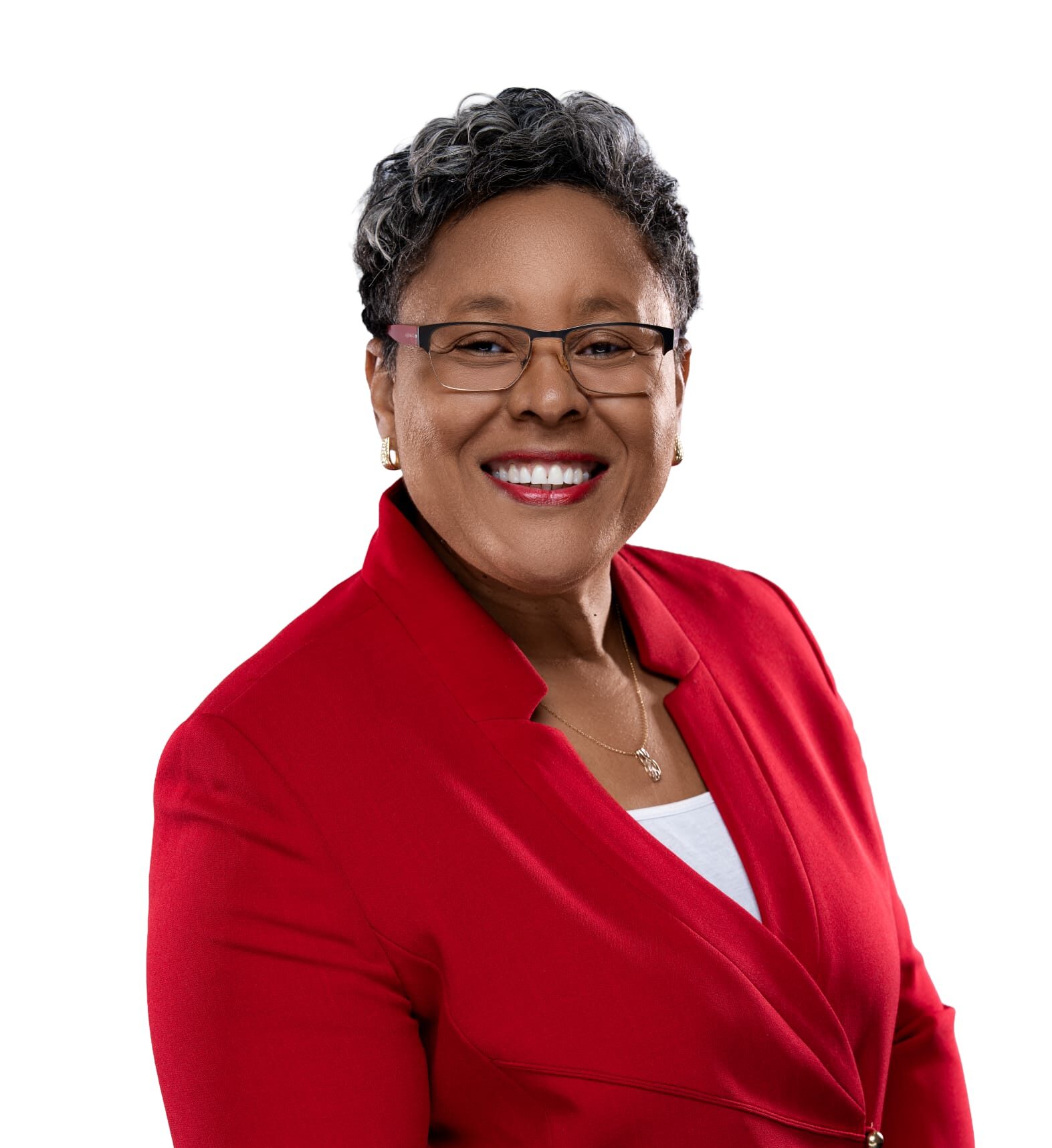
    Following the decisive general election win of the Antigua and Barbuda Labour Party (ABLP) on April 30, the new administration has outlined its intended leadership lineup for the country’s Upper House of Parliament, revealed during a formal swearing-in ceremony for government-aligned senators hosted at Government House this Friday. During the official proceedings, the ceremony’s master of ceremonies publicly announced the planned nominations: sitting Senator Alincia Williams-Grant has been tapped to be put forward for the role of Senate President when the chamber holds its first formal session on May 20. Joining her in the top Senate leadership will be Philip Shoul, who has been selected for nomination as Deputy President of the Senate. Ten government-backed senators completed their formal swearing-in process at the event, marking the first step in establishing the new legislative body after the general election. Beyond the top two leadership roles, officials also confirmed that Senator Shenella Govia will take on the critical position of Leader of Government Business in the Senate, tasked with coordinating the administration’s legislative agenda in the Upper House. In addition to her Senate responsibilities, Govia was also sworn in during the ceremony as Minister of State within the Ministry of Housing and Works, giving her a dual role in the legislative and executive branches of government. The full ceremony followed longstanding constitutional protocol: each participating senator first took the three required oaths — the oath of allegiance to the crown, the oath of office, and the oath of secrecy — before Governor General Rodney Williams formally presented each official with their official instruments of appointment, formalizing their new roles. Event organizers also reminded attendees and the public of the full timeline for establishing the new parliament: the Lower House of Parliament is scheduled to convene first on May 18, where its members will hold a formal vote to elect a new Speaker and Deputy Speaker to lead the chamber’s proceedings. Two days later, on May 20, the Senate will gather for its inaugural session to hold the official vote to confirm the nominated President and Deputy President, formally completing the formation of the new national legislature after the ABLP’s election victory.

  • Laura Fernandez beëdigd als nieuwe president van Costa Rica

    Laura Fernandez beëdigd als nieuwe president van Costa Rica

    On May 9, 2026, Laura Fernandez, a 39-year-old center-right political leader, took the oath of office as Costa Rica’s new president during an inauguration ceremony held at San José’s National Stadium, marking a new chapter for the Central American nation already navigating rising security challenges and shifting regional geopolitics.

    Fernandez’s Sovereign People’s Party (PPSO) secured an absolute majority in the 57-seat national parliament, claiming 31 seats – a governing advantage that clears the way for her administration to advance its full legislative agenda without relying on opposition support. She first claimed victory in the country’s February 1 presidential election, a hotly contested race that saw her defeat competitors to succeed outgoing president Rodrigo Chaves, a well-documented ally of former U.S. President Donald Trump. In a surprising arrangement that preserves Chaves’ influence in national governance, the former leader will remain in the new cabinet as Minister of the Presidency and Finance, granting him continued significant sway over policy making.

    To underscore her administration’s commitment to deepening the strategic partnership between Costa Rica and the United States, Fernandez appointed new vice president Douglas Soto to serve concurrently as Costa Rica’s ambassador to Washington. The inauguration was attended by high-profile international guests that highlighted the new government’s geopolitical priorities: Kristi Noem, U.S. Special Envoy and leader of Trump’s ‘Shield of the Americas’ initiative, and Isaac Herzog, President of Israel, were both in attendance. Their presence drew attention to shifting regional alignment amid ongoing global tensions stemming from the Gaza conflict.

    At the top of Fernandez’s policy priority list is addressing the steady rise in criminal activity that has shaken Costa Rica’s long-held reputation as one of Central America’s most stable nations. The country has increasingly become a key transit route for drug smugglers moving contraband north to the United States, fueling a surge in gang-related violence and organized crime. In response, Fernandez has announced sweeping, ambitious reforms to the country’s justice system and national security legislation, naming Gerald Campos as the new Minister of Public Security to lead the crackdown. ‘We are waging a merciless war on organized crime,’ Fernandez stated in her inaugural address, laying out her hardline stance on security.

    Her administration’s approach to security closely echoes the controversial model adopted by neighboring El Salvador. Costa Rica is currently constructing a new maximum-security prison modeled after El Salvador’s mega-sized CECOT prison facility, which gained global attention for its mass incarceration of alleged gang members. The country is also a signatory to the controversial ‘third country agreements’ with the United States, a policy that allows the U.S. to deport migrants with no legal connection to Costa Rica to be detained and resettled in the country. Last year, hundreds of Venezuelan migrants deported from the U.S. were held in CECOT without due process, drawing widespread condemnation from global watchdogs. Human rights organizations have repeatedly criticized these agreements, warning that they expose deported migrants to severe risk of inhumane living conditions and human rights abuses.

    With her party’s unchallenged majority in parliament, political analysts note that Fernandez faces few procedural barriers to pushing through her full proposed reform agenda, setting the stage for major shifts in both Costa Rica’s domestic security policy and its foreign relations in the coming years.