分类: politics

  • Barbados voelt directe gevolgen crisis in Venezuela

    Barbados voelt directe gevolgen crisis in Venezuela

    Barbados Prime Minister Mia Amor Mottley has issued a stark warning that her nation is experiencing immediate repercussions from the United States’ military intervention in Venezuela. The escalating situation in Caracas has triggered significant aviation disruptions across the Caribbean region, resulting in canceled flights, stranded passengers, and mounting pressure on the island’s tourism and transportation infrastructure.

    Addressing journalists at Ilaro Court, Mottley characterized the preceding 24 hours as ‘extremely challenging,’ noting that her government had to simultaneously manage national security concerns, aviation emergencies, and humanitarian issues amid rapidly evolving developments in Venezuela. The US operation, which reportedly resulted in the capture of President Nicolás Maduro and his wife aboard a naval vessel, prompted immediate security and air traffic alerts throughout the Caribbean, triggering emergency consultations among regional leaders.

    Thirteen scheduled flights to Barbados were canceled, affecting thousands of passengers including cruise travelers and customers of JetBlue, Delta, United Airlines, and KLM. The crisis has extended to Bridgetown’s port, where four cruise ships are currently docked with a fifth expected, creating logistical challenges due to limited berthing capacity. The Barbadian government has implemented measures to assist stranded travelers while coordinating with tourism and immigration authorities to manage the situation, though airspace has since reopened.

    When questioned about Barbados’ position regarding the developing crisis, Mottley emphasized her country’s commitment to regional coordination through CARICOM and adherence to international law. ‘Let me be very clear: Venezuela is our friend, the United States of America is our friend. The Caribbean Community is the body with which we, as a matter of principle, align our foreign policy,’ the Prime Minister stated. She indicated Barbados would await additional information before taking collective action, refusing to ‘preempt or compromise the integrity of CARICOM’s consultation process.’

    Mottley reiterated Barbados’ fundamental foreign policy principle: ‘Our principles are clear: small states can only survive within a rules-based international order. Anything that undermines that causes us grave concern, both in Barbados and throughout the region.’

    Other Caribbean nations have expressed serious concerns about the situation. The CARICOM chair condemned the escalation and called for dialogue and peaceful solutions to prevent further regional destabilization. Colombia, which shares a border with Venezuela and hosts significant refugee populations, expressed apprehension about regional implications while emphasizing the importance of stability and security. Trinidad and Tobago, a key transportation hub, reported heightened readiness at airports and ports while expressing solidarity with affected passengers.

    The Caribbean has endured years of impacts from the Venezuelan crisis, including migration flows and economic pressures, with these latest developments underscoring the critical need for enhanced regional cooperation.

  • Latin American Countries and Spain reject aggression on Venezuela

    Latin American Countries and Spain reject aggression on Venezuela

    A coalition of nations has issued a formal condemnation of recent actions authorized by former U.S. President Donald Trump, declaring them in direct violation of fundamental principles of international law. The collective statement emphasizes that these operations contravene core tenets of the United Nations Charter, specifically the prohibition against the use and threat of force and the imperative to respect state sovereignty and territorial integrity.

    The nations further characterized these actions as establishing an ‘extremely dangerous precedent’ that severely undermines regional peace and security while placing civilian populations at significant risk. The statement articulates a firm position that the resolution of the Venezuelan situation must be achieved exclusively through peaceful means, including dialogue and negotiation that respects the expressed will of the Venezuelan people, free from any form of external interference and in strict compliance with international legal standards.

    Reaffirming the foundational status of Latin America and the Caribbean as a ‘Zone of Peace,’ the document underscores principles of mutual respect, the peaceful settlement of disputes, and absolute non-intervention. It issues a powerful call for regional unity, transcending political differences, to confront any measures that threaten to destabilize the area.

    The coalition has formally urged United Nations Secretary-General António Guterres, along with member states of pertinent multilateral mechanisms, to employ their diplomatic offices to actively contribute to de-escalating tensions and safeguarding regional peace.

    Concluding the declaration, the nations expressed profound concern regarding any external attempts to seize governmental control, administration, or ownership of Venezuela’s natural and strategic resources. They emphasized that such appropriation is fundamentally incompatible with international law and poses a direct threat to the political, economic, and social stability of the entire region.

  • Uruguay reiterates rejection of US intervention in Venezuela

    Uruguay reiterates rejection of US intervention in Venezuela

    In a nationally televised statement, Uruguay’s President Luis Lacalle Pou articulated his nation’s firm commitment to foundational principles of international relations, emphasizing non-intervention and the peaceful settlement of disputes. The address outlined Uruguay’s diplomatic stance regarding external military involvement in Venezuela’s political affairs.

    The president underscored that Uruguay maintains a long-established foreign policy tradition that rejects interference in the internal matters of sovereign states, particularly through coercive measures or military force. He reiterated his government’s dedication to resolving international conflicts through dialogue and negotiation rather than confrontation.

    Central to Uruguay’s position are the core tenets of international law, including the sovereign equality of all nations and the imperative of defending multilateralism. President Lacalle Pou emphasized that these principles form the bedrock of his administration’s approach to global affairs.

    Significantly, the Uruguayan leader revealed that his country coordinates with a coalition of nations including Brazil, Colombia, Chile, Mexico, and Spain regarding the Venezuela situation. This collaborative approach aims to present a unified perspective in international forums while seeking diplomatic solutions.

    President Lacalle Pou confirmed that Uruguay will pursue this consensus position through multiple diplomatic channels, including active engagement within the Community of Latin American and Caribbean States (CELAC) and the Organization of American States (OAS). The ultimate objective remains facilitating a peaceful resolution to the ongoing political crisis in Venezuela through institutional frameworks and dialogue.

  • Cubans in Ecuador condemn US aggression against Venezuela

    Cubans in Ecuador condemn US aggression against Venezuela

    A prominent international association has issued a forceful condemnation of recent actions targeting Venezuelan leadership, characterizing them as unlawful under established global governance principles. The Association of Caribbean Unity and Regional Entities (ACURE) has formally denounced what it describes as the effective abduction of Venezuelan President Nicolás Maduro and First Lady Cilia Flores, asserting these actions constitute a blatant violation of diplomatic immunities granted to sitting heads of state.

    In an official communiqué disseminated through the Cuban Consulate in Ecuador, ACURE posed a challenging question to United States authorities: “Under which specific tenets of International Law does the United States presume the authority to act as global adjudicator while simultaneously disregarding fundamental international legal standards?”

    The organization additionally expressed strong opposition to President Donald Trump’s assertion of American jurisdiction over Venezuelan affairs during a recent press briefing. ACURE specifically condemned the invocation of the nineteenth-century Monroe Doctrine as justification, labeling this approach “entirely illicit and contrary to contemporary international legal frameworks.”

    Further analysis from the association suggests that potential military engagement would be principally motivated by Washington’s strategic interests in controlling Venezuela’s substantial natural resources, including petroleum reserves, gold deposits, and critical rare earth elements essential for modern technology.

    The statement provided historical context referencing previous military interventions throughout the region, cautioning against the repetition of such patterns driven primarily by economic ambitions rather than humanitarian or democratic concerns. ACURE emphasized the imperative of immediately restoring President Maduro and his wife to their rightful positions while advocating for strengthened respect for national sovereignty and international law as cornerstones of peaceful global coexistence.

  • Spain in mass  drives in support of  Venezuela

    Spain in mass drives in support of Venezuela

    A substantial crowd of demonstrators convened peacefully outside the United States diplomatic mission in Madrid on Sunday, responding to a mobilization call from the Committee Against NATO and Military Bases alongside the Antifascist International. The assembly, which drew thousands, was met with a significant security presence comprising Spanish Civil Guard and national police forces.

    Protesters vocalized strong opposition to U.S. foreign policy through resonant chants including “Yankees hands off Venezuela” and demands to cease American interference while respecting Latin American sovereignty. The visual symbolism of the gathering extended beyond Venezuelan flags to include Palestinian banners, merging condemnation of Israel’s military actions in Gaza with criticisms of NATO’s escalating militarism and European Union complicity.

    Araceli Escudero, representing the Bolivarian Solidarity Platform and Cuban friendship associations, characterized the event as exceptionally successful. She noted the unprecedented turnout for such a demonstration in recent memory, warning that current developments in Venezuela represent a comprehensive violation of rights with potential to destabilize the entire Latin American and Caribbean region. Escudero’s statements to Prensa Latina emphasized the interconnected nature of global geopolitical struggles against Western interventionism.

  • Social rejection grows in El Salvador against aggression of Venezuela

    Social rejection grows in El Salvador against aggression of Venezuela

    A coalition of international voices has sharply criticized what they characterize as an unprecedented interventionist escalation by the United States government against Venezuela’s leadership. The coordinated response follows reports of operations targeting Venezuelan President Nicolás Maduro and First Lady Cilia Flores, which multiple organizations have denounced as an illegal kidnapping attempt designed to destabilize the legitimately constituted government of the Bolivarian Republic.

    Central to the condemnation is the assertion that these actions represent an extrajudicial application of force that undermines international norms. The movement argues that Washington’s operations seek to effectively decapitate Venezuela’s democratic institutions through means that circumvent established legal frameworks.

    Amid the widespread criticism, Salvadoran legislator Claudia Ortiz of the center-right Vamos party offered a more nuanced perspective. While not defending the Maduro government, Ortiz questioned the methodological implications of such operations, emphasizing that “the challenge for the region is not only to combat organized crime, but to do so without making the exception the rule or weakening the rule of law.” The parliamentarian, quoted extensively in El Mundo, further expressed concerns about the United States exercising power without democratic constraints, warning that “without active institutions, no democracy can withstand the pressure” of such approaches.

    The political condemnation has been amplified by social and popular movements across El Salvador. Multiple labor unions have aligned with statements from the World Federation of Trade Unions, which contends that Washington’s true objective centers on gaining control over Venezuela’s substantial oil reserves. This economic interpretation of geopolitical motives has gained traction among critical voices.

    Adding to the chorus of disapproval, three significant organizations—the Antifascist International El Salvador Chapter, the Operation Solidarity Network, and Mission Miracle—have jointly reaffirmed their rejection of the operations against Venezuela’s leadership. These groups have characterized the actions as violations of national sovereignty that establish dangerous precedents for international relations in the Western Hemisphere.

  • ‘That’s enough’: Greenland PM urges Trump to drop annex threats

    ‘That’s enough’: Greenland PM urges Trump to drop annex threats

    COPENHAGEN, Denmark — International leaders have united in condemnation following President Donald Trump’s renewed assertions regarding United States territorial ambitions toward Greenland. The autonomous Danish territory’s Prime Minister Jens-Frederik Nielsen issued a forceful rebuke via social media, stating: “That’s enough now. No more pressure. No more insinuations. No more fantasies of annexation.”

    The controversy emerged during President Trump’s comments to journalists aboard Air Force One on Sunday, where he articulated strategic motivations behind potential acquisition of the mineral-rich Arctic territory. “We need Greenland from the standpoint of national security, and Denmark is not going to be able to do it,” Trump stated, referencing the island’s geopolitical significance amid changing Arctic conditions.

    Greenland possesses substantial untapped reserves of rare earth minerals and occupies a critical position along emerging shipping routes as polar ice recedes. Additionally, the territory lies along the shortest missile trajectory between Russia and the United States, hosting an existing American military installation at Thule Air Base.

    Danish Prime Minister Mette Frederiksen joined the growing diplomatic pushback, urging the United States to cease threatening rhetoric toward its traditional ally. By Monday, multiple European nations and the European Union had expressed solidarity with Copenhagen’s position.

    Prime Minister Nielsen emphasized Greenland’s openness to diplomatic engagement while insisting on proper channels: “We are open to dialogue. We are open to discussions. But this must happen through the proper channels and with respect for international law.”

    The administration’s renewed interest in Greenland follows heightened military involvement in Venezuela, raising concerns about expanded territorial ambitions. President Trump indicated forthcoming attention to the matter, noting “We’ll worry about Greenland in about two months” and suggesting more immediate discussion within “20 days.”

  • St Vincent gov’t says situation in Venezuela of ‘grave concern’ to region

    St Vincent gov’t says situation in Venezuela of ‘grave concern’ to region

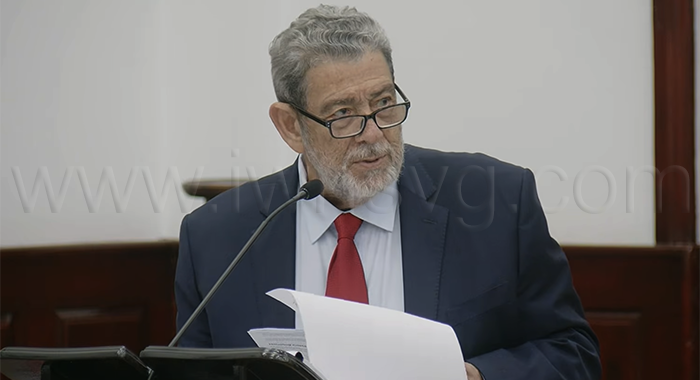
    KINGSTOWN, St. Vincent (CMC) – The newly installed government of St. Vincent and the Grenadines has declared it is vigilantly observing the escalating political and military crisis in Venezuela after United States forces reportedly captured the nation’s President, Nicolas Maduro, and his spouse. Foreign Affairs Minister Fitz Bramble characterized the situation as one of ‘grave concern’ for both the small island developing state and the wider Caribbean region. Minister Bramble, a former diplomat, emphasized that the nation’s allegiance lies with the collective diplomatic stance of the Caribbean Community (CARICOM), which has consistently advocated for peaceful dialogue and the strict adherence to international law. He confirmed that Prime Minister Dr. Godwin Friday’s administration, barely a month into its term, is assessing the potential far-reaching economic and political ramifications for its own nation. The SVG government remains in constant communication with its embassy in Caracas, where Ambassador Gareth Bynoe has reported that all diplomatic personnel are safe and no Vincentian nationals in Venezuela have yet sought consular assistance. While acknowledging friendships with both Venezuela and the United States, the government has pledged to keep its citizens informed as the volatile situation continues to develop.

  • Dominica agrees to accept refugees from US

    Dominica agrees to accept refugees from US

    In a significant diplomatic development, the Commonwealth of Dominica has formally agreed to accept non-national refugees from the United States under a carefully negotiated arrangement. Prime Minister Roosevelt Skerrit confirmed the agreement at a press conference, revealing that his administration will accept third-party refugees who meet specific non-violence criteria.

    The agreement emerges against a backdrop of recent tensions, coming less than a month after the United States imposed travel restrictions on Dominica effective January 1, 2026. This timing highlights the complex nature of bilateral relations between the two nations.

    Prime Minister Skerrit emphasized the thorough negotiations with the U.S. State Department, stating, “Our discussions included careful deliberation to ensure we avoid receiving violent individuals or those who might compromise Dominica’s national security. These concerns have been acknowledged and well received by the State Department.”

    The decision, according to Skerrit, stems from Dominica’s “responsibility to safeguard the wellbeing of our people, particularly their access to lawful travel, education, employment and family connections, while strengthening cooperation between our governments.”

    The refugee agreement has drawn commentary from regional leaders, including Trinidad and Tobago’s Prime Minister Kamla Persad-Bissessar, who previously suggested that visa restrictions on Dominica and Antigua and Barbuda resulted from these nations “badmouthing” the United States. Persad-Bissessar cautioned Trinidad and Tobago citizens to “behave” to avoid similar restrictions.

  • Delcy to US: Let’s co-operate based on international law

    Delcy to US: Let’s co-operate based on international law

    In the wake of former President Nicolás Maduro’s extraordinary rendition to the United States, Venezuela’s Acting President Delcy Rodríguez has issued a profound appeal for international peace and sovereign respect. The dramatic capture of Maduro and his wife Cília Flores by U.S. forces from a Caracas compound on January 3rd has triggered a diplomatic crisis with far-reaching implications.

    Through an official Facebook communiqué delivered on January 4th, Rodríguez articulated Venezuela’s vision for peaceful coexistence amidst escalating tensions. ‘Our nation aspires to exist free from external threats within a framework of mutual respect and international cooperation,’ she declared, emphasizing that global stability originates from securing peace within individual nations.

    The acting president outlined Venezuela’s diplomatic priorities, stressing the necessity for ‘balanced and respectful international relations between the United States and Venezuela, founded upon principles of sovereign equality and non-interference.’ This statement represents both a diplomatic overture and a subtle condemnation of the military operation that extracted the South American leader.

    Rodríguez directly addressed the Trump administration’s allegations of narco-terrorism against Maduro’s government—charges consistently denied by Venezuelan officials—while proposing an alternative path forward. She called for bilateral collaboration ‘within the framework of international law to strengthen lasting community coexistence,’ explicitly urging President Trump to choose dialogue over confrontation.

    In a poignant tribute, Rodríguez alongside Foreign Minister Yván Eduardo Gil Pinto honored 32 Cuban combatants reportedly killed during the extraction operation. Through Telegram channels, she memorialized these ‘martyred brothers’ as embodiments of courage and dignity, their sacrifice now ‘planted in the sacred land of Simón Bolívar.’

    The acting president’s message transcends mere diplomatic rhetoric, representing a strategic positioning of Venezuela as a nation committed to peaceful resolution despite experiencing what it characterizes as ‘criminal U.S. military aggression.’ Her statements reflect both the immediate crisis response and a broader vision for Venezuela’s future regional role.