分类: politics

  • Briceño Pulls Plug on 13th Amendment, Gun Court Still in Play

    Briceño Pulls Plug on 13th Amendment, Gun Court Still in Play

    In a significant policy reversal, the Briceño administration has formally terminated its pursuit of the Thirteenth Amendment to Belize’s Constitution as a mechanism to address the nation’s crime epidemic. The decision follows extensive nationwide consultations that revealed insufficient public and parliamentary support for the constitutional overhaul.

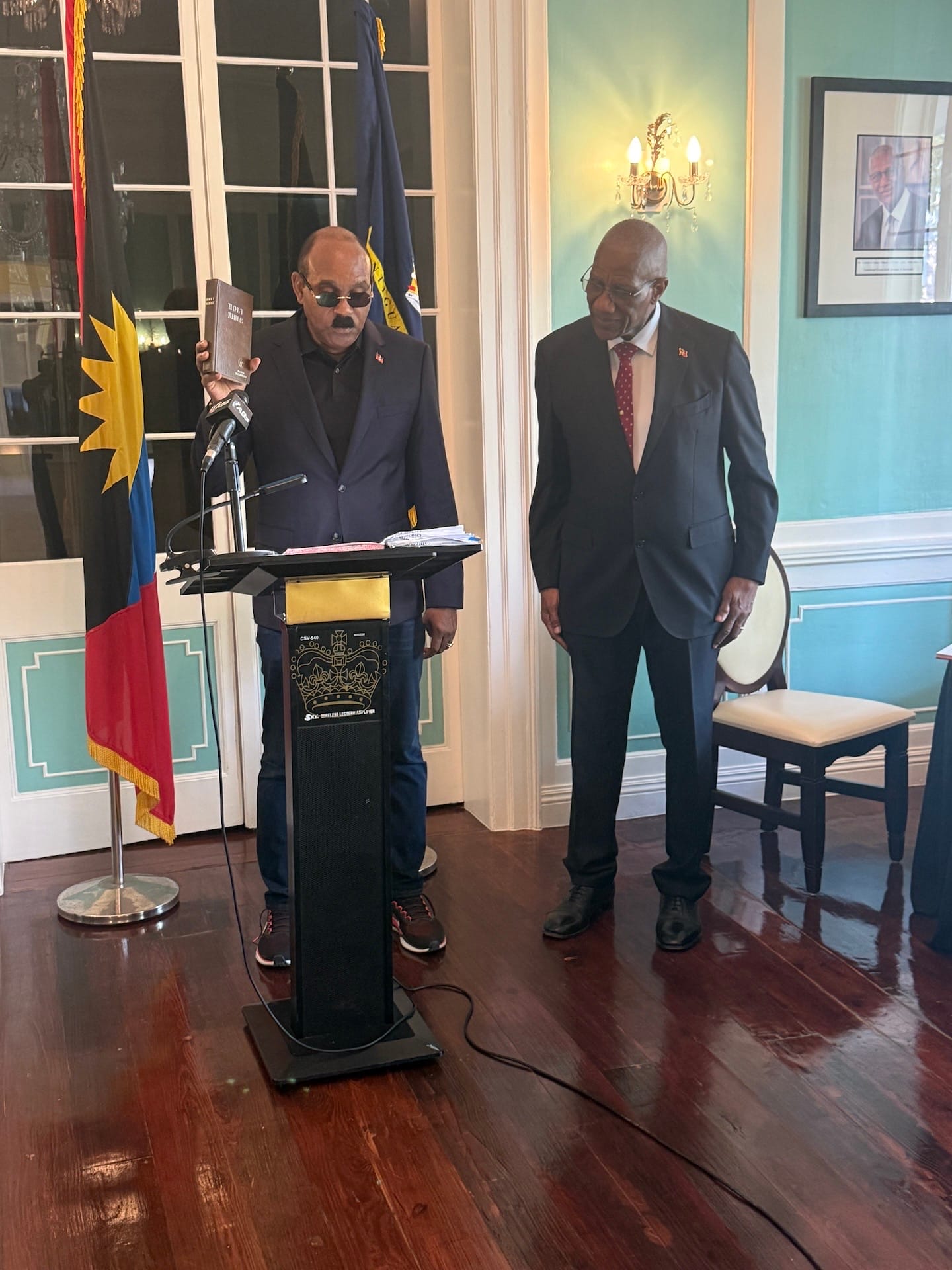
    Attorney General Anthony Sylvestre confirmed the administration’s shift in strategy, indicating that while the comprehensive amendment package has been shelved, certain components—notably the establishment of a specialized Gun Court—remain under consideration through alternative legislative pathways.

    “The ministry of Home Affairs and AG’s ministry are consulting and considering this matter,” Sylvestre stated. “A final product has not been determined as yet regarding what will be the next step—whether that will be an amendment to the criminal code or the Crime Control and Criminal Justice Act.”

    The Attorney General emphasized that any legislative measures derived from the original amendment proposal would require thorough parliamentary deliberation and additional public consultation. He specifically noted that the potential implementation of a Gun Court, once contemplated as part of the constitutional amendment, could potentially be enacted through regular statutory legislation rather than constitutional reform.

    Sylvestre declined to provide further specifics pending final decisions, but unequivocally stated: “The Thirteenth Amendment or parts of the Thirteenth Amendment will no longer be pursued.” The ultimate determination regarding which elements might be preserved through alternative legislation rests with parliamentary committees and elected representatives.

    This development represents a notable recalibration of the government’s approach to criminal justice reform, shifting from comprehensive constitutional change to targeted legislative measures that can be implemented through established parliamentary processes.

  • Jerry Enriquez Wins Leave to Sue JLSC

    Jerry Enriquez Wins Leave to Sue JLSC

    In a significant legal development, social advocate Jerry Enriquez has secured High Court authorization to challenge the Judicial and Legal Services Commission’s rejection of his formal complaint. The judicial body had previously dismissed Enriquez’s submission in late 2025, a decision the activist contends disregarded substantial and compelling evidence.

    The High Court’s approval enables Enriquez to pursue formal judicial review proceedings against the JLSC, marking a notable escalation in the confrontation between civil society and Jamaica’s judicial oversight mechanism. Attorney General Anthony Sylvestre acknowledged the historical precedent of such challenges, revealing this isn’t the commission’s first courtroom encounter.

    Sylvestre referenced a prior case that progressed to the Caribbean Court of Justice involving allegations against Justice of Appeal Awich. The Jamaican Bar Association had previously sought removal proceedings against Awich for alleged misconduct concerning delayed judgment delivery, though the JLSC initially declined to advance those proceedings. That case established important procedural precedents regarding the commission’s accountability mechanisms.

    The current litigation raises fundamental questions about complaint adjudication transparency within Jamaica’s judicial oversight framework. Legal observers anticipate this case could potentially reshape how the JLSC evaluates future misconduct allegations and complaint dismissals.

  • FGM’s Walton-Desir to boycott National Assembly; questions how Opposition Leader’s office was budgeted for

    FGM’s Walton-Desir to boycott National Assembly; questions how Opposition Leader’s office was budgeted for

    In a dramatic escalation of Guyana’s parliamentary crisis, Opposition Parliamentarian Amanza Walton-Desir has declared her party’s intention to boycott Monday’s crucial budget reading session. The leader of the Forward Guyana Movement (FGM) demands that Speaker Manzoor Nadir first convene opposition legislators to elect a formal Opposition Leader before any fiscal deliberations commence.

    Walton-Desir’s statement directly challenges the legitimacy of the upcoming budget presentation by Finance Minister Dr. Ashni Singh, scheduled for January 26, 2026. “We will not sit there and pretend that it is business as usual,” she asserted, emphasizing that her movement “will not lend legitimacy to nonsense” by participating in proceedings while the government “deliberately refuses” to facilitate the constitutional process.

    The political stalemate centers on the election of an Opposition Leader following September’s general elections, which returned the People’s Progressive Party Civic (PPPC) to power with 36 seats. The We Invest in Nationhood (WIN) party, led by Azruddin Mohamed, emerged as the main opposition with 16 seats, but Mohamed faces potential extradition to the United States over alleged financial crimes.

    Walton-Desir, a legal professional, raised substantive questions about budgetary procedures, noting that the Office of the Opposition Leader receives state funding through parliamentary subventions. “Who has been engaged to determine that figure? What figure did they budget for the operation of the Office of the Leader of the Opposition when they have deliberately refused to allow one to be elected?” she questioned.

    The constitutional impasse has drawn international attention, with Western diplomats including US Ambassador Nicole Theriot advocating for the election process to proceed. Meanwhile, Attorney General Anil Nandlall has expressed concerns that electing Mohamed would “tarnish the country’s image” and cause “permanent damage” to Guyana’s international standing.

    President Irfaan Ali recently claimed his administration has “no business” in determining the Opposition Leader selection, despite previously suggesting the position should go to a female legislator. The President has already appointed members to the Teaching Service Commission without opposition consultation, contrary to constitutional requirements.

    Walton-Desir framed the conflict as a fundamental test of Guyana’s democratic integrity: “This is not only disrespect to the Constitution, it is disrespect to the people of Guyana.” She concluded that the PPPC-led administration is “manufacturing normalcy whilst refusing to complete the constitutional architecture, and then using their majority numbers to bulldoze legitimacy.”

  • Prime Minister Browne Receives Farewell Visit from Indian High Commissioner

    Prime Minister Browne Receives Farewell Visit from Indian High Commissioner

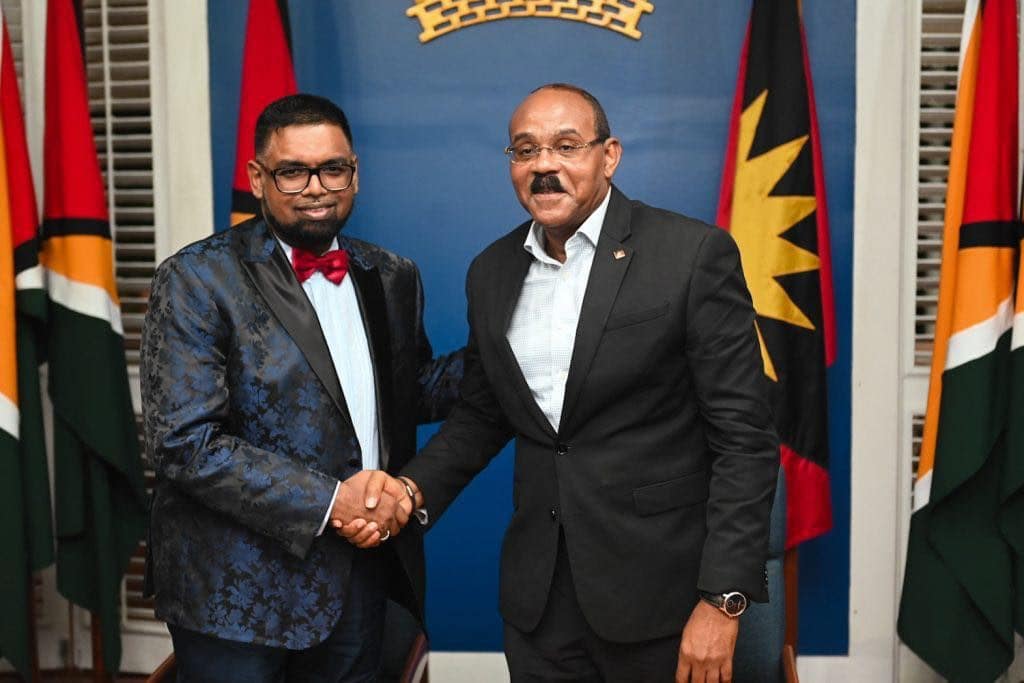
    In a significant diplomatic engagement, Prime Minister Gaston Browne of Antigua and Barbuda hosted a farewell meeting with outgoing Indian High Commissioner Dr. Amit Telang, marking a pivotal moment in bilateral relations between the two nations. The Prime Minister characterized the occasion as “bittersweet,” acknowledging both the satisfaction of Dr. Telang’s new assignment in New Delhi and the regret surrounding his premature departure from the Caribbean nation.

    During the extensive discussions, Prime Minister Browne emphasized India’s role as an inspirational model for small island states seeking resilient prosperity amidst global transformations. He particularly highlighted India’s extraordinary economic trajectory over the past decade, recognizing its emergence as a dominant global economy. The leadership of Antigua and Barbuda expressed strong interest in deepening bilateral cooperation as both countries continue their developmental journeys.

    A central focus of the dialogue involved enhancing people-to-people connections and facilitating improved mobility between the two countries to bolster trade and business development. While existing visa arrangements were acknowledged, both parties identified potential for expanding access mechanisms to accommodate increased travel for entrepreneurs, investors, and academic exchanges. The Prime Minister stressed that enhanced mobility would significantly contribute to trade expansion, cultural exchange, and long-term economic partnership strengthening.

    High Commissioner Telang reciprocated the sentiments, expressing profound appreciation for the hospitality extended by the government and citizens of Antigua and Barbuda. He characterized his tenure as remarkably productive, noting substantial intensification of cooperation between the nations during his service. The High Commissioner additionally commended Antigua and Barbuda’s successful organization of the SIDS Summit and extended India’s support for the upcoming Commonwealth Heads of Government Meeting.

    The discussions yielded concrete developments in bilateral cooperation, particularly regarding renewable energy initiatives. The High Commissioner confirmed advanced negotiations concerning solar energy projects, revealing that Indian companies had already conducted exploratory visits and were finalizing proposals for submission through diplomatic channels. This cooperation aligns with Antigua and Barbuda’s strategic priorities in renewable energy infrastructure development and reducing fossil fuel dependency.

    Prime Minister Browne welcomed the prospective solar energy partnership, emphasizing his administration’s commitment to securing financing and technical partnerships through India’s solar development programs. The government’s dedication to achieving energy stability through clean, reliable solutions for national sustainability was reiterated as a core policy objective.

    Concluding the meeting, Prime Minister Browne extended best wishes for Dr. Telang’s future endeavors while encouraging his continued advocacy for Antigua and Barbuda within Indian diplomatic circles. The Prime Minister expressed confidence that incoming diplomatic representation would build upon the established foundation of cooperation, fostering deeper friendship and mutually beneficial progress between the nations.

  • City Council declares solid waste emergency, to ask govt for help

    City Council declares solid waste emergency, to ask govt for help

    The Georgetown Mayor and City Council has officially declared a limited state of emergency regarding solid waste management in Guyana’s capital, marking a critical turning point in the city’s ongoing sanitation crisis. The emergency declaration, passed during a statutory council meeting on Monday, January 19, 2026, enables the immediate reassignment of non-essential municipal staff to sanitation duties and initiates the development of a comprehensive strategy seeking financial and operational support from central government.

    Mayor Alfred Mentore outlined an ambitious multi-pronged approach that includes rapid deployment of additional equipment, short-term hiring of garbage collection contractors, and identification of illegal dumping hotspots. The administration plans enhanced enforcement measures against litterbugs and establishment of temporary garbage drop-off sites across commercial districts, markets, hospitals, schools, and densely populated residential areas.

    The emergency declaration emerged against a backdrop of political tensions, with only 13 of 30 councilors attending the critical meeting—10 from A Partnership for National Unity (APNU) and three from the People’s Progressive Party Civic (PPPC). Earlier that day, APNU councilors had boycotted a separate meeting called by Local Government Minister Priya Manickchand, who has repeatedly expressed skepticism about the mayor’s motives since her appointment following September 2025 elections.

    Despite these tensions, Mayor Mentore emphasized willingness to ‘throw politics through the window’ and collaborate with the PPPC-led central government. He envisioned the Georgetown cleanup initiative serving as a pilot model for other locally governed areas in Guyana, requiring ‘hand-in-glove arrangement between the city and the government.’

    Chief Sanitation Officer Walter Narine highlighted alarming statistics showing a 16% increase in garbage production over five years, now reaching 184 tonnes daily. He attributed this surge to growing migrant populations and proliferation of supermarkets, noting garbage trucks now must make three trips per constituency instead of one. Narine warned that ‘the current system can’t continue’ without structural changes.

    The council supported Narine’s proposal to hire small contractors with prompt payment through a petty-cash system, addressing previous contractor unwillingness to work due to payment delays. Meanwhile, concerns were raised about holding larger garbage collection companies accountable for their performance lapses.

    The resolution represents a significant municipal response to what Councilor Clayton Hinds described as a waste disposal crisis affecting specific areas of Georgetown, though he characterized the emergency as affecting only ‘a small area’ of the city.

  • Director of Financial Intelligence Unit gives updates for 2024-2025

    Director of Financial Intelligence Unit gives updates for 2024-2025

    Dominica’s Financial Intelligence Unit (FIU) has marked the 2024-2025 period as exceptionally significant in its ongoing battle against financial crimes, according to Director McKelson Ferrol. Speaking at a recent Ministry of National Security and Legal Affairs press conference, Ferrol detailed substantial operational advancements including the establishment of a specialized subunit and enhanced staffing capabilities.

    The Unit’s analytical department has demonstrated remarkable efficiency in processing suspicious activity reports while developing both operational and strategic analyses to support key authorities including the Commonwealth of Dominica Police Force, Financial Services Unit, Eastern Caribbean Central Bank, and Customs Division. FIU personnel have additionally strengthened their expertise through participation in regional and international training programs, seminars, and conferences, serving in capacities ranging from assessors to trainers.

    Critical collaboration with the Director of Public Prosecution, the Attorney General’s Chambers, and multiple regional and international agencies has yielded successful investigations and prosecutions across various financial crime categories, including money laundering, drug trafficking, and illegal firearms trade.

    In a strategic move toward regulatory compliance, Dominica will present its CFATF 4th Round Mutual Evaluation Third Follow-Up Report at the Caribbean Financial Action Task Force meeting in Trinidad and Tobago in May 2026. This follows the October 2024 presentation and November 2025 gazetting of three pivotal legislative measures: the Suppression of Financing of Terrorism Act, Money-Laundering Prevention Act, and Anti-Money-Laundering and Suppression of Terrorism Finance Amendment, Code of Practice 2025.

    The nation will seek re-rating for three previously partially compliant recommendations and one non-compliant recommendation. Director Ferrol expressed confidence in obtaining favorable outcomes during the May 2026 CFATF Plenary session.

    Notably, under the provisions of the Money Laundering Prevention Act, Minister of National Security and Legal Affairs Rayburn Blackmoore facilitated a substantial disbursement of $2,042,096.42 from the asset recovery fund to support critical institutions including the Roseau District Court, FIU, Supreme Court, Customs Division, and Regional Security System.

  • Shyne Barrow Criticises UDP Over Venezuela Stance

    Shyne Barrow Criticises UDP Over Venezuela Stance

    A significant political rift has emerged within Belize’s United Democratic Party (UDP) following controversial remarks about Venezuela, exposing internal divisions on foreign policy. Former UDP leader Moses “Shyne” Barrow has publicly denounced current party leadership for expressing sympathy toward Venezuelan President Nicolás Maduro without consulting membership.

    Barrow specifically criticized Senator Patrick Faber and other UDP representatives for what he characterized as “crying tears for the dictator, narco-trafficker Mr. Nicolás Maduro” during a recent press conference. The former leader emphasized the UDP’s identity as a “conservative, center-right party” with established international affiliations to Republican and conservative parties, suggesting the pro-Maduro position contradicts these alliances.

    The controversy stems from a UDP press conference held last Tuesday where Faber criticized the Briceño administration’s January 5 statement on Venezuela. Faber had argued the government’s position lacked clarity and appeared designed to avoid offending Washington, claiming the ruling People’s United Party was “hiding behind CARICOM” rather than asserting an independent foreign policy.

    Barrow countered this perspective by endorsing the government’s approach, describing the official statement as “mild and temperate and consistent with what CARICOM put out on the matter.” He further cautioned against antagonizing the United States, Belize’s largest trading partner, while invoking former Prime Minister George Price’s foreign policy mantra of being “friend to all, enemy to none” – while explicitly excluding “despotic dictators” from this philosophy.

    Barrow highlighted Maduro’s record of jailing political opponents, creating millions of displaced Venezuelans, and threatening CARICOM’s zone of peace as reasons to distance Belize from the Venezuelan leader. Senator Faber declined to comment when contacted by news outlets regarding the growing internal dispute.

  • Shyne Barrow Says “A Monopoly Benefits the Belizean People”

    Shyne Barrow Says “A Monopoly Benefits the Belizean People”

    In a significant political development, former United Democratic Party (UDP) leader Moses “Shyne” Barrow has voiced conditional support for Belize Telemedia Limited’s proposed acquisition of Speednet, arguing that state-controlled monopolies can deliver public benefit. The controversial stance emerged during a January 19th press engagement where Barrow challenged prevailing skepticism toward market consolidation.

    Barrow presented a comparative analysis of Belize’s infrastructure landscape, noting: “Our nation already operates sanctioned monopolies in critical sectors including Belize Electricity Limited and Belize Water Services. The ideological resistance to telecommunications consolidation appears inconsistent when examining existing market structures.” The former opposition leader specifically addressed shareholder concerns, emphasizing that since BTL operates as a public-private partnership with majority Belizean ownership, any resulting monopoly would ultimately benefit citizens through consolidated returns.

    Despite his theoretical support, Barrow delivered scathing criticism of BTL’s leadership for their disastrous public rollout of the proposal. He characterized the board’s communications strategy as profoundly mishandled, creating unnecessary public distrust. Barrow particularly contested the board chairman’s characterization of BTL as a private entity, asserting: “This represents a fundamental misrepresentation of corporate structure. As a PPP model with majority public ownership, the enterprise ultimately serves the Belizean people.”

    The former UDP leader simultaneously addressed internal party tensions, criticizing current UDP Leader Tracy Panton for her undisclosed meeting with Lord Ashcroft aboard his yacht. Barrow questioned the timing and opacity of the engagement, suggesting it undermined Panton’s credibility to demand transparency in the BTL-Speednet negotiations.

    Prime Minister John Briceño has maintained that BTL’s board should pursue corporate interests independently, while opposition figures demand greater transparency before approving any merger. The developing situation reveals deep philosophical divisions regarding market regulation and public ownership in Belize’s political landscape.

  • Shyne Responds to Being Left Off UDP Former Leaders List

    Shyne Responds to Being Left Off UDP Former Leaders List

    Belizean politician Moses “Shyne” Barrow has publicly contested his exclusion from the United Democratic Party’s roster of former leaders “in good standing,” labeling the move as both divisive and constitutionally improper. The controversy emerged during a recent UDP press conference where Barrow’s name was conspicuously absent from the honored list.

    Expressing profound disappointment to News Five, Barrow emphasized his extensive service record as opposition leader, UDP party leader, and longstanding Mesopotamia constituency representative. “I’ve served my country with all that I’ve had,” Barrow stated, reaffirming his ongoing commitment to his constituents despite the party’s apparent snub.

    The political veteran highlighted constitutional requirements, noting that formal due process must precede any declaration of bad standing status. “If they want to say I am in bad standing, thus I don’t qualify, they would have to have a meeting, which they have not done,” Barrow asserted, questioning the procedural validity of his exclusion.

    Barrow further accused current UDP leadership of double standards, recalling previous instances where he disciplined members for public criticism only to be told such actions violated freedom of speech principles. “I would like to see what their position is now,” he challenged.

    The tension appears rooted in Barrow’s historical disagreements with Opposition Leader Tracy Panton, including his 2025 legal challenge against the Elections and Boundaries Commission regarding use of UDP’s signature red color by Panton’s Alliance for Democracy candidates. The Supreme Court ultimately dismissed the case as moot.

    Recent tensions reignited when Barrow included his name on promotional materials as “Shyne Barrow, Mesopotamia, UDP,” prompting Panton to publicly affirm Lee Mark Chang as the area’s sole duly elected representative. Barrow countered that while Chang holds the elected position, he never officially secured standard-bearer or caretaker status through proper party procedures.

    Barrow lamented the public nature of the dispute, emphasizing that internal resolution mechanisms should have been pursued. UDP Leader Tracy Panton responded to inquiries by noting the National Party Council had not yet convened to determine standing status, with the first meeting scheduled for January 31, 2026.

  • Most public servants trying to frustrate gov’t will fall in line – Leacock

    Most public servants trying to frustrate gov’t will fall in line – Leacock

    St. Clair Leacock, Deputy Prime Minister and Minister of the Public Service of St. Vincent and the Grenadines, has voiced measured optimism regarding the cooperation of public servants following the recent political transition. In a Monday interview on Boom FM, Leacock acknowledged that some officials remain loyal to the former Unity Labour Party (ULP) administration but predicted they would ultimately align with the new government.

    The Central Kingstown representative, whose New Democratic Party (NDP) ended the ULP’s 25-year governance in November’s general election, addressed concerns about bureaucratic resistance. He characterized the situation as a natural consequence of prolonged single-party rule, noting that institutional culture cannot transform overnight.

    Leacock revealed he would personally accompany several public workers dismissed under the previous administration’s COVID-19 vaccine mandate who were experiencing difficulties reinstating their positions. This intervention demonstrates the government’s commitment to implementing its policy of reinstating affected employees.

    The Deputy Prime Minister articulated a pragmatic perspective on political allegiance within the civil service, recognizing public servants’ right to personal political beliefs while distinguishing between legitimate dissent and active obstruction. He expressed confidence that most officials would rationally recognize the new political reality and cooperate accordingly.

    With a January 31 deadline established for the reinstatement process, Leacock warned that persistent non-compliance would trigger administrative consequences. He commended certain sectors, particularly the police force, for their efficient implementation of the reinstatement policy while noting varying levels of cooperation across government entities.

    The government has developed a detailed implementation process through the Attorney General’s office, emphasizing the complex financial and administrative considerations involved in reintegrating dismissed workers into the public service payroll.