分类: politics

  • Trump nominates Kari Lake as next US ambassador to Jamaica

    Trump nominates Kari Lake as next US ambassador to Jamaica

    Former Arizona television news anchor and long-time Donald Trump ally Kari Lake has been selected by the 47th U.S. president to serve as the next American ambassador to the Caribbean nation of Jamaica, multiple administration sources confirm.

    If Lake’s nomination receives the required confirmation from the U.S. Senate, she will step into a post that has been vacant since January 2025, when the tenure of previous ambassador Nick Perry concluded.

    Lake first rose to national prominence as one of the most high-profile backers of Trump’s unsubstantiated claims that he was wrongfully defeated in the 2020 presidential election by then-candidate Joe Biden. She carried that loyalist reputation into her own 2022 bid for Arizona governor, a race that ended in a narrow defeat to Democratic opponent Katie Hobbs.

    Earlier this year, in March 2025, Lake joined the Trump administration in a domestic advisory role, taking a position as a special advisor to the U.S. Agency for Global Media, the federal body that oversees U.S. government-run international media outlets. Her nomination to the Jamaica ambassadorship marks the highest-profile political appointment of her career to date.

  • BEWU boss: ‘This is our contract. It has nothing to do with politics’

    BEWU boss: ‘This is our contract. It has nothing to do with politics’

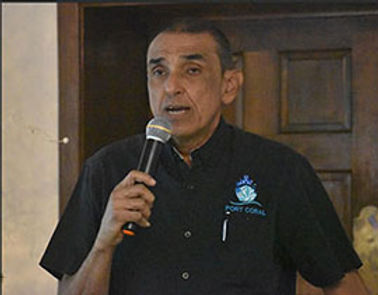
    As the Bahamas approaches its upcoming general election, a scheduled lump-sum payment to hundreds of utility workers has ignited public debate over its timing and potential political motivations, with union leadership pushing back firmly against claims of improper political maneuvering.

    Kyle Wilson, president of the Bahamas Electrical Workers Union (BEWU), confirmed last week that more than 800 junior line staff employed by Bahamas Power and Light (BPL) received a one-time $3,500 cost of living supplement, a benefit explicitly outlined in the union’s existing industrial agreement with the power provider. Speaking to The Tribune, Wilson emphasized that the payout structure was finalized through collective bargaining more than 18 months before the election was called, and the timeline for disbursement aligns with the contractual schedule laid out years in advance.

    “This is a contractual entitlement for our members, it has no connection to electoral politics whatsoever,” Wilson stated. “It is purely a coincidence that the scheduled payment date falls just days before the general election. There is no political angle to this at all.” He also clarified that all funds for the supplement come directly from BPL’s operating budget, rather than being drawn from government public coffers.

    The timing of the payouts has attracted increased public and media scrutiny, coming on the heels of a controversial decision by the incumbent Davis administration to erase outstanding residential electricity bills for customers on Grand Cay and Moore’s Island. The government has framed that move as a correction of longstanding billing errors that emerged in the wake of Hurricane Dorian and the COVID-19 pandemic, but political observers have questioned whether the series of financial benefits for voters are timed to sway electoral support.

    Wilson pushed back against these insinuations, accusing political commentators and critics of attempting to politicize a routine internal labor matter. He noted that BPL has a long history of issuing similar cost-of-living lump-sum payments to union employees, meaning the current disbursement is neither unusual nor without precedent.

    “Everything is amplified in the lead-up to an election,” Wilson explained. “Opponents and commentators will try to twist any development to score political points, but this is strictly an internal issue between BPL and its unionized workforce. This has nothing to do with the election, in any shape or form.”

    Wilson expressed satisfaction with the outcome of the collective bargaining process, noting that the agreement strikes a fair balance for both workers and the utility. He also praised BPL management for sustaining stable, productive labor relations over the past several years, adding that there have been no major work stoppages, union-led demonstrations, or disputes escalated to the national Labour Board during that tenure.

    He specifically credited BPL Chief Executive Officer Toni Pratt with fostering a collaborative negotiating environment, which allowed the company and union to reach an amicable agreement that protects worker benefits while supporting the company’s goal of delivering reliable electrical service to Bahamian consumers across the country. Wilson added that the union remains committed to holding up its end of the agreement by supporting workers in delivering high-quality service to the public.

  • Texas lawsuit accuses Netflix of illegal data collection

    Texas lawsuit accuses Netflix of illegal data collection

    DALLAS, TEXAS – In a high-profile legal action filed Monday, Texas’ top law enforcement official has brought a landmark lawsuit against global streaming leader Netflix, leveling serious claims that the company violates state consumer protection rules through unauthorized user data harvesting and deliberately addictive platform design. In the explosive opening of his 59-page complaint filed at a Dallas-area state court, Republican Attorney General Ken Paxton cut straight to the heart of his allegations: “When you watch Netflix, Netflix watches you.”

    Per an official press release accompanying the suit, Paxton argues that Netflix operates as an unrestricted giant data warehouse, continuously tracking and recording not just users’ viewing histories and content preferences, but a wide range of what he calls “sensitive behavioral data” — with children and teen users among those improperly monitored. The complaint further alleges that Netflix monetizes this harvested personal information by sharing granular user insights with third-party advertisers, enabling highly targeted ad campaigns that generate billions in revenue for the company at the expense of consumer privacy.

    A second core allegation centers on Netflix’s deliberate use of platform features designed to foster compulsive viewing, particularly among vulnerable young users. The most prominent example cited is the platform’s default-enabled autoplay function, which is activated for all users including children, automatically loading the next episode of a series immediately after the previous one ends. Paxton stresses that this feature removes natural stopping points for viewing, encouraging extended, addictive binge-watching habits that disproportionately impact minors.

    In his public statement, Paxton pushed back against Netflix’s long-held public branding, saying: “Netflix is not the ad-free and kid-friendly platform it claims to be. Instead, it has misled consumers while exploiting their private data to make billions.”

    The legal action comes amid a heated Republican primary race for U.S. Senate, where Paxton is challenging long-serving incumbent Senator John Cornyn for the party’s nomination. The lawsuit seeks immediate court injunctions to block Netflix from continuing to collect or share consumer data for the duration of the litigation. It also requests civil penalties of up to $10,000 for each confirmed violation of Texas’ Deceptive Trade Practices Act, which could amount to massive financial penalties given the scale of Netflix’s user base in the state.

    As of Tuesday morning, Netflix has not yet issued a public response to the allegations laid out in the suit.

  • US to revoke passports of parents with child support debt

    US to revoke passports of parents with child support debt

    A new policy from the U.S. State Department is set to introduce stricter enforcement of long-standing child support laws, with officials announcing they will begin revoking passports from American citizens who owe substantial delinquent child support payments.

    Under the updated rules, any parent carrying unpaid child support debt exceeding $2,500 (approximately €1,844) could face the penalty, though enforcement will prioritize individuals who owe particularly large outstanding amounts. In announcing the change, State Department officials framed the policy as a common-sense measure designed to uphold American family well-being and ensure compliance with existing federal mandates. The action, they said, holds parents accountable for both the legal and moral responsibilities they owe to their children.

    The policy itself is rooted in a 1996 federal law that has long permitted passport sanctions for delinquent child support, but the provision has rarely been fully enforced. Prior to this update, passport restrictions were only applied when individuals with unpaid debt attempted to renew their existing travel documents. That limited approach left many parents with significant delinquent debt able to retain and use their valid passports without consequence.

    Under the revamped framework, the State Department will collaborate closely with the U.S. Department of Health and Human Services to proactively identify individuals who meet the debt threshold, then move to revoke their current passports. Once revoked, a passport becomes invalid for all international travel, and affected individuals will not qualify to receive a new replacement document until their full child support debt is settled. Officials have urged all parents with outstanding balances to immediately coordinate payment plans with relevant state agencies to avoid triggering the penalty.

    While the State Department did not officially confirm a start date for the new enforcement regime, reporting from the Associated Press indicates the policy will go into effect starting Friday. The BBC has reached out to the State Department for further comment and confirmation of the timeline. For individuals who are already traveling outside the United States when their passport is revoked, the AP reports that they will need to visit the nearest U.S. embassy or consulate to obtain a limited emergency travel document that will allow them to return to the country.

    In its official statement, the State Department emphasized that the new enforcement aligns with the core goal of protecting children’s welfare. “This action supports the welfare of American children by exacting real consequences for child support delinquency under existing federal law,” the statement read.

  • Man offers ‘compensation’ to suppress HDC contracts story

    Man offers ‘compensation’ to suppress HDC contracts story

    An ongoing investigation into alleged bid-rigging and contract collusion within Trinidad and Tobago’s suspended $3.4 billion national housing program has taken an unexpected turn, after an intermediary claiming to represent a senior Housing Development Corporation (HDC) official under scrutiny offered a cash compensation bribe to the *Sunday Express* in exchange for scrapping the investigative story.

    The meeting took place last Thursday on Ariapita Avenue in Woodbrook, with the intermediary — a well-connected figure with deep ties to local political circles — laying out a clear quid pro quo for the newsroom’s investigative team. If the outlet agreed to kill the story about the alleged collusion, the journalist behind the investigation would receive financial compensation, plus access to a cache of internal documents detailing claims of mismanagement that occurred at HDC during the previous People’s National Movement (PNM) administration.

    “Bringing this kind of negative light on the HDC at this time is not what they want,” the 6-foot-tall intermediary told *Sunday Express* reporters. When pressed for clarification on the offer, he repeated the terms: dropping all coverage of the collusion allegations would result in the payout, plus additional documented scoops on other HDC controversies.

    The *Sunday Express* immediately rejected the bribe offer, noting that the contract awarding process under investigation is a matter of significant public interest, given the multi-billion-dollar scale of the housing program and the public funds allocated to it.

    The attempt at hush money came after the newspaper had spent the preceding week reaching out to the implicated HDC official and the two private contractors awarded the contested contracts, in response to formal complaints of collusion filed by whistleblowers. The intermediary first contacted the newsroom on Wednesday morning, the day before the in-person meeting, claiming the official was open to negotiating a discussion about the contract controversy. Since the bribe offer was made, the story has moved forward with new developments from the contractors involved.

    Within 24 hours of the meeting, Chaguanas-based attorney Denelle S Singh submitted a pre-action protocol letter to the *Sunday Express* on behalf of one contractor and his firm. The letter denied all collusion allegations and threatened immediate legal action if the contractor’s name is published in any upcoming coverage.

    The second contractor, who secured one of the multi-million-dollar HDC contracts under investigation, initially spoke briefly with the *Sunday Express* last Tuesday, before submitting a detailed formal response via WhatsApp late Friday evening. In his statement, the contractor emphasized that his company is barred from disclosing confidential client arrangements, commercial terms, or project-specific details unless required by law or explicitly authorized by involved parties.

    He firmly denied that his company has ever engaged in collusion with any HDC official related to housing projects in Freeport or any other location across the country, adding that all of the firm’s construction work has always been carried out in strict compliance with legal contractual and commercial standards. When asked directly about any personal or improper business relationship between his firm and the implicated HDC official, the contractor brushed the question aside, noting that like all construction firms operating in the country, his company interacts with dozens of industry stakeholders and public officials as part of routine commercial activity.

    “[Company name] has provided construction, renovation, and related contracting services for numerous commercial entities over time,” he said in response to questions about whether the firm had ever done work for businesses owned by the HDC official. “As a matter of company policy, we generally do not publicly disclose confidential client relationships, commercial arrangements, or project-specific details unless legally required to do so or authorised by the relevant parties. Any services provided by the company, where applicable, would have constituted legitimate commercial construction services performed at arm’s length and in the ordinary course of business.”

    The contractor “firmly and unequivocally” rejected all allegations, suggestions, or implications of collusion, noting that the company maintains a strict zero-tolerance policy toward bribery, corruption, and all forms of unethical business conduct. When asked about his relationship with the other contractor awarded a contested multi-million-dollar HDC contract, he repeated his policy of not disclosing confidential commercial arrangements, adding that the company has always acted properly, professionally, and in full compliance with the law throughout the entire contracting process for the HDC project.

    “We complied with the applicable procurement, tendering, and submission requirements as communicated by the relevant authorities,” he said. “We remain confident that our experience, technical capability, operational capacity, and performance record qualified us to participate in and be considered for such opportunities.”

    The $3.4 billion national housing program at the center of the allegations has already been suspended by authorities, and the bribery attempt has intensified questions about transparency and accountability in public infrastructure contracting across Trinidad and Tobago. The *Sunday Express* has confirmed it will continue its investigation into the collusion allegations, despite the bribe attempt and pending legal threat.

  • HDC official under scrutiny for collusion

    HDC official under scrutiny for collusion

    A corruption and conflict of interest scandal has thrown Trinidad and Tobago’s massive $3.4 billion public housing programme into limbo, after a whistleblower complaint prompted regulators to order an immediate halt to newly awarded contracts. The case centers on a senior official at the country’s Housing Development Corporation (HDC), who is alleged to have long-standing personal and private business ties to two of the 11 contractors that secured shares of the multi-billion public works package.

    Shortly after the HDC announced the list of winning contractors for the public-private partnership programme in early April, the Office of Procurement Regulation (OPR) received multiple formal and informal complaints. Acting on these submissions — which included a formal complaint filed on behalf of activist Wendell Eversley by attorney Randall Mitchell — the regulator ordered the state-owned housing agency to suspend all programme activities pending a full, independent review of the entire bidding and award process.

    Multiple independent sources with direct knowledge of the award process and the ongoing investigation have confirmed to local outlet the Sunday Express that the ties between the HDC official and the two contractors date back roughly a decade. The first contractor, a prominent local businessman who owns a popular chain of retail stores, previously purchased an entire chain of businesses from the HDC official. While the businessman’s company currently holds contracts with another state entity, multiple sources confirmed it has never led a large-scale residential construction project before this award.

    Records indicate the second contractor also shares a long personal and professional history with the HDC official. Around 10 years ago, the two partnered on a private housing development in Trinidad’s Freeport area, and the HDC official previously hired the second contractor to complete renovation and repair work on multiple commercial properties across the country. The second contractor also has well-documented business ties to the first contractor, and has assisted in constructing several of the first contractor’s commercial buildings over the years. Sources familiar with the investigation confirm these overlapping relationships will be a core focus of the OPR’s review.

    Public concerns about the integrity of the procurement process were first raised by opposition People’s National Movement (PNM) officials, including Member of Parliament Camille Robinson-Regis and former prime minister Stuart Young. Young publicly questioned the qualifications of multiple winning firms, noting that many of the awarded companies have little to no prior experience delivering large-scale housing construction projects. A check of the Ministry of Land and Legal Affairs’ Companies Registry Online System confirmed all winning companies have been legally registered in the country for multiple years, though that verification does not address their industry experience.

    When contacted for comment last Friday, HDC chairman Feeroz Khan declined to speak on the record about the allegations. “Given that the matters relating to the procurement process in question are currently engaging the attention of the Office of the Procurement Regulation, Senior Counsel has advised that the matter is sub judice, and hence it would be improper to comment on same,” Khan said.

  • How would you grade Guevarro?

    How would you grade Guevarro?

    As Trinidad and Tobago Police Service (TTPS) Commissioner Allister Guevarro approaches his one-year anniversary in the top law enforcement role next month, Homeland Security Minister Roger Alexander is opening the door for public and peer input on his tenure — declining to share his own personal rating ahead of the broader feedback period.

    Alexander made the announcement during the TTPS’s 103rd annual Sports and Family Day, held Tuesday at St James Barracks, where reporters pressed him for his assessment of Guevarro’s leadership and what areas may need improvement. Guevarro and several senior TTPS deputies, including Junior Benjamin and Suzette Martin, were in attendance during the media interaction.

    When asked to weigh in on Guevarro’s leadership of the national police force, Alexander pushed back on framing policing performance as a one-person responsibility. “It’s a team effort and not an individual effort. For the team effort, I have total confidence in the Trinidad and Tobago Police Service, from where I came from,” he told reporters.

    The conversation also turned to longstanding public demands for mandatory body-worn cameras for frontline patrol officers, a policy widely cited as a tool to boost transparency and police accountability. While Alexander confirmed the government and TTPS do not oppose the adoption of body cameras, he said outfitting officers with life-saving protective gear is the immediate priority, given the rising danger facing law enforcement in the country.

    “At this time, I have decided to protect law enforcement first by giving them the requisite protection gear so they can better protect you as citizens and this nation as a whole,” he explained. Pointing to the increasingly heavy firepower used by criminal actors, including 7.62mm and 5.56mm ammunition, Alexander questioned whether the public should prioritize recording equipment over officer safety: “What do you want? Do you want a man to be confident enough to take on these persons or do you want him to tape it with all the requisite equipment?”

    After reporters reiterated the role of body cameras in ensuring transparency and accountability, Alexander shifted the conversation to what he called the deeper root causes of violent crime in the country: systemic failures in family and community upbringing. He argued that public discourse too often focuses exclusively on police performance, while ignoring the role of family members who harbor violent criminals and fail to intervene in harmful behavior early on.

    “Why this conversation is not with the parenting aspect of this?” he asked. “Greater attention must be paid to family structures, community influence and early intervention in schools. We often question police officers, but less focus is placed on parents and grandparents, and on the fathers and them who are shooting persons, killing young children and then going to sleep and hugging up their children.”

    Alexander added that even during the event, there are families across the country turning a blind eye to the criminal activity of their relatives: “Right now, while we’re speaking here, there’s someone — a grandmother, a mother, somebody — looking out the window to see when the police is coming because their criminal son is lying on the bed. He’s sleeping because he was out all night.”

    To address these root causes, the minister confirmed the government is rolling out a new, multi-stakeholder psychosocial intervention initiative focused on crime prevention, a strategy the administration says is unprecedented in Trinidad and Tobago. A dedicated intervention team will work directly in schools and local communities to address harmful patterns early, partnering with criminologists, psychologists, parent-teacher associations, and faith leaders to implement preventive measures.

    “At this time, the police have a psychosocial intervention team that we are putting together to enter the schools, to enter the community… Things that were never done before, because we understand prevention is the first stage,” Alexander said. “We have a wide range of professionals and community leaders coming on board because they understand prevention is better than cure.”

  • Kamla to honour ‘jahaji legacy’

    Kamla to honour ‘jahaji legacy’

    On a historic visit to a small island off the coast of Trinidad that holds deep meaning for the nation’s Indo-Trinidadian community, Prime Minister Kamla Persad-Bissessar has formally unveiled plans to rename Nelson Island, a landmark forever tied to the arrival of more than 140,000 Indian indentured labourers between 1845 and 1917. The announcement, made alongside India’s Minister of External Affairs Dr Subrahmanyam Jaishankar, frames the renaming as a long-overdue act of historical reclamation that centers the stories of the people who gave the site its enduring cultural significance, rather than the colonial figures for which it was originally named.

    Persad-Bissessar emphasized that the island is far more than a geographic landmark: for descendants of indentured labourers, it is the sacred first touchpoint of their ancestors’ journey across the Kala Pani, the dark waters of the Atlantic that separated workers from their home country. The Prime Minister’s own family history is intertwined with this legacy; her maternal great-grandmother, 16-year-old Sumaria Seepersad, arrived at the island from Madras in the 1880s speaking only Bhojpuri, and went on to toil on south Trinidad’s sugarcane estates after being widowed young. “I do not believe Sumaria could ever have imagined that one day, upon the very shores where she first arrived, her great-granddaughter Kamla would stand as Prime Minister of Trinidad and Tobago,” Persad-Bissessar told the gathered crowd.

    In her remarks, the Prime Minister drew a clear line between the injustices of indentureship and the transatlantic slave trade that preceded it, calling the system a deliberate form of human trafficking designed to prop up the British colonial economy after emancipation. “Indentureship was a form of human trafficking, bearing many of the same labour controls, abuse and humiliation of the transatlantic slave trade that preceded it,” she said. Workers endured a grueling three-month voyage, often signed contracts they could not understand, and faced harsh, exploitative conditions on sugar plantations across the country. Despite this, Persad-Bissessar celebrated the resilience of the labourers, who built community and persevered through hardship out of hope for a better future for their descendants.

    Addressing the once-pejorative term “coolie” used to describe indentured labourers, a label that is still sometimes used against people of Indian descent today, Persad-Bissessar rejected any shame associated with the term. “I feel no shame at that. We were coolies, and I said the other day, it took a little coolie girl from a place down in Siparia to become the Prime Minister of Trinidad and Tobago,” she said, drawing loud applause from attendees including government ministers and members of the Indian delegation.

    To guide the renaming process, Persad-Bissessar announced that a cross-institutional committee led by Natasha Barrow, Permanent Secretary in the Office of the Prime Minister, in partnership with the National Trust of Trinidad and Tobago, will oversee the project. A public-facing website will also be launched to collect name suggestions from communities across the country, making the renaming a collective, public-led process.

    Following the announcement, Persad-Bissessar and Jaishankar unveiled a commemorative plaque on the island to mark the occasion. The visit was the first of three official engagements for the day, which also included the launch of a new agro-processing facility at Brechin Castle and a national prosthetics center in Penal.

    Persad-Bissessar framed the renaming as part of a broader global movement of post-colonial self-definition, pointing to India’s renaming of colonial-era cities such as Bombay to Mumbai, Madras to Chennai, and Calcutta to Kolkata as a precedent. “Such changes reflect historical reclamation, cultural dignity, and national self-definition by a free people,” she noted. She added that Trinidad and Tobago has a long history of renaming colonial sites after independence, from renaming King George V Park to Nelson Mandela Park to rebranding streets after national cultural icons including Janelle “Penny” Commissiong, Black Stalin, and Lord Kitchener.

    While the island’s legacy is most closely tied to Indian indentured labour, Persad-Bissessar also acknowledged its layered history: under British colonial rule, enslaved Africans were forced to build military fortifications on the site, and the name “Nelson Island” itself is derived from Thomas Neilsen, a British doctor who took ownership of the land after it was originally called Stephenson’s Island. The island also holds other important chapters of national history: in the 1930s, Jewish refugees fleeing Nazi Germany were detained on the island, and prominent 20th century labour leaders Tubal Uriah “Buzz” Butler and George Weekes were once imprisoned there. Still, Persad-Bissessar argued, the island’s core identity is shaped by the tens of thousands of indentured labourers who first stepped onto its shores on their journey to building new lives in the Caribbean, and that identity deserves to be permanently enshrined in its name.

  • Nieuwe RvC Telesur onder leiding van Nagisch Algoe treedt maandag aan

    Nieuwe RvC Telesur onder leiding van Nagisch Algoe treedt maandag aan

    A major leadership shakeup is set to take place at Suriname’s state-owned telecommunications provider Telesur, with the entire current supervisory board (Raad van Commissarissen, RvC) set to be officially dismissed and a new five-member board appointed during the company’s upcoming Annual General Meeting of Shareholders (Algemene Vergadering van Aandeelhouders, AVA).

    The planned reshuffle, confirmed by the meeting’s official agenda and a formal memorandum from Suriname’s Council of Ministers, will be held on May 11 at the President’s Cabinet, chaired by President Jennifer Simons. The dismissal of the sitting supervisory board and the appointment of its replacement are among the core items on the meeting’s working schedule.

    According to the Council of Ministers’ document, dated May 7, 2026, the national government has formally approved the exit of the current board, with official gratitude extended to members for their past service to the company. The outgoing supervisory board was led by president-commissaris Sanjay Raghoebarsingh, and included six additional members: Richel Apinsa, Ferrucio Hira, Paulus Abena, Sonia Bron, Ravish Isrie and Remie Oosterwolde.

    The new supervisory board will be composed entirely of five male appointees. Nagish Algoe will take on the role of president-commissaris, with the remaining board seats filled by Luciano Wijdenbosch, Frans Eersteling, Alexander Deel and André Daal.

    This leadership transition at Telesur is not an isolated change. It forms part of a broader wave of governance restructuring across multiple state-owned enterprises in Suriname, implemented following the inauguration of the country’s new ruling government.

  • Fuel consumers to receive subsidy from government

    Fuel consumers to receive subsidy from government

    Against a backdrop of skyrocketing global crude oil markets, the Commonwealth of Dominica is rolling out targeted consumer relief through a new fuel subsidy program designed to soften the blow of steep price increases for local motorists and businesses. As of May 7, 2026, unsubsidized fuel prices across the island stand at $17.98 per gallon for regular gasoline, $19.23 per gallon for high sulfur diesel, $20.53 per gallon for ultra-low sulfur diesel, and $18.23 per gallon for kerosene.

    In an official press briefing, Prime Minister Roosevelt Skerrit outlined the context driving the policy: global crude prices have spiked by more than 30% in recent months, creating unavoidable upward pressure on local retail fuel costs that threatened household budgets and small business viability. To counter this trend, the Dominican government will roll out per-gallon subsidies ranging between $1.50 and $2.00 starting at the next monthly fuel price review cycle, scheduled for the end of May. The subsidy will be delivered through a targeted reduction in domestic fuel taxes.

    While the relief package will come at a net cost of more than $500,000 to public funds each month, Skerrit emphasized that the support is critical for low- and middle-income households, public transportation operators, commercial fishing crews, and small and medium-sized enterprises across the island. At the same time, the Prime Minister was transparent about the significant tradeoffs the policy requires for public finances. Every dollar allocated to fuel subsidies represents forgone government revenue at a moment when public spending is already rising rapidly. Higher operating costs for core public services including public schools and hospitals, coupled with ongoing post-disaster recovery efforts in the flood-hit eastern and northeastern regions of the country, have stretched public budgets thin.

    Skerrit added that diesel prices alone have jumped 48% since the start of February 2026, and ongoing volatility in global crude markets through 2026 means these subsidies will become an increasingly heavy burden on the Dominican national treasury. This sustained pressure, in turn, limits the government’s ability to allocate funding to other core priorities, including public health initiatives, public education upgrades, infrastructure development, and long-term disaster resilience programming.

    Moving forward, the government will maintain a monthly fuel price review process to strike a balance between protecting consumers from sudden price shocks and upholding responsible fiscal management that preserves long-term public service capacity. Looking beyond short-term relief, Skerrit reaffirmed that the only sustainable path to long-term energy security for Dominica is accelerating the country’s transition from fossil fuels to domestic renewable energy sources.