A shocking early-morning gang-linked triple shooting that claimed the life of a two-year-old child has ignited a fiery political debate in Trinidad and Tobago over the ruling government’s crime control policies, just months into its second state of emergency (SoE) implemented to curb spiraling violent crime.
On Thursday, gunmen ambushed a vehicle carrying Akini Kafi, 2, his father Aquil Kafi, and Anthony Wilson in the Port of Spain neighborhood of Belmont, killing all three. The child’s mother, Antonia Cain-Kafi, was struck by four bullets and remains in critical condition at a local hospital. This brutal killing followed a similar April attack in Morvant that left nine-year-old J’Layna Armstrong dead alongside three adult relatives, in what police described as another targeted gang shooting.
Prime Minister Kamla Persad-Bissessar addressed the tragedy Tuesday during a parliamentary crime debate, following a diplomatic ceremony at the Port of Spain Red House where 2,000 Indian-donated laptops were distributed to students across seven districts and bilateral education memoranda were signed. Opening her remarks, Persad-Bissessar expressed profound grief over the unnecessary loss of innocent life, emphasizing that the killing of a child represents an unconscionable national tragedy.
“Every life lost is a heartbreak to many, and especially when there’s a child, it’s a tragedy,” she told reporters. “I know our law enforcement officers are doing the best they can to pursue those responsible for this tragedy, and our hearts go out to the families and the loved ones left behind.”
Against this backdrop of national mourning, the prime minister defended her administration’s core crime control measure: the ongoing state of emergency. She pushed back against growing public and opposition criticism of the policy, arguing that the national murder rate would be far higher if the SoE had not been put in place. Persad-Bissessar also confirmed that no nationwide curfew would be introduced at this stage of the emergency.
Persad-Bissessar’s government won a decisive victory in the April 28, 2025 general election. Just three months after taking office, the administration declared its first state of emergency in response to rapidly escalating gang violence and mounting national security threats. A second SoE was extended on March 3 of this year, after intelligence services received concrete warnings of imminent gang reprisal attacks across the Port of Spain metropolitan area.
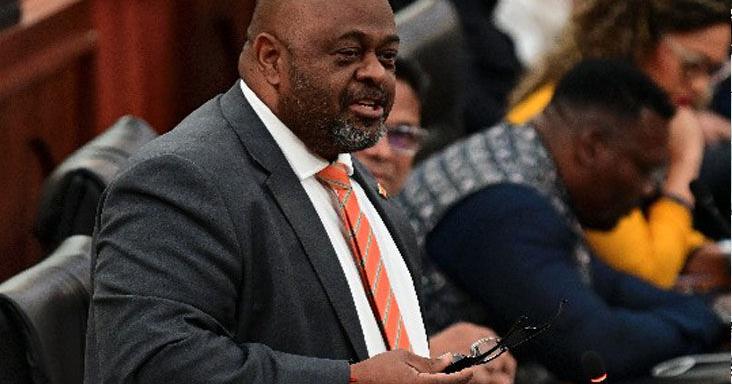
The parliamentary debate devolved into partisan acrimony after Defence Minister Wayne Sturge made the bombshell claim that the recent Belmont triple murder and the April Morvant quadruple killing are directly linked to ongoing inter-gang turf wars in constituencies controlled by the opposition People’s National Movement (PNM). Sturge, who is a resident of Belmont, told the chamber that two local streets – Serraneau Street and Belle Eau Road – have long been divided into rival gang territories, with residents blocked from crossing into the opposing area. He confirmed that both recent mass shooting incidents are rooted in this long-running territorial feud.
Sturge launched a scathing counterattack against opposition calls for his resignation and that of Homeland Security Minister Roger Alexander, pointing to the PNM’s own record of out-of-control violent crime when the party held power. He reminded lawmakers that under the previous PNM administration, the national murder rate hit all-time record highs, including one 24-hour period in July 2019 that saw 11 separate killings. Sturge went further, dismissing PNM MP Stuart Young, who first called for the ministers’ resignations, as one of the most ineffective national security ministers in the country’s history.
“When 11 murders take place under his watch, he has the gall to come and call for resignations on this side,” Sturge said. “What he’s not saying is that his own constituents are largely responsible for the most murders in this country, and they refuse to allow zones of special operations (ZOSO) to be implemented in the area.”
In a charged verbal exchange, Sturge pressed his attack, telling Young: “The same way you wouldn’t know when your constituents are going to murder some of your other constituents a street away, you expect us to know? But, let me tell you something, what we wouldn’t do, we wouldn’t know that four people are trapped in a pipeline and wait and let them die.”
Young immediately stood to object, labeling Sturge’s remarks “gibberish” and “verbal diarrhoea.” Sturge quickly shot back, responding: “He could call it all kinds of things, verbal diarrhoea; you know what he couldn’t say? That I lie.”