分类: politics

  • Voters face missing names despite short election lines

    Voters face missing names despite short election lines

    On general election day across the country, voting operations in most electoral districts unfolded far more smoothly than pre-election forecasts had warned, though persistent issues with voter roll inaccuracies have validated longstanding opposition concerns about the integrity of the electoral registry ahead of the vote. A field survey conducted by The Tribune across polling stations nationwide found that most voters waited less than an hour to cast their ballots, with many completing the process in just a handful of minutes.

    The majority of polling locations opened on schedule, voting lines moved at a consistent pace, and numerous voters commended the overall administrative organization of the election. That said, scattered issues including mismatches in the voter register, insufficient ballot supplies, unexpected delays, and accessibility challenges were reported throughout voting day.

    The most common grievance centered on voters whose names were missing from their local voting register, voters incorrectly assigned to constituencies they did not reside in, and approved voter transfers that were never updated in the official registry.

    At Yellow Elder Primary School, a polling location serving the St Barnabas constituency, Michael Halkitis, candidate for the Progressive Liberal Party (PLP), noted that multiple voters who had applied for transfers found their changes had never been finalized. “Some of them just voted in the constituency where they appeared because the transfer was not finalised, so you had some of them, but by and large, a very smooth process,” Halkitis told The Tribune. He added that voter turnout was consistent through the morning, with the earlier advanced polling likely reducing election day turnout numbers. When asked why affected voters rarely opted to file protest ballots, he explained that most avoid the option out of a belief that protest ballots are never officially counted.

    Parallel issues emerged in the Golden Isles constituency, where Free National Movement (FNM) candidate Brian Brown documented cases of voters who held valid voter ID cards but could not find their names on the register at the Anatol Rodgers High School polling station. Brown confirmed that several of these impacted voters were ultimately forced to cast protest ballots.

    Complaints about the flawed voter register also spread rapidly across social media platforms. Local voter Shadai Toote shared a live video detailing her experience: she had submitted a transfer request from St Barnabas to Fort Charlotte back in March, but was ultimately incorrectly assigned to Bains and Grants Town — a constituency where she has never lived. “It’s like appalling to me,” Toote said. “I can’t begin to fathom that we’ve had four plus years to get prepared for something like this, and they still dropped the ball, so I’m being advised that I can’t vote in the constituency I’m in because I’m not on any of their registries.”

    Similar reports came from Abaco, where multiple voters opted to forgo voting entirely after discovering they had been assigned to the wrong constituency. Jobeth Coleby-Davis, PLP candidate for the Elizabeth constituency, confirmed her campaign team had received multiple complaints about incorrect constituency assignments. “They’ve been noticing it. And I think when those incidents come up, they speak with the returning officer, the presiding officer, to see how they would allow it to move ahead,” she said.

    Heather Hunt, FNM candidate for Elizabeth, shared one voter’s experience: the voter’s card correctly listed Elizabeth as their constituency, but their name appeared on the register for a different district. “They were sent to another constituency because that’s where the name appears on the register, and they had already tow the line and everything for almost half an hour,” Hunt said. “So that frustration we’re hearing, but you know, that person just is determined to, you know, exercise their right to vote, and so they just decided that they’re going to take that drive and go to the other constituency where their name is.”

    One of the most significant disruptions arose in Long Island, where FNM candidate Andre Rollins reported that Polling Division Nine, the island’s largest voting district, received 60 fewer ballots than the number of registered voters assigned to the location. “The fact that it’s the largest polling division means that it is curious that the Parliamentary Registration Department would send much fewer number of ballots than the number of people who are on the register,” Rollins said. “We have 360 plus persons on the register here on polling division number nine. However, they included only 300 white paper ballots in polling division nine ballot box when they send it from New Providence here to Long Island.”

    Rollins noted that legal guidance provided to the FNM suggested the polling station should not have opened at all, as the shortage put eligible voters at risk of being disenfranchised. The issue was ultimately resolved by reallocating surplus ballots from three smaller nearby polling divisions — 25 extra ballots were pulled from each of Divisions Three, Four and Eight, bringing Division Nine’s total ballot count up to 375.

    Ballot shortages were also reported on New Providence. In Fort Charlotte’s Polling Division One, voting was delayed for nearly 45 minutes after the station exhausted its initial ballot supply and had to wait for additional stock to be delivered.

    Not all voting experiences were marred by issues, however. At Jordan Prince-Williams Baptist School, Bamboo Town resident Darren Sinclaire described his voting experience as efficient and well-organized, noting that he and his elderly mother completed the entire process in roughly eight minutes. When asked if he felt anxious after hearing widespread warnings about voter register errors ahead of election day, Sinclaire said: “Yeah, I was, because I heard a lot of errors on the register and stuff like that, so I wondered if there would be any error on our parts, but everything went pretty smooth.”

    In Fort Charlotte, voter Nadia Benaby arrived at the CC Sweeting Senior High School polling station at 8:45 a.m. and finished voting by 9:15 a.m. She called the experience the smoothest voting process she had participated in across six general elections. At the same polling location, though, FNM candidate Travis Robinson highlighted concerns including late delivery of ballots.

    Voters across multiple other constituencies, including Freetown, Centerville, Garden Hills and Carmichael, reported average wait times of 20 minutes or less, reflecting that the majority of voting operations ran according to plan.

  • Dominican Republic designates Iran’s IRGC and Hezbollah as terrorist organizations

    Dominican Republic designates Iran’s IRGC and Hezbollah as terrorist organizations

    In an official policy announcement released by its Ministry of Foreign Affairs, the Caribbean nation of the Dominican Republic has formally added two groups — Iran’s Islamic Revolutionary Guard Corps (IRGC) and Lebanon’s political-military movement Hezbollah — to its national list of designated terrorist organizations.

    The Dominican government clarified that the decision aligns with multiple binding international frameworks and domestic legal standards, including counterterrorism resolutions adopted by the United Nations Security Council, the Inter-American Convention against Terrorism, and existing national counterterrorism legislation. This move marks a notable shift in the country’s formal designation of transnational groups, bringing it into alignment with a growing number of nations that have taken similar action in recent years.

    Notably, the new designation does not immediately disrupt the existing diplomatic arrangements between the Dominican Republic and Iran. Iran currently maintains non-resident diplomatic accreditation for the Dominican Republic through its embassy in neighboring Cuba, a arrangement that remains in place following the announcement. The accredited Iranian ambassador to the Dominican Republic, Seyed Mohammad Hadi Sobhani, only formally presented his credentials to Dominican President Luis Abinader this past December 2024, just months before the counterterrorism designation was made public.

  • Dominican Republic looks to Guatemala for best practices in assisting returned migrants

    Dominican Republic looks to Guatemala for best practices in assisting returned migrants

    A high-profile delegation led by Geanilda Vásquez, pro tempore president of the Central American Integration System (SICA), undertook an official working visit to Guatemala between May 11 and 12 to examine the Central American nation’s successful “Return to Home Plan”, a landmark government initiative designed to deliver holistic humanitarian aid and long-term reintegration support to migrants returning to their home country.

    As the head of the Dominican delegation, Vásquez confirmed that her country is currently developing its own tailored national model for receiving and reintegrating returning Dominican migrants, drawing on proven successful strategies from across the Central American region. The upcoming Dominican program is structured to address the full spectrum of needs that returnees often face after arriving back home, ranging from immediate access to emergency medical care and official identity documentation to longer-term support including public education enrollment, professional job placement services, and specialized psychosocial counseling to help returnees readjust to community life.

    During the two-day working trip, the Dominican delegation held in-depth coordination meetings with senior representatives from three key institutions: the Guatemalan Migration Institute, the Secretariat for Central American Social Integration, and the International Organization for Migration. Beyond formal talks, delegation members also conducted on-site tours of state-run migrant reception and assistance facilities across Guatemala, where they gained first-hand insight into how different government and international bodies coordinate their work to support returnees from the moment of arrival through to full, sustained reintegration into local communities.

  • Leonel Fernández says Dominican economic crisis stems from government policies

    Leonel Fernández says Dominican economic crisis stems from government policies

    In a public address delivered on Tuesday in Santo Domingo, former Dominican Republic president Leonel Fernández has pushed back against the current government’s narrative that the country’s ongoing economic struggles stem primarily from the escalating conflict in the Middle East. Instead, Fernández placed full blame on what he called systemic government mismanagement: unplanned policy improvisation, a rapidly ballooning national public debt, and unsustainable excessive current government spending.

    Speaking during the latest installment of his weekly public address series “La Voz del Pueblo”, the founder and leader of the opposition People’s Force party also criticized the current administration’s recently announced austerity policies. Fernández pointed out a glaring contradiction at the heart of the government’s messaging: while officials claim they are implementing strict spending cuts to shore up the economy, they simultaneously report strong economic growth alongside persistent, unusually high public outlays across all sectors.

    The former leader did not dismiss the regional spillover effects of global geopolitical instability entirely. He acknowledged that heightened tensions in the Middle East have created ripple effects that put upward pressure on fuel, transportation, and staple food prices across the Caribbean, including the Dominican Republic. However, he emphasized that the Dominican Republic’s core economic difficulties predated the current outbreak of conflict in the Middle East, meaning the current government cannot shift all blame to an international crisis.

    Fernández went on to outline the root causes of the country’s challenges as he sees them: unchecked expansion of the national public debt, a bloated government payroll that has expanded far beyond sustainable levels, and a rapid increase in public subsidy spending, most notably in the critical electricity sector that has long been a drain on Dominican public finances.

  • ‘No patois in the House!’ Speaker shuts down Burchell’s attempt to present in Jamaican dialect

    ‘No patois in the House!’ Speaker shuts down Burchell’s attempt to present in Jamaican dialect

    On Wednesday, a landmark attempt to bring Jamaican patois into official parliamentary debate was cut short moments after it began, igniting a heated clash between government and opposition lawmakers over linguistic identity and institutional rules.

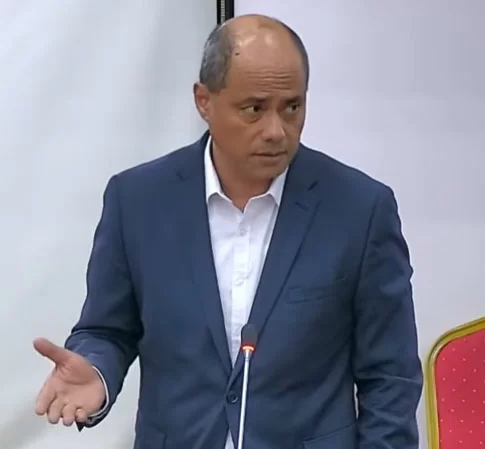
    Nekeisha Burchell, the opposition’s spokesperson for creative industries, culture and information, had stepped to the floor to deliver her first ever Sectoral Debate address, opening her remarks in the creole language spoken by the vast majority of Jamaicans: “Madam Speaker, mi git up dis afta noon fi mek mi fuss sectoral speech pon mi portfolia…”

    Before she could continue, House Speaker Juliet Holness interrupted immediately, invoking the chamber’s long-standing Standing Orders that mandate the use of standard English for all parliamentary proceedings. “Hold on, hold on, hold on. Standing Orders. And I think you are fully aware,” Holness stated, issuing a clear warning that any further attempt to use patois would result in Burchell losing her allotted speaking time: “If I have to stop you again during your presentation you will not get any additional time.”

    The interruption quickly spilled over into cross-party bickering across the parliamentary chamber. Government members rallied behind the speaker’s adherence to existing rules, while opposition lawmakers pushed back, arguing that Burchell should be granted permission to use the national dialect that forms a core part of Jamaican cultural identity.

    Opposition MPs also drew a parallel to a high-profile incident six months prior, when State Minister Alando Terrelonge was stopped mid-address by ruling party MP Everald Warmingong after he spoke Spanish to visiting Cuban guests in the chamber. Warmington had also cited the Standing Orders at the time, asserting his right as an elected representative to follow parliamentary rules and understand all proceedings. Critics of the Wednesday ruling point to that incident as evidence of inconsistent enforcement of the language rule.

    After the brief disruption, Burchell resumed her address, framing her attempt to use patois as a deliberate statement about cultural acceptance in Jamaica’s most formal public institutions. “Madam Speaker, perhaps I should abandon that attempt to use our local language because I have been reminded of the linguistic conventions of this honourable House,” she said. “Because maybe there is no more fitting way to begin a presentation on culture than to speak briefly in the language understood by the overwhelming majority of the Jamaican people, even if that language still struggles for full acceptance in some of our most formal, national spaces including this very Parliament.” She then switched to standard English, often referred to locally as the “Queen’s English,” to deliver the remainder of her address.

    The incident has reignited long-running national discussions about the status of Jamaican patois, which is recognized as the country’s primary spoken language but has yet to gain full official status in formal government and institutional settings.

  • Luis Abinader arrives in Panama to promote investment at World Free Zones Congress

    Luis Abinader arrives in Panama to promote investment at World Free Zones Congress

    The Dominican Republic’s head of state, President Luis Abinader, has touched down in Panama to take part in the high-profile World Free Zones Congress, a key global gathering focused on advancing cross-border economic collaboration and special trade zone development. As a featured guest of the event, Abinader is set to deliver the opening ceremony’s keynote address, where he will lay out the Dominican Republic’s strategic vision for attracting international capital and highlight untapped opportunities for global businesses.

    Central to his trip is a packed schedule of targeted strategic meetings designed to draw new foreign investment into the Dominican Republic, with a specific focus on three high-growth sectors: logistics, advanced manufacturing, and the development of specialized free trade zones.

    Beyond the congress agenda, Abinader has planned formal bilateral talks with his Panamanian counterpart, President José Raúl Mulino, as well as a meeting with Mohammed Al Zarooni, president of the World Free Zones Organization. Discussions between the two national leaders will center on identifying new avenues to deepen bilateral cooperation and expand the scope of economic and trade relations between the Dominican Republic and Panama.

    Abinader’s engagement also includes separate sessions with senior industry leaders and government officials: he will meet with top executives from global logistics firm DP World, Panama’s Minister of Industry and Commerce Julio Moltó, and Martín Pedersen, president of the International Free Zones Authority. A key milestone expected during the visit is the signing of a memorandum of understanding between the Dominican delegation and the World Free Zones Organization, a pact that will formalize cooperation frameworks and facilitate the exchange of industry best practices for sustainable free zone development.

    Accompanying President Abinader on the official visit are three senior Dominican officials: Minister Eduardo Sanz Lovatón, Biviana Riveiro, and Dominican Ambassador Roberto Salcedo, who will support the delegation’s engagement across all scheduled events and initiatives.

  • Abinader to meet Guyanese president during official visit to Guyana

    Abinader to meet Guyanese president during official visit to Guyana

    Dominican Republic President Luis Abinader is set to depart for an official working visit to the South American nation of Guyana on Wednesday evening, kicking off a diplomatic trip aimed at deepening collaboration between the two Caribbean countries. The visit, which comes fresh off Abinader’s high-profile appearance in Panama, will feature structured bilateral negotiations with Guyanese President Mohamed Irfaan Ali and the formal signing of several new cooperation agreements.

    Upon his arrival at Georgetown’s Cheddi Jagan International Airport, Abinader will first be greeted with full military honors, a traditional ceremonial welcome reserved for visiting heads of state. Following the welcome ceremony, the Dominican leader will attend an official reception hosted at Guyana’s Government House to kick off his official engagements.

    The core of the visit will take place on Thursday, when the two national leaders will hold one-on-one and delegation-level talks. Both sides have confirmed that discussions will center on reinforcing long-standing bilateral relations and opening new avenues for cross-border cooperation across key sectors of mutual interest. Abinader travels to Guyana directly from Panama City, where he delivered the opening keynote address at the global World Free Zones Congress. During his time in Panama, the president highlighted the Dominican Republic’s competitive advantages and actively promoted untapped investment opportunities in the country’s fast-growing technology and advanced manufacturing sectors.

    Abinader’s official delegation for the Guyana trip includes three senior Dominican officials: Eduardo Sanz Lovatón, the Dominican Minister of Finance, Biviana Riveiro, the executive director of the Dominican Export and Investment Center, and Ernesto Torres Pereyra, the Dominican Ambassador to Guyana. Per the official schedule released by the Dominican presidency, Abinader will conclude his diplomatic engagements and depart Georgetown to return to the Dominican Republic later on Thursday.

  • JUTC loses $100 b in 10 years, says Phillips

    JUTC loses $100 b in 10 years, says Phillips

    KINGSTON, Jamaica — In a scathing critique delivered during Wednesday’s Sectoral Debate in Jamaica’s House of Representatives, opposition transport spokesperson Mikael Phillips has launched a blistering attack on the current administration’s stewardship of the Jamaica Urban Transit Company (JUTC), claiming that the state-owned public bus service is facing its gravest crisis since the agency’s launch nearly 30 years ago.

    Drawing on a stark medical metaphor to illustrate the severity of the transit agency’s troubles, Phillips compared the JUTC to a critical patient abandoned in a hospital’s emergency waiting area. “For a decade now, the JUTC has been languishing in the hospital’s accident and emergency department, left on a bench without even a bed,” he told lawmakers. He went on to criticize the government’s misaligned response to the crisis, adding, “They have called on a carpenter to examine the patient, when what is truly required is oxygen and a skilled physician to diagnose the ailment and prescribe a cure.”

    Founded in 1998 to provide affordable, reliable public transit across Jamaica’s main urban centers, the JUTC has steadily deteriorated under the current government’s watch, Phillips argued, reaching a nadir unseen in its 26-year operational history. The core of the crisis, he emphasized, is a crushing decade-long financial decline that has left the agency on the brink of collapse.

    According to figures presented by Phillips to the House, the state-run transit provider has accumulated cumulative losses exceeding 100 billion Jamaican dollars over the past ten years, a shortfall he attributes directly to government indifference. “This is a direct consequence of this Administration’s apathy that has left the company in this pathetic state,” he stated. Compounding the bleak financial picture, Phillips added that projections show the JUTC is on track to rack up an additional 14.8 billion Jamaican dollars in losses during the current fiscal year, deepening the agency’s ongoing financial crisis.

  • U.S. approves deportation of Haitian national Dimitri Vorbe to the Dominican Republic

    U.S. approves deportation of Haitian national Dimitri Vorbe to the Dominican Republic

    In Miami, federal U.S. authorities have given formal approval for the deportation of Haitian citizen Dimitri Albert Edouard Vorbe to the neighboring Dominican Republic, following his arrest by U.S. Immigration and Customs Enforcement (ICE) agents earlier this year. The detainment centers on claims that Vorbe represents a potential threat to the United States’ foreign policy objectives, a charge that has put the case under intense public and legal scrutiny.

    This proceeding comes at a pivotal moment: the U.S. and the Dominican Republic recently signed a new bilateral migration accord that permits the temporary cross-border transfer of third-country nationals between the two nations. However, Dominican government officials have publicly reiterated that Haitian citizens are explicitly excluded from the terms of this agreement, creating a layer of legal and diplomatic uncertainty around the planned deportation.

    Court documents from the federal judicial system lay out Vorbe’s legal response to his detainment. In early 2025, he filed a habeas corpus petition challenging the legality of his detention, arguing that ICE violated his fundamental due process rights under U.S. law. At the time of his arrest, Vorbe was in the process of seeking lawful permanent resident status via a family-based immigration petition filed on his behalf by his son, who is a natural-born U.S. citizen. He also held active Temporary Protected Status (TPS), a federal designation that provides temporary legal protection from deportation for Haitian nationals who meet eligibility criteria, a status he had maintained for years prior to his arrest.

    ICE officers took Vorbe into custody at his private residence in Miami in September 2025, and he has since been held at the Krome Processing Center, South Florida’s largest and busiest immigration detention facility, as he navigated his legal challenge.

    Legal analysts and immigration policy advocates note that this deportation decision opens a new chapter in ongoing national and regional debates over U.S. immigration strategy, as well as collaborative migration management efforts across the Caribbean. The case brings into sharp relief the tensions between bilateral security agreements, immigration enforcement, and the legal rights of migrants seeking protected status in the United States, and it is expected to inform future negotiations between the U.S., the Dominican Republic, and other Caribbean nations on migration policy.

  • Gov’t to undertake $800 m greenhouse expansion

    Gov’t to undertake $800 m greenhouse expansion

    KINGSTON, Jamaica — Jamaica’s national government has unveiled an $800 million initiative to build 95 climate-resilient greenhouses across four of the island’s parishes, with completion targeted for the end of 2026. The plan was announced by Minister of Agriculture, Fisheries and Mining Floyd Green on Wednesday, May 13, during his 2026/2027 Sectoral Debate address to the country’s House of Representatives.

    Minister Green emphasized that protected agricultural infrastructure is a critical component of strengthening resilience for Jamaica’s farming sector, which is disproportionately exposed to the impacts of climate change. He framed the project as the largest single investment in protected agriculture structures in the nation’s history. The greenhouses will be distributed across strategic growing regions: 40 units will be constructed in Mocho, Clarendon; 20 in Water Valley, St Ann; 15 in Black Stone Edge, also in St Ann; 10 in Lancaster, Manchester; and the remaining 10 in Damhead, St Catherine.

    Beyond the new construction, the government also plans to redevelop the existing greenhouse cluster in Content, Manchester into a fully functional dedicated protected agricultural zone. The upgraded site will include new on-site storage facilities and an improved access farm road to support local producers.

    The project forms part of the broader $50-million US ADAPT Jamaica initiative, funded by the Green Climate Fund (GCF). A key innovation of this program is that all new greenhouses will be engineered to withstand the force of Category Five hurricanes, a design tailored to Jamaica’s frequent exposure to extreme tropical weather events.

    “This is one of the defining features of the project,” Green told lawmakers. “We are designing greenhouses that fit our specific climate reality, and we will invest more than $1.5 billion over the next five years to roll out this resilient infrastructure across the island.”

    Over the five-year timeline of the GCF ADAPT Jamaica project, the overarching goal is to boost climate resilience for roughly 700,000 smallholder and vulnerable farmers across Jamaica’s central parishes, helping to protect food supplies and support livelihoods amid growing climate uncertainty.