分类: politics

  • Heat on former UHWI chairman

    Heat on former UHWI chairman

    A routine Tuesday meeting of Jamaica’s Public Accounts Committee (PAC) devolved into a fiery, courtroom-style interrogation Tuesday, as two ruling-party Members of Parliament pressed former University Hospital of the West Indies (UHWI) Board Chairman Wayne Chai Chong over the institution’s controversial 2023 international chief executive officer search that ultimately led to the board’s dissolution.

    Government MPs Zavia Mayne, who also serves as a State Minister in the Ministry of Finance, and Heroy Clarke spent hours challenging Chai Chong’s version of events, casting doubt on whether the full dissolved board had actually signed off on critical steps of the hiring process. The interrogation revisited the governance tensions that roiled the prominent public hospital last year, reopening one of the most divisive episodes in the institution’s recent history.

    The failed permanent CEO search, which concluded in the collapse of Chai Chong’s board in late 2023, sparked widespread accusations of ministerial interference, systemic dysfunction, and a total breakdown of institutional governance at the facility. Throughout the tense sitting, the two lawmakers repeatedly pushed back on Chai Chong’s claims, particularly surrounding the level of unified board support for the top overseas candidate and key decisions made during the hiring process.

    Clarke led the aggressive line of questioning around travel costs for the preferred candidate, repeatedly demanding clarity on whether the board had formally approved the airfare and associated expenses to bring the applicant to Jamaica for final interviews. “Did you authorise, did you instruct, did you ask, did you recommend anyone on the board to pay the travelling amount to the person that came from wherever you said she came from?” Clarke asked.

    Chai Chong pushed back against claims of unilateral decision-making, insisting every step of the process had received full board approval. He explained that the board had made the final in-person due diligence a mandatory step for the candidate, who resided outside Jamaica, making the travel arrangement a necessary part of the process. “The board indicated that it wanted to see the individual and complete final due diligence with that individual, and that individual lives overseas so that final due diligence is necessary to be conducted,” Chai Chong said.

    Tensions rose further when Clarke questioned whether the full board was actually aligned behind the international recruitment effort. Chai Chong rejected suggestions he had acted outside of board authority, stressing that the entire search followed formal protocols and was managed by a professional third-party recruitment firm with deep experience in Jamaican public sector hiring.

    He told the committee that the board had identified hiring a permanent CEO as an immediate top priority when it took office, responding to ongoing operational and governance challenges that had left the hospital without stable leadership. “Certainly, as a board, the person that is most important to us is the CEO who we will hold accountable for the performance of the institution. You needed to have someone in place who is permanent, who is conducting the activities and the goals of the institution,” Chai Chong said.

    The board determined the critical leadership role could not be filled through internal promotions, Chai Chong explained, leading it to greenlight an international search conducted by a well-regarded recruitment firm with a track record of work for the Jamaican government and other major national institutions. According to Chai Chong, the process drew more than 90 applicants from across Jamaica and abroad, including candidates from the United Kingdom, Australia, the United States, and other Caribbean nations.

    He also disclosed that the board secured private sector support to top up the successful candidate’s salary, after receiving advice that existing public sector compensation caps would not attract a high-caliber executive capable of turning around the struggling hospital.

    Confrontation flared again when Clarke pressed Chai Chong to recall the exact amount spent on the preferred candidate’s travel, pressing the former chairman after he repeatedly stated he could not remember the specific figure. “You can’t recall? But you know it’s a she, and you can’t recall the money that was paid over to the she, and you were a part of the board at that time, and you were the chairman?” Clarke asked pointedly. After Chai Chong stuck by his claim of not recalling the amount, Clarke openly questioned his credibility, saying, “You know, I came in here this morning and I looked at your face and I said, ‘Here is an honest man’. But then you take all that away from me just now.”

    Mayne also raised questions about the board’s decision to shortlist an overseas candidate who had already reached the standard retirement age, an issue that emerged during the hearing. Chai Chong responded that the retirement age question was not raised during the early stages of the search, but after the board sought clarification, members concluded it was not a barrier to moving forward with the candidate.

    The PAC sitting also revealed new details about why the recruitment ultimately failed. Chai Chong disclosed that the preferred candidate ultimately refused to sign the employment contract over concerns about the hospital’s existing internal reporting structure. The candidate demanded a guarantee that the senior director of clinical services would report directly to the CEO, a condition the board could not resolve before the contract was finalized. “The candidate indicated that the most important person for them to be able to achieve the objectives of the institution was the senior director of clinical services and in their experience in the other organisations that she was in charge of, that person needed to report to the CEO position. So she felt that unless she could be guaranteed by the board that we were able to resolve that position and that situation, she would not be able to effect her duties,” Chai Chong said.

    The hearing then shifted to the dispute that led to the board’s collapse, with opposition MP Christopher Brown, who represents St Mary South Eastern, asking Chai Chong about claims that the Minister of Health intervened to overrule the board’s decision on an acting CEO appointment after the international search fell through.

    Chai Chong confirmed that he resigned from his post because he believed the board’s institutional authority had been irreparably undermined. “Well, I felt that if the board had taken a decision, which is one of the most critical decisions that a board has to make as to the position of the CEO, and if that decision was being overturned, then in essence the board was being told that it had no power, and I was not willing to continue serving where decisions of the board could be overturned without any kind of consultation with the board,” he said.

    Mayne pushed back directly on Chai Chong’s account, denying that the minister had interfered in the process and suggesting the former chairman resigned only after the minister publicly labeled the board dysfunctional. “It is very unusual. I want to put it to you, Mr Chong, that the minister did no such thing and that you are upset because the minister described you as being dysfunctional,” Mayne argued.

    Chai Chong rejected that claim, noting that the description of the board as dysfunctional came after his resignation, so it could not have been the motivation for his departure. “Well, I believe the description of dysfunction took place long after I resigned. So, in that situation, your assertion that I did so because my board was being described as dysfunctional would not be correct,” he said.

  • Senator Morgan says audit highlights $11 billion in Hurricane Melissa recovery spending

    Senator Morgan says audit highlights $11 billion in Hurricane Melissa recovery spending

    KINGSTON, Jamaica — In the wake of Hurricane Melissa’s destructive passage across the island, a senior Jamaican government official has pushed back against public scrutiny over unspent disaster donations, framing a new real-time audit from the Auditor General’s Department as proof the administration is delivering meaningful relief to affected communities while validating plans for a dedicated national reconstruction agency.

    Marlon Morgan, a government senator and parliamentary secretary in the Ministry of Information, outlined key findings from the ongoing audit Tuesday: the government has already committed more than $11.3 billion to 420 active Hurricane Melissa relief and recovery contracts, a figure that far outpaces the $1.4 billion in unspent disaster donations flagged in the Auditor General’s preliminary report.

    Morgan emphasized that while the report correctly notes unspent funds held by the Office of Disaster Preparedness and Emergency Management (ODPEM) — which has spent less than 2% of the $1.44 billion in total donations allocated to it for the response — the far larger volume of active recovery spending demonstrates the government’s commitment to supporting storm-impacted residents.

    “What is instructive is that the $1.4 billion in donations cited in the Auditor General’s Report as being unspent so far is exponentially outstripped by the massive $11.3 billion that is actually being spent on various relief and recovery initiatives,” Morgan said. “There can be no denying that in spite of bureaucracy-related red tape which delays project implementation and the expenditure of available funds, the Government has utilised practical and situationally appropriate mechanisms to deliver timely and effective relief for citizens affected by Hurricane Melissa, while ensuring value for money.”

    Morgan framed the real-time audit itself as a critical step toward upholding government transparency and accountability to the Jamaican public. He added that the audit’s findings clearly underscore the scope of the government’s ongoing recovery work, noting that the document references the full $11.3 billion in active spending across 420 separate contracts. He also characterized the audit, which uncovered ODPEM’s low spending rate on donations, as a timely and important assessment that highlights the need for administrative reform.

    Crucially, Morgan tied the audit’s findings of bureaucratic delays to the government’s push for the new National Reconstruction and Resilience Agency (NaRRA), which recently completed parliamentary debate. He praised Prime Minister Andrew Holness and his cabinet for their foresight in creating the new agency, which is designed to cut through red tape and speed up post-disaster recovery and long-term resilience work.

    Morgan stressed that the audit contains no findings of corruption or improper misappropriation of funds, noting that its core observations around implementation delays merely confirm longstanding public frustrations with bureaucratic gridlock that has held back national growth.

    “The Jamaican people should note that the report does not contain any scandalous or damning finding of loss and/or corruption, and in many respects, reaffirms the bureaucracy-related challenges that many Jamaicans are already aware of, and understandably so, have grown impatient with,” he explained. “The public is fully aware that our country’s growth and development are being inhibited, in part, by our stark implementation challenges. What the Auditor General Report underscores is that it cannot be business as usual. It affirms that NaRRA will go a far way in helping Jamaica efficiently and effectively utilise available funds in improving the quality of life of the Jamaican people.”

    Morgan added that the recent parliamentary debate over NaRRA served an important public education purpose, giving Jamaicans a clearer picture of how outdated bureaucratic processes — particularly around public procurement — are stifling national progress. He noted that the audit’s findings directly reinforce the arguments the government made during the debate in favor of reform.

    “As a Government, we did our research and presented data making the case that there is a better way forward in pursuit of reconstruction and resilience building — a 21st-century, fit-for-purpose way that will have positive impact and deliver transformational results in a timely fashion, while ensuring transparency, probity and accountability,” Morgan said.

    He reminded the public that the audit represents a snapshot of ongoing work, rather than a final assessment of the full recovery effort. “I wish to emphasise the fact that the Report in question is the product of a real-time audit, which is a snapshot in time, and as such, it should be appreciated that post-Hurricane Melissa relief and recovery activities are ongoing; they are not at an end.”

  • MITUR and MIREX train diplomats to promote tourism and investment

    MITUR and MIREX train diplomats to promote tourism and investment

    In a strategic move to elevate the Caribbean nation’s standing as a top-tier global tourism and investment hub, the Dominican Republic’s Ministry of Tourism and Ministry of Foreign Affairs have jointly rolled out a pioneering “Tourism Training for Diplomats” initiative.

    The intensive upskilling program, which is being hosted by the country’s Institute of Higher Education in Diplomatic and Consular Training and will run through May 21, brings together a diverse cohort of active Foreign Service members, senior government officials, and leading industry experts. Over the course of the program, participants will engage in a structured schedule of interactive lectures and hands-on workshops covering a wide range of critical tourism-focused topics, from modern tourism governance and targeted investment attraction to expanding international air connectivity, advancing sustainable tourism practices, and refining strategic global communication strategies.

    Speaking on the launch of the program, Dominican Tourism Minister David Collado emphasized that the new initiative underscores the central role the tourism sector plays as a core pillar of the nation’s ongoing economic and social development. The roster of expert speakers lined up for the course includes Vice Minister Carlos Peguero, veteran Ambassador José Rafael Espaillat, alongside senior representatives from ProDominicana, the country’s national trade and investment promotion agency, and UN Tourism, the United Nations’ specialized agency for travel and tourism.

    At its core, the training program is designed to equip Dominican diplomatic personnel with targeted, practical tools they can use in their global postings to drive new foreign investment into the country’s tourism ecosystem, secure new and expanded international air routes to key source markets, and ultimately solidify the Dominican Republic’s competitive position as a leading Caribbean tourism destination on the global stage.

  • MSMEs must be at centre of economic growth, says Hylton

    MSMEs must be at centre of economic growth, says Hylton

    KINGSTON, Jamaica — In a landmark address during this week’s Sectoral Debate in the House of Representatives, Anthony Hylton, the Jamaican Opposition’s spokesman on Trade, Industry and Global Logistics, laid out a bold new economic development plan that puts micro, small and medium-sized enterprises (MSMEs) at the center of the country’s next growth phase.\n\nHylton opened his remarks by framing the Opposition’s policy approach as rooted in practical, tangible action that delivers immediate, visible benefits to citizens while building robust foundations for long-term systemic transformation. “On this side of the House, we believe Jamaica’s next phase of development must focus on practical, achievable initiatives that deliver visible benefits while laying the foundation for long-term transformation,” Hylton told parliamentarians. He emphasized that unlocking the untapped productive potential of the nation’s MSME sector is the cornerstone of this vision.\n\nHylton argued that the current status of MSMEs in Jamaica is unsustainable: these enterprises carry a disproportionate share of the country’s employment and innovation burden, yet remain confined to the margins of the national economy. He noted that in high-performing global economies, MSME expansion is enabled by fully integrated support ecosystems, where access to financing, efficient logistics infrastructure, digital business platforms, targeted technical assistance, and expanded market channels operate in seamless alignment to fuel growth.\n\nTo address gaps in Jamaica’s current support framework, Hylton announced the Opposition’s backing for a dedicated National MSME Growth and Export Programme. This initiative would deliver low-interest financing tied directly to production output, develop shared manufacturing and agro-processing facilities that cut overhead costs for small operators, and embed end-to-end support for packaging upgrades, international standards certification, digital commerce adoption, and export market preparation.\n\nBeyond targeted programming, Hylton called for a creative repurposing of existing national infrastructure to better serve entrepreneurs and local production. He offered one high-impact proposal: reimagining the Postal Corporation of Jamaica as a National SME Incubator and E-Commerce Platform. “Our post offices should no longer exist merely as traditional mail facilities. They can become digital business hubs, export gateways, fulfilment centres, and logistical support systems serving entrepreneurs in every parish across Jamaica,” he explained. In partnership with the private sector, Hylton said this conversion would dramatically reduce one of the most prohibitive barriers to small business success: the lack of affordable access to logistics networks, digital payment systems, modern technology, and global market connectivity.\n\nHylton also called for a structural overhaul of the Jamaica Business Development Corporation, pushing the agency to shift away from its current administrative focus and evolve into an active market-maker. Under this new mandate, the corporation would work directly to secure international retail partnerships for local goods, expand global shelf space for the “Things Jamaican” brand, and connect small domestic businesses to flexible blended financing opportunities that fit their needs.\n\nRejecting the idea that sustainable widespread prosperity can be driven solely by a small cohort of large corporations, Hylton insisted that long-term success depends on empowering thousands of individual Jamaicans to produce, innovate, scale their operations, and compete in global export markets.\n\nTurning to Jamaica’s logistics and trade advantage, Hylton acknowledged the country’s valuable geographic positioning as a strategic trade hub, but stressed that location alone is not enough to deliver inclusive growth. He called for urgent, decisive action to develop integrated logistics parks connected to existing ports, national highways, airports, and industrial zones. These parks would be designed to attract manufacturing, assembly, warehousing, and distribution operations, while Special Economic Zones would be reoriented from isolated, disconnected enclaves to engines of broad-based growth that benefit surrounding local communities. “Every logistics investment must create opportunities for Jamaican suppliers, truckers, technicians, contractors, and workers,” Hylton said.\n\nHe also made the case for modernizing Jamaica’s logistics governance system, noting that the Port Community System (PCS) developed under the national Logistics Hub framework must move beyond its current status as a limited data testing space. Instead, Hylton stressed, it must operate as a unified coordinating mechanism that brings together customs authorities, shipping lines, freight forwarders, trucking operators, warehouses, terminal managers, and industry regulators into a single, transparent, accountable system.\n\nHylton concluded by warning that none of these proposed economic transformations can succeed without intentional investment in workforce readiness and human capital development. He emphasized that economic growth must uplift, not bypass, local communities, outlining a second key initiative: a Community Enterprise Link Programme. This program would ensure that major industrial and logistics developments create tangible opportunities for nearby communities through local supplier sourcing, targeted supplier development programs, expanded access to public and private procurement opportunities, business mentorship, and direct community investment.\n\n“Growth must not remain concentrated among the few. It must create pathways into ownership, entrepreneurship, and upward mobility for ordinary Jamaicans across every parish of this country,” Hylton said.

  • Dominicans abroad can now schedule ID renewal appointments

    Dominicans abroad can now schedule ID renewal appointments

    In a significant administrative update aimed at streamlining services for its global diaspora, the Central Electoral Board (Junta Central Electoral, JCE) of the Dominican Republic has launched a new online appointment platform that allows Dominican citizens residing outside the country to schedule renewals for their national identity and voter cards.

    Unlike previous systems that often restricted scheduling based on an individual’s birth month, the newly launched service removes this limitation entirely. All eligible Dominican citizens living abroad, regardless of when they were born, can now reserve a preferred date and time to process their updated identification documents through the centralized platform.

    JCE officials have underscored the far-reaching benefits of maintaining an up-to-date national identification card. A current, valid ID streamlines a wide range of critical activities for citizens, from completing government-related administrative procedures to accessing both public sector services and private sector offerings, as well as ensuring that all personal records on file with electoral and national authorities reflect accurate, current information.

    To schedule an appointment, eligible citizens only need to access the JCE’s official website, where the user-friendly scheduling portal is hosted, making the process of updating identification documents far more accessible for the Dominican diaspora spread across the globe.

  • Ecuador’s Maria Fernanda Espinosa kandidaat voor leiderschap VN

    Ecuador’s Maria Fernanda Espinosa kandidaat voor leiderschap VN

    A historic shift in the race for the world’s most prominent diplomatic role is taking shape, as veteran Ecuadorian diplomat Maria Fernanda Espinosa Garces has officially been put forward as a candidate for the next Secretary-General of the United Nations. The nomination was submitted Tuesday by the government of Antigua and Barbuda, a senior United Nations official confirmed to international news agency Reuters.

    Espinosa brings decades of high-level experience to the contest, with a long and distinguished track record in global diplomacy, multilateral cooperation and human rights advocacy. Between 2018 and 2019, she served as President of the UN General Assembly, holding one of the body’s most visible leadership roles before. She also previously served as Ecuador’s minister of both Foreign Affairs and Defense, giving her deep experience in national and international governance.

    With Espinosa’s entry into the race, the field of candidates vying to succeed incumbent Secretary-General António Guterres now stands at five. Notably, three of the five contenders are women, meaning the 2026 selection process could end with the appointment of the first female Secretary-General in the United Nations’ 81-year history. The election for this critical global leadership post is scheduled to take place later in 2026, and the successful candidate will begin a five-year term starting on January 1, 2027.

    The role of UN Secretary-General is widely regarded as one of the most influential positions in modern world politics. Tasked with leading the UN’s sprawling bureaucracy, the officeholder is responsible for advancing global peace and security, coordinating cross-border cooperation on a wide range of pressing global issues, from human rights protections and sustainable development to large-scale humanitarian response efforts.

    Guterres, who first took office in 2017, has spent his two terms navigating an unprecedented string of global crises, ranging from protracted regional armed conflicts to the accelerating impacts of climate change and the global COVID-19 pandemic. Whoever succeeds him will inherit a complex set of interconnected challenges, and will face the urgent task of rebuilding broad global confidence in multilateral cooperation at a time of rising geopolitical division.

    The presence of three women in the current candidate pool reflects a growing, years-long global demand for greater gender parity at the highest levels of international institutional leadership. For decades, advocacy groups have pushed for the United Nations to break the long-standing pattern of male-only leadership at the organization, arguing that greater gender diversity at the top will lead to more inclusive and effective global governance.

  • Antigua and Barbuda advances CHOGM 2026 preparations following successful advance visits

    Antigua and Barbuda advances CHOGM 2026 preparations following successful advance visits

    St. John’s, Antigua – May 11, 2025 – As the countdown continues to the 2026 Commonwealth Heads of Government Meeting (CHOGM), set to take place across the Caribbean nation of Antigua and Barbuda from November 1 to 4, 2026, the host government has hit a key milestone in pre-event preparations. Three coordinated advance visits – two in-person engagements held April 28–29 and May 5–6, and a final virtual briefing on May 11 – have wrapped up successfully, laying critical groundwork for the high-profile diplomatic gathering.

    The pre-summit visits drew participation from representatives of 26 Commonwealth member states, alongside senior officials from the Commonwealth Secretariat, Antigua and Barbuda’s own CHOGM 2026 Taskforce, national government agencies, cross-functional protocol teams, security units, logistics coordinators and a wide range of other key stakeholders.

    During the visits, Antigua and Barbuda’s organizing team provided delegations with a full, detailed walkthrough of all planned preparations for what will be one of the Commonwealth’s most influential annual diplomatic events. Briefings covered every critical operational domain, from official protocol processes, delegate accreditation systems and streamlined arrival and departure procedures to enhanced immigration facilitation, pre-booked accommodation arrangements, inter-venue transportation plans, media operations infrastructure, cross-agency security coordination, programming for special high-level events, and logistical setups for the official Commonwealth forums and associated side events.

    The in-person visits offered visiting delegations a unique opportunity to connect directly with their Antiguan and Barbudan counterparts, meet the dedicated liaison officers assigned to each delegation, inspect on-ground operational setups first-hand, and flag any technical concerns related to their upcoming participation in the November summit. These interactive engagements have already tightened cross-stakeholder coordination across protocol, logistics, media services, transportation and delegate support, while reaffirming Antigua and Barbuda’s firm commitment to delivering a smoothly run, warmly welcoming summit for the entire Commonwealth community.

    For its part, the virtual advance engagement ensured that even delegations unable to travel for in-person visits received full access to all critical briefing materials and up-to-date preparatory information, leaving no participant out of pre-summit planning loops.

    Speaking on the completion of the advance visits, E. P. Chet Greene, Antigua and Barbuda’s Minister of Foreign Affairs, Trade and Immigration, emphasized the significance of the milestone for the host nation. “These visits have allowed Antigua and Barbuda to showcase just how far our coordination, preparation and planning for CHOGM have advanced,” Greene noted. “Welcoming the entire Commonwealth family to our shores later this year is both a tremendous honour and a serious responsibility. Our team is working tirelessly to ensure every delegation is received with warmth, efficiency and excellence, as leaders gather to discuss an urgent, important global agenda at this critical moment in world affairs.”

    Sir Vivian Richards, the designated CHOGM 2026 Envoy, echoed that sentiment, highlighting the national spirit that will define the summit. “Antigua and Barbuda is preparing to welcome the Commonwealth family with the core values that define our people: confidence, resilience, hospitality and national pride,” Richards said. “CHOGM 2026 is far more than just another diplomatic meeting; it is a moment for our small nation to stand proudly on the global stage and showcase everything we have to offer.”

    Key dignitaries including Sir Rodney Williams, Governor General of Antigua and Barbuda, took part in the closing receptions held for both in-person advance visits. Karen-Mae Hill, CHOGM Focal Point and High Commissioner, also joined both in-person visit delegations to support coordination throughout the process.

    The Government of Antigua and Barbuda has formally extended its gratitude to all participating delegations, national agencies, technical working groups, volunteer teams, service providers and partner organizations that have contributed to the planning and delivery of both the advance visits and the broader CHOGM 2026 project. Special recognition was given to the Ministry of Foreign Affairs for leading and coordinating all aspects of the advance visit program.

  • Baltimore Begins Duties as Agriculture Minister of State

    Baltimore Begins Duties as Agriculture Minister of State

    Randy Baltimore has officially stepped into his new post as Minister of State within Antigua and Barbuda’s Ministry of Agriculture, Lands, Fisheries and the Blue Economy, and he has identified targeted collaboration with and tangible support for local producers as his top priorities heading into the role. Monday marked Baltimore’s first full day on the job, a day he spent engaging in strategic working sessions alongside senior ministry leadership. He joined Cabinet-level Agriculture Minister Anthony Smith Jr. for discussions with the Permanent Secretary of the ministry and the department’s core technical team to align on early operational goals.

    During the introductory meetings, participants centered talks on upgrading and reinforcing the institutional frameworks that underpin the nation’s agricultural and fisheries industries. The talks also focused on aligning these system improvements with the broader development objectives the ministry has laid out for the coming term. Baltimore’s appointment comes at a critical juncture for the Caribbean nation, as the national government continues rolling out ambitious work to expand national food security programs and unlock sustainable growth in the blue economy, a sector that holds massive potential for job creation, export expansion and long-term economic resilience for the island nation.

  • President-commissaris Scheek ziet grote uitdagingen bij TAS

    President-commissaris Scheek ziet grote uitdagingen bij TAS

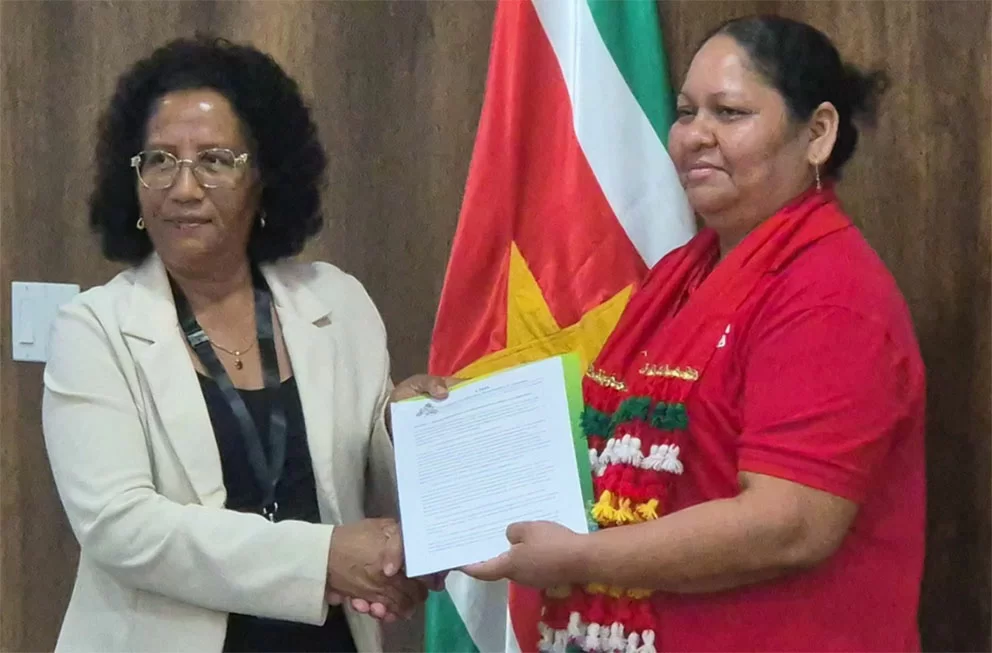
    On May 12, a key leadership appointment was formalized for one of Suriname’s most critical telecommunications regulatory bodies, marking a new chapter in the South American nation’s digital governance efforts. Emanuel Scheek has taken up the post of president-commissioner of the Telecommunicatie Autoriteit Suriname (TAS), during a shareholders’ general meeting held at the Presidential Cabinet.

    The installation ceremony was led by Raymond Landveld, Suriname’s Minister of Transport, Communication and Tourism, who stood in for President Jennifer Simons, who was unable to attend the event. In his remarks at the ceremony, Minister Landveld underscored the outsized regulatory importance TAS holds for Suriname’s fast-evolving telecommunications sector. He noted that both TAS and national telecom provider Telesur rank among the government’s core strategic institutions for the country’s digital ecosystem, emphasizing that TAS carries the formal mandate to oversee operations of Telesur and every other private and public telecommunications company operating across Suriname.

    Beyond routine market oversight, Landveld confirmed that the Surinamese government has tasked TAS with a high-priority additional responsibility: contributing substantially to the drafting and preparation of a landmark new electronic communications law. The new regulatory framework is designed to keep pace with rapid technological advancements reshaping the global and local telecom sector, updating outdated rules to match current industry realities, and TAS will bring its on-the-ground regulatory expertise to shape fit-for-purpose legislation and sector standards.

    In his first public remarks following his appointment, Scheek acknowledged the heavy workload ahead for the agency and his new leadership role, but expressed confidence that collaborative work centered on national interests will deliver tangible progress. “There is a great deal of work waiting to be done. But I am certain that if we work together and put national interest first, we will overcome the challenges ahead,” Scheek told attendees.

    The new TAS chief noted he did not accept the position lightly, saying the immediate coming months will be dedicated to aligning goals with TAS’s governing board, setting clear institutional priorities, and mapping out a strategic path forward. “The goal is for me to contribute my part in my own way, and we will adapt as developments unfold,” he added.

    Scheek also highlighted that he has existing professional ties with multiple members of the TAS board, having collaborated with them on prior initiatives. This existing working relationship, he said, creates a strong foundation to advance the shared goal of strengthening TAS as an independent, effective regulatory authority for Suriname’s telecom sector. “I look forward to a productive collaboration, so that we can deliver strong results and ensure TAS truly lives up to the standard of the authoritative regulatory body it is meant to be,” Scheek said.

  • PNM blasts Lee over HDC ‘chaos’

    PNM blasts Lee over HDC ‘chaos’

    A brewing political storm in Trinidad and Tobago has intensified after the main opposition party, the People’s National Movement (PNM), publicly called for Housing Minister David Lee to step down, citing mounting allegations of mismanagement, lack of accountability and a disturbing attempted bribery scandal tied to the state-run Housing Development Corporation (HDC).

    The controversy ignited following an investigative report published by the *Sunday Express*, penned by journalist Mark Bassant. Bassant revealed that last Thursday, during a meeting on Ariapita Avenue in Woodbrook, an unnamed man claiming to act on behalf of a senior HDC official offered him undisclosed financial compensation to drop the planned investigative story. The man reportedly told Bassant that senior HDC leadership wanted to avoid negative public attention for the agency at this time, and that in exchange for killing the story, he would also provide the reporter with internal documents alleging mismanagement that occurred during the previous PNM administration.

    When contacted by the *Sunday Express* for comment on the allegations over the weekend, Minister Lee distanced himself entirely from the situation, claiming total ignorance of the incident. “I have no idea or information about what is reported in the articles,” Lee said. “I, as minister, don’t get involved in the running of HDC or any State agency under my purview. Also, I don’t get involved in any procurement process!”

    That response has drawn sharp condemnation from former Housing Minister and current PNM spokesperson Camille Robinson-Regis, who launched a scathing attack on Lee in an official statement released Monday. Robinson-Regis argued that Lee’s repeated “I don’t know” responses to growing crises in the housing sector prove he is unfit to hold office, and that he must either take responsibility for the chaos on his watch or resign honorably.

    Robinson-Regis emphasized that the attempted bribery incident is far from an isolated problem. Over the course of the last several months, she said, the Trinidad and Tobago public has watched a steady stream of controversies, confusion and ethically questionable decisions emerge from the housing sector, with Lee consistently appearing unaware, uninformed or completely detached from the operations of his own ministry. She listed a litany of outstanding concerns, including controversial handling of public housing allocations, widespread delays and incomplete construction projects, and persistent confusion over the actual number of finished housing units versus projects that have only broken ground.

    She also highlighted two particularly high-stakes issues currently under scrutiny: the government’s decision to regularize squatters who illegally occupied HDC-owned housing units, and a $3.4 billion Design-Build-Finance public procurement program that is now being formally investigated by the Office of Procurement Regulation. Multiple complaints have been filed about the program, including claims of selective tendering that excludes long-established local contractors, and unreasonably compressed bid deadlines for projects requiring more than $100 million in financing.

    These ongoing issues have fueled growing public concern over transparency, accountability and regulatory oversight across the entire housing sector, Robinson-Regis noted, yet Lee has once again fallen back on a claim of total ignorance. “It raises a serious and troubling question for the people of Trinidad and Tobago—when will the minister ever know what is happening in his ministry?” she said. “If the minister cannot do the job, then he needs to do the honourable thing and just resign.” On behalf of Trinidad and Tobago’s citizens, Robinson-Regis demanded answers: what does Lee actually know about the operations of his ministry, who is actually making key decisions for the housing sector, who is exercising required oversight, and why does the minister consistently only learn about critical controversies after they become public knowledge?

    Robinson-Regis rejected Lee’s attempt to distance himself from responsibility, reminding him that a cabinet minister is not a spectator or a sideline observer. She cited Section 79 of Trinidad and Tobago’s Constitution, which clearly states that a minister assigned to a government department holds responsibility for general direction and control over that department. Ministers are individually accountable for all activities of their portfolio, answerable first to Parliament and ultimately to the people of the country, she said.

    Public office comes with mandatory accountability, Robinson-Regis stressed. Cabinet ministers are tasked with shaping policy, making key decisions, and ensuring optimal management of all human, physical and financial resources allocated to their portfolio. “They cannot enjoy the authority and prestige of office while distancing themselves from controversy whenever serious questions arise,” she said. If Lee is truthful about having no knowledge of the critical issues unfolding in his ministry, she added, the country is forced to confront an even more alarming question: who exactly is running Trinidad and Tobago’s housing sector?