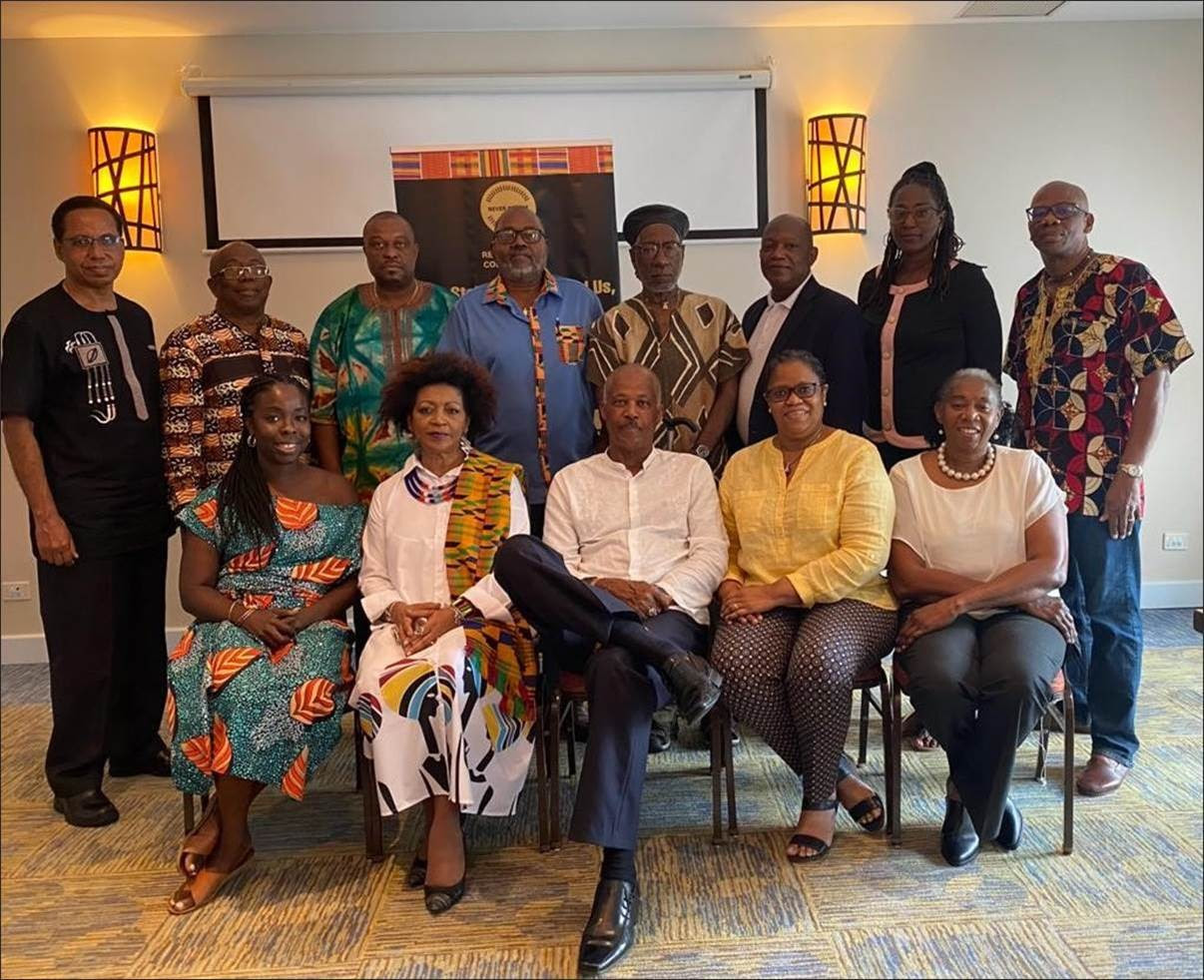
In mid-July 2026, an official delegation from the CARICOM Reparations Commission (CRC) will travel to the United Kingdom, launching a week of high-level advocacy to advance the global cause of reparatory justice for the transatlantic slave trade and centuries of chattel enslavement. The mission, hosted by the Institute of Commonwealth Studies at the University of London’s School of Advanced Study, centers on strengthening cross-border strategic partnerships, expanding public education programs, and deepening civil society alignment around the global reparations agenda.
The delegation brings together the most prominent leaders in the international reparations movement. It is led by CRC Chairman Professor Sir Hilary Beckles, and includes vice chairs Dorbrene O’Marde (Antigua and Barbuda Reparations Support Commission), Eric Phillips (Guyana Reparations Committee), and Professor Verene Shepherd, who also serves as Vice Chair of the UN Committee on the Elimination of Racial Discrimination. Rounding out the delegation are Barbados Ambassador to CARICOM David Comissong and Dr. Ron Daniels, Convenor of the U.S.-based National African Reparations Commission.
This UK visit comes at a watershed moment for the global reparations movement, with a series of landmark institutional developments clearing a path for more aggressive collective action, all ahead of the 2026 Commonwealth Heads of Government Meeting (CHOGM) hosted by Antigua and Barbuda later this year. In March 2026, the UN General Assembly adopted a historic resolution led by Ghana that formally designated the transatlantic trafficking of enslaved Africans and chattel enslavement as the “gravest crime against humanity.” One month later in June, Ghana brought together heads of state, multilateral institution representatives, legal scholars, and civil society leaders at a High-Level Consultative Conference on Reparations in Accra. That gathering was widely described as a “historic turning point for Africans and People of African descent,” producing a shared framework to coordinate global reparatory justice efforts.
Just ahead of the London delegation’s visit, CARICOM heads of government finalized and approved an updated version of the *CARICOM Ten Point Plan for Reparatory Justice: A Manifesto for the Coming Enlightenment*. First adopted in 2014 and last revised in 2018, this new iteration frames reparations as an urgent “global human rights imperative” and integrates decades of new historical research and shifting global political dynamics to strengthen the region’s advocacy.
To ensure transparency and keep global media and stakeholders informed, the CRC has called on journalists to attend an official public briefing scheduled for July 14, 2026, held in Room 261 of University of London’s Senate House. The briefing will also be offered via virtual participation on Zoom, with pre-joined requested 10 minutes ahead of the 2:00 PM BST start time to accommodate attendees across multiple time zones. Access details for virtual attendees are published on CARICOM’s official website.
This visit marks only the second official collective visit by the CRC to the UK, and its full itinerary includes three key engagements beyond the media briefing: a closed-door meeting with CARICOM and African Union high commissioners and ambassadors based in the UK; a public roundtable discussion hosted at the Institute of Commonwealth Studies; and a formal panel presentation at the UK Parliament, organized by MP Bell Ribeiro Addy, chair of the All Party Parliamentary Group on Afrikan Reparations (APPG-AR).
Established at the 34th CARICOM Heads of Government Meeting in 2013, the CRC has spent the last 12 years leading the global revitalization of the reparations movement through consistent advocacy, public education, and scholarly collaboration. Through conferences, symposia, public lectures, and peer-reviewed publications, the commission has worked to expand public understanding of both the historical harms and ongoing intergenerational impacts of more than 300 years of chattel enslavement across the Caribbean. Its collaborative work has generated new research on underdiscussed topics ranging from the foundational role of slavery in the development of modern Western banking to the links between historical enslavement and current high rates of intergenerational trauma and non-communicable diseases like hypertension across Caribbean communities.
The CRC’s UK outreach comes as new polling reveals dramatic gaps in British public knowledge of the country’s role in the transatlantic slave trade, alongside growing public support for reparative action. A 2025 poll of more than 2,000 UK adults, commissioned by The Repair Campaign, found that 85% of respondents had no idea Britain forcibly transported more than 3 million enslaved Africans to Caribbean plantations, and 89% were unaware that chattel slavery operated in the British Caribbean for more than 300 years. Despite these knowledge gaps, support for action is growing: 63% of UK adults now back a formal government apology from Britain to Caribbean nations and the descendants of enslaved people, a 4% increase from 2024 levels. Support for financial reparations also rose 4% year-over-year, reaching 40% of all respondents.
The CRC’s London visit builds on significant progress CARICOM made within the Commonwealth in 2024. At the 2024 CHOGM held in Apia, Samoa, Commonwealth heads of government signed on to communiqué language that formally recognized transatlantic slavery and the trafficking of enslaved Africans as crimes against humanity, and agreed that “the time has come for a meaningful, truthful and respectful conversation towards forging a common future based on equity.”
All updates from the delegation’s London mission will be published in real time on the official CARICOM website and shared via the commission’s public WhatsApp community. Full information on the CRC and the newly updated Ten Point Plan is available via the official links published on CARICOM’s online platforms. The visit underscores the commission’s long-standing commitment to building global alliances, advancing demands for historical accountability, and advancing the socio-economic transformation needed to redress the harms of chattel slavery.