分类: politics

  • “Bring Back the Millions” Protest Targets Briceño Government

    “Bring Back the Millions” Protest Targets Briceño Government

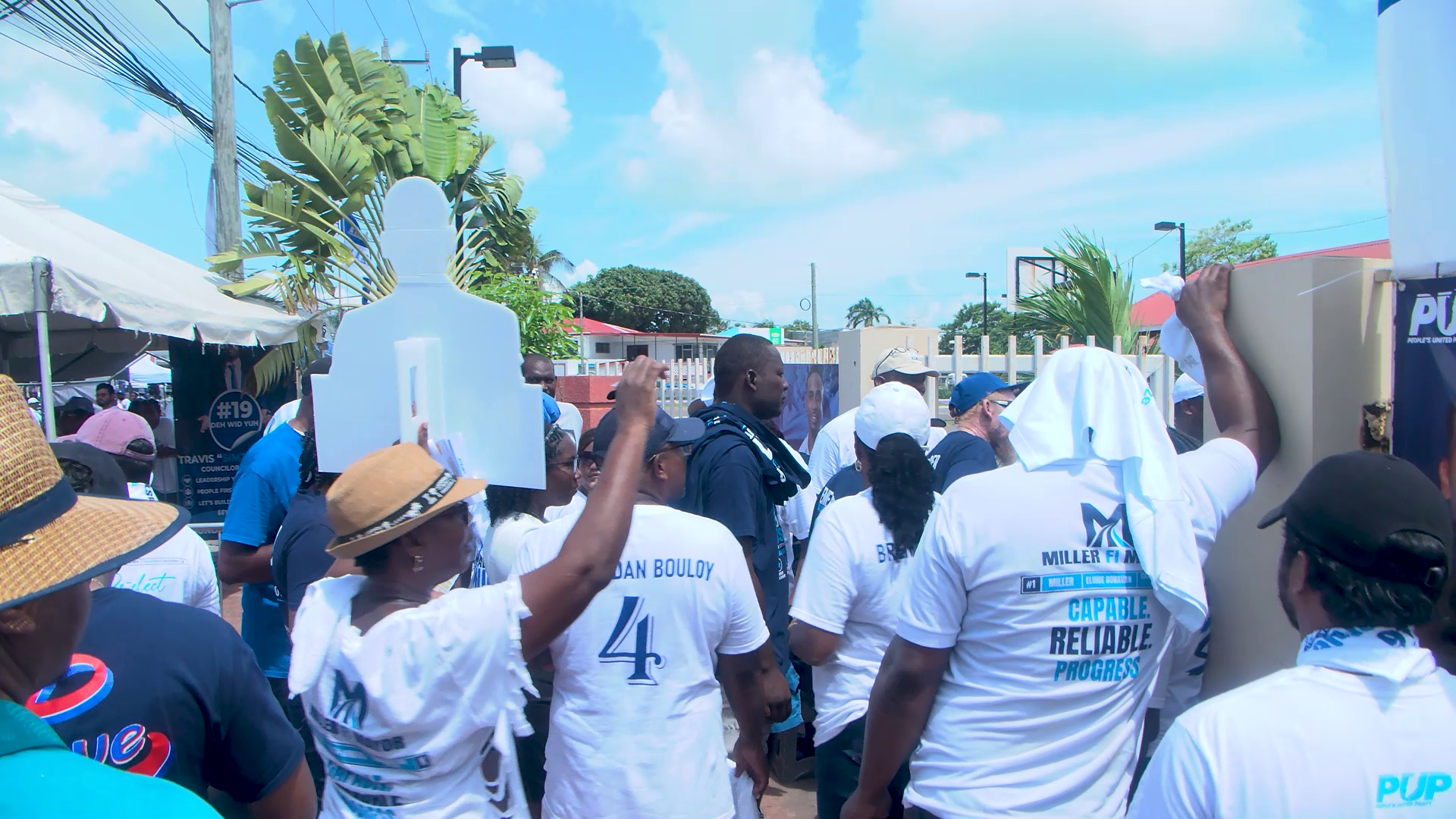
    On the morning of July 10, 2026, hundreds of Belizeans gathered in the streets of Belize City for a coordinated anti-corruption demonstration aimed directly at the sitting Briceño government, capping weeks of growing public anger over an alleged procurement scandal tied to the country’s Ministry of Defense. Organized by the center-right United Democratic Party (UDP), the nation’s main parliamentary opposition, the “Bring Back the Millions” protest drew a mixed crowd of partisan activists and unaffiliated ordinary citizens, concluding its march at the city’s central Battlefield Park after hours of peaceful demonstrations.

    The first major point of contention emerging from the demonstration is the conflicting claims over how many people participated. Opposition Leader Tracy Panton, the public face of the protest, has put the official crowd count at approximately 2,000 attendees, a figure backed by what she says is an official police situational report. However, independent informal estimates have placed the actual number closer to 500, turning the attendance size into an early point of political sparring between the opposition and ruling People’s United Party (PUP).

    Beyond the crowd size dispute, protesters delivered a unified condemnation of what they call “corruption on steroids,” linking their demonstration directly to the ongoing Ministry of Defense procurement controversy that has already seen several senior officials placed on administrative leave. Marchers carried hand-painted signs with slogans in English, Creole, and Spanish echoing public frustration, including “Bring Back the Millions,” “Wi Tiaad ah di corruption” (translated: We are tired of corruption), “Todos Robamos” (translated: We are all robbed), and “Tax Payers Money Stolen.”

    Key opposition and civil society figures used the demonstration to amplify their demands for full accountability, rejecting the ruling government’s incremental response of placing implicated officials on paid administrative leave. Andrew Baird, former president of the KHMHA Workers Union, who joined the protest carrying the UDP’s official banner, argued that half-measures are insufficient to address public anger. “I think more decisive action needs to be taken by the prime minister. We cannot be satisfied with people to be placed on paid leave, and expect that the public would be okay with such action,” Baird stated. He called for cabinet minister Oscar Mira, who has already been benched pending investigation, to be removed from his ministerial post entirely until the probe is completed and any wrongdoing is confirmed or ruled out.

    Not all attendees were affiliated with the UDP, highlighting that public anger over corruption crosses party lines. One unaffiliated protester emphasized that all Belizeans have a responsibility to exercise their democratic right to demand accountability, calling out the ruling PUP for failing to deliver on pre-election good governance promises: “Every Belizean supposed to come out and exercise their right. I want to tell the Government, stop cover unu sins with the PUDP sins. When you were on the opposition you had solution for everything, now stand up and complete what you promised.”

    Thus far, the demonstration has remained entirely peaceful, a outcome that protest organizer Brian “Yellow Man” Audinett credits to intentional crowd management that kept UDP supporters in line. “It is a peaceful protest today. There is no need for violence,” Audinett said. However, he issued a stark warning to the Briceño administration: if the government fails to address protesters’ demands and crack down on alleged corruption, future demonstrations will be far more disruptive. “The time will come if the PUP refuse to listen. At the next protest, if the PUP refuse to give up on these corrupt hustling and thing, we will create havoc and we will shut down the country.”

    Closing out the day of action, Panton issued a clear final warning to the Briceño government, arguing that the administration owes its power to a public mandate that it has now betrayed. “They would be foolish not to listen to the voices of the people. Because they did not get there on their own. It was the people who gave them a mandate, and they have betrayed the mandate of the people, and the people have had enough,” Panton said. Panton also claimed that the details of the procurement scandal that have already been made public are just the tip of the iceberg, suggesting more allegations of graft will emerge in the coming weeks.

  • Security Committee Declares Exercise STRONGHOLD a Success, Thanks Public for Cooperation

    Security Committee Declares Exercise STRONGHOLD a Success, Thanks Public for Cooperation

    On July 10, 2026, the Royal Police Force of Antigua and Barbuda’s Office of Strategic Communications issued an official statement on behalf of the Commonwealth Heads of Government Meeting (CHOGM) National Security Planning Committee (NSPC), celebrating the successful conclusion of the three-day national security readiness drill codenamed Exercise STRONGHOLD, which ran from July 8 to 10.

    The NSPC opened its statement by extending sincere gratitude to the entire population of Antigua and Barbuda for their steady patience, active cooperation, and clear understanding throughout the duration of the large-scale drill. Organizers confirmed that the exercise fully met all pre-set strategic and operational objectives, marking a critical milestone in the island nation’s preparations to host the 2026 CHOGM later this year.

    As a core component of Antigua and Barbuda’s pre-summit security planning, Exercise STRONGHOLD was designed to put the country’s existing national security protocols, emergency response frameworks, inter-agency coordination mechanisms, communication infrastructure, and large-scale international event management capacity to a rigorous real-world test. Over the three-day period, hundreds of security personnel and emergency responders carried out a full suite of coordinated operational activities across key strategic locations across Antigua. These drills covered everything from official convoy movement simulations, enhanced traffic management protocols, venue security screening and access control, to structured mock emergency response scenarios that challenged teams to adapt to rapidly evolving situations.

    Beyond validating existing plans, the exercise provided an unparalleled opportunity for stakeholders to identify gaps in current readiness and refine operational workflows ahead of the summit, ensuring that visiting heads of government, international delegates, and all summit attendees will be hosted in a safe and secure environment. Organizers emphasized that every operational goal set for the exercise was achieved, highlighting the exceptional level of professionalism, discipline, and unwavering commitment shown by all participating agencies and personnel.

    The seamless coordination and collaborative execution of responsibilities across teams underscored the growing strength of partnerships between Antigua and Barbuda’s national security forces, emergency response services, and cross-government supporting agencies. The NSPC also extended specific commendation to the country’s business community and multiple government ministries and departments, whose flexibility and proactive collaboration with planning teams were central to the drill’s smooth execution.

    Special recognition was also given to local media outlets, whose responsible, accurate coverage and timely dissemination of exercise updates kept the public fully informed, reducing confusion and supporting the seamless rollout of all operational activities. The committee further acknowledged the contributions of dozens of additional public agencies, administrative departments, and community volunteers, whose behind-the-scenes work underpinned the exercise’s overall success.

    Above all, the NSPC emphasized that the exercise could not have been completed without the buy-in of ordinary residents, motorists, and local business owners, many of whom were disrupted by temporary road closures, traffic diversions, and restricted access to certain areas during the drill. The committee noted that the public’s patience, cooperation, and civic-minded commitment to hosting a successful summit were the most critical factors enabling the safe and efficient execution of all exercise activities.

    With preparations for 2026 CHOGM continuing through the remainder of the year, the NSPC says it looks forward to sustained collaboration and support from the public, private sector, government stakeholders, and all community partners as additional readiness exercises and planning activities are rolled out in the coming months. Reaffirming the country’s commitment to delivering a seamless, secure, and world-class summit, the committee noted that through intentional partnership, rigorous advance planning, and consistent preparedness, Antigua and Barbuda is on track to host a successful 2026 CHOGM and showcase the nation’s capacity to deliver a landmark international event.

  • CCJ Clarifies Appeal Rules in Belize Electoral Boundaries Case

    CCJ Clarifies Appeal Rules in Belize Electoral Boundaries Case

    On July 10, 2026, the Caribbean Court of Justice (CCJ) published its full reasoned decision for a March ruling that clarifies critical appeal procedures in Belize’s long-running electoral boundaries dispute, siding with claimant Jeremy Enriquez and his legal counsel, Senior Counsel Anand Ramlogan, on two out of three linked legal applications.

    The core of the underlying dispute dates back to Enriquez’s formal legal challenge against the Government of Belize, which accuses the national government of failing to revise the country’s electoral district boundaries as required by recommendations put forward by the official Elections and Boundaries Commission. The three applications brought before the CCJ addressed distinct procedural questions arising from earlier lower court proceedings: the legal validity of a filed notice of appeal, a personal wasted costs order issued against Ramlogan, and an ex parte order granted by the High Court trial judge.

    In its first key holding, the CCJ overturned a decision by Belize’s Court of Appeal that had struck out Enriquez’s notice of appeal as legally invalid. The regional court clarified that under Belize’s Senior Courts Act, the window to file an appeal opens as soon as a lower court order is signed, entered, or formally perfected, and completion of any one of these steps meets the requirement to activate the appeal timeline. The CCJ further confirmed that the notice of appeal in question was fully valid, noting that even if it had been filed prematurely, the Court of Appeal already held the authority to correct the procedural error rather than dismissing the appeal entirely.

    Second, the CCJ vacated the personal wasted costs order that required Ramlogan to cover 50% of the Attorney General’s legal fees connected to an interim relief application. The court emphasized that a wasted costs order against a legal practitioner is not merely a standard adjustment of litigation costs, but a disciplinary action targeting a lawyer’s professional conduct. For this reason, the CCJ ruled that no extra permission to appeal the order was required. The judgment also highlighted that the High Court judge violated multiple procedural requirements when issuing the order: the judge acted on their own initiative without clearly stating the legal grounds for the penalty, failed to give Ramlogan an opportunity to defend his conduct at a required show-cause hearing, and did not provide the mandatory seven-day advance notice outlined in Belize’s Civil Procedure Rules.

    On the third application, which challenged the High Court’s ex parte order that restricted publication of certain case details and mandated Ramlogan to turn over additional information, the CCJ ruled against Enriquez. The court found that the claimant had skipped a required procedural step: under Belize’s legal framework, parties must first ask the High Court itself to vary or cancel an ex parte order before filing an appeal. The CCJ concluded that the proposed appeal had no reasonable prospect of succeeding, and therefore dismissed the application.

    As a final outcome, the CCJ granted special leave to appeal and upheld the first two successful appeals, ordering that Enriquez and Ramlogan receive compensation for their legal costs in both the CCJ proceedings and the earlier Belize Court of Appeal hearing. For the dismissed third application, costs were awarded to the Attorney General and the Elections and Boundaries Commission.

  • Mexico Seeks U.S. Probe Into ICE Deaths of 17 Citizens

    Mexico Seeks U.S. Probe Into ICE Deaths of 17 Citizens

    Tensions between Mexico and the United States have reached a new boiling point over the deaths of 17 Mexican nationals connected to U.S. Immigration and Customs Enforcement (ICE) operations during Donald Trump’s second presidential term, with Mexico announcing a major escalation of legal and diplomatic action Thursday.

    Mexican Foreign Minister Roberto Velasco confirmed that the Mexican government will not limit its response to diplomatic protests. Instead, it will file formal criminal complaints directly with U.S. prosecutors, demanding full criminal probes into the circumstances of each death. Of the 17 fatalities, 14 occurred while the Mexican citizens were held in ICE custody, and the remaining three happened during active ICE enforcement operations, according to official Mexican government data.

    Beyond criminal complaints, Velasco announced that Mexico is preparing cease-and-desist letters to private companies that run the immigration detention centers where the in-custody deaths took place. The legal notifications are framed as a first step that could open the door to future civil litigation against the private facility operators.

    This tougher approach follows 11 previous diplomatic protest notes Mexico submitted to Washington over the deaths. To date, U.S. authorities have only stated that internal investigations into the incidents remain ongoing, a response that has failed to de-escalate Mexican anger.

    The most recent incident that amplified frictions is the killing of 52-year-old Lorenzo Salgado Araujo earlier this week. The Mexican national was shot and killed by an ICE officer during a traffic stop in Houston. U.S. authorities defend the officer’s actions, claiming Salgado resisted arrest and tried to run the officer over with his vehicle, forcing the officer to open fire in self-defense. But Salgado’s family has vehemently rejected this official narrative. They describe Salgado as a dedicated construction worker who had resided in the U.S. for nearly 35 years, saying he panicked when he noticed unmarked vehicles following him, and did not pose a lethal threat to the officer.

    Mexican President Claudia Sheinbaum has made clear her administration’s position: the deaths point to potential human rights violations, and in some instances, may amount to homicide. “We cannot turn a blind eye to the Mexicans who have died in ICE operations or who were detained in these detention centers operated by private companies contracted by ICE,” Sheinbaum stated.

    Mexico is also planning to bring the issue before global and regional human rights oversight bodies, including the Inter-American Commission on Human Rights and the Office of the United Nations High Commissioner for Human Rights, to push for international scrutiny of the cases.

    So far, U.S. institutions have offered mixed responses. The U.S. Department of Homeland Security has defended ICE’s standard operating procedures, arguing that immigrant detainees are granted due process and adequate medical and basic care, and that all officers receive training to only use the minimum level of force required in any given situation. The U.S. Department of Justice has not issued any public statement regarding Mexico’s planned legal action as of Thursday.

    Mexico’s decision to pursue direct legal action adds a new formal layer to long-simmering concerns over U.S. immigration enforcement practices, and analysts warn it could put significant additional strain on bilateral relations between the two neighboring countries as the investigations move forward.

  • Northern Aid The main social assistance programs available in the Dominican Republic

    Northern Aid The main social assistance programs available in the Dominican Republic

    In a recent televised exclusive interview with CDN, Leah Francis Campos, the United States Ambassador to the Dominican Republic, has painted a rosy picture of the current state of bilateral relations between the two nations, asserting that the partnership is experiencing one of its strongest periods in modern history. According to Campos, this positive momentum is anchored in deepening collaboration across three core areas: cross-border security initiatives, expanding bilateral trade, and alignment on shared democratic principles.

    During the conversation, the ambassador commended what she described as a robust, healthy ecosystem of freedom of expression within the Dominican Republic, while adding a note of caution that this fundamental right must always be exercised with a sense of social and civic responsibility. She also spoke warmly of the Dominican people, praising their renowned hospitality and deep national patriotism, drawing a parallel between those traits and the shared cultural values of the American public. Campos further defended the priority that the Trump administration placed on engagement with the Latin American and Caribbean region during its tenure.

    However, several of Campos’ comments on high-stakes sensitive issues have ignited widespread public discourse and division across the country. Key contentious announcements include new bilateral agreements to facilitate the orderly deportation of irregular migrants through coordinated channels, the decision to close the local USAID mission over allegations of deviating from its core program objectives, and a public proposal to deploy United Nations peacekeeping forces to stabilize the crisis-stricken neighboring nation of Haiti.

    Beyond policy issues, Campos also issued a public warning about growing Chinese geopolitical and economic influence across the Caribbean region, and publicly voiced support for traditional Christian values and the right to life. She was careful to clarify, however, that she has no intention of interfering in internal domestic political and social debates taking place within the Dominican Republic. On security cooperation, she reaffirmed that transnational drug trafficking remains a top critical national security threat for the United States, and restated Washington’s ongoing commitment to joint training programs and collaborative counter-narcotics operations with Dominican law enforcement and security agencies.

    Public and political reactions to the ambassador’s comments emerged rapidly, revealing deep divides in perspective. Pro-government sectors in the Dominican Republic have welcomed the renewed commitment to bilateral security cooperation and alignment on democratic governance, praising the strengthened partnership. Conversely, critical voices have raised sharp questions over the ambassador’s stance on Haiti and the closure of the USAID mission, warning that shutting down the aid program could have severe negative consequences for vulnerable, low-income communities that rely on USAID support. A number of independent analysts have also framed Campos’ comments on social values and national sovereignty as a subtle attempt to shape the direction of domestic social policy debates in the country, raising concerns about external overreach.

  • Briceño Convenes Special Cabinet Meeting on Procurement Amid Heightened Scrutiny

    Briceño Convenes Special Cabinet Meeting on Procurement Amid Heightened Scrutiny

    Amid growing public and political scrutiny over questionable procurement procedures linked to the Ministries of Home Affairs and Defence, Belize Prime Minister John Briceño has convened an extraordinary gathering of the full Cabinet and all government chief executive officers to address systemic gaps in the country’s public procurement system.

    The one-of-a-kind strategic session was not a routine procedural check-in: it was crafted as a targeted intervention to deep-dive into three core pillars of public procurement: globally recognized best practices, binding legislative obligations, and persistent vulnerabilities that have repeatedly been flagged in official government audits. Unlike standard cabinet discussions that focus on policy approval, this meeting centered on reflection and course correction, bringing together the nation’s top fiscal oversight bodies to lay out clear findings for senior leadership.

    Three top oversight officials led the substantive presentations: the Financial Secretary, the Contractor General, and the Auditor General. Together, they covered critical topics spanning from the central fiscal role that transparent, well-managed procurement plays in protecting public funds to the most common irregularities that creep into public contracting processes. They also unpacked the core principle of value-for-money, which ensures taxpayer investments deliver maximum public benefit, and walked attendees through recurring audit results that paint a consistent picture of weak internal controls across nearly all levels of government entities. No department was singled out as an exception in the broader overview of systemic challenges.

    Central to the day’s deliberations was a detailed review of Belize’s existing regulatory framework for procurement, including the landmark Finance and Audit Reform Act (FARA), formal Stores Orders, and all associated subsidiary regulations. Meeting participants collaboratively explored actionable adjustments to boost compliance across all government agencies, cut unnecessary red tape that slows down project delivery, and eliminate bureaucratic bottlenecks that often drive unexpected cost overruns or create openings for accidental or intentional procedural violations.

    By the close of the session, the gathering produced two immediate, tangible outcomes to move reform forward. First, Prime Minister Briceño issued a formal directive ordering the Ministries of Finance and Public Service to partner with the independent Offices of the Contractor General and Auditor General to build and roll out a mandatory, ongoing professional development program. This training will be required not just for frontline procurement staff, but also for cabinet ministers, chief executive officers, and senior financial officers, ensuring that even the highest levels of government leadership understand and follow proper procurement protocols.

    Second, the full Cabinet signed off on the creation of a dedicated technical working group, which will be tasked with conducting a comprehensive review of Belize’s entire body of procurement legislation. The group’s core mandate will be to draft targeted amendments that strengthen the country’s legal framework, closing loopholes that currently enable corrupt or improper procurement practices and making enforcement clearer and more robust.

    In a formal statement issued after the meeting, the Prime Minister’s Office emphasized that this special session is not a one-off fix. Moving forward, similar high-level oversight and review sessions will be held on a regular basis across the entire public service. The overarching goal of these ongoing efforts is to foster more informed, responsible decision-making, drive continuous institutional improvement across government, and ultimately deliver more efficient, accountable public services to the people of Belize.

  • CHOGM Security Exercise Successfully Concluded

    CHOGM Security Exercise Successfully Concluded

    Authorities in Antigua and Barbuda have enacted temporary movement restrictions across multiple districts of the nation’s capital, St John’s, as part of stepped-up security preparations ahead of the 2026 Commonwealth Heads of Government Meeting (CHOGM).

    The large-scale security simulation launched at 6:00 a.m. local time on Friday, and is scheduled to wrap up by noon the same day. Within the formally designated ‘red zone,’ strict limits have been placed on both vehicle and pedestrian movement throughout the exercise window.

    A number of critical government facilities and adjacent compounds are closed to all entry for the duration of the drill. These include major public institutions: the Antigua Public Utilities Authority (APUA), Medical Benefits Scheme, Social Security Administration, Treasury Department, Civil Registry, Statistics Department, PDV Caribe, and Government House. Additionally, all vehicle traffic has been banned from the eastern stretch of Corn Alley for the length of the simulation.

    Local law enforcement has issued public advisories noting that all affected sites will remain closed to staff, visitors, and members of the general public until the exercise concludes at midday. Police have also urged all travelers to steer clear of the restricted zone and plan alternate travel routes to avoid unnecessary delays or conflicts with security personnel.

    Officials confirmed the drill is designed to test the full spectrum of the country’s security frameworks, evaluating operational readiness, emergency response protocols, and inter-agency coordination ahead of the high-profile summit, which will bring dozens of Commonwealth heads of state and hundreds of official delegates to Antigua and Barbuda in 2026.

  • Hughes Claims US Dictated Deportee Arrangement, Says Antigua Did Not Negotiate

    Hughes Claims US Dictated Deportee Arrangement, Says Antigua Did Not Negotiate

    A heated political debate has erupted in Antigua and Barbuda over a proposed third-country deportee agreement with the United States, after opposition Senator Chester Hughes launched a scathing attack on the incumbent Gaston Browne administration, accusing leaders of accepting Washington’s terms outright rather than engaging in genuine bilateral negotiations.

    Hughes laid out his criticisms during a United Progressive Party (UPP) town hall gathering focused on the government’s recently released White Paper detailing the agreement, pushing back hard against the ruling party’s framing of the process as a collaborative negotiation between the two nations.

    According to Hughes, the Gaston Browne cabinet finalized a Memorandum of Understanding (MOU) with U.S. authorities months ago but has yet to provide any transparent, detailed explanation of the deal’s terms to Antigua and Barbuda citizens. The senator claimed that the agreement was not negotiated at all, but rather dictated to the local government by U.S. officials. “America did not negotiate with any of these governments. America told them, ‘You’re going to take these persons.’ And that’s it,” Hughes stated during the meeting.

    A core point of Hughes’ criticism centers on the Prime Minister’s shifting public statements about the scope of the agreement, specifically the number of deportees that Antigua and Barbuda will be required to accept. Hughes said the Prime Minister has offered conflicting figures: first claiming the country would take no more than 10 people, then revising that number to 16 in recent remarks, before suggesting the country would accept whatever number of people arrives on any single deportation flight from the U.S. Hughes called these inconsistent claims “fanciful wordplay” meant to confuse the public.

    The senator also highlighted a series of critical unanswered questions about the practical implementation of the deal, most notably where newly arrived deportees will be housed and how they will be integrated or managed once in the country. He questioned whether the government plans to place deportees in existing residential communities, underutilized state-owned housing, or another location entirely, noting that no official guidance has been shared with the public to date.

    Another key grievance raised by Hughes is the administration’s decision to sign the MOU before launching any public consultation process. He emphasized that the White Paper outlining the agreement was only published after the deal was already finalized, meaning citizens had no opportunity to weigh in on a policy that will have significant social and economic impacts on the country.

    Beyond domestic criticism of the Browne administration, Hughes also lashed out at Caribbean leaders more broadly, arguing that regional governments should have negotiated a unified collective position with the United States on the deportee issue, rather than negotiating separate deals individually. He echoed the Prime Minister’s own acknowledgement that regional collective action would have been preferable, but argued that the current crop of regional leaders are too arrogant and self-interested to prioritize the needs of their populations over political expediency.

    Looking ahead, Hughes called on members of Antigua and Barbuda’s Parliament to use the upcoming debate on the government’s White Paper to hold the Browne administration accountable for its handling of the agreement. He urged lawmakers to demand clear, direct answers to outstanding questions on behalf of the Antiguan and Barbudan public, challenging the executive’s opaque approach to the controversial deal.

  • Former Police Says Antigua Not Equipped to Handle Third-Country Deportees

    Former Police Says Antigua Not Equipped to Handle Third-Country Deportees

    A retired senior law enforcement leader in Antigua and Barbuda has sounded a stark alarm over the Caribbean nation’s ability to absorb a planned influx of third-country deportees sent from the United States, warning that the arrangement would deepen already severe public safety and policing challenges the country currently faces.

    Speaking at a United Progressive Party town hall focused on the government’s recently released policy White Paper, former Assistant Commissioner of Police Nuffield Burnette framed the proposal as a high-risk gamble that the country can ill afford. With the island nation’s law enforcement apparatus already stretched thin by persistent domestic crime, Burnette questioned why local leaders would voluntarily agree to take on unplanned additional responsibilities that would further strain institutional capacity.

    “If our law enforcement agencies are already failing to keep up with day-to-day domestic crime, what will happen when we add this new layer of demands laid out in the White Paper?” Burnette said during the event. “We need to make our position clear to the country’s leadership while we still have the chance: we do not support this potentially damaging proposal as it stands.”

    Burnette also pushed back against the common narrative that Antigua and Barbuda ranks among the safest nations in the Caribbean. He argued that official assessments that rely almost exclusively on homicide rates paint an incomplete and misleading picture of the country’s true crime landscape, erasing the widespread impact of violent home invasions and other offenses that leave long-term psychological trauma on survivors.

    To illustrate his point, he referenced a string of fatal home invasion attacks carried out by young offenders years earlier, saying these incidents prove the country’s public safety challenges are far more severe than official cross-border comparisons often acknowledge. “No crime leaves a deeper trauma than a home invasion,” Burnette explained. “Our homes are supposed to be our safe sanctuaries, our castles. When intruders break into that space and commit acts like sexual assault within those four walls, that means we have a very serious crisis that cannot be ignored.”

    The retired senior officer also cast doubt on the accuracy of the government’s official crime statistics, noting that a large share of criminal incidents are never reported to police, and that officials have been accused of downplaying the true scale of crime to project a more positive image. “I made a deliberate choice not to bring any official statistics with me tonight,” Burnette said. “The numbers are not reliable. People do not report every crime they experience, and what the government releases to the public rarely matches the actual reality of crime across the country.”

    Burnette went on to criticize the performance of Antigua and Barbuda’s Royal Police Force, pointing to systemic issues including slow emergency response times, gaps in leadership, and a steady decline in overall operational effectiveness. “We are not properly managing the current crime situation in Antigua and Barbuda,” he said. “Police often fail to respond to calls in a timely manner, sometimes do not show up at all, and more often than not their response is unacceptably delayed.”

    Against this already challenging backdrop, Burnette argued that accepting third-country deportees would introduce a host of new complexities that the country’s institutions simply do not have the capacity to address. He noted that the government’s White Paper covers a broad range of people including asylum seekers, refugees, and stateless persons, but Antigua and Barbuda currently has no dedicated legal framework in place to manage the arrival and integration of these groups.

    “Our existing laws have absolutely no provisions to accommodate any of these populations,” Burnette said. “That is the most alarming detail that stuck with me when I reviewed the proposal.”

    Burnette concluded by calling for a full, open national debate on the plan before any binding decisions are made, emphasizing that the proposal carries sweeping long-term implications for the country’s public safety and the future of its law enforcement system.

  • 25 Vincentians graduate from Taiwan universities

    25 Vincentians graduate from Taiwan universities

    A new cohort of students from St. Vincent and the Grenadines (SVG) has marked a major academic milestone, with at least 25 SVG nationals graduating from Taiwanese universities in 2026, while 36 more have secured scholarships to begin their degree programs in Taiwan this coming fall.

    The vast majority of this year’s graduates received full financial support through scholarship programs administered by the Taiwanese government, specifically overseen by Taiwan’s Ministry of Foreign Affairs and the Taiwan International Cooperation and Development Fund. Out of the 2026 graduating cohort, only one student earned his degree through a university athletic basketball scholarship, and a further two students self-funded their entire higher education in Taiwan.

    Breaking down the academic achievements of government scholarship recipients, 13 of the 22 funded students completed undergraduate first degrees, seven earned master’s degrees, and two walked away with PhDs: one in aquatic immunology and genetics, and the other in business administration. The broader group of undergraduate and graduate graduates earned credentials across a diverse array of academic disciplines, spanning mechanical and electrical engineering, international relations and diplomacy, computer science, education, nursing, psychology, forestry and natural resources, biomedical imaging, and culture and creative industries.

    Most of the 2026 graduates chose to be included in the annual SVG embassy graduation yearbook, which marks its sixth edition this year. In a formal address to the graduating class, SVG Prime Minister Godwin Friday framed the graduates’ success as the outcome of a deliberate, life-changing decision they made years prior to pursue higher education in Taiwan.

    “Take time to appreciate the importance of that decision. It has led you to this moment,” Friday said. The prime minister emphasized that the graduates’ achievements serve as a tangible reflection of the value of 45 years of unbroken diplomatic relations between SVG and Taiwan.

    “Over the decades, our partnership has remained strong, rooted in mutual respect and shared investment in education, development, and progress. Your success today is a living testament to the benefits of that enduring friendship,” he added. Friday urged graduates to bring their newly acquired skills, fresh perspectives, and energy back home to contribute to SVG’s national development, while encouraging them to represent their country with pride no matter where their future careers take them.

    “… no matter where your path leads you, fly the flag of St. Vincent and the Grenadines proudly and continue to do your best. Carry forward the same determination that has brought you thus far, remain steadfast in your commitment to community, and never give up on your dreams,” he said.

    SVG’s Ambassador to Taiwan, Kenton X. Chance, also extended congratulations to the graduates, drawing on his own experience as a Taiwan scholarship student between 2006 and 2012 to validate the unique challenges they overcame during their studies.

    “I know that being so far from home, in an unfamiliar country, where the language is so different, requires a kind of fortitude that those who have never experienced it might never fully understand. … You have stayed the course, you have overcome the obstacles, and you are graduating,” Chance noted.

    Academic exchanges through scholarship programs have been a core pillar of SVG-Taiwan relations for decades: since 2004 alone, approximately 321 Vincentian students have received Taiwanese government scholarships to pursue university-level study in the country. For the 2026 intake, 36 students have already accepted their awards, with some set to complete a one-year Mandarin language preparatory program before starting their formal degree coursework. The SVG Embassy in Taipei is currently preparing to welcome the incoming cohort and has committed to supporting students to make their transition to living and studying in Taiwan as seamless as possible, Chance confirmed.