分类: politics

  • US wants St Lucia to ban nationals from studying medicine in Cuba, says PM

    US wants St Lucia to ban nationals from studying medicine in Cuba, says PM

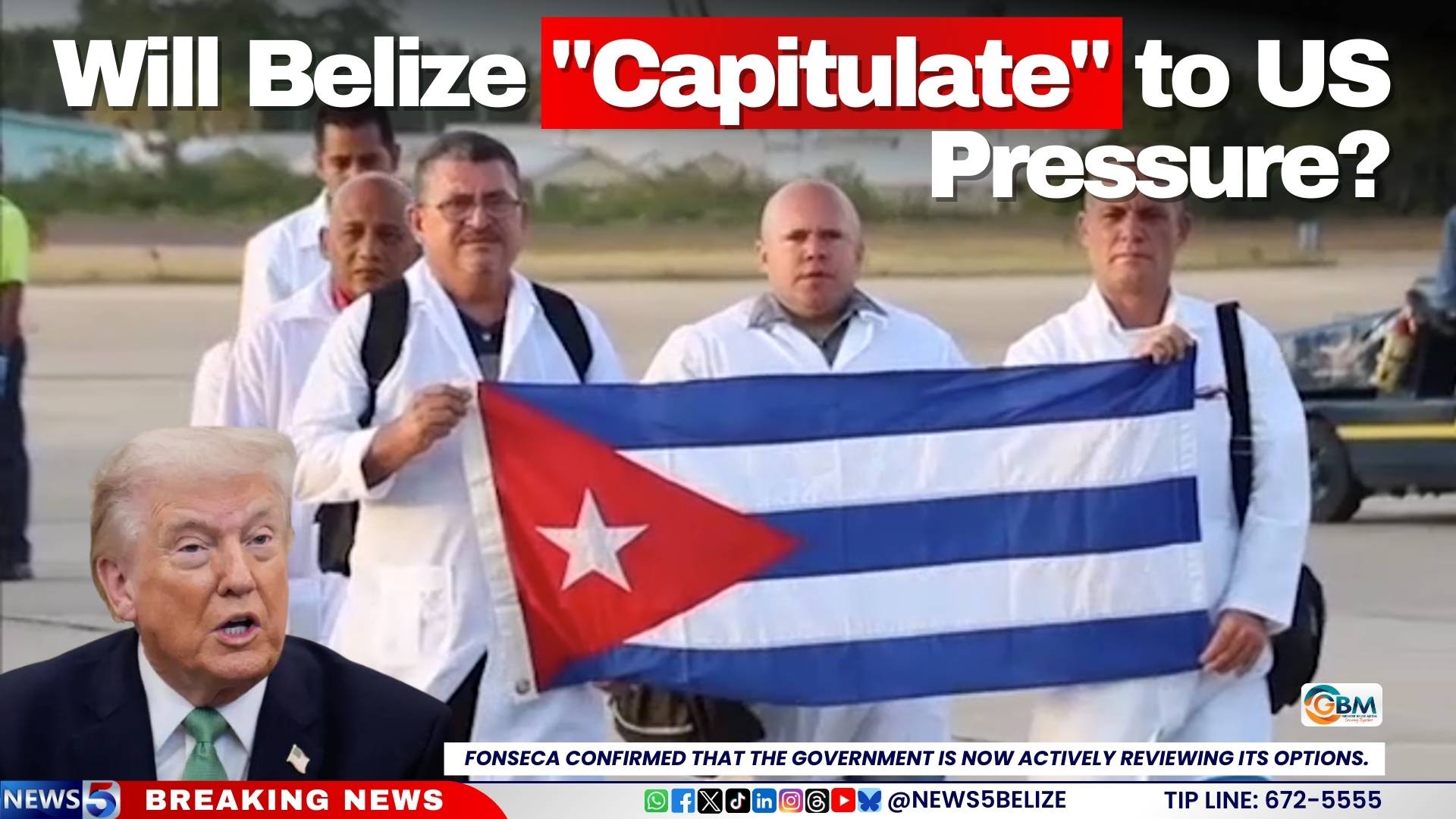
    CASTRIES, St. Lucia – Prime Minister Phillip J. Pierre has revealed that the United States government has formally requested that St. Lucia cease sending its nationals to Cuba for medical training, creating a significant diplomatic and public health challenge for the Caribbean nation. The announcement was made during the second World Congress on Racial and Ethnic Health Disparities held in St. Lucia over the weekend.

    Prime Minister Pierre characterized the US directive as a ‘major problem,’ emphasizing that a substantial portion of the country’s medical professionals received their education in Cuba. ‘Many of our doctors got trained in Cuba and now the great United States has said we can’t do that any longer,’ Pierre stated, adding that the policy also affects Cuban medical personnel working in St. Lucia.

    The Prime Minister identified geopolitical pressures from Washington as the primary driver behind this unprecedented policy shift, which he warned would exacerbate strains on the nation’s healthcare infrastructure. Pierre appealed to the diaspora and local innovation initiatives to help mitigate the impact of these developing challenges.

    This diplomatic development follows recent statements from the US Embassy in Barbados, which has intensified its criticism of Cuba’s medical missions program. US officials have condemned what they characterize as a system of ‘coercion and abuse,’ alleging that Cuban medical workers face withheld wages, confiscated passports, forced family separation, and excessive working hours under dangerous conditions.

    Washington has further escalated its rhetoric, describing the program as ‘forced labor’ that treats medical professionals ‘as commodities rather than human beings.’ The US government has committed to exposing what it terms injustices within Cuba’s medical export scheme and called for its termination.

    Despite these challenges, Congress Chair Sir Cato Laurencin, a US-based orthopedic surgeon and academic, suggested that St. Lucia possesses alternative options to address its medical training needs, though specific alternatives were not detailed in the proceedings.

  • Bill, Hillary Clinton to testify in US House Epstein probe

    Bill, Hillary Clinton to testify in US House Epstein probe

    WASHINGTON—Former President Bill Clinton and former Secretary of State Hillary Clinton will provide testimony before a congressional committee investigating the handling of investigations into Jeffrey Epstein, according to a spokesperson for the former first couple. This development comes as House Republicans had been preparing contempt resolutions against the Clintons for initially refusing to comply with subpoenas.

    The bipartisan House investigation examines how authorities previously handled cases involving the convicted sex offender, whose extensive connections with global business and political figures have created ongoing political ramifications. The Clintons had previously challenged the validity of the subpoenas, arguing they lacked clear legislative purpose, and instead submitted sworn written statements regarding their limited associations with Epstein.

    Angel Urena, spokesperson for Bill Clinton, stated on social media platform X: ‘The former President and former Secretary of State will be there. They look forward to setting a precedent that applies to everyone.’

    The Epstein case continues to generate significant political tensions in Washington, with Democrats alleging the investigation is being weaponized to target political opponents of former President Donald Trump—who himself had documented associations with Epstein but has not been called to testify. Trump had previously attempted to block the disclosure of investigative files related to Epstein for several months.

    In their submitted statements, Bill Clinton acknowledged using Epstein’s aircraft for Clinton Foundation humanitarian missions during the early 2000s but denied visiting Epstein’s private island. Hillary Clinton stated she had no meaningful interactions with Epstein and never traveled on his aircraft or to his properties.

    The resolution of this testimony dispute prevents a potential Democratic Party rift that might have emerged during contempt proceedings, as some Democrats believe no one should be immune from scrutiny regarding Epstein’s crimes, while others viewed the Republican effort as primarily partisan.

    The Justice Department recently released what it described as the final batch of documents related to the Epstein investigation, though the political implications continue to reverberate through Washington.

  • Deputy Mayor of Mahdia resigns, former Mayor denies ministerial interference

    Deputy Mayor of Mahdia resigns, former Mayor denies ministerial interference

    The municipal governance of Mahdia, the capital of Guyana’s Region Eight (Potaro-Siparuni), has been plunged into a leadership crisis following the resignation of its Deputy Mayor, Akita John. Her decision comes merely days after Mayor Eslyn Romascindo-Hussain tendered her own resignation, creating a significant vacuum in the city’s administration.

    In an official resignation letter addressed to Local Government Minister Priya Manickchand, Ms. John cited overwhelming personal reasons for her departure, effective February 7, 2026. She articulated that the immense demands of the office had severely encroached upon her personal life, making it unsustainable to continue. “After careful reflection, I have determined that the demands of the position have become increasingly challenging and are taking away significantly from my personal life,” she stated, emphasizing her desire to prioritize her well-being and personal responsibilities.

    This move mirrors that of her predecessor, Mayor Romascindo-Hussain, who stepped down on February 1, 2026. The former Mayor also attributed her resignation to the detrimental impact the role had on her health, describing her three-year tenure as “very challenging” and detrimental to her physical and mental stability in a letter to Ministers Manickchand and Junior Minister Pauline Sukhai.

    The consecutive resignations had fueled widespread speculation of potential political interference, particularly targeting Junior Minister Sukhai. However, in a decisive public statement, former Mayor Romascindo-Hussain vehemently denied any such influence. She dispelled the rumors as “false information” and reaffirmed her unwavering commitment to the ruling People’s Progressive Party Civic (PPPC). She explicitly commended Minister Sukhai’s support, stating, “I have always been supported by the Hon. Minister… and have never had any interference when it came to the work of the council.”

    Both former officials expressed their continued support for the development and progress of Mahdia amidst this period of governmental transition.

  • PCP plans lower pension age for public, higher threshold for MPs

    PCP plans lower pension age for public, higher threshold for MPs

    In a significant policy announcement, New National Party leader Kemar Stuart has unveiled the People’s Coalition for Progress (PCP) plan to radically reform Barbados’ retirement system and tax structure. Speaking at a Saturday night rally in Baxter’s Road, Stuart declared the coalition’s intention to reverse pension age requirements by lowering the eligibility threshold for citizens while increasing it for parliamentarians.

    The proposed legislation would raise the pension age for Members of Parliament from 50 to 57 years, while simultaneously reducing the retirement age for the general public to 62. Stuart characterized this as a fundamental rebalancing toward equitable retirement policies. ‘We will be increasing the politician’s pension age from 50 to 57 as our first order of business,’ Stuart told supporters. ‘Meanwhile, we will be lowering the people’s age to 62 to ensure ordinary Barbadians enjoy the benefits of their National Insurance Scheme contributions.’

    The PCP leader sharply criticized current government policies that he claimed were pushing retirement ages toward 70-72 years, emphasizing his party’s commitment to allowing citizens to ‘enjoy your retirement, your life, your hard work.’ Stuart invoked the principle of fairness with the declaration: ‘If it’s good for the goose, it’s good for the gander.’

    In a related economic proposal, Stuart challenged Central Bank Governor Kevin Greenidge’s warnings against reducing the 17.5% Value Added Tax (VAT). Dismissing Greenidge’s concerns about economic stability as ‘a lie,’ Stuart revealed that VAT revenues between April and December 2025 reached $860 million, with projections exceeding $1 billion annually. He argued that a 2.5% reduction from an estimated $1.6 billion revenue pool—approximately $64 million yearly—would not adversely affect the national economy.

    Stuart positioned VAT reform as a cornerstone of the PCP’s economic agenda, asserting that the current revenue strength provides sufficient cushion for targeted tax relief aimed at addressing cost of living pressures faced by Barbadian citizens.

  • Costa Ricanen naar de stembus

    Costa Ricanen naar de stembus

    Costa Ricans headed to the polls on Sunday for a pivotal general election that could determine the nation’s approach to escalating drug-related violence that has shattered its reputation as a peaceful tourist haven. Pre-election surveys positioned Laura Fernández of the Sovereign People’s Party (PPSO) as the clear frontrunner with just over 40% support, potentially securing an outright victory and avoiding an April 5 runoff.

    Fernández, protégé and former chief of staff to incumbent President Rodrigo Cháves, has campaigned on continuing her mentor’s hardline security policies and anti-establishment messaging. Her closest competitors in the 20-candidate field include centrist economist Alvaro Ramos, representing Costa Rica’s oldest political party, and progressive coalition candidate Claudia Dobles, a former first lady whose husband presided from 2018-2022. Both trail significantly in polls but remain potential contenders for a second round should Fernández fall short of the 40% threshold.

    The election occurs against a backdrop of record homicide rates and multiple corruption investigations that have tested public confidence. Despite these challenges, President Cháves maintains a 58% approval rating according to University of Costa Rica’s CIEP polls.

    Fernández has additionally requested voters grant her party 40 seats in the 57-seat legislative assembly, which would provide the supermajority needed to implement constitutional reforms. The current administration holds only eight seats and attributes legislative gridlock to this minority status.

    Approximately one-quarter of the 3.7 million eligible voters remain undecided, with the largest undecided bloc comprising young adults (18-34) from coastal provinces Guanacaste, Puntarenas, and Limón—regions hardest hit by drug violence.

    Polls opened at 6:00 AM local time and closed at 6:00 PM, with initial results expected before midnight. Although consecutive reelection is prohibited in Costa Rica, Fernández has pledged to include Cháves in her administration, positioning her candidacy as continuity of his populist mandate.

  • GECOM Commissioners refuse to discuss their future with Opposition Leader

    GECOM Commissioners refuse to discuss their future with Opposition Leader

    In a significant political development, three election commissioners aligned with the A Partnership for National Unity/People’s National Congress Reform (APNU/PNCR) have formally declined Opposition Leader Azruddin Mohamed’s request to discuss their potential resignation from the Guyana Elections Commission (GECOM). Commissioners Vincent Alexander, Charles Corbin, and Desmond Trotman conveyed their position through a joint letter dated January 31, 2026, indicating their willingness to engage on other electoral matters while explicitly excluding discussions about their status from the agenda.

    The commissioners acknowledged Mohamed’s role as Opposition Leader but firmly stated that their positions remain “a sine qua non subject to legislative or judicial intervention,” effectively rejecting calls for their voluntary departure. This response comes amid public statements from Mohamed’s We Invest in Nationhood (WIN) party, which has argued that GECOM’s composition should reflect the current configuration of the National Assembly, where WIN holds 16 seats compared to APNU’s 12.

    The political standoff highlights deeper tensions within Guyana’s electoral governance framework. PNCR-APNU Leader Aubrey Norton criticized Mohamed’s approach, suggesting that proper protocol would involve consulting with his party first regarding any potential commissioner changes. Norton further asserted that GECOM appointments are permanent unless modified through legislative processes.

    Adding complexity to the situation, Norton and APNU parliamentary leader Dr. Terrence Campbell have accused Mohamed of overlooking what they perceive as biased voting patterns by GECOM Chairman Retired Justice Claudette Singh, who they claim consistently sides with ruling party-nominated commissioners. The controversy unfolds against the backdrop of ongoing debates about electoral reforms, particularly regarding the implementation of digitalized biometric systems for voter registration and verification—a measure that Chairman Singh has cautioned must balance technological advancement with constitutional compliance.

  • PM says young architects and designers should be given public works contracts on St. John’s City project

    PM says young architects and designers should be given public works contracts on St. John’s City project

    In a significant policy shift for urban development, the Prime Minister has formally advocated for prioritizing young architects and designers in awarding contracts for the St. John’s City project. This directive calls for a deliberate inclusion of emerging professionals in public works, marking a strategic move to infuse fresh perspectives and innovative design philosophies into national infrastructure.

    The announcement underscores a commitment to generational change within the construction and design sectors. By creating pathways for younger talent to lead major government-funded projects, the initiative aims to address longstanding industry barriers that often favor established firms. The St. John’s redevelopment, a flagship urban renewal program, is positioned to become a model for this new approach, potentially setting a precedent for future public works contracts nationwide.

    Government sources indicate this policy is part of a broader strategy to stimulate economic innovation and job creation for young professionals. The move has been framed not merely as an economic stimulus but as an investment in the nation’s creative capital, ensuring that public spaces reflect contemporary design thinking and sustainable practices championed by the newer generation of architects.

    While specific implementation details remain under development, the Prime Minister’s office confirmed that relevant ministries are drafting guidelines to operationalize this vision. The criteria are expected to balance experience with innovation, ensuring project viability while providing unprecedented opportunities for young firms to demonstrate their capabilities on a public stage.

  • COMMENTARY: Price Reduction Promise & Scandal

    COMMENTARY: Price Reduction Promise & Scandal

    In a striking case of political deflection, the Antigua and Barbuda government faces mounting criticism for erroneously blaming retailers for delayed price reductions that stem directly from administrative failures. The controversy centers on the implementation of CARICOM-mandated tariff reductions on essential food items that were supposed to provide consumer relief.

    The timeline reveals systemic governmental delays: While CARICOM members agreed to rate reductions effective July 1, 2025, Antigua’s Cabinet only approved the measure on October 8, 2025, with implementation scheduled for January 1, 2026. Surprisingly, officials then announced in December 2025 that reductions were immediately effective—creating an impossible situation for retailers who had already paid full duties on Christmas season inventory.

    Retail experts explain the practical realities: Businesses cannot immediately adjust prices on existing stock without incurring significant losses, particularly when 40% duties were already paid. The process requires selling existing inventory, updating point-of-sale systems, and importing new stock under revised tariffs—a process that realistically extends into February 2026 for most establishments.

    Compounding the problem, the government excluded numerous essential items from reductions including chicken, pork, tuna, pasta, and various juices. The administration’s rushed December implementation during peak business season further demonstrated poor understanding of retail operations.

    Rather than acknowledging these structural issues, government officials have universally condemned retailers as price gougers—a narrative that ignores the administration’s five-month delay in implementing CARICOM agreements that neighboring countries adopted in mid-2025. This pattern mirrors previous policy implementation failures, including the bungled minimum wage revision.

    The current impasse reflects deeper governmental dysfunction in Antigua and Barbuda, where blame deflection appears institutionalized rather than addressing administrative deficiencies that truly delay consumer relief.

  • Justice : Bar Association President Patrick Pierre-Louis asks the CPT to be held accountable

    Justice : Bar Association President Patrick Pierre-Louis asks the CPT to be held accountable

    In a strongly worded official statement dated January 28, 2026, the Port-au-Prince Bar Association has issued a stark condemnation of Haiti’s transitional leadership. Under the presidency of Patrick Pierre-Louis, the legal body has called for immediate accountability from members of the Presidential Transitional Council, citing catastrophic failures in strengthening the nation’s justice system during 19 months of exceptional transitional governance.

    The Association’s declaration highlights multiple systemic failures, particularly emphasizing the unresolved assassination of President Monferrier Dorval after sixty-five months of investigation. The statement further condemns the absence of effective judicial and security policies to combat terrorist acts perpetrated by armed gangs against vulnerable populations.

    Expressing profound concern about the deterioration of rule of law institutions, the Bar Association warned of impending crises within the criminal justice system. These deficiencies are expected to manifest when addressing numerous legal cases involving investigations, judicial decisions, and enforcement of judgments related to offenses committed during the transition period.

    The statement specifically references the exhaustion of the April 3, 2024 Political Agreement by the February 7, 2026 deadline, noting the grave dangers this situation poses to governmental structures and national sovereignty. The Association expressed outrage at public displays of petty squabbles among highest state authorities, which they characterize as being driven by clan or individual biases rather than national concerns.

    Despite these criticisms, the Bar Association emphasized the necessity of preserving general interest through constructive dialogue among the nation’s vital forces. The statement serves as both a reminder of the Political Agreement that provided normative basis for the Council’s legitimacy and an invitation for leadership to account for their governance exercises, enabling the nation to learn from this critical transitional experience.

  • Venezuela kondigt amnestie aan voor politieke gevangenen

    Venezuela kondigt amnestie aan voor politieke gevangenen

    Venezuela’s interim President Delcy Rodríguez has unveiled a sweeping amnesty initiative that could secure freedom for hundreds of political detainees, marking the most significant conciliatory gesture since assuming power on January 3. The announcement came during a high-profile ceremony attended by judicial authorities, cabinet ministers, military leadership, and government officials.

    The proposed legislation, which will receive expedited consideration by the government-controlled National Assembly, aims to address long-standing demands from US-backed opposition groups. Rodríguez characterized the measure as a vital mechanism to ‘heal the wounds of political confrontations’ and restore justice and social cohesion within the nation.

    In a parallel reform, Rodríguez declared the imminent closure of Helicoide prison in Caracas—a facility repeatedly documented for torture and human rights violations. The notorious detention center will be converted into a recreational complex serving both police personnel and local communities.

    The announcement unfolded amid mixed reactions. While government officials presided over the ceremony, including some accused by former detainees of involvement in prison abuses, relatives of political prisoners gathered outside correctional facilities livestreaming the proceedings and demanding immediate releases.

    Opposition leader and Nobel Prize recipient María Corina Machado expressed skepticism regarding the government’s sincerity, suggesting the move resulted from international pressure. She emphasized that political detainees have endured incarceration ranging from one month to 23 years under what she described as a ‘cruel repressive apparatus.’

    Human rights organization Foro Penal estimates 711 individuals remain imprisoned for political activities in Venezuela, with 183 already convicted. Notable cases include former parliamentarian Freddy Superlano, attorney Perkins Rocha, and former governor Juan Pablo Guanipa, a key ally of Machado.

    Critical details remain unclear as the government has not released specific eligibility criteria for the amnesty program. Rodríguez indicated the law would cover political violence offenses from 1999 to present, excluding those convicted of murder, drug trafficking, corruption, or human rights violations.

    The US State Department confirmed Friday that all known American detainees in Venezuela have been released and announced the arrival of new chief diplomat Laura Dogu to Caracas on Saturday.

    Despite earlier promises of releases, advocacy groups Provea and Foro Penal criticized the process for lacking transparency and proceeding too slowly. They emphasized that detainees are imprisoned unjustly for exercising internationally recognized rights protected by Venezuela’s constitution.

    Outside another Caracas prison, Edward Ocariz—who himself endured over five months’ detention following the 2024 presidential elections—joined families in demanding faster action. ‘We Venezuelans have suffered enough injustices and humiliations,’ Ocariz stated. ‘No one deserves this, yet the guilty continue governing Venezuela.’