分类: politics

  • Young slams Govt over Pt Lisas plant shutdowns

    Young slams Govt over Pt Lisas plant shutdowns

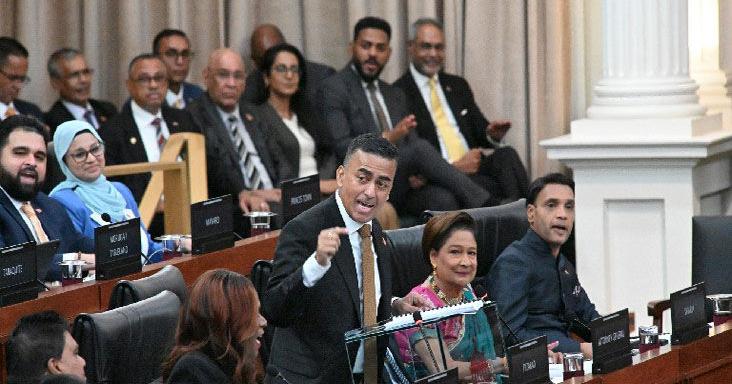
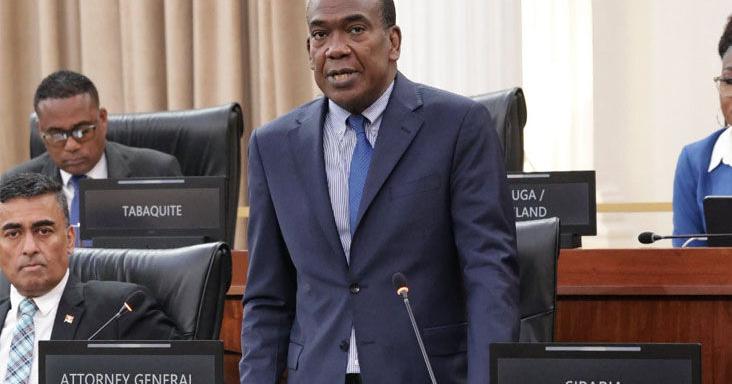
    A sharp political backlash has hit the ruling administration of Trinidad and Tobago over its stewardship of the country’s critical energy industry, with former energy minister Stuart Young leveling sweeping accusations of incompetence, policy missteps and regulatory negligence that he warns threaten thousands of jobs, critical foreign exchange revenue and long-term investor confidence. Young made the allegations public in a detailed Facebook post published over the weekend, targeting both Prime Minister Kamla Persad-Bissesar and current Energy Minister Dr Roodal Moonilal for a series of missteps that have already disrupted operations at the country’s key Point Lisas Industrial Estate, where major global petrochemical players operate.

    At the core of Young’s criticism is the government’s revised natural gas allocation policy, which he argues has diverted critical gas supplies away from established ammonia and methanol producers at Point Lisas to Atlantic LNG, a move driven purely by the short-term appeal of elevated global LNG prices. Young calls this decision a short-sighted and fundamentally flawed policy that has already forced operational shutdowns at a nitrogen plant run by Nutrien, one of the world’s largest fertiliser manufacturers, and prompted major methanol producer Methanex to issue explicit warnings that it could be forced to shutter its operations next if the current policy framework remains in place.

    Young emphasized that the current administration’s mismanagement unfolded in less than a year in office, tying the industrial disruptions directly to what he describes as the government’s fundamental ignorance of how the energy sector operates, as well as eroded business confidence among international investors that have long anchored Trinidad and Tobago’s industrial energy economy. “In less than a year Kamla Persad-Bissesar’s incompetence and mismanagement of the energy sector has led to the shut-down of the plants of one of the largest global fertiliser companies Nutrien, at Pt Lisas, and now one of the largest global methanol producers Methanex is signalling that they may follow suit,” Young wrote in his post.

    Beyond the gas allocation controversy, Young also took aim at Moonilal over the delayed response to an offshore oil spill in the Gulf of Paria first detected on May 1. He accused the minister of failing to detect and disclose the spill for nine days, noting that the incident was only publicly confirmed by the Trinidad and Tobago government after Venezuelan authorities exposed the spill. “It is clear that Moonilal has no say—in fact, sadly, as Minister of Energy he did not even know the oil assets under his stewardship were responsible for an oil spill on May 1 and it took the Venezuelans exposing the spill for the government to tell us today, May 10 (9 days later), that there was an offshore oil spill. Total incompetence or dishonesty,” Young said.

    Young also raised serious legal questions about the leadership of the National Gas Company (NGC), the state-owned entity responsible for managing the country’s gas supplies, arguing that the board and senior management will face fiduciary legal scrutiny over the controversial policy shifts that have triggered the industrial shutdowns. “Furthermore, the board at NGC has serious legal questions to answer as in a few short months under their tenure major petroleum chemical companies at Pt Lisas have shut down and are indicating further shut downs which are due to the change in gas allocation policies at NGC. These decisions will be subject to legal fiduciary scrutiny of the board and management at NGC,” he added.

    Closing his statement, Young left a provocative question for both the administration and the public of Trinidad and Tobago, challenging the government’s record on one of the country’s most economically vital sectors: “So once again Trinidad and Tobago, who exactly is winning?” Young warned that if the current policy course is not reversed, the full consequences will be felt across the national economy: permanent job losses at Point Lisas, permanent reductions in critical foreign exchange earnings, collapse of local service companies that support the petrochemical sector, and a lasting drought of foreign direct investment in the country’s energy industry.

  • ‘Don’t mash up your family for me’ — PM

    ‘Don’t mash up your family for me’ — PM

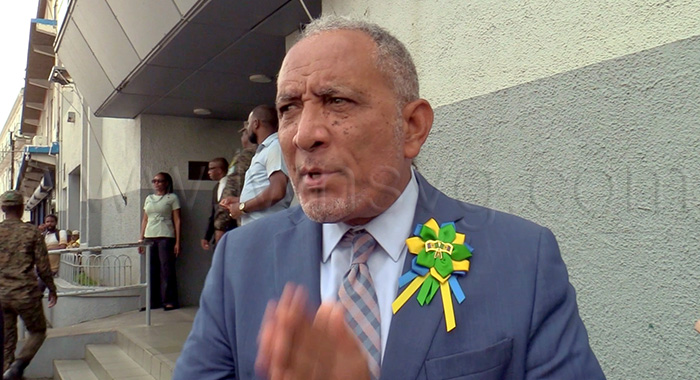
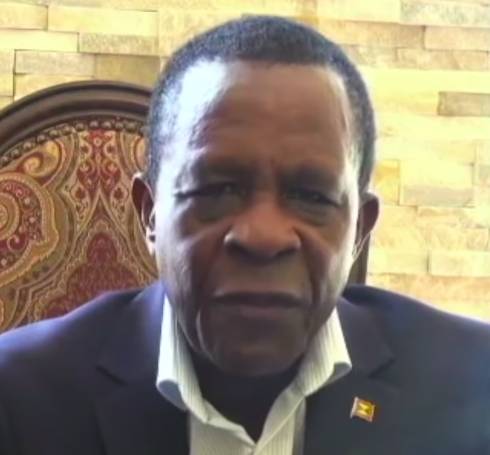
    In a recent wide-ranging radio interview on NBC Radio focused primarily on the planned National Development Bank, St. Vincent and the Grenadines Prime Minister Godwin Friday used the closing segment of the broadcast to deliver a heartfelt Mother’s Day greeting and a unexpected, deeply personal appeal to the nation’s people. Friday’s core message was clear: political differences, even unwavering support for him and his ruling administration, should never be allowed to fracture family relationships. For the prime minister, personal and intergenerational family ties must always take precedence over partisan political loyalties.

    Opening his informal closing remarks, Friday offered warm holiday wishes to maternal figures across the country, saying, “Mothers are the most precious people on God’s earth. This is truth. I want to wish all mothers a Happy Mother’s Day. I want to wish you a happy mother’s year.”

    From there, he expanded his reflection to cover broader questions of family life, directing particular guidance to younger generations of Vincentians. He pushed young people to prioritize their parents and close kin over partisan disputes that have become increasingly common in modern political discourse.

    “I would say to young people in particular, … value and cherish your mother, but your parents as well, and in general,” Friday said. “I always tell people I know you love me and so forth, and you campaign and so on, but don’t mash up your family for me. Make sure that you stay close to your parents and your children and so forth, your cousins, your uncles and that. Build that relationship.”

    To ground his appeal in personal experience, Friday opened up about a recent loss that reshaped his perspective on life and conflict. He recounted attending the sudden funeral of one of his own cousins, a moment that drove home the extreme fragility and brevity of human life. He noted that too often, people invest time and energy into holding grudges, building political enmities, and planning retaliation against those they disagree with — investments that ultimately mean nothing when life ends unexpectedly.

    “I was at a funeral not so long ago, a cousin of mine passed suddenly, and it dawned on me how fragile life is, and how sometimes we make all these plans and we form all these enmities and we want to get back at this person and so forth. And then what happens?” he said. Through this anecdote, he emphasized the ultimate futility of holding personal and political grudges that erode the bonds that matter most.

    Closing his reflection, Friday urged all Vincentians to reframe how they spend their limited time. “So I say to people, you have very little time and as the older you get, the less there is. Use it to do good. That’s it.”

  • Trump verwerpt Iraanse vredesvoorstellen; conflict en spanningen in Golfregio blijven hoog

    Trump verwerpt Iraanse vredesvoorstellen; conflict en spanningen in Golfregio blijven hoog

    After 10 weeks of open conflict between the United States and Iran, hopes for a swift diplomatic resolution have been dashed, leaving regional security and global energy markets on edge. On Sunday, former President Donald Trump flatly rejected Iran’s counterproposal to a U.S.-drafted peace framework, extending a standoff that has already inflicted widespread damage across the Middle East and disrupted one of the world’s most critical energy chokepoints.

    The clash, which erupted in late February, has caused extensive harm to civilian and infrastructure across Iran and Lebanon, brought most commercial shipping through the Strait of Hormuz to a near-standstill, and pushed global energy prices sharply higher. The 21-mile waterway, which carried roughly one-fifth of the world’s total oil supply before the outbreak of hostilities, remains the conflict’s most globally impactful flashpoint.

    Iran tabled its counteroffer to the U.S. proposal earlier last week, on Wednesday. The Iranian plan centers on an immediate end to all hostilities across every front of the conflict, with specific priority given to de-escalation in Lebanon, and guarantees for unimpeded commercial navigation through the blockaded Strait of Hormuz. Key demands in the proposal include war damage reparations from the U.S., formal international recognition of Iran’s territorial sovereignty over the Strait, full lifting of U.S. economic blockades and long-running sanctions on Tehran, and an end to the U.S. ban on Iranian crude oil exports.

    Within hours of the proposal’s public release, Trump rejected the plan outright via social media, writing simply: “I do not like it – COMPLETELY UNACCEPTABLE.” Markets reacted instantly: global benchmark crude prices jumped $3 per barrel within minutes of the announcement, as traders priced in prolonged disruption to energy supplies.

    The original U.S. peace framework had called for an immediate ceasefire as a first step, with negotiations on thorny core disputes including Iran’s nuclear program to follow. According to anonymous sources familiar with the discussions, Iran has already signaled willingness to compromise on the nuclear front, offering to dilute most of its stockpile of highly enriched uranium and transfer the remaining supply to a neutral third country for safekeeping. Pakistan, which has served as the primary neutral mediator between Washington and Tehran, transmitted Iran’s full peace proposal to U.S. officials following its completion.

    Despite a month-old ceasefire that had brought several days of relative calm to the region, hostile drone activity was detected over multiple Gulf Cooperation Council states on Sunday, a stark reminder that the risk of renewed escalation remains acute. Even amid the standoff, small signs of limited de-escalation emerged this week: for the first time since the conflict began, a Qatari Energy-operated liquefied natural gas carrier, the Al Kharaitiyat, completed a safe transit of the Strait of Hormuz en route to Pakistan’s Port Qasim. Iran authorized the passage as a gesture of goodwill to Pakistan and Qatar, both of which have acted as mediators in the peace talks. Separately, Iran’s semi-official Tasnim News Agency reported Sunday that a Panamanian-flagged bulk carrier, which had been turned away when it attempted to transit the Strait on May 4, was finally permitted to pass through a corridor designated by Iranian military forces.

    Diplomatic pressure for a resolution is mounting as Trump prepares for an upcoming visit to China, as the ongoing conflict has already triggered a widespread global energy crunch that threatens to undermine fragile growth in the world economy. On Sunday, Trump acknowledged in a televised address that while Iran has suffered heavy military losses, it has not yet been fully defeated and hostilities are far from over. Israeli Prime Minister Benjamin Netanyahu echoed that assessment, noting that “additional work is required” to neutralize Iran’s nuclear program and ballistic missile program, adding that while diplomacy remains the preferred path forward, a military option remains on the table.

    For its part, Iran has shown no willingness to back down on its core demands. Iranian President Masoud Pezeshkian reiterated Sunday via social media that Iran “will never bend to the enemy” and will defend its national interests with unwavering resolve. In recent days, violence has actually intensified around the Strait of Hormuz even amid the ceasefire: there have been multiple reported incidents of intercepted drones over the United Arab Emirates, a drone attack on a cargo vessel in Qatari territorial waters, and active anti-aircraft operations in Kuwait. Fighting also continues unabated in southern Lebanon between Israeli forces and Iran-backed Hezbollah militias, despite a U.S.-brokered ceasefire reached on April 16. New peace talks between Israeli and Lebanese delegations are scheduled to kick off in Washington on May 14.

    Internationally, the Trump administration faces a lack of broad support for a unilateral military mission to reopen the Strait of Hormuz without a full peace agreement, with NATO allies uniformly hesitant to join such an operation. Domestically, Trump also faces growing pressure from opposition Democratic lawmakers, who are pushing legislation to force an immediate end to U.S. involvement in the conflict. Senate Armed Services Committee ranking member Jack Reed, the panel’s top Democrat, issued a scathing rebuke of the administration’s handling of the crisis Sunday, saying: “This situation has only been made worse by Trump’s own choices. Now he is desperately scrambling to find a way out.”

  • Haiti : Dismissal of the Director General of the Ministry for the Status of Women

    Haiti : Dismissal of the Director General of the Ministry for the Status of Women

    A leadership shakeup at Haiti’s Ministry for the Status of Women and Women’s Rights (MCFDF) has ignited widespread backlash from women’s advocacy groups across the country, after a veteran female senior official was ousted from the top administrative post and replaced by a male interim predecessor.

    The official removed from the role of Director General is Sandy François, a career public servant with 28 years of institutional experience at the ministry. François was first appointed to the director general position in July 2024 by former MCFDF Minister Marie Françoise Suzán, building on her decades of work advancing women’s rights within Haitian government structures.

    Taking her place is Hémanex Gonzague Désir, who previously filled the role on an interim basis for 18 months prior to François’ 2024 appointment. The decision to appoint a man to lead the government body dedicated exclusively to advancing women’s status and rights has drawn fierce condemnation from dozens of Haitian feminist organizations. Prominent groups including Platfòm Fanm Angaje pou Ayiti and Nègès Mawon were among the 14+ advocacy groups that released an official joint statement denouncing the move on May 9, 2026.

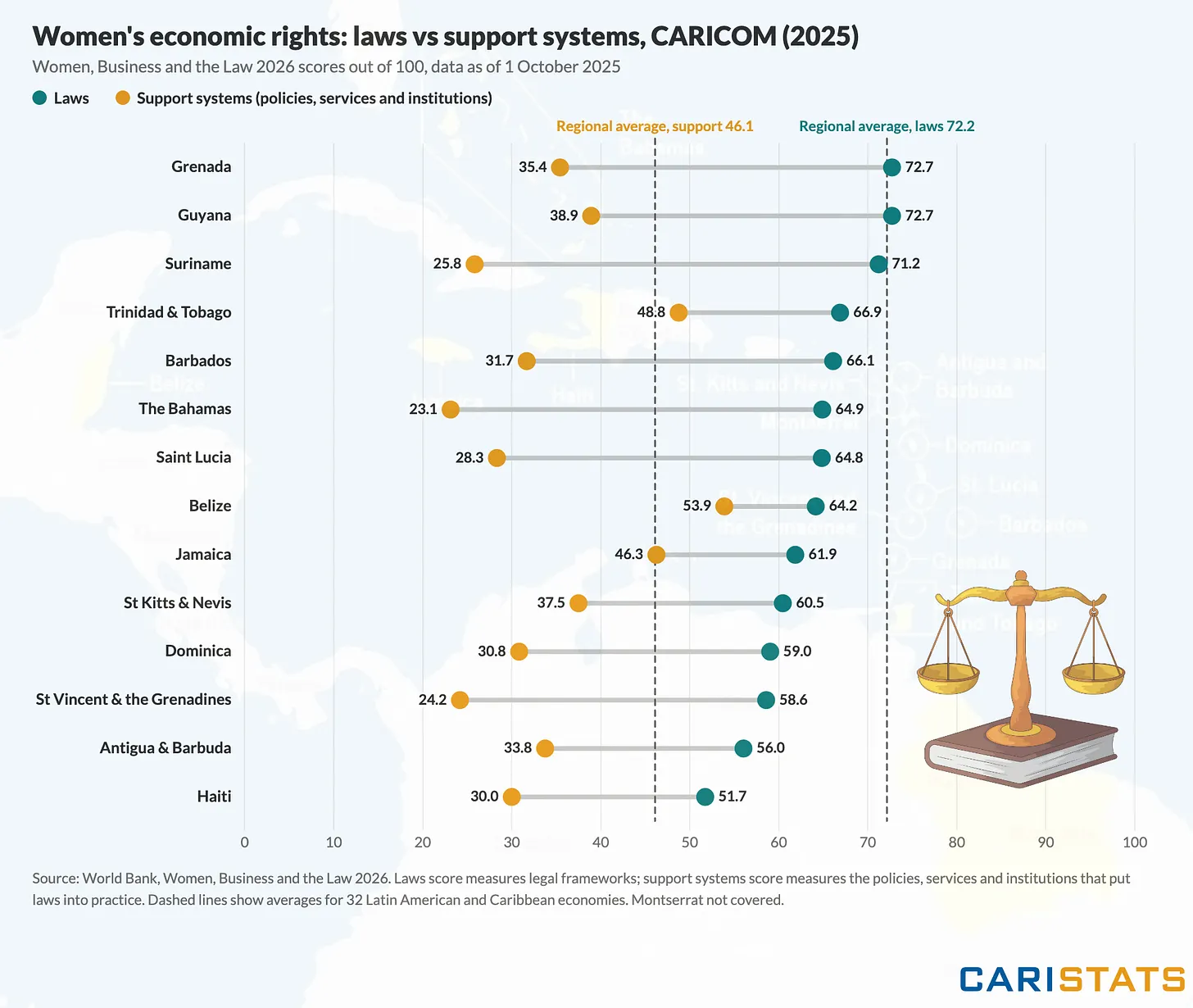
    In the statement, the coalition of rights groups argued that the personnel change represents a major step backward for gender parity in Haiti’s senior government ranks. The coalition emphasized that the reshuffle leaves Haitian women holding just 3 of the 18 available Director General positions across all national ministries — a figure that falls drastically short of both the 30% minimum gender quota for civil service leadership enshrined in the Haitian Constitution and the country’s constitutional guarantee of full gender equality.

    The personnel shift is part of a broader government-wide restructuring under Prime Minister Alix Didier Fils-Aimé, which has seen Director General positions replaced across multiple portfolios, including the Ministry of National Education and the Ministry of the Interior. To date, current MCFDF Minister Pedrica Saint-Jean has not released any public explanation for François’ dismissal, leaving the coalition of advocates to question the government’s motives.

    Critics argue that the unannounced removal of a widely respected female leader from the ministry tasked with protecting women’s rights exposes deep systemic patriarchy within Haiti’s governing institutions, with many suggesting the decision may be rooted in political motivations rather than institutional or performance concerns. The controversy has renewed pressure on the Fils-Aimé administration to address long-running gaps in gender representation across all levels of Haitian government.

  • Chinese premier congratulates Antigua and Barbuda PM on re-election

    Chinese premier congratulates Antigua and Barbuda PM on re-election

    Diplomatic ties between China and Antigua and Barbuda have been reinforced this week, after Chinese Premier Li Qiang extended official congratulations to Gaston Browne on his successful re-election as Prime Minister of the Caribbean nation.

    The formal congratulatory message was delivered by Li on Thursday, with the top Chinese leader highlighting the robust, consistent trajectory of bilateral relations between the two countries over the decades. Since the two nations first established formal diplomatic relations 43 years ago, the partnership between China and Antigua and Barbuda has remained on solid footing, marked by steady growth and impactful, mutually rewarding results across a wide spectrum of collaborative projects and practical cooperation areas.

    In the message, Li Qiang made clear his willingness to partner with the newly re-elected Browne to build on the existing foundation of friendship between the two nations. The priority moving forward, Li noted, will be to continuously deepen mutually beneficial cooperation, elevate the overall China-Antigua and Barbuda bilateral relationship to new, higher levels, and ultimately translate this closer partnership into tangible, improved welfare for the people of both countries.

  • PM promises sweeping reforms on election eve

    PM promises sweeping reforms on election eve

    As the Bahamas prepares for its hotly contested general election, the country’s two major political parties have wrapped up their final campaign events over the weekend, delivering starkly contrasting closing messages to voters ahead of polling day.

    Incumbent Prime Minister Philip “Brave” Davis, leader of the Progressive Liberal Party (PLP), took the stage Saturday night before a crowd of thousands of energized supporters at Nassau’s Clifford Park, framing his administration’s bid for a second term as a chance to build on four years of progress. The rally opened with the entrance of Davis to the song *Goodness of God*, complete with celebratory fireworks, live performances from local artists, and speeches from all PLP candidates, as attendees repeatedly cheered on the party’s re-election bid.

    During his keynote address, Davis laid out an ambitious policy agenda for a new term, centered on expanding access to opportunity across housing, workforce development, healthcare, and small business growth. A core pillar of the plan is upskilling: Davis committed that a returning PLP government would train 25,000 Bahamians through the Upskill Bahamas initiative by 2031, building on the existing National Apprenticeship Programme. The administration also plans to construct new campuses for the Bahamas Technical and Vocational Institute (BTVI) and a new Public Health Authority academy, while investing in the expansion of the domestic creative economy to retain local talent.

    “For too long, we have watched some of our writers in this country get their education, build their careers and they don’t come back home because the opportunity was not here, because the path home was not clear,” Davis told the crowd. “So we are not just educating young Bahamians. We are building a country where people will stay and build both their careers and our country.”

    On housing, Davis prioritized expanding affordable homeownership, specifically targeting essential workers including nurses, teachers, and law enforcement officers through an expanded rent-to-own programme. To protect renters, he pledged new national mandatory housing standards and the creation of a dedicated residential tenancy authority, alongside a programme to repurpose distressed properties for the affordable housing market. “For every Bahamian who wants a path to ownership, this government is going to offer significantly increased help in building that path,” he added.

    For healthcare, Davis highlighted ongoing clinic renovations and new hospital projects, while announcing new reforms for a second term: full health insurance coverage for all public servants, including Bahamian contract workers, expanded prescription drug coverage under the National Health Insurance scheme, a permanent 24-hour suicide prevention hotline, and the rollout of telemedicine and mobile clinics to all Family Island health facilities within three years. He also confirmed an expansion of the catastrophic healthcare fund to shield families from crippling medical debt following unexpected serious diagnoses.

    To cut red tape for local entrepreneurs, Davis announced a new unified digital one-stop application system that would allow business owners to register a company, obtain a business license, sign up for National Insurance Board coverage, and secure a tax identification number all through a single form. A unified development approval portal with legally binding mandatory decision timelines will also end the longstanding problem of development applications sitting unanswered for months, he said.

    Davis closed his address by attacking the opposition Free National Movement (FNM), dismissing its leadership as petty, spiteful, and ill-suited for national office. Speaking directly to FNM leader Michael Pintard, he noted that the role of prime minister requires steady temperament and sound judgment that voters can trust, calling out the opposition’s recent campaign claims. “This not a job for those with anger management issues. But above all, people have to be able to trust your judgment,” he said. He also pushed back against FNM claims of shifting voter momentum after the opposition’s recent SOS rally, pointing to the massive turnout at Clifford Park as evidence of PLP’s support.

    Meanwhile, at the FNM’s closing rally held at Savannah Sound Park on the island of Eleuthera, Pintard doubled down on scathing criticism of the PLP, framing the election as a chance to remove a dishonest, corrupt administration that has betrayed public trust.

    Pintard opened by accusing the PLP of repeated lies to voters, including false claims about FNM policy. He refuted PLP assertions that the FNM would eliminate the popular national school lunch programme, noting the FNM originally created the policy when it held power. He also denied claims that an FNM government would mass fire public servants and postal workers, turning the accusation back on Davis, who he criticized for failing to intervene when dozens of women social services workers were fired from the Marathon constituency under a PLP MP. “Philip was in charge when the member of parliament for Marathon fired women in social services. What did Davis do? He did absolutely nothing to protect those Bahamian women, more than 90 percent of those in urban renewal, more than 95 percent were fired under Philip,” Pintard said.

    On national sovereignty, Pintard called out the PLP for failing to address a rising tide of scam marriages designed to exploit Bahamian immigration law. He emphasized that the FNM welcomes legal immigrants and supports genuine cross-border relationships, but will crack down on fraud that undermines national borders. “If two persons fall in love, one from elsewhere, one from here, I celebrate love. They should be entitled to all the rights. But for those who fake love to make paper, we don’t rate you. We rate our laws,” he said. “And so tonight we have an opportunity to send a message to the PLP to let them know we need new leadership in the country that will protect the sovereignty of the country.”

    Pintard laid out his own policy platform for voters, including commitments to restore reliable banking access to Family Islands by forgiving or reducing business license fees for commercial banks to incentivize their return to smaller islands. A FNM government would also modernize the national post office, introduce a new national lottery with proceeds directed to sports, culture, education, environmental protection, and youth development, increase agricultural subsidies, and expand educational access for students with disabilities including autism.

    On corruption, Pintard said an FNM administration would root out graft in public agencies without mass layoffs of civil servants, noting he never fired staff during his tenure leading two government ministries. “We make no apology for wanting better for you. They can run as many ads as they want so you don’t have to see brothers and sisters arrested for putting their hand in the cookie jar. We will change it and we will make it better without one single person being fired,” he said.

    He closed by attacking Davis’s call for early election, alleging the prime minister scheduled the vote before releasing a new budget to hide a widening national deficit. Pintard noted that under the PLP, even without the shocks of Hurricane Dorian or the COVID-19 pandemic, national debt has increased by $2 billion, and the extra billion dollars in annual Value Added Tax revenue that the government collected has not been accounted for. “The PLP with no Dorian and no COVID has added $2 billion on our national debt. The VAT was supposed to be collected to pay down the debt but it has grown. The country was earning a billion dollars extra under Davis and Chester but you don’t know where the money is,” he said. “Philip says we are desperate for power, I say he is desperate to keep power,” he added, also questioning the accounting of $120 million from the sale of Grand Lucayan and claiming Davis should retire rather than seek a second term.

  • Trump nominates Kari Lake as next US ambassador to Jamaica

    Trump nominates Kari Lake as next US ambassador to Jamaica

    Former Arizona television news anchor and long-time Donald Trump ally Kari Lake has been selected by the 47th U.S. president to serve as the next American ambassador to the Caribbean nation of Jamaica, multiple administration sources confirm.

    If Lake’s nomination receives the required confirmation from the U.S. Senate, she will step into a post that has been vacant since January 2025, when the tenure of previous ambassador Nick Perry concluded.

    Lake first rose to national prominence as one of the most high-profile backers of Trump’s unsubstantiated claims that he was wrongfully defeated in the 2020 presidential election by then-candidate Joe Biden. She carried that loyalist reputation into her own 2022 bid for Arizona governor, a race that ended in a narrow defeat to Democratic opponent Katie Hobbs.

    Earlier this year, in March 2025, Lake joined the Trump administration in a domestic advisory role, taking a position as a special advisor to the U.S. Agency for Global Media, the federal body that oversees U.S. government-run international media outlets. Her nomination to the Jamaica ambassadorship marks the highest-profile political appointment of her career to date.

  • BEWU boss: ‘This is our contract. It has nothing to do with politics’

    BEWU boss: ‘This is our contract. It has nothing to do with politics’

    As the Bahamas approaches its upcoming general election, a scheduled lump-sum payment to hundreds of utility workers has ignited public debate over its timing and potential political motivations, with union leadership pushing back firmly against claims of improper political maneuvering.

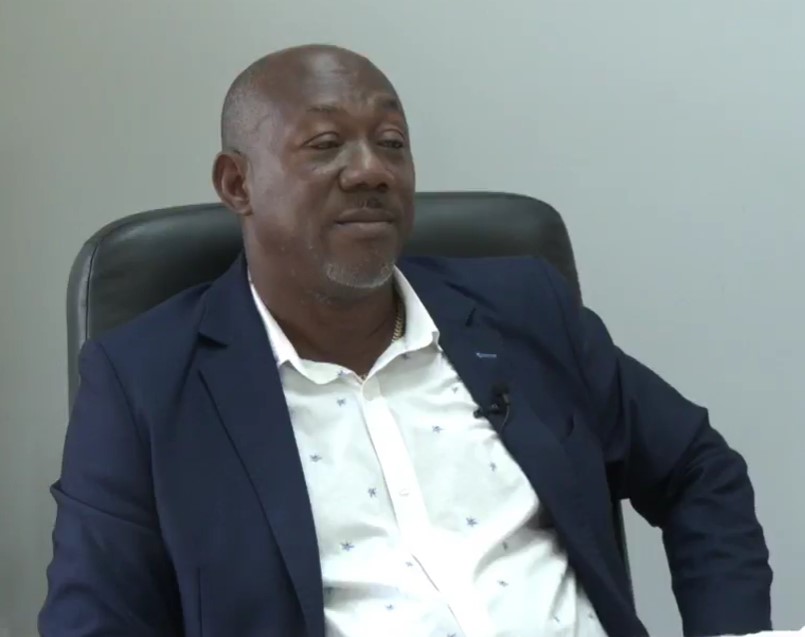
    Kyle Wilson, president of the Bahamas Electrical Workers Union (BEWU), confirmed last week that more than 800 junior line staff employed by Bahamas Power and Light (BPL) received a one-time $3,500 cost of living supplement, a benefit explicitly outlined in the union’s existing industrial agreement with the power provider. Speaking to The Tribune, Wilson emphasized that the payout structure was finalized through collective bargaining more than 18 months before the election was called, and the timeline for disbursement aligns with the contractual schedule laid out years in advance.

    “This is a contractual entitlement for our members, it has no connection to electoral politics whatsoever,” Wilson stated. “It is purely a coincidence that the scheduled payment date falls just days before the general election. There is no political angle to this at all.” He also clarified that all funds for the supplement come directly from BPL’s operating budget, rather than being drawn from government public coffers.

    The timing of the payouts has attracted increased public and media scrutiny, coming on the heels of a controversial decision by the incumbent Davis administration to erase outstanding residential electricity bills for customers on Grand Cay and Moore’s Island. The government has framed that move as a correction of longstanding billing errors that emerged in the wake of Hurricane Dorian and the COVID-19 pandemic, but political observers have questioned whether the series of financial benefits for voters are timed to sway electoral support.

    Wilson pushed back against these insinuations, accusing political commentators and critics of attempting to politicize a routine internal labor matter. He noted that BPL has a long history of issuing similar cost-of-living lump-sum payments to union employees, meaning the current disbursement is neither unusual nor without precedent.

    “Everything is amplified in the lead-up to an election,” Wilson explained. “Opponents and commentators will try to twist any development to score political points, but this is strictly an internal issue between BPL and its unionized workforce. This has nothing to do with the election, in any shape or form.”

    Wilson expressed satisfaction with the outcome of the collective bargaining process, noting that the agreement strikes a fair balance for both workers and the utility. He also praised BPL management for sustaining stable, productive labor relations over the past several years, adding that there have been no major work stoppages, union-led demonstrations, or disputes escalated to the national Labour Board during that tenure.

    He specifically credited BPL Chief Executive Officer Toni Pratt with fostering a collaborative negotiating environment, which allowed the company and union to reach an amicable agreement that protects worker benefits while supporting the company’s goal of delivering reliable electrical service to Bahamian consumers across the country. Wilson added that the union remains committed to holding up its end of the agreement by supporting workers in delivering high-quality service to the public.

  • Texas lawsuit accuses Netflix of illegal data collection

    Texas lawsuit accuses Netflix of illegal data collection

    DALLAS, TEXAS – In a high-profile legal action filed Monday, Texas’ top law enforcement official has brought a landmark lawsuit against global streaming leader Netflix, leveling serious claims that the company violates state consumer protection rules through unauthorized user data harvesting and deliberately addictive platform design. In the explosive opening of his 59-page complaint filed at a Dallas-area state court, Republican Attorney General Ken Paxton cut straight to the heart of his allegations: “When you watch Netflix, Netflix watches you.”

    Per an official press release accompanying the suit, Paxton argues that Netflix operates as an unrestricted giant data warehouse, continuously tracking and recording not just users’ viewing histories and content preferences, but a wide range of what he calls “sensitive behavioral data” — with children and teen users among those improperly monitored. The complaint further alleges that Netflix monetizes this harvested personal information by sharing granular user insights with third-party advertisers, enabling highly targeted ad campaigns that generate billions in revenue for the company at the expense of consumer privacy.

    A second core allegation centers on Netflix’s deliberate use of platform features designed to foster compulsive viewing, particularly among vulnerable young users. The most prominent example cited is the platform’s default-enabled autoplay function, which is activated for all users including children, automatically loading the next episode of a series immediately after the previous one ends. Paxton stresses that this feature removes natural stopping points for viewing, encouraging extended, addictive binge-watching habits that disproportionately impact minors.

    In his public statement, Paxton pushed back against Netflix’s long-held public branding, saying: “Netflix is not the ad-free and kid-friendly platform it claims to be. Instead, it has misled consumers while exploiting their private data to make billions.”

    The legal action comes amid a heated Republican primary race for U.S. Senate, where Paxton is challenging long-serving incumbent Senator John Cornyn for the party’s nomination. The lawsuit seeks immediate court injunctions to block Netflix from continuing to collect or share consumer data for the duration of the litigation. It also requests civil penalties of up to $10,000 for each confirmed violation of Texas’ Deceptive Trade Practices Act, which could amount to massive financial penalties given the scale of Netflix’s user base in the state.

    As of Tuesday morning, Netflix has not yet issued a public response to the allegations laid out in the suit.

  • Pressure grows on UK’s Starmer to quit as PM

    Pressure grows on UK’s Starmer to quit as PM

    LONDON, United Kingdom – Just 10 months after sweeping to power on a wave of public demand for change following 14 years of Conservative rule, British Prime Minister Keir Starmer is facing the most severe crisis of his leadership, sparked by catastrophic results in last week’s local and regional elections that have left his Labour Party reeling. On Monday, the 63-year-old prime minister delivered a urgent address to shore up his position, vowing to silence critics who question his leadership and reverse the public’s growing discontent with his tenure.

    His pledges to deliver more bold, transformative policy have failed to win over dissenters within his own party, however. As of Monday evening, at least 55 of Labour’s roughly 400 sitting members of parliament have publicly called for Starmer to step down, including three junior government aides who resigned from their posts to signal their loss of confidence in his leadership.

    Joe Morris, former parliamentary private secretary to Health Secretary Wes Streeting – a figure long speculated to be preparing a potential leadership bid – wrote on social media platform X that it is now undeniable that Starmer no longer holds the public trust required to deliver the change voters overwhelmingly backed last year. Tom Rutland, a former aide to Environment Secretary Emma Reynolds, echoed that sentiment, saying Starmer has irrevocably lost his authority among the parliamentary Labour party and cannot rebuild the support needed to govern effectively.

    Under Labour’s internal party rules, any candidate seeking to challenge Starmer for the leadership must secure the backing of 81 Labour MPs – equal to 20% of the party’s parliamentary caucus – to trigger an official leadership contest. While challengers have not yet hit that threshold, a formal contest would almost certainly ignite a damaging wave of internal factional infighting, with MPs from the party’s left and right wings jockeying to elevate their preferred candidate or shore up Starmer’s remaining support.

    Starmer took office in July 2024 following a landslide general election victory that ended 14 years of Conservative governance marked by harsh austerity policies, repeated Brexit-related internal chaos, and widespread criticism of the party’s handling of the COVID-19 pandemic. But his first 10 months in Downing Street have been marred by one policy misstep after another, most recently a high-profile scandal over the appointment and rapid sacking of Peter Mandelson as UK Ambassador to the United States, after new revelations emerged about Mandelson’s past ties to convicted sex offender Jeffrey Epstein.

    Starmer has also failed to deliver the sustained economic growth needed to ease the ongoing cost of living crisis that continues to strain household budgets across the UK, though he has drawn rare cross-party praise for his firm resistance to U.S. President Donald Trump’s stance on Iran.

    Last week’s local and regional elections delivered a damning verdict on Starmer’s first 10 months in power, with major gains at Labour’s expense going to the hard-right Reform UK and the left-wing populist Green Party. For the first time since the devolved Welsh parliament was established in 1999, Labour lost control of the legislature to Welsh nationalist party Plaid Cymru, and the party also failed to make any meaningful gains against the Scottish National Party in the Scottish Parliament.

    In his crunch address on Monday, Starmer acknowledged the widespread public anger over the state of the country, the political system, and his leadership. “I know I have my doubters, and I know I need to prove them wrong, and I will,” he told the party. He committed to delivering a sweeping, ambitious policy shift rather than incremental change, focusing on three core areas: boosting long-term economic growth, forging closer ties with the European Union, and accelerating the transition to clean energy.

    In one of the most significant shifts of his premiership, Starmer pledged to fully nationalize British Steel, and delivered the harshest assessment of Brexit from any UK prime minister since the country’s acrimonious departure from the bloc in 2020, admitting the 2016 referendum result had left the UK poorer, weaker, and less secure on the global stage. He launched a blistering attack on Reform UK leader Nigel Farage – the face of the 2016 pro-Brexit campaign and a figure now widely tipped as a potential future prime minister – labeling Farage a chancer and a grifter who dragged the country into its current precarious position for his own political gain. “If we don’t get this right our country will go down a very dark path,” he warned.

    Despite Starmer’s appeal for unity, the rebellion against his leadership shows no signs of easing. Senior Labour MP Catherine West, who had previously threatened to trigger a leadership challenge on Monday, announced she was instead collecting signatures from Labour MPs calling on Starmer to outline a formal timetable for a leadership election to be held in September. Starmer has hit back, pledging to fight any challenge to his leadership and warning that the voting public will never forgive Labour if the party repeats the same internal chaos that defined the latter years of Conservative rule, which saw five different prime ministers take office between 2010, including three in just four months in 2022.

    Speculation has long centered on Health Secretary Wes Streeting and former Deputy Prime Minister Angela Rayner as the most likely candidates to challenge Starmer, but neither figures command universal support across the fractious parliamentary Labour party. Rayner, who has stopped short of publicly calling for Starmer’s resignation, acknowledged in her own remarks on Monday that the current approach to governance is failing and demands urgent change. Another popular potential contender, Greater Manchester Mayor Andy Burnham, is currently ineligible to run for leader as he does not hold a seat in parliament.

    The lack of a clear, broadly popular successor to Starmer means the prime minister could still cling to power, especially with the next UK general election not scheduled to take place until 2029. All eyes now turn to Wednesday, when Starmer is set to lay out his full legislative agenda for the coming parliamentary session in the annual King’s Speech, in what will be widely read as a make-or-break moment for his leadership.