分类: politics

  • Return of the PM to Haiti, assessment of his official visit (video)

    Return of the PM to Haiti, assessment of his official visit (video)

    Haitian Prime Minister Alix Didier Fils-Aimé returned to Port-au-Prince on Thursday, April 24, 2026, following an official working visit to the United States, and held a press conference immediately upon arrival at the Diplomatic Salon of Toussaint Louverture International Airport to outline key outcomes of his trip.

    Waiting to welcome the prime minister on the tarmac was a high-level cross-institutional delegation, including top members of the Haitian government: Marie Élisabeth Régine Joseph Haddad, Secretary General of the Presidency; Odilien Charles, Secretary General of the Council of Ministers; Lieutenant-General Derby Guerrier, Commander-in-Chief of the Armed Forces of Haiti (FAd’H), accompanied by senior military staff; and Vladimir Paraison, Director General of the National Police of Haiti (PNH), alongside the national police high command.

    In his opening remarks to reporters, Fils-Aimé framed the visit as a productive strategic engagement that aligned with Haiti’s most pressing national priorities: curbing widespread gang violence, shoring up fragile state institutions, and laying the groundwork for long-term, sustainable economic rebound. Over the course of his trip, the prime minister held more than 20 bilateral meetings with representatives of global and regional stakeholders.

    He placed particular emphasis on constructive, forward-looking discussions with senior leadership from three of the world’s leading multilateral financial institutions: the World Bank, the International Monetary Fund (IMF), and the Inter-American Development Bank (IDB). Fils-Aimé noted that these talks centered on accelerating high-impact immediate programs focused on driving domestic private investment and expanding formal job opportunities across the country. “Every new job that we create is a direct, tangible blow to insecurity,” he emphasized, linking economic opportunity directly to the country’s ongoing fight against criminal gangs.

    On the security and governance fronts, Fils-Aimé shared that top global leaders have reaffirmed their unwavering support for Haiti’s efforts to restore full state sovereignty across national territory. These leaders include Organization of American States (OAS) Secretary General Albert Ramdin, U.S. Secretary of State Marco Rubio, United Nations Secretary General António Guterres, and other senior international figures. During his meetings, the prime minister also pushed for the rapid, full deployment of the multinational Gang Suppression Force (GSF) and called for international support to strengthen Haiti’s national electoral infrastructure ahead of upcoming democratic processes.

    Closing his remarks, Fils-Aimé extended sincere gratitude to the international community and U.S. congressional leaders for their continued commitment to Haiti’s stability and development, framing the visit as a critical step forward in rebuilding partnerships to address the country’s most urgent challenges.

  • Opposition Slams Government on Crime, Commissioner Fires Back

    Opposition Slams Government on Crime, Commissioner Fires Back

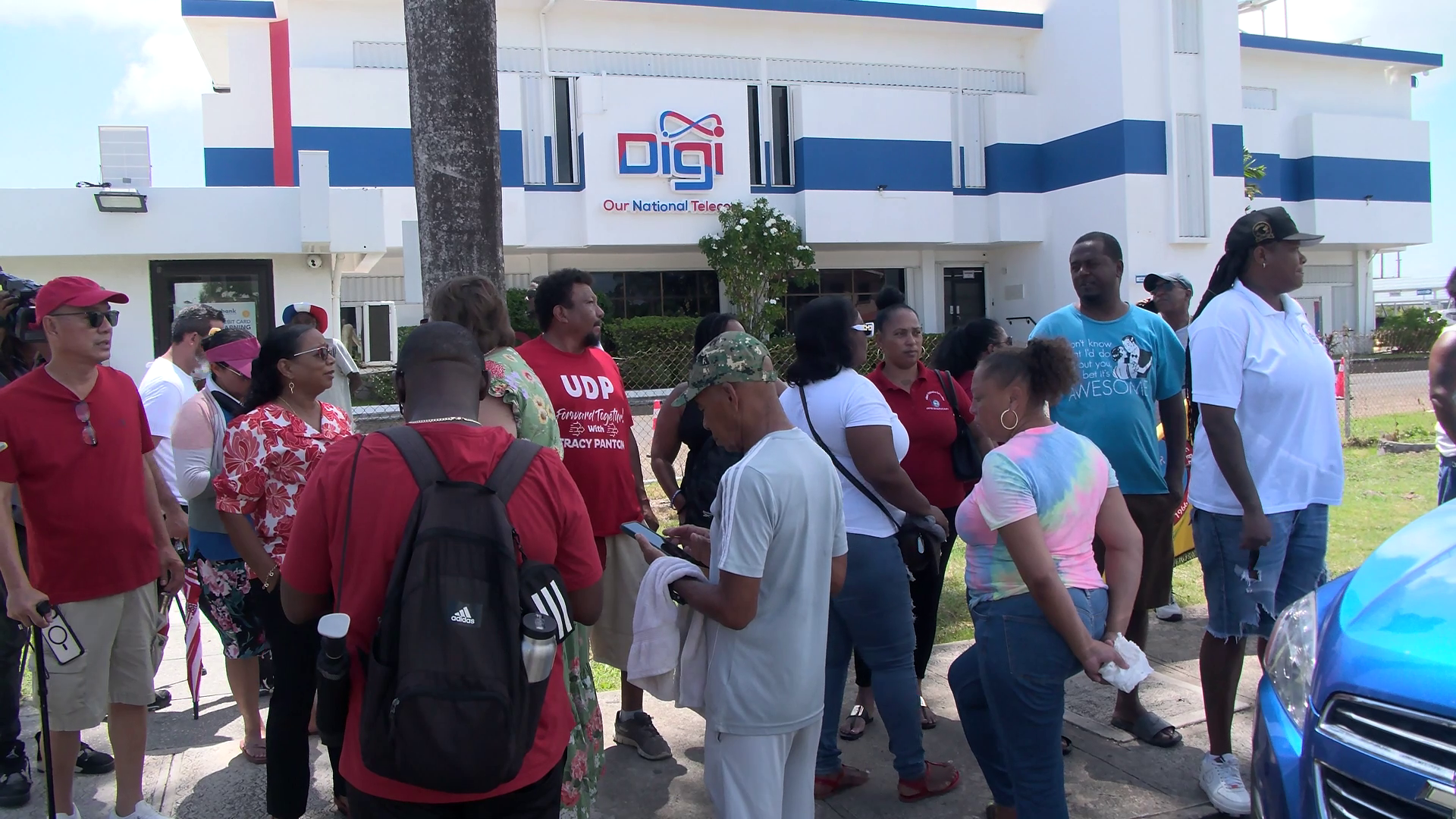
    As a wave of violent criminal incidents including homicides, abductions and missing person cases continues to grab public attention, the governing Briceño administration is facing mounting political pushback from the country’s main opposition bloc. During a press briefing held this week by the United Democratic Party (UDP), opposition senator Patrick Faber launched a sharp critique of the current government’s public safety strategy, arguing that the recent uptick in violent crime proves the administration has failed to retain control over national security.

    Faber emphasized that criminal activity of this frequency and severity would have prompted sweeping, coordinated national intervention from previous governments, calling into question the current administration’s commitment to protecting civilian communities. Following the opposition’s accusations, local journalists directly pressed Commissioner of Police Richard Rosado to address claims that law enforcement is losing ground in the national fight against violent crime.

    In his direct response, Rosado pushed back against the opposition’s criticism, noting that political factions are fully entitled to their public perspectives. He pointed out that the UDP held national power for 13 years prior to the current administration’s term, challenging the opposition to put forward concrete, actionable policy solutions instead of relying solely on criticism of ongoing efforts.

    Rosado underscored that the national police department is exhausting all available resources to curb violent crime, including leveraging all legal frameworks at the force’s disposal, integrating modern digital technology into patrol and investigation work, and deploying both community-led and intelligence-driven policing strategies to keep criminal activity at a manageable level for communities across the country. Despite law enforcement’s insistence that it is operating at full capacity, questions remain among the general public over whether these current efforts are sufficient to reverse the recent rise in violent incidents and restore widespread public confidence in national safety.

    This report is adapted from a transcribed broadcast of a national evening news program, released digitally on April 24, 2026.

  • Heated Land Dispute Draws Three Ministers to San Marcos

    Heated Land Dispute Draws Three Ministers to San Marcos

    On April 24, 2026, escalating tensions over a contested land parcel in southern Belize’s San Marcos Village prompted three high-ranking government officials to travel to the Toledo District to mediate between conflicting parties. The confrontation has pitted local Maya residents against a private landowner, with the community claiming the territory is held as communal land to which all villagers should retain legal access. According to local residents, the private landowner has recently expanded activities beyond agreed boundaries, encroaching on the land the community has long relied on for collective use.

    As public concern over the standoff grew, Dr. Louis Zabaneh, Minister of Indigenous People’s Affairs, led the government’s on-site intervention, accompanied by Oscar Requena, Area Representative for the district, and Oscar Mira, Minister of Home Affairs. The delegation’s primary priority was to hear unfiltered concerns directly from San Marcos residents and prevent the simmering disagreement from boiling over into open conflict.

    Following a closed-door talks with community representatives, Dr. Zabaneh outlined the government’s approach in an on-the-record interview. “We held a very candid and respectful discussion of the issues,” he explained. “We did both an in-depth look at the situation on the ground in San Marcos where the residents are claiming that a private land owner is impinging on areas that should be communal land or land that residents should have access to. Then we looked at the broader picture of the process ahead with the review panel and how we can move forward towards a resolution.”

    Zabaneh noted that community members spoke openly and passionately about their longstanding connection to the land and their concerns over the encroachment. Following the meeting with villagers, the ministerial delegation planned to hold a separate negotiating session with the private landowner, with the explicit goal of identifying common ground for compromise. The ultimate objective, Zabaneh stressed, is to de-escalate immediate tensions and work toward a permanent, mutually acceptable long-term resolution to the conflict. “We are trying at least, we don’t know how it will transpire. But we are giving it our best shot,” he added.

    The local landowners’ association, Toledo Private and Lease Landowners Limited, has pushed back against the community’s claims. In a statement ahead of the mediation, the group confirmed that the family holding the legal title to the disputed parcel has not taken any action to provoke tensions, asserting that the landowner is only carrying out restoration work on territory that had been cleared previously.

    This report is adapted from a transcript of an evening television newscast, originally published online.

  • Ministry of Defense delivers equipment to the Army to strengthen operational capabilities

    Ministry of Defense delivers equipment to the Army to strengthen operational capabilities

    In a formal ceremony held at the Dominican Republic’s “August 16th” Military Camp, the nation’s Ministry of Defense has formally transferred a large shipment of upgraded military gear to the Dominican Republic Army, marking a key milestone in the government’s ongoing campaign to modernize and strengthen the country’s national defense institutions.

    The handover ceremony was led by Defense Minister Lieutenant General Carlos Antonio Fernández Onofre of the Dominican Republic Army, with the shipment officially accepted by Army Commanding General Major General Jorge Iván Camino Pérez. Senior defense officials including Deputy Defense Ministers, the Armed Forces Inspector General, and members of the Armed Forces General Staff and high military command were in attendance, signaling broad institutional backing for the armed forces’ modernization agenda.

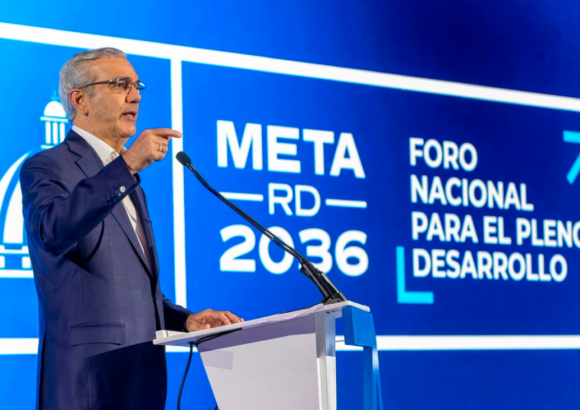
    Per an official press statement from the defense ministry, the equipment delivery is executed in full alignment with directives issued by Dominican Republic President Luis Rodolfo Abinader Corona, who serves as the supreme authority over the nation’s Armed Forces and National Police. The shipment forms a core component of the administration’s broader institutional strengthening and modernization drive for the country’s military.

    The new equipment will be distributed to seven key frontline units critical to national defense and internal security: the 1st Battalion “Juan Pablo Duarte”, 2nd Battalion “Francisco del Rosario Sánchez”, 3rd Battalion “Matías Ramón Mella” under the First Infantry Brigade, as well as the Army’s elite Commando Battalion.

    The full shipment includes a range of advanced firearms: IWI ARAD 5.56-caliber assault rifles, Negev 7.62-caliber machine guns designed for integration with patrol vehicles and transport platforms, precision rifles from Barrett and Daniel Defense, alongside more than 11,000 custom work uniforms manufactured domestically by the Dominican Military Industry, plus a range of additional operational supplies.

    This deployment of new equipment is rooted in the administration’s long-term strategic vision to build a more modern, efficient, and rapidly responsive Dominican Armed Forces. The upgrade is designed to boost the operational readiness of frontline troops and optimize their performance across a wide range of operational scenarios.

    Military officials note that the integration of these new weapons and systems represents a substantial leap forward in military technology for the Dominican Army, bringing improvements to operational reliability and adaptability that will directly enhance the effectiveness of military units as they carry out their core national defense and security missions.

  • UPP Shows Contempt for the People by Failing to Produce a Manifesto, says ABLP

    UPP Shows Contempt for the People by Failing to Produce a Manifesto, says ABLP

    As Antigua and Barbuda prepares to head to the polls for its upcoming general election, the ruling Antigua and Barbuda Labour Party (ABLP) has launched sharp criticism of the opposition United Progressive Party (UPP), accusing the challenger of blatant disrespect for voters by refusing to release an official policy manifesto ahead of the vote.

    With voting days fast approaching, the UPP has failed to put forward any actionable policy proposals, structured governing programs, detailed cost breakdowns for its pledges, or any formal commitment that would allow the electorate to evaluate the party’s agenda or hold its leaders accountable after the election, according to ABLP’s statement. Despite having produced no formal policy platform of its own, the opposition has nonetheless moved to criticize the ABLP’s recently released manifesto – attacks that ABLP describes as baseless, lacking in specific evidence, and completely disconnected from any meaningful alternative vision for the country.

    The ABLP argues that this lack of action and hollow criticism amounts to nothing more than distracting political noise, not the serious, purpose-driven leadership that the country requires. For any political party seeking to govern, a published manifesto serves as the fundamental foundation for earning public trust: it is the document that lays out what a party intends to do if elected, giving voters a clear standard to judge candidates against. The UPP is actively asking Antigua and Barbudans for their electoral support, yet it has refused to share any concrete details about what it would deliver if given power, the ABLP says.

    In contrast to the opposition’s inaction, the ABLP highlights that it has released a comprehensive, detailed manifesto that has been widely distributed across the country and made available in multiple accessible formats for all voters. The document lays out the ABLP’s verifiable track record of responsible governance during its current term, paired with a clear, actionable five-year plan to advance the country moving forward.

    The ABLP emphasizes that the choice before voters is unambiguous: they can select a leadership team with a proven track record of delivery and a detailed plan for the future, or opt for an opposition that offers nothing more than unfounded criticism and no governing agenda. The party adds that the UPP’s failure to release a manifesto is far from a simple administrative oversight. Instead, it is a deliberate choice that reflects a fundamental lack of seriousness about governing, a rejection of the basic accountability that all political parties owe voters, and an intentional act of contempt for the people of Antigua and Barbuda whose support the UPP is currently courting.

  • Caribbean think-tank to brainstorm major regional, global issues

    Caribbean think-tank to brainstorm major regional, global issues

    As the global order continues to shift rapidly, bringing overlapping challenges to small and medium-sized states across the Americas, a leading Guyanese research institution is preparing to bring together cross-border experts to unpack pressing regional and international concerns.

    The Centre for International and Border Studies (CIBS), a Georgetown-headquartered think tank focused on cross-border and global policy issues, will host its flagship two-day conference on May 14 and 15 this year, held at the Herdmanston Lodge in the nation’s capital. Designed to accommodate a wide range of attendees regardless of geographic barriers, the gathering will operate as a hybrid event, welcoming both in-person guests and remote participants joining via digital platforms.

    Organized under the overarching theme “Navigating The Future: Guyana, the Caribbean and Latin America in a Changing Global Environment”, the conference will create space for rigorous critical discussion of four core priority areas: deepening regional integration progress, advancing inclusive sustainable development across the hemisphere, unpacking the evolving geopolitical landscape of the Americas, and addressing other emergent pressing international issues shaping the region’s trajectory.

    The lineup of presenters and panelists draws top expertise from across the Americas and beyond. Attendees will hear from U.S. academic Dr. Scott McDonald, former United Nations official Dr. Bertrand Ramcharan who also serves as Chancellor of the University of Guyana, and multiple lecturers from the University of the West Indies: Dr. Kai-Ann Skeete, Dr. Marlon Anatol, and Dr. Jacqueline LaGuardia Martinez. Two prominent Brazilian scholars, Paulo Correa of the Federal University of Amapa and Ambere Freitas of Brazil’s Roraima Federal Institute, will also contribute analysis, alongside a roster of seasoned regional experts including Carl Greenidge, Dr. Ulric Trotz, Dr. Clement Henry, Neville Bissember, and CIBS’ current director Dr. Mark Kirton.

    Founded as a collaborative transnational network, CIBS counts a diverse global membership of academics, policy professionals, and practitioners hailing from across Latin America and the Caribbean, as well as the United States, Asia, and Africa. The upcoming conference marks a key effort to bridge cross-regional expertise and generate actionable insight for navigating the uncertain global shifts facing the Western Hemisphere in the coming years.

  • Leegstaande gebouwen en brandgevaar: tijd voor structureel beleid

    Leegstaande gebouwen en brandgevaar: tijd voor structureel beleid

    On Wednesday, a large blaze broke out once again in central Paramaribo, consuming the long-vacant former headquarters of insurance provider Clico on Klipstenenstraat. For years, this derelict structure has been informally occupied by vulnerable people, and local residents have raised repeated concerns about safety risks in the area – yet no action has ever been taken to address the issue. This is not an isolated event: just months earlier, a similarly devastating fire broke out at an abandoned property on the corner of Henck Arronstraat and Jessurunstraat, putting the entire historic inner city at risk of explosions and widespread destruction.

    What we are seeing now is not a string of random accidents, but a dangerous, repeating pattern that threatens lives, destroys private and public property, and erodes the character of Suriname’s capital city, says Danielle van Windt, Deputy Minister of Social Affairs and Housing of Suriname, in a policy opinion piece calling for urgent systemic change. Anyone walking through greater Paramaribo can see the scale of the problem: dozens of properties lie empty, left to decay after decades of economic decline that has left owners unable or unwilling to maintain their buildings. But vacant, unmaintained property is never a neutral issue: it attracts unhoused people and people struggling with addiction, and creates fire hazards that put the entire surrounding community at imminent risk.

    The Clico building is just one high-profile example of a widespread crisis. How many other unmonitored, unmaintained properties across the city are owned by absentee owners who refuse to take responsibility for their assets?

    Van Windt emphasizes that the societal costs of this crisis go far beyond the immediate risk of fire. When unregulated occupation of derelict buildings becomes common, it creates a toxic mix of dangers: fire hazards, explosion risks, increased criminal activity, and a degraded urban landscape that directly contradicts Suriname’s national ambition to build a prosperous, attractive capital. Paramaribo aims to position itself as a modern, welcoming city that draws foreign investment and provides safe, livable communities for local families. But that goal is impossible to achieve as long as the inner city is allowed to decay into a zone of neglect and danger.

    To address this systemic crisis, Van Windt has proposed the creation of a national registry of “high-risk” neglected buildings. Every vacant, abandoned property would need to be formally registered, and owners would be legally required to complete mandatory maintenance to bring structures up to safety standards. If owners fail to meet this obligation, the government would take over maintenance responsibilities, and gain the legal authority to repurpose the property for public use. Options include converting the buildings into affordable housing for people waiting on social housing waitlists, or renovating them through public works programs to provide market-aligned social rental housing.

    This is not an unnecessary, luxury policy – it is an urgent necessity given Suriname’s ongoing severe housing shortage, Van Windt argues. While thousands of Surinamese families are desperately seeking stable, safe housing, dozens of viable buildings sit empty, derelict and dangerous across Paramaribo. Allowing this pattern of vacancy and neglect to continue is indefensible in the face of a national housing crisis. Every abandoned property should be repurposed for public good: it can be used for social rental housing, temporary shelter for unhoused people, or community-led projects. The status quo, where property owners evade their responsibilities and the broader public pays the price for their neglect, can no longer stand.

    What strikes me most about this crisis is that local residents have been sounding the alarm for years, Van Windt says. Neighbors see the risks every day, live with constant fear of disaster, and have long dealt with the smoke, debris and uncertainty that come with nearby derelict buildings. For far too long, their voices have been ignored by policymakers. We acknowledge this failure, and we are now ready to take the first step toward systemic, structural change to fix this crisis. This is not about shifting blame – it is about taking responsibility and changing course to build a safer capital.

    Suriname is ready to move forward. We want to be a nation that can be proud of its capital city. But that cannot happen as long as we allow the inner city to burn, both literally and metaphorically.

    Addressing the crisis of homelessness must also be a core part of this new policy framework, Van Windt notes. We need targeted social policy to support this vulnerable group, going beyond purely punitive measures to provide shelter, supportive care, and pathways to stable long-term housing. At the same time, we must take a firm stance on neglected vacancy, because unregulated vacancy is not a private issue for owners – it is a public crisis that affects the entire community.

    It is past time for policymakers to step up and take responsibility. It is time for the government to show it can learn from past mistakes. It is time to stop putting out individual fires and start building the structural policy we need to prevent disasters from happening in the first place. A registry of high-risk buildings, mandatory maintenance requirements for owners, and a formal repurposing framework for neglected properties – these are not radical ideas. They are common-sense steps for a city that takes the safety and well-being of its residents seriously.

    The latest fire on Klipstenenstraat is a clear wake-up call, just as the fire on Henck Arronstraat was before it. How many more warnings do we need before we act? Paramaribo deserves better. Suriname deserves better. And the residents who live every day with the fear of the next major blaze deserve better. It is time for action. It is time for meaningful policy change. It is time to repurpose vacant buildings and return our capital city to the people who call it home.

  • DFP condolence statement on the passing of DASPA CEO, Ian Pinard

    DFP condolence statement on the passing of DASPA CEO, Ian Pinard

    The Dominican political landscape is this week grappling with the sudden loss of one of its most notable public figures, Ian Pinard, whose career spanned senior political roles and critical infrastructure leadership. The Dominica Freedom Party (DFP) has officially joined the entire nation in mourning his passing, releasing a public statement confirming the news of his death.

    Pinard wore many hats across his decades of public service to Dominica. At the time of his death, he served as Chief Executive Officer of the Dominica Air and Sea Port Authority, the government body that oversees the island nation’s critical transportation and trade hubs. Prior to this senior infrastructure leadership role, Pinard built a long legacy in electoral politics, holding a seat as a government minister and serving as the parliamentary representative for the Soufriere Constituency.

    His unexpected death has sent ripples of shock across the country, with members of the public, political colleagues, and constituents expressing surprise at the news of his passing. In its official statement, the DFP extended its deepest and most sincere condolences to Pinard’s immediate family, extended relatives, close friends, colleagues, and all staff at the Dominica Air and Sea Port Authority. The party also made a special point of acknowledging the loss to the residents and community of the Soufriere Constituency, which Pinard represented for years.

    Closing its statement, the Dominica Freedom Party offered a final tribute, wishing Pinard’s soul eternal rest.

  • Freeland Condemns Vandalism After Campaign Banner Torn Down in Potters

    Freeland Condemns Vandalism After Campaign Banner Torn Down in Potters

    A recent act of political vandalism has sparked condemnation from senior Canadian officials after a campaign banner belonging to Deputy Prime Minister Chrystia Freeland was intentionally torn down in the Potters area. The incident, which unfolded over the past days, has drawn attention to rising tensions surrounding political discourse in local constituencies ahead of an expected political cycle.

  • Labadie krijgt commando leger uit handen van president Simons

    Labadie krijgt commando leger uit handen van president Simons

    On April 24, a historic leadership transition ceremony took place at Suriname’s Memre Buku Barracks, where President Jennifer Simons, the nation’s supreme commander, formally installed Mitchell Labadie as the new commander of the Surinamese National Army. Simons also announced Labadie’s promotion to the rank of brigadier general, marking the start of a new chapter for the country’s top military leadership.

    The handover event carries far more weight than a simple change in command, Simons emphasized during her keynote address at the ceremony. She framed the appointment as a critical milestone in advancing Suriname’s national security development, aligning the military with the country’s shifting domestic and international priorities. The Surinamese government has expressed full confidence in Labadie’s ability to lead the armed forces with expertise, unwavering integrity, and clear strategic focus.

    In her remarks, President Simons underlined that the National Army serves not only as a core state institution but also as a key societal actor deeply tied to Suriname’s broader national progress. She outlined a clear set of core priorities for the new commander, spearheading a comprehensive modernization drive for the military. Top on the agenda is boosting operational capacity, strengthening institutional preparedness to tackle emerging future challenges, and reinforcing disciplinary standards across all ranks.

    Labadie will also oversee efforts to expand and improve the military’s personnel foundation, build out new and existing international military cooperation partnerships, support domestic stability and public security initiatives, and integrate more advanced modern technologies into military operations.

    Beyond welcoming the new leadership, President Simons publicly extended her sincere appreciation to outgoing commander Brigadier General Werner Kioe A Sen, recognizing his years of dedicated service to the nation and the armed forces.

    This leadership transition comes as Suriname enters a period of preparation to address a growing set of interconnected economic and security challenges. According to the Surinamese government, a professional, modern, and adaptable national army is an indispensable foundation for safeguarding national interests and advancing the country’s development goals through this shifting landscape.