分类: environment

  • Tour Guides and Fisherfolk Fear Fallout from Marine Protection Plan

    Tour Guides and Fisherfolk Fear Fallout from Marine Protection Plan

    A contentious marine conservation initiative in Belize is generating significant concern among fishing communities and tourism operators as the government prepares to finalize its protection plan. The Resilient Bold Belize project, designed to safeguard marine ecosystems and enhance climate change resilience, faces strong opposition from local stakeholders who fear economic devastation.

    Eworth Garbutt, President of the Belize Flat Fishery Association, has emerged as the leading voice against the proposed expansion of fully protected marine zones. According to Garbutt, the conservation blueprint would establish no-take zones across critical fishing grounds and popular tour destinations, including coral reef systems that currently support numerous families.

    The controversy centers on the government’s approach to marine protection, which Garbutt characterizes as disproportionately targeting traditional fishing activities while ignoring more significant environmental threats. He specifically cites sewage pollution, mangrove degradation, and damage to seagrass beds as primary concerns that the plan fails to adequately address.

    With the draft map scheduled for validation on December 4th, 2025, the debate has intensified between conservation objectives and economic realities. Garbutt emphasizes that the proposed protected areas would eliminate permanent fishing places that generations of Belizeans have depended on for their livelihoods. The association president argues for a more balanced approach that addresses multiple environmental threats while preserving traditional access to marine resources.

    The outcome of this confrontation could establish significant precedents for marine conservation policy throughout the Caribbean region, potentially influencing how developing nations balance ecological protection with economic sustainability in climate-vulnerable coastal communities.

  • Blue Economy CEO Postpones Marine Map Validation Amid Fisherfolk Concerns

    Blue Economy CEO Postpones Marine Map Validation Amid Fisherfolk Concerns

    In a significant development for Belize’s environmental policy, Chief Executive Officer Beverly Wade of the Ministry of Blue Economy has announced the postponement of a crucial validation workshop for the Resilient Bold Belize initiative. The decision comes in direct response to mounting concerns from fishing communities and other stakeholders regarding the implementation of marine protected areas.

    The initiative represents a cornerstone of Belize’s Blue Bond conservation commitment, specifically targeting the protection of 20% of the nation’s coral reef ecosystems. Wade clarified that this protection area constitutes less than 2% of Belize’s total ocean space, addressing what she termed a ‘significant misconception’ among concerned parties.

    During an exclusive interview, Wade emphasized the people-centered nature of the project, stating: ‘The government remains committed to balancing ecological resilience with livelihood preservation. While certain areas demonstrate critical importance for coral conservation, they may simultaneously hold substantial value for local fisheries.’

    The validation workshop, originally scheduled for this week, has been delayed to allow for additional consultations with stakeholder groups. Wade stressed that this postponement does not indicate a halt to the project but rather demonstrates the government’s respect for community engagement processes. ‘Now that we have identified bona fide concerns,’ Wade explained, ‘we want to create adequate opportunity for meaningful dialogue with these various groups before proceeding.’

    The decision reflects the ongoing challenge faced by conservation initiatives in balancing environmental protection with socioeconomic considerations, particularly in developing nations where marine resources directly support local communities.

  • Gillnet and Longline Bust in Belize’s Southern Waters

    Gillnet and Longline Bust in Belize’s Southern Waters

    In a significant victory for marine conservation, Belizean authorities and volunteers have intercepted and destroyed illegal fishing equipment in the country’s southern waters. On Tuesday morning, the Belize Territorial Volunteers discovered a massive Guatemalan gillnet, nearly 400 feet long, illegally placed within Belizean waters near the Sapodilla Cayes. The net, posing a severe threat to marine life, was promptly removed and destroyed. Simultaneously, over three miles of illegal longline gear were seized just five miles from Barranco. The Belize Coast Guard, led by Rear Admiral Elton Bennett, has attributed these successes to increased patrols and intelligence-driven operations along the southern maritime border. Bennett revealed that this year alone, over 45 feet of bill net and 4,000 to 5,000 feet of gillnet have been confiscated, marking a significant reduction in illegal fishing activities compared to the previous year. The Coast Guard has also detained several individuals from Guatemala and Honduras involved in these illegal operations. This latest bust underscores the ongoing challenges and the critical need for constant vigilance to protect Belize’s marine resources.

  • Belize Harnesses Science to Safeguard Fisheries

    Belize Harnesses Science to Safeguard Fisheries

    Belize is taking decisive steps to protect its marine ecosystems by leveraging scientific research to ensure the sustainability of its fisheries. Recognizing the critical role of healthy fisheries in food security, cultural heritage, employment, and the blue economy, the Ministry of Blue Economy and Marine Conservation recently collaborated with the Fisheries Department to host a technical workshop. Led by renowned marine scientist Dr. Kendra Karr, the workshop analyzed decades of data, dating back to 1977, on Belize’s most valuable marine species: lobster, conch, and finfish. The initiative aims to develop updated fisheries management plans that balance ecological health with economic viability. The event brought together fishers, researchers, and government officials to ensure that decisions are informed by both scientific evidence and local expertise. Rigoberto Quintana, Fisheries Administrator, emphasized the importance of updating outdated management plans, particularly for lobster and conch, which have not been revised since 2014. Valdemar Andrade, Executive Director of T.A.S.A., highlighted the economic significance of species like conch and lobster, which contribute 25-30% of the national catch from the Turneffe Atoll. Belize’s commitment to sustainable fisheries underscores the need for cross-sector collaboration, transparency, and data-driven decision-making. As the nation advances its Blue Economy vision, these efforts aim to secure resilient and profitable fisheries for future generations.

  • Reflecting on passage of PISLM CSIDS Bill 2025

    Reflecting on passage of PISLM CSIDS Bill 2025

    On November 4, 2025, Grenada’s Parliament made a historic move by enacting the Partnership Initiative for Sustainable Land Management (PISLM) Bill for Caribbean Small Island Developing States (CSIDS). This legislation formalizes two critical agreements: the Agreement Establishing PISLM and the Headquarters Agreement between PISLM and the Government of Grenada. With this, Grenada becomes the official host of PISLM, an intergovernmental organization tasked with advancing the Caribbean’s commitments under the United Nations Convention to Combat Desertification (UNCCD) and related global frameworks on sustainable land and soil management. This decision places Grenada at the forefront of regional efforts to protect and sustainably manage its most vital natural resources. The bill arrives at a crucial time, as land degradation in Grenada and across the Caribbean accelerates due to deforestation, poor agricultural practices, overgrazing, and sand mining, exacerbated by extreme climate events. These practices undermine the land’s ability to provide essential ecosystem services, threatening food and water security, biodiversity, and community welfare. The legislation establishes a robust framework to combat land degradation, enhance climate resilience, and promote sustainable livelihoods, particularly in rural areas. It also aligns with Grenada’s National Sustainable Development Plan and Vision 75, reinforcing the nation’s commitment to environmental stewardship. Hosting PISLM’s headquarters offers Grenada significant advantages, including enhanced capacity in sustainable land management, opportunities for scientific research, and knowledge sharing. This positions Grenada as a regional leader in evidence-based environmental policies. The progress of PISLM, under the leadership of Dr. Ronen Francis and the Regional Council, marks a transformative step toward resilient development and underscores the importance of sustainable land management in achieving long-term environmental and socio-economic goals.

  • Environment Ministry signs $300M MoU for ecological restoration

    Environment Ministry signs $300M MoU for ecological restoration

    Santo Domingo – In a landmark move to bolster environmental sustainability, the Dominican Republic’s Ministry of Environment and Natural Resources has inked a Memorandum of Understanding (MoU) with Mamaland Company SA, a subsidiary of the Mota-Engil Group. The agreement, valued at USD 300 million, focuses on ecological restoration, carbon credit initiatives, and conservation projects across the nation. This partnership underscores the Dominican Republic’s commitment to becoming a regional leader in green finance and climate action. The MoU highlights comprehensive studies on degraded ecosystems, including mangroves, wetlands, and protected areas, to inform targeted restoration and conservation strategies. Beyond environmental benefits, the collaboration aims to foster green employment opportunities, facilitate technology transfer, enhance institutional capacity, and provide training for rural communities. Dominican Ambassador to Portugal, Patricia Villegas de Jorge, played a pivotal role in facilitating this initiative, emphasizing its potential to position the country at the forefront of sustainable development in the Caribbean region.

  • One Million Trees Campaign to Be Accelerated, Says Government

    One Million Trees Campaign to Be Accelerated, Says Government

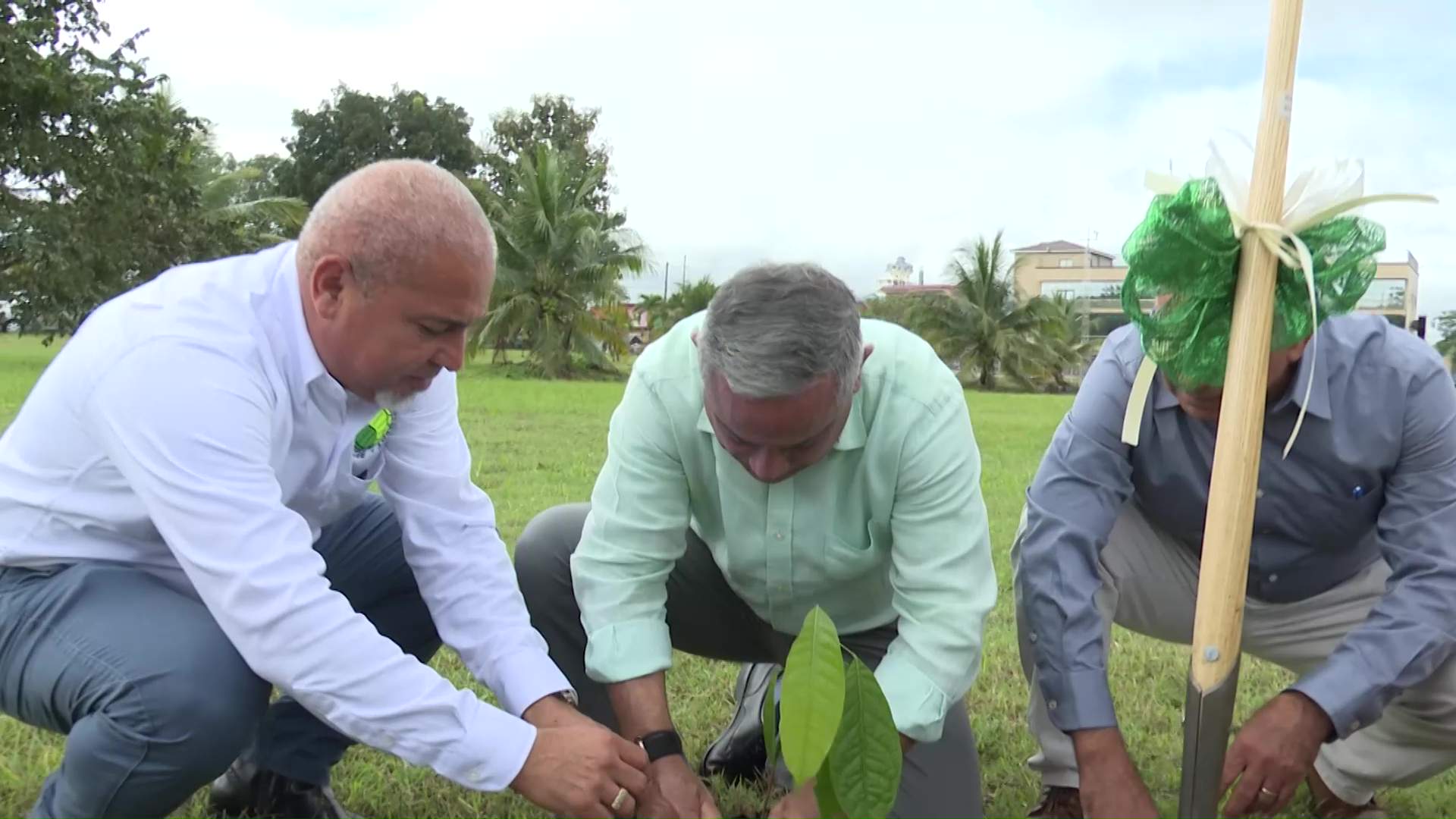
    The government of Antigua and Barbuda is intensifying its ambitious ‘One Million Trees in a Year’ reforestation campaign as part of a broader strategy to enhance environmental restoration and climate resilience. Spearheaded by the Forestry Division and the Department of the Environment, the initiative has entered a more active phase aimed at revitalizing degraded landscapes, bolstering watershed protection, and expanding tree cover nationwide. Maurice Merchant, the Director General of Communications, emphasized the government’s commitment to accelerating the program during a recent post-briefing session. ‘This campaign will be meticulously coordinated to ensure we achieve our target within the stipulated timeframe,’ Merchant stated. The initiative will prioritize community engagement, school-based planting activities, and collaborations with environmental organizations to meet its national objectives. Officials highlight that the campaign aligns with Antigua and Barbuda’s international environmental and climate commitments, contributing to biodiversity conservation and mitigating the adverse effects of deforestation and land degradation.

  • How Conservation Is Powering Belize’s Tourism Through Eco-Adventures

    How Conservation Is Powering Belize’s Tourism Through Eco-Adventures

    Belize’s tourism industry, a cornerstone of its economy, is thriving thanks to a unique synergy between conservation and eco-adventures. The Corozal Bay Wildlife Sanctuary, managed by the Sarteneja Alliance for Conservation and Development, exemplifies this innovative approach. By blending traditional livelihoods with sustainable tourism, the alliance ensures that both the ecosystem and local communities benefit. The RioReef Expedition, a flagship initiative, partners with local fishers and artisans to promote eco-tourism while reinvesting profits into conservation efforts. The Belize Fund for a Sustainable Future further amplifies this impact through grants, enabling critical research and monitoring programs. Visitors to the sanctuary can explore diverse ecosystems, from mangroves to coral reefs, and even participate in mangrove planting at Warrie Bight. Historical sites like the Cerros Mayan temple add cultural depth to the experience, highlighting the intersection of nature and heritage. This holistic approach not only preserves Belize’s natural beauty but also fosters economic resilience and community pride, proving that conservation is a powerful driver of sustainable tourism.

  • PACT’s $1.9M Climate Project Arms Local Teams with Smart Tech

    PACT’s $1.9M Climate Project Arms Local Teams with Smart Tech

    In a significant move to bolster climate resilience, the Protected Areas Conservation Trust (PACT) has equipped multiple municipalities across Belize with cutting-edge technology. The initiative, part of the GCF Readiness 10 Project, is funded by a $1.9 million grant from the Green Climate Fund and managed by the Climate Finance Unit. The project provides local teams with essential tools such as laptops, GPS units, and drones to enhance environmental protection and preparedness for future climate challenges. Abil Castaneda, Executive Director of PACT, emphasized the urgency of global climate action, particularly with COP30 approaching in Belem, Brazil. Castaneda highlighted that while PACT’s core mission remains the protection of Belize’s natural areas, climate change represents the most critical threat to the environment. This initiative marks a pivotal step in empowering local communities to address climate vulnerabilities effectively.

  • Moratorium on Logging Licenses to Protect Forests

    Moratorium on Logging Licenses to Protect Forests

    Belize’s forests are facing unprecedented threats, prompting the Ministry of Sustainable Development to take decisive action. Unsustainable logging practices, illegal timber extraction, and increasing construction demands have severely impacted the nation’s forest ecosystems, particularly young, regenerating trees. In a recent incident, four individuals were apprehended for illegally transporting nearly a hundred logwood posts in Orange Walk. To address these challenges, the government has announced a five-year moratorium on short-term forest licenses and petty permits, effective December 1, 2025. This policy, endorsed by the Cabinet, aims to protect Belize’s forests and ensure the sustainable management of its timber resources. During the moratorium, the Forest Department will conduct comprehensive assessments of forest stock, intensify efforts to combat illegal logging, and promote eco-friendly alternatives such as bamboo and reusable steel scaffolding. Officials emphasize that wildfires and overharvesting pose significant risks not only to the environment but also to the nation’s economy. This bold move underscores Belize’s commitment to preserving its natural heritage for future generations.