分类: business

  • Howai: We’ll find a balance

    Howai: We’ll find a balance

    A brewing controversy over new banking service fees implemented by one of Trinidad and Tobago’s largest financial institutions has spurred regulatory intervention and widespread pushback from business leaders across the country, with ongoing negotiations aimed at striking a compromise between bank profitability and consumer affordability.

    Starting May 1, 2026, Republic Bank rolled out a series of increased service charges that immediately sparked frustration among retail and business customers. In response to widespread public concern, Central Bank Governor Larry Howai confirmed Wednesday that regulators have been in active discussions with the bank to review the new fee structure.

    Speaking to reporters on the sidelines of the inaugural FINLIT Live 2026 financial literacy event hosted by the Central Bank at the Macoya Centre of Excellence, Howai emphasized that both sides are working to identify a middle ground. He noted that the bank has committed to re-examining the increases to balance the institution’s need for fair compensation for services against the financial burden passed to consumers. “We understand why citizens are frustrated, and we do not take this sentiment lightly,” Howai said, referencing an official statement the Central Bank released earlier this week. “Our role as regulator is defined by law, but it is not a passive one. Citizens deserve a financial system that works in their interest, and we will continue to advocate for that.”

    Howai clarified that while existing legislation prevents the Central Bank from issuing fines for approved price increases, the regulator will use its advocacy authority to prevent excessive markup of banking costs. He added that while service fees are an unavoidable part of offering banking services, key questions remain about whether the current increases are justifiable, properly communicated, and deliver clear value to customers. Ultimately, Howai expressed confidence that negotiators will develop a fee framework that leaves customers comfortable.

    The controversy comes as Republic Bank reports strong ongoing profitability: the bank posted a half-year net profit of $1.07 billion for the period ending March 31, 2026, a 5.4% increase from the same period in 2025. For the full year ending September 2025, parent company Republic Financial Holdings recorded a record annual profit of $2.2 billion, a figure that has amplified criticism of the timing of the fee hikes from leading business groups.

    Dianne Joseph, president of the T&T Coalition of Services Industries (TTCSI)—whose members contribute more than 60% of the country’s gross domestic product—framed banking services as an essential operational utility for businesses, not a discretionary luxury. While she acknowledged that financial institutions need to recover costs associated with digital infrastructure upgrades, Joseph argued that the cumulative fee increases, coming on the heels of record annual profits, raise serious questions about economic fairness. For small and medium-sized enterprises (SMEs) and sole traders, she explained, higher banking overheads create a downstream multiplier effect that ultimately pushes up prices for end consumers. Joseph urged the Central Bank to go beyond routine monitoring and leverage its regulatory influence to push for a fairer balance between strong bank earnings and the financial stability of the business sector and everyday citizens. She added that a sustainable economy depends on a financial system that invests in the productivity of local communities, and she looks forward to a resolution that keeps banking accessible as a catalyst for service-led growth, not a barrier.

    Multiple business chamber leaders echoed Joseph’s concerns. Vivek Charran, chairman of the Confederation of Regional Business Chambers, noted that given the bank’s growing annual profits, consumers and small businesses have a valid right to question why they must absorb higher routine banking costs. Charran emphasized that the Central Bank’s involvement confirms the issue has expanded beyond a private disagreement between a bank and its customers to become a broader concern impacting consumers, small businesses, and overall cost of living in the country. He added that public anxiety over the new fees goes beyond individual transaction costs, noting that new charges for digital transactions directly contradict national policy goals to expand cashless digital transformation.

    Kiran Singh, president of the Greater San Fernando Area Chamber of Commerce, added that new fee increases place an extra financial strain on businesses already navigating tight budgets. “While we recognise the importance of maintaining a stable and profitable banking sector, it is equally critical that financial institutions remain aligned with the realities facing their customers,” Singh said, noting that banks have remained consistently profitable through recent economic challenges and must collaborate with the businesses they serve.

    Baldath Maharaj, president of the Chaguanas Chamber of Industry and Commerce, explained that for local SMEs, the May 1 fee hikes come amid a “perfect storm” of already rising costs for utilities, freight, and labor. With the banking sector posting six-month profits exceeding $1 billion, Maharaj argued that these additional costs are increasingly difficult to justify. He added that high switching costs in the banking sector effectively lock business customers into their current institutions, leaving them no option but to absorb the new charges. Maharaj commended Howai’s intervention and urged the Central Bank to deliver immediate, tangible relief for SMEs, which he described as the engine of the national economy. “Profitability is necessary for stability, but it must not come at the expense of the very businesses and consumers struggling to navigate this fragile recovery period,” he said, adding that a quick resolution would send a signal to other financial institutions considering similar fee increases to hold off on their plans.

    As of Wednesday, Republic Bank had not responded to requests for comment on the ongoing negotiations and criticism.

  • Agric Show Draws 37,800+ as Interest in Farming Grows

    Agric Show Draws 37,800+ as Interest in Farming Grows

    Belize’s largest annual agricultural industry gathering is staging a striking recovery, as shifting public and economic focus toward sustainable domestic farming drives record turnout for the 2026 National Agriculture and Trade Show. Held across four days from April 30 to May 3 in the capital city of Belmopan, the 2026 event drew more than 37,800 attendees – a jump of nearly 6,000 visitors compared to the 2025 edition. This sharp uptick in foot traffic marks a clear turning point for Belize’s agriculture sector, signaling growing public and commercial momentum behind domestic food production and climate-forward farming innovation.

    The growth extended far beyond just visitor numbers. The total count of participating vendors and exhibition booths rose 13% year-over-year, representing the largest single-year expansion the event has seen in the past four years. This expansion reflects growing interest from producers, agri-tech suppliers, and small-scale farmers looking to showcase their work and connect with consumers and buyers.

    Beyond agricultural demonstrations and trade discussions, the event integrated robust cultural programming that drew large crowds. One of the most popular attractions, the Cabalgata horseback parade, grew dramatically from only 34 participating riders in 2025 to 156 riders in 2026, with live musical bands and decorative floats adding to the festive, community-focused atmosphere of the showcase.

    Agriculture Minister Rodwell Ferguson opened the event and highlighted the collective effort behind its success, crediting participating farmers, dedicated event organizers, and cross-sector public-private partners for pulling off the record-breaking gathering. In his remarks, Ferguson also emphasized that even as the sector grows, continued investment in innovative farming practices remains critical to addressing ongoing climate challenges that threaten Belize’s agricultural output and long-term food security.

    As attendance and participation numbers climb, so too does national attention on the future of Belize’s core agricultural industry. The record turnout at this year’s showcase makes clear that farming is once again emerging as a central priority for communities, policymakers, and consumers across the country.

  • Digicel Haiti and CANAL+ join forces to revolutionize streaming

    Digicel Haiti and CANAL+ join forces to revolutionize streaming

    In a move set to reshape Haiti’s digital entertainment landscape, leading telecommunications provider Digicel Haiti and global entertainment giant CANAL+ have announced a transformative strategic partnership designed to expand sustainable access to premium streaming content across the country. Announced on May 7, 2026, the collaboration represents a watershed moment for Haiti’s growing streaming industry, with the two firms targeting an enhanced, more reliable, and widely accessible digital viewing experience for Haitian consumers.

    Under the terms of the new agreement, Digicel Haiti subscribers on four existing packages – Access, Évasion, Évasion+, and Tout CANAL – will gain access to custom-tailored data plans built exclusively for streaming CANAL+ content through the provider’s official mobile application. This integration means users can enjoy CANAL+’s full catalog, which includes hit international series, blockbuster films, live professional sports, and exclusive original programming, anytime and anywhere across Haiti’s national coverage area.

    Haiti has seen a steady, sustained rise in consumer demand for on-demand digital content in recent years, as more Haitians turn to streaming for entertainment and information. This partnership directly addresses a key gap in the local market: the need for high-performance, consistent connectivity that matches evolving consumer viewing habits. Digicel Haiti brings to the table its well-established reputation for extensive network coverage and robust signal strength across the country, while CANAL+ contributes its decades of global expertise as a leading provider of premium entertainment content. Together, the partners aim to deliver a seamless, high-quality streaming experience that does not force consumers to choose between accessibility and content quality.

    “This collaboration is a clear demonstration of our ongoing commitment to elevating the digital experience for every Digicel customer in Haiti,” explained Jean-Philippe Brun, General Manager of Digicel Haiti, in a statement following the partnership announcement. “By combining our network infrastructure with CANAL+’s industry-leading content library, we are making premium entertainment far more accessible, while delivering data plans that are specifically optimized for consistent streaming.”

    Beyond the immediate integrated data and content offering, the partnership lays critical groundwork for future collaboration between the two companies. Down the line, consumers can expect new bundled service packages, subscriber-only promotions, and innovative streaming features tailored to the Haitian market. Both firms share a core long-term goal: to democratize access to high-quality digital premium entertainment for as many Haitians as possible, unlocking new opportunities for the country’s growing digital economy.

  • Nickeriaanse rijstboeren voorbereid op nieuw seizoen

    Nickeriaanse rijstboeren voorbereid op nieuw seizoen

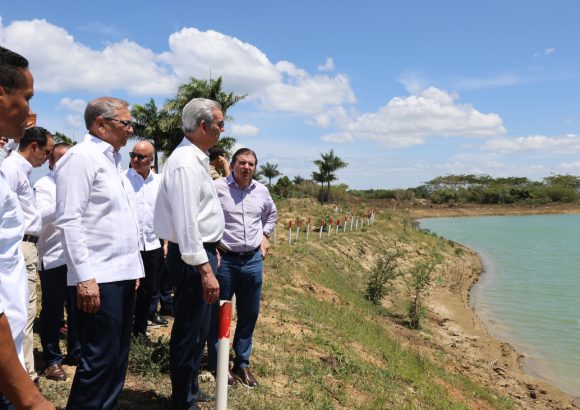
    The new growing season’s official rice sowing window kicked off on May 1 and will run through June 30, and rice producers across western Suriname have already kicked off preparation work for the critical planting period. For a cohort of local farmers, a water shortage during the last short growing season left them completely unable to plant their crops, making this main season — which aligns with the annual rainy season — a particularly high-stakes opportunity to recover lost yields. Already, this group has planted several hectares of rice in Middenstandspolder, the low-lying growing zone located between the towns of Wageningen and Henarbrug, near the Nickerie River.

    But just days after planting, unexpected heavy rainfall has left portions of these newly sown fields completely submerged, putting the young rice seedlings at severe risk of rotting before they can establish. Faced with this urgent threat, the affected farmers submitted a formal request to agricultural authorities to clear and dredge the region’s existing water retention dam, a structure originally built to hold water for crops during prolonged dry spells.

    William Waidoe, deputy director of the Western Region branch of Suriname’s Ministry of Agriculture, Livestock and Fisheries (LVV), confirmed that the ministry has already responded to the request. “We have opened up the dam for this group of farmers, so that excess water can drain freely with the tide out into the Nickerie River,” Waidoe explained in an official statement.

    The drainage improvement work is being funded and executed through a public-private partnership between the ministry and the local farming community. Under the collaborative model, LVV contributes heavy excavation equipment and a certified operator to carry out the dredging work, while farmers cover the cost of fuel, lubricants, and water for the construction crew. The project also includes clearing debris from the primary drainage channel that runs from Henarbrug toward Wageningen, expanding the system’s capacity to move large volumes of rainwater quickly.

    Waidoe emphasized that fast, efficient drainage of excess rainfall is non-negotiable to protecting planting outcomes during the rainy season. “When heavy rains hit, water needs to be able to flow unobstructed to the Nickerie River,” he said. “This approach lets us manage the irrigation and drainage system with the limited resources we have available.”

    For months, this collaborative model of shared responsibility for maintaining regional irrigation and drainage infrastructure has been consistently implemented across western Suriname’s rice belt, all with the core goal of creating safe, reliable conditions for rice planting. Waidoe noted that coordinated action between government authorities and producers delivers widespread benefits to the entire local rice sector, strengthening food security and supporting the livelihoods of thousands of agricultural workers across the region.

  • Global Debt Hits Record $353 Trillion

    Global Debt Hits Record $353 Trillion

    In its latest quarterly Global Debt Monitor report released May 6, 2026, the Institute of International Finance (IIF) has revealed that total global debt has climbed to an unprecedented record of nearly $353 trillion, marking one of the fastest quarterly expansions in global borrowing in nearly a year.

    Between January and March 2026, total global borrowing grew by more than $4.4 trillion, the sharpest quarterly increase recorded since the second half of 2025. The United States emerged as the single largest contributor to this jump, driven primarily by ballooning federal government borrowing, while China also recorded a notable surge in non-financial corporate debt over the same period.

    Alongside the headline debt figure, the IIF’s analysis tracked shifting investor behavior in global sovereign bond markets. While demand for U.S. Treasury securities has not collapsed, the report identifies early, gradual signs of diversification among global investors, who are increasingly increasing their holdings of Japanese and European government bonds. IIF analysts emphasized that this slow shift does not pose an immediate threat to the $30 trillion U.S. Treasury market, the largest sovereign debt market in the world.

    The global debt-to-GDP ratio, a key metric for measuring debt sustainability relative to economic output, held steady at approximately 305% in the first quarter of 2026. However, the report highlights a clear growing divergence between advanced and emerging economies: many developed nations have recorded gradual declines in overall debt levels, but emerging markets have continued to see sustained debt growth, with total emerging market debt hitting a new record of $36.8 trillion.

    Long-term structural risks continue to cast shadow over global debt sustainability, the IIF warns. Under current policy frameworks, U.S. national debt is projected to keep growing on its current trajectory. Broader global structural pressures—including aging populations across most major economies, rising spending commitments for defense and energy security, and massive capital investment required for AI and cybersecurity infrastructure—will likely push total global debt even higher in the coming years.

    Geopolitical instability adds an additional layer of upward pressure on borrowing needs. Ongoing conflicts in the Middle East and other unresolved geopolitical flashpoints are expected to increase government spending and borrowing costs for nations across the globe, further exacerbating debt trends.

    Contrary to common misconceptions, the $353 trillion global debt burden does not represent an amount owed to a single external creditor. The vast majority of global debt is held within the international financial system, borrowed from domestic and cross-border banks, pension funds, insurance companies, investment vehicles, sovereign governments, and private investors. As the IIF clarifies, global debt is largely a system of “mutual obligation”—one entity’s liability is almost always another entity’s asset and investment, both within national borders and across global markets.

  • Digital services firm expands with major investment

    Digital services firm expands with major investment

    A homegrown digital services leader based in Barbados has officially launched its expanded regional operations, backed by more than $1 million in capital investment, with ambitious plans to bring robust digitisation and information management support to governments and public institutions across the Caribbean.

    Abergower Barbados Limited, which has built a five-year track record as a large-scale digitisation provider, has established its new hub at the former Banks Brewery compound in Wildey, where it currently employs 40 skilled local workers. For founder and chief executive Robin Prior, the expansion marks more than just a growth milestone—it represents a long-term investment in Barbados’ digital economy and its emerging knowledge sector.

    “By establishing and expanding our operations here, we are investing in local talent, creating high-quality employment and building a knowledge-based ecosystem that positions Barbados as a leader in digital services within the Caribbean,” Prior explained during a media tour of the new facility, where he walked reporters through the end-to-end digitisation workflow. “Our team, now over 40 strong and growing, is at the heart of everything we do. We are deeply committed to developing our people, promoting from within and equipping our staff with the skills needed to drive in an increasingly digital world.”

    The cornerstone of the company’s current work is a landmark partnership with Bridgetown’s Queen Elizabeth Hospital, where Abergower is leading a full-scale digitisation of the facility’s millions of paper medical records. All operations adhere to strict international quality and data protection standards, with robust cybersecurity protocols built into every step of the process. Prior noted that more than $1.09 million in cutting-edge capital equipment—sourced and tested before shipment from the United Kingdom—powers the facility’s workflow, including high-performance scanners purpose-built for sensitive medical document processing.

    The 40 current staff members were selected from more than 100 local applicants and completed extensive training covering secure document handling, ISO-compliant quality management, and internal operational tracking that allows every file to be traced throughout the digitisation process. Abergower Facility Manager Wayne Banfield outlined the meticulous workflow designed to preserve data accuracy: after client boxes of records are received and sorted, scanning teams process each individual file, before scanned data moves to quality control teams that cross-verify digital copies against original physical documents. Once verified, records are re-packaged and stored for return to the client, while encrypted digital copies are secured in on-site and backup systems.

    Prior emphasized that strict data protection is non-negotiable for the firm: “None of the information we’re processing is available anywhere else except here and our backup systems, so there is no access, there is no knowledge, there is no ability for anybody to get into any of the information at all.” The company holds ISO 27001 certification, requiring annual independent audits of its data security processes and operational procedures to maintain compliance.

    Looking ahead, Abergower is poised to expand its partnerships and geographic footprint across the region. The firm is finalizing a memorandum of understanding with the University of the West Indies that will create new collaborative opportunities across multiple cutting-edge sectors, including artificial intelligence, additive manufacturing, microfilm conversion, and digital dental technology. The partnership will bridge academia and local industry, creating pathways to train the next generation of digital professionals while leveraging local expertise to drive innovation, according to Prior.

    Beyond Barbados, the company is already exploring expansion opportunities in several Eastern Caribbean and Caribbean nations: Saint Lucia, Guyana, St. Vincent and the Grenadines, and Antigua and Barbuda. As regional governments and institutions accelerate their own digital transformation journeys to deliver more modern, citizen-centered services, demand for Abergower’s specialized services has grown significantly. “The demand for modern citizen focused and future ready services has never been greater, and we are proud to play a part in that evolution,” Prior said, noting that the firm is positioned to support regional partners as they transition from legacy paper-based systems to efficient digital infrastructure.

  • EU-funded CDB programme strengthens trade capacity and competitiveness across Caribbean

    EU-funded CDB programme strengthens trade capacity and competitiveness across Caribbean

    After five years of targeted intervention across 15 Caribbean nations, an €8.7 million regional trade capacity building initiative, funded by the European Union (EU) and administered by the Caribbean Development Bank (CDB), has formally concluded, leaving behind measurable improvements to regional trade systems, institutional capabilities and global economic competitiveness.

    The programme merged two complementary frameworks: the European Development Fund’s Economic Partnership Agreement (EPA) initiative and the CARICOM Single Market and Economy (CSME) Standby Facility for Capacity Building, designed to address a longstanding gap between regional trade agreements and on-the-ground implementation. At a closing event held in Bridgetown, Barbados, stakeholders from participating governments, regional bodies and development partners gathered to celebrate the initiative’s outcomes and reflect on lessons learned for future collaborative projects.

    Over its operational lifespan, the programme delivered 27 separate targeted interventions across the Caribbean Forum (CARIFORUM) region, partnering with more than 100 local, national and regional institutions, and contributing over 11,000 hours of specialized technical assistance to build sustainable capacity. Each participating nation received more than €350,000 in combined grant financing and technical support, focused on priority areas including trade facilitation, export expansion and value chain development, technical and vocational skills training, quality infrastructure improvement, and the alignment of domestic food safety and certification standards with global requirements.

    Lisa Harding, Division Chief of CDB’s Private Sector Division, emphasized that the programme’s success grew from intentional collaboration, hands-on on-location support, and investment in long-term institutional strengthening rather than one-off policy changes. Results, she noted, are already visible across core economic sectors including trade, agriculture, skills development and export growth. “This programme reinforces a lesson we know well: Transformation does not come from agreements alone. It comes from implementation, capable institutions, and sustained partnerships,” Harding told attendees at the closing ceremony.

    Paula Byer, Acting Director of Foreign Trade at Barbados’ Ministry of Foreign Affairs and Foreign Trade, highlighted that the programme’s priorities align directly with the needs of small, vulnerable Caribbean economies, as well as Barbados’ own national development strategy and commitment to deeper regional integration. While trade agreements open new market access, Byer explained, nations must first build the institutional capacity and competitive muscle to capitalize on those opportunities. “MSMEs are the backbone of our regional economies, yet they face the greatest barriers in international trade,” she noted. A more integrated CARIFORUM economy, she added, allows Caribbean nations to pool collective resources, expand cross-border production networks, and compete more effectively in global markets, while long-term partnerships with the EU remain critical to advancing export diversification and sustainable, inclusive growth across the region.

    Chiara Tardivo, Team Leader for Economics and Trade at the EU-Caribbean Partnership, echoed that sentiment, expressing the EU’s continued commitment to Caribbean regional development and satisfaction with the programme’s concrete, verifiable outcomes across all participating countries. CARIFORUM Director-General Alexis Downes-Amsterdam further emphasized that market access alone cannot deliver broad-based economic gains. For small Caribbean economies to convert trade opportunities into tangible market presence and long-term growth, she explained, sustained investment in financing, targeted technical assistance, and ongoing institutional strengthening are non-negotiable.

    CDB officials confirmed that the programme’s interventions have laid a robust foundational framework for building more resilient, competitive national and regional economies across the Caribbean, positioning participating nations to better pursue their long-term development priorities in an increasingly interconnected global trading system.

  • Grenadian General Insurance celebrates 35 years of service

    Grenadian General Insurance celebrates 35 years of service

    On April 30, 2026, one of Grenada’s most enduring homegrown insurance providers, Grenadian General Insurance Company Limited, gathered industry leaders, government officials, loyal clients, dedicated employees, and key partners at the iconic Spice Island Beach Resort for a special “Toast to 35” Anniversary Cocktail Event, celebrating a major 35-year corporate milestone.

    For more than three decades, Grenadian General Insurance has anchored local economic security by providing coverage for residential properties, commercial enterprises, personal vehicles, and household livelihoods across the island. Over that time, the firm has cultivated a strong regional reputation rooted in three core values: consistent reliability, transparent fairness, and client-first care. This anniversary evening was designed not only to honor the company’s accumulated achievements over 35 years but also to publicly reaffirm its long-term commitment to serving the Grenadian people into the future.

    In his opening address to attendees, General Manager Kevon La Barrie reflected on the company’s humble origins and gradual growth, crediting the mutually beneficial relationships the firm has built across Grenada for its decades-long success. “Our longevity is not the result of accident or good fortune alone,” La Barrie noted. “It is built on the unwavering trust and confidence our policyholders have placed in us, the relentless dedication of every member of our team, and our consistent commitment to showing up for customers when they need us most.” He also outlined the company’s ongoing evolution, highlighting recent investments in modernized digital systems and expanded service offerings designed to improve convenience for its growing client base.

    A centerpiece of the evening’s formal program was a special Milestone Staff Award, created to recognize the longstanding contributions of tenured employees who have helped steer the company to success. The inaugural award was presented to Mignonette Hall, honoring her decades of professionalism and commitment to the firm’s mission. The event also paid tribute to all past and current team members, whose collective work has transformed Grenadian General Insurance into one of the nation’s most respected and established insurance institutions. Longstanding corporate clients were also recognized for their years of partnership, highlighting the cross-sector collaboration that has supported the company’s growth.

    Grenada’s Prime Minister, the Honourable Dickon Mitchell, delivered special guest remarks at the event, officially acknowledging the outsize impact Grenadian General Insurance has had on national development. Mitchell praised the firm for strengthening local business confidence and bolstering Grenada’s overall economic resilience over 35 years of operation. Following the Prime Minister’s address, all attendees joined in the ceremonial “Signature Toast to 35,” raising their glasses to celebrate the company’s past progress and toast to its future ambitions.

    As Grenadian General Insurance enters its 36th year of operation and embarks on its next chapter of growth, company leadership confirmed the firm will remain focused on three core priorities: elevating the standard of customer service across all lines of coverage, embracing digital and operational innovation to meet evolving client needs, and upholding its foundational mission of protecting what matters most to Grenadian individuals, families, and businesses.

  • AGRIC 2026 Draws Over 37,000 Visitors

    AGRIC 2026 Draws Over 37,000 Visitors

    Belize’s 2026 National Agriculture and Trade Show (AGRIC 2026), held under the forward-looking theme “Advancing Smart Agriculture,” wrapped up its four-day run having drawn more than 37,800 total attendees, official data from the country’s Ministry of Agriculture confirms. This attendance figure marks a modest uptick from the 2025 iteration of the event, though it remains slightly below the 41,000 visitor milestone set during the 2024 show.

    Beyond attendance numbers, the 2026 event delivered notable expansion across key metrics, growing 13% in the number of participating vendors, exhibition booths, and on-site concessions compared to previous years. The show was deliberately structured to showcase both sides of Belize’s agricultural identity: time-honored traditional farming practices that have shaped the nation’s food systems for generations, and cutting-edge agricultural technologies designed to boost productivity and resilience.

    One of the most popular and expanded highlights of this year’s event was the traditional Cabalgata, a horseback procession celebrating Belize’s deep-rooted livestock heritage. The event saw explosive growth in participation, jumping from just 34 riders in 2025 to 156 participating equestrians in 2026. The procession was complemented by live music performances and decorative floats that highlighted the cultural significance of livestock rearing to Belizean communities.

    Speaking on the event’s outcomes, Minister of Agriculture Rodwell Ferguson attributed the show’s success this year to robust cross-stakeholder collaboration between government agencies, private agricultural producers, technology providers, and local community groups. Ferguson emphasized that the growing scale and engagement at AGRIC 2026 mirrors broader positive trends in Belize’s agricultural sector, particularly the industry’s ongoing shift toward sustainable production practices that can adapt to intensifying climate challenges.

    Organizers reaffirmed that the annual National Agriculture and Trade Show has solidified its role as the country’s central platform for three core goals: driving agricultural innovation by connecting producers with new technologies, delivering practical education to farming communities and the general public, and fostering ongoing public engagement with the critical work of Belize’s agricultural sector. Looking ahead, organizers plan to continue expanding the event’s focus on climate-resilient and technology-driven agriculture in coming years.

  • Black Ink Marketing launches conference connecting diaspora to Jamaica’s real estate sector

    Black Ink Marketing launches conference connecting diaspora to Jamaica’s real estate sector

    A specialized investment conference connecting the global Jamaican diaspora to local property and investment opportunities in Jamaica is scheduled to take place on June 5, 2026, at the DoubleTree by Hilton Sunrise – Sawgrass Mills in South Florida, organized by Black Ink Marketing Event Solutions Limited.

    Billed as the “From Deed to Key Investment Housing Conference” and themed “Invest in Your Piece of Di Rock”, the gathering comes amid a growing, unmet demand from Jamaicans living overseas for credible, actionable guidance on property-related activities back home. In recent years, more diaspora members have pursued projects ranging from purchasing residential property to developing inherited land and securing financing for real estate ventures, but many have faced gaps in trusted information and access to legitimate industry partners. This conference was developed specifically to address that gap.

    The full-day event will combine educational sessions, collaborative panel discussions and structured networking opportunities, with leading industry experts covering a wide spectrum of critical topics for diaspora investors. Attendees will gain insights into the step-by-step process of securing official land titles, common real estate fraud schemes and how to avoid falling victim to them, the full pipeline of real estate investment from capital raising to project completion, strategies for building long-term wealth that extends beyond physical land and housing, structuring assets to protect generational legacies, public-private partnership initiatives in the Jamaican housing sector, and modern construction techniques that build climate-resilient, future-proof structures.

    Headlining the event as keynote speaker is David Mullings, a prominent Jamaican entrepreneur and investor who serves as chairman and chief executive officer of Blue Mahoe Capital. Other key participants will include representatives from real estate development firms, financial lending institutions, legal practices, realty agencies, and Jamaican government bodies, all of which will have the opportunity to connect directly with attendees who are actively seeking to invest or purchase property.

    Maxine Miller, the lead organizer of the conference, explained that the core mission of the initiative is to close the persistent information gap that has prevented many diaspora members from pursuing their property goals, while creating a vetted, trusted platform for engagement between overseas Jamaicans and local industry and government stakeholders in Jamaica.

    Miller emphasized that the event is far more than a one-time industry gathering: “This is more than just a conference; it is a movement focused on empowering Jamaicans abroad to confidently invest, build wealth and secure their legacy through property ownership and development back home.”

    The South Florida launch was strategically chosen to serve the large Jamaican diaspora community based in the region, and organizers intend for this to be the first in a series of international events designed to increase diaspora participation in Jamaica’s housing and broader investment ecosystem. As Miller put it, “We believe the South Florida staging will serve as the first of several international engagements aimed at strengthening diaspora participation in Jamaica’s housing and investment landscape. We are taking Jamaica…to Jamaicans.”

    Registration for the 2026 conference is open now, with tickets available for purchase through the official event website at spurropen.com.