分类: business

  • RBL pauses fee hike after pushback

    RBL pauses fee hike after pushback

    Trinidad and Tobago’s largest commercial lender, Republic Bank Limited (RBL), has halted its planned broad fee increases scheduled to take effect May 1, pulling the updated fee schedule from its official website just days after widespread public and industry backlash over the changes. The decision to pause the rollout comes 24 hours after Central Bank Governor Larry Howai confirmed that the banking regulator was in active discussions with RBL to strike a fair balance between the institution’s revenue needs and the affordability of banking services for everyday consumers and businesses.

    Last month, the bank unveiled a sweeping slate of fee adjustments affecting nearly every core banking service, ranging from routine day-to-day transactions to penalty charges for account mismanagement. The most notable proposed increases included a jump in non-sufficient funds (NSF) fees from $34.50 to $57.50, an identical hike to overdraft fees, and a doubling of some late loan payment penalties to a maximum of $100. Additional changes raised charges for paper-based services including cheque books, manager’s cheques and foreign currency drafts, a move the bank framed as an incentive to push customers toward cheaper digital banking platforms. New or adjusted debit transaction fees were also set to roll out across multiple popular account types, with the bank clarifying that only in-branch teller transactions would face the new charges — no increases were planned for ATM transfers, ACH transactions, online and mobile banking, or point-of-sale card payments.

    In a public advertisement printed in national newspapers on the day of the pause announcement, RBL acknowledged that it had received widespread customer feedback and concerns about the planned changes. “At Republic Bank, we’ve been listening closely to the conversations and feedback regarding our updated service fees. We understand that any change to your banking costs causes concern, and we’ve noticed there has been some confusion about what these changes actually mean for you,” the bank’s statement read.

    Citing customer input as the core driver of the pause, the bank confirmed: “Because we value your feedback, we have decided to pause the fee increases originally set for May 1, 2026 (notice of which was given on April 1, 2026). We will share the new implementation dates with you soon. We want to take this time to clear the air and ensure you have all the facts.” The bank added that its ultimate goal remains making banking “convenient, safe and—most importantly—affordable” for all account holders, and noted that the 90-day pause will give branch teams time to meet directly with customers, clarify misinformation, and help users identify the lowest-cost banking options for their needs.

    In explaining the original rationale for higher paper service fees, RBL noted that fewer than 5% of its active customers regularly use cheques, and maintaining legacy paper-based banking systems creates significant unnecessary costs for the institution. “The world is moving away from paper cheques because digital payments are faster, safer, and much cheaper for you. While we need to recover some of those costs, our main goal is to help your transition to the free or lower-cost ‘anytime, anywhere’ digital options that save you a trip to the bank,” the bank’s original statement read.

    As of the pause announcement, attempts by media to reach Republic Financial Holdings Ltd (RFHL) President Nigel Baptiste and Vice-President Karen Yip Chuck for additional comment were unsuccessful.

    The Central Bank’s engagement with RBL began earlier this week, after customers and industry groups raised widespread alarms about the fee hikes. Speaking to reporters Wednesday following the inaugural FINLIT Live 2026 financial literacy event in Macoya, Howai confirmed that ongoing negotiations were focused on finding a balanced outcome. “I’m sure there are ways in which we would be able to find some kind of a balance between their need to ensure that they are properly compensated for the services that they offer and the cost that is passed on to the consumers,” Howai told reporters.

    The governor explained that while the Central Bank lacks legislative authority to issue fines for routine bank price increases, it can push for revisions to fee structures that are deemed excessive or poorly communicated. “What we will do is engage with the banks, and the banks do listen to us and they do respond to us, and I am sure that going forward on the whole issue of fees that we will have a regime that customers will be comfortable with,” he said. Howai added that the core questions under discussion remain whether fee levels are justifiable, communicated clearly, and deliver fair value to consumers.

    Since RBL first announced the fee changes on April 28, leadership of business chambers across the country have publicly voiced opposition to the plan, highlighting the disproportionate harm the higher fees would inflict on small and medium-sized enterprises, service sector businesses, and low-income households. While industry groups acknowledged the Central Bank’s intervention and RBL’s stated reasoning for the changes, they have raised ongoing questions about the fairness of the proposed fee structure amid the bank’s strong recent financial performance.

    Financial filings show that RBL recorded a net profit of $1.07 billion for the first half of its 2026 fiscal year, which ended March 31. That figure represents a 5.4% increase ($54 million) compared to the $1.01 billion profit the bank posted in the same six-month period in 2025.

  • IMF Urges Antigua and Barbuda to Address Arrears, Tighten Spending and Expand Tax Base

    IMF Urges Antigua and Barbuda to Address Arrears, Tighten Spending and Expand Tax Base

    Against a backdrop of uneven economic progress for the Caribbean twin-island nation, the International Monetary Fund has issued a clear call for additional fiscal policy overhauls, warning that unresolved payment arrears and persistently high financing requirements still put long-term debt stability at risk. In its newly published Article IV consultation report released this week, the global financial body acknowledged the meaningful strides Antigua and Barbuda has already made to cut public debt levels and shore up its overall fiscal standing, but flagged that long-outstanding payments owed to Paris Club creditors and domestic vendors remain a pressing unresolved issue.

    “Persistent arrears and elevated gross financing needs are constraining access to longer-term financing and undermining debt sustainability,” the IMF Executive Board said in an official statement following its assessment. Board directors have pushed the Antiguan and Barbudan government to build a robust, all-encompassing strategic framework that can clear existing arrears, diversify the country’s sources of financing, and free up budget space for investments that strengthen the economy’s ability to absorb future shocks.

    Beyond clearing backlogged payments, the IMF has laid out a suite of additional policy recommendations to shore up public finances. These include new measures to boost government revenue collection that will help rebuild depleted fiscal buffers and keep the country on track to meet its core fiscal goals. Top priorities outlined by the fund include expanding the overall tax base, rolling back unnecessary tax exemptions, capping growth in current public spending, and refining the targeting of social support programs to ensure aid reaches the populations that need it most.

    Directors also emphasized the need for institutional upgrades, urging national authorities to strengthen fiscal governance structures and enhance oversight, transparency, and standardized reporting for both general government finances and state-owned public enterprises. These changes, the IMF argues, would reduce mismanagement risks and build greater investor confidence in the country’s fiscal trajectory.

    The IMF’s report did highlight tangible recent progress for Antigua and Barbuda: between 2024 and 2025, the nation’s fiscal position strengthened notably, driven by improved tax enforcement and collection, higher capital inflows from the country’s popular Citizenship-by-Investment Programme, disciplined government spending, and controlled modest increases in capital expenditure. The fund projects that the nation will post a primary budget surplus of nearly 5 percent of gross domestic product (GDP) in 2025, an improvement that has helped drive significant debt reduction. Public debt has fallen sharply from a peak of 101 percent of GDP in 2020 to an estimated 68 percent of GDP in 2025, a decline directly tied to the stronger fiscal performance of recent years.

    Even with these notable gains, the IMF stressed that significant headwinds remain. Persistent global economic uncertainty and long-standing structural debt vulnerabilities continue to create major downside risks for the small open economy, which relies heavily on tourism and foreign investment. To address these risks and prevent the accumulation of new arrears in the future, the fund has called for sweeping upgrades to the country’s cash flow management and debt governance practices.

  • Overcharging Passengers Could Put Bus Operators Off the Road

    Overcharging Passengers Could Put Bus Operators Off the Road

    Starting May 12, 2026, bus operators across Belize will access targeted relief from skyrocketing fuel costs, through a joint $3 per-gallon diesel subsidy program launched by the Belize Bus Association and the country’s Ministry of Transport. The Belizean government is committing $1.5 million in public funds to cover the subsidy over a three-month period, framing the policy as a shared effort to balance the pressures of rising operational costs for transit providers and affordability for daily commuters. The intervention comes amid growing public frustration, as regular commuters have reported widespread complaints that some unscrupulous bus operators have already raised ticket prices far above the officially approved fare levels, leaving working households squeezed by ongoing cost-of-living increases. Transport Minister Dr. Louis Zabaneh addressed the delicate balancing act between supporting transit providers and protecting consumers in an interview with local media, explaining that the final subsidy amount was a compromise that reflected the country’s fiscal constraints. “We do have persons who naturally will express their views that things are difficult,” Zabaneh noted. “I must say that the adjustment is less than what was contemplated three weeks ago. Even so, we understand it is a shared burden between the operators who did not get how much they were asking for in the subsidy. Some were asking for ten dollars. That was not palatable. They got three dollars.” Under the policy framework, operators are permitted to raise fares by up to $1 for long-distance routes, a far smaller increase than the $3 to $4 hike that some operators had initially pushed for. This means both commuters and the general public, through taxpayer-funded subsidy contributions, share the weight of higher global diesel prices, according to the minister. In response to public reports of unapproved overcharging, the Ministry of Transport has launched a public reporting mechanism to hold rogue operators accountable. The ministry has published a dedicated phone number and announced the reporting initiative across its official social media channels, encouraging commuters to submit reports of inflated fares immediately after an incident. Ministry enforcement teams will launch prompt investigations into every credible claim, Zabaneh confirmed, and operators found guilty of consistent overcharging will face severe penalties, up to and including revocation of their operating licenses. Local resident Paul Lopez echoed the concerns of many commuters, saying, “There are some residents complaining that on certain rides they are paying more than what they understand they are supposed to be paying.” This report is a transcript of an evening television newscast covering the policy rollout, originally published online for audiences unable to view the live broadcast.

  • From Wage Bands to Percentages: What It Means for Your Paycheck

    From Wage Bands to Percentages: What It Means for Your Paycheck

    As part of a decades-long push to modernize Belize’s public social safety net, the Social Security Board (SSB) is weighing a sweeping structural reform that would replace the country’s outdated fixed wage band contribution model with a progressive percentage-based system, following six weeks of nationwide public consultations that gathered input from more than 1,000 stakeholders. The proposed overhaul, which will not take effect until at least 2027 even if finalized, marks one of the most significant changes to Belize’s social security program in a quarter century.

    Currently, Belize is one of just four nations globally that still relies on a rigid 13-tier fixed wage band system, where workers are sorted into contribution categories based on their weekly earnings. This outdated framework creates redundant administrative work, extra paperwork for both private businesses and the SSB itself, and creates unnecessary complexity for payroll management across the country’s labor market.

    Under the initial draft of the reform, the SSB proposed moving to a single flat percentage contribution model aligned with the CARICOM regional standard, which would split contributions at 5.41% from employers and 4.59% from employees. The proposal also includes a long-overdue update to the minimum contribution floor, raising the baseline from $55 BZD — a figure that has not been adjusted since 2001 — to a proposed $130 BZD. SSB CEO Jerome Palma noted that the $130 baseline was identified as a “sweet spot” during consultations, and clarified that part-time workers, who rarely meet the 40-hour weekly work threshold that would hit the $130 earnings mark, would still be eligible for adjusted contribution terms under existing legislation.

    But feedback from the consultation process revealed a key concern from low-income workers: a single flat rate would actually increase contribution deductions for workers earning near the bottom of the income scale. For example, a worker earning $160 BZD per week currently pays an effective contribution rate of roughly 2.46% under the existing wage band system; under the original flat rate proposal, that worker’s total deduction would rise significantly.

    In response to that widespread feedback, the SSB now plans to revise the proposal to incorporate a multi-tier progressive structure, with three income brackets that maintain higher employer contribution rates for lower-income earners, aligning with public expectations for a progressive system that does not place undue burden on low-wage workers. Palma explained that the overwhelming consensus from consultations called for retaining tiered protection for lower-income workers, a revision the board will integrate into the updated draft.

    Overall, roughly 60% of consultation participants supported the core shift to a percentage-based system, backing the reform with only minor structural adjustments. After revising the draft proposal to incorporate public feedback, the SSB will hold a second round of public consultations later in 2026 to gather additional input before finalizing the plan. Officials have confirmed that no changes to payroll deductions will take effect in 2026, so Belizean workers and employers will not see any adjustments to their Social Security contributions this year regardless of the board’s final decision.

  • SSB Invests Record $130 Million in 2026

    SSB Invests Record $130 Million in 2026

    As Belizean workers continue contributing to the national Social Security system to secure their post-retirement benefits, the board managing the public fund has lifted the curtain on where those contributions are being allocated – revealing a landmark pace of investment activity for 2026 that officials say is designed to safeguard long-term pension payouts.

    Between January 1 and April 30 of 2026 alone, the Social Security Board (SSB) has deployed $130 million in new investments across domestic assets, marking an all-time high for any full year of SSB activity, let alone a four-month window. Leo Vasquez, SSB’s General Manager of Finance and Investment, laid out the details of the aggressive investment push, highlighting two Hydro Belize-linked assets as the largest contributors to the year’s unprecedented spending.

    Of the total new investment, $1.4 million has gone toward purchasing equity in Hydro Belize, the independent energy producer that was previously known as Fortis. This stake gives SSB a 30% holding in the firm and two seats on Hydro Belize’s board of directors. Unlike the utility provider BEL, which distributes power across the country, Hydro Belize handles the generation side of the market, supplying 100% of its output to BEL for distribution. SSB projects that the equity stake will generate roughly $4 million in annual dividend payments, and the board plans to hold this asset for far longer than the 20-year term of the second Hydro Belize investment.

    The second, larger Hydro Belize holding is a $42.5 million bond issue carrying a 6% annual return. This bond will mature in 20 years, at which point SSB will recoup the full principal investment. In addition to the Hydro Belize positions, the SSB’s new investments span a range of asset classes, from business loans to domestic commercial ventures and large-scale real estate developments.

    To date, the SSB’s total domestic investment portfolio stands at $654 million. Looking ahead, agency officials have confirmed that they are exploring opportunities to expand the fund’s reach into international markets, a move that would diversify SSB’s holdings and potentially open up new sources of returns to support future benefit obligations.

    This investment push comes as public retirement systems across small developing economies work to grow their asset bases fast enough to keep pace with rising pension demands as populations age. By accelerating investment activity now, SSB leaders say they are positioning the fund to maintain steady pension and benefit payouts to retirees for decades to come.

  • SSB Reviews Plan That Could Change Your Pay Cheque Deductions

    SSB Reviews Plan That Could Change Your Pay Cheque Deductions

    Scheduled for implementation discussion by 2026, a fundamental restructuring of Belize’s social security contribution system is moving forward, with the Social Security Board (SSB) currently refining a landmark proposal that would reshape how workers’ payroll deductions are calculated. The reform effort comes after months of extensive nationwide outreach that gathered input from government representatives, labor unions, business owners, and working people across the country, representing more than 1,000 individual stakeholders.

    For decades, Belize has relied on a rigid wage-band framework that divides workers into 13 distinct contribution tiers based on their earnings brackets. This long-standing system is now targeted for replacement under the SSB’s proposal, which would shift to a proportional income-based calculation structure. Board officials argue that the update would streamline administrative processes, create a more transparent deduction system, and boost overall operational efficiency for both the agency and contributing employers.

    One of the most consequential proposed updates addresses the contribution floor — the minimum earnings base used to calculate Social Security deductions. This figure has not been adjusted since 2001, remaining stuck at $55, and the proposal would raise it to $130 to align with decades of wage growth and economic change in Belize.

    According to SSB Chief Executive Officer Jerome Palma, early public feedback has already shaped the trajectory of the reform, leading the board to walk back an initial plan for a universal one-size-fits-all flat contribution model. During consultations, lower-income workers and advocacy groups raised consistent concerns that a single flat rate would disproportionately increase payroll deductions for the lowest earning cohorts, leaving them with a higher proportional burden than they face under the current system.

    After compiling and analyzing feedback from the first round of engagement, the board confirmed that there is broad public support for a multi-tiered proportional system that would apply different rules to lower, middle, and higher income groups to ensure fairness across earnings levels. The SSB will now revise the draft proposal to incorporate this input, with plans to launch a second round of public consultations later this year to gather additional feedback before finalizing any changes.

  • SSB Reveals Record $130 Million Investment

    SSB Reveals Record $130 Million Investment

    In a landmark announcement for Belize’s social security system, the Social Security Board (SSB) has disclosed that it has deployed a record-breaking $130 million in new investments since the start of 2026 – the largest single-year capital allocation in the institution’s history.

    Every employed Belizean contributes regularly to the national Social Security program, which provides critical social safety net benefits including retirement pensions, disability support, and medical assistance to eligible citizens. This latest investment update answers long-standing public interest about how the program’s accumulated funds are managed and deployed to generate long-term returns.

    According to SSB officials, the majority of this year’s new investment has been allocated to shares and bonds issued by Hydro Belize, the national energy provider that supplies 100 percent of the power generated for Belize Electricity Limited (BEL), the country’s main electricity distributor.

    Leo Vasquez, SSB’s General Manager of Finance and Investment, broke down the tangible benefits of this strategic allocation for the program. Vasquez noted that the equity portion of the Hydro Belize holdings alone is projected to deliver approximately $4 million in annual dividend income to the Social Security fund. This consistent passive income will strengthen the program’s financial position and support its ability to pay out future benefits to contributors.

    With this latest round of investments, the total value of SSB’s holdings in domestic Belizean markets now reaches $654 million. Looking ahead, institution leaders have identified expansion into international markets as the next strategic priority to diversify the fund’s portfolio and reduce exposure to domestic market volatility.

    More in-depth reporting on this historic investment, including additional details about portfolio allocation and long-term strategic plans, will be broadcast during News 5 Live’s 6 o’clock prime time segment this evening.

  • IMF Calls for Better Connectivity, Financial Sector Reforms and Skills Development in Antigua and Barbuda

    IMF Calls for Better Connectivity, Financial Sector Reforms and Skills Development in Antigua and Barbuda

    Against a backdrop of mounting global economic volatility and escalating climate-related risks, the International Monetary Fund (IMF) has laid out a comprehensive roadmap of targeted long-term reforms designed to lift Antigua and Barbuda’s global competitiveness, reinforce financial governance, and harden the small island nation against future economic shocks.

    The recommendations are outlined in the IMF’s latest Article IV consultation, a regular statutory assessment of member states’ economic health and policy frameworks. In the document, fund directors emphasize that upgrading domestic connectivity is a critical foundational step to unlock growth in trade, tourism—Antigua and Barbuda’s historic economic backbone—and boost the country’s overall competitive standing in the Caribbean region. To complement infrastructure improvements, the IMF urges the Antiguan government to streamline inefficient port and customs clearance procedures, while adopting a rigorous approach to prioritizing public infrastructure projects to avoid wasteful spending and unsustainable debt burdens.

    One pressing bottleneck highlighted by the consultation is the country’s persistent skills gap. IMF directors warn that without targeted intervention to address workforce shortages, the constraint will drag on medium and long-term economic expansion, limiting the country’s ability to capitalize on growth opportunities in key sectors.

    Beyond competitiveness and labor market adjustments, the IMF places significant emphasis on strengthening regulation of the domestic financial sector, with a particular focus on the credit union segment. The fund recommends a fundamental shift away from traditional compliance-focused supervision toward a modern risk-based oversight model, alongside targeted actions to improve loan loss provisioning practices and shore up capital buffers across the sector to mitigate systemic risk.

    Two additional policy priorities identified in the report are strengthening the country’s anti-money laundering (AML) and counter-terrorism financing (CTF) regulatory frameworks, and enhancing oversight of Antigua and Barbuda’s high-profile Citizenship by Investment Programme (CIP), a key source of foreign revenue for the island nation. The IMF also stresses that upgrading national data collection and management systems is an overlooked but critical reform, noting that robust, high-quality economic data is a prerequisite for crafting effective, evidence-based public policy that drives sustainable growth.

    The release of the recommendations comes as Antigua and Barbuda maintains a steady trajectory of economic expansion. The IMF projects the country will record real gross domestic product growth of 3 percent in 2025, with growth largely fueled by ongoing construction activity, even as the key tourism sector faces softer demand than in previous post-pandemic recovery years.

  • Onion glut leaves farmers struggling as imports persist, BAS warns

    Onion glut leaves farmers struggling as imports persist, BAS warns

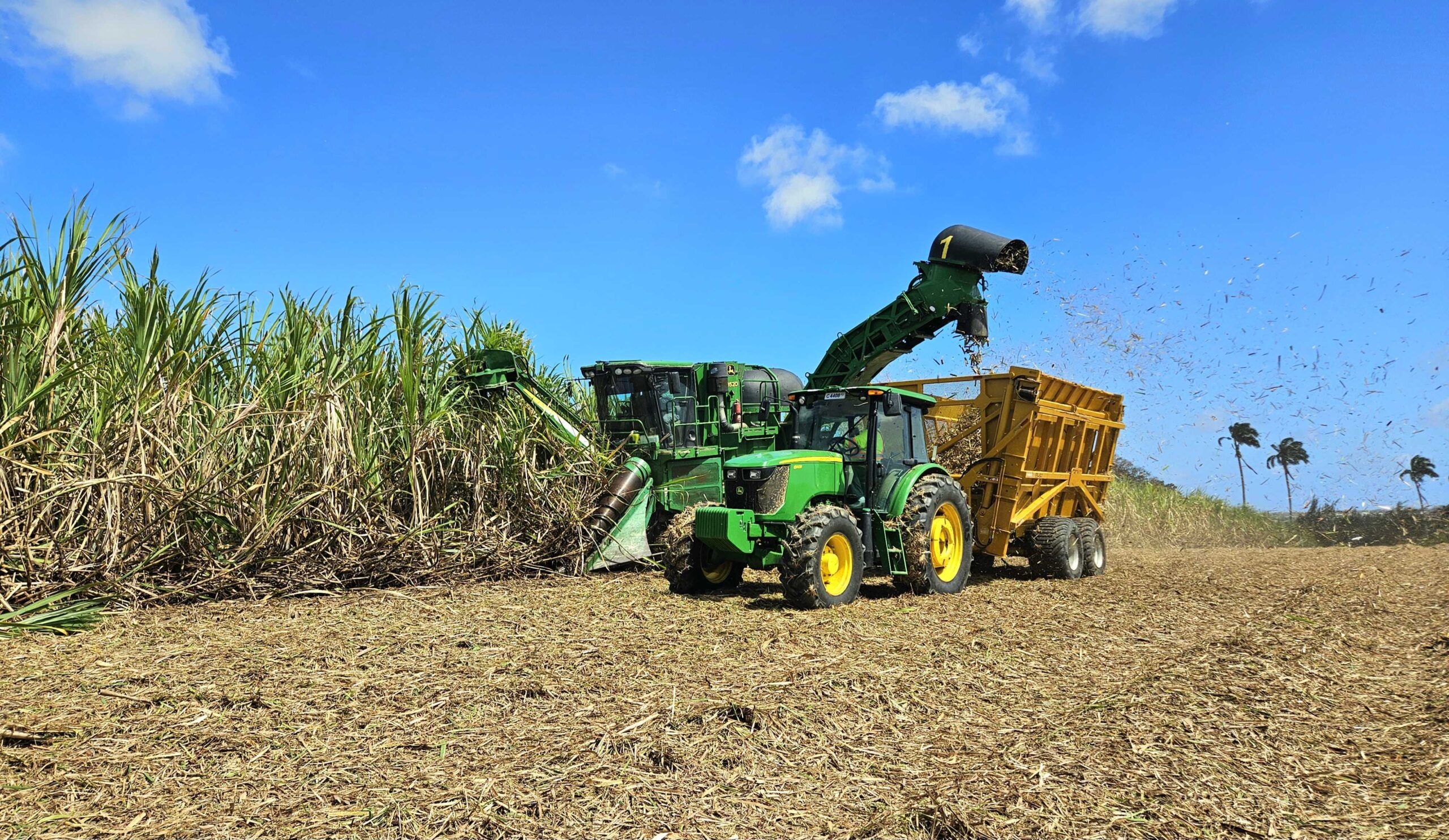
    A paradoxical crisis has hit Barbados’s onion sector: after a successful government-backed push to expand domestic cultivation that delivered a strong harvest, hundreds of local farmers are now unable to offload their produce, according to warnings from the Barbados Agricultural Society (BAS).

    James Paul, chief executive officer of the industry association, laid out the roots of the crisis during a press briefing. Over the past year, agricultural advocates successfully persuaded local growers to scale up onion planting, pushing total cultivated acreage past the 100-acre mark – a major milestone for the country’s goal of boosting food security and reducing reliance on imports. But this win has laid bare deep, long-unaddressed flaws in the sector’s marketing, distribution and infrastructure frameworks.

    The most pressing issue, Paul explained, is the unregulated flow of imported onions that continues to saturate the local market exactly when domestic crops reach peak harvest. Competing against cheaper foreign shipments puts local producers, who already face far higher production costs than their international competitors, at an insurmountable disadvantage. Paul argued this misaligned policy undermines the very government efforts to expand domestic agriculture.

    “I do not think it makes any logical sense to allow imports during windows where we know a large local harvest is incoming,” Paul said. “When we encourage farmers to invest in expanding production, we have a responsibility to plan ahead for how that produce will reach consumers. Right now, we are forcing growers to compete with imported goods on uneven ground, and that is unfair.”

    Beyond misaligned import policy, gaps in post-harvest infrastructure and storage are compounding farmers’ struggles. Unlike imported onions, which are treated to withstand long-haul shipping, locally grown onions require carefully controlled, well-ventilated storage environments that protect the crop from pests and spoilage. Many of these specialized facilities have fallen into disrepair, Paul said, pointing to the shuttered historic drying plant in Foursquare, St. Philip as an example of the lost infrastructure the sector needs to restore or replace.

    Fragmented coordination among individual farmers has also weakened the sector’s position, Paul added. Without collective organizing, small-scale growers lack collective bargaining power when negotiating with middlemen, and cannot deliver the consistent supply and pricing that major buyers require. This disorganization leaves individual producers vulnerable to exploitation, often forcing them to sell their crop below the cost of production just to clear inventory.

    This dynamic threatens the long-term viability of domestic onion cultivation: if farmers cannot earn a reasonable return on their investment this season, Paul warned, few will be willing to expand planting in the coming year. Currently, just 20% of Barbados’s total onion demand is met by local production, but Paul said the country has the natural capacity to meet 100% of domestic demand if systemic flaws are addressed. With targeted improvements to storage, marketing and coordination, Paul estimated that total cultivated acreage could double to 200 acres within 12 months, creating a more resilient, self-sufficient domestic onion sector.

    As intermittent rainfall threatens remaining unharvested crops, Paul has urged all local onion farmers to share real-time updates on their yields and harvest timelines with the BAS to enable better cross-sector market coordination. He also called for closer collaboration between private sector stakeholders and the state-owned Barbados Agricultural Development and Marketing Corporation (BADMC) to fix gaps in the national onion value chain.

    “Barbados has the ability to fully supply our own onion demand, we can do this,” Paul emphasized. “Right now, we are holding ourselves back from reaching our full potential by failing to put the right systems in place. We all have to work together to fix this – we cannot let farmers invest their time and money into a crop just to be left stuck with unsellable produce.”

  • Worrell: Currency shifts won’t affect Caribbean economies

    Worrell: Currency shifts won’t affect Caribbean economies

    Long-established market forces have cemented the United States dollar’s position as the undisputed global standard of value, and recent fluctuations in other major currencies will bring no meaningful economic shifts to Caribbean nations, according to a prominent former central banking leader from the region.

    Dr Delisle Worrell, former governor of the Central Bank of Barbados and a veteran International Monetary Fund consultant, laid out this argument in the May issue of his regularly published Economic Letter, which carries the headline *The Dollar is the World’s Standard of Value*.

    Worrell stressed that Caribbean economies are structured entirely around the US dollar for cross-border activity. Every key external transaction for the region—from pricing tourist packages to settling export and import trades, to securing foreign debt—uses the US dollar as the benchmark, and all clearing processes run through dollar-denominated accounts hosted by American commercial banks and the Federal Reserve Bank of New York. Against this backdrop, recent upward movements in the value of sterling, the Canadian dollar, the euro, the Japanese yen and the Chinese renminbi will not alter core economic conditions for Caribbean countries, he said.

    The former governor, who also founded the Central Bank of Barbados’ research department, pointed out that the primary spillover harm from today’s global economic instability hitting Caribbean nations is imported inflation. He outlined a clear threshold for policy response: only countries where governments hold a fiscal surplus of revenue over current expenditure exceeding 2% of GDP have the capacity to roll out targeted subsidies to cap fuel and essential goods prices. For all other regional economies, there are few policy tools available to ease inflationary pressure, he added.

    Worrell also issued a strong caution against one commonly proposed policy adjustment: revaluing domestic currencies to counteract inflation brought in from global markets. He explained that if a central bank drew down its foreign currency reserves to push the domestic exchange rate higher, market participants including commercial banks, import and export firms, and tourism operators would almost certainly hoard the cheapened US dollars instead of passing the exchange rate benefits through to consumers and other end users.

    Global monetary data backs his broader claim about the dollar’s dominance: out of 180 legally recognized sovereign currencies across the world, the value of all 179 non-US currencies is defined relative to the dollar, Worrell noted. This status quo is not dependent on US government policy, shifts in the US or global economy, or price movements of gold, oil or other commodities, he said. It also has not been dislodged by the emergence of cryptocurrencies built on blockchain technology or any other fintech innovation. “All economic values are based on the dollar,” he concluded.

    Worrell frames the dollar’s global benchmark status as a historical convention, comparable to the widespread adoption of Greenwich Mean Time as a global time standard. He traced the 80-year evolution of this arrangement: after World War II ended in 1945, the global economy split into two separate geopolitical and economic blocs, with the United States holding overwhelming sway over trade and finance in the Western democratic sphere. This established the dollar as the reference currency for all nations outside the Soviet-led bloc. When the Soviet Union collapsed in the early 1990s, the dollar’s use as a global reference spread to every corner of the world.

    Crucially, Worrell emphasized that the dollar’s dominance emerged from organic market practice rather than top-down policy mandate from the United States or global institutions. Individual consumers, multinational companies and financial institutions across the world have consistently chosen the dollar as the go-to reference for settling cross-border transactions. He offered a common example: a consumer in Jamaica purchasing goods from Chinese suppliers will almost always first calculate the cost in US dollars before converting the total to Jamaican dollars for their final budgeting.

    This entrenched market preference has outlasted every challenge to the dollar’s status, Worrell argued. Even as major economies including post-war Germany, Japan and most recently China rose to become the world’s second-largest economy, global markets have retained the dollar as the primary settlement currency. The dollar’s benchmark position also emerged unscathed from the 2007–2008 global financial crisis and the subsequent downgrading of market confidence in US government creditworthiness.

    Today, despite growing uncertainty around the direction of US policy and the global economic volatility this unpredictability generates, there is no evidence of a broad global shift away from the dollar toward the euro, renminbi or any other alternative currency to serve as the universal standard of value, Worrell said.