分类: business

  • Economist Calls for CARICOM Unity on US Surcharge Move

    Economist Calls for CARICOM Unity on US Surcharge Move

    As the United States gears up to implement a 10 percent import surcharge via World Trade Organization (WTO) channels, a prominent Belizean economist is sounding the alarm over the disproportionate harm this measure could inflict on small, trade-dependent economies across the Caribbean, calling for coordinated collective action from the Caribbean Community (CARICOM) bloc.

    Dr. Phillip Castillo, a local economic expert, has pushed back against the core justification the US has offered for the new tariff: addressing persistent balance-of-payments deficits. Castillo argues that this rationale falls apart when considering the unparalleled global dominance of the US dollar, which puts Washington in a unique position to avoid the kinds of balance-of-payment crises that plague smaller nations. In an exclusive interview with The Reporter, he broke down the specific risks for Belize, noting that the Central American nation already runs a substantial trade deficit with the United States — importing far more American goods than it is able to export to the large North American market.

    For Belize, whose export volume to the US is already limited, the new 10 percent surcharge would act as yet another prohibitive trade barrier, further squeezing domestic producers’ access to American consumers and worsening the country’s already lopsided trade balance. Beyond the immediate impact on Belize, Castillo emphasizes that the moment underscores a long-running need for stronger regional coordination among CARICOM member states. Small individual Caribbean nations lack the economic clout to negotiate effectively with major global powers like the United States, but a unified CARICOM bloc would carry far more leverage to push back against harmful trade measures, he explained.

    Castillo also questioned the broader credibility of the US’s decision to seek WTO approval for the surcharge, pointing out that Washington has a recent history of imposing unilateral tariffs on dozens of countries without going through the WTO’s multilateral dispute and approval process. The current formal application to the global trade body, he suggested, looks less like a commitment to multilateral process and more like an attempt to retroactively grant international legitimacy to a trade policy that fits a pattern of unilateral American action.

    The US formally notified the WTO of its plan to impose the 10 percent surcharge earlier this year, invoking Section 122 of the 1974 US Trade Act to back its claim that the measure is necessary to correct balance-of-payments imbalances. WTO members are scheduled to begin formal consultations with Washington on the proposal in the coming weeks, a process Castillo says is not without opportunity for small economies. Even with the odds stacked against them, the multilateral consultation process creates a formal space for smaller nations to collectively air their opposition and potentially shift American trade policy before the surcharge is implemented, he noted.

    Still, Castillo warned that if the US moves forward with the measure despite global pushback, the global trading system will face deeper disruptions, with the worst fallout falling on vulnerable small economies like Belize that lack the economic size and diversification to absorb external trade shocks. The proposed surcharge comes at a particularly fragile moment for the global economy, which is already grappling with skyrocketing oil prices tied to escalating geopolitical tensions between the US, Israel and Iran, as well as lingering unresolved tariff disputes and persistent supply chain disruptions that have left global growth already teetering.

  • Belize Completes WTO Trade Review in Geneva

    Belize Completes WTO Trade Review in Geneva

    GENEVA, May 7 — The small Central American nation of Belize has formally concluded its fourth Trade Policy Review at the World Trade Organization’s Geneva headquarters, wrapping up two days of multilateral discussions that highlighted the country’s post-crisis progress and ongoing reform goals.

    The periodic review, a core WTO mechanism designed to examine member states’ trade frameworks, assessed every dimension of Belize’s current trade strategy, from regulatory overhauls to targeted initiatives aimed at driving inclusive economic expansion and drawing foreign direct investment. Throughout the review process, fellow WTO member nations delivered widespread positive feedback for Belize’s remarkable economic resilience in the wake of two major disruptive events: the global COVID-19 pandemic and Hurricane Lisa, a powerful storm that caused widespread infrastructural and economic damage across the country in 2022. Despite the overlapping shocks, members noted that Belize has maintained consistent gross domestic product growth and stayed on track with its long-term development agenda.

    Much of the praise centered on Belize’s active push to modernize its national trade ecosystem through a series of business-friendly regulatory reforms. A key flagship initiative highlighted during the review is the ongoing development of a unified Trade and Investment Electronic Single Window, a digital platform that will consolidate all cross-border trade documentation and approval processes into a single online portal. Once fully operational, the system is projected to cut down processing times for imports and exports significantly, reduce administrative overhead for domestic and international businesses operating in Belize, and improve the country’s competitiveness in global markets.

    WTO members also highlighted Belize’s forward-looking work to build out emerging high-growth economic sectors, specifically its digital economy and sustainable blue economy focused on ocean-related industries. The country’s groundbreaking Blue Bond initiative, which mobilizes private and public capital for marine conservation and sustainable coastal development, was singled out as a model for small island developing states. Members also recognized inclusive digital skills programs that have already trained more than 1,000 Belizean women, expanding economic participation and closing gender gaps in the growing tech sector.

    The review also included constructive discussions around areas for further improvement. WTO members encouraged Belize to address backlogs in required technical trade reporting and continue investing in capacity building for its national trade institutions to strengthen regulatory implementation. In response, Belize’s delegation openly acknowledged existing delays and reaffirmed the government’s unwavering commitment to boosting policy transparency, aligning its regulatory framework with international standards, and fully meeting all of its obligations as a WTO member.

    For Belize, a country heavily reliant on tourism, agricultural exports, and cross-border trade, the outcome of the fourth review paves the way for continued reform that can support sustained, inclusive growth in the coming years.

  • IMF reports steady growth and falling debt in Antigua and Barbuda

    IMF reports steady growth and falling debt in Antigua and Barbuda

    The International Monetary Fund (IMF) has released its latest Article IV assessment of Antigua and Barbuda’s economy, confirming solid expansion in 2025 fueled by rising construction output, cooling inflation and a years-long downward trend in public debt. Even as the multilateral institution acknowledges the small island nation’s recent economic gains, it warns that persistent payment arrears and mounting financing pressures remain the most pressing threats to long-term fiscal stability.

    Per the IMF’s projections, Antigua and Barbuda’s real gross domestic product grew by 3% in 2025. The driving force behind this growth was a marked rebound in the construction sector, which was strong enough to offset a unexpected slowdown in the country’s core tourism industry. One key milestone highlighted in the report is the full recovery of national employment levels, which have now returned to the benchmarks seen before the COVID-19 pandemic disrupted global travel and local labor markets.

    Inflation, which has been a major source of economic strain across the Caribbean in recent years, fell dramatically for Antigua and Barbuda in 2025. After averaging more than 6% in 2024, the annual inflation rate dropped to 1.4% last year, a shift that reflects broad stabilization of global and domestic price pressures across key goods and services.

    The country has also made significant progress in reducing its overall public debt burden. From a peak of 101% of GDP in 2020, in the wake of pandemic-related stimulus spending, the public debt-to-GDP ratio is estimated to have fallen to 68% in 2025. The IMF credits this improvement to stronger overall fiscal performance and increased government revenue, particularly the steady inflows generated by the country’s popular Citizenship by Investment (CBI) program.

    Despite these encouraging developments, the IMF has drawn attention to two major lingering vulnerabilities: substantial payment arrears owed to both Paris Club sovereign creditors and domestic suppliers, plus persistent elevated financing needs that continue to drag on the country’s long-term debt sustainability.

    IMF Executive Directors have called on Antigua and Barbuda’s government to implement a “credible and comprehensive strategy” to clear outstanding arrears, strengthen national debt and cash management frameworks, and carve out sustainable fiscal space for investments in climate resilience and critical infrastructure. The island nation is highly vulnerable to the impacts of climate change, including more frequent and severe hurricanes and coastal erosion, making targeted resilience investments a priority for long-term economic survival.

    Directors also acknowledged progress in boosting tax collection and enforcing fiscal discipline, with the country’s primary fiscal balance projected to hit nearly 5% of GDP in 2025. Even so, they urged local authorities to take additional steps to broaden the national tax base, cut back on inefficient tax exemptions, and strengthen oversight of both general public finances and state-owned enterprises, which have historically been a source of fiscal leakage.

    The IMF assessment notes that Antigua and Barbuda’s overall financial system remains stable and well-liquidated, but policymakers are encouraged to pursue additional structural reforms to boost the competitiveness of the tourism sector, strengthen regional and international trade links, and upgrade the skills of the local workforce to support long-term growth.

    Looking ahead, the IMF projects that Antigua and Barbuda will continue to see steady economic expansion in the coming years. However, the institution repeated warnings that the country’s small open island economy remains heavily exposed to outside risks, including ongoing global economic uncertainty, volatile commodity prices, and sudden external economic shocks that could derail growth progress.

  • Price of electricity with geothermal: expected medium term price drop but short term fluctuation

    Price of electricity with geothermal: expected medium term price drop but short term fluctuation

    Dominica Electricity Services (DOMLEC) board member Samuel Raphael has announced upcoming tiered electricity price reductions for all customer groups, a policy shift driven by the recent launch of the island’s new geothermal power facility. Speaking at a public press conference on Wednesday, Raphael laid out a clear breakdown of savings tailored to different consumption levels: residential and small-scale users will see their bills drop by up to 17%, small business owners will enjoy a 12% reduction, and larger commercial operations will benefit from a 10% cut. To illustrate the tangible impact for average households, Raphael offered a simple example: a customer currently paying $100 monthly for electricity would see their monthly payment fall to $83, translating to $17 in monthly savings.

    While the long-term trajectory for energy costs is downward, Raphael cautioned that short-to-medium term prices will likely see fluctuations driven by ongoing volatility in global crude oil markets. This instability, he noted, stems from escalating geopolitical tensions between the United States and Iran, which have pushed international oil prices upward in recent weeks. Currently, DOMLEC’s energy mix still relies on diesel for 25% of its total generation, leaving the grid exposed to swings in global fossil fuel pricing. As the market stabilizes over time, Raphael emphasized, the full cost benefits of geothermal power will take full effect, bringing consistent, lower prices.

    The new 10-megawatt geothermal plant has now been fully operational for approximately one month, injecting clean, renewable energy into DOMLEC’s supply grid. When combined with the island’s existing hydroelectric power infrastructure, renewable energy now accounts for 75% of DOMLEC’s total generation capacity. Raphael, who is also a private business owner and a stakeholder in Dominica’s key eco-tourism sector, expressed particular enthusiasm for this milestone. The shift to majority renewable energy not only brings down long-term consumer costs, he added, but also aligns with the island’s sustainability goals that underpin its eco-tourism brand.

    Even with the progress achieved, Raphael acknowledged that the remaining 25% dependence on fossil fuels means the utility will continue to face external price pressures until renewable capacity can be further expanded. No exact timeline for the full rollout of the permanent price cuts was shared during the press briefing, but Raphael confirmed that the utility is working toward implementing the reductions as soon as market conditions allow.

  • Cashless system for Manor Park vendors

    Cashless system for Manor Park vendors

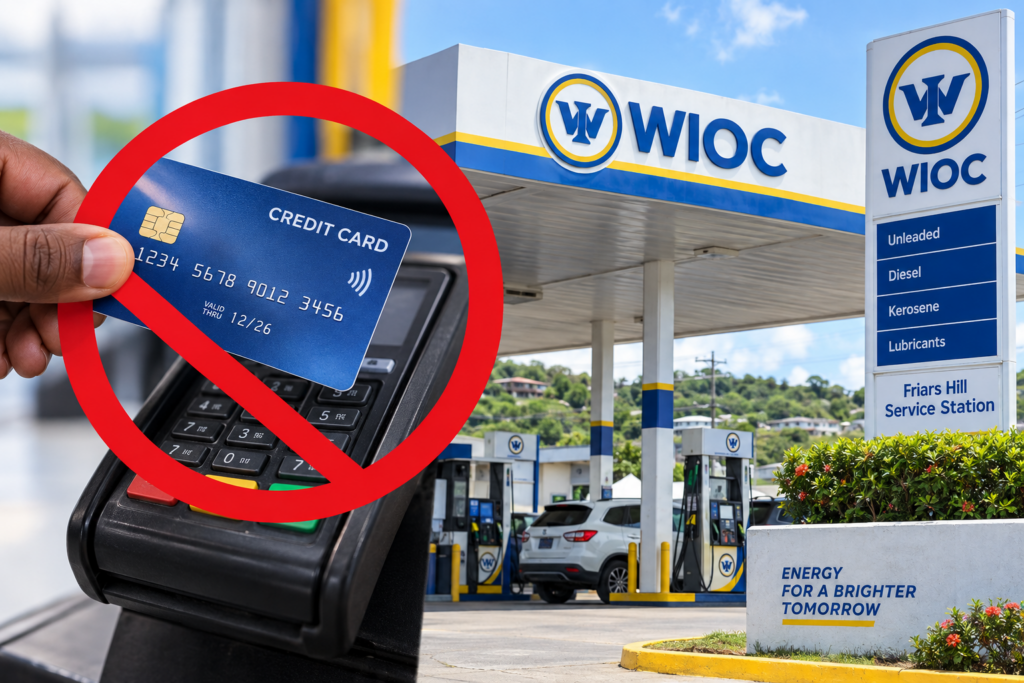
    A landmark digital payments initiative aimed at empowering micro, small and medium-sized enterprises (MSMEs) and informal vendors has officially launched at the busy Manor Park/Constant Spring bus park in Jamaica, drawing praise from government officials as a transformative step toward modernizing local commerce.

    Delano Seiveright, Member of Parliament for St Andrew North Central and State Minister in the Ministry of Industry, Investment and Commerce, called the roll-out a game-changing development for the area’s small business ecosystem, framing it as a core component of broader efforts to upgrade the region’s transport and commercial infrastructure.

    Led by global payment technology leader Mastercard in collaboration with a coalition of public and private sector partners, the initiative is designed to close the digital inclusion gap for small and informal traders. By simplifying access to electronic payment processing, the project aims to bring unbanked and underbanked vendors into the formal digital economy, opening new growth opportunities that were previously out of reach.

    This expansion follows a successful pilot program that launched in craft markets across Montego Bay, St James. Building on that early momentum, the program is now being rolled out to additional public market spaces and tourism-linked commercial zones across the entire island of Jamaica.

    During an on-site visit to the bus park Tuesday, Seiveright emphasized that the digital push aligns perfectly with ongoing plans to revitalize the entire Manor Park commercial district, designed to improve experiences for both local vendors and the thousands of customers that pass through the hub daily.

    “This is exactly the direction we need to go,” Seiveright explained during the event. “We are supporting our small operators with practical tools to grow their businesses, improve operational efficiency, and access a wider customer base — including international visitors who increasingly rely on cards and digital payment methods.”

    Strategically positioned as a key transit gateway connecting Kingston to Jamaica’s northern and north-western regions, the Manor Park bus park sees consistent foot traffic from both local commuters and out-of-town tourists. Seiveright noted that a growing share of these visitors now prefer cashless transactions, making digital payment access a critical competitive advantage for local vendors.

    To enable immediate adoption, Jamaica’s National Commercial Bank (NCB) has provided pre-activated mobile point-of-sale devices to a first cohort of participating vendors, allowing them to begin accepting digital payments right after onboarding. Leading regional telecommunications provider Digicel is supporting the project with network connectivity and on-site technical assistance to ensure seamless activation and ongoing trouble-free use for participating traders.

    Seiveright personally took part in a demonstration transaction with a local vendor during the launch, showcasing the system’s intuitive design and fast processing speed to attendees.

    The digital enablement program runs in tandem with major physical infrastructure upgrades to the Manor Park bus park and adjacent vending area, which are being delivered through a structured public-private partnership framework. Seiveright confirmed that a large share of the physical renovation work has already been completed, with additional construction and improvement projects currently in progress.

    Major landscape enhancement works, scheduled to be carried out by Pan Jamaica Group Limited — one of Jamaica’s largest corporate entities and a major property owner in the Manor Park district — are set to kick off before the end of this month.

    The broader Manor Park redevelopment initiative is spearheaded by Seiveright, private sector leader Richard Lake and the Lake Group, with core support from the Lisa Hanna Foundation. Additional strategic backing has been committed by PanJam, the Tourism Product Development Company (TPDCo), the Kingston and St Andrew Municipal Corporation (KSAMC), and leading corporate partner Wisynco Group Limited.

    Seiveright stressed that combining large-scale physical infrastructure upgrades with digital capability building creates a holistic, people-centered model for community and commercial development, rather than the piecemeal approaches common to many public space renewal projects.

    “We’re not just fixing the space physically. We’re also equipping the people who operate within it to compete in a more modern economy,” Seiveright said, urging participating vendors to embrace the new platform and establish themselves as early innovators in digital commerce across Kingston’s growing commercial sector.

    “This is an opportunity to fundamentally improve how business is done here — making operations more efficient, more secure, and more attractive to a far wider range of customers,” he added.

  • Parent company of Trump’s Truth Social reports US$400m loss

    Parent company of Trump’s Truth Social reports US$400m loss

    Trump Media & Technology Group (TMTG), the parent firm behind former U.S. President Donald Trump’s social media platform Truth Social, has disclosed a staggering net loss exceeding $400 million for the first three months of 2025, with the overwhelming majority of the deficit tied to plummeting valuations in the cryptocurrency sector, per a regulatory filing released Friday.

    The company, which became publicly traded and counts Trump as its largest single shareholder, reported total revenue of just $900,000 across the first quarter. That figure marks a remarkably low top line for an enterprise that currently holds a public market valuation of $2.47 billion.

    Trump, who relies heavily on Truth Social as his primary platform for public announcements and political messaging, controls roughly 41% of TMTG’s outstanding shares. Those holdings are held in a blind trust established to manage his financial interests during his second presidential term.

    Beyond its core social media operations, TMTG has expanded into digital asset investing. Twelve months prior to this quarterly report, the firm secured $2.5 billion in dedicated funding specifically for cryptocurrency investments – a pivot aligned with Trump’s well-documented personal interest in the digital asset space in recent years.

    The broad downturn in crypto markets during the first quarter hit TMTG’s investment portfolio particularly hard. Bitcoin, the world’s largest cryptocurrency by market capitalization, saw its price drop from a peak above $126,000 in early October 2024 to less than $70,000 by the end of March 2025. While Bitcoin has since recovered partially to trade above $80,000, the markdown required for quarterly reporting still generated massive unrealized losses.

    Under U.S. accounting regulations, publicly traded companies must mark their investment holdings to current market value each quarter, even if they have not sold the assets. This requirement forced TMTG to record a total net loss of $406 million for the first quarter. The company confirmed in its filing that “the vast bulk” of this loss stems directly from its digital asset holdings.

    TMTG signaled it remains committed to its long-term growth strategy, stating in the filing that it will “continue to focus on expanding its infrastructure and audience to prepare for future monetised features.”

    In addition to its social media and crypto investment operations, TMTG announced a planned merger with TAE Technologies, a U.S.-based firm developing commercial nuclear fusion technology, back in December 2024. The merger is currently on track to close in the middle of 2026, according to the company’s latest update.

  • Nintendo to hike Switch 2 price, warns on profits

    Nintendo to hike Switch 2 price, warns on profits

    In a major update on the Japanese gaming industry’s financial health released Friday, gaming giant Nintendo has announced it will raise prices for its newly launched Switch 2 console, as skyrocketing memory chip costs driven by the global AI boom create unprecedented margin pressure. The company also warned that its full-year net profit will drop sharply by 27% in the current fiscal year ending March 2026. Rival Sony, by contrast, has delivered a far more optimistic forecast, projecting a 13% rise in gaming division income even as sales of its mature PlayStation 5 console continue to decline.

    Nintendo’s price adjustments will roll out in phases across key global markets. Starting May 25, Japanese consumers will see a 20% jump in Switch 2 retail prices. From September 1, the console will cost $499.99 in the United States, an 11% increase, and 499.99 euros in the European Union, representing a 6% price hike.

    For the 12-month period ending next March, Nintendo projects net profit will fall to 310 billion Japanese yen, equal to roughly $1.98 billion, on total annual sales of 2.05 trillion yen. That marks an 11.4% drop in revenue from the prior fiscal year. Operating profit is forecast to hit 370 billion yen, a figure that falls well below the average analyst consensus estimate of 480 billion yen, according to data compiled by Bloomberg News.

    The prior fiscal year delivered strong results for Nintendo, however. The company reported that net profit surged 52% year-over-year to 424 billion yen, while annual revenue climbed to 2.31 trillion yen, nearly double the prior year’s total. The Switch 2, launched last June, got off to a strong commercial start, with global sales growing steadily after its release. By the end of March, Nintendo had sold 19.86 million units of the new console, boosted by popular first-party titles including *Pokemon Pokopia*, *Mario Kart World*, and *Donkey Kong Bananza*.

    The core headwind facing console manufacturers right now is the rapid rise in memory chip prices. The global AI boom has spurred massive demand for high-capacity memory chips from data centers and AI developers, pushing up costs for consumer electronics makers including game console and smartphone producers. Supply chain disruptions linked to ongoing conflict in Iran have further tightened available supplies, worsening the cost pressure for manufacturers.

    For Sony, the past fiscal year saw PlayStation 5 sales fall to 16 million units, down from 18.5 million units in the prior 12-month period. Since the PS5 launched in 2020, Sony has sold 92 million units of the console overall, putting the company in a strong position to capitalize on the upcoming November launch of the highly anticipated blockbuster title *Grand Theft Auto VI*. Industry analysts note the franchise is expected to drive a massive wave of new console sales in the coming year.

    “If there is any game that can move millions of additional PlayStation units, it is this one,” Serkan Toto, a leading gaming industry consultant, told AFP.
    Sony projects that even with lower console sales, its gaming division will see higher profits in the fiscal year ending March 2027. Industry analysts explain that Sony’s more mature position in the PS5 product cycle leaves it better insulated from rising memory chip costs than Nintendo’s newly launched Switch 2.

    “Sony’s more mature PS5 console cycle leaves it better placed to weather higher memory costs,” said Amir Anvarzadeh, a strategist at Asymmetric Advisors. “Having already moved past the heavy hardware penetration costs typical of earlier product cycle years, Sony’s bottom line stands to benefit significantly from the high-margin software sales and ecosystem engagement that the *Grand Theft Auto VI* launch should trigger.”

    Nintendo, however, faces a more challenging operating environment, Toto noted. Switch 2 consumers are especially price sensitive, he said, and the console’s first-year game lineup is far weaker than that of the original Switch at launch. Even so, Toto added that Nintendo has room to improve its performance by ramping up software releases in the coming months: “But now it’s time for them to really step on the gas on the software side.”

  • Spirit exit likely to lead to higher US airfares, experts say

    Spirit exit likely to lead to higher US airfares, experts say

    When Spirit Airlines, the pioneering ultra-low-cost carrier that reshaped U.S. air travel for 32 years, ceased all operations on May 2, it left behind more than thousands of rebooked passengers and empty route slots: industry analysts and economists broadly agree that its exit will add significant new upward pressure on already climbing U.S. airfares.

    Founded in 1992, Spirit built its legacy on the so-called “Spirit Effect”, a market phenomenon that turned affordable air travel from a luxury into an accessible option for millions of consumers who had previously been priced out of flying. Its stripped-down business model — which eliminated free checked bags, complimentary in-flight meals, and other non-essential extras to keep base fares as low as possible — earned it a reputation as the industry’s most disruptive competitive force. This impact was so significant that the U.S. Department of Justice (DOJ) highlighted it in 2023, when regulators moved to block Spirit’s proposed merger with JetBlue, arguing that losing Spirit’s independent presence would harm consumer competition.

    Official DOJ data underscores just how much Spirit shaped market pricing: when the carrier entered a new route, average fares across all competing airlines on that route dropped by an immediate 17%, and when it exits a market, fares jump by an average of 30%. That historical trend has left experts bracing for broad fare increases as the aviation industry absorbs Spirit’s exit.

    The timing of Spirit’s collapse could not be worse for consumers, who are already facing rising ticket costs driven by skyrocketing jet fuel prices tied to ongoing conflict in the Middle East. New data from the U.S. Department of Transportation released this week confirms that U.S. airline jet fuel costs surged 56% in March compared to February, and are up 30% from the same period one year ago.

    While many carriers have moved quickly to fill the gap left by Spirit, with low-cost peers including Frontier, Breeze and Avelo adding capacity and new routes to capture Spirit’s former customer base, all of these existing competitors already price their tickets slightly higher than Spirit did. Frontier, the largest of Spirit’s ultra-low-cost rivals, has announced plans to add nine new routes this summer and 15 extra daily departures across 18 former Spirit routes, a move the airline projects will boost its key revenue metric by 3 to 5% and grow its total capacity by 6 to 8%.

    Even as existing carriers maintain the basic economy fare tiers that major airlines originally launched specifically to compete with Spirit and other budget carriers, experts say those low-cost options will likely become less attractive for consumers. Jan Brueckner, emeritus economics professor at the University of California, Irvine, noted that while basic economy tickets are not expected to disappear entirely, airlines will almost certainly raise their prices. “They might be less attractive” to budget-focused travelers, Brueckner explained.

    Aviation analysts broadly echo this assessment. “There’s no question in some markets fares will probably increase,” said Richard Aboulafia, an aviation expert at consultancy AeroDynamic. Richard Masler, head of analysis for the Centre for Aviation, pointed out that for more than a decade, Spirit’s disruptive presence forced legacy major airlines to cut their own fares and adopt more granular pricing models to stay competitive.

    Bradley Akubuiro, a partner at advisory firm Bully Pulpit International, noted that Spirit’s exit will not make air travel entirely unavailable to consumers, but it will eliminate the industry’s most powerful check on excessive pricing. “The likely consequence for passengers is not that air travel suddenly becomes unavailable,” he said. “It’s that the cheapest version of air travel becomes immediately harder to find in some markets.” Over time, he added, fares will continue to creep upward because “a meaningful check on the system is now gone.”

  • OP-ED: Portsmouth and green fuels – A northern industrial hub for hydrogen, ammonia—and medical oxygen

    OP-ED: Portsmouth and green fuels – A northern industrial hub for hydrogen, ammonia—and medical oxygen

    As the Caribbean nation of Dominica lays the groundwork to scale up its domestic geothermal energy capacity, a new long-term industrial vision has emerged for the northern coastal city of Portsmouth, centered on building a pilot green fuel production facility powered by zero-carbon geothermal electricity. This proposal, outlined in the final installment of a three-part investigative series by independent contributor McCarthy Marie, frames the green fuels project as a secondary strategic priority that would only move forward after Dominica meets its core national energy goal: expanding geothermal power to replace polluting diesel generation and speed up electric vehicle adoption across the island.

    Marie notes that a viable geothermal resource has already been identified in the northern region of Dominica, creating the foundation for industrial development. If the country successfully expands its initial 10 megawatt geothermal capacity to 20 megwatts and strengthens its national grid to support new large-scale energy loads, the green fuels pilot becomes a technically realistic possibility. For operational flexibility, the industrial facility could run as a largely independent power producer using the northern geothermal field, with a backup connection to the national grid only for emergency contingencies.

    To make the proposal accessible to non-technical audiences, Marie breaks down the basic science behind the three core products the facility would produce: green hydrogen, green ammonia, and medical oxygen. Unlike carbon-intensive hydrogen produced from fossil fuels, green hydrogen is created by splitting water molecules through electrolysis, a process powered entirely by renewable electricity. Green ammonia, in turn, is synthesized by combining that green hydrogen with nitrogen captured from the atmosphere. Ammonia already serves as a critical input for global fertilizer production and is emerging as a promising low-carbon fuel for the international shipping industry.

    Unlike many industrial inputs, all key raw materials required for production are available locally on Dominica. The island’s abundant geothermal and hydropower resources provide the required zero-carbon electricity, fresh purified water supplies the water for electrolysis, and nitrogen for ammonia production can be captured directly from ambient air using small-scale, compact pressure swing adsorption or membrane air separation technology that can be installed on-site, eliminating the need for costly nitrogen imports.

    One often-overlooked benefit of green hydrogen production that this project would leverage is the co-generation of medical-grade oxygen. For every 1 kilogram of hydrogen produced through electrolysis, approximately 8 kilograms of oxygen are created as a byproduct. This oxygen has immediate, high-value public benefits for Dominica: it would drastically strengthen the country’s medical oxygen supply resilience, improving hospital capacity and emergency preparedness for public health crises. If the facility scales up over time, surplus oxygen could also open new export opportunities for the island, provided logistics, certification, and market conditions prove favorable.

    Structured around three core revenue streams, the Portsmouth facility would prioritize practical near-term use cases before pursuing larger commercial opportunities. Green hydrogen would first supply local industrial operations and small-scale pilot power projects, or serve as an intermediate input for ammonia production. Green ammonia would target two potential markets: as a domestic fertilizer input and as a maritime bunkering fuel for international shipping, but only if the project meets strict port safety and bunkering standards and proves financially viable. Medical oxygen would be reserved for domestic hospital use first, with exports considered only after meeting all local demand.

    Marie emphasizes that the proposal follows a strict, cautious development framework: feasibility assessment first, pilot testing second, and large-scale scaling only if all preliminary checks confirm the project’s viability. Crucially, the green industrial project must not distract from Dominica’s urgent immediate goal of rapidly expanding geothermal capacity to displace diesel.

    The concrete next step outlined in the proposal is a comprehensive feasibility study for the Portsmouth site, which will examine six core areas: total electricity demand for the pilot facility, water sourcing and purification requirements, safety protocols and storage infrastructure (especially for ammonia, which requires strict handling), alignment with international port handling and bunkering standards, identification of realistic off-takers starting with medical oxygen, and access to climate finance and resilience funding to cover pilot development costs.

    If the feasibility study returns positive results, the Portsmouth project could mark a strategic turning point for Dominica, moving the country beyond energy sovereignty for electricity and road transport to build a more resilient, low-carbon industrial economy centered on sustainable maritime logistics. Marie stresses that development would proceed incrementally, prioritizing safety, financial viability, and alignment with the country’s core national priorities at every step.

  • Oliemarkt blijft onder druk ondanks mogelijke vredesdeal tussen VS en Iran

    Oliemarkt blijft onder druk ondanks mogelijke vredesdeal tussen VS en Iran

    The global oil and gas industry is bracing for ongoing supply constraints in the coming weeks, energy industry leaders and market analysts agree — even if long-running tensions between the United States and Iran are resolved through a new peace agreement. Industry experts caution that restoring full oil shipments out of the Persian Gulf region and rebuilding depleted global inventories will take months, meaning oil producers will have to continue drawing on stored stockpiles for a prolonged period to meet soaring seasonal demand this summer.