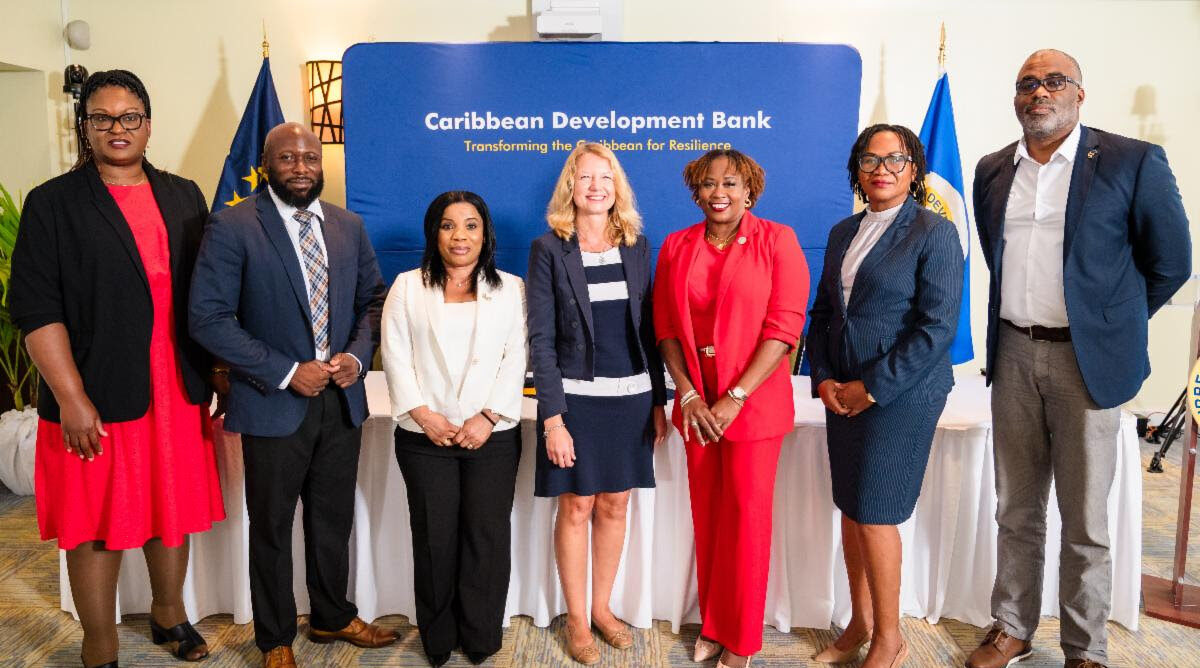
After five years of targeted intervention across 15 Caribbean nations, an €8.7 million regional trade capacity building initiative, funded by the European Union (EU) and administered by the Caribbean Development Bank (CDB), has formally concluded, leaving behind measurable improvements to regional trade systems, institutional capabilities and global economic competitiveness.
The programme merged two complementary frameworks: the European Development Fund’s Economic Partnership Agreement (EPA) initiative and the CARICOM Single Market and Economy (CSME) Standby Facility for Capacity Building, designed to address a longstanding gap between regional trade agreements and on-the-ground implementation. At a closing event held in Bridgetown, Barbados, stakeholders from participating governments, regional bodies and development partners gathered to celebrate the initiative’s outcomes and reflect on lessons learned for future collaborative projects.
Over its operational lifespan, the programme delivered 27 separate targeted interventions across the Caribbean Forum (CARIFORUM) region, partnering with more than 100 local, national and regional institutions, and contributing over 11,000 hours of specialized technical assistance to build sustainable capacity. Each participating nation received more than €350,000 in combined grant financing and technical support, focused on priority areas including trade facilitation, export expansion and value chain development, technical and vocational skills training, quality infrastructure improvement, and the alignment of domestic food safety and certification standards with global requirements.
Lisa Harding, Division Chief of CDB’s Private Sector Division, emphasized that the programme’s success grew from intentional collaboration, hands-on on-location support, and investment in long-term institutional strengthening rather than one-off policy changes. Results, she noted, are already visible across core economic sectors including trade, agriculture, skills development and export growth. “This programme reinforces a lesson we know well: Transformation does not come from agreements alone. It comes from implementation, capable institutions, and sustained partnerships,” Harding told attendees at the closing ceremony.
Paula Byer, Acting Director of Foreign Trade at Barbados’ Ministry of Foreign Affairs and Foreign Trade, highlighted that the programme’s priorities align directly with the needs of small, vulnerable Caribbean economies, as well as Barbados’ own national development strategy and commitment to deeper regional integration. While trade agreements open new market access, Byer explained, nations must first build the institutional capacity and competitive muscle to capitalize on those opportunities. “MSMEs are the backbone of our regional economies, yet they face the greatest barriers in international trade,” she noted. A more integrated CARIFORUM economy, she added, allows Caribbean nations to pool collective resources, expand cross-border production networks, and compete more effectively in global markets, while long-term partnerships with the EU remain critical to advancing export diversification and sustainable, inclusive growth across the region.
Chiara Tardivo, Team Leader for Economics and Trade at the EU-Caribbean Partnership, echoed that sentiment, expressing the EU’s continued commitment to Caribbean regional development and satisfaction with the programme’s concrete, verifiable outcomes across all participating countries. CARIFORUM Director-General Alexis Downes-Amsterdam further emphasized that market access alone cannot deliver broad-based economic gains. For small Caribbean economies to convert trade opportunities into tangible market presence and long-term growth, she explained, sustained investment in financing, targeted technical assistance, and ongoing institutional strengthening are non-negotiable.
CDB officials confirmed that the programme’s interventions have laid a robust foundational framework for building more resilient, competitive national and regional economies across the Caribbean, positioning participating nations to better pursue their long-term development priorities in an increasingly interconnected global trading system.