分类: business

  • Travel expert warns volatile airfares could hurt tourism

    Travel expert warns volatile airfares could hurt tourism

    At the inaugural Love Caribbean: Jamaica Edition 2026 conference hosted this week at Princess Grand Jamaica in Green Island, Hanover, a veteran travel industry specialist has sounded the alarm over volatile airline ticket pricing, urging immediate coordinated action between air carriers and local accommodation providers to protect Jamaica’s core tourism sector.

    Claire Robinson, a destination wedding expert and travel agency owner with decades of cross-sector experience including a previous role at the now-shuttered Air Jamaica, laid out her concerns during a panel discussion Tuesday, highlighting recurring disruptions that have eroded client trust. Robinson, who has been named a Destination Jamaica Top 50 Travel Advisor for nine straight years and currently operates Claire Skies Travel from the United States, explained that today’s extreme price swings create impossible barriers for travel planners. Even when agents hold quoted combined airfare and hotel packages for just 24 hours to let clients decide, she noted, return calls often reveal ticket prices have jumped dramatically—far beyond minor, expected adjustments.

    The vast majority of global airlines now rely on dynamic pricing frameworks, which adjust ticket values in real time based on variables like booking demand, route popularity, and operating costs. Looking back to her earlier career in aviation, Robinson recalled a far more stable pricing environment, when promotional weekend fares from Baltimore to Jamaica remained fixed for an entire travel season. While she acknowledged that shifting industry conditions—most notably sustained high fuel costs that have pushed up airline operating expenses—have transformed the sector, she argued that daily, unpredictable price fluctuations pose a systemic risk to Jamaica’s entire tourism ecosystem.

    “Without aligned collaboration across all parts of the travel industry, we are setting ourselves up for major challenges in the years ahead,” Robinson warned, emphasizing that the current volatility will ultimately drive away prospective visitors who are deterred by unpredictable pricing.

    In response to Robinson’s comments, Jamaica’s Deputy Director of Tourism Philip Rose, who also attended the four-day industry conference, pushed back on the critique, noting that existing partnerships between airlines and large Jamaican resorts are already well established. The Jamaica Tourist Board regularly brings both sides together at conferences and strategic planning meetings to coordinate on critical planning, from airline flight capacity planning to resort expansion projects, Rose explained.

    “These two segments of the industry work hand in hand on core growth initiatives,” he said. On the topic of pricing itself, Rose framed dynamic pricing as a standard market practice that aligns with how any industry operates: businesses set prices based on what consumers are willing to pay.

    As a long-standing top global travel destination, Jamaica draws consistent high demand, and both resorts and airlines operate as commercial entities that need to turn a profit, Rose noted. Far more concerning than fluctuating prices, he argued, is the risk of deep price drops that would cheapen Jamaica’s brand as a premium travel destination—a outcome that he said has not occurred in Jamaica’s modern tourism history and is unlikely to emerge anytime soon.

    The 2026 conference, which ran from Monday to Thursday, brought together hundreds of wedding planners, travel advisors, and travel industry leaders to focus on the fast-growing niche of destination weddings and romance travel—one of the most lucrative segments of Jamaica’s tourism economy.

  • GLOBAL OIL SHOCK THREATENS JAMAICA’S INFLATION PROGRESS

    GLOBAL OIL SHOCK THREATENS JAMAICA’S INFLATION PROGRESS

    A dramatic 25% jump in domestic fuel prices across Jamaica is emerging as a major new headwind for the Bank of Jamaica’s (BOJ) inflation stabilization strategy, undoing progress that had allowed policymakers to begin cautious monetary easing earlier this year. The challenge comes to a head this Friday with the release of the Statistical Institute of Jamaica (Statin)’s April inflation reading, ahead of the BOJ Monetary Policy Committee’s late-May meeting, which will convene against a backdrop of spiking global oil prices and escalating geopolitical tensions roiling international energy markets.

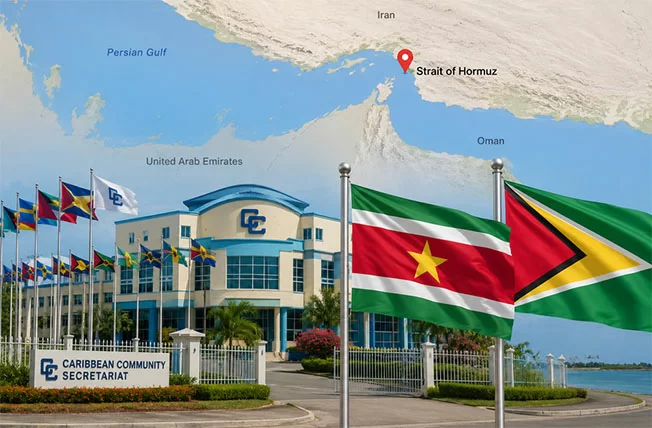
    Data from state refiner Petrojam tracks the steep upward trajectory of local fuel costs: regular 87-octane gasoline climbed from $151.32 per liter on February 26 to $189.88 per liter by May 14, a $38.56 per liter increase equal to roughly 25%. Over the same window, 90-octane premium gasoline rose by an average of $40 per liter, while automotive diesel gained $35.25 per liter to hit nearly $198 per liter. These local price gains trace directly to escalating supply disruptions at the Strait of Hormuz, the world’s most critical energy chokepoint that links the Persian Gulf to global consumer markets. Heightened conflict between Iran and the United States has disrupted commercial tanker transits through the narrow waterway, tightening global energy supplies substantially.

    New data from the U.S. Energy Information Administration (EIA) quantifies the severity of the supply shock: total flows of crude oil, condensate, and refined petroleum products through the strait dropped to 14.6 million barrels per day in the first quarter of 2024, down nearly 30% from 20.7 million barrels per day in the final quarter of 2023. The EIA confirmed that conflict-linked supply disruptions have been far more severe than initial projections, forcing the agency to sharply upgrade its forecast for global oil inventory drawdowns over the rest of the year.

    Global oil markets have reflected this tight supply: international benchmark Brent crude traded near $105 per barrel on Thursday, after topping $110 per barrel earlier this week, as persistent tensions around Iran and Hormuz keep market participants on edge. For import-dependent Jamaica, this confluence of rising crude prices, elevated shipping costs, and tighter refined fuel supplies has translated directly to much higher landed fuel costs that pass through to consumers and businesses.

    The BOJ first flagged growing uncertainty around the inflation outlook back in March, warning that Middle East conflict and resulting commodity and energy price gains posed material risks to domestic price stability. The central bank noted that the energy shock creates a difficult policy tradeoff for global central banks, pushing up inflation while simultaneously dragging on economic growth. Despite these warnings, the BOJ held its benchmark policy rate steady at 5.50% in March, following a February rate cut that came when early 2024 data showed inflation pressures beginning to moderate. That cautiously optimistic outlook has quickly shifted, however, as fuel price gains accelerated through March and April.

    Energy price increases typically ripple through national economies in a staggered pattern: they first raise direct costs for gasoline and diesel, then over time push up prices for transportation services, electricity generation, food distribution, and general business operating costs. Jamaica’s largest electricity provider, Jamaica Public Service, recorded a drop in its fuel rate adjustment to $26.852 per kilowatt-hour in April, down from $33.008 per kWh in March — a move that reflects lagged pricing based on earlier, lower fuel costs. But industry analysts note that sustained global oil price gains will likely reverse this trend and push electricity fuel rates higher in coming months if Hormuz disruptions continue.

    For Jamaican consumers, the new fuel costs have already translated to tangible budget pressure: a motorist filling a standard 45-liter tank of regular gasoline now pays roughly $1,735 more than they did in late February. Commercial operators and diesel-reliant businesses, including logistics firms, agricultural producers, manufacturers, and tourism transportation providers, face similar margin pressure. As Jamaica imports nearly 100% of its refined fuel, the country remains uniquely exposed to international oil price volatility, shipping disruptions, and geopolitical shocks that originate thousands of miles from its borders.

    The steepest local price gains occurred between March and early May, as global supply concerns intensified: 87-octane gasoline rose from $154.38 per liter on March 5 to over $190 per liter by May 7, before edging lower in the most recent weekly price adjustment. Automotive diesel followed the same trajectory, climbing from $166.75 per liter in early March to $197.75 per liter by May 7. While the latest Petrojam pricing update brought a marginal 25-cent decline for both regular gasoline and diesel, leading international energy forecasts indicate broad upward pressure on oil markets will persist if Hormuz transit disruptions continue.

  • LALOR SALUTED

    LALOR SALUTED

    Jamaica is mourning the loss of one of its most influential business titans, Dennis Lalor, who passed away on Wednesday night at the age of 91 following a period of declining health. Over a career that stretched more than 50 years, Lalor left an enduring legacy across the nation’s business landscape, sports administration, and philanthropic work, earning widespread acclaim from political and industry leaders alike.

    Lalor’s most defining professional achievement came with the founding of the Insurance Company of the West Indies (ICWI) Group Limited, where he served for decades as chairman and chief executive officer. Under his steady leadership, ICWI grew to become one of the largest full-service financial institutions across the entire Caribbean region, setting a benchmark for private sector success in the area.

    In a public tribute posted to his X social media account, Jamaican Prime Minister Dr. Andrew Holness hailed Lalor as a pioneering visionary whose ingenuity and unwavering commitment to national progress shaped the trajectory of Jamaica’s private sector. “Through his work at ICWI and his service to the Private Sector Organisation of Jamaica (PSOJ), he made a lasting contribution to economic growth, entrepreneurship, and corporate leadership in our country,” Holness wrote. The Prime Minister emphasized that Lalor’s passing represents a profound loss for the entire nation, extending condolences on behalf of the Jamaican government and public to Lalor’s family, friends, colleagues, and all who were impacted by his work.

    Dennis Chung, chief technical director of the Financial Investigations Division, who collaborated with Lalor at the PSOJ and during the divestment process of Air Jamaica, remembered Lalor as a man of exceptional character first and foremost. Chung, who referred to Lalor by his beloved nickname “Chairman”, noted that while many will celebrate Lalor’s landmark business achievements, his greatest legacy lies in his integrity, humility, and devotion to the Jamaican people. “Chairman was truly a remarkable person — a true patriot — defined by his character more than his accomplishments,” Chung said in his full tribute, published in the Jamaica Observer. “He had a passion for Jamaica and compassion for the people. He was a man who always sought to do what was right rather than what was in his interest.”

    Beyond his work at ICWI, Lalor held leadership roles on dozens of public and private boards across Jamaica and the Caribbean. A chartered insurer and Fellow of the Jamaican Institute of Management, he also served as chairman of Life of Jamaica (now Sagicor), Air Jamaica, the Casino Gaming Commission, the Jamaica Racing Commission, the Advisory Council on Justice Reform in Jamaica, and Lister Mair/Gilby High School for the Deaf, where he also acted as deputy chairman of the Jamaica Association for the Deaf.

    Lalor was also deeply passionate about sports administration, particularly in polo and horse racing. He served as president of the Kingston Polo Club and played a foundational role in advancing Jamaica’s thoroughbred horse racing industry. Over his lifetime, his contributions earned him dozens of national and regional honors: in 1983, he received the Prime Minister’s Medal for his work in business and sports; six years later, he was inducted into Jamaica’s Hall of Fame of Thoroughbred Racing; in 1994, he was awarded the Order of Jamaica, the nation’s fourth-highest civilian honor, granting him the style “Honourable”; in 2006, he was inducted into the PSOJ Hall of Fame for his transformative contributions to Jamaica’s private sector growth.

    During his tenure as PSOJ president from 1990 to 1992, the organization played a critical collaborative role supporting the Jamaican government’s landmark economic liberalization program. During the 1990s Jamaican financial sector crisis, Lalor demonstrated steady, visionary leadership while restructuring the ICWI Group, which included Life of Jamaica, Citizens Bank, and ICWI itself. The awards committee for the 1996 inaugural Jamaica Observer Business Leader Award, where Lalor was nominated, highlighted his skilled navigation of the crisis during a bank run, his pioneering reforms to life insurance agent compensation structures, and his bold work to secure international capital to keep the group solvent through the turbulent period.

    Lalor also maintained deep ties to academia and philanthropy across his career. He served for years as chairman of The University of the West Indies (UWI) Development & Endowment Fund, and was awarded both the UWI Vice Chancellor’s Award and the UWI Alumni Association Pelican Award for his dedicated service to the institution. A lifelong philanthropist, he held board positions at major global and local nonprofit bodies, including the Centre on Philanthropy & Civil Society at the City University of New York and the international board of United Way. He was also an old boy of Kingston College and a long-serving Freemason, founding the Kingston College Lodge and chairing the Freemasons Association (Jamaica) Limited.

  • LVMH sells Marc Jacobs to WHP Global, which will form partnership with G-III

    LVMH sells Marc Jacobs to WHP Global, which will form partnership with G-III

    In a major strategic shakeup of the global luxury fashion landscape, French luxury conglomerate LVMH announced Thursday it has reached a definitive agreement to sell its 28-year-old holding, the Marc Jacobs brand, to U.S.-based brand management firm WHP Global. The transaction, which is on track to close by the end of 2025 following completion of mandatory regulatory reviews, will retain brand founder Marc Jacobs in his role as creative director, a position he has held since the label was integrated into the LVMH portfolio back in 1997.

    Marc Jacobs rose to become one of the most influential fashion labels of the early 2000s, drawing global acclaim for its boundary-pushing designs and cementing Jacobs’ reputation as a leading voice in contemporary fashion. However, in the years following its peak popularity, the brand gradually lost market momentum and underwent a series of overhauls to its business model in search of long-term commercial viability. After years of restructuring, multiple industry outlets confirm the brand has now returned to consistent profitability, setting the stage for LVMH’s divestment.

    Per details from a separate statement issued by apparel conglomerate G-III, the company will join WHP Global as co-owner of Marc Jacobs through a 50/50 joint venture. G-III plans to invest approximately $500 million in the deal, which will be funded through a combination of existing cash reserves and new debt financing. Under the terms of the agreement, G-III will take responsibility for running Marc Jacobs’ direct-to-consumer retail and wholesale operations, while WHP Global will oversee overall brand strategy and intellectual property. WHP Global already manages a portfolio of well-known lifestyle and fashion labels including rag & bone, G-Star RAW, and Vera Wang.

    In a joint statement released alongside the announcement, Marc Jacobs expressed deep gratitude to LVMH chair and CEO Bernard Arnault, the wealthiest person in France, for three decades of unwavering support. Before stepping back to focus entirely on his eponymous label, Jacobs served 16 years as the artistic director of Louis Vuitton, LVMH’s flagship luxury brand that drove much of the group’s global growth during his tenure. “I remain committed in my role as creative director of Marc Jacobs International and look forward to this bright new chapter,” Jacobs added.

    Arnault also praised Jacobs’ contributions to the global fashion industry, highlighting the designer’s “unique vision” and “undeniable” impact that shaped LVMH’s development over the past 30 years.

    Industry rumors of a potential sale first emerged in July 2024, when The Wall Street Journal, citing anonymous sources familiar with the negotiations, reported LVMH was in talks to offload Marc Jacobs in a deal valued at roughly $1 billion. At the time, the report noted the French conglomerate was in discussions with multiple potential suitors, including Authentic Brands Group — the owner of Reebok — and WHP Global.

    The sale of Marc Jacobs comes as LVMH, the world’s largest luxury goods group by revenue that counts Dior, Celine, and Moët Hennessy among its dozens of brands, navigates a challenging global economic environment. In a recent corporate update, the group reported a 22% year-over-year drop in net profit for the first half of 2025, noting that the business demonstrates “good resilience” despite ongoing geopolitical and economic disruptions amplified by the ongoing conflict in the Middle East. LVMH first signaled slowing demand back in April, when it reported a 6% year-over-year decline in overall first-quarter revenue.

  • EdgeChem brings global expertise to Jamaican painters through workshop

    EdgeChem brings global expertise to Jamaican painters through workshop

    KINGSTON, Jamaica — In a landmark collaboration to uplift Jamaica’s professional painting and finishing sector, local chemical and coatings supplier EdgeChem has partnered with global industry brand Pentrilo to host the Jamaica leg of the Pentrilo Masters World Tour 2026, an immersive, hands-on professional development workshop focused on raising craft standards across the island.

    Hosted on April 29 at Kingston’s Caymanas Golf Club, the event reimagined the popular venue as a dynamic, live working classroom, where more than 100 local painters and contracting professionals had the rare opportunity to learn directly from Juan Carlos Paris, an internationally acclaimed decorative painting specialist with decades of global industry experience.

    Unlike traditional lecture-based training sessions, the workshop centered entirely on practical, real-world skill-building. Participants worked through guided exercises focused on cutting-edge application methods, getting firsthand experience with professional-grade tools and techniques that are still new to many Jamaican contractors. Training modules covered complex multi-layer finish application, precision surface preparation and taping, high-performance roller system use, and decorative plaster installation, allowing attendees to refine their craft step-by-step and build both technical proficiency and on-the-job confidence.

    To extend the impact of the single-day event, every participant took home a custom Pentri Box stocked with a full range of specialized painting tools and equipment, enabling them to practice new techniques and apply their learnings to future projects long after the workshop concluded. At the end of the training, all attendees also received official certification for completing the global Pentrilo Masters program.

    For Jamaica’s growing construction and finishing sector, the workshop filled a critical gap: it gave local professionals access to world-class training without the cost or barrier of traveling overseas for international education. This comes at a time when domestic demand for high-quality residential and commercial painting finishes is rising rapidly, as homeowners and business clients increasingly expect work aligned with global quality benchmarks. Industry leaders note that initiatives like this are essential to helping local contractors stay competitive and meet evolving market expectations.

    Melissa McHargh, Chief Operating Officer of EdgeChem Jamaica Limited, highlighted that the high level of participant engagement throughout the day made clear that Jamaican painting professionals have a strong appetite for continuous improvement and skill development. She emphasized that adopting innovative tools and modern techniques does more than improve final finish quality—it also boosts work efficiency, reduces physical fatigue for on-site crews, and cuts down on unnecessary material waste.

    McHargh added that bringing globally recognized training directly to local professionals helps close the gap between common domestic practices and international best-in-class methods. The long-term impact of this work extends far beyond individual participants, she noted, as improved skills will drive higher efficiency, less waste, and higher overall project quality across job sites throughout Jamaica.

    EdgeChem CEO Ockino Petrie emphasized in an official news release that the company’s mission goes far beyond simply supplying coatings and finishing products to the Jamaican market. “At EdgeChem, our role goes beyond supplying coatings; we are committed to strengthening the entire ecosystem that supports quality construction and finishing,” Petrie said. “By bringing world-class training directly to Jamaican professionals, we’re helping raise industry standards, improve sustainability and ensure our local contractors can confidently compete at an international level.”

    By the end of the landmark session, participants departed not only with new certification and professional tools, but also with a renewed sense of pride and perspective on their craft, ready to bring upgraded skills to projects across the island.

  • REOI: OECS Data for Decision Making Project – Consulting Services, Individual Consultant

    REOI: OECS Data for Decision Making Project – Consulting Services, Individual Consultant

    Grenada’s Central Statistical Office (CSO) has launched a call for expressions of interest from qualified individual consultants to fill a 12-month Communications and Stakeholder Support Officer role, embedded within the regional Organisation of Eastern Caribbean States (OECS) Data for Decision Making (DDM) Project. Backed by World Bank financing, this cross-national initiative is designed to upgrade statistical infrastructure across participating OECS member states, with a core goal of strengthening local systems to produce, analyze, and share high-quality official data that underpins evidence-based policy and public decision-making.

    As the national implementing body for Grenada’s component of the project, the CSO is currently gearing up to roll out two high-priority national surveys: the combined Survey of Living Conditions and Household Budget Survey (SLC–HBS), and the regular Labour Force Survey (LFS). For these large-scale data collection efforts to deliver accurate, representative results, broad public participation and clear buy-in from key stakeholders are non-negotiable. To meet this need, the CSO has identified a gap in targeted communications capacity, requiring a dedicated specialist to lead outreach, public sensitization, and stakeholder coordination to boost participation rates and maintain data integrity.

    The selected consultant will operate under the direct supervision of the CSO Director of Statistics, working in lockstep with the office’s technical teams and other project-appointed consultants. The role’s scope spans five core functional areas, starting with leading communications and outreach for the two flagship surveys. This includes developing accessible public education materials — from frequently asked questions and radio broadcast scripts to social media content and key talking points — supporting on-the-ground outreach such as media interviews, community information sessions, and stakeholder briefings, and monitoring public feedback to flag emerging communication risks to project leadership.

    Second, the consultant will serve as the CSO’s official focal point for the project’s broader Strategic Communications Consultancy, coordinating input, feedback, and scheduling between the external firm and CSO teams to ensure all communications outputs align with the office’s on-the-ground operational needs. Third, the role covers ongoing public relations and communications support, including drafting press releases, social media content, briefing notes, public notices, and talking points, helping to standardize consistent, accurate messaging around official statistics, and growing public awareness of the CSO’s work and data products.

    Fourth, the consultant will provide coordination and administrative support, maintaining up-to-date activity trackers, schedules, and stakeholder contact lists, supporting logistics for project meetings, workshops, media events, and public consultations, and preparing correspondence, meeting minutes, and follow-up documentation. Finally, the specialist will support project monitoring and reporting, tracking the implementation of all communications activities, preparing regular progress updates, maintaining organized records of all communications outputs and engagement activities, and supporting documentation for project reporting and audit requirements.

    By the end of the 12-month assignment, the consultant is expected to deliver a full suite of outputs including a comprehensive communications and stakeholder engagement work plan, all outreach and sensitization materials for the SLC–HBS, LFS, and other CSO project activities, media and stakeholder engagement content packages, updated activity trackers and communication logs, meeting minutes and action item follow-up documentation, regular progress and activity reports, and a fully organized digital repository of all communications and outreach materials.

    To be eligible for consideration, candidates must hold a bachelor’s degree in communications, public relations, journalism, marketing, media studies, public administration, management, or a closely related field, with a minimum of three years of hands-on professional experience in communications, public relations, stakeholder engagement, or program coordination. Prior experience working with government agencies, donor-funded projects, or public sector programs is considered a significant advantage. Required core skills include exceptional writing, editing, and content development capabilities, strong organizational and cross-team coordination abilities, advanced interpersonal and stakeholder engagement skills, existing familiarity with the media and communications landscape in Grenada or the wider Caribbean, full proficiency in Microsoft Office and common digital communication tools, and a proven ability to handle confidential information with professional integrity.

    The selection process will adhere to the World Bank’s February 2025 Procurement Regulations for IPF Borrowers, using the standard Individual Consultant Selection (ICS) method. The 12-month role will be based full-time at the CSO’s offices in Grenada.

    Interested eligible candidates are required to submit a complete expression of interest package including a detailed curriculum vitae outlining relevant experience and qualifications, a cover letter explaining their suitability for the assignment, and contact information for at least two professional references. All submissions must be in English, clearly marked with the line “Expression of Interest – Communications and Stakeholder Support Officer”, and submitted electronically via the official Grenada procurement portal no later than 3:00 pm Atlantic Standard Time on June 5, 2026. No submissions will be accepted after the deadline. The detailed Terms of Reference for the assignment are available for public download on both the Grenada government procurement notice website and the tender portal listed in the announcement. Inquiries can be directed to Procurement Officer Erisa Bleasdille at the Central Procurement Unit, Ministry of Finance in St George’s, Grenada.

  • Fernandez Urges Faster Action to Capitalise on Tourism Growth as Arrivals Hit Record Levels

    Fernandez Urges Faster Action to Capitalise on Tourism Growth as Arrivals Hit Record Levels

    Against a backdrop of surging visitor numbers that are hitting unprecedented records in 2026, Antigua and Barbuda is being urged to move quickly to capitalize on the booming momentum sweeping its critical tourism sector, according to the nation’s Tourism Minister Charles Fernandez. In a recent address outlining the government’s updated strategic vision for the industry, Fernandez explained that policy priorities are evolving past the single goal of growing arrival volumes. Instead, the new focus centers on elevating both the quality of visitor experiences and the long-term value the sector delivers to local communities, with a heavy emphasis on inclusive, sustainable growth that lifts residents across the country.

    Fernandez highlighted three major pillars that have already fueled the sector’s strong 2026 performance: a pipeline of ongoing luxury hospitality development projects, expanded cruise ship operations that bring more day-trippers and overnight guests to the islands, and increased airlift capacity that opens the destination up to more international travelers from key source markets. One particularly valuable opportunity on the near horizon, he noted, is the nation’s second consecutive hosting of the Caribbean Travel Marketplace. This high-profile industry gathering gives Antigua and Barbuda a unique platform to strengthen long-standing collaborative ties with global tourism partners and put its one-of-a-kind island offerings front and center for leading international travel buyers.

    In closing, Fernandez extended public recognition to the nation’s frontline tourism workers and broader hospitality stakeholders, crediting their consistent dedication with preserving Antigua and Barbuda’s standing as one of the most sought-after top travel destinations in the Caribbean. He also reaffirmed the national government’s unwavering commitment to ongoing targeted investment in the sector, which continues to anchor the country’s overall economy and drive widespread employment and development across both islands.

  • Antigua and Barbuda Records Strongest Tourism Start With 7% Visitor Increase

    Antigua and Barbuda Records Strongest Tourism Start With 7% Visitor Increase

    Antigua and Barbuda’s tourism industry has kicked off 2026 with one of the strongest opening quarters in the nation’s history, posting a solid 7% year-over-year rise in international visitor arrivals, new industry data shows.

    Statistics unveiled at the annual Caribbean Travel Marketplace confirm the twin-island nation hosted 110,830 international visitors between January and March, with every month of the quarter breaking previous arrival records. Growth accelerated steadily across the three-month period: starting at 5% in January, climbing to 8% by March, which set an all-time record for the highest single-month visitor volume in Antigua and Barbuda’s history.

    Colin James, chief executive officer of the Antigua and Barbuda Tourism Authority, called the start to 2026 “phenomenal”, pointing to robust demand gains from the key U.S. market and surging traveler interest from across Europe as core drivers of the uptick.

    Beyond the record arrival numbers, tourism leaders are advancing a deliberate strategy to diversify the nation’s tourism offerings beyond traditional leisure travel. A major priority is tapping into the global meetings, incentives, conferences and exhibitions (MICE) segment, and the country is already hosting multiple regional and international industry events on its shores this quarter.

    Two key infrastructure investments are laying the groundwork for even stronger growth in cruise tourism, one of the sector’s fastest-growing segments. Officials project a 22% annual increase in cruise ship arrivals for 2026, a gain supported by expanded home-porting operations and a $30 million comprehensive upgrade to the nation’s main cruise terminal.

    The country is also positioning itself to capture higher-value tourism demand through a wave of new luxury hospitality developments. High-profile projects from global brands including Nobu, Nikki Beach, and Marriott International are in the pipeline, set to boost the country’s appeal to high-spending travelers seeking premium vacation experiences.

    Amid ongoing geopolitical turbulence that has disrupted travel patterns in other popular global destinations, Antigua and Barbuda has leaned into its reputation as a safe, stable, and welcoming getaway to attract travelers seeking worry-free vacations, tourism officials added.

    Even with the historic quarterly gains, sector leaders acknowledge headwinds that continue to challenge the industry. James highlighted that soaring global oil prices and steadily climbing operational costs remain persistent pressing concerns for tourism businesses and workers across all segments of the sector.

  • Premier Mark Brantley Urges Resilient Wealth Structures, Cites Nevis Financial Legacy at STEP CC2026

    Premier Mark Brantley Urges Resilient Wealth Structures, Cites Nevis Financial Legacy at STEP CC2026

    Against a backdrop of growing global economic uncertainty, Nevis Premier and Minister of Finance Mark A. G. Brantley has called for a fundamental rethink of traditional private wealth management practices, urging industry leaders to build flexible, resilient structures capable of weathering generational volatility during his keynote address at the 2026 STEP Caribbean Conference (CC2026) held in St. Lucia.

    The three-day industry gathering, which ran from May 11 to 13 at Sandals Grande St. Lucia, brought together hundreds of leading stakeholders from the global private wealth and trust sector under the official theme ‘Legacy in Transition: Governance, Technology and Next Generation Wealth’. Attendees and speakers traveled from more than a dozen jurisdictions spanning North America, the Caribbean, Europe, and beyond to unpack pressing industry topics: intergenerational wealth transfer, evolving global regulatory frameworks, governance best practices, and strategic succession planning for high-net-worth families. A sizeable delegation of financial services professionals from Nevis, led by Nevis Finance Director Rita Hawkins, joined the conference to reinforce the island’s ongoing engagement with the global financial services community.

    Delivering his featured presentation titled ‘Navigating Private Wealth in a Volatile World’ on May 12, Brantley — a qualified Trust and Estate Practitioner (TEP) himself — opened by framing the modern challenges facing wealth holders and their advisors. He argued that volatility has become a defining feature of nearly every dimension of the global economy, from equity markets and supply chains to monetary policy, regulatory regimes, and even daily work environments. ‘The only certainty in our lives, particularly at this point in world history, is uncertainty,’ Brantley told attendees. ‘For private wealth holders and their advisors, this raises a profound challenge, because private wealth is not just about achieving returns. It is about preserving optionality, protecting families, funding legacies, and navigating uncertainty across generations.’

    Brantley identified four interconnected forces driving today’s widespread structural volatility: growing geopolitical fragmentation across the globe, sweeping shifts in global monetary regimes following the end of the ‘Free Money Era’, rapid acceleration of technological disruption, and rising social and regulatory scrutiny of private wealth. He emphasized that the modern operating environment is not only more volatile than decades prior, but far more complex — a shift that penalizes rigid, outdated approaches to wealth planning. ‘Complexity punishes rigidity. Private wealth now exists under a much brighter spotlight,’ he noted.

    In place of traditional strategies focused narrowly on maximizing returns, Brantley urged industry professionals to prioritize structural adaptation and resilience. He highlighted the critical role of the Society of Trust and Estate Practitioners (STEP) in equipping advisors with the ongoing professional development and resources needed to address modern challenges. ‘As advisors, it is your skills and competence, enhanced by the continuing professional development that STEP offers, that will be relied upon to help responsibly preserve generational wealth for your clients,’ he said. ‘Private wealth is not solely about maximizing returns — it is about surviving multiple crises without permanent loss.’

    Beyond structural strategy, Brantley stressed that long-term intergenerational wealth preservation depends equally on strong governance, intentional planning, and shared family purpose. He noted that while market shifts, regulatory change, and volatility are unavoidable, thoughtfully structured trust and estate planning does more than protect assets — it preserves a family’s legacy across generations. ‘Well-governed private wealth does not fear volatility but rather navigates it strategically and often emerges stronger as a result,’ Brantley added.

    The address also doubled as an opportunity to position Nevis as a leading, forward-thinking international financial services jurisdiction, building on the island’s centuries-long ties to global finance. Brantley highlighted Nevis’ unique financial legacy: as the birthplace of Alexander Hamilton, the first United States Secretary of the Treasury and a founding architect of the U.S. financial system, the island has deep roots in global financial innovation that stretch back to the earliest days of modern global finance. That legacy, Brantley implied, underpins Nevis’ ongoing reputation as a trusted jurisdiction for structured private wealth planning in an uncertain world.

  • 2026 Caribbean Travel Trends Report Unveiled at Caribbean Travel Forum in Antigua

    2026 Caribbean Travel Trends Report Unveiled at Caribbean Travel Forum in Antigua

    St. John’s, Antigua – The annual Caribbean Travel Forum kicked off this week in the heart of Antigua, bringing together industry leaders, destination marketing organizations, hospitality stakeholders and tourism policymakers from across the region and around the globe. A key highlight of the opening sessions was the official unveiling of the highly anticipated 2026 Caribbean Travel Trends Report, a comprehensive analysis that maps out shifting consumer behaviors, emerging market opportunities and pressing challenges for the Caribbean’s $50 billion tourism sector.

    Drawing on 12 months of data collection from passenger surveys, booking platforms, airline route planning and hotel occupancy analytics, the report identifies three core trends set to shape travel to the region over the next two years. First, it projects a 18% growth in demand for multi-destination itineraries, as travelers increasingly seek to combine island hopping with immersive cultural experiences rather than sticking to a single resort stay. Second, it notes a sharp rise in the share of travelers prioritizing sustainability, with 62% of recent visitors indicating they would pay a 10% premium for accommodation certified as carbon-neutral by regional environmental bodies. Third, it highlights fast-growing demand from emerging long-haul markets, particularly Southeast Asia and West Africa, where outbound travel to the Caribbean has grown by an average of 22% annually since 2022.

    Forum attendees emphasized that the report comes at a critical moment for the Caribbean tourism industry, which is still balancing post-pandemic recovery with growing economic pressures from global inflation and the impacts of climate change on coastal infrastructure. “This data gives our member nations a clear roadmap to adapt their marketing and investment strategies to meet evolving traveler expectations,” said Carla Gullory, chair of the Caribbean Tourism Organization, in her remarks following the launch. “By leaning into sustainable development and tapping new growth markets, we can strengthen the resilience of our tourism economies while preserving the natural and cultural assets that make the Caribbean such a desirable destination.”

    The forum is scheduled to run for three days, with additional working sessions focused on infrastructure investment, workforce development, and climate adaptation strategies for coastal tourism destinations across the region.