分类: business

  • St. Kitts and Nevis Citizenship Programme Named “Programme of the Year” at CIS 2026

    St. Kitts and Nevis Citizenship Programme Named “Programme of the Year” at CIS 2026

    The 2026 Caribbean Investment Summit, hosted this week in Saint Lucia, has crowned St. Kitts and Nevis’ revamped Citizenship by Investment Programme as the global industry leader, awarding the federation four distinguished honors including the summit’s most prestigious accolade: Programme of the Year.

    Alongside the top title, the federation claimed three additional awards recognizing excellence across core pillars of its programme: the Sustainable Development Impact Award, the Time to Citizenship Efficiency Award (won for the second consecutive year), and the Caribbean Impact Award. The sweep of awards marks a major milestone for the programme, which underwent a full structural overhaul less than two years ago to transition to a statutory-led governance model. The reform was designed to strengthen regulatory oversight, insulate day-to-day operations from political interference, and bring the programme in line with evolving global security standards.

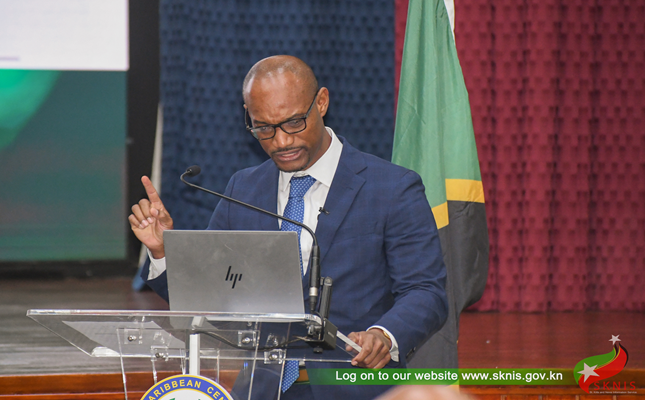
    Accepting the awards on behalf of the St. Kitts and Nevis Citizenship Unit, Executive Chairman H.E. Calvin St. Juste called the honors a powerful validation of the two-year reform journey. “When we transitioned to a statutory body, our mission was clear: to take the world’s first citizenship by investment programme and make it the world’s most secure and efficient,” St. Juste said. “These accolades belong to a team that has worked tirelessly to prove that rigorous due diligence and operational excellence are not mutually exclusive.”

    Each award highlights a distinct strength of the transformed programme. The Sustainable Development Impact Award recognizes the unit’s consistent alignment with the federation’s national vision to build a “Sustainable Island State,” channeling programme proceeds into long-term green and social development projects. The back-to-back Time to Citizenship Efficiency Award affirms that the team has cut processing timelines without loosening strict vetting standards, a balance many regional programmes struggle to maintain. The Caribbean Impact Award, meanwhile, acknowledges St. Kitts and Nevis’ leadership in setting high industry benchmarks that lift standards across the entire Caribbean region, at a time when regional citizenship programmes face growing international scrutiny.

    In 2026 alone, the Citizenship Unit rolled out further upgrades to its operations, including strengthened multi-layered due diligence protocols, advanced biometric identity verification systems, and updated compliance frameworks that exceed international requirements. St. Juste noted that the reforms have moved the programme from a period of necessary restructuring to an era of undisputed industry leadership. “By integrating advanced biometrics and strengthening our governance, we haven’t just met international expectations—we have set the new benchmark for the entire Caribbean,” he said. “St. Kitts and Nevis is no longer just the oldest citizenship programme; we are once again the vanguard of the industry.”

    The recognition comes amid increased global oversight of Caribbean citizenship by investment programmes, with the European Union and United States raising ongoing concerns over potential risks of financial crime, tax evasion, and inadequate vetting. St. Kitts and Nevis’ aggressive reform agenda has positioned the federation as a proactive leader addressing these concerns ahead of regulatory changes.

    In a secondary announcement that underscores the federation’s growing regional influence, the summit confirmed that St. Kitts and Nevis will host the 2027 Caribbean Investment Summit (CIS27) next year.

    Looking ahead, the St. Kitts and Nevis Citizenship Unit will host its own investor-focused event, the Investment Gateway Summit, from June 17 to 20 in St. Kitts. The gathering, themed “Connect, Collaborate, and Celebrate,” will bring together existing citizens and prospective investors to showcase the programme’s new framework and explore future collaboration opportunities.

    This report is based on a press release distributed via SKNVibes.com, with editorial restructuring for clarity.

  • LVV wil citrussector versterken vanwege groeiende vraag

    LVV wil citrussector versterken vanwege groeiende vraag

    Growing consumer demand for citrus fruits has pushed Suriname’s Ministry of Agriculture, Livestock and Fisheries (LVV) to strengthen regional agricultural support offices and launch a targeted capacity-building initiative aimed at upgrading the country’s citrus sector. The new Citrus Cultivation Training, launched as part of the IDB-funded ‘Strengthening of Citrus Production in Suriname’ project and implemented by the Fruit Tree Research Department (VBO), comes as persistent import dependence for oranges and orange juice highlights gaps in local output despite years of distributed citrus sapling sales.

    LVV Minister Mike Noersalim emphasized that the training program aligns with the ministry’s core goals: raising citrus output, improving fruit quality, and building a more sustainable local citrus industry. Unlike many short agricultural workshops, this comprehensive program runs between 12 and 18 months, matching the full growth cycle required to cultivate market-ready citrus saplings from seed. “When we successfully grow a sufficient supply of healthy saplings, we can make them available for sale to the public,” Noersalim explained, noting that while thousands of saplings have been sold in recent years, the impact on overall local production has not matched rising consumer demand. Today, Suriname still relies heavily on imported oranges and processed orange juice to meet domestic consumption needs.

    Many participants in the program are already small-scale citrus growers who have chosen to upskill to address evolving industry challenges. Noersalim pointed out that emerging crop diseases, invasive pests, and the growing impacts of climate change have created an urgent need for updated growing knowledge. “It is very encouraging that existing small-scale producers are proactively seeking out new information and techniques to adapt to these changes,” the minister added. The high turnout for the training also underscores the strong level of interest across Suriname’s agricultural community in expanding citrus production.

    Acting Director of the Directorate of Agricultural Research, Marketing and Processing Rayen Toekoen confirmed that citrus is a strategically important crop in Suriname, valued for both large-scale commercial production and small-scale household cultivation. However, the sector currently faces a range of persistent barriers, including low overall productivity, frequent disease and pest outbreaks, and limited adoption of modern, climate-adapted cultivation techniques. The training program is designed to directly address these gaps by delivering both practical skills and evidence-based technical knowledge to participating farmers and agricultural extension officers.

    The curriculum combines structured classroom learning with hands-on field training to ensure participants gain actionable skills. Theoretical modules cover topics including citrus variety identification, climate-adapted cultivation methods, and proven strategies to boost output. Practical sessions allow trainees to apply new techniques directly in growing fields, with guided practice in pruning, crop maintenance, pest and disease identification, and soil nutrient management. By equipping local producers with updated skills, LVV aims to grow domestic citrus output, reduce long-term import dependence, and build a more resilient, sustainable citrus sector for Suriname.

  • Belizean Company Eyes Sargassum as Economic Gold

    Belizean Company Eyes Sargassum as Economic Gold

    For years, thick, foul-smelling mounds of sargassum seaweed have plagued Belize’s tropical coastline, turning postcard-perfect beaches into unpleasant, unusable expanses. The invasive algae has frustrated local residents, driven away beach-going tourists, and created a persistent, costly environmental headache that has left officials and communities scrambling for long-term solutions. Now, one homegrown Belizean company is flipping the script on this persistent problem, reimagining the abundant seaweed not as hazardous waste, but as an untapped economic resource that could drive local development and solve two pressing challenges at once.

    Building Belize Better Manufacturing Co., a local startup co-founded by Gregory Lavalley, is developing innovative processes to convert harvested sargassum into two high-demand, eco-friendly products: sustainable construction blocks and nutrient-rich livestock feed. The venture addresses a gaping unmet need in Belize’s domestic construction market, Lavalley explains: currently, no local manufacturer produces eco-construction blocks at the mass scale needed to meet projected infrastructure demand across the country’s northern development corridor over the next five years. Lavalley estimates the current supply gap for construction blocks in the region ranges from 2 million to 7 million units, a shortfall that currently forces developers to rely on more expensive, carbon-heavy imported materials.

    By using locally harvested sargassum as a core input for these blocks, the company can cut production costs, reduce reliance on foreign imports, and create much-needed employment in rural coastal communities that have been hit hard by struggling fisheries this year. “This is a way for us to turn this crisis or environmental issue into a great opportunity to help with the community, build out local infrastructure, and support economic growth without having to bring in imported products,” Lavalley explained in an interview. “It’s going to bring steady labor to the rural villages, which rely heavily on the fisheries, which they’ve been kind of cut short this year. So we’re hoping that this is a great opportunity for the government as well as the community and our company to partner up and kind of figure out the best solution to how we can help with the problem.”

    If the initiative scales successfully, it will deliver widespread benefits beyond job creation and infrastructure development: it will also slash the millions of dollars Belize spends annually on sargassum cleanup operations, while turning a pollutant that damages coastal ecosystems into a revenue-generating resource. The project remains in its early stages, Lavalley notes: initial product testing is set to launch later this month, and full commercial production could be up and running within six to 12 months pending all necessary regulatory approvals. For a country grappling with a growing sargassum crisis and uneven rural economic development, the venture offers a groundbreaking, circular economy model that turns a pressing environmental problem into a catalyst for local growth.

  • Food entrepreneur opens Kira’s Cuisine in St James

    Food entrepreneur opens Kira’s Cuisine in St James

    After nearly a decade honing her skills across Barbados’ top culinary venues, veteran chef Shakira Drakes has opened her first independent food business, Kira’s Cuisine, at St. James’ Husbands Heights Park. The milestone launch of her entrepreneurial dream carried extra personal significance: it fell exactly on her daughter’s 21st birthday, a date Drakes intentionally chose to mark her own resilience and professional journey.

  • Surge in scam calls prompts CIBC customer warning

    Surge in scam calls prompts CIBC customer warning

    CIBC Caribbean, one of the leading regional financial institutions, has issued a public warning to its customer base after a sharp uptick in coordinated fraudulent schemes designed to steal sensitive personal banking information. In an official public statement released recently, the bank confirmed that multiple customers have come forward in recent days to report suspicious unsolicited communications that impersonate bank representatives.

    These fraudulent attempts have taken multiple digital and telecommunication forms, the bank confirmed. Many victims have reported receiving deceptive phone calls that display CIBC Caribbean’s official branding to appear legitimate, with callers pressuring recipients to disclose or confirm confidential account details. A number of the fake calls have been hosted through mainstream platforms including Google Meet and other popular social media apps, expanding the scammers’ reach beyond traditional phone lines. Additionally, customers have flagged deceptive phishing emails sent from addresses that closely mimic the bank’s official contact email, cibccustomer@gmail.com, designed to trick recipients into trusting the sender.

    CIBC Caribbean has made clear that all these communications are illegal fraudulent attempts, and clarified that the institution never initiates contact through these channels to request personal or sensitive banking information. The bank is urging all customers to exercise extreme caution and avoid any engagement with individuals who reach out unexpectedly asking for account details.

    For customers who encounter suspicious activity, the bank has outlined clear reporting steps: affected or concerned users should immediately forward details of the interaction, including a screenshot of the call or message, to the bank’s dedicated Fraud Team at fraud@cibccaribbean.com. Customers who have already shared confidential information with scammers are advised to reach out to the bank directly using the official customer service phone number printed on the back of their CIBC Caribbean debit or credit card, to allow for rapid account protection measures.

    To help customers distinguish legitimate communications from scams, the bank reaffirmed that its official representatives will never contact customers through social media, text message, email or unsolicited phone calls to request that they download third-party remote desktop applications, click unrecognized links, or share any sensitive personal information. This ban covers all high-risk confidential data, including one-time verification codes, personal identification numbers (PINs), full card numbers, CVV security codes, card expiration dates, personal email addresses, account passwords and online banking login credentials.

    While the financial institution emphasized that it maintains robust, industry-leading security systems to defend customer accounts against fraud, it noted that collective vigilance is critical to preventing successful scams. CIBC Caribbean reaffirmed its ongoing commitment to protecting customer assets and personal data, and called on all account holders to remain cautious to keep their information and accounts secure.

  • LIAT Air Launches Direct Antigua-Guadeloupe Service

    LIAT Air Launches Direct Antigua-Guadeloupe Service

    Caribbean-based regional carrier LIAT Air has marked a key milestone in its network expansion strategy with the launch of its first-ever nonstop service connecting Antigua and Guadeloupe, a move set to strengthen travel links across the Caribbean archipelago and open up new opportunities for both leisure and business travelers. The new cross-regional route officially entered operation on Friday, with the maiden direct flight taking off from V.C. Bird International Airport in Antigua promptly at 8 a.m., according to the airline’s official announcement. Going forward, the service will maintain a consistent twice-weekly schedule, giving travelers a reliable new option to move between the two popular Caribbean destinations. Beyond just adding a new flight route, the introduction of this direct connection eliminates the need for inconvenient layovers at intermediate Caribbean hubs that travelers previously had to rely on to travel between Antigua and Guadeloupe. “Passengers can now enjoy direct flights between Antigua and Guadeloupe two times a week, opening the door for seamless business travel, weekend escapes, cultural exchange, and unforgettable Caribbean adventures,” the airline stated in a press release outlining the new service. The launch of this route is part of LIAT Air’s broader push to rebuild and expand its regional network following a period of restructuring, with the carrier aiming to reconnect key tourism and business hubs across the Caribbean that have long lacked convenient direct air links. In closing, LIAT Air extended its gratitude to its loyal passenger base, regional industry partners, and community supporters who have stood by the airline throughout its growth journey, enabling the company to continue rolling out new connectivity options across the Caribbean region. Industry analysts note that the new route is expected to bring tangible benefits to both destinations, boosting cross-border tourism, supporting small business trade across the islands, and making it easier for local communities to maintain personal and professional connections across the Caribbean Sea.

  • Dredging Barge Arrives in Antigua for Crabbs Peninsula Energy Project

    Dredging Barge Arrives in Antigua for Crabbs Peninsula Energy Project

    The long-awaited dredging barge tasked with supporting major coastal preparations for the Crabbs Peninsula energy project has arrived at Antigua’s St. John’s Harbor, marking a key milestone in the country’s ambitious plan to expand its renewable energy capacity and upgrade national energy infrastructure.

    Project officials confirmed that the 120-meter coastal dredging vessel reached its destination early Wednesday morning, after a two-week voyage from its previous deployment in Trinidad and Tobago. Over the next 12 weeks, the barge and its on-site crew will carry out extensive seabed dredging work along the 2.5-kilometer coastline adjacent to the project site. The work is designed to deepen coastal channels, clear sediment buildup, and prepare the seabed for the installation of undersea cables and onshore construction access routes that will support a new 70-megawatt solar-wind hybrid energy facility.

    The Crabbs Peninsula energy project, a joint initiative between the Antiguan government and a regional renewable energy developer, is projected to meet nearly 40 percent of Antigua and Barbuda’s total domestic electricity demand once completed. It is also expected to create over 200 local construction jobs and reduce the country’s reliance on imported fossil fuels, which currently account for more than 90 percent of its energy generation.

    Project manager Carlos Mendez told reporters on Thursday that the timely arrival of the dredging barge keeps the entire project on track for its scheduled completion in late 2025. “This is more than just an energy project; it’s a foundational step for Antigua and Barbuda’s transition to cleaner, more affordable energy independence,” Mendez said. “The dredging work we’re about to undertake eliminates a major bottleneck for the rest of construction, so we’re pleased to be moving forward as planned.”

    Local business leaders have welcomed the development, noting that the project’s infrastructure upgrades will also open new opportunities for coastal tourism development along the Crabbs Peninsula. Environmental monitoring teams have already been deployed to the area to ensure dredging activities comply with regional marine protection standards, with measures in place to minimize disruption to local coral reef systems and fish populations.

  • New TEF chairman touts tourism education as new industry

    New TEF chairman touts tourism education as new industry

    Against the backdrop of post-hurricane recovery and the ongoing race to maintain global tourism competitiveness, newly installed Tourism Enhancement Fund (TEF) chairman Ryan Parkes has issued a bold call to Jamaican educators: reposition holistic tourism education as an independent, standalone industry to drive long-term national growth.

    Parkes laid out his vision during a Teachers’ Day luncheon held Wednesday at the Montego Bay Convention Centre. The event was hosted by Edmund Bartlett, Member of Parliament for St James East Central, and coincided with the 30th anniversary of the constituency’s East Central St James Scholarship and Welfare Fund.

    In his address, Parkes emphasized that Jamaica’s tourism sector stands at a critical turning point in the months after Hurricane Melissa hit the island last October. He argued that rebuilding the nation’s tourism offering extends far beyond repairing damaged physical infrastructure; it demands a fundamental reimagining of Jamaica’s most valuable tourism asset: its human capital.

    “I want to challenge you, the teaching fraternity, to let us make education in tourism — and in a holistic way — a new industry by itself. The opportunities are endless,” Parkes urged the gathered educators.

    As Parkes explained to the Jamaica Observer in a follow-up interview expanding on his proposal, tourism is already Jamaica’s single largest contributor to national GDP, accounting for roughly 30% of the country’s total economic output when both direct and indirect impacts are counted. Given this outsize economic footprint, he said, the sector deserves a strategic, integrated approach that ties it directly to education, workforce development, and broad national economic strategy.

    “If the majority of your contribution is already coming from tourism there is the opportunity for us to harness that industry and to ensure that it is well-equipped to compete in the new dimension within which we operate,” he noted.

    Parkes stressed that educators serve as the foundational agents of skills development and training, putting them in a unique position to reshape the workforce competencies needed for a modern, competitive tourism sector. Drawing a comparison to the Dominican Republic, which has built a dominant global niche around affordable all-inclusive resorts, Parkes argued that Jamaica’s unique competitive advantage lies not in infrastructure or pricing alone, but in the warmth and hospitality of its people.

    Cultivating that signature customer-centric hospitality requires intentional, early training, he said, and that process starts with educators at the center of the tourism skills ecosystem.

    “Because you are moulding young minds and you are preparing those minds for the world of work, there is no better constituent group than yourselves to be able to have that dialogue with and for us to work together in shaping the future of tourism,” Parkes added.

    He further emphasized that the quality of Jamaica’s workforce training will directly determine the country’s ability to outperform peer destinations in an increasingly crowded global tourism market, making educator collaboration on tourism education a make-or-break priority for the nation’s economic future.

  • Rose Hall set to bloom

    Rose Hall set to bloom

    Along the quiet outskirts of Montego Bay in St James, Jamaica, a transformative wave of tourism and infrastructure development is reshaping the coastal community of Rose Hall, with local leaders drawing comparisons to the explosive growth that turned St Ann’s Drax Hall into one of the island’s most dynamic economic hubs in recent years.

  • IMF Calls for Stronger Oversight of Credit Unions in Antigua and Barbuda

    IMF Calls for Stronger Oversight of Credit Unions in Antigua and Barbuda

    The International Monetary Fund (IMF) has issued a formal call for stricter regulatory oversight of credit unions operating across Antigua and Barbuda, framing the reform as a critical pillar of broader work to shore up stability and resilience in the Caribbean nation’s financial sector. In its recently released Article IV consultation report, the global financial body confirmed that Antigua and Barbuda’s overall financial system remains on solid footing, with healthy levels of liquidity and sustained stability. Even so, the organization has pushed for continuous regulatory and supervisory overhauls to strengthen sector-wide governance. IMF executive directors put forward targeted recommendations, urging local authorities to shift toward a risk-focused model of supervision for the credit union industry. This shift, they argue, should be paired with targeted actions to improve loan loss provisioning practices and shore up capital buffers across credit unions, closing existing gaps in financial preparedness. The IMF emphasized that robust financial sector oversight is particularly vital at this juncture, as Antigua and Barbuda continues to navigate post-shock economic recovery and works to build long-term defenses against external volatility and structural domestic vulnerabilities. Beyond credit union reform, the report also underlined the urgent need for sustained progress on two key financial priorities: deepening the country’s financial markets to support greater access to capital, and updating frameworks to counter money laundering and terrorist financing, bringing them in line with evolving global standards. The nation’s high-profile Citizenship by Investment Programme was also flagged as an area requiring ongoing regulatory scrutiny, a key component of the government’s broader push to upgrade national financial governance. These policy recommendations come alongside the IMF’s latest economic forecasts for the twin-island nation, which confirm that Antigua and Barbuda’s economy kept expanding through 2025. Growth was driven largely by a boom in domestic construction activity, which offset a marked slowdown in the critical tourism sector. The IMF estimates that real gross domestic product grew by 3% for the year, while inflation cooled dramatically to 1.4% — a significant improvement from previous higher levels. Despite the positive growth trajectory, the report warned that notable downside risks remain on the horizon. Persistent global economic uncertainty, swings in global commodity prices, and domestic capacity constraints all threaten to derail progress moving forward. Strengthened financial oversight and targeted structural reforms, the IMF concluded, would position Antigua and Barbuda to lock in long-term economic stability and lay the groundwork for sustained inclusive growth. As the nation continues to build out its economic foundations, these regulatory updates are framed as a critical investment in both financial security and long-term prosperity.