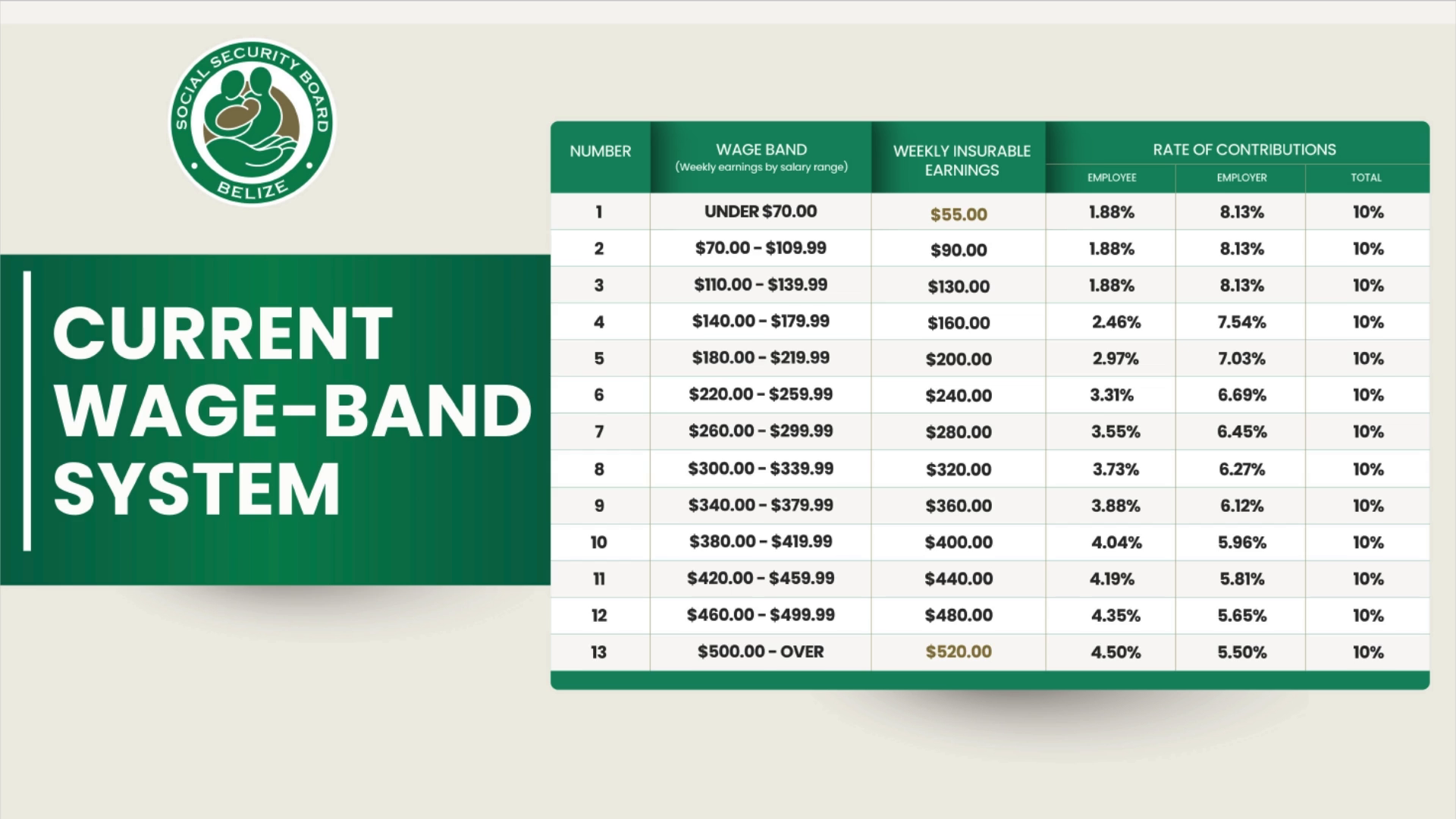
As part of a decades-long push to modernize Belize’s public social safety net, the Social Security Board (SSB) is weighing a sweeping structural reform that would replace the country’s outdated fixed wage band contribution model with a progressive percentage-based system, following six weeks of nationwide public consultations that gathered input from more than 1,000 stakeholders. The proposed overhaul, which will not take effect until at least 2027 even if finalized, marks one of the most significant changes to Belize’s social security program in a quarter century.
Currently, Belize is one of just four nations globally that still relies on a rigid 13-tier fixed wage band system, where workers are sorted into contribution categories based on their weekly earnings. This outdated framework creates redundant administrative work, extra paperwork for both private businesses and the SSB itself, and creates unnecessary complexity for payroll management across the country’s labor market.
Under the initial draft of the reform, the SSB proposed moving to a single flat percentage contribution model aligned with the CARICOM regional standard, which would split contributions at 5.41% from employers and 4.59% from employees. The proposal also includes a long-overdue update to the minimum contribution floor, raising the baseline from $55 BZD — a figure that has not been adjusted since 2001 — to a proposed $130 BZD. SSB CEO Jerome Palma noted that the $130 baseline was identified as a “sweet spot” during consultations, and clarified that part-time workers, who rarely meet the 40-hour weekly work threshold that would hit the $130 earnings mark, would still be eligible for adjusted contribution terms under existing legislation.
But feedback from the consultation process revealed a key concern from low-income workers: a single flat rate would actually increase contribution deductions for workers earning near the bottom of the income scale. For example, a worker earning $160 BZD per week currently pays an effective contribution rate of roughly 2.46% under the existing wage band system; under the original flat rate proposal, that worker’s total deduction would rise significantly.
In response to that widespread feedback, the SSB now plans to revise the proposal to incorporate a multi-tier progressive structure, with three income brackets that maintain higher employer contribution rates for lower-income earners, aligning with public expectations for a progressive system that does not place undue burden on low-wage workers. Palma explained that the overwhelming consensus from consultations called for retaining tiered protection for lower-income workers, a revision the board will integrate into the updated draft.
Overall, roughly 60% of consultation participants supported the core shift to a percentage-based system, backing the reform with only minor structural adjustments. After revising the draft proposal to incorporate public feedback, the SSB will hold a second round of public consultations later in 2026 to gather additional input before finalizing the plan. Officials have confirmed that no changes to payroll deductions will take effect in 2026, so Belizean workers and employers will not see any adjustments to their Social Security contributions this year regardless of the board’s final decision.