分类: business

  • National Bus Company Set for March Merger

    National Bus Company Set for March Merger

    Belize’s transportation sector is poised for a significant transformation as the newly registered National Bus Company prepares to commence operations on March 1st. The consolidation brings together seventeen formerly independent bus operators under a single corporate entity, representing a major restructuring of the country’s public transportation system.

    According to Transport Minister Dr. Louis Zabaneh, the ownership structure will see the participating operators collectively holding a thirty-nine percent stake valued at $19.4 million. The government will maintain a controlling forty-five percent share worth $22 million, while institutional investors including insurance companies and the Social Security Board will acquire the remaining fifteen percent, representing $7.05 million in shares.

    The merger represents a substantial consolidation from thirty-one independent operators to fifteen remaining entities, with the seventeen merging companies operating as one unified corporation. Minister Zabaneh emphasized that this structural overhaul is expected to generate considerable benefits through economies of scale, particularly through bulk purchasing power that will reduce fuel costs for the existing diesel bus fleet.

    A more significant operational cost reduction is anticipated when the company begins transitioning to electric buses between March 1st and the end of August. This shift to electric vehicles is projected to dramatically decrease the company’s operating expenses while modernizing Belize’s public transportation infrastructure.

    The initiative has not achieved universal participation, with several northern operators opting to remain outside the consolidated company. Minister Zabaneh acknowledged that the door remains open for future participation, noting that reasons for non-participation vary from prudent caution to outright political opposition, with some UDP-affiliated operators explicitly refusing to support the government-led initiative.


  • Operators Face Tougher Standards, Terminal Fees

    Operators Face Tougher Standards, Terminal Fees

    The Ministry of Transport is implementing rigorous new operational standards and introducing terminal rental fees as part of a comprehensive restructuring of the bus transportation sector. This development coincides with the formation of the National Bus Company, which represents a significant consolidation initiative within the industry.

    Transport CEO Chester Williams emphasized the mandatory nature of these changes, stating, “I anticipate that certain operators may struggle to comply with the forthcoming conditions. However, their inability to meet these standards falls outside our jurisdiction. Those who fail to comply will face the full consequences as prescribed by legislation. Enhancing our operational benchmarks is imperative—maintaining the status quo is no longer viable.”

    During recent discussions, questions emerged regarding the executive leadership structure of the newly established company. Dr. Louis Zabaneh, Minister of Transport, provided clarification on the implementation timeline: “The company has been formally incorporated with an interim single director. Subscription agreements are being finalized for operator signatures scheduled throughout this week. We anticipate convening a general assembly on the 27th to elect the board of directors, who will subsequently appoint the management team.”

    The National Bus Company is slated to commence operations on March 1st, at which point all road service permits will transition to company ownership. Anna Loague has been appointed as interim sole director pending the election of a complete board, overseeing the initial phase of this transformative industry consolidation.

  • Food prices lead January inflation rise in Dominican Republic

    Food prices lead January inflation rise in Dominican Republic

    The Dominican Republic’s Central Bank has reported a 0.4% monthly inflation rate for January, elevating the annual inflation figure to 4.98%. This sustained inflationary pattern continues to operate within the institution’s established target corridor of 4.0% ± 1.0% for an unprecedented 32nd consecutive month.

    The primary catalyst for January’s price escalation emerged from the food and non-alcoholic beverage sector, which experienced a 0.68% increase and contributed nearly half (45.7%) of the overall monthly inflation. Significant supplementary pressures originated from restaurants and hotels (1.13%), education services (1.79%), miscellaneous goods and services (0.34%), and housing costs (0.26%).

    A notable mitigating factor arrived through transportation expenses, which declined by 0.28% during the same period, providing partial counterbalance to the overall Consumer Price Index ascent.

    Monetary authorities highlighted core inflation—excluding volatile components such as food items, fuels, regulated services, alcohol, and tobacco—which maintained a year-on-year rate of 4.89%. This metric, closely monitored by policymakers for underlying inflation trends, demonstrates the economy’s persistent but controlled inflationary environment. The annual inflation closure at 4.95% for 2025 confirms the Dominican Republic’s continued macroeconomic stability within its targeted parameters.

  • New sugar minister vows urgent action amid crop uncertainty

    New sugar minister vows urgent action amid crop uncertainty

    Barbados’ newly appointed Minister of Agriculture, Dr. Shantal Munro-Knight, has declared the resolution of the sugar industry’s mounting challenges as an immediate priority, following revelations about the uncertain status of the 2026 crop season and operational preparedness of the island’s sole processing facility. This development emerges against a backdrop of conflicting assessments from industry participants and growing apprehension regarding Portvale Factory’s capacity to commence operations.

    Recent investigative reporting uncovered substantial doubts about the impending harvest timeline, with planters represented by Barbados Sugar Industries Ltd (BSIL) advocating for a mid-February start. Conversely, the Sugar Industry Staff Association (SISA) and informed sources indicate that the mill remains unprepared for operation this month, exacerbating uncertainties surrounding the nation’s historically significant sector.

    The sugar industry’s precarious condition became politically charged during recent electoral campaigns. Kemar Stuart of the New National Party (within the People’s Coalition for Progress) accused governing authorities of obscuring the sector’s true financial and operational condition. Meanwhile, Democratic Labour Party agriculture spokesperson Amoy Gilding-Bourne characterized the industry as being ‘in limbo’ following the apparent collapse of a crucial partnership arrangement with the cooperative entity previously designated to manage operations.

    Gilding-Bourne highlighted additional ambiguities concerning the ownership and control of Barbados Energy and Sugar Company (BESCO) and Agricultural Business Company Ltd (ABC)—two entities established during the 2023 restructuring initiative.

    In response to these challenges, Dr. Munro-Knight has adopted a methodical approach centered on consultation and information gathering. During her swearing-in ceremony at CARIFESTA House, the minister emphasized that her initial priority involves convening with agricultural stakeholders to comprehensively assess the situation. She stated that understanding completed Estimates and the forthcoming Budget process remains essential for fully grasping the industry’s current state.

    The minister confirmed that multiple stakeholders have already requested meetings, and she intends to prioritize listening to all concerned parties before determining the appropriate course of action. While the traditional harvest commencement window approaches, Dr. Munro-Knight affirmed that any official announcement regarding the 2026 crop will follow thorough consultations with industry representatives.

    The resolution of current uncertainties may ultimately depend on these preliminary engagements, as the government endeavors to stabilize an industry that retains significant cultural and economic importance despite persistent operational and structural challenges.

  • IICA signs agreement with Costa Rican gov’t to bolster country’s agriculture industry

    IICA signs agreement with Costa Rican gov’t to bolster country’s agriculture industry

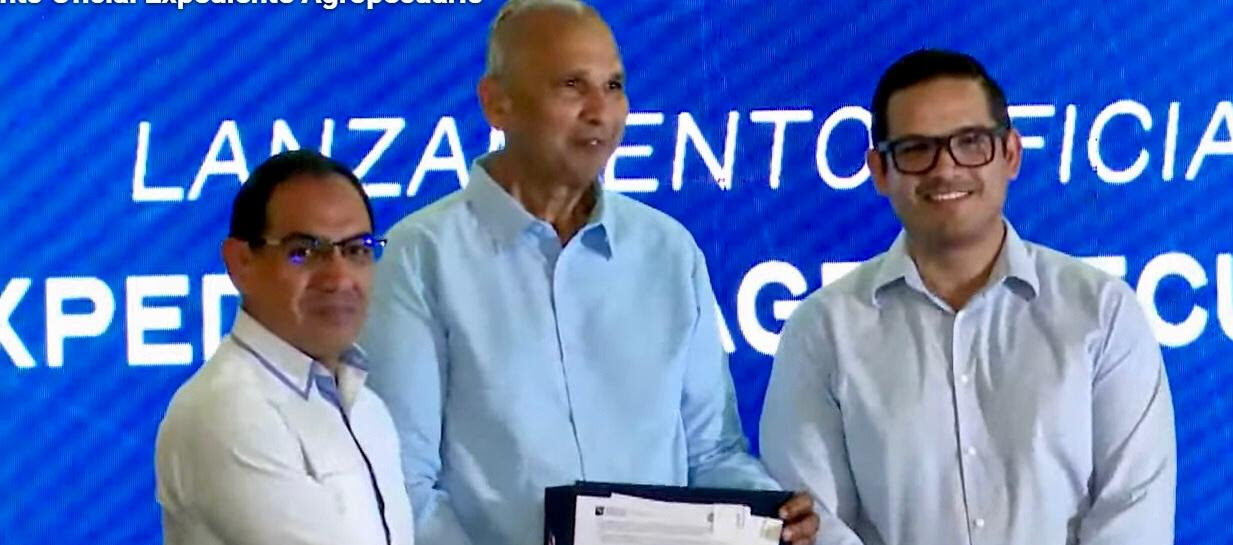
    Costa Rica has forged a landmark alliance with the Inter-American Institute for Cooperation on Agriculture (IICA) to revolutionize its agricultural sector through a comprehensive modernization strategy. The formal agreement, signed between the Ministry of Agriculture and Livestock (MAG) and the hemispheric organization, centers on implementing a groundbreaking Payment for Results (PfR) program backed by $140 million in funding from the World Bank and International Fund for Agricultural Development (IFAD).

    The partnership was officially launched during the inauguration of MAG’s new digital single file system, with high-level participation from Costa Rican Minister of Agriculture and Livestock Víctor Carvajal Porras, Environment and Energy Minister Franz Tattenbach Capra, and IICA Director General Muhammad Ibrahim, who served as honorary witness to the signing ceremony.

    This five-year initiative represents a paradigm shift in agricultural governance, structured around eight strategic indicators that IICA will technically verify. The program’s architecture encompasses six transformative pillars: digital transformation of agricultural systems, enhanced traceability mechanisms, infrastructure modernization, implementation of Nationally Appropriate Mitigation Actions (NAMAs), development of Payment for Environmental Services (PES) frameworks, and promotion of green financing strategies.

    IICA’s role as technical partner leverages the organization’s regional expertise to ensure international standards in management, evaluation, and accountability. Director General Ibrahim emphasized the strategic importance of this collaboration, noting that ‘the transformation and modernization of the agricultural sector are essential to respond to national demands and global challenges.’ The Institute will work closely with ministries and private sector stakeholders to overcome institutional barriers and strengthen sustainable practices.

    Beyond immediate operational improvements, the agreement positions IICA as a key policy advisor in strengthening Costa Rica’s agricultural public policies. The collaboration aims to create a more innovative and resilient agricultural sector that simultaneously addresses environmental commitments and international market requirements, establishing a new benchmark for sustainable agriculture in the Americas.

  • Azizi Joseph Wins Brand-New Changan Alsvin in Townhouse Megastore Promotion

    Azizi Joseph Wins Brand-New Changan Alsvin in Townhouse Megastore Promotion

    In a remarkable conclusion to a highly publicized retail promotion, Azizi Joseph has been declared the grand prize winner of a brand-new Changan Alsvin sedan. The life-changing vehicle was awarded through an extensive marketing campaign orchestrated by Townhouse Megastore, a prominent retail chain known for its innovative customer engagement strategies.

    The promotional event, which ran for several months across multiple Townhouse Megastore locations, offered customers automatic entry with qualifying purchases. The campaign successfully drove significant foot traffic and sales volume while generating substantial brand awareness for both the retailer and Changan Motors, the Chinese automotive manufacturer producing the Alsvin model.

    Joseph’s win represents a substantial value acquisition, with the Changan Alsvin representing one of the most competitive compact sedans in its class. Featuring modern design elements, advanced technological integrations, and fuel-efficient performance capabilities, the vehicle has been gaining international market traction as an affordable transportation solution.

    Retail analysts note that such high-value promotions have become increasingly popular among major retailers seeking to differentiate themselves in competitive markets. The strategy effectively creates dual benefits: generating immediate sales boosts while building long-term customer loyalty through memorable brand interactions.

    Townhouse Megastore representatives expressed enthusiasm about the promotion’s overall success, noting that customer engagement metrics significantly exceeded expectations throughout the campaign period. The company has indicated it will likely implement similar high-impact promotions in future marketing cycles based on these results.

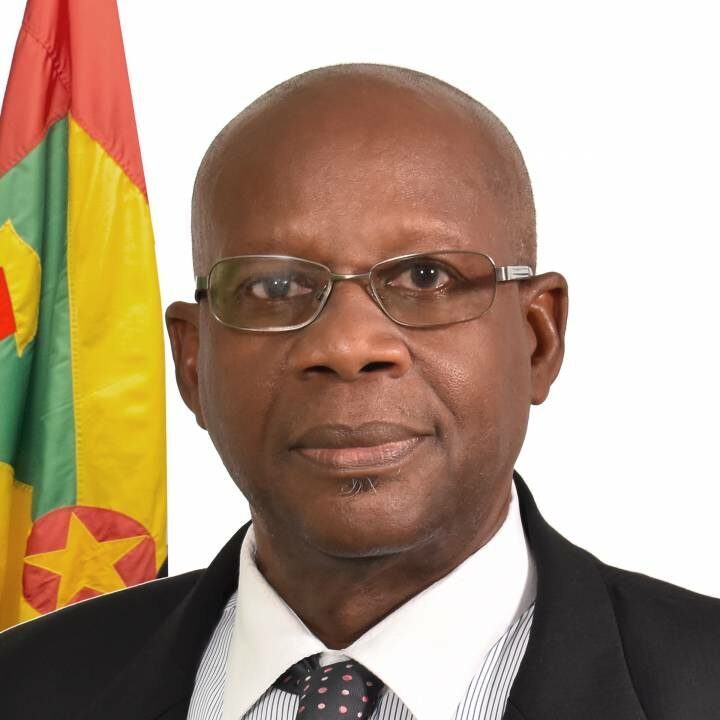
  • Message from Minister Lennox Andrews on current seafood export issue

    Message from Minister Lennox Andrews on current seafood export issue

    The Grenadian government has issued a decisive response to ongoing seafood export restrictions, affirming its commitment to both national economic interests and long-term marine sustainability. Addressing the nation’s fishing communities directly, officials emphasized the sector’s fundamental role in sustaining livelihoods, ensuring food security, and driving export revenue.

    In a comprehensive action plan, authorities outlined immediate measures including enhanced regulatory oversight, strengthened compliance mechanisms, and improved traceability protocols. The government is actively collaborating with international partners to expedite the restoration of full market access while simultaneously implementing support programs for affected fishers and exporters.

    Concurrent with these efforts, Grenada is accelerating initiatives to boost local value-added production and reduce dependency on imports. A strategic push to expand domestic consumption of premium locally-caught seafood—particularly the nation’s renowned yellowfin tuna—forms a key component of this economic recalibration.

    The Ministry of the Blue Economy and Marine Affairs has committed to maintaining transparent communication with industry stakeholders throughout this transitional period, emphasizing unity and decisive action as essential to navigating current challenges. The government’s position remains unequivocal: corrective measures will be implemented where necessary, systemic strengths will be reinforced, and the future of Grenada’s fisheries will be built on principles of resilience, competitiveness, and sustainability.

  • Warner Bros. resuming talks with Paramount on its buyout offer

    Warner Bros. resuming talks with Paramount on its buyout offer

    NEW YORK — In a significant development within the media consolidation landscape, Warner Bros. Discovery (WBD) has officially resumed negotiations with Paramount Skydance concerning its acquisition proposal. The media conglomerate has established a strict deadline of February 23rd for Paramount Skydance to present its ultimate and most competitive offer. This move intensifies the bidding war for WBD’s assets, which has captivated the industry since late last year.

    A corporate statement from WBD clarified that while these discussions are proceeding, the company’s board maintains a preference for the existing merger proposition from streaming giant Netflix. To that end, a special meeting for shareholders has been convened for March 20th to deliberate and vote on the Netflix agreement.

    The contest pits two fundamentally different acquisition strategies against one another. Paramount Skydance is pursuing a complete takeover of Warner Bros. Discovery for an estimated $108 billion. In contrast, Netflix’s arrangement, valued at approximately $83 billion, is a more targeted acquisition focused solely on WBD’s streaming services and studio operations. A critical element of the Netflix proposal is that it would not include WBD’s linear television networks, such as CNN and Discovery. These broadcast assets would instead be spun off into a new, independent publicly traded entity to be named Global Networks.

    A point of contention has been Paramount Skydance’s accusation that the WBD board has not been sufficiently transparent, failing to provide shareholders with the comprehensive details necessary to make a fair comparison between the two competing bids. The newly opened talks are intended to address these perceived deficiencies and clarify specific terms within Paramount Skydance’s merger agreement, which has been revised twice since its initial submission.

  • GDB participates in ECCB meeting with ECCU development banks

    GDB participates in ECCB meeting with ECCU development banks

    In a significant move to bolster regional economic cooperation, development banks across the Eastern Caribbean Currency Union (ECCU) have initiated a transformative collaboration framework following a high-level consultative forum hosted by the Eastern Caribbean Central Bank (ECCB). The two-day gathering, convened in St Kitts and Nevis on January 29-30, 2026, assembled senior executives from development financial institutions to address pressing regional challenges and accelerate climate-resilient economic growth.

    Royston Cumberbatch, General Manager of the Grenada Development Bank (GDB), represented his institution at the strategic meetings that focused on mobilizing concessional funding and enhancing sustainable development finance mechanisms. The forum served as a catalytic platform for knowledge exchange, best practice sharing, and strategic alignment across critical sectors including agricultural development, climate adaptation, infrastructure modernization, economic diversification, and financial inclusion initiatives.

    A pivotal moment emerged when Dr. David Lowe, Managing Director of the Development Bank of Jamaica (DBJ), presented his institution’s innovative wholesale lending model. This approach, which channels funding through commercial financial institutions to reach end-borrowers, has yielded remarkable results including minimal non-performing loan ratios and enhanced institutional sustainability. Conference participants engaged in detailed analysis of how this framework could inform structural reforms within Eastern Caribbean development banks, particularly regarding balance sheet strengthening, risk management enhancement, and development impact amplification.

    Dr. Lowe emphasized the critical balance between financial performance and measurable socio-economic outcomes, urging development banks to prioritize both institutional sustainability and tangible community impact. In response to these discussions, participants unanimously agreed to pursue a formal Memorandum of Understanding between Jamaican and Eastern Caribbean development institutions. This forthcoming agreement will establish mechanisms for technical cooperation, knowledge transfer, and capacity building, with formalization anticipated within coming months.

    The GDB delegation presented updates on their digital transformation program, climate finance initiatives, and strategic plans to expand affordable credit access and technical support for micro, small, and medium-sized enterprises (MSMEs) and homeowners. These initiatives align closely with Grenada’s national development priorities and regional sustainable development objectives.

    Cumberbatch reflected on the forum’s significance, stating: ‘This collaborative engagement reinforced the imperative of regional cooperation among development banks as we work collectively to expand financial access, strengthen climate resilience, and support inclusive economic growth. The insights gained will directly inform GDB’s strategic priorities as we enhance our developmental impact both nationally and regionally.’

    The Grenada Development Bank has reaffirmed its commitment to fostering partnerships that unlock development financing, strengthen institutional capabilities, and promote sustainable prosperity throughout the Eastern Caribbean region.

  • VS geeft Trinidad en Tobago licenties voor olie- en gasactiviteiten met Venezuela

    VS geeft Trinidad en Tobago licenties voor olie- en gasactiviteiten met Venezuela

    The United States has issued two General Licenses to Trinidad and Tobago, enabling the Caribbean nation to legally conduct specific oil and gas activities in Venezuela and within their shared maritime border region. This development marks a significant shift in hemispheric energy cooperation following previous sanction-related disruptions.

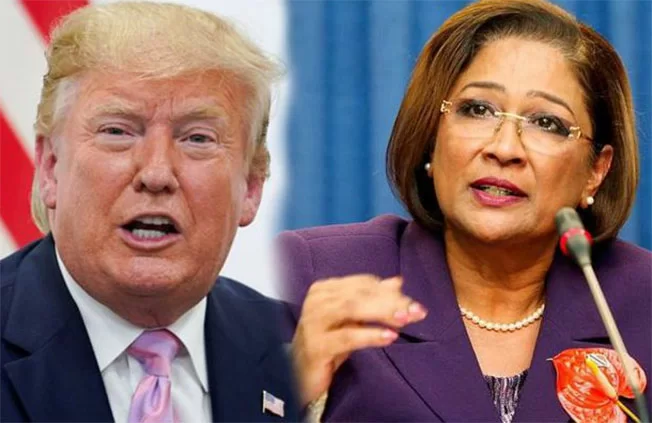
    Prime Minister Kamla Persad-Bissessar announced the licenses via social media, characterizing them as a crucial advancement for regional energy security. She emphasized that this U.S. authorization not only strengthens diplomatic ties with Washington but also positions Trinidad and Tobago as a “reliable energy hub” in the Caribbean basin.

    “We remain optimistic about enhancing our role in regional energy markets, supporting domestic industry, securing employment opportunities, and contributing to stable supply chains that benefit the broader region,” the Prime Minister stated. She further committed that all activities would adhere to applicable legal and regulatory frameworks with strong emphasis on transparency and governance.

    The licenses contain specific financial provisions requiring all payments from oil and gas ventures—including taxes or royalties to Venezuela’s government, state oil company PdVSA, or its entities—to be deposited into special accounts designated by the U.S. Department of the Treasury. The regulations explicitly exclude commercially unreasonable payments, debt swaps, or transactions involving gold or digital currencies.

    This authorization follows broader U.S. sanctions easing that has enabled major energy corporations including Shell, BP, Chevron, Eni, and Repsol to consider or expand operations in Venezuela. The move reverses the April 2025 revocation of previous licenses that had suspended development of the Dragon and Cocuina-Manakin gas fields, projects with substantial economic implications for Trinidad and Tobago.

    Energy analysts view the development as both an opportunity for regional energy security and a challenge due to Venezuela’s complex geopolitical landscape. Persistent sanctions, political volatility, and international tensions continue to influence the operating environment. While the new licenses potentially pave the way for future investments and collaborations, experts caution that strict adherence to international regulations and ongoing diplomatic coordination will be essential for long-term success.