分类: business

  • Jamaica in talks with other countries on unified platforms for digital payments, says Holness

    Jamaica in talks with other countries on unified platforms for digital payments, says Holness

    KINGSTON, Jamaica — Jamaica is actively engaged in diplomatic and technical discussions with multiple countries — including India — as it works to build a unified digital payment infrastructure aimed at expanding access to cashless transactions across the island nation, Prime Minister Dr. Andrew Holness announced Thursday.

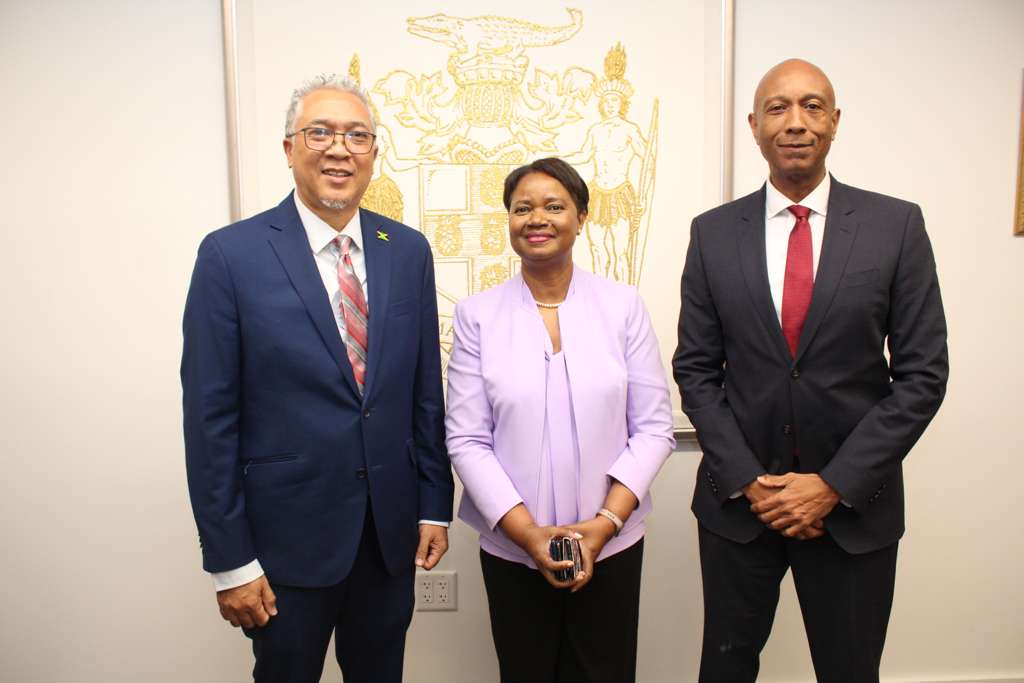
    Holness made the disclosure during the Recover Better Conference, a one-day action-focused summit hosted by the Jamaican Consulate General in New York that centers on strengthening the country’s post-disaster recovery and long-term economic resilience. The conversation came as the prime minister addressed audience questions about the current state of mobile banking penetration in Jamaica.

    The core goal of expanding digital payment access, Holness emphasized, is to reduce the share of Jamaicans who remain locked out of formal financial services, commonly referred to as the unbanked population. He noted that a surprising gap separates Jamaica’s economic standing from its digital payment performance: many nations with lower per capita gross domestic product than Jamaica have achieved far higher rates of digital payment adoption, even among residents who do not hold traditional commercial bank accounts.

    “While Jamaica boasts a higher share of banked adults than many peer economies, that share still falls short of our national goals, and the rate of active digital payment use remains stubbornly low,” Holness explained. “That is the core challenge we are working to address.”

    As one of a small handful of countries globally to launch a central bank digital currency, Jamaica already has experience with digital financial innovation through its JAMDEX CBDC project. But Holness openly acknowledged that the initiative has not gained the widespread public and commercial adoption that government leaders initially projected.

    Two major bottlenecks are holding back faster growth, the prime minister explained. First, the country’s established banking sector has been slow to make the full capital investments required to support widespread digital payment rollout. Upgrading infrastructure to support cashless transactions — including installing widespread point-of-sale terminals at retail locations, issuing contactless payment cards to account holders, and updating backend processing systems — represents a major upfront capital commitment that banks have been reluctant to absorb quickly.

    Second, Jamaica currently lacks a unified interoperability platform that allows multiple independent digital payment systems to transact with one another seamlessly. While policymakers support a competitive market with multiple private and public payment providers, a shared connecting layer is required to ensure users can send and receive payments across different services without friction, Holness noted.

    To solve this interoperability gap, Jamaica has already entered into preliminary discussions with Indian officials to explore adopting India’s proven unified payment platform architecture, the prime minister confirmed.

    Jamaica does already have a basic infrastructure connecting all of the country’s automated teller machines, but Holness said the network requires additional capital investment to expand access and support full digital payment interoperability. Government officials are currently in talks with domestic banks to secure the funding needed to upgrade this existing framework.

    Additionally, the Bank of Jamaica has established a regulatory sandbox to allow digital payment providers to test new services and secure regulatory approval in a controlled environment. Even with this supportive policy in place, however, Holness admitted that the approval and scaling process for new mobile payment systems has proceeded far slower than anticipated.

  • Fidelity expands GAC presence as line-up rolls out in Jamaica

    Fidelity expands GAC presence as line-up rolls out in Jamaica

    KINGSTON, Jamaica — One year after first bringing Guangzhou Automobile Corporation (GAC) vehicles to Jamaican consumers, local automotive distributor Fidelity Motors Limited is scaling up its footprint in the market by rolling out the Chinese automaker’s full product portfolio. Long recognized as Jamaica’s exclusive distributor for Nissan Motor Company vehicles, Fidelity unveiled six all-new GAC models to the public Wednesday at the National Indoor Sports Centre, headlined by the regional debut of the S7 five-seater plug-in hybrid SUV.

    This expansion comes on the heels of stronger-than-expected early consumer adoption following GAC’s official launch in the Jamaican market in late 2025. The move is a strategic response to shifting buyer priorities across Jamaica’s automotive landscape, as Fidelity moves to diversify its offering to match evolving local demand.

    The Jamaican market expansion aligns with GAC’s rapid global growth trajectory. Last month alone, the automaker logged 42,165 units sold worldwide, marking an 86% year-over-year increase that has provided solid momentum for its ongoing expansion into Caribbean emerging markets.

    Alan Bayne, Chief Executive of the Goddard Enterprises Limited Auto Division — parent group of Fidelity Motors — noted that GAC’s growing local appeal is anchored by its industry-leading residual value. Citing a February 2026 automotive industry analysis, Bayne shared that GAC ranks first among all Chinese auto brands for three-year resale value, a metric that holds major weight for local consumers. “That will provide much comfort to the Jamaican car buyer,” Bayne commented at the launch event.

    Deborah Stewart, General Manager of Fidelity Motors, explained that modern Jamaican car buyers are prioritizing more than just affordable pricing. Today, consumers are actively seeking advanced in-vehicle technology, top-tier safety ratings, and refined overall driving performance — needs the expanded GAC lineup is built to address. “The response since our introduction late last year has been extremely encouraging,” Stewart said, adding that the full product rollout is designed to cater to buyer demand across every major automotive segment.

    Currently, GAC’s Jamaican product range covers all major powertrain categories, from traditional internal combustion engines to hybrid and fully electric models. Existing offerings include the GS3 Emzoom compact SUV, Emkoo mid-size SUV, GS8 full-size SUV, Empow performance sedan, and the all-electric AION V crossover. The newly launched S7 plug-in hybrid rounds out this portfolio, packing a 1.5-litre hybrid powertrain that delivers a combined driving range of up to 1,150 kilometres on a full tank and full charge. It also comes standard with cutting-edge driver-assistance technology, including map-free autonomous driving capabilities.

    GAC’s regional expansion across the Caribbean is supported by a partnership with regional distributor Motorworld, alongside longstanding global supply agreements with top-tier automotive component manufacturers including Bosch, Denso and Michelin.

    Speaking at the launch ceremony, China’s Ambassador to Jamaica Wang Jinfeng framed GAC’s growing presence in Jamaica as a visible reflection of the deepening economic partnership between the two countries, particularly in the areas of cross-border investment and clean automotive technology. The launch event brought together key stakeholders from across the regional automotive industry, with leadership from Fidelity, GEL Auto Division, Motorworld and the Chinese embassy in attendance to mark the milestone of GAC’s full lineup rollout.

  • DBJ’s M5 framework drives recovery dialogue for agriculture at New York conference

    DBJ’s M5 framework drives recovery dialogue for agriculture at New York conference

    Against the backdrop of ongoing post-disaster reconstruction in the wake of Hurricane Melissa, Jamaica’s national development finance institution took center stage at a one-day New York recovery forum to showcase its work and rally global support for the island nation’s long-term resilience goals.

    Hosted by the Jamaican Consulate General in New York, the Recover Better Conference convened diaspora representatives, international investors, and key industry stakeholders to mobilize three core resources for Jamaica’s rebuilding: targeted capital, specialized expertise, and cross-sector collaborative partnerships. The event placed specific focus on the Development Bank of Jamaica (DBJ), spotlighting its existing work in post-disaster reconstruction and economic transformation while generating new interest in partnerships to advance national recovery.

    In his opening remarks on DBJ’s role, Managing Director Dr. David Lowe stressed that collective partnership forms the backbone of effective post-crisis recovery, singling out the Jamaican diaspora as an underutilized catalyst for accelerated progress. “Partnership is non-negotiable for meaningful recovery,” Dr. Lowe stated in an official press release distributed Friday. “The Jamaican diaspora holds unique stakes and capabilities in this work, and DBJ stands ready to act as their dedicated partner to direct investment toward high-impact opportunities that restore livelihoods and secure Jamaica’s long-term economic prosperity. All stakeholders must step forward to build a robust ecosystem that supports solution-focused, resilient national development.”

    During its formal presentation at the conference, DBJ outlined its comprehensive, innovative framework for recovery financing that positions the institution as more than a traditional lender: it operates as a strategic catalyst for sustainable, inclusive growth. Unlike standard development banks that rely solely on debt instruments, DBJ combines a flexible mix of loans, equity stakes, grant funding, credit guarantees, and hands-on technical support to close persistent financing gaps, unlock private sector expansion, and build a solution-oriented development pathway that serves all stakeholders.

    A core pillar of DBJ’s current recovery intervention is targeted support for Jamaica’s agricultural sector, which suffered some of the most severe damage from recent climate-driven disasters. Over the past financial year, the bank has approved roughly $9.3 million in dedicated loans for agricultural operations and agribusinesses, supporting hundreds of small and medium-sized enterprises across the island. This financing has helped restore lost production capacity, reinforce national food security systems, and stabilize incomes for thousands of households dependent on the agricultural sector.

    DBJ also highlighted the early successes of its signature M5 Business Recovery Programme, a structured initiative designed to support struggling enterprises through a holistic package of credit access, direct grants, loan restructuring, and collateral assistance. With $63 million in total financing allocated to the program and robust demand across multiple sectors of the economy, M5 has emerged as a critical lifeline that helps businesses stabilize operations, rebuild damaged infrastructure, and scale for long-term growth while embedding innovative resilience strategies to weather future shocks.

    To deepen engagement with diaspora stakeholders, Nicola Russell, manager of DBJ’s public-private partnership and privatisation division, joined a conference panel focused on expanding diaspora participation through investment, volunteerism, skills sharing, and philanthropy. During the discussion, Russell outlined a pipeline of investable public-private partnership and privatisation (PPP&P) opportunities open to external stakeholders, emphasizing that diaspora members and the wider global investment community can deliver tangible impact for Jamaica’s reconstruction and long-term development. She also noted that leveraging diaspora networks and on-the-ground expertise is key to advancing productive dialogue and unlocking transformative capital for large-scale PPP projects.

    The conference featured a headline keynote address from Jamaican Prime Minister Dr. Andrew Holness, who presented the government’s official vision for the country’s recovery in a talk titled “Building Back Better: Jamaica’s Vision for National Recovery and Resilience.” Holness underscored the critical importance of coordinated national action, strategic targeted investment, and cross-stakeholder partnerships to advance ongoing reconstruction and build systemic national resilience.

    Beyond its immediate post-Hurricane Melissa recovery work, DBJ used the conference to outline its broader national mandate, which includes supporting micro, small, and medium-sized enterprises (MSMEs), mobilizing private domestic and international capital, and advancing large-scale infrastructure development through public-private partnerships. Through these integrated efforts, the bank reaffirmed its commitment to serving as a strategic partner for all stakeholders, working to build a resilient, inclusive, and solution-driven economic future for all Jamaicans.

  • Disney Cruise Line adds Dominican Republic to Caribbean itineraries

    Disney Cruise Line adds Dominican Republic to Caribbean itineraries

    At the annual Seatrade Cruise Global industry conference held in Miami, a landmark announcement that promises to reshape Caribbean cruise tourism has emerged: Disney Cruise Line will officially add the Dominican Republic to its regular Caribbean voyage routes starting this November. This move marks a significant win for the Dominican Republic’s fast-growing travel and hospitality sector, with Disney vessels set to make regular port calls at Taíno Bay, the modern cruise terminal located in Puerto Plata – one of the northern Dominican Republic’s most rapidly expanding leisure and tourism hubs.

    Dominican Republic’s Minister of Tourism David Collado emphasized that the entry of a globally renowned brand like Disney Cruise Line represents a transformative milestone for the country’s cruise industry. Unlike mass market cruise operators that cater to lower-budget travelers, Disney typically attracts higher-spending international visitors, a demographic that will deliver greater revenue gains for local businesses from hospitality to artisanal retail. Beyond direct economic benefits, Collado noted that the partnership also cements the Dominican Republic’s standing as one of the Caribbean’s premier cruise destinations, setting it apart from competing regional markets.

    Industry analysts and tourism officials project that Disney’s decision will trigger a ripple effect of positive growth across the country’s tourism ecosystem. It is expected to drive a measurable uptick in overall visitor arrivals, create new local jobs tied to cruise tourism, and advance the government’s ongoing push for sustainable, long-term tourism development.

    This addition is not an isolated win: it builds on the Dominican Republic’s growing roster of partnerships with major global cruise lines, and reinforces the country’s position as a central strategic hub for Caribbean cruise routes. While at Seatrade Cruise Global, the Dominican Republic’s tourism delegation also held a series of high-level closed-door meetings with other top industry leaders, used the event to showcase the country’s diverse tourism offerings – from tropical beaches to historic cultural sites – and laid the groundwork to attract additional cruise operator partnerships in the coming years, with the ultimate goal of expanding the country’s global visibility in the competitive international cruise market.

  • Roofing Advances as Antigua Cruise Port Upland Development Takes Shape

    Roofing Advances as Antigua Cruise Port Upland Development Takes Shape

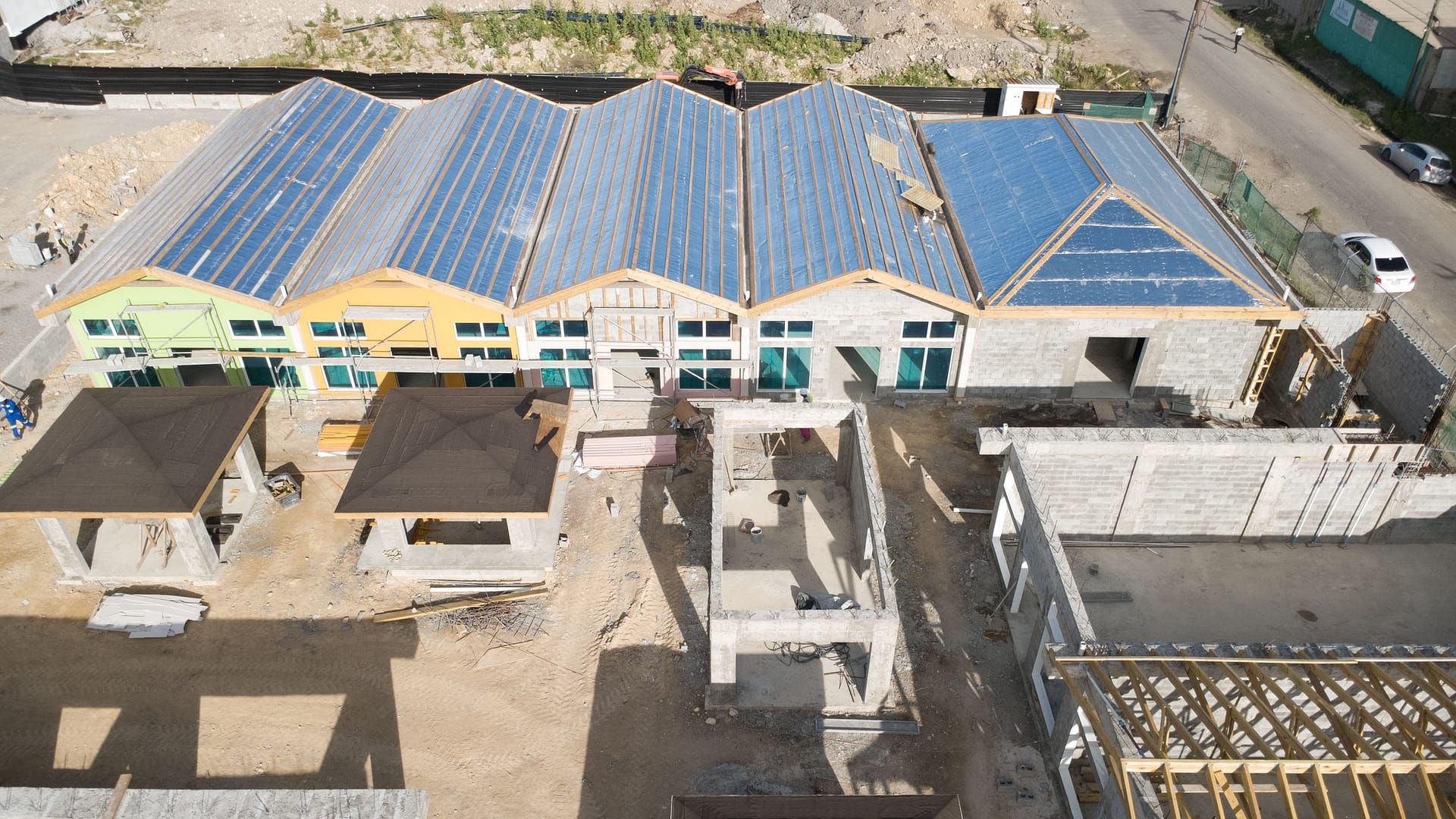
    Construction work on the ambitious upland expansion project at Antigua Cruise Port has crossed a key threshold, moving into advanced stages that are already reshaping the site’s physical landscape for visitors and stakeholders alike. As roofing operations across multiple new structures progress steadily, the development has entered a visible new phase that brings the project’s long-term vision closer to completion.

    Developers working on the initiative have begun applying vibrant, Caribbean-inspired paint palettes to the exterior walls of what will soon become new retail outlets and entertainment venues. This design choice is more than cosmetic: it is intended to carve out a distinct, energetic visual identity for the expanded precinct, weaving the region’s cultural and natural character into the built environment itself to reflect the destination’s unique appeal.

    Leading the on-site construction push is local team LICCOM, which continues to hit critical project milestones ahead. Alongside ongoing roofing work across the development’s core structures, crews are also making steady progress on one of the project’s most anticipated amenities: the Day Club pool, a recreational feature expected to draw significant visitor interest once the port opens to expanded operations.

    The entire upland development is a core component of a broader overhaul of Antigua Cruise Port led by Global Ports Holding, the global port infrastructure operator. The overarching goal of the upgrade is to elevate the overall visitor experience at the facility, transforming it from a simple transit point into a dynamic, multifaceted hub that delivers value both to the hundreds of thousands of cruise passengers that pass through each year and to local businesses operating in and around the port.

    Project stakeholders say the recent, visible progress—shifting the build from behind-the-scenes structural work to public-facing finishing touches—serves as a clear signal that the next chapter of Antigua Cruise Port’s transformation is now within sight, with the project remaining on track to deliver its promised upgrades to the Caribbean’s cruise sector.

  • MSC Cruises to establish permanent base in La Romana

    MSC Cruises to establish permanent base in La Romana

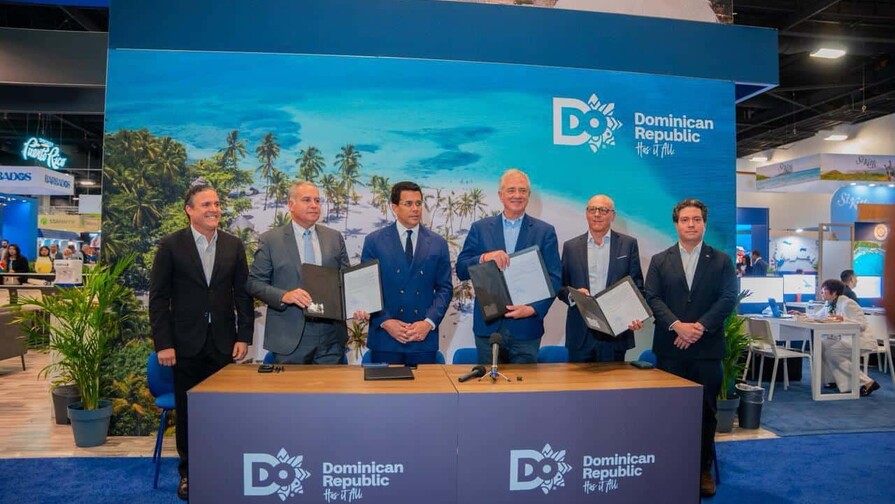
    At the annual Seatrade Cruise Global conference held in Miami, Dominican Republic’s Minister of Tourism David Collado made a landmark announcement for the country’s travel and cruise sector: starting in November 2026, the Caribbean nation will host the first permanent, year-round homeport for a major European cruise line, based out of the eastern coastal city of La Romana.

    This historic initiative grew out of a newly signed partnership between leading European cruise operator MSC Cruises and Costasur Casa de Campo. The agreement covers far more than just the homeport establishment: it also includes plans for the management and sustainable development of Catalina Island, as well as a major expansion of cruise itineraries that will add multiple new Dominican destinations to MSC Cruises’ global routes.

    Regional and industry stakeholders have highlighted that this project is expected to deliver widespread economic benefits across the Dominican Republic, particularly in the country’s eastern region where the port is located. Projections point to significant new foreign direct investment flowing into the local tourism infrastructure, a measurable boost to overall national visitor arrivals and spending, and the creation of hundreds of new permanent and seasonal jobs for local workers.

    Cruise industry leaders have emphasized the strategic value of this milestone. A permanent year-round homeport is far more impactful for a destination than occasional port calls, as it drives consistent visitor traffic and generates ongoing economic activity, rather than the seasonal fluctuations that characterize many Caribbean cruise markets. This move is expected to significantly strengthen the Dominican Republic’s competitive position in the $50 billion global cruise industry, and aligns with the national government’s long-term strategy to establish the country as one of the Caribbean’s leading central cruise hubs.

  • Over $10 million USD invested in Haiti, a new factory is being built at CODEVI

    Over $10 million USD invested in Haiti, a new factory is being built at CODEVI

    In a landmark move for Haiti’s ongoing economic revitalization efforts, government officials formalized a deal on April 15, 2026, to host a new manufacturing facility from global packaging leader ALPLA Group at the CODEVI Industrial Development Company free trade zone in Ouanaminthe, a city in Haiti’s northeastern region.

    The project brings more than $10.2 million in foreign direct investment to the Caribbean nation, marking a major vote of confidence in Haiti’s recent policy overhauls designed to improve its domestic business environment. For policymakers, the investment is not just a capital injection—it is tangible proof that economic reform efforts are starting to pay off with international stakeholders.

    The new local entity, ALPLA HAITI S.A., operates as a subsidiary of Austria-based ALPLA Group, a 30-year industry giant that maintains production and distribution operations across more than 45 countries worldwide. ALPLA specializes in producing high-quality bottles, caps, injection-molded components and cutting-edge sustainable packaging solutions for a wide range of consumer and industrial sectors. This new Haitian facility aligns with the group’s broader global expansion strategy, which prioritizes eco-friendly operations, sustainable supply chain management and increased use of recycled raw materials in production processes.

    Beyond manufacturing output, the project is expected to deliver long-term social and economic benefits to local communities. Industrial facilities of this scale typically create hundreds of direct jobs across production, logistics, facility maintenance and administrative roles, and will facilitate the transfer of advanced technical skills to local workers. This talent development is projected to strengthen Haiti’s overall human capital and boost the nation’s competitiveness in regional industrial and export markets.

    Haiti’s Minister of Commerce and Industry, James Monazard, emphasized the Haitian government’s strategic focus on unlocking growth in the country’s northern corridor, particularly the Northeast region. He reaffirmed the executive branch’s continued commitment to removing barriers for international and domestic investors, outlining ongoing policy efforts including administrative process simplification, updates to strengthen the national investment legal framework, targeted financial incentives and on-the-ground support for incoming businesses operating in the country’s free trade zones.

  • Leaked Documents Raise New Questions Over BEL Severance Payments

    Leaked Documents Raise New Questions Over BEL Severance Payments

    A brewing conflict over unpaid severance at Belize Electricity Limited (BEL) has escalated dramatically after leaked internal documents confirmed what frontline and former workers have alleged for decades: senior executives received generous exit payouts while rank-and-file staff were denied the benefits they were owed. The disclosure, shared with local outlet News Five, has reinvigorated protests from retired and ailing former employees, who have long accused the state-linked utility of institutional favoritism toward top management.

    The documents, which detail exit arrangements for three high-ranking BEL leaders who departed between 2007 and 2015, paint a clear picture of unequal treatment. In June 2011, Joseph Sukhnandan, then Vice President of Engineering and Energy Supply, walked away with a total severance package exceeding $156,000 Belize dollars upon his retirement. Felix Murrin, former Vice President of Customer Care and Operations, secured board approval for an exit deal in November 2007 that included payout for 209 unused vacation days and a 33,000 Canadian dollar gratuity. When Rolando Santos, Senior Manager for System Planning and Engineering, left the firm in September 2015, his package included full severance payouts aligned with the Belize Labour Act, in addition to supplementary benefits under the company’s pension plan.

    These documented payouts come as hundreds of lower-tier and retired former employees have staged public protests, demanding the severance they say BEL has refused to pay them for decades. Organizers with the Belize Energy Workers for Justice (BEWJ), the group that pushed for transparency around the payments, say the leak validates long-held suspicions that the company has applied its own employment rules unevenly.

    Dorla Staine, a BEWJ organizer, told News Five the unfair practice dates back more than a quarter century. When workers demanded their earned severance in 1999 ahead of a company restructuring, Staine said management rejected their request and instead imposed a new pension structure — while quietly approving large severance payouts for top executives behind closed doors. “We knew this was happening. It stank then, and it stinks now,” Staine said of the double standard. Fellow BEWJ organizer Shawn Nicholas added that workers have long suspected leadership prioritized their own benefits over the entitlements of rank-and-file staff, and the leaked documents confirm that bias.

    BEL has thus far declined to respond to repeated requests for comment on the leaked documents. In previous public statements, the company has maintained that its current severance and pension structures comply with a 2025 ruling from the Caribbean Court of Justice on similar employee severance claims against Belize Telemedia Limited (BTL), arguing BEL’s pension framework meets all legal requirements. Legal opinions obtained by BEL from two prominent Belizean law firms, Barrow and Company and Balderamos and Arthurs, back that position.

    Barrow and Company’s legal analysis notes that a variation agreement signed between BEL and its union established that all severance would be processed through the company pension plan, though the firm advised BEL to clarify its contractual wording to eliminate ambiguity around employee entitlements. Balderamos and Arthurs agreed that BEL’s pension structure is legally distinct from BTL’s and satisfies the CCJ’s 2025 judgment, but also recommended that the company add clearer breakdowns of employer pension contributions, severance entitlements and any balance discrepancies in all future exit correspondence.

    Even with legal backing for BEL’s overall policy structure, the unexplained disparity between executive exit packages and denied worker claims has left unresolved questions that continue to fuel worker outrage. For protesting employees, many of whom are elderly or living with chronic illness and have walked picket lines under extreme heat to demand their owed pay, the leak only deepens the injustice of the company’s practices. As of April 15, 2026, BEL has yet to issue a public explanation for the unequal payouts, leaving the dispute at an impasse between workers and utility leadership.

  • Dominican Republic hits record USD 1.4B in March exports

    Dominican Republic hits record USD 1.4B in March exports

    The Caribbean nation of the Dominican Republic has hit an unprecedented export landmark in March 2026, with total outbound shipments hitting $1,448.6 million — a 20.7% year-over-year surge that represents the highest monthly export value ever recorded for this time of the year. This remarkable growth has been largely fueled by a dramatic boom in raw gold exports, which jumped 78.2% year-over-year to add an extra $110.8 million to the nation’s total export revenue. Beyond the mining sector, other key industries including circuit breakers, tobacco, and medical instruments also posted solid double-digit gains, providing broad-based support for the overall expansion.

    When broken down by export destination, the United States retains its position as the Dominican Republic’s largest single trading partner, absorbing just over 50% of all national exports, worth $731.3 million in total. Canada claimed second place on the destination rankings, with shipments to the North American nation soaring 150% year-over-year, a surge directly tied to increased gold exports. Neighboring Haiti came third, posting a robust 36.4% growth in Dominican exports, while Puerto Rico and China rounded out the top five destination markets.

    By product category, raw gold claimed the largest share of total exports at 17.1%, followed by medical instruments and premium cigars. The nation’s Free Zones continued to anchor overall export activity, accounting for 58% of total outbound shipments, while exports operating under the National Regime also posted unexpectedly strong expansion that outpaced initial analyst projections.

    The strong March performance aligns with broader accelerating economic momentum across the country. For the entire first quarter of 2026, cumulative Dominican exports reached $3,736.9 million, representing an 18.3% year-over-year increase. This sustained export expansion has been underpinned by robust foreign direct investment (FDI) inflows, which hit $5,032.8 million across 2025. Long anchored in the tourism, energy, and real estate sectors, FDI is increasingly diversifying into the country’s fast-growing mining and manufacturing industries, creating a more balanced and resilient economic base. Buoyed by these positive trends, the World Bank projects that the Dominican Republic will lead all countries in Latin America and the Caribbean in economic growth for 2026.

  • Govt pushes for collateral registry to unlock small biz lending

    Govt pushes for collateral registry to unlock small biz lending

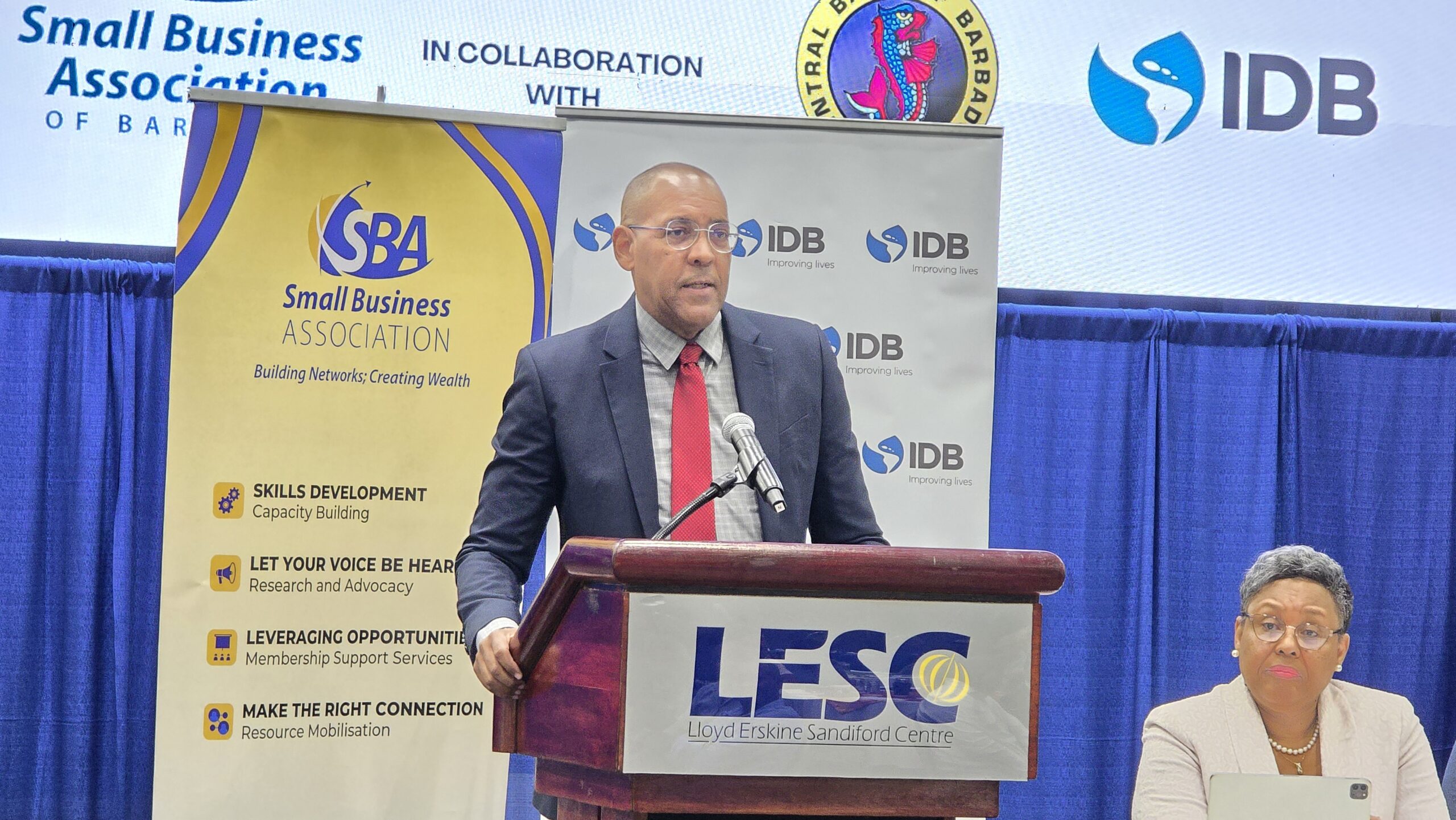
    Barbados’ small business sector is facing a deep-rooted financial barrier that is stifling growth, according to the island nation’s Business Development Minister Kerrie Symmonds. Speaking at the State of the Sector Conference hosted Wednesday at the Lloyd Erskine Sandiford Centre, Symmonds unveiled a landmark new national MSME survey – the first comprehensive assessment of the sector in a decade – that lays bare the scale of the challenge. The study confirms a stark reality for Barbados’ business landscape: 98% of all domestic enterprises qualify as micro, small or medium enterprises (MSMEs), yet more than half of these businesses generate annual revenues of no more than $100,000. Symmonds traced this stagnation directly to a systemic flaw in the country’s lending framework: commercial banks uniformly require land as a condition for approving loans, and the vast majority of small business owners do not hold this traditional form of collateral. Without access to affordable capital, MSMEs cannot expand their operations, hire additional staff, or invest in new infrastructure, trapping most small enterprises in a cycle of low revenue. “The problem isn’t that small business owners lack valuable assets entirely – the system is built to only recognize one type of security, that most of these entrepreneurs simply do not have,” Symmonds explained. He pointed to small-scale local farmers as a key example: many cultivate productive, profitable plots on government-leased land, and own heavy farming equipment and growing crops that hold clear tangible value. But because they do not own the land they work, they are automatically disqualified from accessing bank loans, under current rules. Symmonds noted that this gap between available assets and lending eligibility is not unique to agriculture: emerging tech entrepreneurs, retail operators, and service providers often invest heavily in specialized equipment, intellectual property, and inventory that could serve as security – if the regulatory framework allowed for alternative collateral. The government, which campaigned on addressing MSME access to finance during the last general election, has already begun moving to fix the issue, Symmonds confirmed. In the most recent national budget, the administration introduced factoring services as an interim solution, and the government now plans to move forward urgently with the establishment of a national collateral registry. This system would allow entrepreneurs to pledge non-traditional assets – from farm equipment and harvested crops to business machinery and intellectual property – as security for loans, unlocking capital that is currently inaccessible to small operators. Symmonds emphasized that the collateral registry model is already proven to drive inclusive MSME growth across the developing world. Similar systems are already operational across Latin America, including Colombia, and have been rolled out in multiple regions across Africa, from North Africa to Central, East and West Africa. “Developing economies around the globe have recognized that unlocking access to capital for ordinary people with good business ideas is how broad-based economic development happens,” he said. Beyond giving entrepreneurs a path to growth, Symmonds noted that the reform would also benefit lending institutions by reducing their risk exposure. A properly regulated collateral registry would create a clear secondary market for pledged assets, allowing banks and other lenders to recoup their investment if a borrower defaults on a loan. “This is not a handout to small businesses – it is a rethinking of our lending framework that works for both entrepreneurs and financial institutions,” he added. “We are fully prepared to put in place the necessary regulatory and legislative framework to make this reform a reality for Barbados.”