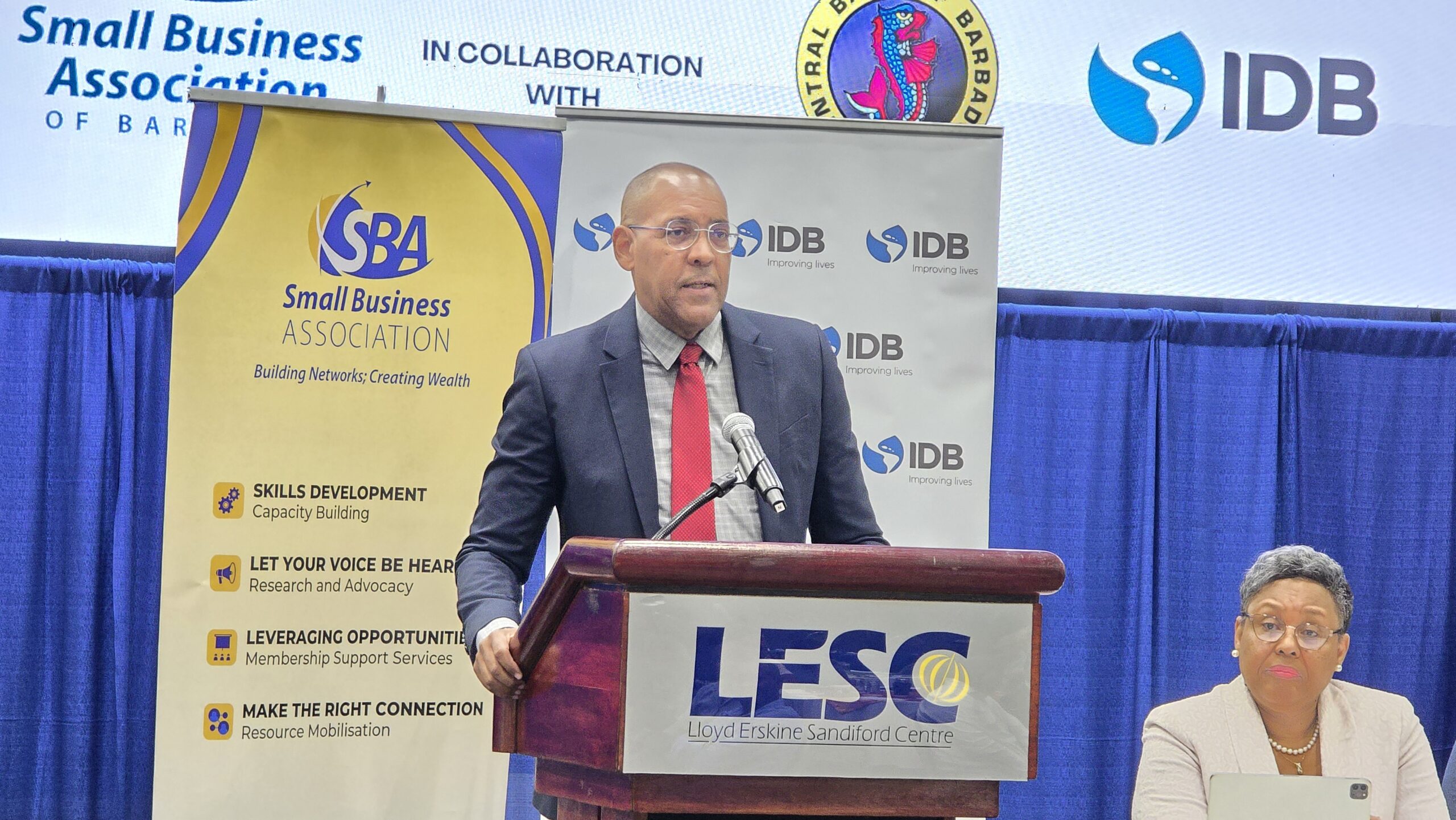
Barbados’ small business sector is facing a deep-rooted financial barrier that is stifling growth, according to the island nation’s Business Development Minister Kerrie Symmonds. Speaking at the State of the Sector Conference hosted Wednesday at the Lloyd Erskine Sandiford Centre, Symmonds unveiled a landmark new national MSME survey – the first comprehensive assessment of the sector in a decade – that lays bare the scale of the challenge. The study confirms a stark reality for Barbados’ business landscape: 98% of all domestic enterprises qualify as micro, small or medium enterprises (MSMEs), yet more than half of these businesses generate annual revenues of no more than $100,000. Symmonds traced this stagnation directly to a systemic flaw in the country’s lending framework: commercial banks uniformly require land as a condition for approving loans, and the vast majority of small business owners do not hold this traditional form of collateral. Without access to affordable capital, MSMEs cannot expand their operations, hire additional staff, or invest in new infrastructure, trapping most small enterprises in a cycle of low revenue. “The problem isn’t that small business owners lack valuable assets entirely – the system is built to only recognize one type of security, that most of these entrepreneurs simply do not have,” Symmonds explained. He pointed to small-scale local farmers as a key example: many cultivate productive, profitable plots on government-leased land, and own heavy farming equipment and growing crops that hold clear tangible value. But because they do not own the land they work, they are automatically disqualified from accessing bank loans, under current rules. Symmonds noted that this gap between available assets and lending eligibility is not unique to agriculture: emerging tech entrepreneurs, retail operators, and service providers often invest heavily in specialized equipment, intellectual property, and inventory that could serve as security – if the regulatory framework allowed for alternative collateral. The government, which campaigned on addressing MSME access to finance during the last general election, has already begun moving to fix the issue, Symmonds confirmed. In the most recent national budget, the administration introduced factoring services as an interim solution, and the government now plans to move forward urgently with the establishment of a national collateral registry. This system would allow entrepreneurs to pledge non-traditional assets – from farm equipment and harvested crops to business machinery and intellectual property – as security for loans, unlocking capital that is currently inaccessible to small operators. Symmonds emphasized that the collateral registry model is already proven to drive inclusive MSME growth across the developing world. Similar systems are already operational across Latin America, including Colombia, and have been rolled out in multiple regions across Africa, from North Africa to Central, East and West Africa. “Developing economies around the globe have recognized that unlocking access to capital for ordinary people with good business ideas is how broad-based economic development happens,” he said. Beyond giving entrepreneurs a path to growth, Symmonds noted that the reform would also benefit lending institutions by reducing their risk exposure. A properly regulated collateral registry would create a clear secondary market for pledged assets, allowing banks and other lenders to recoup their investment if a borrower defaults on a loan. “This is not a handout to small businesses – it is a rethinking of our lending framework that works for both entrepreneurs and financial institutions,” he added. “We are fully prepared to put in place the necessary regulatory and legislative framework to make this reform a reality for Barbados.”