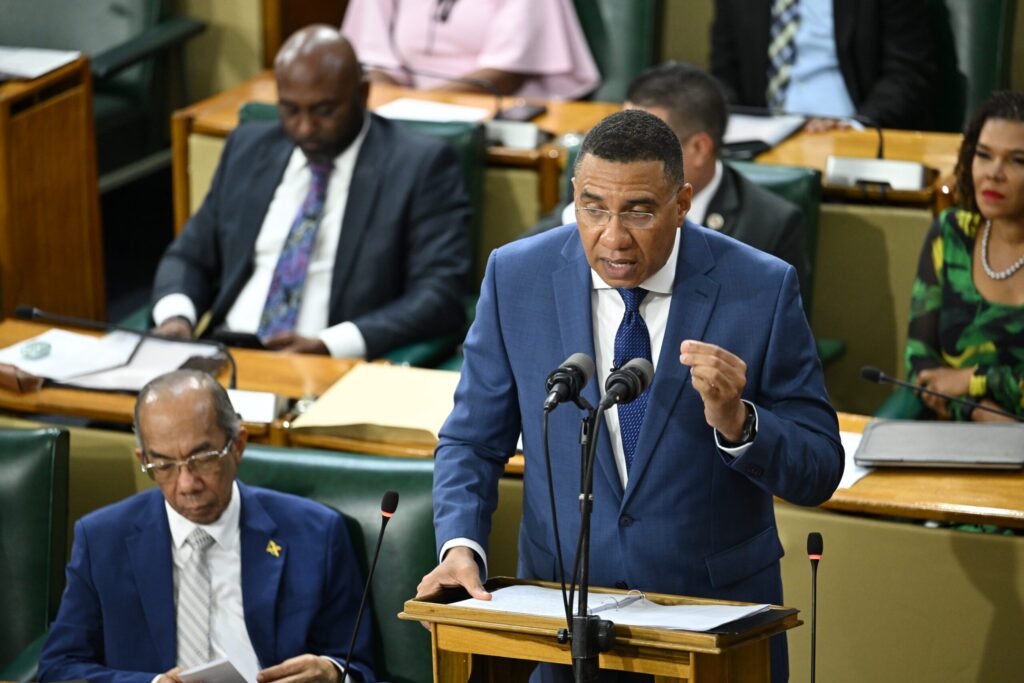
KINGSTON, Jamaica — Jamaica is actively engaged in diplomatic and technical discussions with multiple countries — including India — as it works to build a unified digital payment infrastructure aimed at expanding access to cashless transactions across the island nation, Prime Minister Dr. Andrew Holness announced Thursday.
Holness made the disclosure during the Recover Better Conference, a one-day action-focused summit hosted by the Jamaican Consulate General in New York that centers on strengthening the country’s post-disaster recovery and long-term economic resilience. The conversation came as the prime minister addressed audience questions about the current state of mobile banking penetration in Jamaica.
The core goal of expanding digital payment access, Holness emphasized, is to reduce the share of Jamaicans who remain locked out of formal financial services, commonly referred to as the unbanked population. He noted that a surprising gap separates Jamaica’s economic standing from its digital payment performance: many nations with lower per capita gross domestic product than Jamaica have achieved far higher rates of digital payment adoption, even among residents who do not hold traditional commercial bank accounts.
“While Jamaica boasts a higher share of banked adults than many peer economies, that share still falls short of our national goals, and the rate of active digital payment use remains stubbornly low,” Holness explained. “That is the core challenge we are working to address.”
As one of a small handful of countries globally to launch a central bank digital currency, Jamaica already has experience with digital financial innovation through its JAMDEX CBDC project. But Holness openly acknowledged that the initiative has not gained the widespread public and commercial adoption that government leaders initially projected.
Two major bottlenecks are holding back faster growth, the prime minister explained. First, the country’s established banking sector has been slow to make the full capital investments required to support widespread digital payment rollout. Upgrading infrastructure to support cashless transactions — including installing widespread point-of-sale terminals at retail locations, issuing contactless payment cards to account holders, and updating backend processing systems — represents a major upfront capital commitment that banks have been reluctant to absorb quickly.
Second, Jamaica currently lacks a unified interoperability platform that allows multiple independent digital payment systems to transact with one another seamlessly. While policymakers support a competitive market with multiple private and public payment providers, a shared connecting layer is required to ensure users can send and receive payments across different services without friction, Holness noted.
To solve this interoperability gap, Jamaica has already entered into preliminary discussions with Indian officials to explore adopting India’s proven unified payment platform architecture, the prime minister confirmed.
Jamaica does already have a basic infrastructure connecting all of the country’s automated teller machines, but Holness said the network requires additional capital investment to expand access and support full digital payment interoperability. Government officials are currently in talks with domestic banks to secure the funding needed to upgrade this existing framework.
Additionally, the Bank of Jamaica has established a regulatory sandbox to allow digital payment providers to test new services and secure regulatory approval in a controlled environment. Even with this supportive policy in place, however, Holness admitted that the approval and scaling process for new mobile payment systems has proceeded far slower than anticipated.