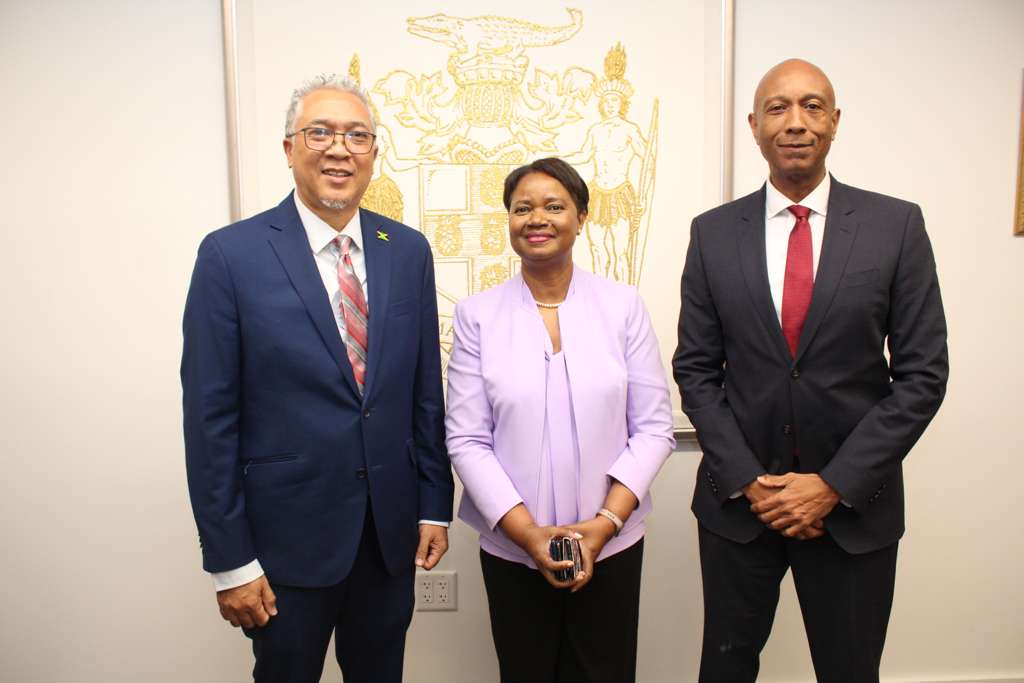
Against the backdrop of ongoing post-disaster reconstruction in the wake of Hurricane Melissa, Jamaica’s national development finance institution took center stage at a one-day New York recovery forum to showcase its work and rally global support for the island nation’s long-term resilience goals.
Hosted by the Jamaican Consulate General in New York, the Recover Better Conference convened diaspora representatives, international investors, and key industry stakeholders to mobilize three core resources for Jamaica’s rebuilding: targeted capital, specialized expertise, and cross-sector collaborative partnerships. The event placed specific focus on the Development Bank of Jamaica (DBJ), spotlighting its existing work in post-disaster reconstruction and economic transformation while generating new interest in partnerships to advance national recovery.
In his opening remarks on DBJ’s role, Managing Director Dr. David Lowe stressed that collective partnership forms the backbone of effective post-crisis recovery, singling out the Jamaican diaspora as an underutilized catalyst for accelerated progress. “Partnership is non-negotiable for meaningful recovery,” Dr. Lowe stated in an official press release distributed Friday. “The Jamaican diaspora holds unique stakes and capabilities in this work, and DBJ stands ready to act as their dedicated partner to direct investment toward high-impact opportunities that restore livelihoods and secure Jamaica’s long-term economic prosperity. All stakeholders must step forward to build a robust ecosystem that supports solution-focused, resilient national development.”
During its formal presentation at the conference, DBJ outlined its comprehensive, innovative framework for recovery financing that positions the institution as more than a traditional lender: it operates as a strategic catalyst for sustainable, inclusive growth. Unlike standard development banks that rely solely on debt instruments, DBJ combines a flexible mix of loans, equity stakes, grant funding, credit guarantees, and hands-on technical support to close persistent financing gaps, unlock private sector expansion, and build a solution-oriented development pathway that serves all stakeholders.
A core pillar of DBJ’s current recovery intervention is targeted support for Jamaica’s agricultural sector, which suffered some of the most severe damage from recent climate-driven disasters. Over the past financial year, the bank has approved roughly $9.3 million in dedicated loans for agricultural operations and agribusinesses, supporting hundreds of small and medium-sized enterprises across the island. This financing has helped restore lost production capacity, reinforce national food security systems, and stabilize incomes for thousands of households dependent on the agricultural sector.
DBJ also highlighted the early successes of its signature M5 Business Recovery Programme, a structured initiative designed to support struggling enterprises through a holistic package of credit access, direct grants, loan restructuring, and collateral assistance. With $63 million in total financing allocated to the program and robust demand across multiple sectors of the economy, M5 has emerged as a critical lifeline that helps businesses stabilize operations, rebuild damaged infrastructure, and scale for long-term growth while embedding innovative resilience strategies to weather future shocks.
To deepen engagement with diaspora stakeholders, Nicola Russell, manager of DBJ’s public-private partnership and privatisation division, joined a conference panel focused on expanding diaspora participation through investment, volunteerism, skills sharing, and philanthropy. During the discussion, Russell outlined a pipeline of investable public-private partnership and privatisation (PPP&P) opportunities open to external stakeholders, emphasizing that diaspora members and the wider global investment community can deliver tangible impact for Jamaica’s reconstruction and long-term development. She also noted that leveraging diaspora networks and on-the-ground expertise is key to advancing productive dialogue and unlocking transformative capital for large-scale PPP projects.
The conference featured a headline keynote address from Jamaican Prime Minister Dr. Andrew Holness, who presented the government’s official vision for the country’s recovery in a talk titled “Building Back Better: Jamaica’s Vision for National Recovery and Resilience.” Holness underscored the critical importance of coordinated national action, strategic targeted investment, and cross-stakeholder partnerships to advance ongoing reconstruction and build systemic national resilience.
Beyond its immediate post-Hurricane Melissa recovery work, DBJ used the conference to outline its broader national mandate, which includes supporting micro, small, and medium-sized enterprises (MSMEs), mobilizing private domestic and international capital, and advancing large-scale infrastructure development through public-private partnerships. Through these integrated efforts, the bank reaffirmed its commitment to serving as a strategic partner for all stakeholders, working to build a resilient, inclusive, and solution-driven economic future for all Jamaicans.