分类: business

  • Banks, credit unions ‘ready’ for BimPay

    Banks, credit unions ‘ready’ for BimPay

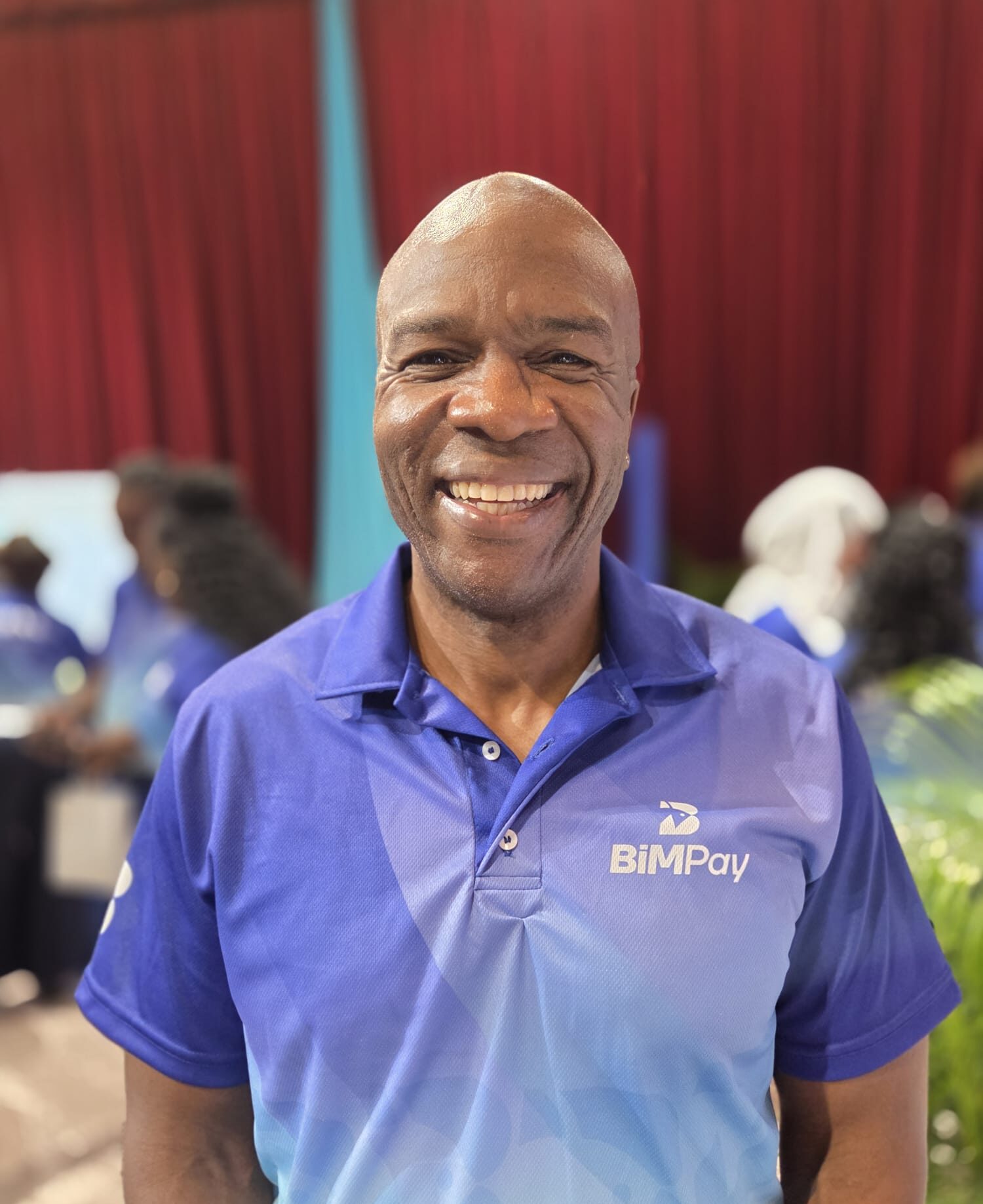
    Barbados is just weeks away from unveiling a transformative new national digital payment platform, BimPay, scheduled to go live on June 12. A top executive from one of the project’s core participating institutions has framed the launch as a watershed moment for the island nation’s financial sector, forecasting sweeping changes to how residents manage and move their money.

    George Thomas, Chief Executive Officer of Sagicor Bank Barbados Limited, one of the six commercial banks and nine founding financial institutions backing the initiative, says BimPay directly aligns with his organization’s founding mission. When Sagicor Bank entered the Barbadian market three years ago, it launched as a digitally-first financial institution built around a core promise to deliver easier, safer, and more innovative financial services to local consumers. For Thomas, the national digital payment infrastructure project represents the fulfillment of that promise.

    “It feeds into our existential ethos in that we were created to bring ease, safety, and innovation into the financial services market,” Thomas explained, drawing a direct line between BimPay’s goals and his bank’s original vision.

    As a bank leader with professional background as a cybersecurity architect, Thomas brought a unique dual perspective to the project: one that celebrates transformative fintech innovation while prioritizing ironclad consumer protection. He stressed repeatedly that technological progress must never be pursued at the cost of robust security frameworks, and praised the Central Bank of Barbados for striking the perfect balance between forward-thinking regulation and risk mitigation.

    “It’s good to see the regulator embrace that spirit of innovation whilst, again, I keep saying safety,” Thomas said. “Because as much as I’m an innovator, I’m also a cybersecurity architect. I am very conscious that it doesn’t matter what you build or how fancy it is, it has to be safe and secure. So I’m seeing all of those boxes being checked here.”

    Thomas also commended regulators for their inclusive rollout strategy, which first让 internal agency employees test the platform hands-on as initial stakeholders — a small-scale preview of the nationwide adoption journey Barbados will begin next month.

    Drawing on decades of professional experience working on early digital currency and payment experiments across the Caribbean, including past projects in the Eastern Caribbean Currency Union, Jamaica, and The Bahamas, Thomas framed BimPay as a far more pragmatic and scalable solution than prior regional attempts. While he described those earlier efforts as valuable proof-of-concept experiments that helped lay groundwork for future innovation, he argued BimPay addresses the core need of digital finance more effectively.

    “I always believed in this approach because the money is already digital,” Thomas noted. “We just need the plumbing — the infrastructure to bring the capacity to access it and move it around to the general public, again, in a safe and secure manner. I think that is what this marks the kickoff. This puts the ball in play.”

    For Thomas, the launch is more than just a domestic upgrade: it positions Barbados as a regional pioneer, bringing the island’s financial services infrastructure in line with global leaders across North America, Asia, and the Middle East. “All of Barbados should feel very proud come June 12 to be pioneers in the region,” he said. “I think this is a march towards parity with any place on planet Earth… We are now on par in terms of financial services and the capabilities provided to citizens.”

    Beyond simplifying everyday person-to-person and retail transactions for ordinary Barbadians, BimPay unlocks substantial new economic opportunity for local fintech creators, entrepreneurs, and software developers. As an open digital infrastructure, the platform allows third-party builders to develop specialized, niche financial tools that larger incumbent banks often overlook, mirroring successful global fintech-bank partnership models.

    Thomas pointed to well-known international precedents, such as M-PESA’s collaborative work with traditional banks across Africa, and similar fintech-institution partnerships across Europe, North America, and Latin America, to illustrate the potential for inclusive growth. “We know we are entering that race, and I think we’re going to race to the front,” he said.

    On the question of whether all participating institutions will be fully prepared for the June 12 launch, Thomas confirmed that banks and credit unions across the island have been working around the clock for six months to complete seamless system integration. “Nobody in the banking system has been sleeping for the past six months, I dare say,” he joked. “We have been working tirelessly around the clock to make this happen. I can safely say, from a technological perspective, there’s a high degree of readiness, and come June 12, we’ll be ready.”

    Pre-launch feedback from consumers has shown strong demand for advanced digital payment features, especially among younger demographics that are already accustomed to global digital payment standards like Apple Pay and Google Pay. Thomas says millennials and Gen Z creators, in particular, are already looking ahead to how BimPay will support the growing digital creator economy, with many already asking how the platform will enable them to receive payments for their social media content and online work.

    While Thomas acknowledged that a small segment of more risk-averse consumers are taking a natural “wait-and-see” approach ahead of the launch, he emphasized that overall public sentiment across Barbados is overwhelmingly optimistic and enthusiastic as the island counts down to launch day. “That is normal,” he said of cautious attitudes. “But generally speaking, I found that people are optimistic and enthusiastic.”

  • Central Bank unveils BiMPay instant payment system

    Central Bank unveils BiMPay instant payment system

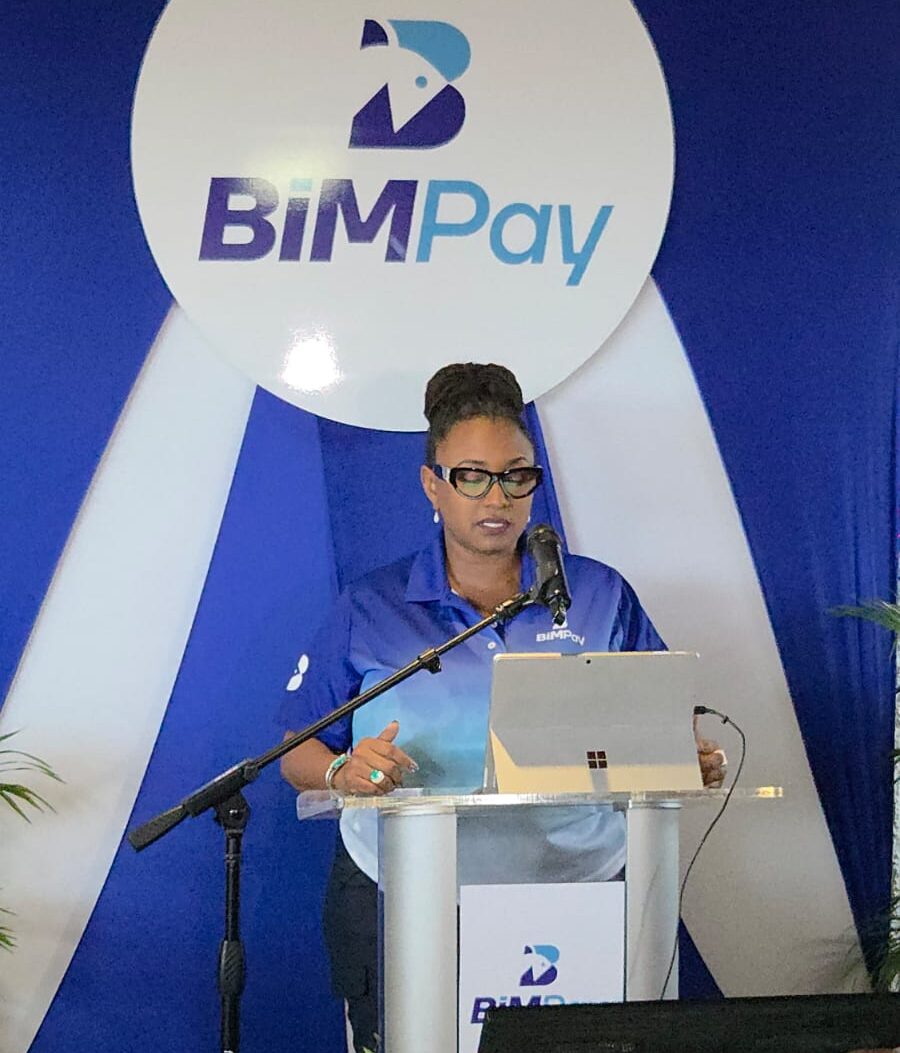
    On a Tuesday gathering held at the Courtney Blackman Grand Salle as part of the internal “Unlock” launch and staff appreciation event, the Central Bank of Barbados made a landmark announcement: the Caribbean nation will usher in a new era of digital finance on June 12 with the official rollout of BiMPay, the country’s first national real-time instant payment system. The platform, which has been hailed as one of the most transformative infrastructure projects the Central Bank has delivered in modern history, will enable frictionless, immediate transactions across all participating commercial banks, credit unions and other licensed financial institutions across the island.

    Deputy Central Bank Governor Michelle Doyle kicked off the event by walking attendees through the intensive two-year development journey that brought the project from concept to launch. She recalled that when work first kicked off in 2024, the team did not start with coding or tech infrastructure — they started with dialogue. Stakeholder workshops were held to map core business requirements, from defining the platform’s core features to deciding which financial entities would join the network, identifying end user needs, and designing a system that would integrate seamlessly into the daily financial lives of all Barbadians.

    Development accelerated dramatically over the past six months, requiring cross-functional collaboration between internal Central Bank departments, external industry consultants, and global fintech vendor Montran, which deployed specialized development teams based in Romania and Ecuador to support the build. Doyle noted that the project effectively compressed 12 months of planned work into just six months, crediting the unwavering commitment of cross-sector teams that sacrificed weekends and personal family time to hit the pre-set launch timeline. Ten days out from the official go-live, Doyle said the platform is ready for launch thanks to the team’s assiduous work, relentless persistence and meticulous attention to detail.

    Central Bank Governor Dr. Kevin Greenidge expanded on the far-reaching economic impact of BiMPay, emphasizing that the initiative represents far more than a simple technological upgrade — it is a foundational overhaul of Barbados’ national financial infrastructure. To illustrate the platform’s purpose, he used a relatable transportation analogy: just as Barbados’ national road network connects communities, residential areas and businesses to enable movement and growth, BiMPay acts as a national financial highway that connects all payment service providers, banks and credit unions into a single interconnected system, allowing funds to move between institutions instantly and seamlessly.

    Greenidge stressed that the core end goal of BiMPay is to advance deep, widespread financial inclusion across every segment of Barbadian society. The platform is designed to make digital payments faster, simpler, more secure and accessible to every person, business and community across the island, including the estimated 10 to 15 percent of Barbadian adults who remain unbanked. “We want to make sure that every Barbadian, whether they have an existing bank account or not, every street vendor, every small business owner, everyone has access to the digital payment system,” he explained.

    To address widespread misconceptions that the central bank would be entering commercial competition with private sector financial institutions, Greenidge clarified that BiMPay operates as a national infrastructure layer, not a commercial service. All customer-facing services are delivered through users’ existing financial providers, with the Central Bank only facilitating the underlying inter-infrastructure transaction network. “We are not competing. We are facilitating,” he emphasized.

    To remove barriers for unbanked and underbanked citizens seeking to access the new system, Sagicor Bank has stepped in as the pioneer partner to streamline onboarding for new users. While existing bank customers will have their accounts automatically and instantly linked to the BiMPay mobile application, the bank has set a 30-minute benchmark for completing full registration and due diligence for first-time users without an existing bank account. Greenidge confirmed that the sector has committed to getting unregistered new users access to a fully functional BiMPay-enabled account within 30 minutes of them downloading the mobile application, cutting through traditional slow onboarding processes.

    Central Bank Director of Communications Noveline Brewster then laid out the step-by-step rollout timeline leading up to and following the June 12 launch. The country’s legacy Automated Clearing House (ACH) and older Real-Time Payments (RTP) platforms will go offline at 2:00 PM on June 12 to enable a seamless midnight switchover to the new BiMPay network. A public evening launch event will be held the same day, featuring live product demonstrations, the first official public transaction processed through the platform, and the world premiere of a custom calypso track dedicated to BiMPay, performed by local artists LeadPipe & Sadis. A nationwide public education and marketing media campaign will launch the following Monday, June 15, to build public awareness and understanding of the new system.

    In a key initiative to ensure no vulnerable groups are left behind during the digital transition, Brewster announced a new strategic partnership with the Barbados Association of Retired Persons (BARP). The Central Bank has signed a memorandum of understanding with BARP to distribute digital tablets and deliver specialized, hands-on in-person training to help senior citizens learn how to use the BiMPay platform safely and confidently.

    Speaking to Central Bank staff in attendance, Greenidge urged employees to act as public ambassadors for BiMPay, helping guide everyday Barbadians through the digital transition. “This is important for families; it is important for all of us,” he said.

  • Guyanese-owned SISPRO teams up with Nigeria’s Bono Energy for offshore exploration

    Guyanese-owned SISPRO teams up with Nigeria’s Bono Energy for offshore exploration

    As of Tuesday, June 2, 2026, a landmark new energy partnership is poised to expand offshore oil exploration in Guyana, after locally-owned energy firm SISPRO announced a joint venture agreement with Nigerian exploration and production operator Bono Energy. The collaboration targets one shallow-water and one deep-water offshore concession, with total projected investment across both blocks reaching as high as $600 million U.S. dollars.

    Senior leaders from Bono Energy, including Director Deji Fawole and Head of Legal and Compliance Leke Solanke, are currently in Georgetown to finalize exploration agreements with Guyana’s Ministry of Natural Resources, with formal signing expected in the coming days. Speaking to reporters on the ground, Fawole outlined the framework for the joint project, confirming the venture has secured full initial funding to launch operations across both concession blocks.

    “We are aligned with SISPRO to advance development of both the shallow-water and deep-water blocks off Guyana’s coast, and we have committed up to $600 million in capital to kickstart this work,” Fawole stated. He added that Bono Energy is dedicated to upholding Guyana’s local content requirements, and will work closely with national authorities to grow the country’s emerging oil and gas sector. Fawole also confirmed that the required signing bonus for the concessions, totaling just under $14 million, will be transferred to the government within the 30-day timeline mandated by regulation.

    Fawole noted that the venture will leverage new seismic data collected by the Guyana government to guide early exploration activities, and expressed strong confidence in the resource potential of both blocks. “Preliminary geological assessments already point to significant untapped potential across our shallow and deep-water concessions,” he said, adding that early estimates place recoverable oil reserves at approximately 300 million barrels in the shallow-water block alone. SISPRO Company Secretary Abbigail Loncke-Watson clarified that initial phase investment will fall between $150 million and $200 million, with additional funding allocated for subsequent exploration and appraisal work.

    While the partnership moves toward final approval, Guyana’s Minister of Natural Resources Vickram Bharrat issued a public timeline for the agreement, warning that the government may revoke the concessions and reoffer them in a future competitive bidding round if SISPRO fails to resolve outstanding internal issues before the signing deadline. “If we do not have signed agreements in place by the required date, those blocks will almost certainly be added to the next bid round,” Bharrat told reporters. He declined to share specific details of the internal disputes, but noted that the government has already extended significant flexibility to SISPRO due to its status as a majority Guyanese-owned company. “We have been very lenient, primarily because this is a local firm,” Bharrat said.

    For its part, SISPRO has moved to address the outstanding issues, which Chairman Dr. Ayodele Dalgety-Dean confirmed centered on confusion around the company’s beneficial ownership structure. Speaking to reporters, Dr. Dalgety-Dean expressed full confidence that the agreement would be finalized imminently, “within a matter of weeks.” She clarified that all ownership questions have now been resolved, with three officially registered beneficial owners: Dr. Dalgety-Dean, Ms. Loncke-Watson, and Dr. Melissa Varswyck. The chairman also pushed back against earlier rumors, confirming that local hotelier Dee George was never a beneficial owner of SISPRO, and has already stepped down from her position as a company director.

  • Making Money from Seaweed

    Making Money from Seaweed

    Across coastal communities around the globe, seaweed has quietly evolved from a wild ocean plant to a versatile commercial commodity that ends up in everything from refreshing beverages to skincare products. Now, one of the world’s leading international conservation organizations is working to unlock this economic potential for more residents of Belize, blending environmental sustainability with new income-generating opportunities.

    The Nature Conservancy (TNC) has launched a self-paced, free online training program focused on small-scale seaweed farming, designed to be accessible to a wide range of learners. Aspiring entrepreneurs, local fishermen seeking to diversify their catch and income, community organizers, and anyone curious about the emerging blue economy can complete the entire curriculum in just four to five hours, fitting the coursework around their existing schedules.

    The program was not developed in a vacuum: experts and community representatives from Belize, Indonesia, and Tanzania collaborated to shape the curriculum, ensuring it addresses the specific needs and conditions of tropical coastal communities. Course content covers all core fundamentals, from the basic mechanics of starting a small seaweed farm to strategies for implementing low-impact growing practices that protect surrounding marine ecosystems. It also walks learners through how entire communities can organize collective operations to maximize shared economic benefits.

    Unlike many forms of agricultural and aquacultural production, seaweed farming carries an exceptionally low environmental footprint. It requires no arable land, no inputs of fresh water, and no synthetic fertilizers or animal feed, making it far less taxing on natural resources than conventional food production. Beyond that, growing seaweed actively supports marine health: it filters excess nutrients from coastal waters to improve water quality, creates critical habitat for a wide range of fish and other ocean species, and absorbs carbon dioxide from the ocean to help mitigate the impacts of climate change.

    In Belize, a small but growing commercial seaweed industry already exists, with local businesses processing the crop into a diverse array of products. Dried whole seaweed, powder, body soaps, hydrating gels, health drinks, and nourishing hair products are already on the market, demonstrating the strong consumer demand for seaweed-based goods. TNC’s new course aims to lower the barrier of entry for new producers, helping more Belizeans join this growing market while upholding strict sustainable practices that protect the country’s valuable coastal ecosystems. The full course is currently available for enrollment through TNC’s official website.

  • Butch Stewart’s family differences resolved

    Butch Stewart’s family differences resolved

    More than two years after the passing of iconic Jamaican tourism and business titan Gordon “Butch” Stewart, his family has announced a resolution to the internal disagreements that emerged following his death in January 2021. The settlement was made public in an official joint statement distributed through Bahamas-based law firm LennoxPaton. Stewart, a decorated industry leader who held the Order of Jamaica distinction, built the globally recognized Sandals & Beaches Group from the ground up, turning the Caribbean resort brand into a cornerstone of the region’s tourism economy and a household name for luxury leisure travelers worldwide. In the statement, the Stewart family confirmed that all outstanding rifts between parties have been amicably resolved. The family expressed that they are now eager to shift focus toward upholding Stewart’s decades-long work and advancing the ongoing growth of the Sandals & Beaches Group, the core enterprise that forms the foundation of his enduring business legacy. This resolution clears a period of uncertainty surrounding the future of the resort conglomerate, reassuring stakeholders, employees, and travelers that the brand will continue its expansion trajectory as its founder originally envisioned.

  • Caribbean Cement reports improved supply following weather-related disruptions

    Caribbean Cement reports improved supply following weather-related disruptions

    KINGSTON, Jamaica — Just weeks after severe April rainfall upended manufacturing operations at one of Jamaica’s leading construction materials suppliers, Caribbean Cement Company Limited (CCCL) has announced a sharp rebound in product availability, with overall supply volumes jumping more than 20% to meet persistent local market demand.

    In an official statement released Wednesday, CCCL Managing Director Jorge Martinez outlined the aggressive corrective measures the firm rolled out to restore operational stability after the weather-related disruption, noting that production and distribution have now surged to unprecedented levels. Between April and May 2026, the company boosted domestic production by more than 50% compared to its post-disruption low, while customer dispatches rose over 23%. This growth pushed total sales to a new record of roughly 110,757 metric tonnes, surpassing the previous high of 108,500 metric tonnes set back in March 2021 amid the COVID-19 pandemic.

    To further shore up domestic inventories and meet unmet demand, CCCL tapped into its parent network Cemex’ global supply chain to import 23,852 metric tonnes of cement by the end of May. Martinez confirmed that additional cargo shipments are already en route to reinforce stock levels and keep market conditions steady for contractors and retail buyers across the island.

    Beyond short-term emergency measures to restock supply, CCCL has rolled out a suite of long-term strategic initiatives designed to boost operational efficiency and elevate customer experience. Key upgrades include expanding warehouse storage capacity at multiple locations across Jamaica, implementing stricter quality control protocols to guarantee finished product reliability, and bringing new production equipment online to raise baseline output capacity.

    In a collaborative move to align supply with upcoming project demand, CCCL has also entered a partnership with the Incorporated Master Builders’ Association of Jamaica. The two groups are developing a centralized database of active and planned construction projects across the country, a tool that will allow CCCL to improve forward planning and more effectively allocate supplies to where they are needed most. The firm is also upgrading its customer communication infrastructure to deliver more frequent, timely updates on product availability and delivery timelines.

    On June 2, Martinez led an on-site inspection of CCCL’s Rockfort, Kingston packing plant alongside Supply Chain and Ports Officer Akayla Roberts and Supply Chain Manager Diego Buitrago, where the team examined finished cement bags ahead of distribution to customers islandwide.

    Looking ahead, CCCL reaffirmed its ongoing commitment to maintaining a consistent, sustainable supply of cement to underpin Jamaica’s ongoing infrastructure development and long-term economic expansion.

  • ITA Airways launches direct Rome–Santo Domingo flights

    ITA Airways launches direct Rome–Santo Domingo flights

    In a move set to reshape air travel links between the Caribbean and Southern Europe, Aeropuertos Dominicanos Siglo XXI (Aerodom), the operator of Dominican Republic’s key airport infrastructure, has praised ITA Airways’ launch of a new nonstop service connecting Rome and Santo Domingo. This strategic connectivity addition is projected to drive meaningful growth in both European inbound tourism and cross-border business travel between the two nations.

    The new route is scheduled to commence operations on November 30, initially running as one weekly flight every Monday. To meet projected demand, ITA Airways will ramp up service to two weekly rotations starting December 14, adding a Sunday flight that will remain in the schedule through March 2027. All services on this route will be operated using state-of-the-art Airbus A330neo aircraft, a modern, fuel-efficient jet configured with three cabin classes: Business, Premium Economy, and Economy, to cater to the diverse needs of leisure and business travelers alike.

    For Aerodom, the addition of Rome to Las Américas International Airport’s expanding route network delivers tangible value to the Dominican Republic’s aviation ecosystem. It further solidifies Santo Domingo’s standing as the country’s leading international entry point for global visitors and trade. Aerodom Chief Executive Officer Cyril Girot emphasized that the new connection will go beyond simple air travel: it will deepen longstanding cultural, economic, and political ties between the Dominican Republic and Italy, while also boosting the country’s appeal as a top-tier destination for both international tourism and foreign business investment.

    This new route forms a core component of ITA Airways’ broader strategic expansion plan across the Americas, as the carrier seeks to capture growing demand for transatlantic travel between Europe and the Caribbean. Industry stakeholders on both sides anticipate the service will unlock new opportunities for reciprocal tourism growth, expanded bilateral trade, and increased people-to-people cultural exchange between Italy and the Dominican Republic.

  • Dominican Republic promotes premium cocoa at Brussels industry forum

    Dominican Republic promotes premium cocoa at Brussels industry forum

    The Dominican Republic has stepped onto the global stage to highlight the exceptional quality and untapped international potential of its cocoa sector, hosting the Dominican Cocoa Forum in Brussels. The event forms a key part of the inaugural Dominican Week, a cultural and trade initiative taking place across Belgium and the Netherlands, designed to open new doors for Dominican agricultural products in European markets.

    Stakeholders from across the global cocoa supply chain gathered at the forum, bringing together local Dominican cocoa producers, award-winning European chocolatiers, trade entrepreneurs, institutional trade representatives, and senior decision-makers from the European cocoa sector. The core goals of the gathering were twofold: to strengthen long-term bilateral trade relationships between the Dominican Republic and European markets, and to raise the international profile of Dominican cocoa among global buyers.

    One of the central agenda items for the forum was a detailed update on the rollout of the official “Dominican Cocoa” Geographical Indication (GI) Seal. This certification initiative is crafted to do more than just verify and protect the national origin of Dominican cocoa; it is also positioned to boost the product’s global brand recognition and elevate its market value. Event organizers stressed that the GI certification will reinforce the already strong reputation Dominican cocoa holds for consistent quality, ethical sustainable production, full supply chain traceability, and the unique flavor profiles tied to the country’s distinct growing regions.

    Joan Margarita Cedano, the Dominican Ambassador to Belgium, addressed attendees during the opening session, framing Dominican cocoa as a global gold standard for fine-flavor cocoa. She noted that the product has long been recognized for its one-of-a-kind taste characteristics and rigorous adherence to international production standards. Beyond formal speeches, the forum included a full schedule of expert-led presentations, panel discussions focused on sustainable production practices and origin certification protocols, and guided product tastings. These activities gave European buyers and large chocolate manufacturers a hands-on opportunity to experience the unique qualities that have secured the Dominican Republic’s place among the world’s top premium cocoa producing nations.

  • Government invests over RD$469.7 million in six new power transformers from China

    Government invests over RD$469.7 million in six new power transformers from China

    In a major step forward for Dominican Republic’s electrical infrastructure upgrade, state-linked utility provider Edesur Dominicana has launched the logistics process to transport six newly manufactured power transformers from China to its domestic concession network. The project, backed by a total investment of RD$469.8 million, is a core component of the company’s long-term strategy to modernize aging grid infrastructure and deliver more consistent, reliable power service to end users across its service territory.

    The acquisition of the transformers followed a competitive public bidding process, which ultimately awarded the supply contract to local firm Electroval. The new units come in three distinct capacity ratings: 30, 40, and 50 megavolt-amperes (MVA), engineered to operate at two standard voltage configurations: 69/12.8 kV and 138/12.8 kV, tailored to fit seamlessly into the Dominican Republic’s existing distribution network. Utility planners project that adding these high-capacity transformers will significantly boost the company’s ability to accommodate growing peak electricity demand, while also reducing the risk of distribution outages and improving overall grid stability for residential, commercial, and industrial customers.

    To guarantee that every unit meets strict technical specifications and global quality benchmarks, a dedicated technical delegation from Edesur traveled to Zhejiang Province, the manufacturing hub in eastern China, to carry out comprehensive Factory Acceptance Tests (FAT) and on-site inspections prior to the equipment’s shipment. According to official statements released by Edesur, all six transformers have passed these rigorous assessments, fully complying with both international industry regulations and the specific operational requirements set out by the utility. This injection of new capital and equipment forms part of a broader national initiative to upgrade the Dominican Republic’s power system, with the overarching goals of boosting operational efficiency, increasing long-term sustainability, and strengthening the grid’s resilience against unexpected disruptions.

  • INSIDE LASCO’S POST-LASCELLES PLAN

    INSIDE LASCO’S POST-LASCELLES PLAN

    More than two years have passed since the passing of LASCO founder Lascelles Chin, and the Jamaican diversified corporate group is finally putting in place a formalized long-term leadership framework to transition out of the founder era, promoting veteran insider Dr Eileen Chin to expanded executive roles as it lays the groundwork for its next chapter of expansion.

    Dr Chin, the founder’s widow and a decades-long LASCO executive, was officially appointed deputy executive chairman of LASCO Manufacturing Limited and LASCO Distributors Limited on May 26. Her appointment to the same role at the group’s third core subsidiary, LASCO Financial Services, is set to be confirmed at a scheduled June 17 board meeting. The confirmation was delayed after the financial unit’s auditors requested extra time to finalize its 2026 full-year financial audit.

    The promotions place Dr Chin, who has climbed the ranks at LASCO over more than 25 years, at the heart of the group’s push to solidify leadership continuity across its three core business lines, which collectively generated more than JMD 44 billion in total annual revenue last fiscal year. For Dr Chin, the top immediate priority is building a robust leadership pipeline across every organizational level to ensure multi-generational success, rather than relying on a single figure to steer the conglomerate.

    “LASCO’s future cannot rest on any single individual,” Dr Chin shared in an interview with the Jamaica Observer, followed by written responses outlining her appointment and long-term vision for the group. “It must be built on strong leadership at every level, a culture of accountability and innovation, disciplined execution, and an unwavering commitment to the customers and communities we serve.”

    She emphasized that succession planning is far more than identifying a single successor for the founder. “Succession planning is not about identifying one person to replace another. It is about ensuring that the organisation has a strong pipeline of capable leaders at every level.”

    Previously a board director across group companies, Dr Chin’s new expanded role will see her take direct operational responsibility, with duties split between her and current Executive Chairman James Rawle. “The chairman and I will be agreeing on what portfolio of the operation I will be looking after,” she explained.

    LASCO’s three core business lines currently face vastly different market conditions, underscoring the complexity of the leadership team’s task:

    – LASCO Manufacturing remains the group’s star performer. For the 12 months ending March 31, 2026, the subsidiary reported a record net profit of JMD 2.76 billion, a 7.6% year-over-year increase, while total revenue climbed to JMD 12.69 billion. The firm also recently launched a new high-speed beverage and water filling line as part of an ongoing capital investment program to boost production capacity and operational efficiency.

    – LASCO Distributors is the group’s largest business by revenue, posting full-year sales of JMD 31.67 billion, but its net profit fell 20.6% year-over-year to JMD 1.06 billion. Rising operating costs, increased marketing spending, and ongoing capital investments compressed margins during the period. The subsidiary is currently investing heavily in expanding its White Marl warehouse, a project management expects to improve long-term logistics efficiency and support future sales growth.

    – LASCO Financial Services is navigating a turnaround following a period of declining profitability. While its most recent full audited results showed a sharp profit drop, updated nine-month results ending December 31, 2025, indicate a recovery is underway: operating profit jumped 166% to JMD 213.3 million as lending activity expanded, pushing the firm back into the black. Total loans and receivables grew from JMD 1.49 billion a year earlier to roughly JMD 2.18 billion, signaling a strategic shift toward growing core lending operations.

    Dr Chin’s path to the top of LASCO’s leadership structure began far from the corporate boardroom. Born in Cuba, she enrolled in medical school at 16 and trained as a physician and researcher before relocating to Jamaica in 1998. She joined LASCO the following year, starting with entry-level work including product label editing, translations, and export coordination, learning the business from the ground up. She later earned an MBA, held leadership roles across exports, product development and manufacturing operations, and eventually rose to become managing director of LASCO Manufacturing, where she delivered record annual earnings last fiscal year. She has been part of LASCO’s journey from a small local player to a diversified publicly listed conglomerate.

    Her appointment also cements the continued involvement of the founding family in the business. The Estate of Lascelles Chin remains one of the largest shareholders across all three LASCO subsidiaries, holding roughly 30% of LASCO Manufacturing and LASCO Financial Services, and just under 29% of LASCO Distributors. Key co-shareholders include East West (St Lucia) Limited and Mayberry Jamaican Equities Limited, and Dr Chin also holds personal equity stakes in each group company.

    Outlining her long-term growth strategy to Business Observer, Dr Chin laid out four core pillars: expanded export reach, new product development, a push into higher-value offerings, and targeted strategic acquisitions.

    Despite decades of expansion across Caribbean and North American markets, exports currently account for only 4% of the group’s total revenue, leaving massive untapped growth potential. “The biggest opportunity now, just the low-hanging fruit, is expanding export,” she said.

    The company plans to deepen its market share across the Caribbean, pursue further growth in the United States and Canada, and rebuild its presence in Central American markets including Guatemala, Nicaragua, Honduras, Panama and Belize, where LASCO products already have strong existing brand recognition. “Those markets provide an opportunity to build on existing brand awareness while creating a platform for broader regional expansion over time,” she noted.

    Beyond exports, LASKO will continue pursuing organic growth through new product launches and extensions of its existing portfolio. “What we have been doing is also looking at new ideas. There is a lot of other things that we could expand on through the organic growth of the company,” she said. The firm is also exploring opportunities in higher-margin product categories including functional food and beverages to diversify its product mix and boost overall profitability.

    Historically, LASCO’s growth has been driven almost entirely by organic expansion, but Dr Chin said the group is now open to evaluating targeted acquisition opportunities that align with its core operations. “We are not interested in acquisitions simply for the sake of growth or scale. Any business we pursue must be strategically meaningful, aligned with our core operations, and capable of strengthening our capabilities, extending our market reach, or enhancing our product portfolio,” she explained. “Our ambition is not simply to build a larger company, but to build a stronger, more diversified and more internationally competitive Jamaican enterprise.”

    Looking ahead, Dr Chin identified one of the most pressing long-term risks not just for LASCO, but for all of Jamaican industry: a growing shortage of skilled specialized talent. As manufacturing equipment, automation and digital technologies grow more advanced, she argued, the domestic supply of qualified workers has failed to keep pace. “If you look at the manufacturing industry, equipment and machinery have become much more sophisticated. You need people with more skill. More technical skill,” she said.

    This skills gap extends to emerging technologies such as artificial intelligence, she added: “AI is coming on-board. We need more people that understand it, that are trained in AI and how to use it to drive efficiencies.”

    Dr Chin argued that a disconnect between Jamaica’s education system and the evolving needs of modern industry is the root cause of the constrained talent pool. While the entrepreneurial culture that Lascelles Chin built remains one of the group’s greatest strengths, preserving that legacy requires adaptive change, not just maintaining the status quo.

    “The greatest threat is not adapting quickly enough to a world that is changing at an unprecedented pace,” she said. “Companies that fail to anticipate and respond to these changes risk losing relevance over time.”

    For LASCO, the core challenge now is turning this philosophy into action, building an organization that can sustain long-term growth, solid leadership continuity, and global competitiveness long after the founder era.